
Cultural background
Sashimi is mainly enjoyed during dinner or at drinking gatherings, where freshness is a crucial factor for taste. In Korea, it is common to dip it in cho-gochujang or enjoy it wrapped in leaves.
Origin & history
Korea's hoe (sliced raw fish) culture grew out of a meeting between the coastal custom of preparing freshly caught fish on the spot and the urban culture of dedicated hoe restaurants. Before refrigerated distribution became widespread, it was a delicacy eaten close to where the fish was landed; later, as fish tanks and distribution networks spread, hoe became common even in inland cities.
A defining feature of Korean hoe restaurants today is the preference for hwareohoe, hoe made from live fish killed and prepared to order. Some places use aging to draw out umami, but in Korea, many diners consider a springy bite and the sense of “바로 잡은 느낌” (baro jabeun neukkim, “just-caught feeling”) part of the flavor.
Regional & modern variations
- Hwareohoe — Hoe prepared after a live fish is ordered and then killed and filleted. It is common at Korean hoe restaurants, where a resilient, firm texture is highly valued.
- Sukseonghoe — Hoe made by keeping prepared fish cold for a set period to mellow its flavor. It has less chew than hwareohoe, but the umami can come through more clearly.
- Mulhoe — A summer dish of hoe mixed with chilled seasoned broth and vegetables. It is especially well known along the East Coast, including areas such as Pohang and Sokcho.
- Sekkosi — A way of serving small fish sliced thinly with the bones left in. The crunchy texture of the bones can feel unfamiliar to first-time diners.
How Koreans eat it
At hoe restaurants, diners commonly eat hoe with a range of seafood side dishes rather than ordering only hoe by itself, then finish by ordering Spicy Fish Soup made with the fish bones and head. At seaside restaurants, the day’s catch matters, so many people ask for the recommended fish rather than choosing only from the fixed menu.
Taste & how to choose
White-fleshed fish hoe tends to be clean-tasting and quite springy, while red-fleshed or blue-backed fish usually has more noticeable oiliness and aroma. Good hoe carries a faint scent of the sea rather than a fishy smell, and the surface of the flesh is neither dried out nor mushy. Chojang, a vinegared Gochujang sauce, has a strong flavor, so if you want to taste the fish itself, try your first piece with just a light dip in Soy Sauce.
Similar dishes
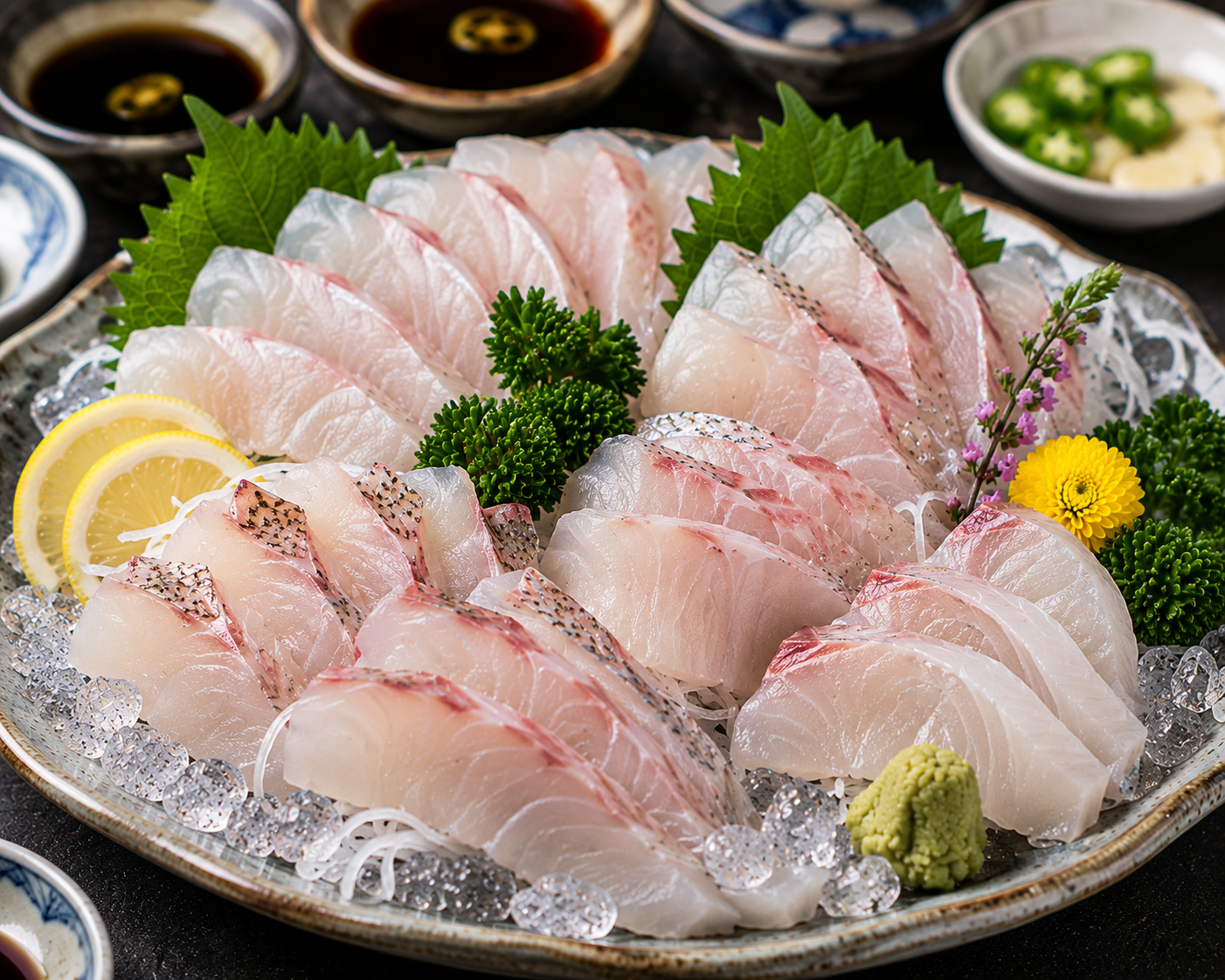
Sea Bass Sashimi
농어회 · nong-eo-hoe
This dish features fresh sea bass served as sashimi, characterized by its chewy and firm texture and light flavor. It is typically enjoyed dipped in a mixture of chogochujang (vinegared chili paste) or soy sauce with wasabi, and can also be wrapped in lettuce or perilla leaves. Freshness is key, as the taste varies depending on the season.
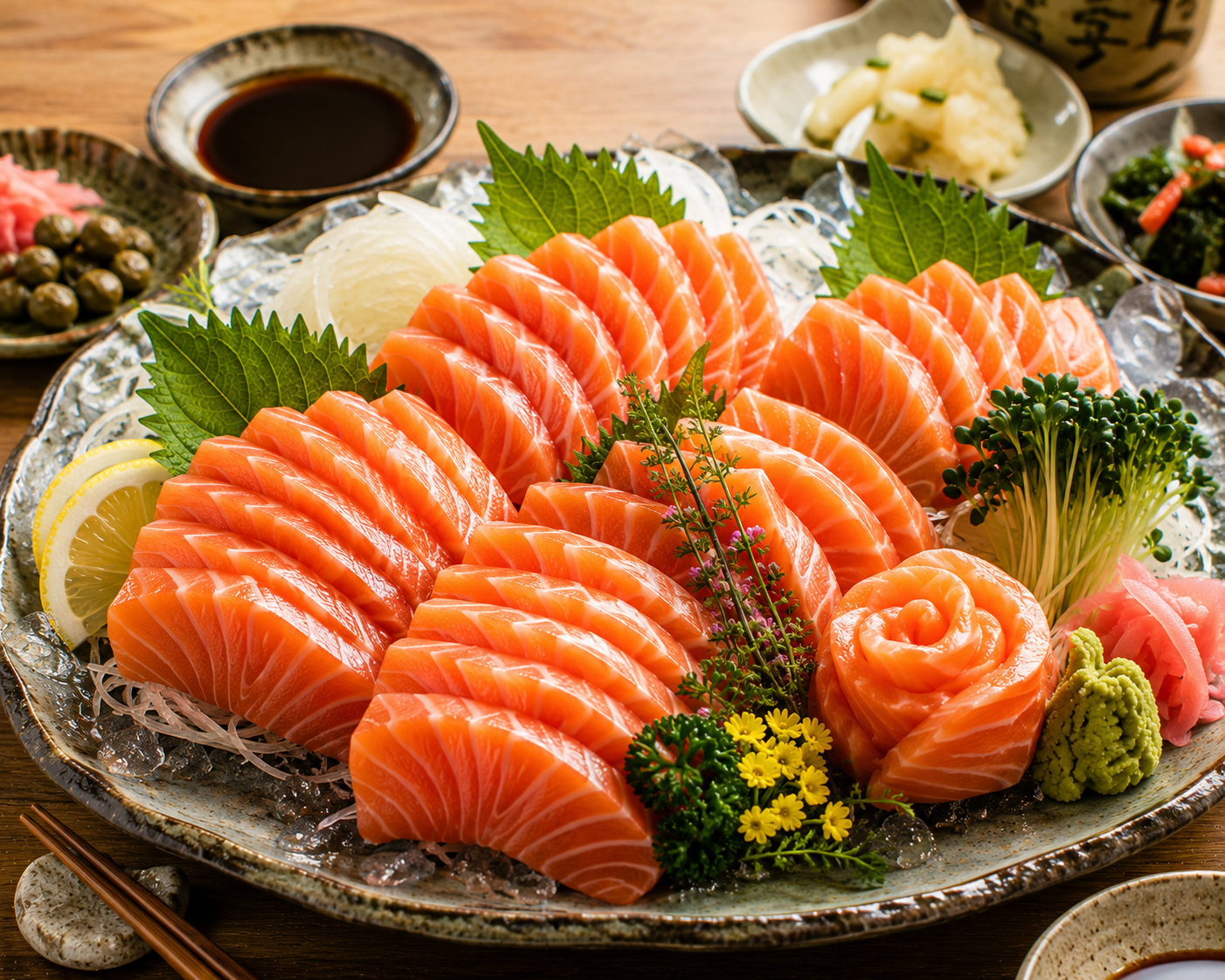
Salmon Sashimi
연어회 · yeon-eo-hoe
Thinly sliced fresh salmon, characterized by its soft and fatty texture. It is enjoyed by dipping in chogochujang (vinegared chili paste) or soy sauce mixed with wasabi, and can also be wrapped in lettuce or perilla leaves.
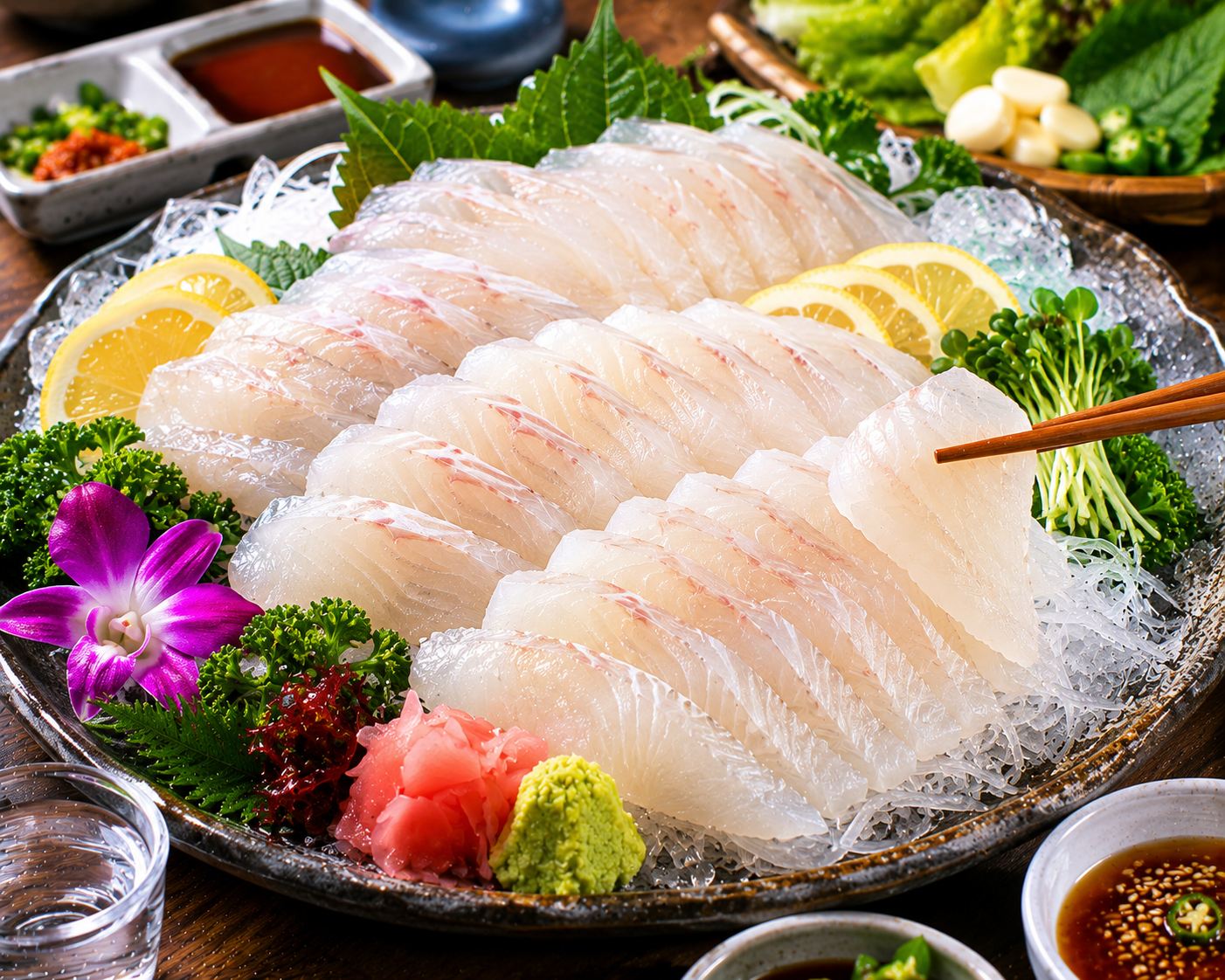
Flounder Sashimi
광어회 · gwang-eo-hoe
Thinly sliced flounder, freshly prepared, with a chewy and bouncy texture and a subtle sweetness. It is often dipped in chogochujang (vinegared chili paste) or soy sauce with wasabi, and eaten wrapped in lettuce or perilla leaf with garlic and ssamjang (Korean dipping sauce).
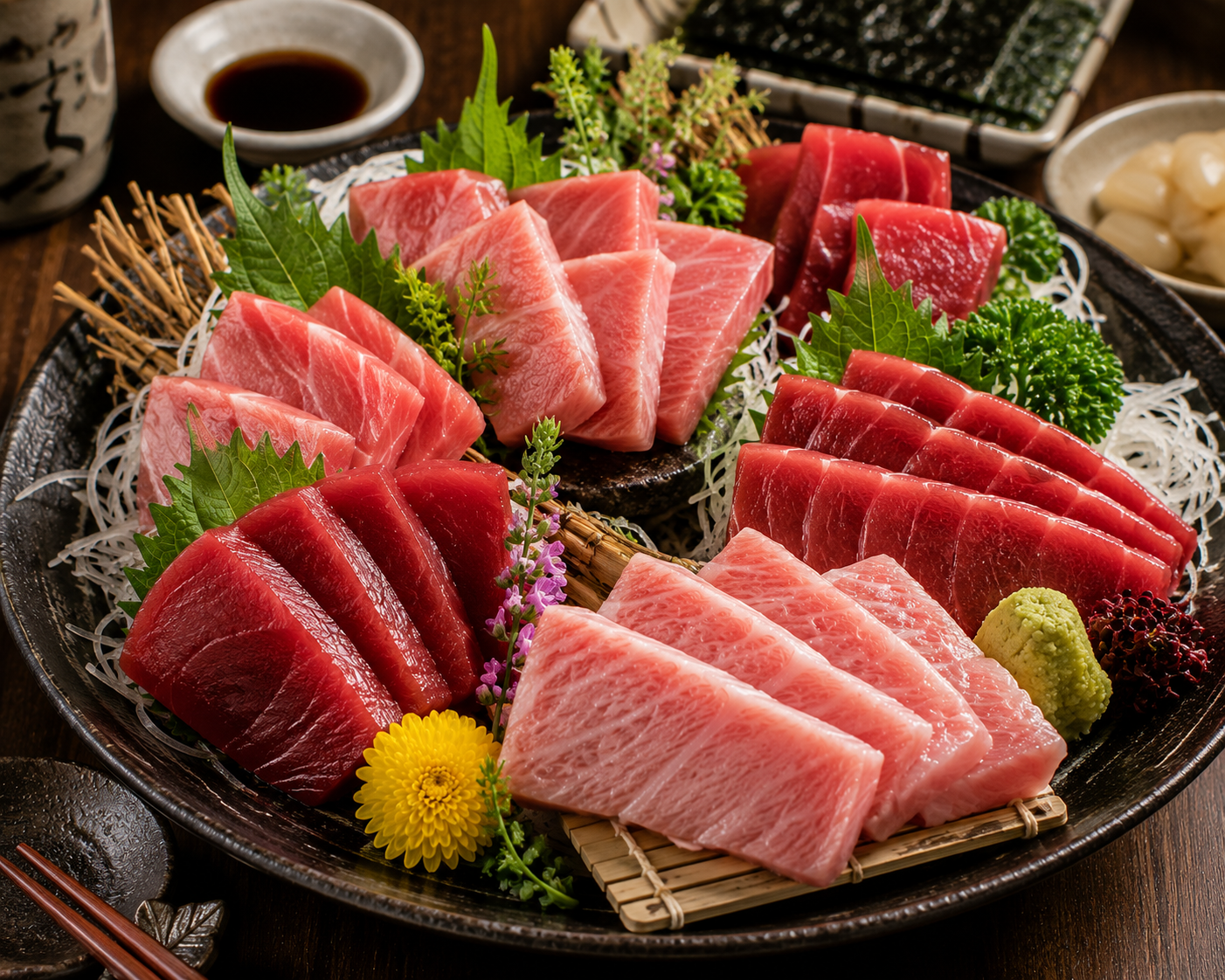
Tuna Sashimi
참치회 · chamchi-hoe
Fresh tuna served in thin slices, characterized by its tender and rich flavor. It is often dipped in chogochujang (vinegared chili paste) or soy sauce with wasabi and can be wrapped in lettuce or perilla leaves.
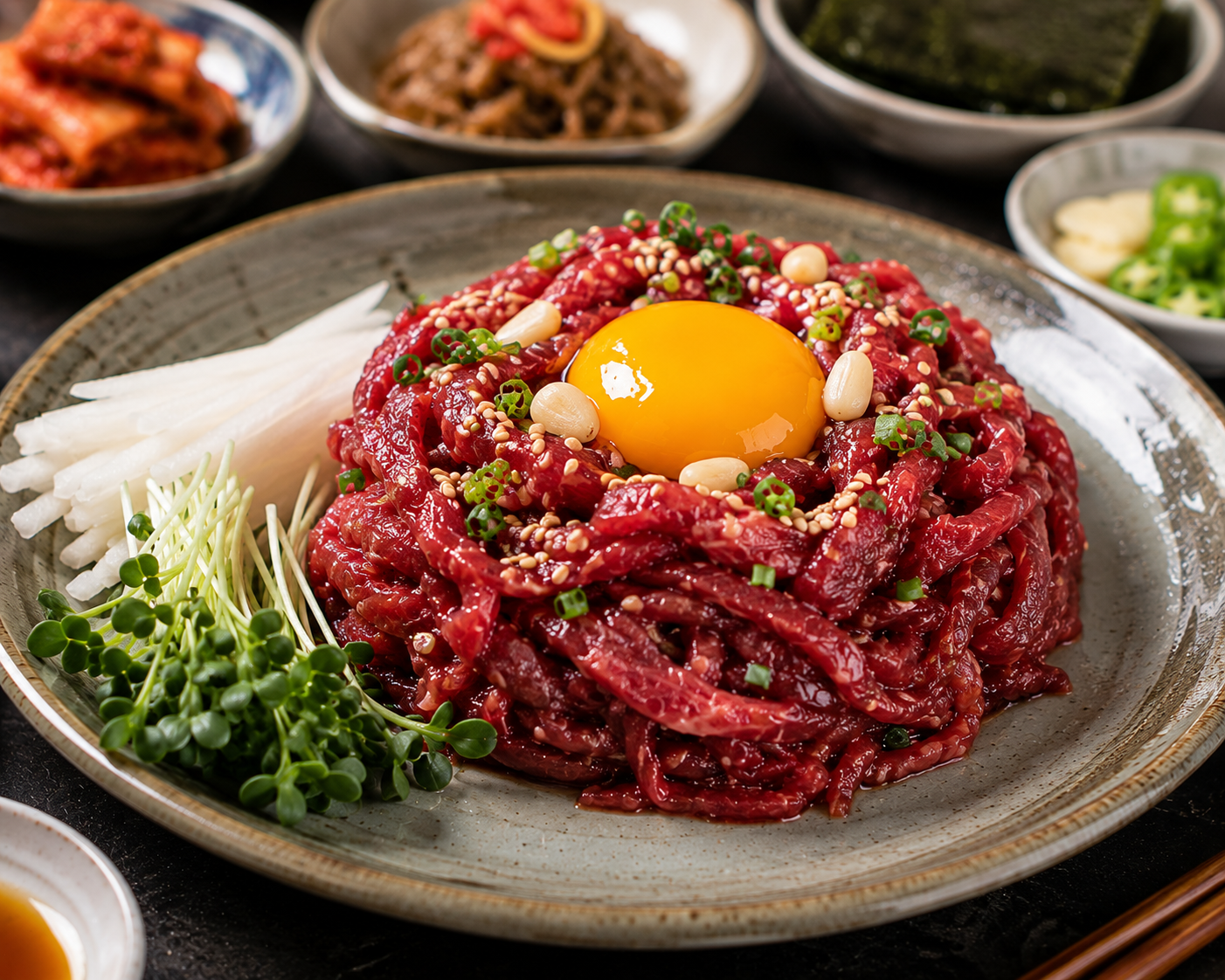
Yukhoe
육회 · yukhoe
A Korean raw beef dish made by slicing fresh beef thinly and seasoning it with soy sauce, sesame oil, garlic, and other ingredients. It is characterized by its chewy texture and savory taste, often served with pear.
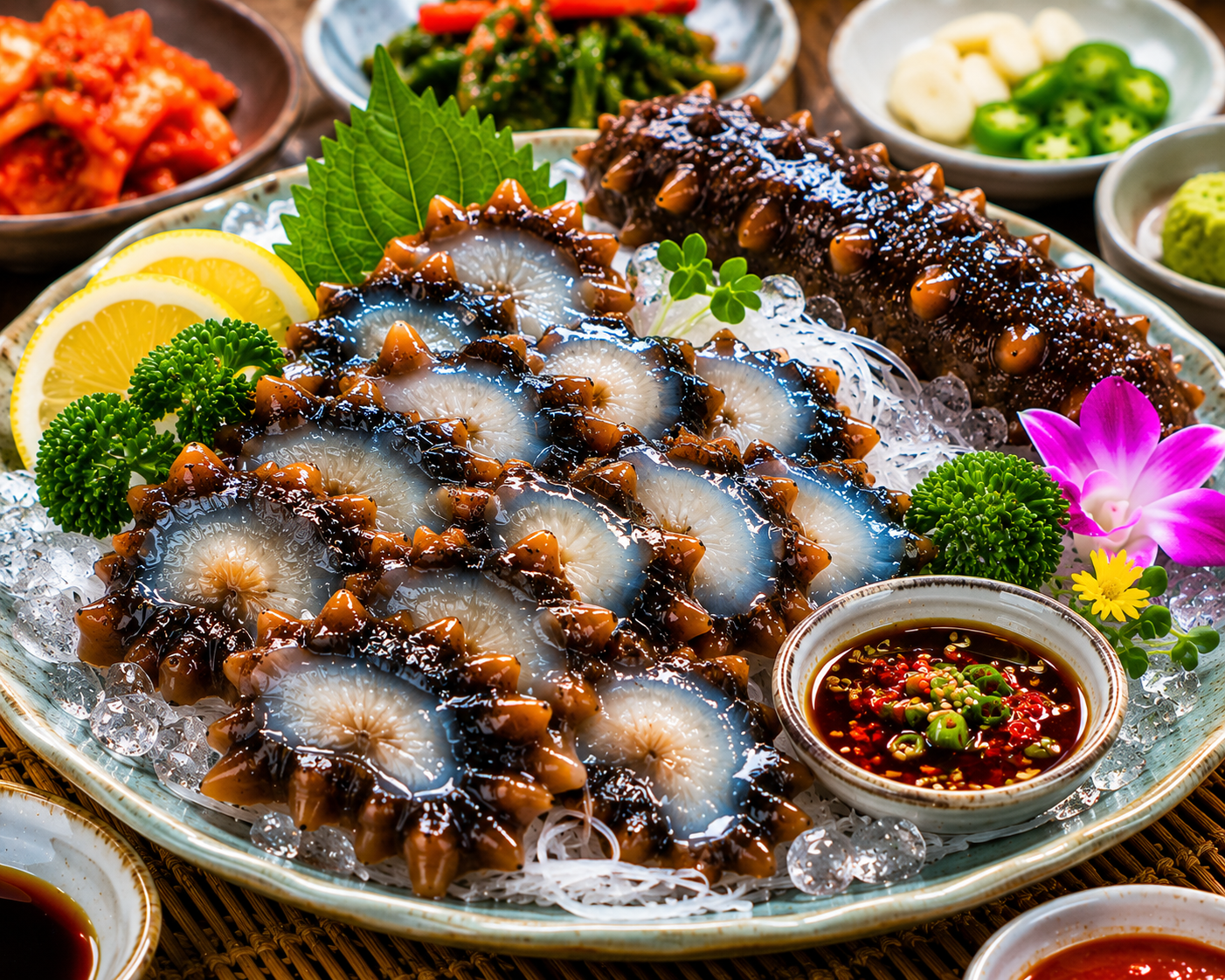
Sea Cucumber
해삼 · hae-sam
Sea cucumber is a fresh seafood dish, usually served thinly sliced and dipped in a sauce called chojang. It features a chewy and bouncy texture, with freshness being key.
Ingredients
How it's made
- 1Prepare fresh fish and slice it thinly.
- 2Prepare cho-gochujang and soy sauce.
- 3Wash and prepare lettuce and perilla leaves.
Nutrition
* Estimated values per serving.
Allergens
Contains fish, not suitable for vegetarians.
How to order
회 주세요
Hoe ju-se-yo
Please give me sashimi
Customize your order
Traveler tips
How to eat it
Frequently asked questions
- How is Korean hoe different from Japanese sashimi?
- Both are sliced raw fish, but Korean hoe is especially known for the chewy texture of live fish and for being eaten with chogochujang, a vinegared Gochujang sauce, and leafy wraps. Japanese-style sashimi often places more emphasis on the umami of the fish itself and its pairing with Soy Sauce and wasabi.
- Why do people eat Spicy Fish Soup after hoe?
- After the fish is sliced for hoe, the remaining bones and head are not thrown away but boiled into a spicy broth. It also gives the meal the feeling of ending with something warm after eating cold hoe, making it a familiar sequence at Korean hoe restaurants.
- If I choose a fish from the tank, is it automatically better?
- Fish tanks are part of the live-fish hoe culture, but flavor depends on the condition of the fish and how it is prepared and stored. Some people find certain fish tastier after a short aging period than when they are served immediately after being killed.
Last reviewed: 2026-10-07