
Cultural background
This dish is primarily enjoyed during evening gatherings with soju, and is also sought after as a delicacy during seaside travels.
Origin & history
Blanched Octopus is not raw; it is blanched seafood. Sukhoe uses suk, meaning “cooked,” and refers to hoe in which ingredients are lightly cooked, chilled, and sliced for serving.
In areas along the East and South Coasts, octopus was regarded as a prized seafood served at banquets or on ancestral ritual tables. A custom still remains of boiling a large octopus whole, preserving its shape, and serving it to guests. One story says the syllable mun in its name symbolized learning and success in official life.
Regional & modern variations
- Pi-muneo Blanched Octopus — Sukhoe made with the large octopus often seen on the East Coast. The flesh is thick with a substantial chew, so it is often served in thin slices.
- Dolmuneo Blanched Octopus — Made by blanching the smaller octopus commonly seen on the South Coast and Jeju. Its texture is relatively firm and springy.
- Muneo-chohoe — A style in which blanched octopus is mixed with chojang, a vinegared red chili paste sauce, or a vinegar-based seasoning and eaten cold. It tastes more tangy than sukhoe.
How Koreans eat it
Blanched Octopus is usually shared from one plate by several people. At markets or near ports, you may choose a pre-boiled octopus by weight and have it sliced for you. A large octopus has tentacles of varying thickness, so even on a single plate, the texture can differ from one part to another.
Taste & how to choose
Good Blanched Octopus has reddish-purple skin and white flesh inside. Rather than simply being tough, it releases sweetness and a scent of the sea as you chew. First-timers may find the bumpy feel of the suckers unfamiliar. Pieces sliced too thick take a long time to chew, so thin slices are easier to eat.
Similar dishes
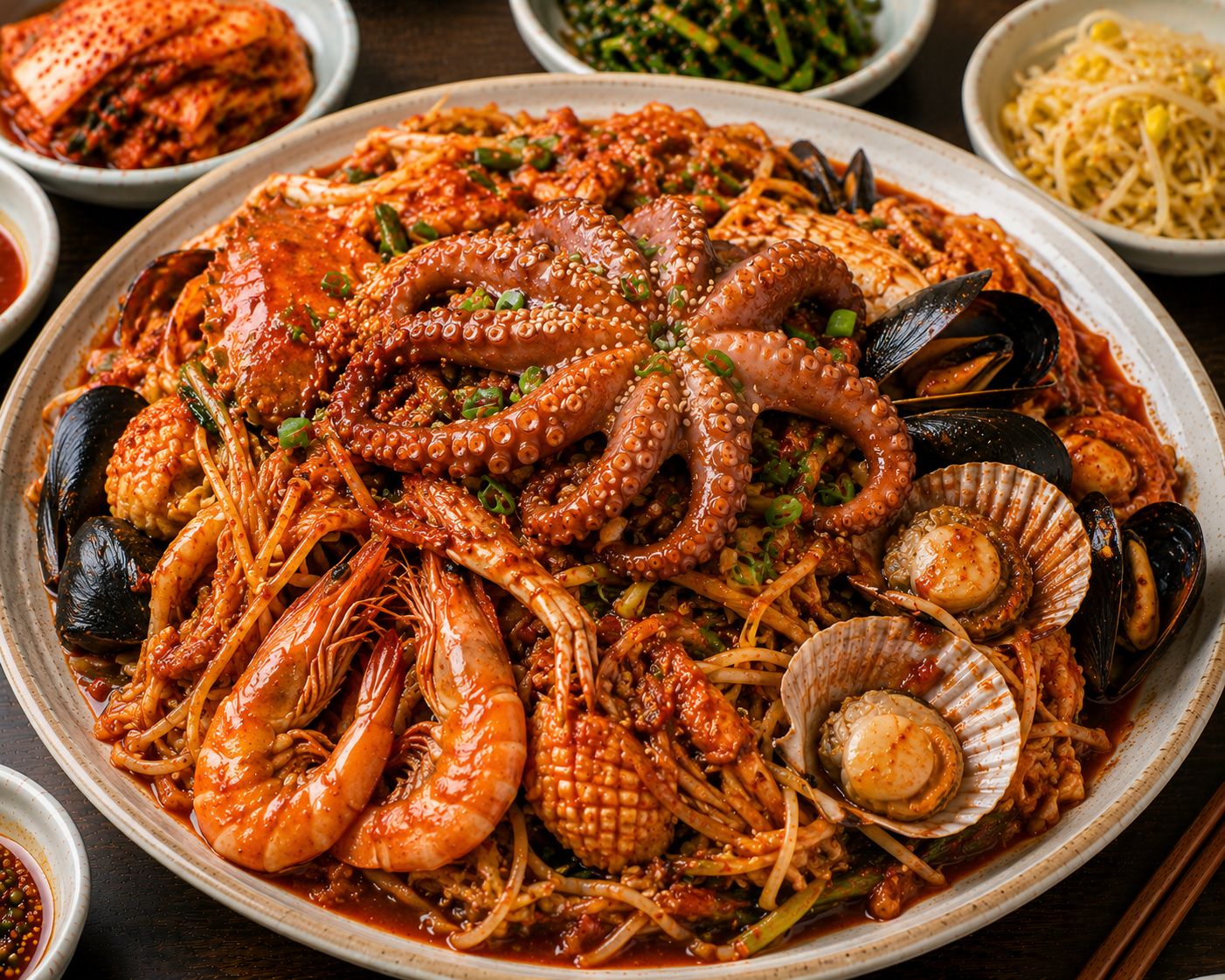
Spicy Braised Seafood
해물찜 · hae-mul-jjim
A spicy and tender dish made by steaming various seafood in gochujang sauce, typically served in a shared plate to be enjoyed by many.
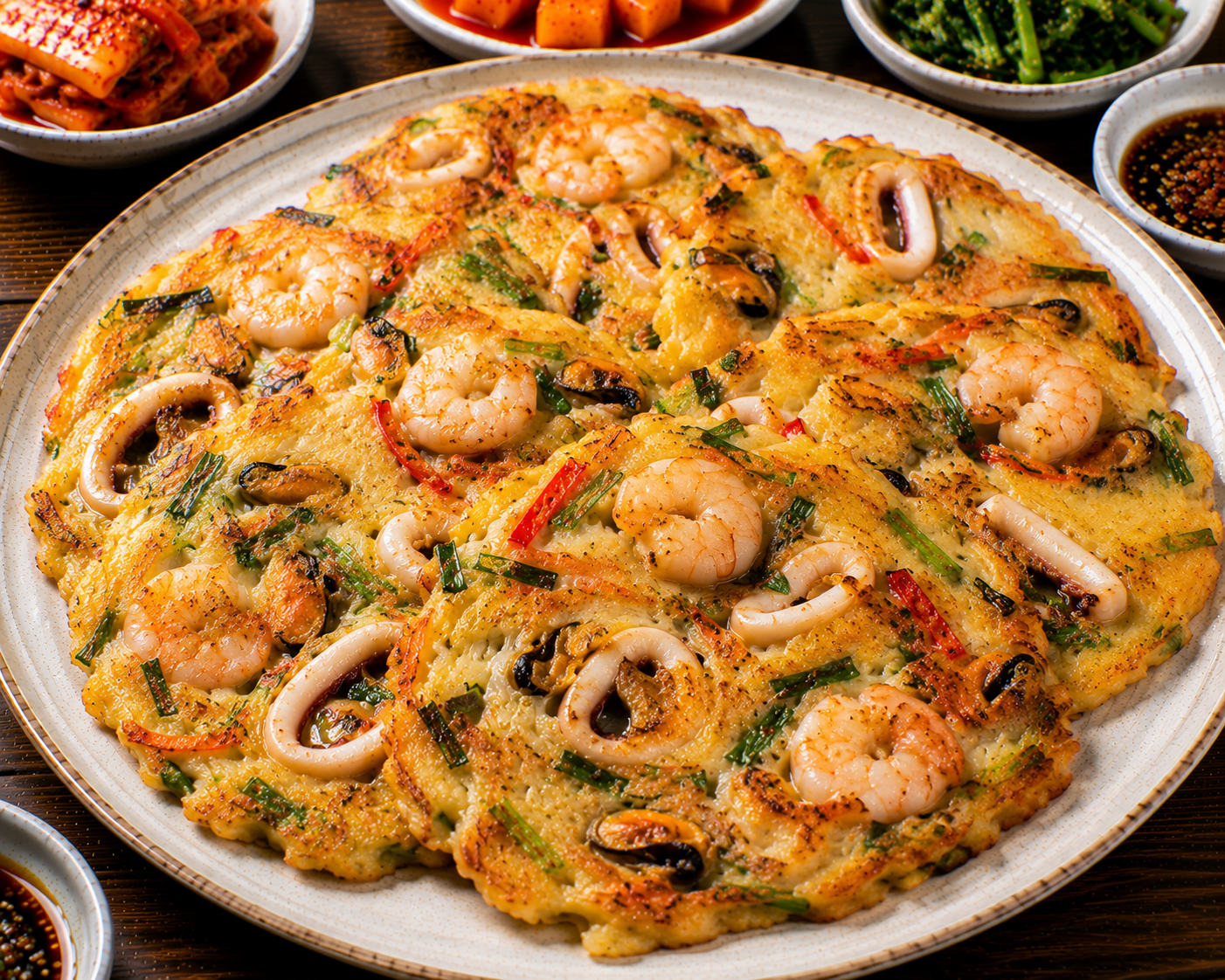
Seafood Pancake
해물전 · hae-mul-jeon
A pancake made with squid, shrimp, and other seafood, coated in flour and egg, and pan-fried until golden. Crispy on the outside and moist on the inside, it tastes even better when dipped in vinegared soy sauce.
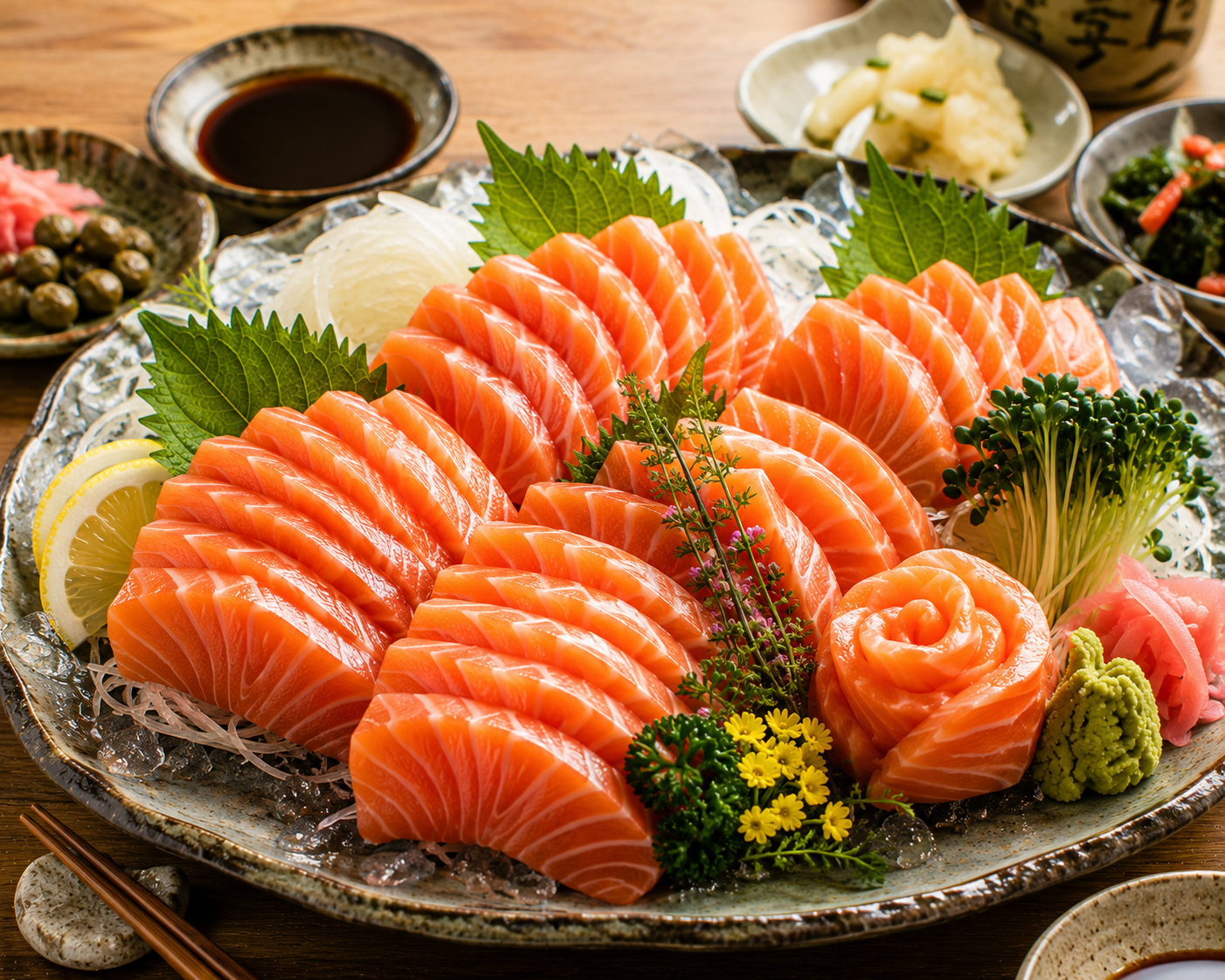
Salmon Sashimi
연어회 · yeon-eo-hoe
Thinly sliced fresh salmon, characterized by its soft and fatty texture. It is enjoyed by dipping in chogochujang (vinegared chili paste) or soy sauce mixed with wasabi, and can also be wrapped in lettuce or perilla leaves.
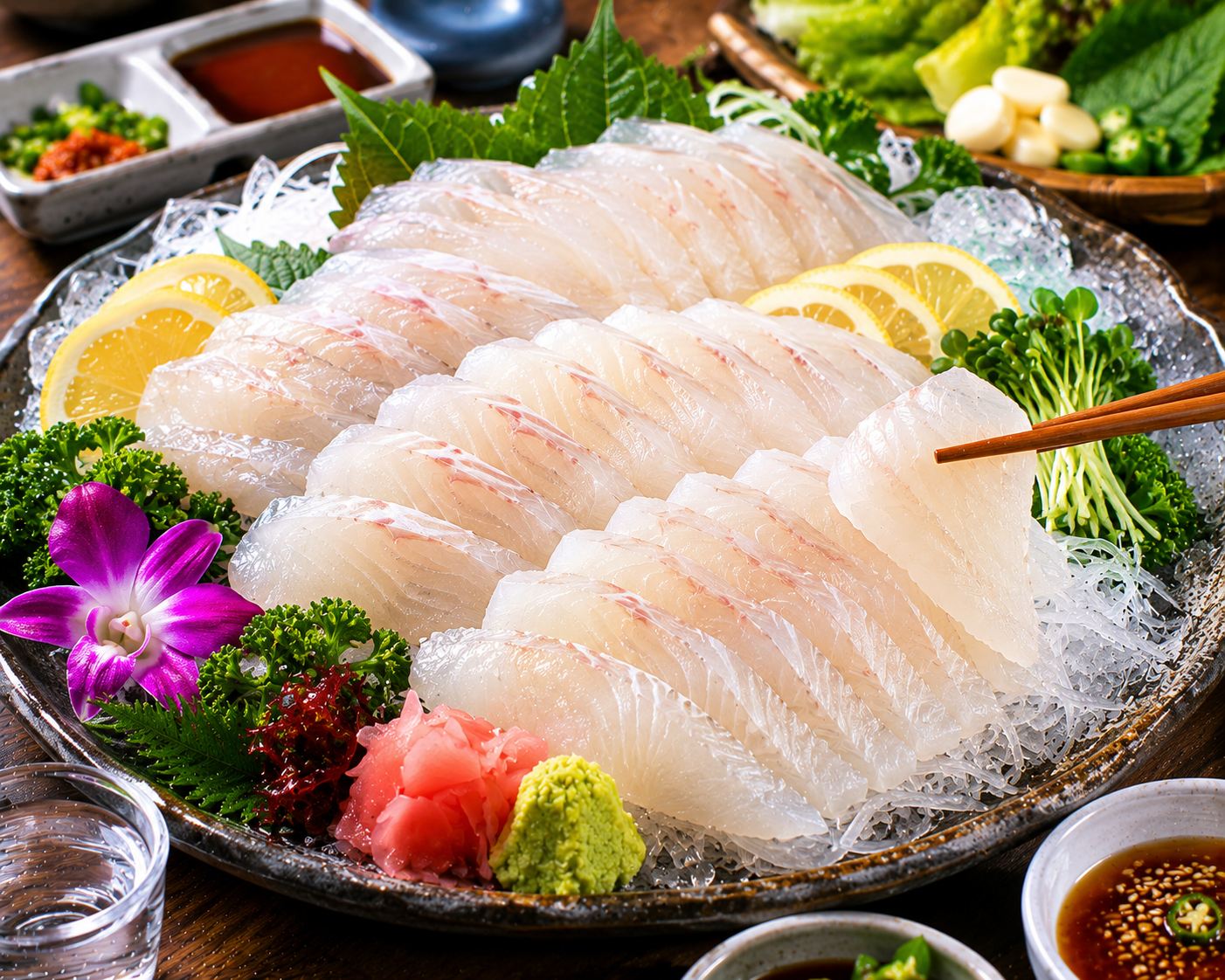
Flounder Sashimi
광어회 · gwang-eo-hoe
Thinly sliced flounder, freshly prepared, with a chewy and bouncy texture and a subtle sweetness. It is often dipped in chogochujang (vinegared chili paste) or soy sauce with wasabi, and eaten wrapped in lettuce or perilla leaf with garlic and ssamjang (Korean dipping sauce).
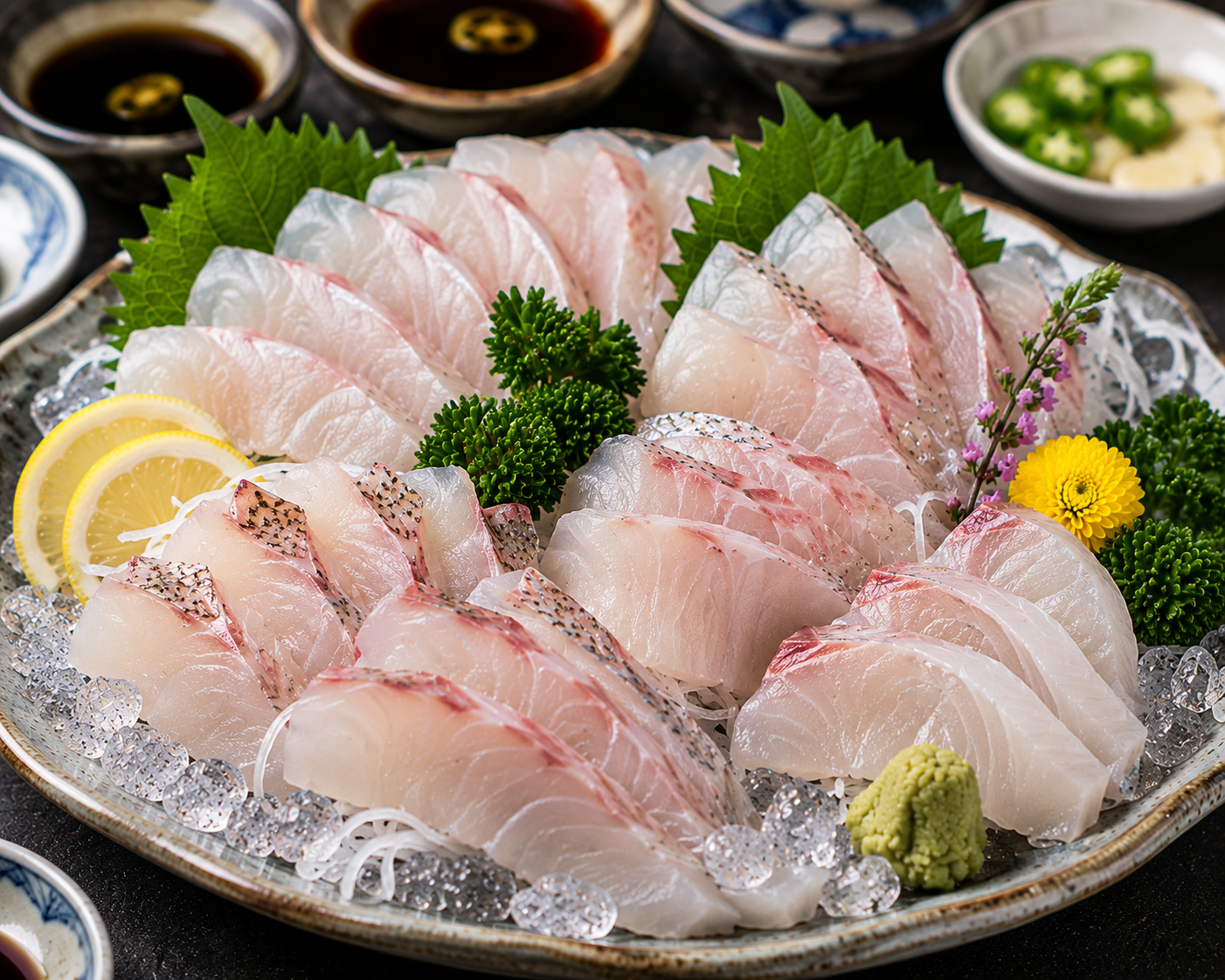
Sea Bass Sashimi
농어회 · nong-eo-hoe
This dish features fresh sea bass served as sashimi, characterized by its chewy and firm texture and light flavor. It is typically enjoyed dipped in a mixture of chogochujang (vinegared chili paste) or soy sauce with wasabi, and can also be wrapped in lettuce or perilla leaves. Freshness is key, as the taste varies depending on the season.
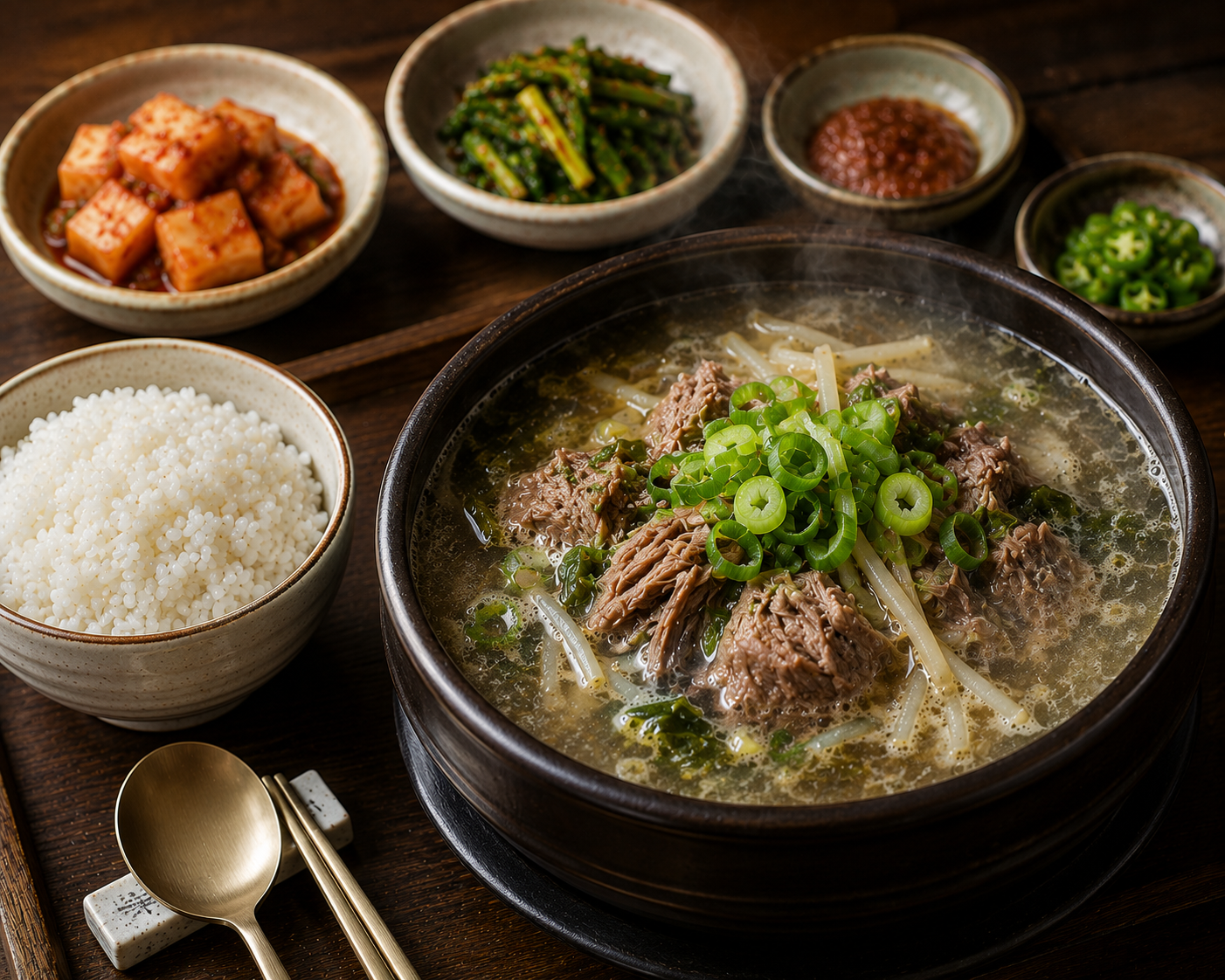
Haejang-guk
해장국 · hae-jang-guk
A soup dish made by boiling beef bones and brisket with ingredients such as bean sprouts and greens for a spicy flavor, this dish is great for easing hangovers.
Ingredients
How it's made
- 1Rub the octopus with salt, wash it, and clean it thoroughly.
- 2Add vinegar to boiling water, put in the octopus, and boil it thoroughly for 20 to 30 minutes.
- 3Let the boiled octopus cool slightly, then slice it diagonally and arrange it on a plate.
Nutrition
* Estimated values per serving.
Allergens
A seafood dish that is gluten-free.
How to order
문어숙회 주세요
Mun-eo-suk-hoe ju-se-yo
Octopus Sashimi please
Customize your order
Traveler tips
How to eat it
Frequently asked questions
- Why is it called “Blanched Octopus” if it comes out cooked?
- In Korean, hoe does not necessarily mean something raw. Blanched Octopus is closer to “cooked hoe,” blanched and then cooled.
- Do people eat the head of the octopus too?
- Yes, it is edible. In restaurants, however, the tentacles are often the main part served, while the head may be sliced separately or used in other dishes.
- Should I remove the suckers before eating it?
- No need to remove them; they are eaten as they are. The bumpy texture of the suckers is one of the defining features of Blanched Octopus.
Last reviewed: 2026-10-07