Cultural background
In Korea, this is a popular food sought after the day after drinking alcohol. It's usually consumed in the morning or at lunch, warming the stomach with its hot broth.
Origin & history
Haejang-guk literally means “soup for clearing away the effects of alcohol.” Stories say it was once called names such as ‘술국’ (sulguk, “liquor soup”) or ‘해정국’ (haejeong-guk, “soup for relieving intoxication”), and the dish is tied to the habit of soothing the stomach with a warm soup at daybreak.
Today, Haejang-guk is less one fixed dish than a broad name for various gukbap-style meals eaten as a single bowl, usually made with a rich meat broth and vegetables. Depending on the region and restaurant, the main ingredient may be seonji, Bean Sprouts, ugeoji, or bone-in meat.
Regional & modern variations
- Seonji Haejang-guk — A type of Haejang-guk made with seonji, coagulated ox or pork blood, and ugeoji. Seonji has a texture somewhere between soft tofu and jelly, so first-time eaters may be surprised.
- Bean Sprout Haejang-guk — Made with plenty of Bean Sprouts, giving the broth a clearer, more refreshing character. Styles served with egg or gim, as in Jeonju-style Bean Sprout Gukbap, are also widely known.
- Bone Haejang-guk — A single-serving soup dish simmered with pork backbone. Although the name includes Haejang-guk, it is easiest to think of it as Gamjatang served in a portion suited to one person.
How Koreans eat it
Many Haejang-guk restaurants open early in the morning, and some stay open until late at night. People go not only the day after drinking, but also after finishing work before dawn or when they need a quick meal while on the move. It usually comes in one large ttukbaegi, an earthenware bowl, with each person ordering their own bowl rather than sharing.
Taste & how to choose
Good Haejang-guk has a deep broth without much gaminess, and the ugeoji is cooked so it is not tough. Bean Sprouts should keep some crunch so the broth does not feel heavy. Even when gochugaru, Korean red pepper powder, is added, the dish is not all about heat; it also has the nutty richness of bone broth and the clean, refreshing taste of vegetables.
Similar dishes
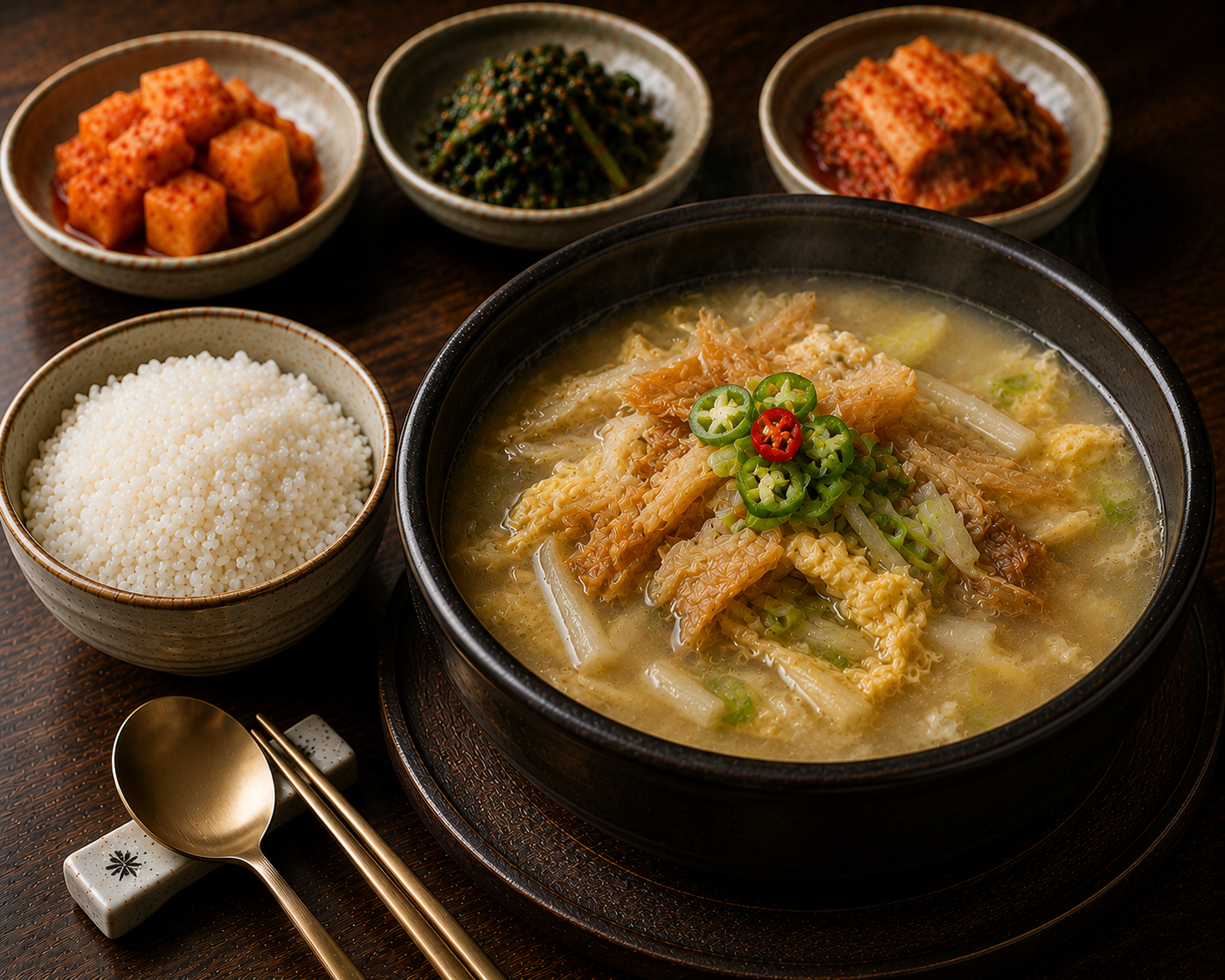
Hwangtae Haejang-guk
황태해장국 · hwangtae-haejangguk
A clear and refreshing soup made by boiling hwangtae with radish, tofu, and green onion, served as a hangover remedy.
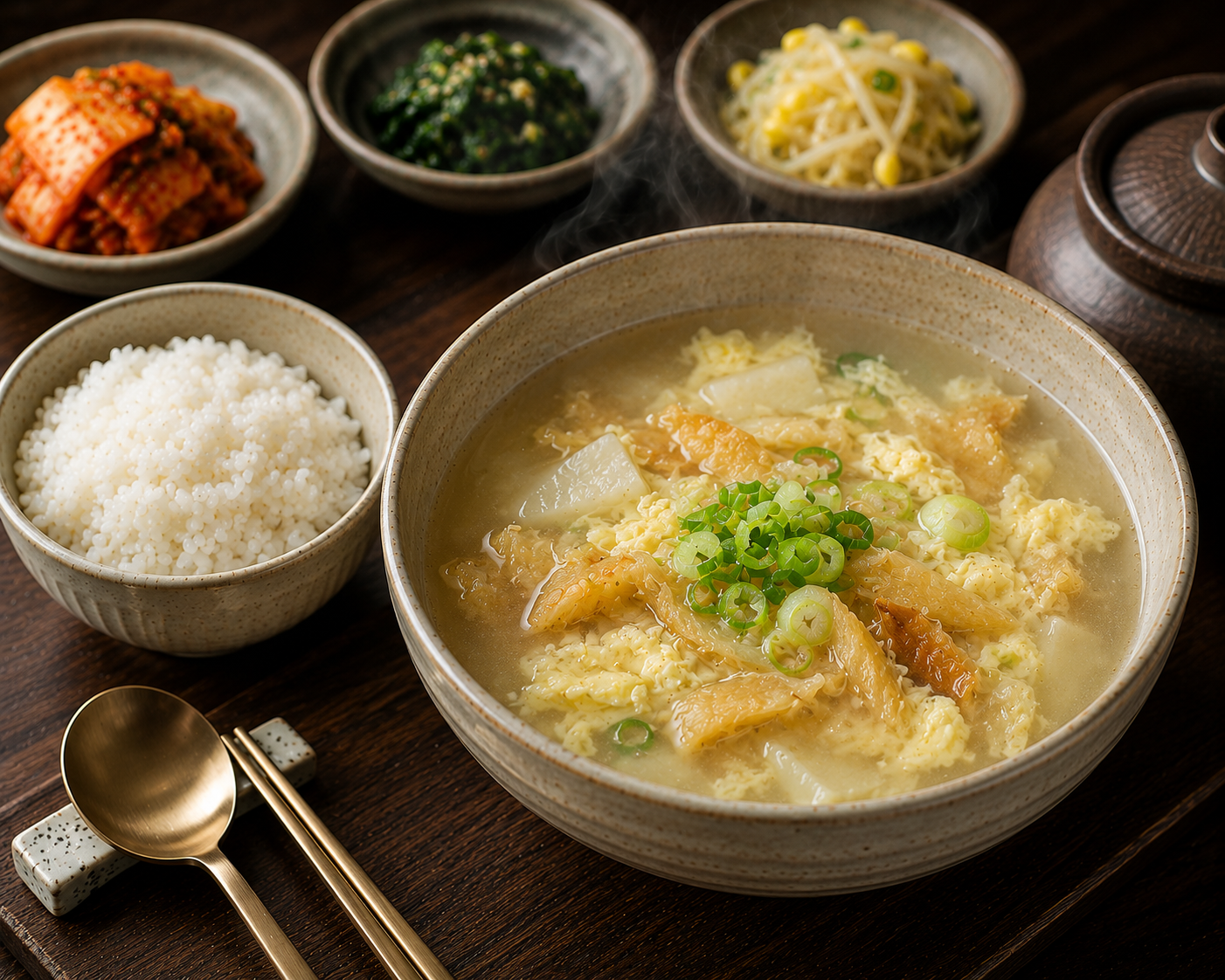
Dried Pollack Soup
북엇국 · bu-geot-guk
A soup dish made by soaking dried pollack in water and boiling it for a clear broth. It is characterized by the mild flavor and soft texture of the pollack and is commonly enjoyed for breakfast or as a hangover cure.
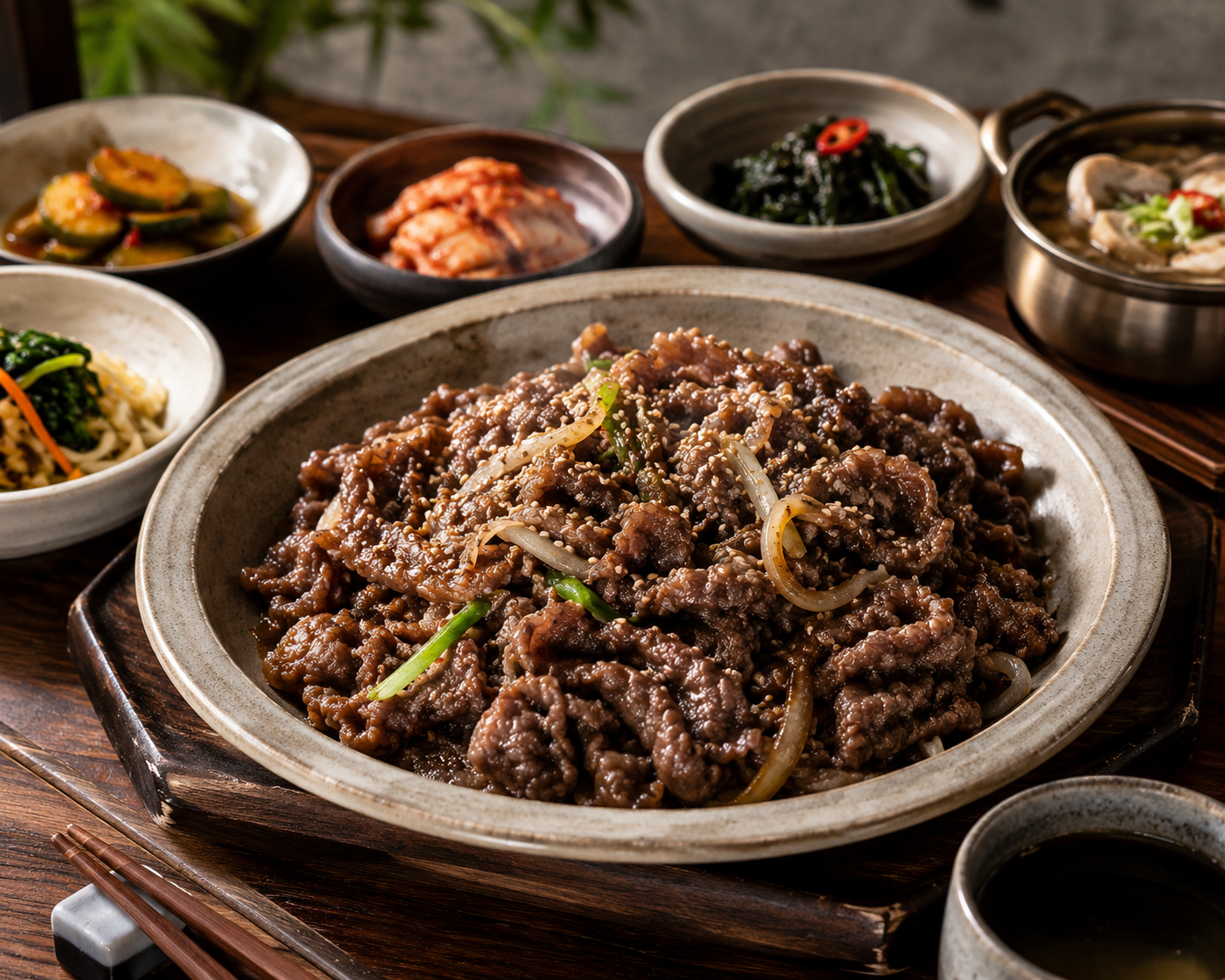
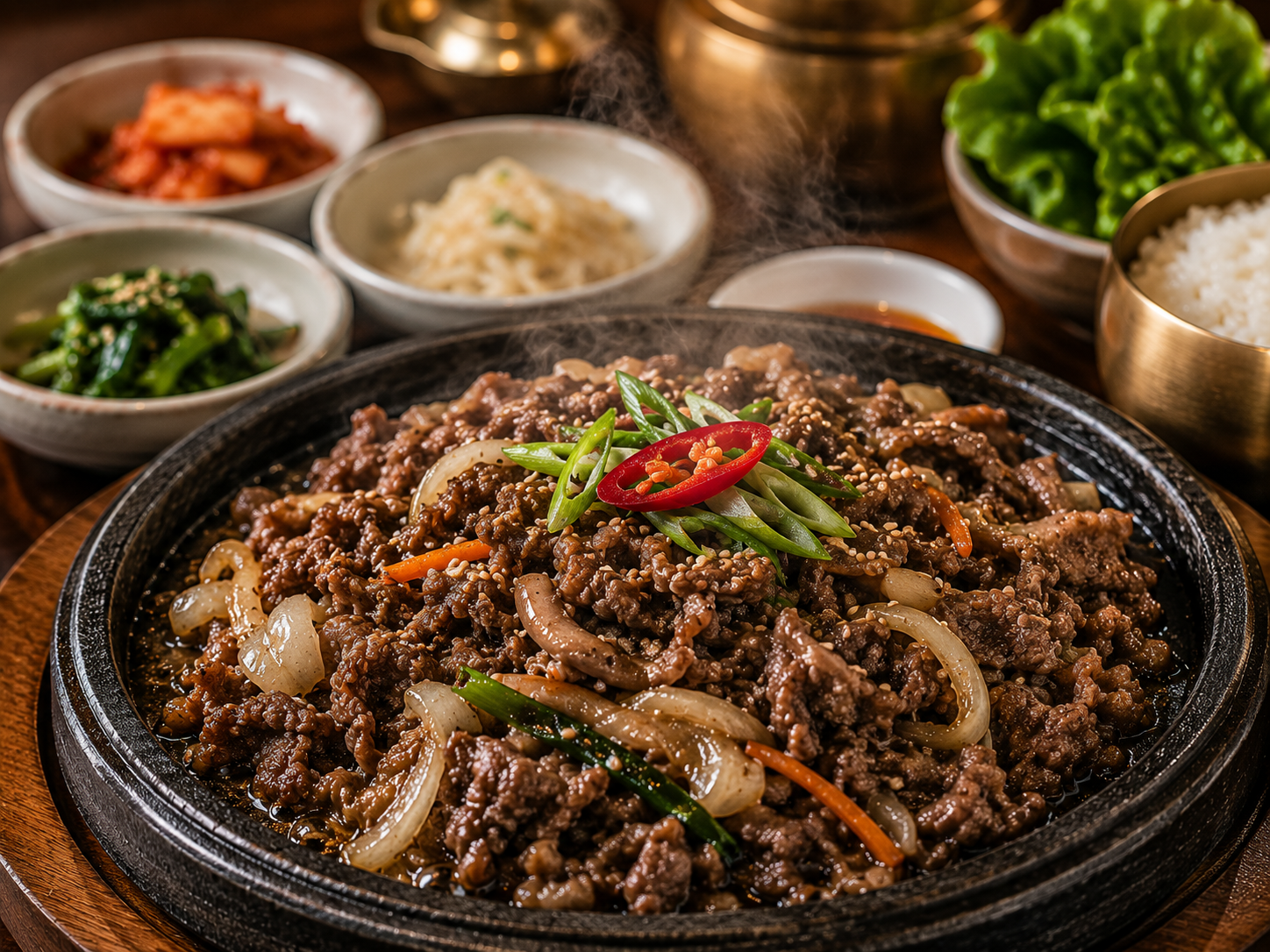
Bulgogi
불고기 · bulgogi
A traditional Korean dish made by seasoning thinly sliced beef with soy sauce, sugar, garlic, and more, then grilling it on a metal plate. It is characterized by a sweet and savory flavor and is usually eaten wrapped in leafy vegetables.
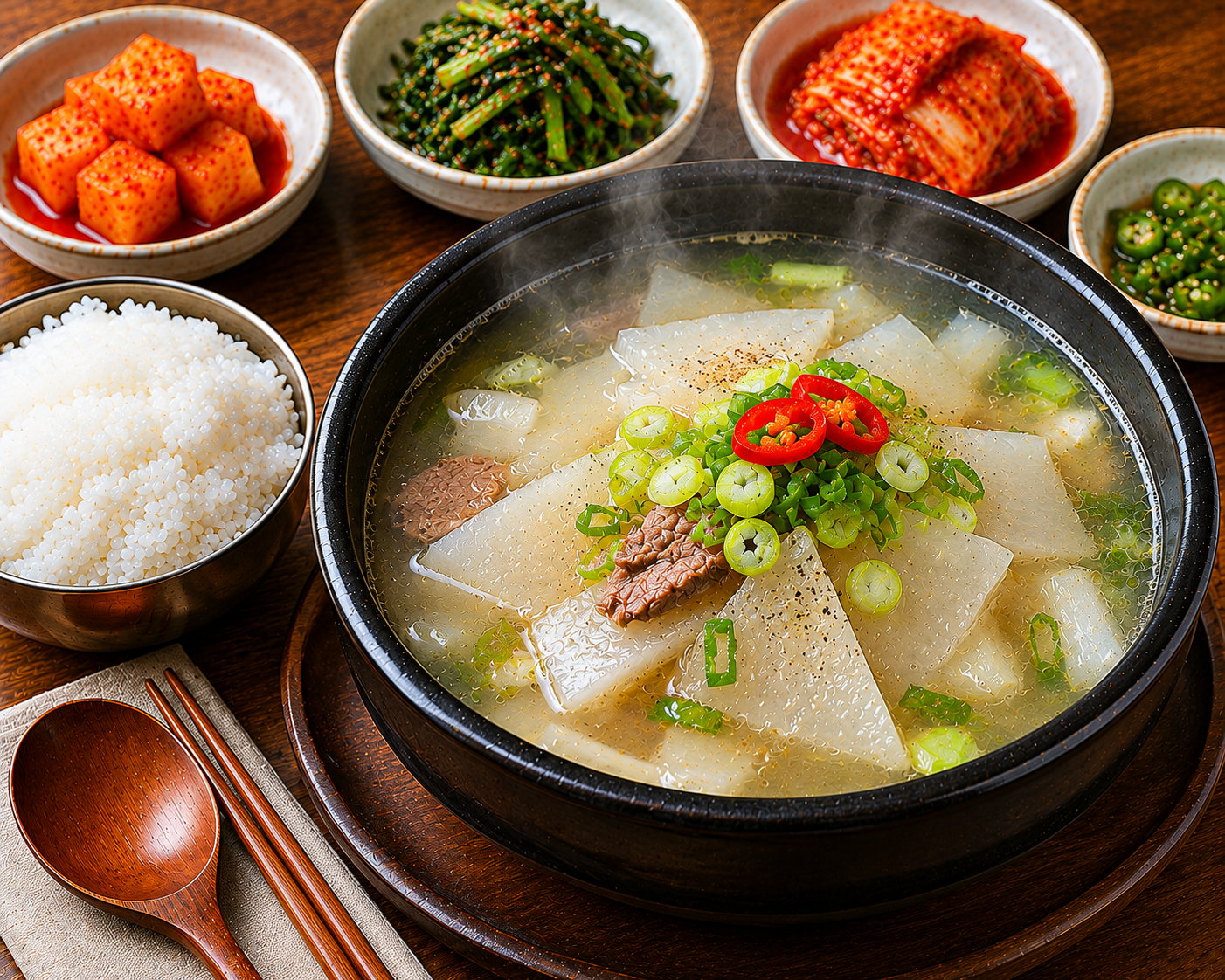
Radish Soup
무국 · mu-guk
A clear soup dish made with radish and beef, characterized by a light and refreshing taste. It is usually enjoyed with rice, and salt or soy sauce can be added at the table to adjust the seasoning.
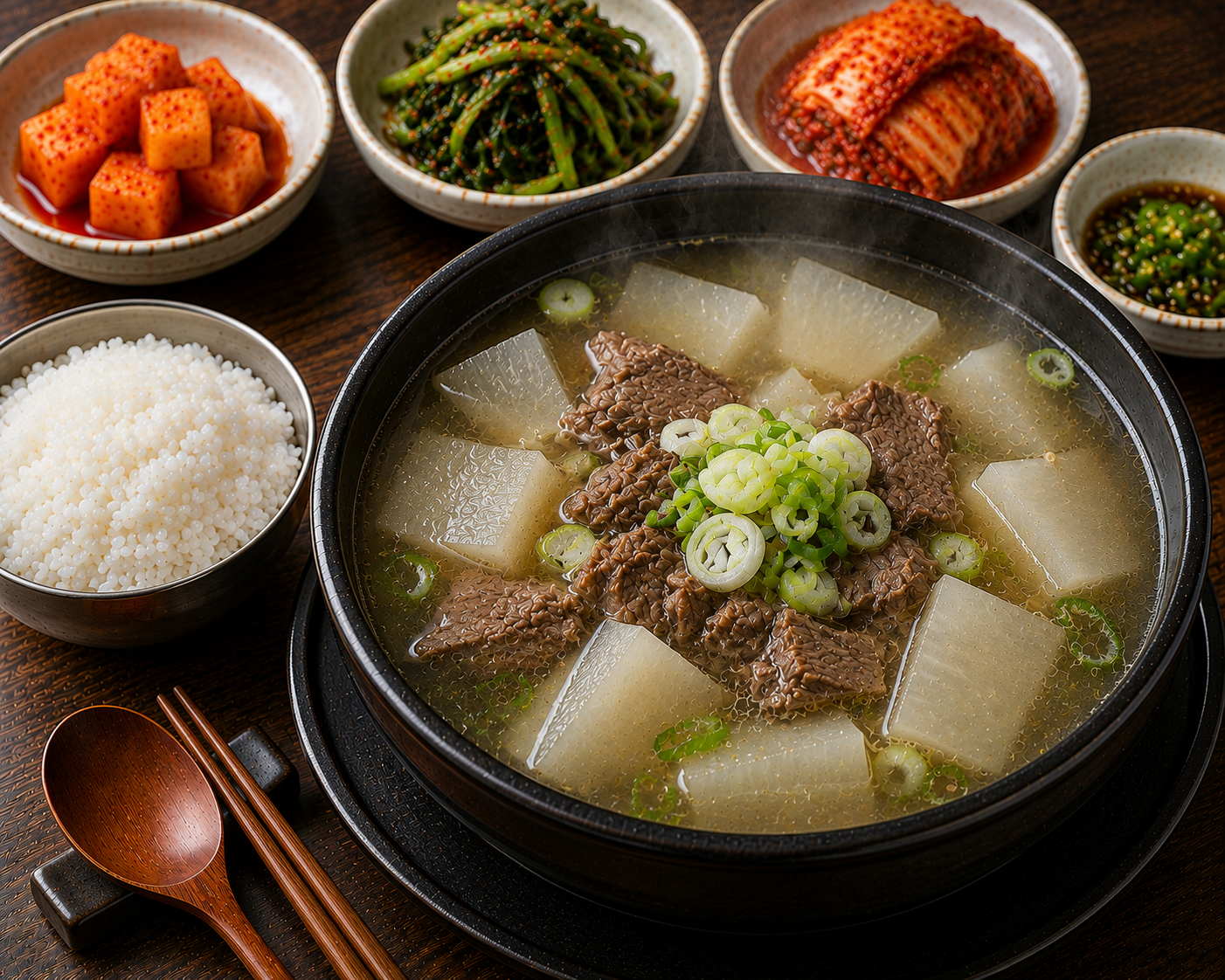
Beef Mu-guk
소고기뭇국 · so-go-gi-mut-guk
A traditional Korean soup dish made by boiling beef and radish in a clear broth. It features a light and refreshing taste, and is enjoyed with rice.
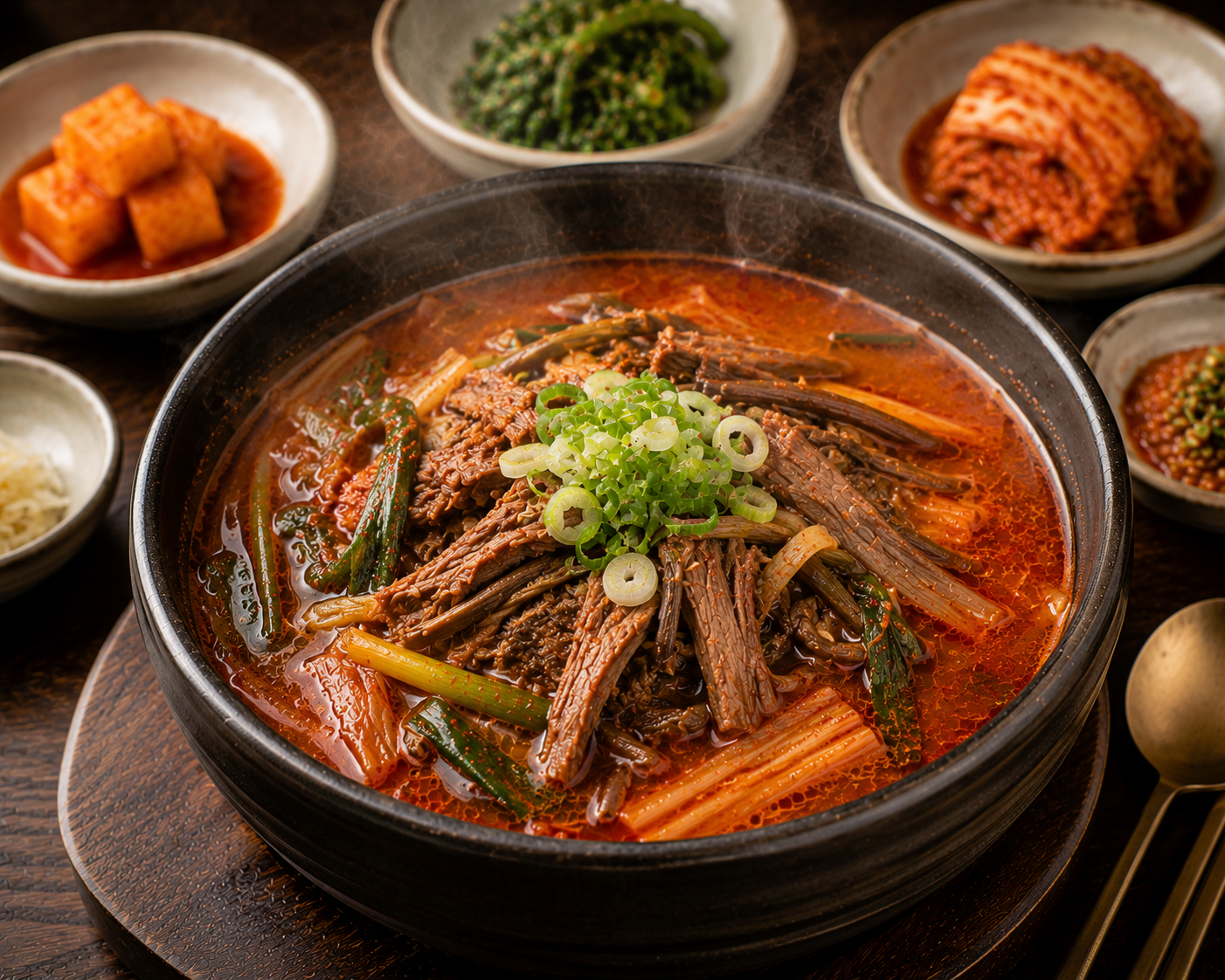
Yukgaejang
육개장 · yuk-gae-jang
A spicy soup dish made with beef, fernbrake, and bean sprouts cooked in hot pepper oil. The broth is rich and spicy, and it tastes even better when eaten with rice.
Goes well with
Ingredients
How it's made
- 1Place beef bones and brisket in water and boil for a long time to extract the broth.
- 2Prepare the bean sprouts and ugeoji (dried napa cabbage leaves).
- 3Add the bean sprouts and ugeoji (dried napa cabbage leaves) to the extracted broth and season with red pepper powder.
- 4Add green onion and bring it to a boil again.
Nutrition
* Estimated values per serving.
Allergens
This dish is not suitable for vegetarian or halal diets as it contains beef.
How to order
해장국 주세요
Hae-jang-guk ju-se-yo
Haejang-guk please
Customize your order
Traveler tips
How to eat it
Frequently asked questions
- Does Haejang-guk always contain seonji?
- No. Seonji Haejang-guk is just one type among many. If seonji is hard for you to eat, ask before ordering, ‘선지 들어가나요?’ (Seonji deureoganayo?, “Does it contain seonji, coagulated blood?”)
- Is Bone Haejang-guk the same dish as this Haejang-guk?
- In a broad sense, it is called Haejang-guk, but Bone Haejang-guk usually uses pork backbone and tastes closer to Gamjatang. Its broth aroma and meat texture differ from ugeoji Haejang-guk made with beef bones and brisket broth.
- Why are Bean Sprouts often added to Haejang-guk?
- Bean Sprouts make the broth taste lighter and more refreshing, and they keep their bite even in hot soup. In Korea, Soybean Sprout Soup and Bean Sprout Haejang-guk have long been regarded as foods that help settle the stomach.
Last reviewed: 2026-10-07