
Cultural background
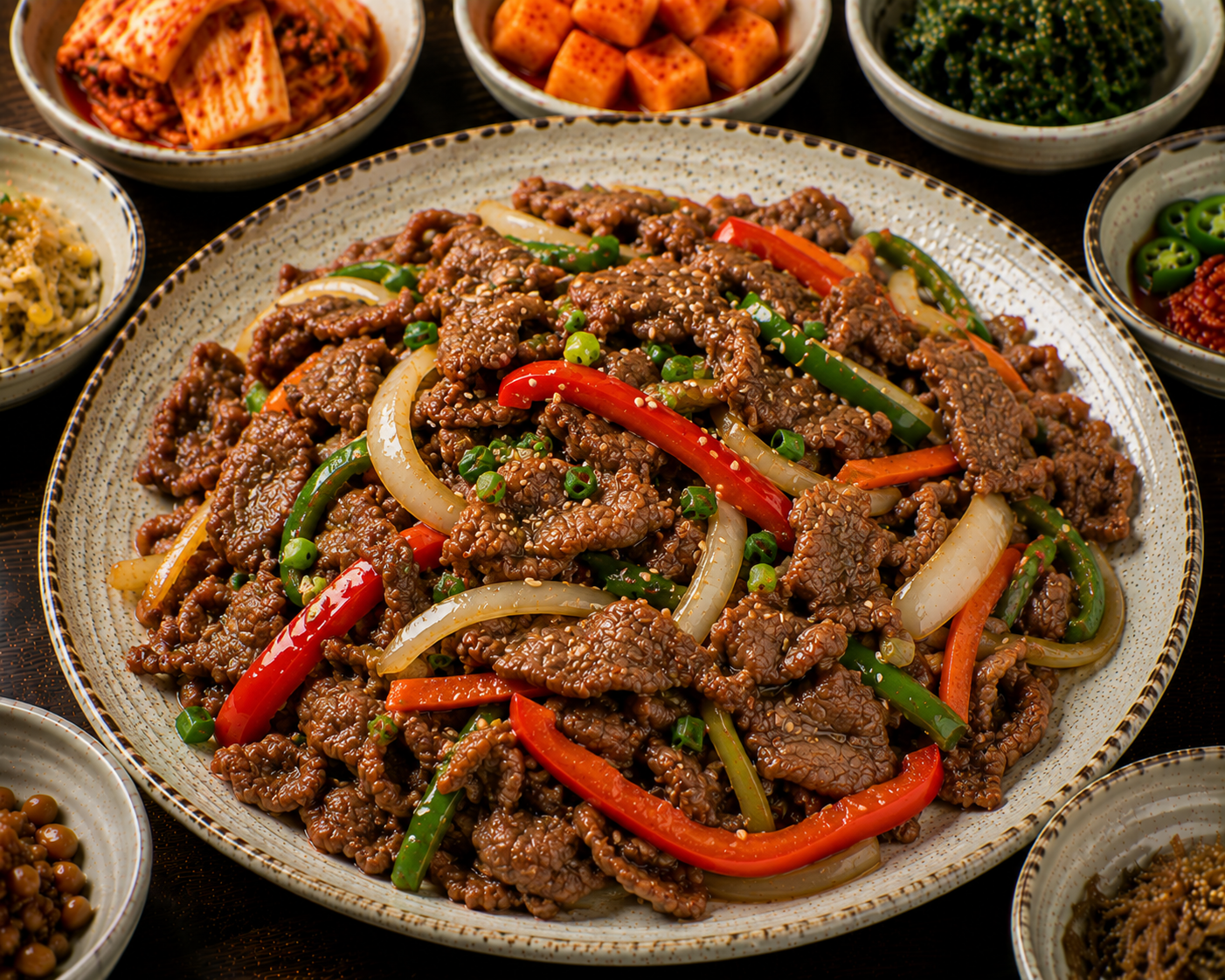
Bulgogi is a representative meat dish in Korea, often enjoyed in gatherings with family or friends. It is common to grill the marinated meat on a metal plate and eat it wrapped in leaves.
Origin & history
Bulgogi is easy to understand as meaning “불에 구운 고기” (bure guun gogi, “meat grilled over fire”), but today’s Bulgogi depends more on its marinade than on simple grilling. The method of letting a Soy Sauce-based marinade soak into thin slices of beef before cooking is seen as part of Korea’s long-standing culture of seasoned meat dishes.
The dish is often linked to “너비아니” (neobiani, “broad, thinly sliced seasoned grilled meat”), known as a dish of the royal court and upper-class households during the Joseon period. Neobiani is made by slicing meat broad and thin, seasoning it, and grilling it. Today, Bulgogi has become firmly established as home cooking, a restaurant staple, and a dish for serving guests.
Regional & modern variations
- Seoul-style Bulgogi — Meat, onions, mushrooms, and dangmyeon are cooked together on a grill plate with a raised center or in a jeongol pan. The meat juices and seasoned broth collect around the edges, making it especially good mixed with rice.
- Gwangyang-style Bulgogi — This style is associated with Gwangyang in Jeonnam. Thin slices of meat are seasoned relatively lightly and grilled quickly over charcoal, so the smoky aroma and the flavor of the meat stand out more than a sweet marinade.
- Eonyang-style Bulgogi — This style is associated with the Eonyang area of Ulsan. The meat is often finely chopped or spread thin, seasoned, and grilled on a grate, giving it a denser chew than standard Bulgogi.
- Ttukbaegi Bulgogi — Bulgogi, broth, vegetables, and dangmyeon are boiled together in a ttukbaegi, a small earthenware pot. Rather than grilled meat, it feels closer to a brothy one-bowl meal.
How Koreans eat it
Bulgogi has very little heat, so it is an easy meat dish to recommend to children or guests trying Korean food for the first time. Some restaurants grill it over charcoal, while many others cook it in a pan with broth. As a result, you may order what you think is a “구이” (gui, “grilled dish”) and have something that looks like jeongol arrive at the table.
Taste & how to choose
The flavor combines the savory saltiness of Soy Sauce, garlic, and sesame oil with sweetness from sugar or pear. Because the meat is thin, it quickly turns tough if cooked too long, and the marinade can burn. Good Bulgogi is not overly sticky with sauce; the meat holds together even when sliced thin, and sweetness is not the only flavor left once it is cooked.
Similar dishes
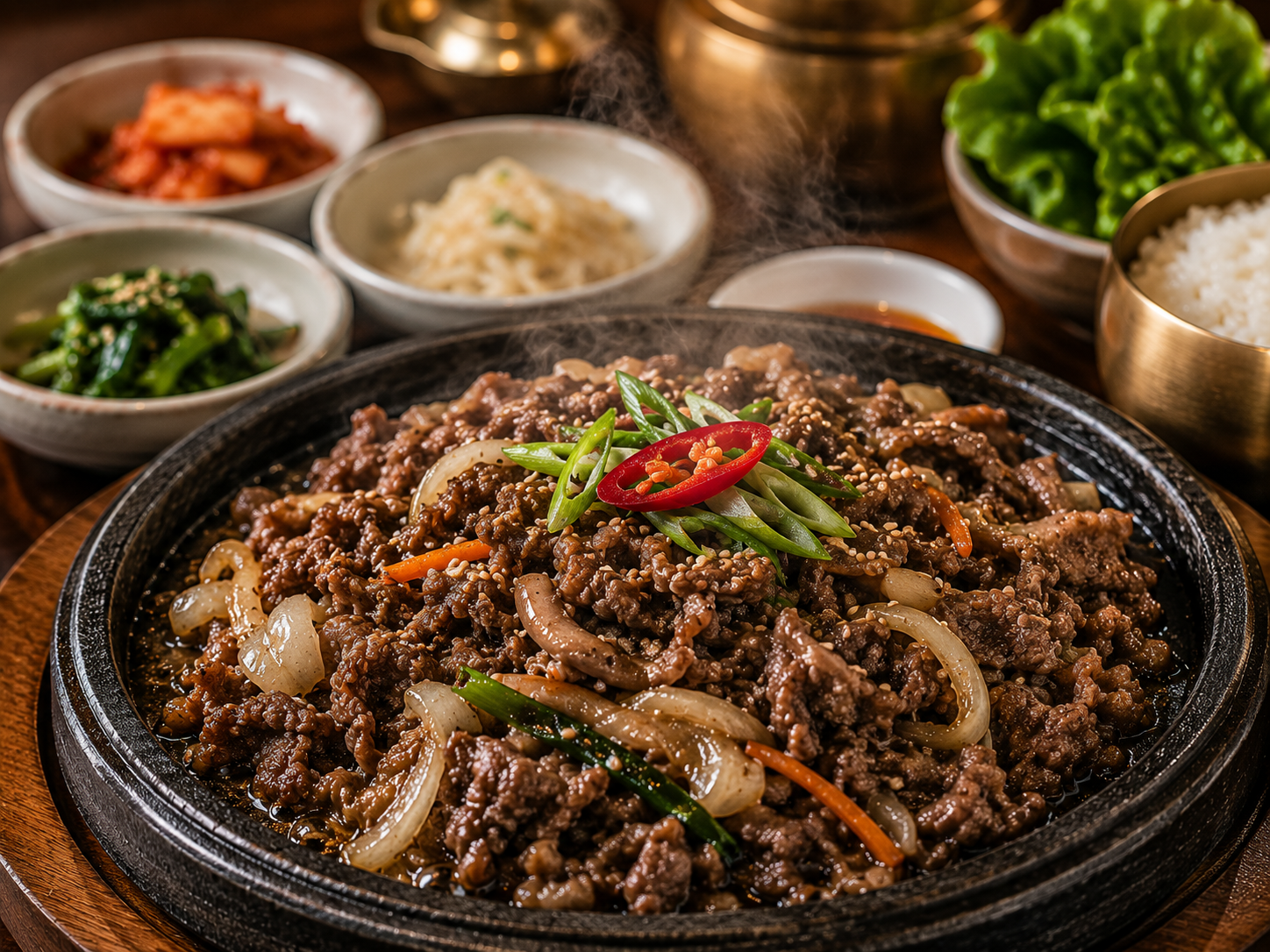
Beef Bulgogi
소불고기 · so-bul-go-gi
A traditional Korean grilled dish made by marinating thinly sliced beef in soy sauce, sugar, garlic, and other ingredients, then grilling it on a hot plate.
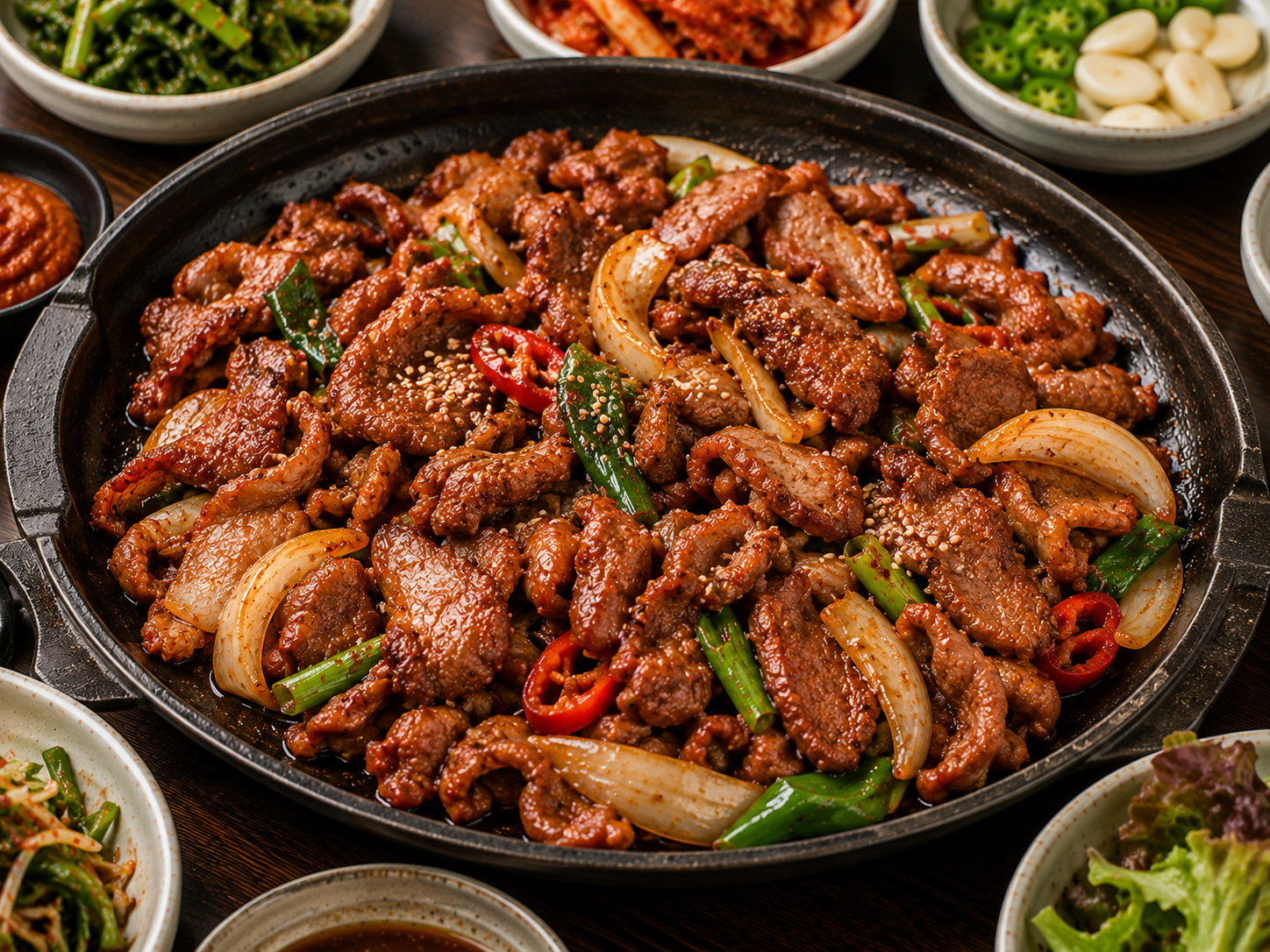
Duck Bulgogi
오리불고기 · ori-bulgogi
A dish where duck meat is marinated in soy sauce and various seasonings, then grilled on a hot plate, resulting in tender, juicy meat.
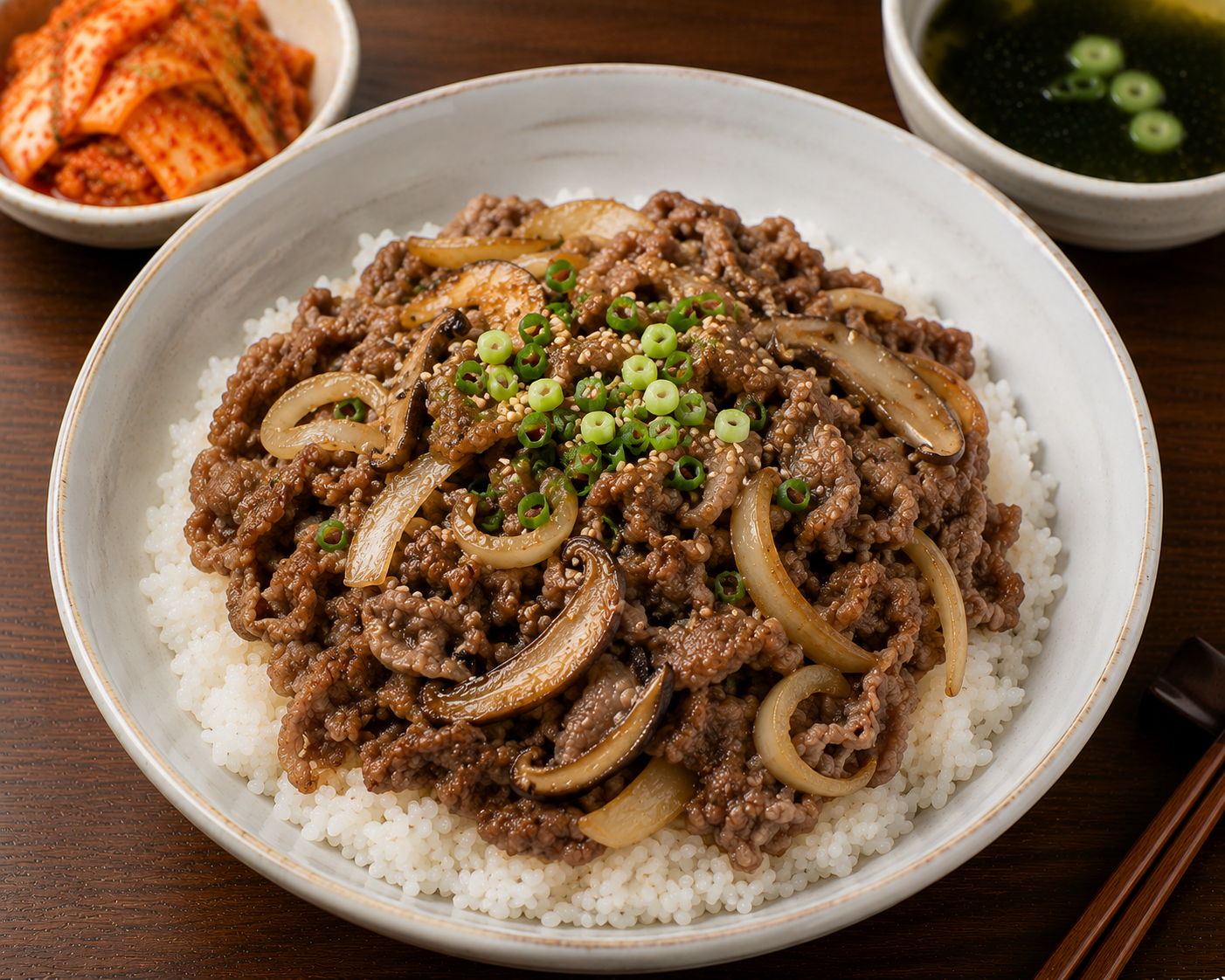
Bulgogi Rice Bowl
불고기덮밥 · bulgogi-deopbap
A Korean-style rice bowl dish topped with stir-fried marinated thinly sliced beef in soy sauce.
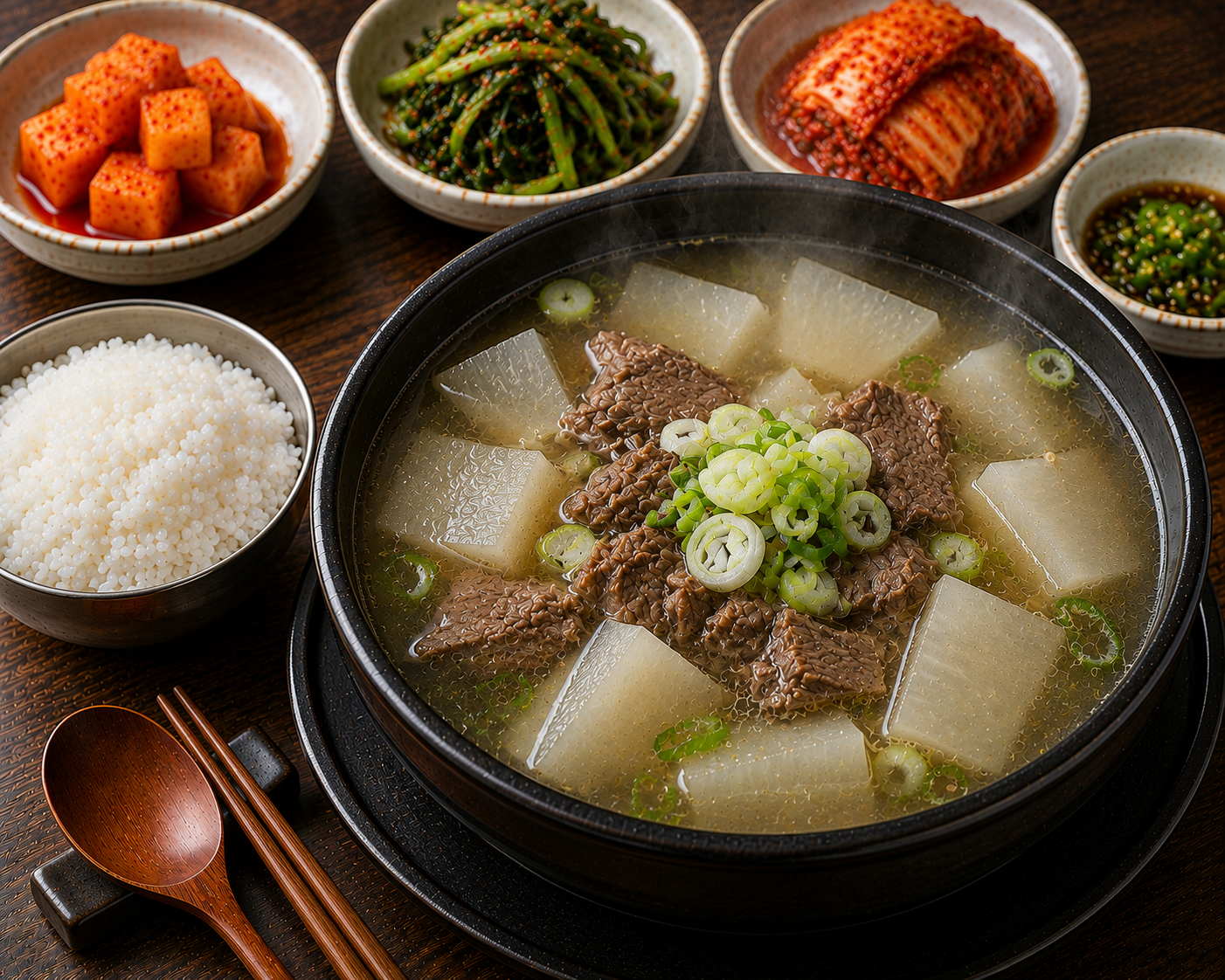
Beef Mu-guk
소고기뭇국 · so-go-gi-mut-guk
A traditional Korean soup dish made by boiling beef and radish in a clear broth. It features a light and refreshing taste, and is enjoyed with rice.
Bulgogi Jeongsik (Grilled Marinated Beef Set Meal)
불고기정식 · bulgogi-jeongsik
A representative Korean meal featuring grilled marinated beef served with rice and various side dishes.
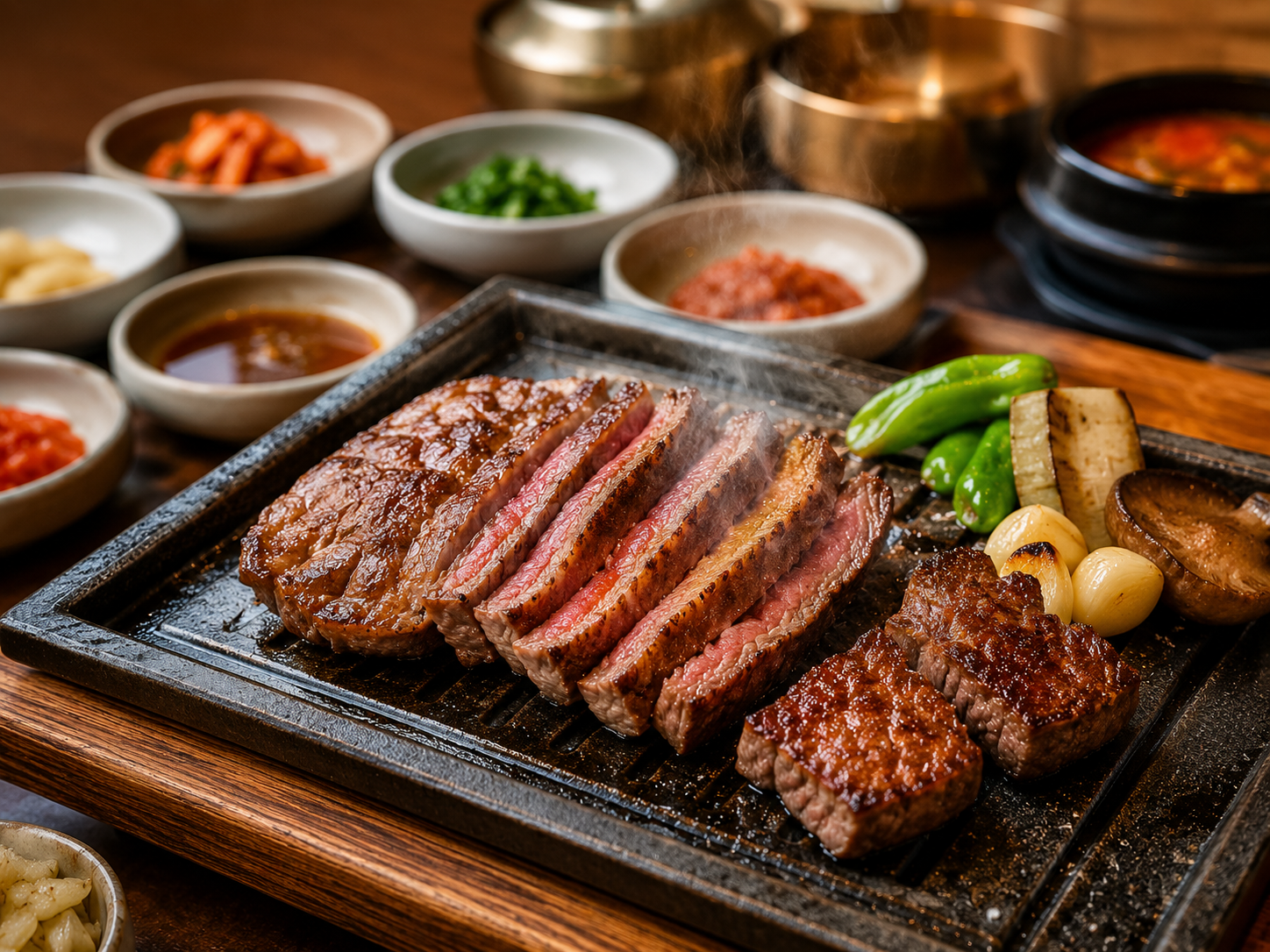
Beef Sirloin Grill
등심구이 · deung-sim-gui
This dish involves grilling the sirloin section of the cow seasoned with salt or soy sauce, characterized by its soft and mild flavor. It is typically grilled directly at the table and enjoyed at the moment it is perfectly cooked, often wrapped in lettuce or perilla leaves and served with ssamjang.
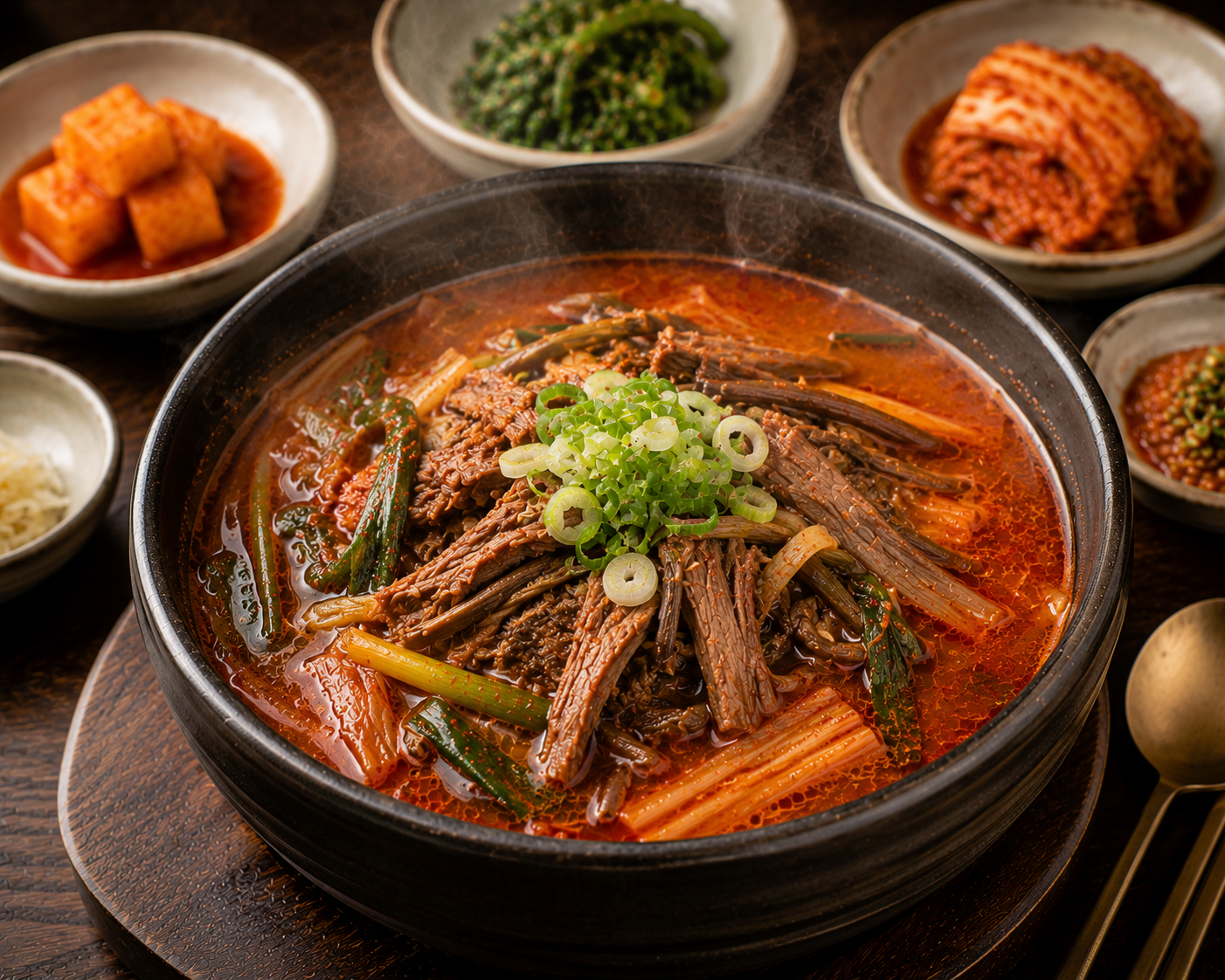
Goes well with
Ingredients
How it's made
- 1Thinly slice the beef and prepare it.
- 2Make the seasoning with soy sauce, sugar, garlic, sesame oil, and more.
- 3Marinate the meat in the seasoning.
- 4Grill the marinated meat on a heated plate.
Nutrition
* Estimated values per serving.
Allergens
Not vegetarian as it uses beef.
How to order
불고기 주세요
Bul-go-gi ju-se-yo
Please give me Bulgogi
Customize your order
Traveler tips
How to eat it
Frequently asked questions
- What is the difference between Bulgogi and Galbi?
- Bulgogi is usually made by seasoning thinly sliced beef and grilling it. Galbi often uses meat from around the ribs or rib cuts, and it may be thicker or served on the bone.
- Why do some versions of Bulgogi have so much broth?
- Seoul-style Bulgogi and Ttukbaegi Bulgogi are eaten almost as if simmered together with the meat juices, marinade, and moisture from the vegetables. Nothing has gone wrong; the style is designed to be good with rice.
- Do you eat Bulgogi rare, like steak?
- In general, Bulgogi is made with marinated thin slices of meat that are cooked through before eating. Once the meat is no longer red and the marinade is bubbling, it is ready to eat.
Last reviewed: 2026-10-07