Bindaetteok
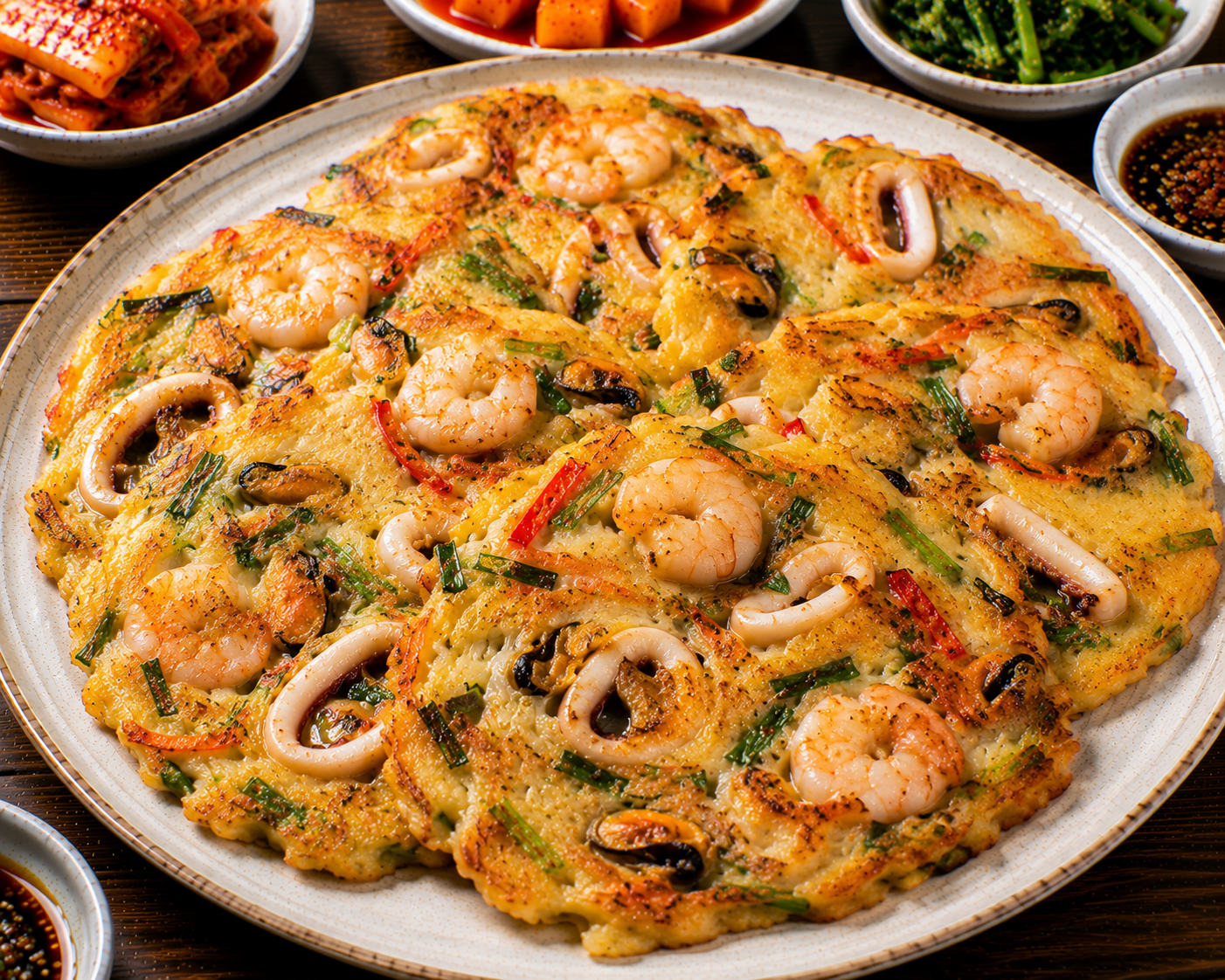
A savory pancake made by grinding soaked mung beans and frying it thickly, adding pork, bean sprouts, and kimchi for more flavor. The outside is golden and crispy while the inside is moist and rich. It is enjoyed dipped in vinegared soy sauce, and pairs well with Makgeolli as a snack.
Cultural background
Bindaetteok is traditionally a food enjoyed in markets, especially famous in Gwangjang Market. There is a culture of enjoying it with Makgeolli on rainy days, and it is considered an emotional combination for Koreans.
Origin & history
Mung beans, not wheat flour, sit at the heart of Bindaetteok. Soaked mung beans are ground and pan-fried in oil, bringing out the beans' nutty flavor and firm texture. As a result, it developed into a thicker, weightier jeon than Pajeon or Kimchi Jeon.
The origin of the name is not settled. A widely known theory says it came from ‘빈자떡’ (binja-tteok, “rice cakes for poor people”), cakes once shared with poor people. Today, Mung Bean Pancake carries the feel of both market food and feast food, and it has become familiar under the name Bindaetteok.
Regional & modern variations
- Mung Bean Pancake — The name is used for the same family of dishes as Bindaetteok. Depending on the region or household, it may be pan-fried smaller and thinner, or shaped neatly for a holiday table.
- Kimchi Bindaetteok — This version adds extra well-fermented kimchi, emphasizing a tangy flavor and reddish color. Compared with Kimchi Jeon, the nutty taste of mung beans is stronger and the texture is more substantial.
How Koreans eat it
At markets, Bindaetteok is usually cooked several at a time on a large iron griddle. When you order, one pancake is cut and served, and it tastes best while still hot. Takeout tends to lose its crispness, so if you eat it at your lodging, it is better to warm it gently in a dry pan without adding more oil.
Taste & how to choose
Good Bindaetteok has crisp edges and a center that is moist but not soggy. When the mung beans are not ground too finely, the texture of the bean bits and mung bean sprouts comes through. First-timers may be surprised by how much nuttier and more filling it is than an ordinary wheat-flour pancake.
Similar dishes
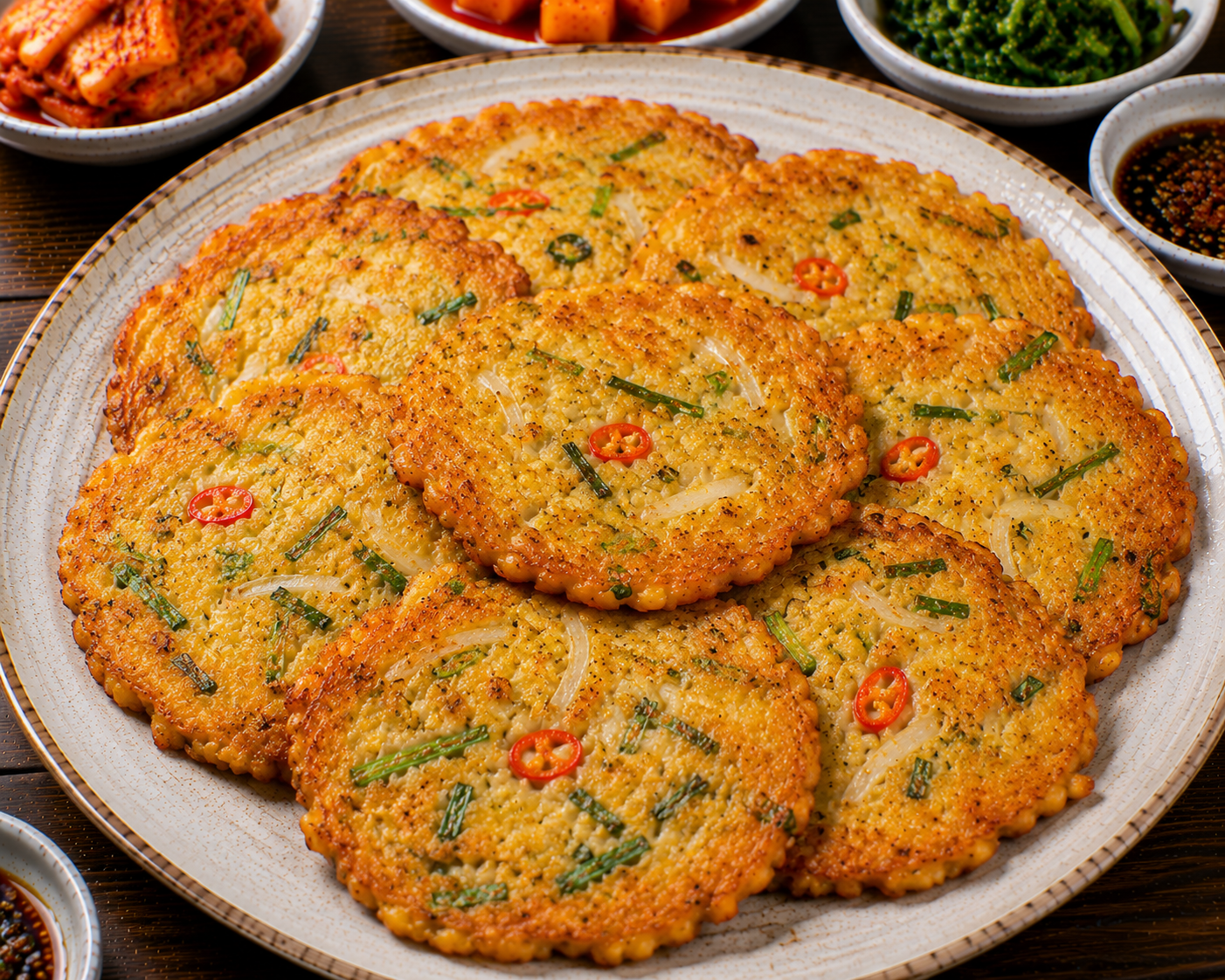
Mung Bean Pancake
녹두전 · nokdu-jeon
A savory pancake made by grinding soaked mung beans and frying them thickly. It has a deep flavor with pork and bean sprouts inside. Enjoy it dipped in vinegared soy sauce, and it pairs well with Makgeolli.
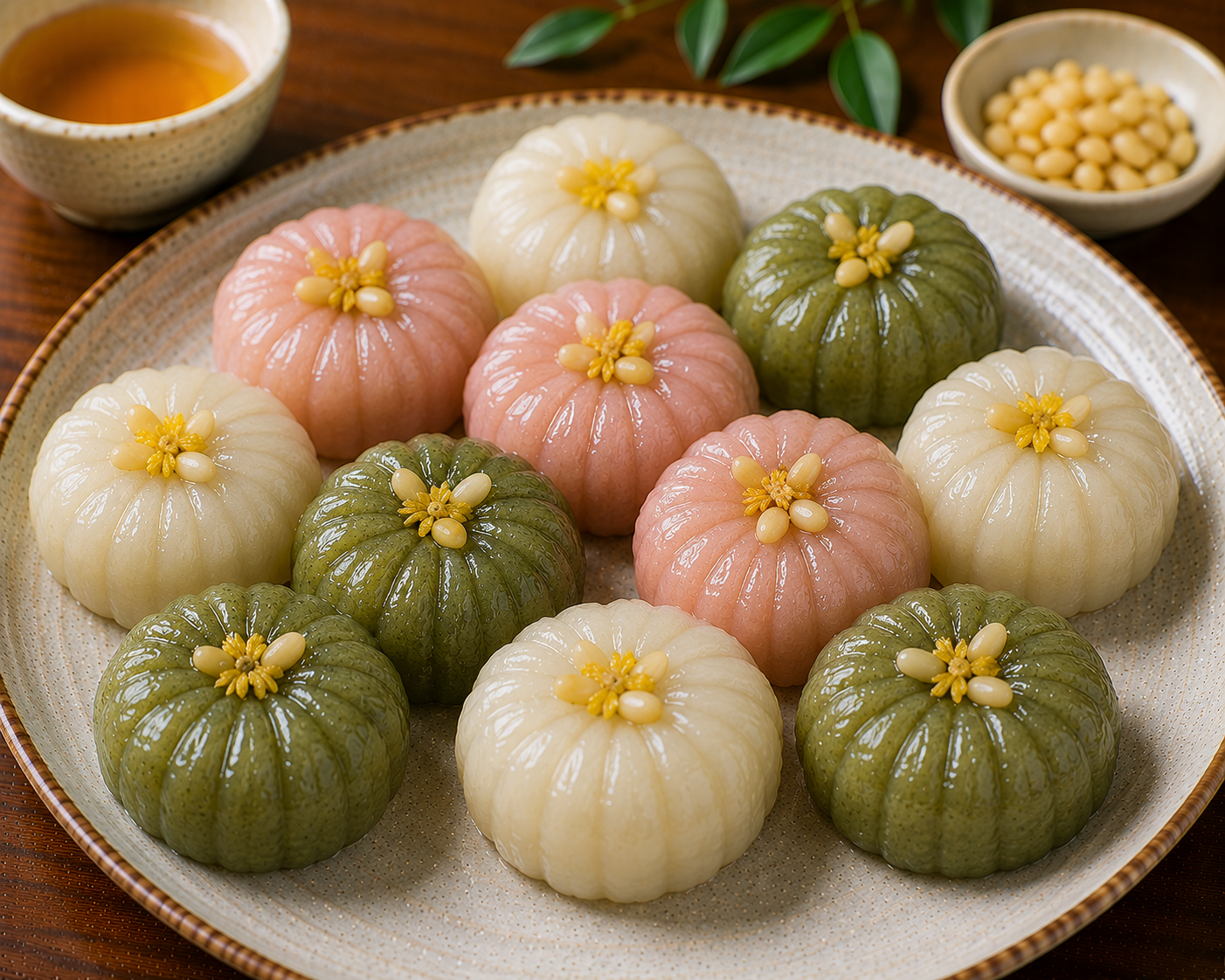
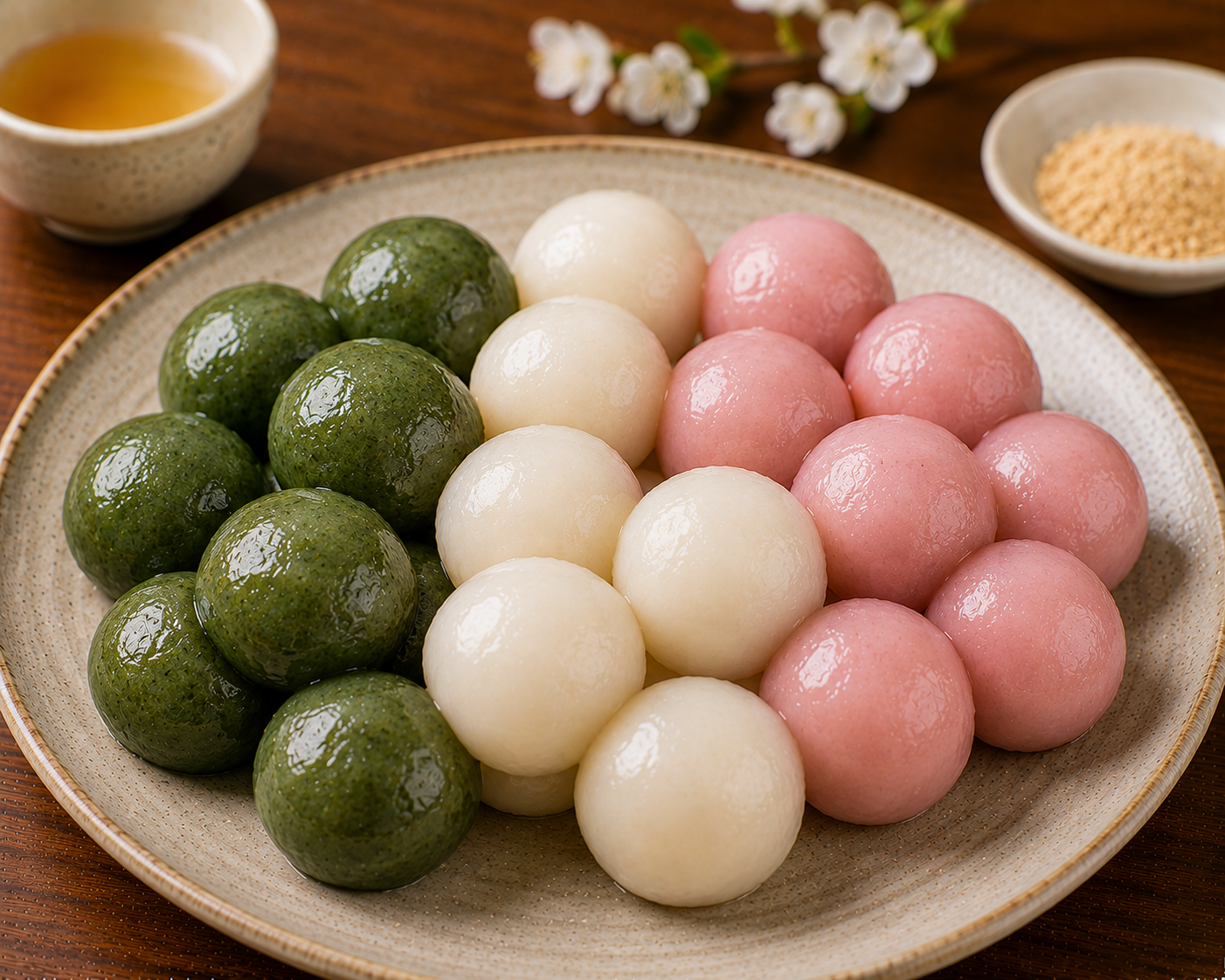
Danja
단자 · danja
A traditional rice cake made by kneading glutinous rice flour into round shapes and coating it with toppings, characterized by its chewy and sweet taste.
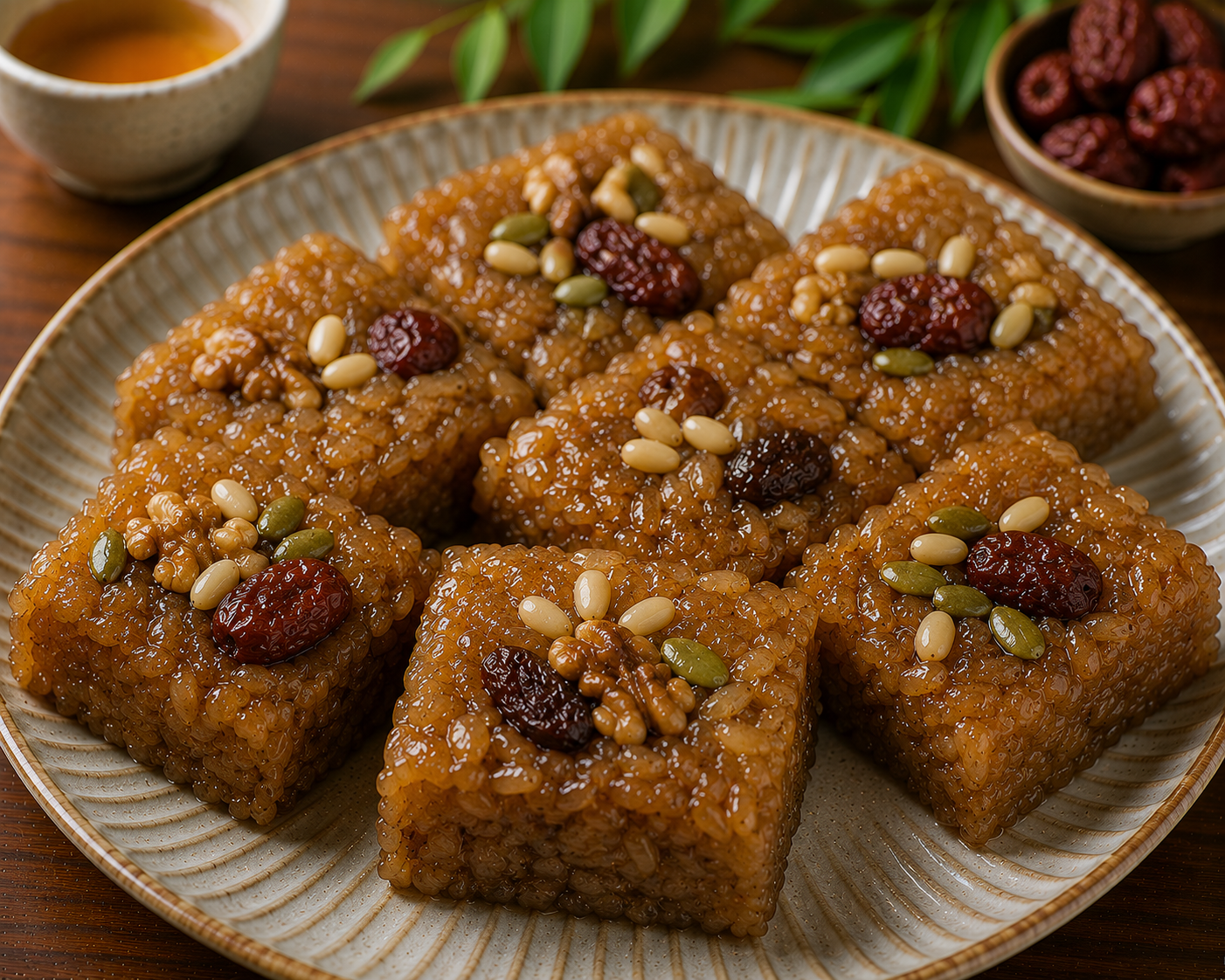
Yak-sik
약식 · yak-sik
A traditional Korean rice cake made by seasoning glutinous rice with honey and soy sauce, and steaming it with dates, chestnuts, and pine nuts.
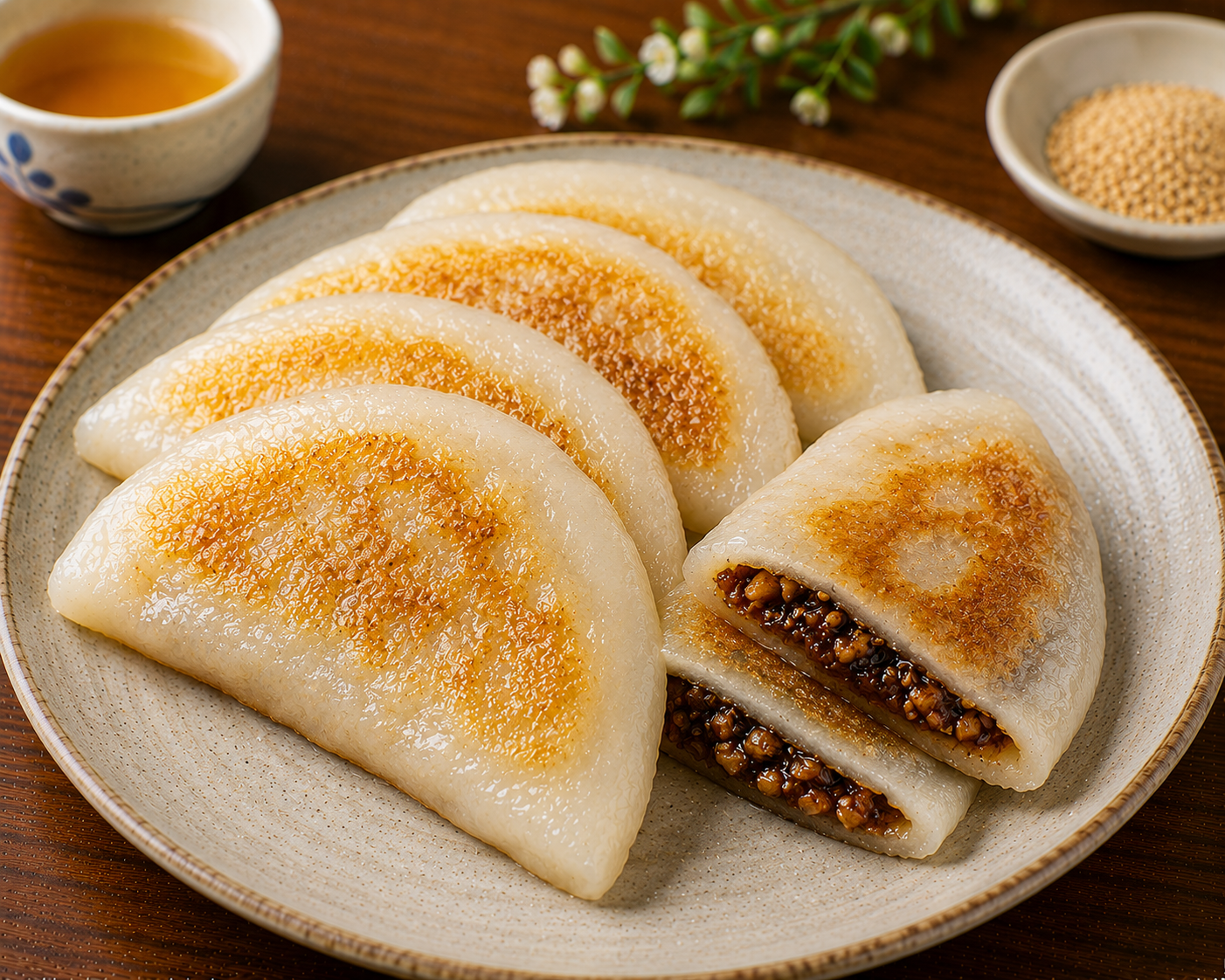
Bukkumi
부꾸미 · bukkumi
A traditional rice cake made by filling glutinous rice dough with red bean paste, shaped like a half-moon, and fried in oil.
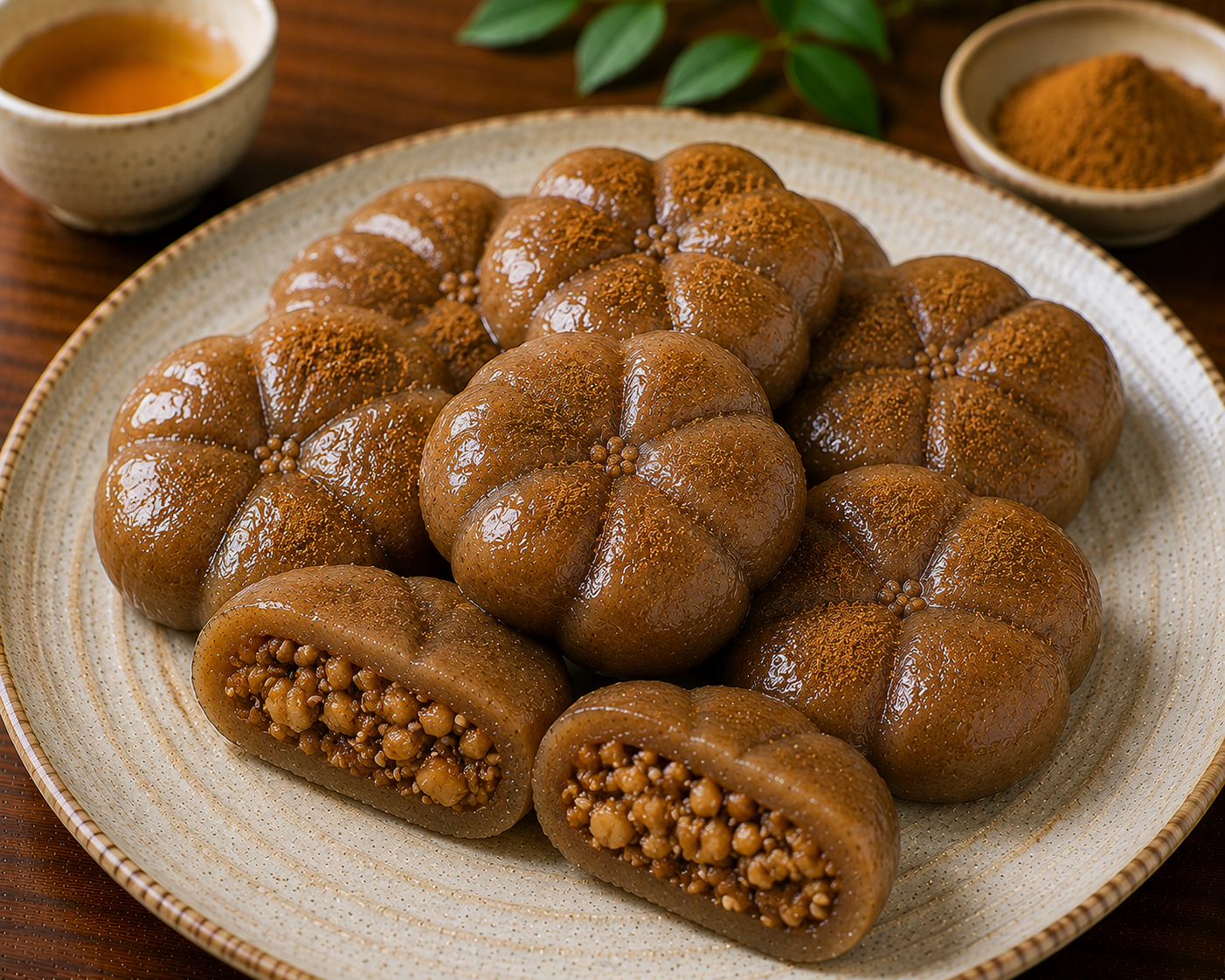
Gaepi-tteok
개피떡 · gae-pi-tteok
A rice cake made by steaming and pounding non-glutinous rice flour, rolling the dough out thin, filling it with red bean paste, and pressing it out into half-moon shapes. Because air is trapped inside and makes it puff up, it is also called baram-tteok (wind rice cake). It is known for its chewy texture and sweet taste.
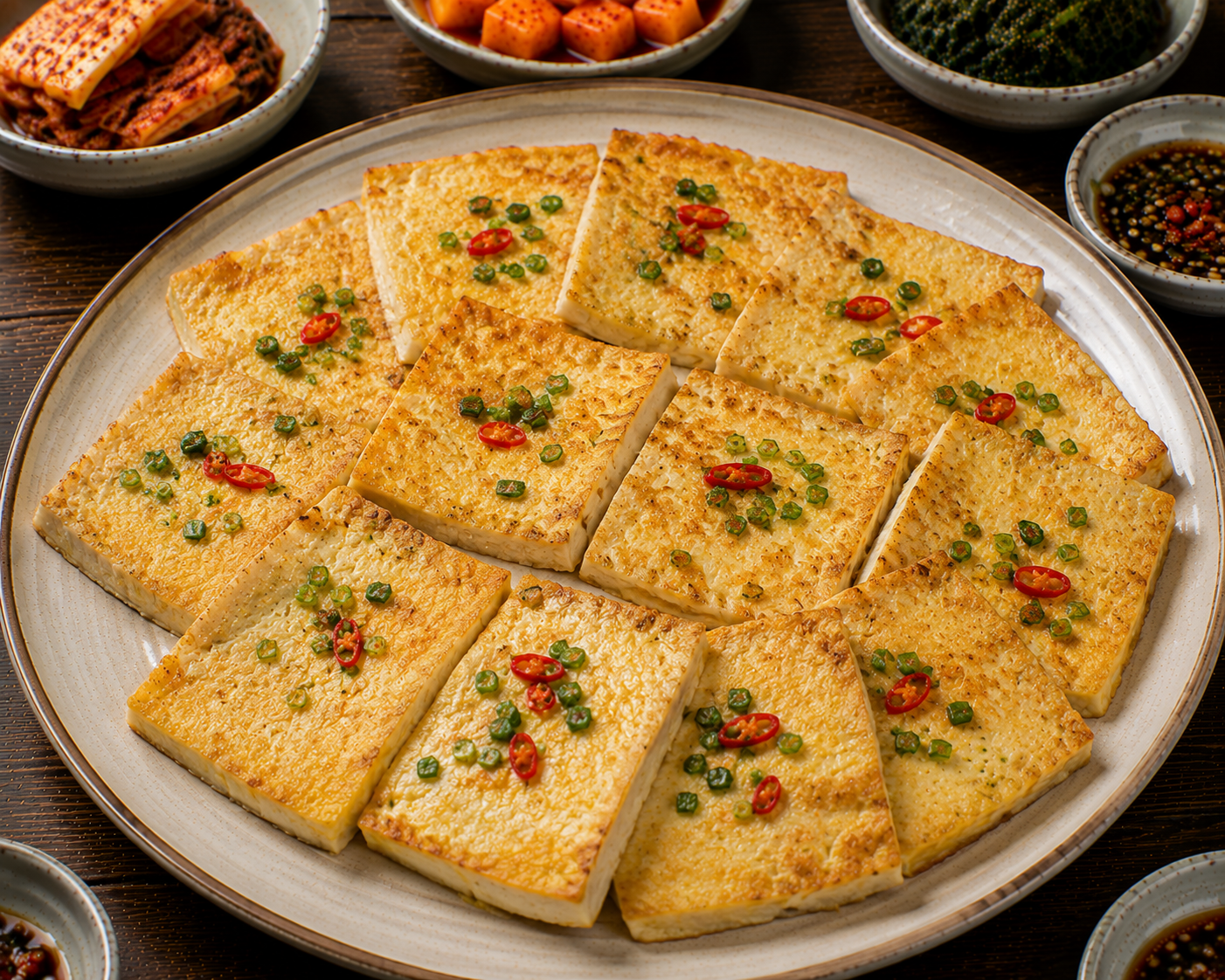
Pan-fried Battered Tofu
두부전 · dubu-jeon
A pancake dish made by cutting tofu into bite-sized pieces, coating them with flour and egg, and frying them in a pan until golden brown. Crispy on the outside and soft and moist on the inside.
Ingredients
How it's made
- 1Soak the mung beans in water and grind them.
- 2Prepare pork, bean sprouts, and kimchi.
- 3Mix pork, bean sprouts, and kimchi into the mung bean batter.
- 4Heat oil in a pan and fry the batter thickly.
Nutrition
* Estimated values per serving.
Allergens
Not suitable for vegetarian and gluten-free diets as it contains pork and pancake mix.
How to order
빈대떡 주세요
Bin-dae-tteok ju-se-yo
Please give me Bindaetteok
Customize your order
Price range
₩7,000
Traveler tips
How to eat it
Where to try it
Frequently asked questions
- Are Bindaetteok and Mung Bean Pancake different dishes?
- Rather than being completely different foods, their names and forms overlap. Bindaetteok is usually thicker and strongly associated with market food, while Mung Bean Pancake is also widely used as the name of a jeon served for holidays or home meals.
- If it is made with mung beans, is it gluten-free?
- It is hard to say definitively. Restaurants and market stalls often mix in buchimgaru, a Korean pancake flour mix, or wheat flour to help the batter hold together.
- Even if it looks like a bean pancake, can it contain meat?
- Meat is commonly added. Pork is especially often used to give it a richer, nuttier flavor, so if you avoid meat, check before ordering.
Last reviewed: 2026-10-07