
Cultural background
Popular among Koreans who enjoy spicy food, and a well-known dish for foreigners who seek the challenge of spicy flavors.
Origin & history
Fire Chicken Noodles take the image of buldak, or chicken seasoned to be extremely spicy, and turn it into ramen. The "stir-fried noodles" part of the Korean name more or less means that, instead of being eaten like soupy ramen, the noodles are boiled, almost all the water is drained off, and a thick sauce is mixed in.
Soupy ramen may be the familiar standard in Korea's instant-ramen culture, but this dish centers on intense heat and a sweet-salty sauce. After becoming known online as a spicy challenge food, it also became one of the signature names for Korea's fiery instant ramen among international travelers.
Regional & modern variations
- Cheese Fire Chicken Noodles — This version adds cheese powder or actual cheese to the spicy sauce. The flavor becomes richer and nuttier, but the heat does not disappear.
- Carbonara Fire Chicken Noodles — A variation that mixes in a smooth flavor similar to cream pasta. Since it can taste milder than the original, first-time eaters sometimes choose it.
- Jjajang Fire Chicken Noodles — A version that adds Fire Chicken sauce to the sweet, savory flavor of Korean-style jjajang ramen. After the heat, the deep sweetness distinctive to jjajang lingers.
How Koreans eat it
People often eat it as a quick meal at convenience stores or in their lodging. In Korea, common pairings to soften the heat include string cheese, sliced cheese, soft-boiled eggs, and triangle Gimbap. When several people eat it together, the meal can turn into a game of seeing who can withstand the spice.
Taste & how to choose
The first impression is sweet and salty, but a strong heat soon lingers on the tongue and lips. Unlike regular Ramen, there is no broth, so the spicy sauce clings directly to the noodles. If you are trying it for the first time, playing it safe means not adding all the sauce at once and leaving a little out.
Similar dishes
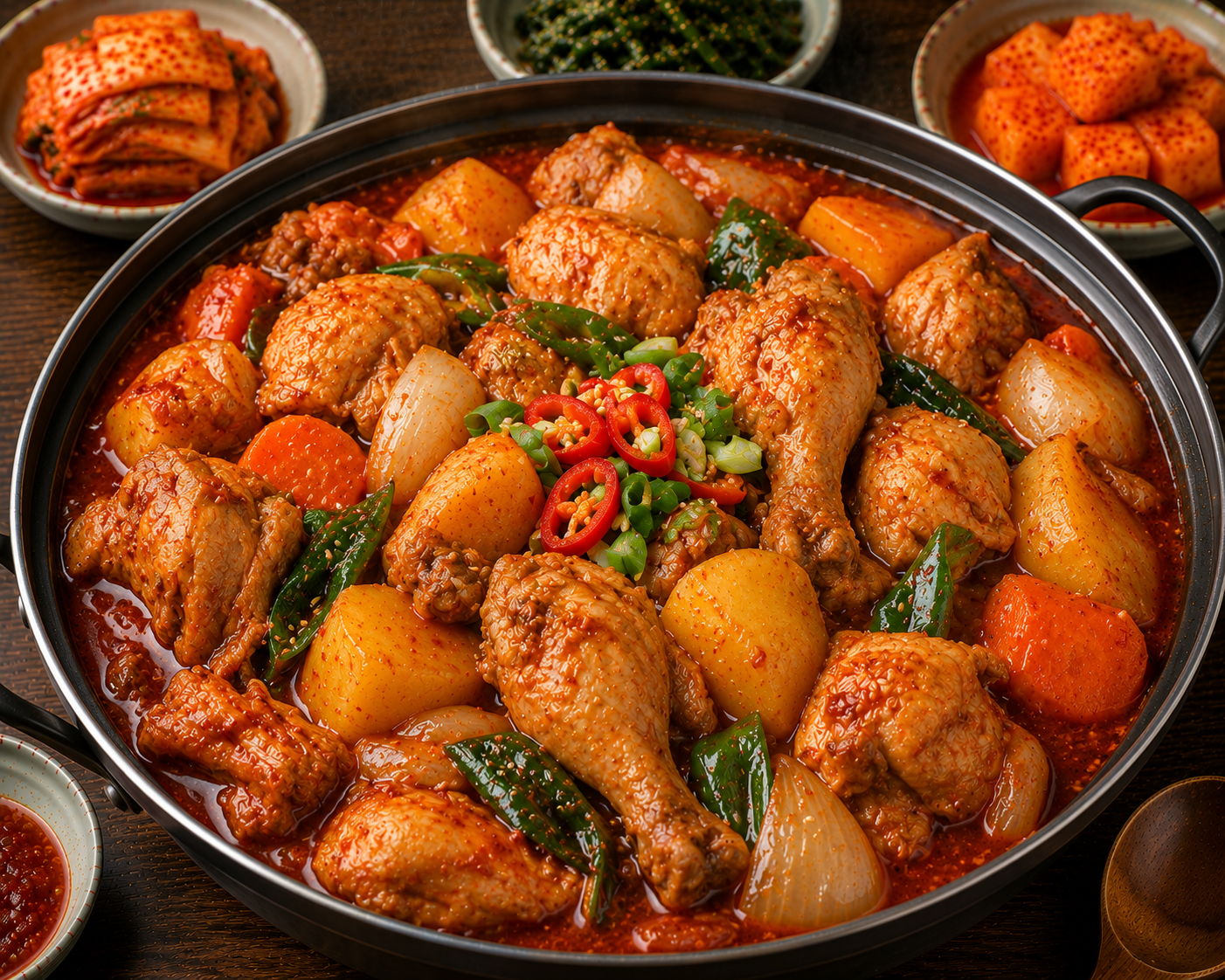
Spicy Braised Chicken
닭볶음탕 · dak-bokkeum-tang
A spicy braised dish made with chicken, potatoes, and carrots simmered in gochujang and gochugaru seasoning.
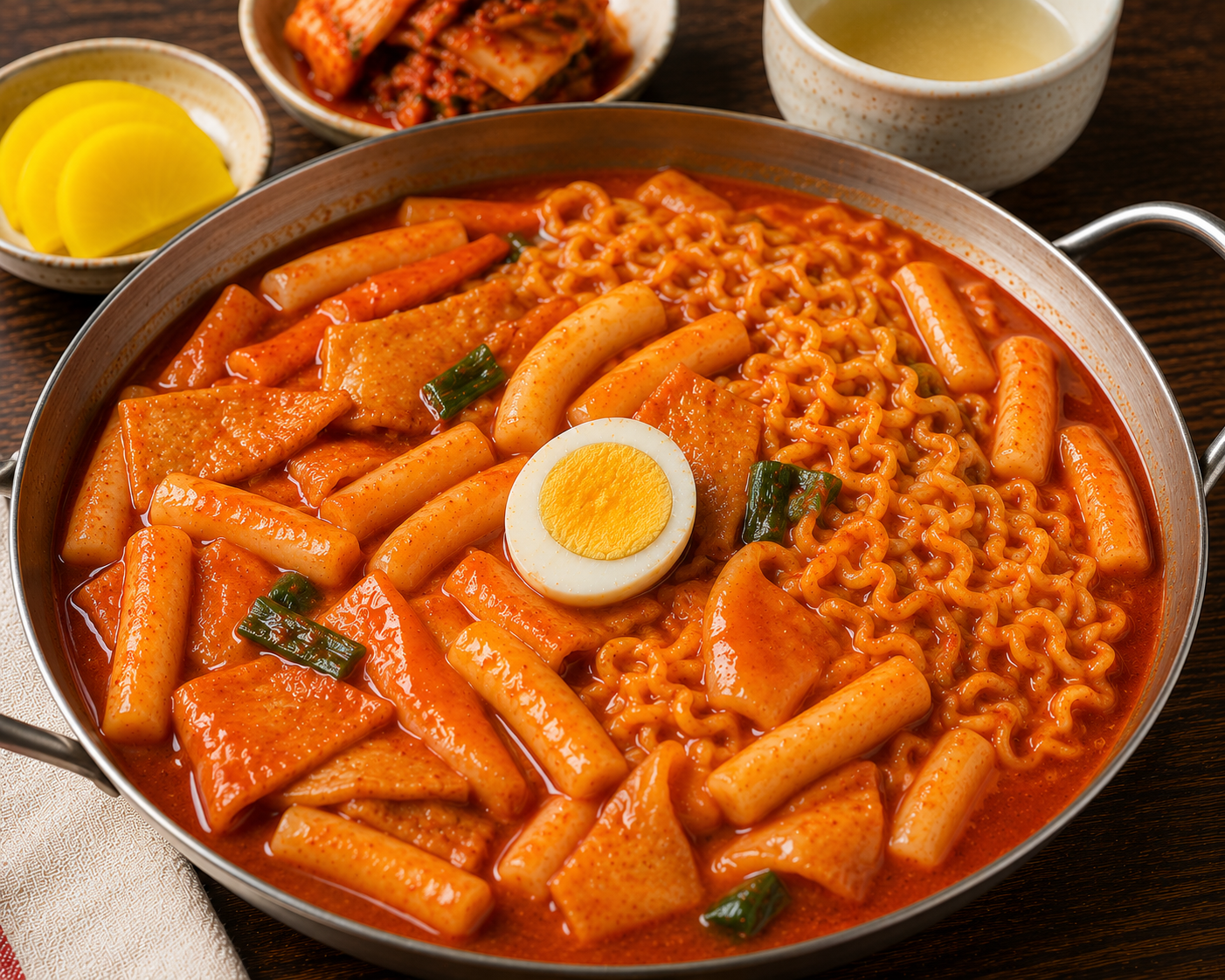
Rabokki
라볶이 · rabokki
A representative Korean snack dish made by adding ramen noodles to tteokbokki, cooked sweet and spicy. It is characterized by the harmony of chewy rice cakes and ramen, and is very popular as a street food.
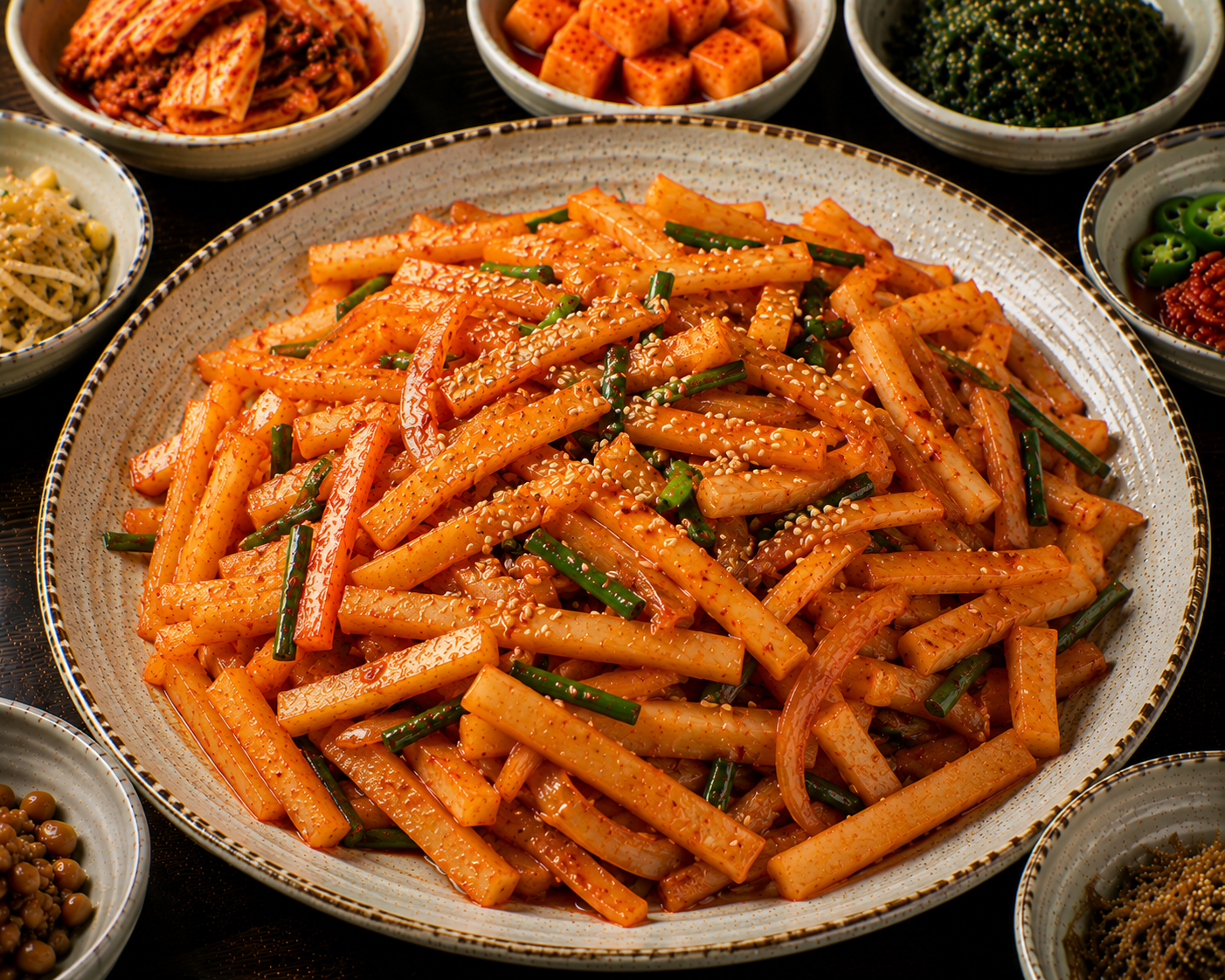
Radish Stir-fry
무볶음 · mu-bokkeum
A savory side dish made by stir-frying radish with soy sauce and oil. It features a crunchy texture and a nutty flavor.
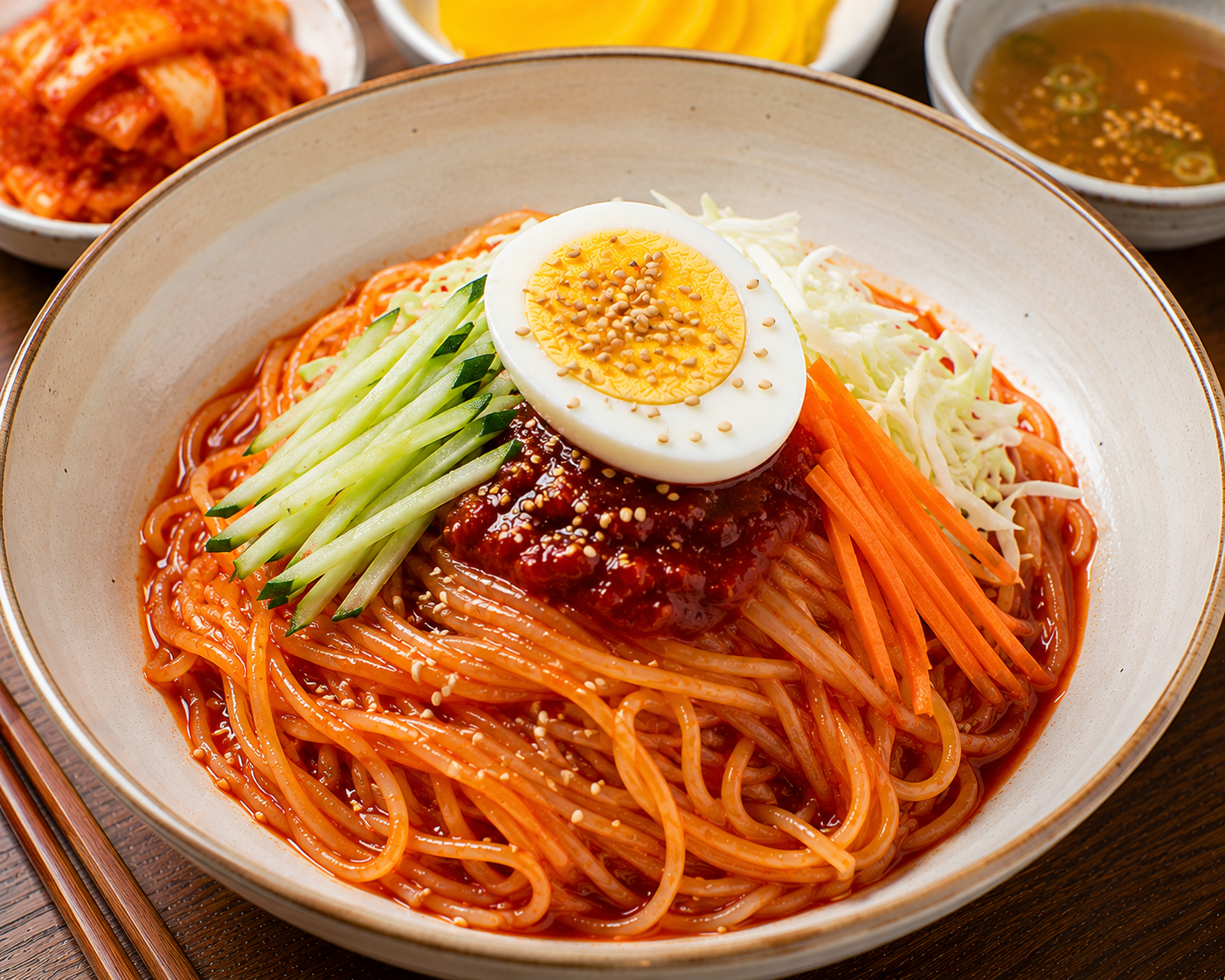
Jjolmyeon
쫄면 · jol-myeon
A Korean noodle dish with chewy noodles mixed with a spicy and tangy sauce.
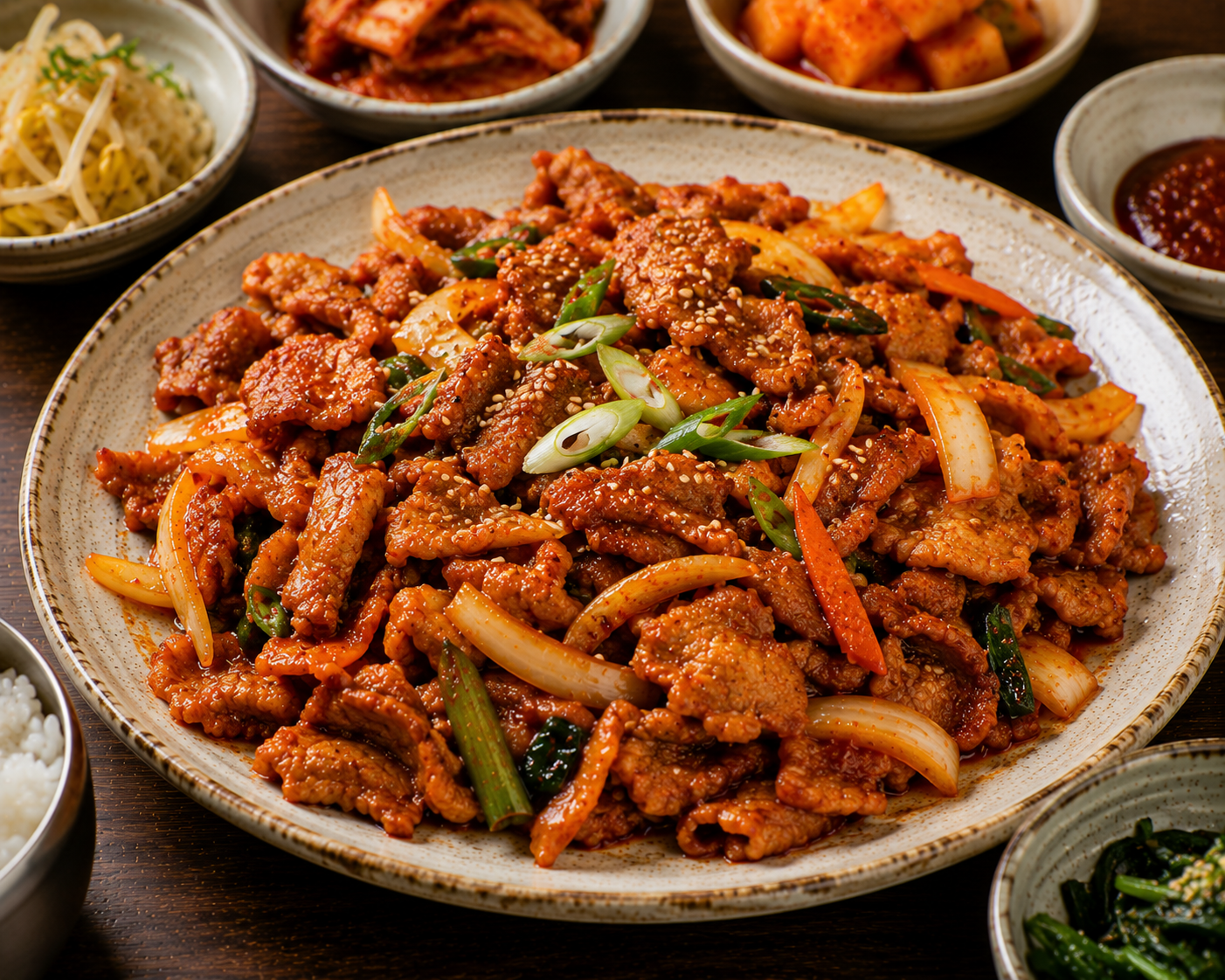
Stir-fried Spicy Pork
제육볶음 · je-yuk-bokkeum
This is a sweet and spicy dish made by marinating pork in gochujang and gochugaru, then stir-frying it over high heat with onions and green onions. The smoky flavor permeates as the seasoning coats the meat, and it is enjoyed either mixed with rice or wrapped in lettuce or perilla leaves.
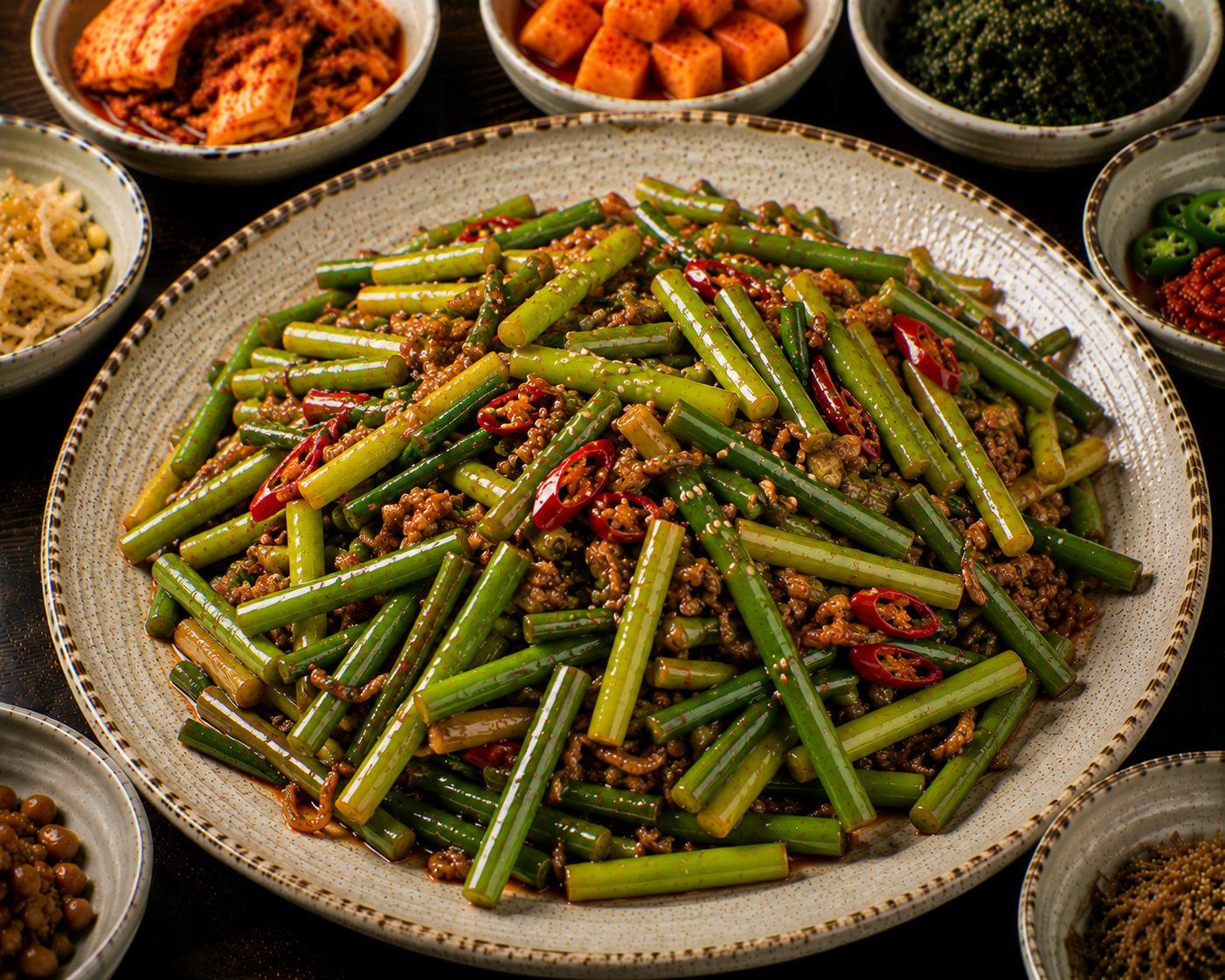
Stir-fried Garlic Scapes
마늘쫑볶음 · maneul-zzong-bokkeum
A savory and nutty side dish made by stir-frying garlic scapes with soy sauce and sesame oil.
Ingredients
How it's made
- 1Boil the ramen in boiling water.
- 2Once the noodles are cooked, drain the water and add the spicy sauce.
- 3Mix the sauce and noodles well and stir-fry them.
- 4Serve the finished Fire Chicken Noodles in a bowl.
Nutrition
* Estimated values per serving.
Allergens
Not suitable for vegetarian and halal diets due to various additives in the ramen.
How to order
불닭볶음면 주세요
Bul-dak-bokkeum-myeon ju-se-yo
Please give me Fire Chicken Noodles
Customize your order
Traveler tips
How to eat it
Frequently asked questions
- If "buldak" means fire chicken, is this chicken ramen?
- The name comes from an extremely spicy chicken dish. Depending on the actual product and flavor, it may contain chicken-derived ingredients or chicken flavoring, so it is not suitable for vegetarian or halal diets.
- Why do you drain off almost all the water?
- This food is not soupy Ramen; it is a stir-fried-style Ramen eaten with sauce coating the noodles. If too much water remains, the flavor becomes diluted, while draining the water too completely can make the sauce thick and pasty.
- Do I have to add all the sauce to eat it properly?
- Adding all of it gives the fullest flavor, but you do not have to. In Korea, people who find the heat too much may use only half the sauce or add cheese, egg, or rice.
Last reviewed: 2026-10-07