Cultural background
Jeotgal is a traditional Korean preserved food, and eori-guljeot is particularly popular as a side dish during the winter.
Similar dishes
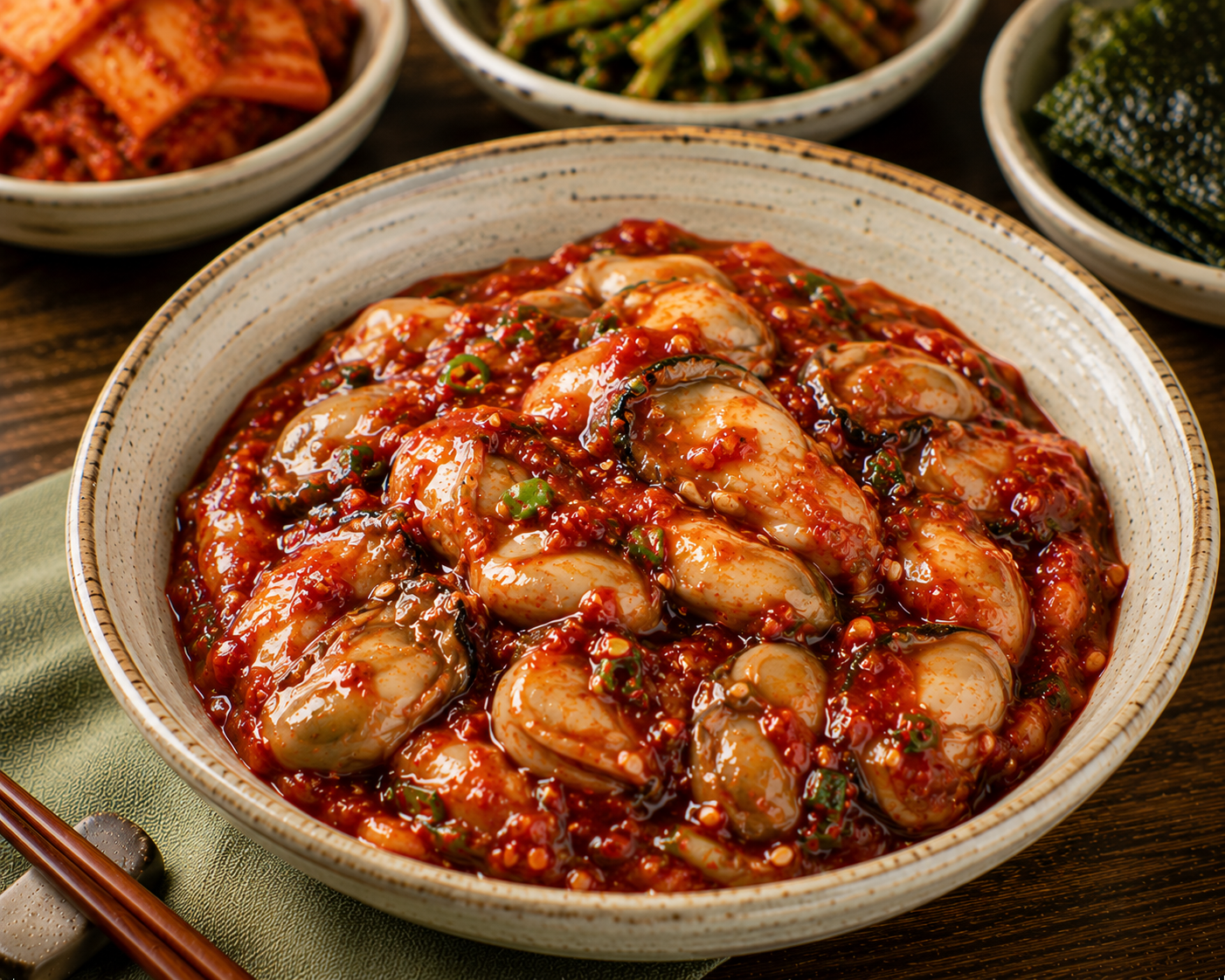
Geuljeot
굴젓 · gul-jeot
A savory and umami-rich side dish made by salting and fermenting oysters. It’s a preserved side dish that is eaten in small amounts with rice.
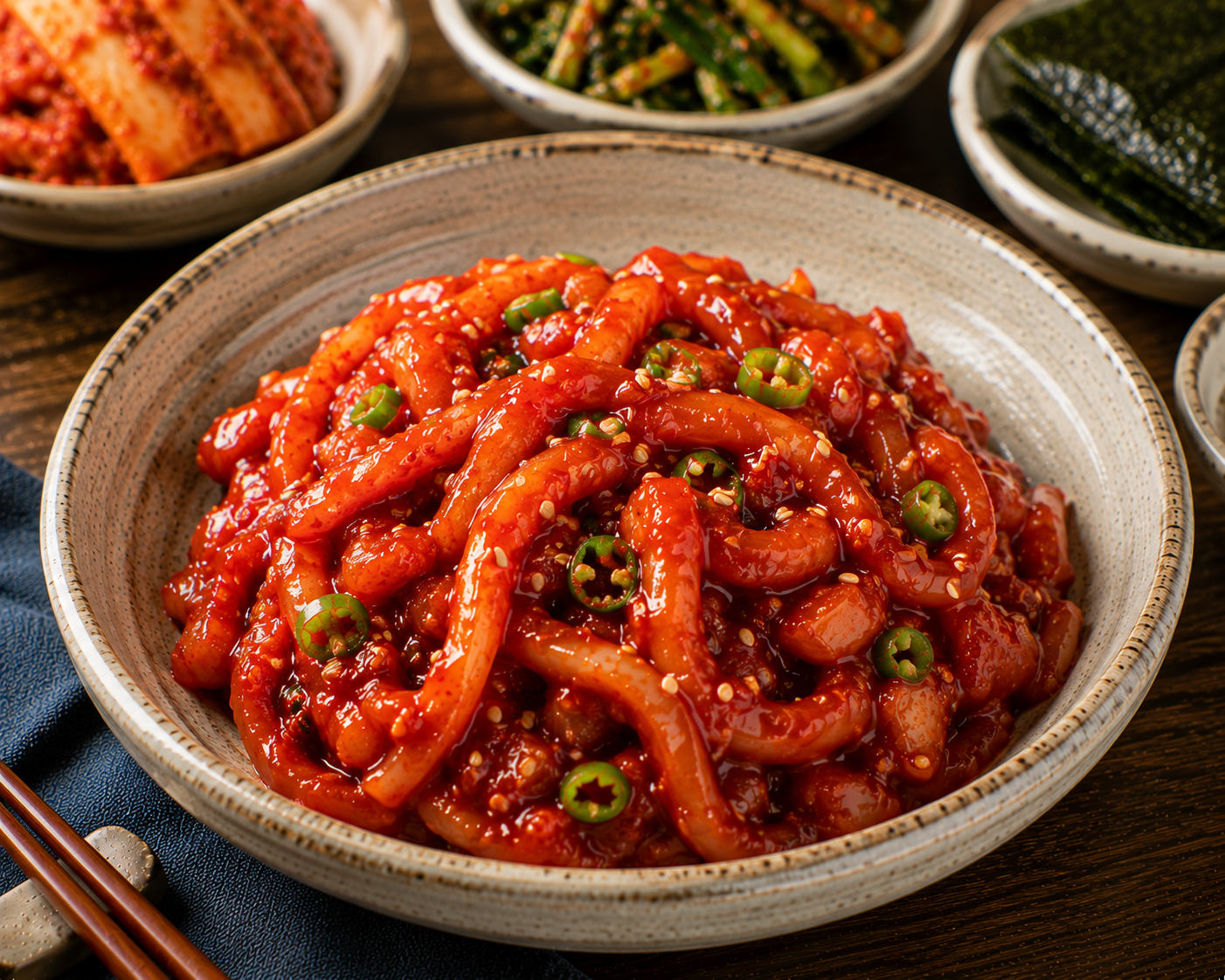
Squid Jeot
오징어젓 · o-jing-eo-jeot
Salted and fermented squid, a savory and umami-rich side dish.
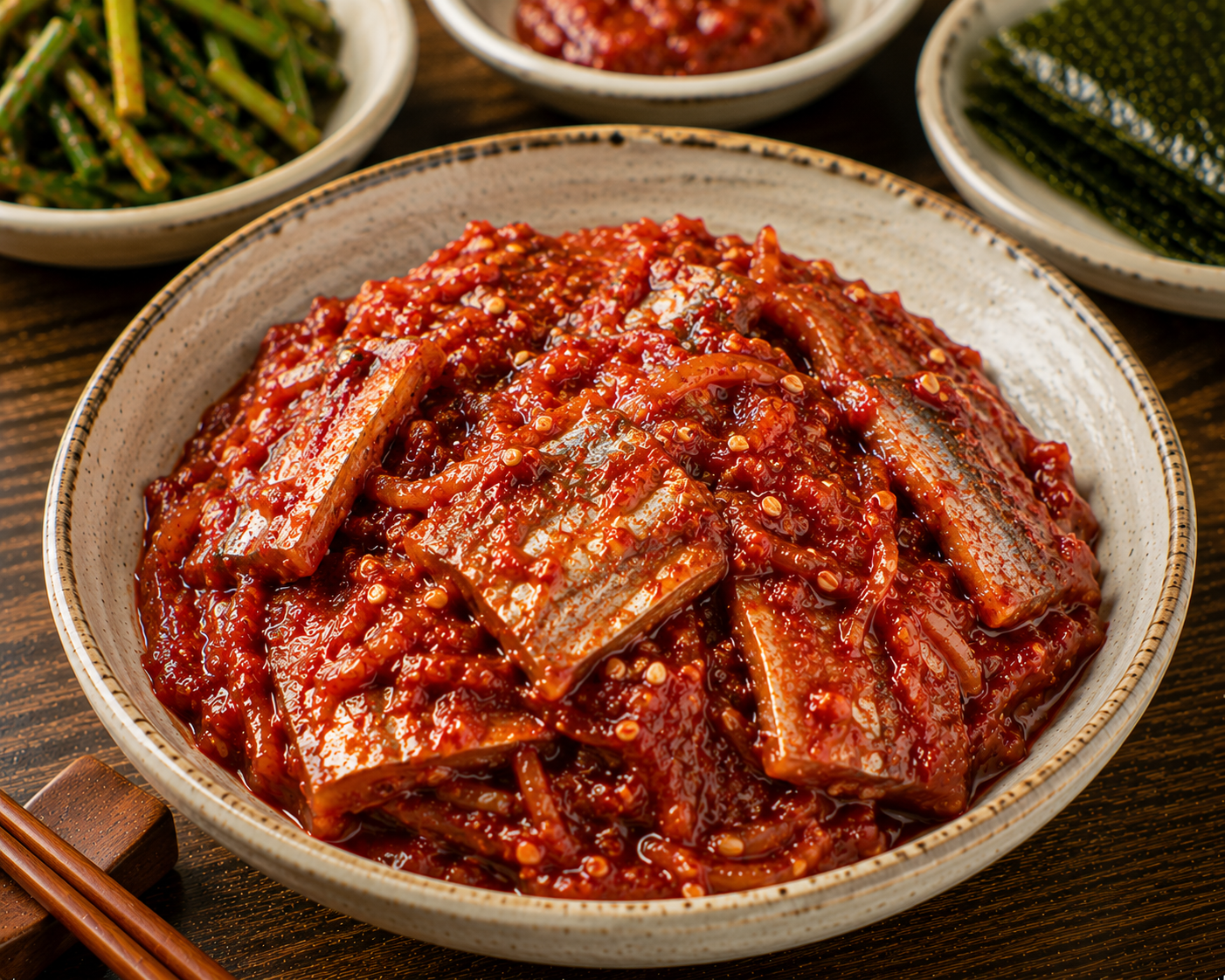
Galchi-jeot
갈치젓 · galchi-jeot
Galchi-jeot is a salty side dish made from fermented hairtail fish, traditionally eaten with rice.
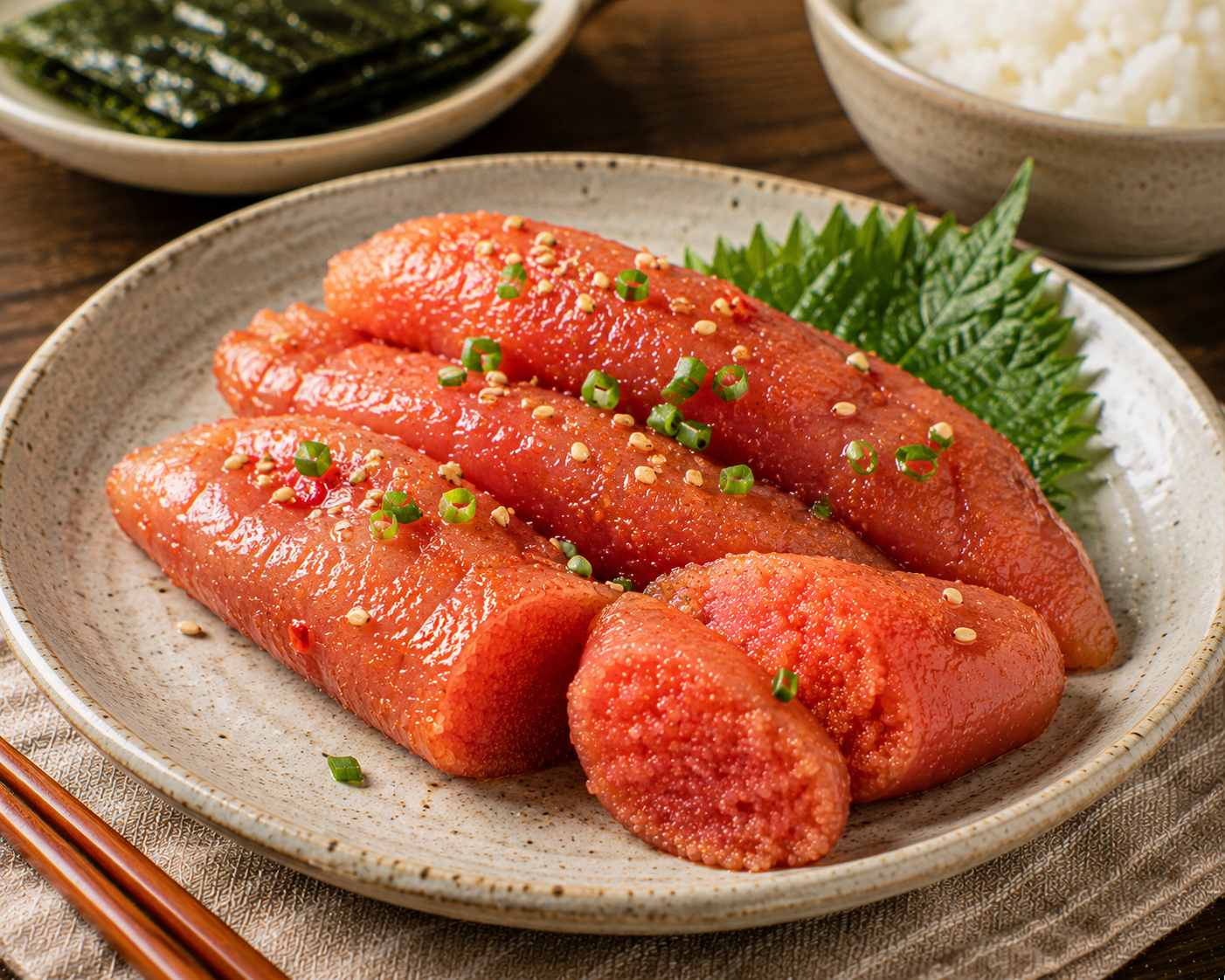
Myeongnan-jeot
명란젓 · myeongran-jeot
Salty side dish made by salting and fermenting the roe of pollack. It has a strong umami flavor and is eaten in small amounts with rice.
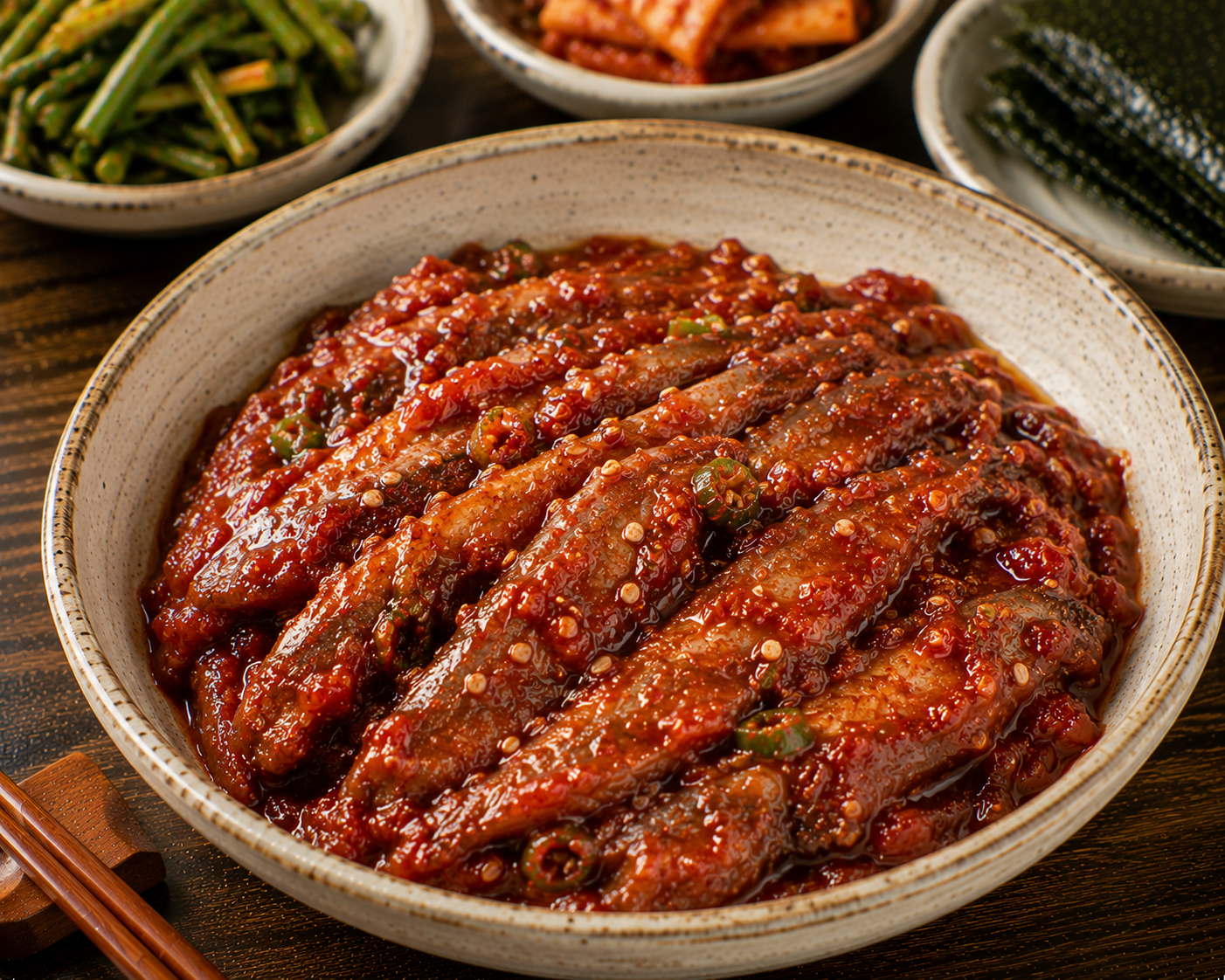
Jogi-jeot
조기젓 · jo-gi-jeot
Jogi-jeot is a salty fermented fish sauce made by salting and fermenting jogi fish, served as a stored side dish alongside rice. It is salty and umami-rich, best enjoyed with rice in small portions.
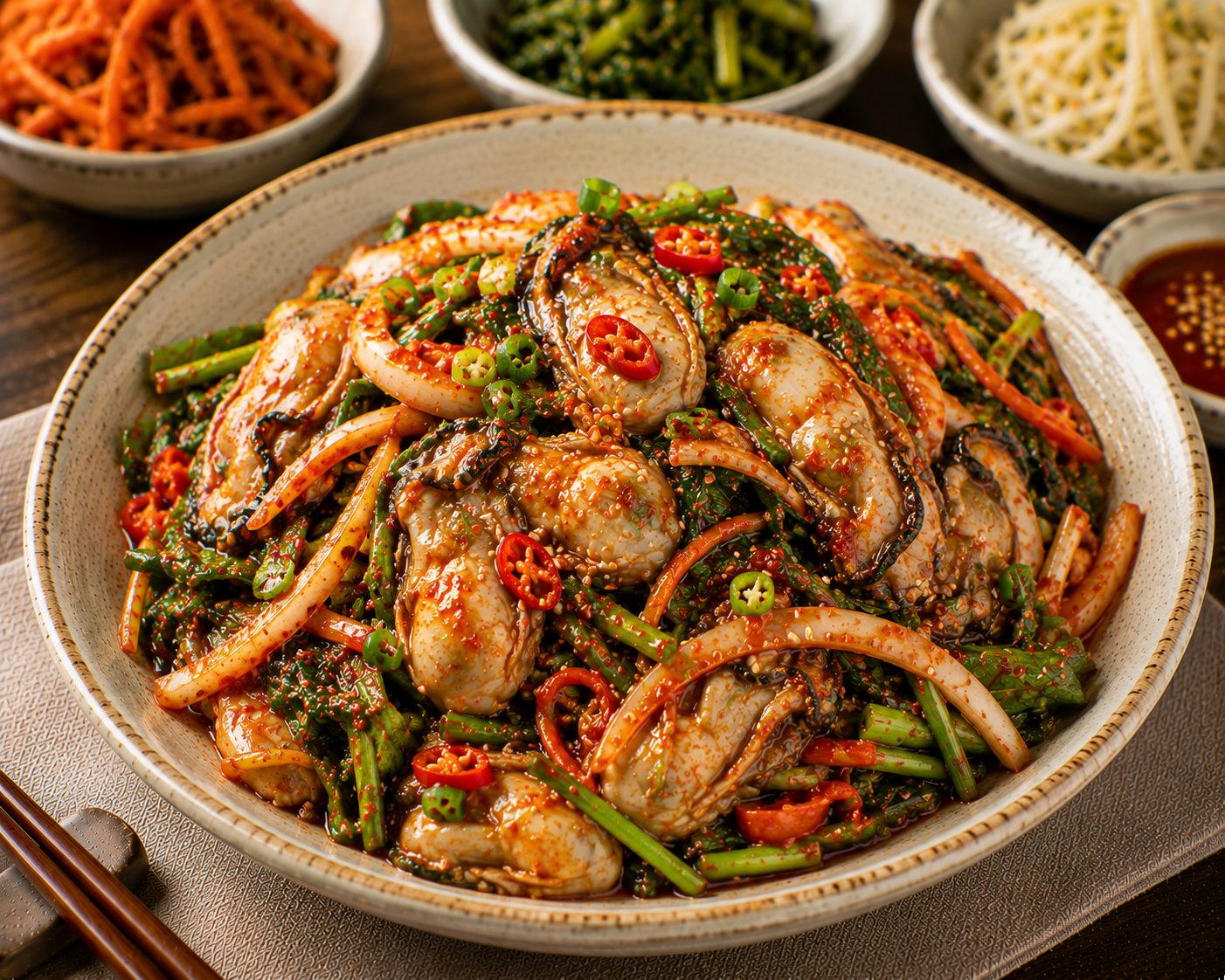
Spicy Seasoned Oysters
굴무침 · gul-muchim
A side dish made by mixing fresh oysters with gochujang and vinegar for a tangy and spicy flavor, enjoyed with crunchy vegetables.
Goes well with
Ingredients
How it's made
- 1Wash the fresh oysters thoroughly and prepare them.
- 2Add salt, red pepper powder, garlic, and ginger to the oysters and mix well.
- 3Pack the mixture into a jar and ferment it.
- 4After a certain period, take out the matured eoriguljeot and store it in the refrigerator.
Nutrition
* Estimated values per serving.
Allergens
Not suitable for vegan and halal diets due to the use of seafood and salt.
How to order
어리굴젓 주세요
Eo-ri-gul-jeot ju-se-yo
Please give me eoriguljeot