Gomtang
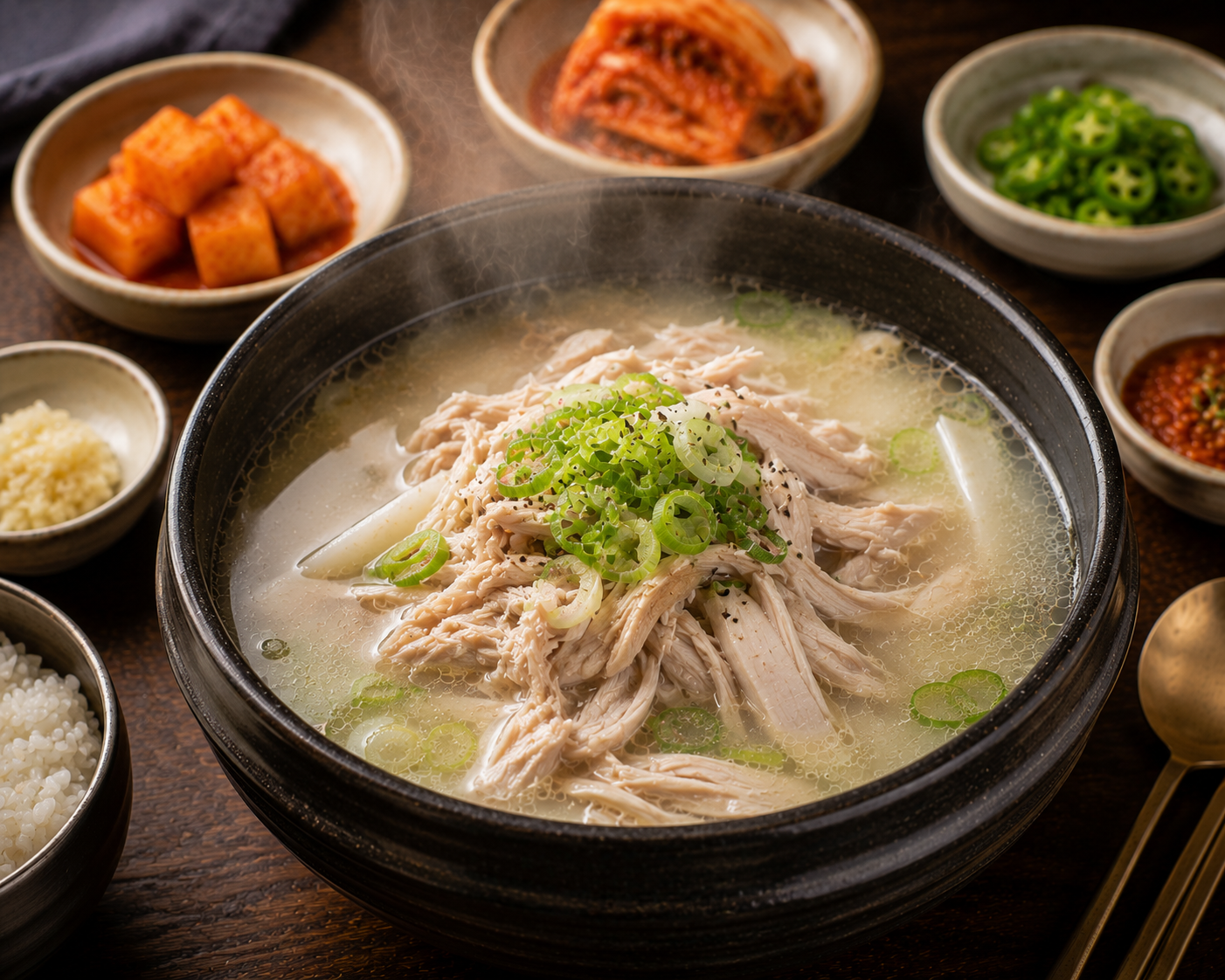
Gomtang is a type of soup that is made by simmering beef bones and brisket for a long time to create a milky and mild broth, served with thinly sliced boiled meat, noodles, and rice. The broth itself is lightly seasoned, so it's best to add salt and chopped green onions to taste, and adding a bit of cubed radish kimchi broth enhances the flavor. It is served piping hot in an earthenware pot, so it's advisable to be careful with the first sip.
Cultural background
Gomtang is a symbol of comfort and recovery for Koreans, considered food that warms and soothes the stomach. It is especially sought after as a hangover remedy the day after drinking, typically for breakfast or lunch.
Origin & history
The word “gom” in Gomtang is often explained as being connected to the idea of simmering meat or bones for a long time. As the name suggests, time matters more than seasoning. Beef and bones are slowly coaxed of their flavor and turned into a soup that works as a full meal in a bowl.
Back when cattle were valuable property, beef broth was considered something special. One account says that in areas where markets and transportation developed, soup restaurants took root by long-simmering bones and assorted cuts left after butchering and selling the resulting soups.
Regional & modern variations
- Naju Gomtang — A style of Gomtang associated with Naju in Jeollanam-do. It is known for a relatively clear broth topped generously with thinly sliced beef, with rice served as if warmed through in the hot soup.
- Sagol Gomtang — Made by simmering sagol, or beef leg bones, for a long time, this version has a milkier, richer broth. Rather than a pronounced meat flavor, it highlights the nuttiness from the bones and a weighty texture.
- Tail Soup — Gomtang simmered with oxtail. Gelatin from around the bones makes the broth more viscous, and part of the pleasure is picking the meat from the tail bones as you eat.
How Koreans eat it
At Gomtang restaurants, salt, pepper, scallions, and Kkakdugi are often set out separately on the table. Rather than arriving fully seasoned from the kitchen, the dish is more the kind of food where diners decide the final seasoning themselves. The gentle broth makes it easy to eat for breakfast, and it is also common at lunch as a quick bowl of gukbap, rice served in soup.
Taste & how to choose
On a first taste, Gomtang can seem “bland,” but a good bowl should not taste like flat water; it leaves behind the sweetness of beef and a subtle aroma of fat. Some versions have clear broth, while others are milky, so color alone does not tell you how rich the soup is. The beef may be thinly sliced, but it should not be dry; ideally, the grain loosens softly as you eat it.
Similar dishes
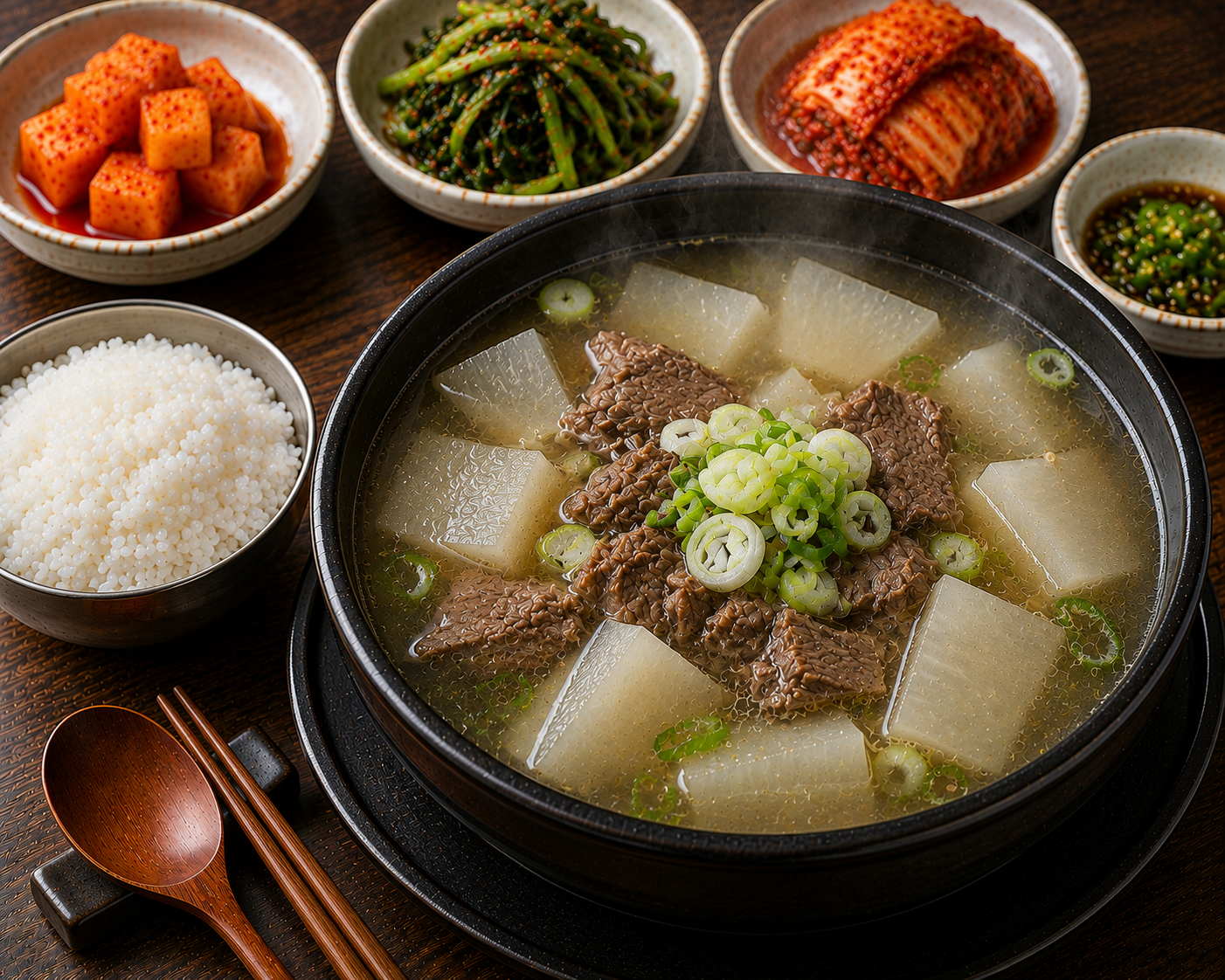
Beef Mu-guk
소고기뭇국 · so-go-gi-mut-guk
A traditional Korean soup dish made by boiling beef and radish in a clear broth. It features a light and refreshing taste, and is enjoyed with rice.
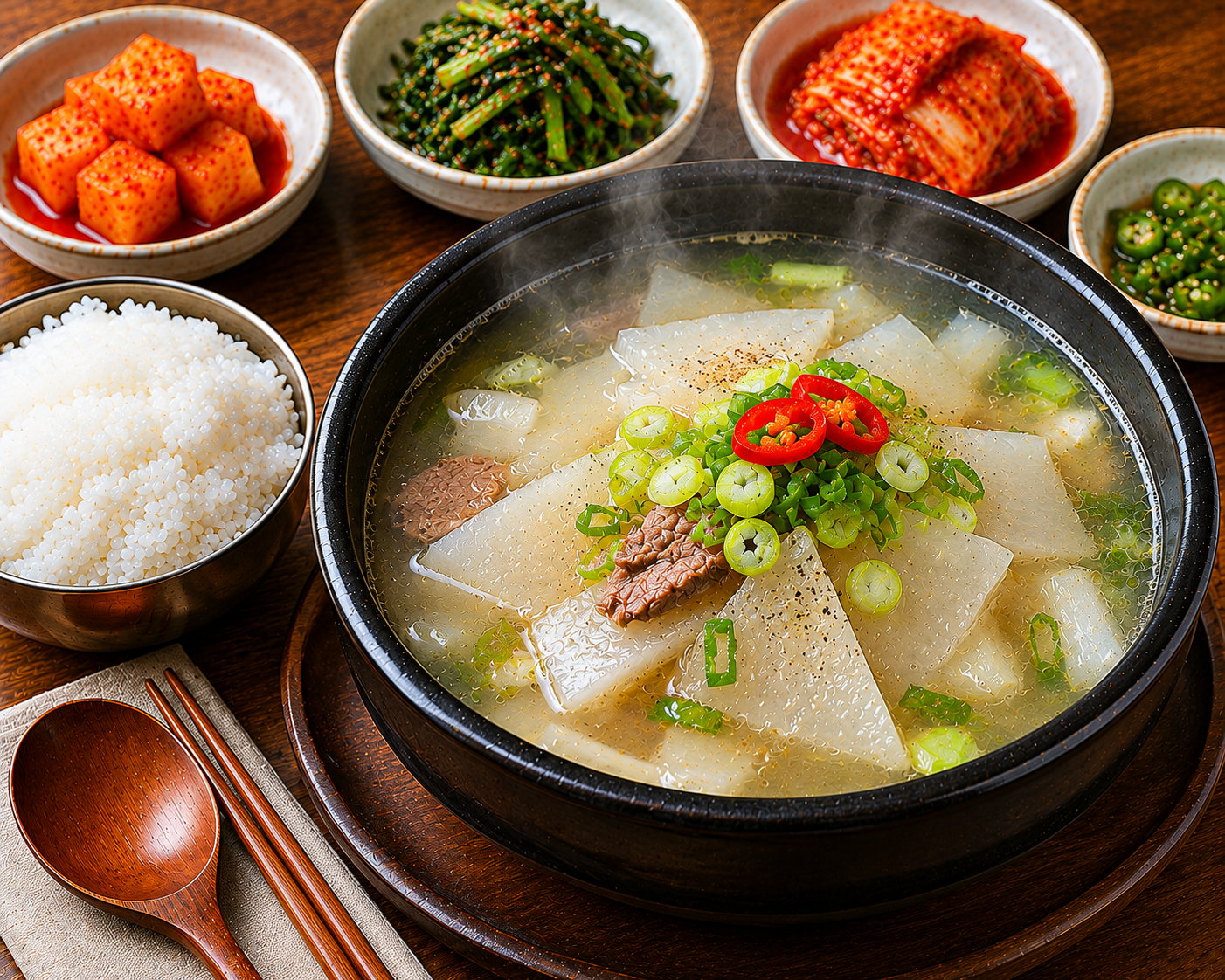
Radish Soup
무국 · mu-guk
A clear soup dish made with radish and beef, characterized by a light and refreshing taste. It is usually enjoyed with rice, and salt or soy sauce can be added at the table to adjust the seasoning.
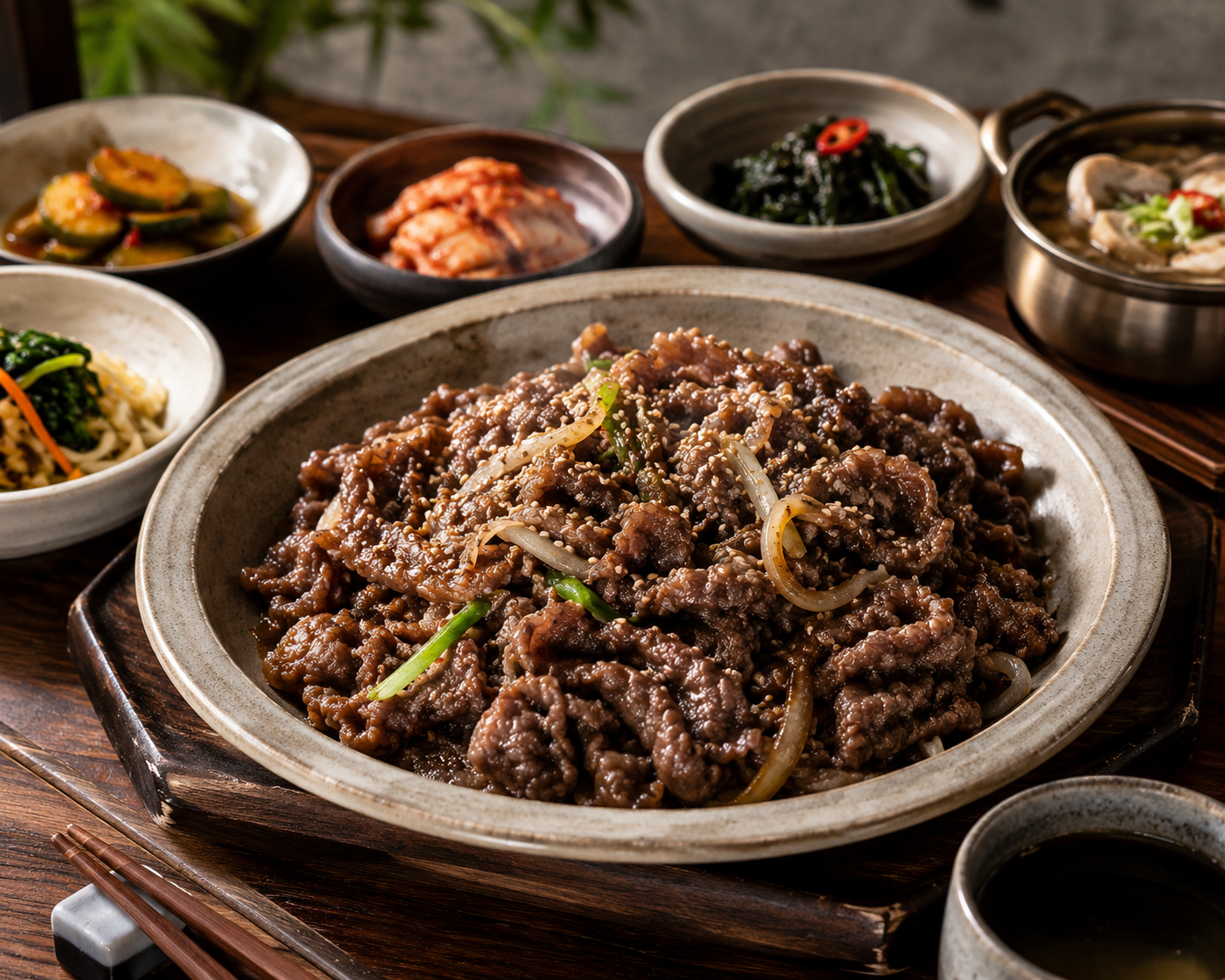
Bulgogi
불고기 · bulgogi
A traditional Korean dish made by seasoning thinly sliced beef with soy sauce, sugar, garlic, and more, then grilling it on a metal plate. It is characterized by a sweet and savory flavor and is usually eaten wrapped in leafy vegetables.
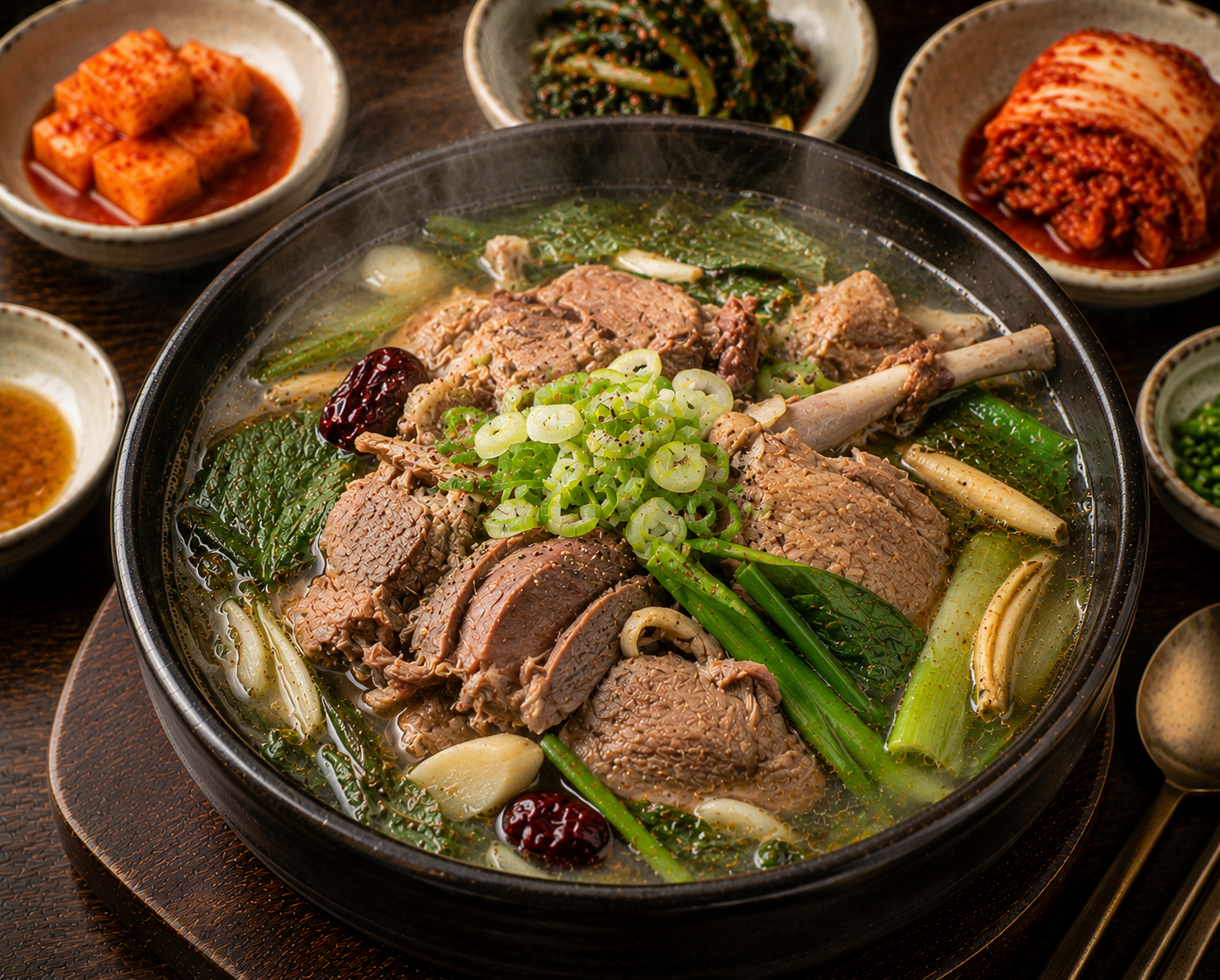
Duck Soup
오리탕 · ori-tang
A nourishing soup made from simmered duck meat with a rich broth. It is characterized by tender duck meat and deep umami flavor, often enjoyed with rice.
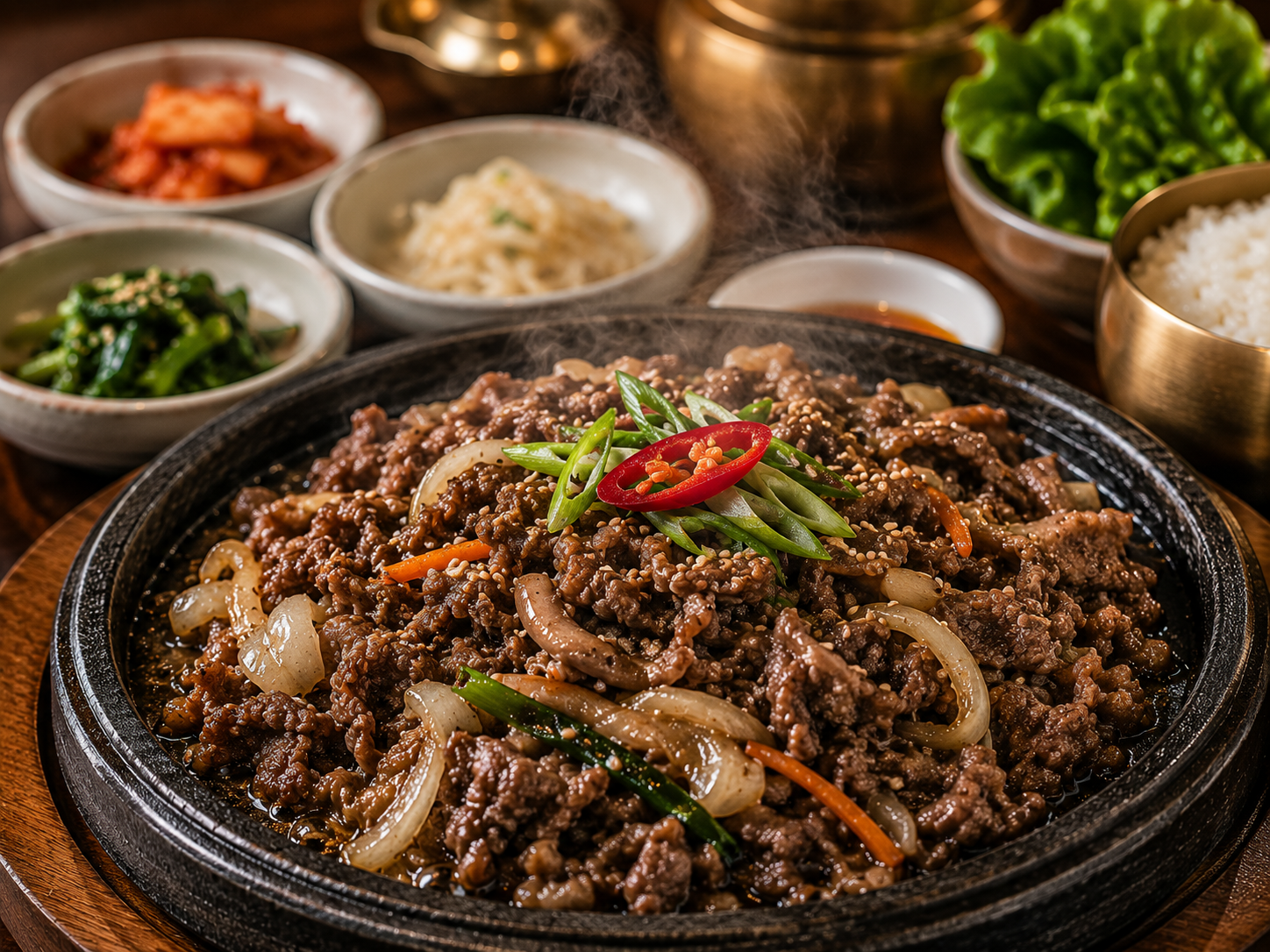
Beef Bulgogi
소불고기 · so-bul-go-gi
A traditional Korean grilled dish made by marinating thinly sliced beef in soy sauce, sugar, garlic, and other ingredients, then grilling it on a hot plate.
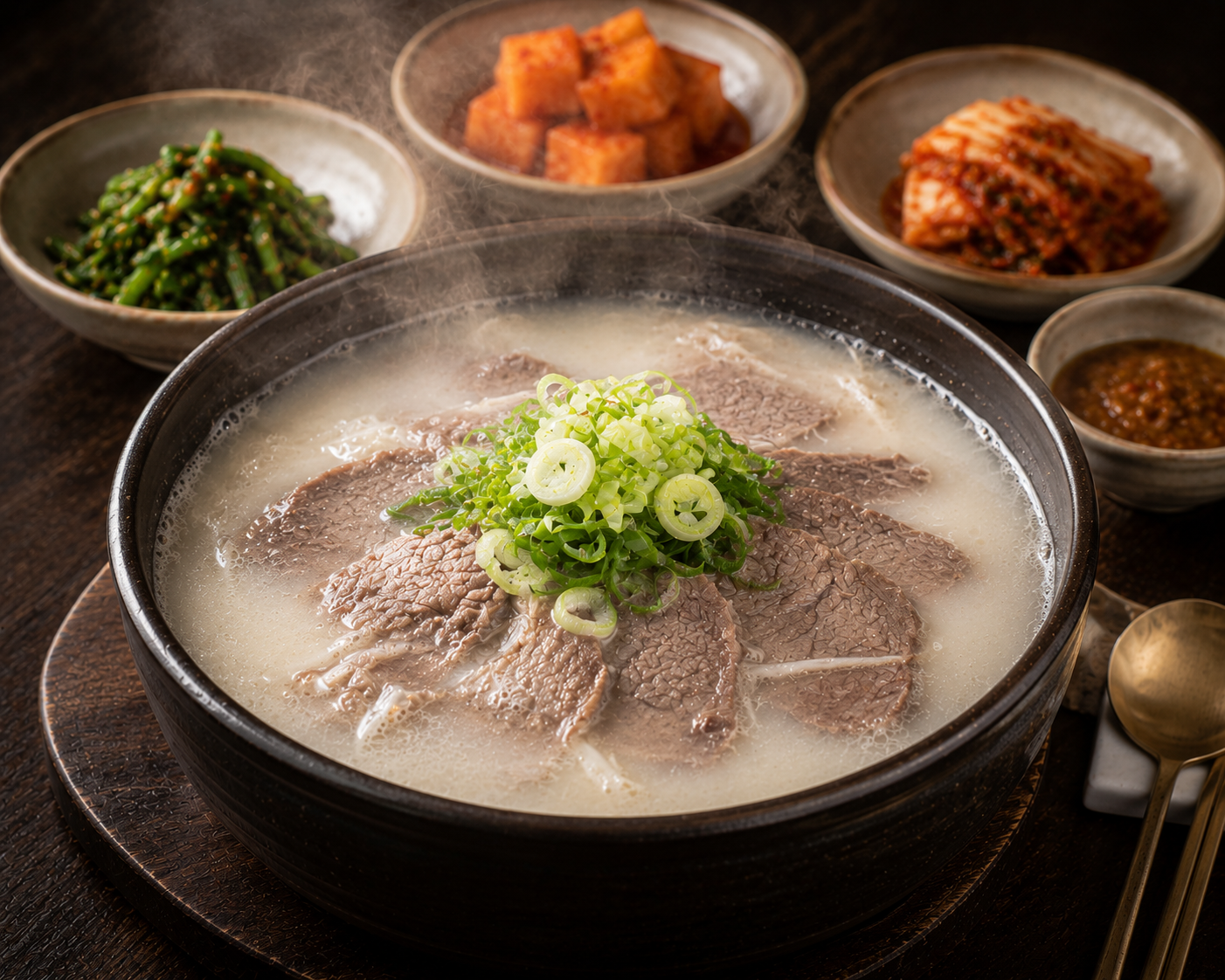
Seolleongtang
설렁탕 · seolleongtang
This is a soup rice dish made with bone broth from beef bones and brisket boiled for a long time until the broth turns white and mild, served with thinly sliced meat, noodles, and rice. The broth itself is lightly seasoned, so it's best to adjust the taste with salt and chopped green onions, and adding a bit of kkakdugi broth enhances its flavor. It is served piping hot in an earthenware pot, so be careful with the first sip.
Goes well with
Ingredients
How it's made
- 1Soak the beef bones and brisket in cold water to draw out the blood.
- 2In a large pot, add water and put in the beef bones and brisket to boil for a long time.
- 3Strain the boiled broth to prepare a clear liquid.
- 4Slice the boiled meat thinly and add it to the broth, cooking it with the noodles.
- 5Season with salt and chopped green onions.
Nutrition
* Estimated values per serving.
Allergens
Contains beef, not suitable for vegetarian or halal diets.
How to order
곰탕 주세요
Gom-tang ju-se-yo
Please give me Gomtang
Customize your order
Traveler tips
How to eat it
Frequently asked questions
- How are Gomtang and Seolleongtang different?
- Both are soups made by long-simmering beef and bones, so they have a lot in common. In general, Seolleongtang is strongly associated with a milky, bone-centered broth, while Gomtang often emphasizes the clear, clean taste of beef broth. That said, methods vary by restaurant, so the line between them is not always sharp.
- If the broth is clear, does that mean it was not simmered long enough?
- Not necessarily. Bones turn the broth milky when they are boiled hard for a long time, while different ways of handling the meat and bones can also produce a clear broth. Clear Gomtang can be seen as a style that brings out a clean beef aroma.
- Do you have to add Somen?
- Not necessarily. Some restaurants add a small amount of Somen by default, while others serve only rice and beef. Somen is an accompaniment that makes the meal more filling and gives the richness of the broth a softer feel.
Last reviewed: 2026-10-07