
Cultural background
A traditional rice cake and snack, it often appears during holidays or celebrations and is also used as a gift shared with neighbors during moving or opening a business.
Origin & history
Injeolmi is the classic example of a pounded rice cake: instead of shaping glutinous rice flour, makers pound steamed glutinous rice directly. The longer it is pounded, the more the rice grains break down, turning stretchy and sticky as if they have become one mass.
The origin of the name remains unclear. One story says that during the Joseon era, a commoner offered this rice cake to a king who was fleeing during wartime, and it came to be called Injeolmi after that person's family name. The tale survives in slightly different forms from region to region.
Regional & modern variations
- Mugwort Injeolmi — Mugwort is mixed into the glutinous rice dough, giving this Injeolmi a greenish hue. The nutty flavor of the soybean powder is joined by mugwort's fresh, slightly bitter aroma.
- Black Sesame Injeolmi — Instead of soybean powder, the pieces are coated in heugimja, ground black sesame. The color is darker than soybean powder, and the sesame gives it a richer, oilier nuttiness.
- Red Bean Injeolmi — This Injeolmi is coated in patgomul, a fluffy coating made from boiled red beans. Compared with soybean powder, it often adds more sweetness and tends to be reddish in color.
How Koreans eat it
Injeolmi is not a rice cake filled with a center; it is a rice cake made for easy cutting and sharing. A large slab can be cut into small pieces and arranged neatly. Rice cake shops usually treat it as something to eat on the day it is made, so buying it fresh is better than keeping it for later.
Taste & how to choose
First-time eaters may be surprised that Injeolmi is less sweet than expected and that the soybean powder feels soft and powdery in the mouth. Good Injeolmi has a coating that has not dried out, a rice cake base that has not cracked, and a soft bend when picked up by hand. Some of the coating falling off easily is fairly natural.
Similar dishes
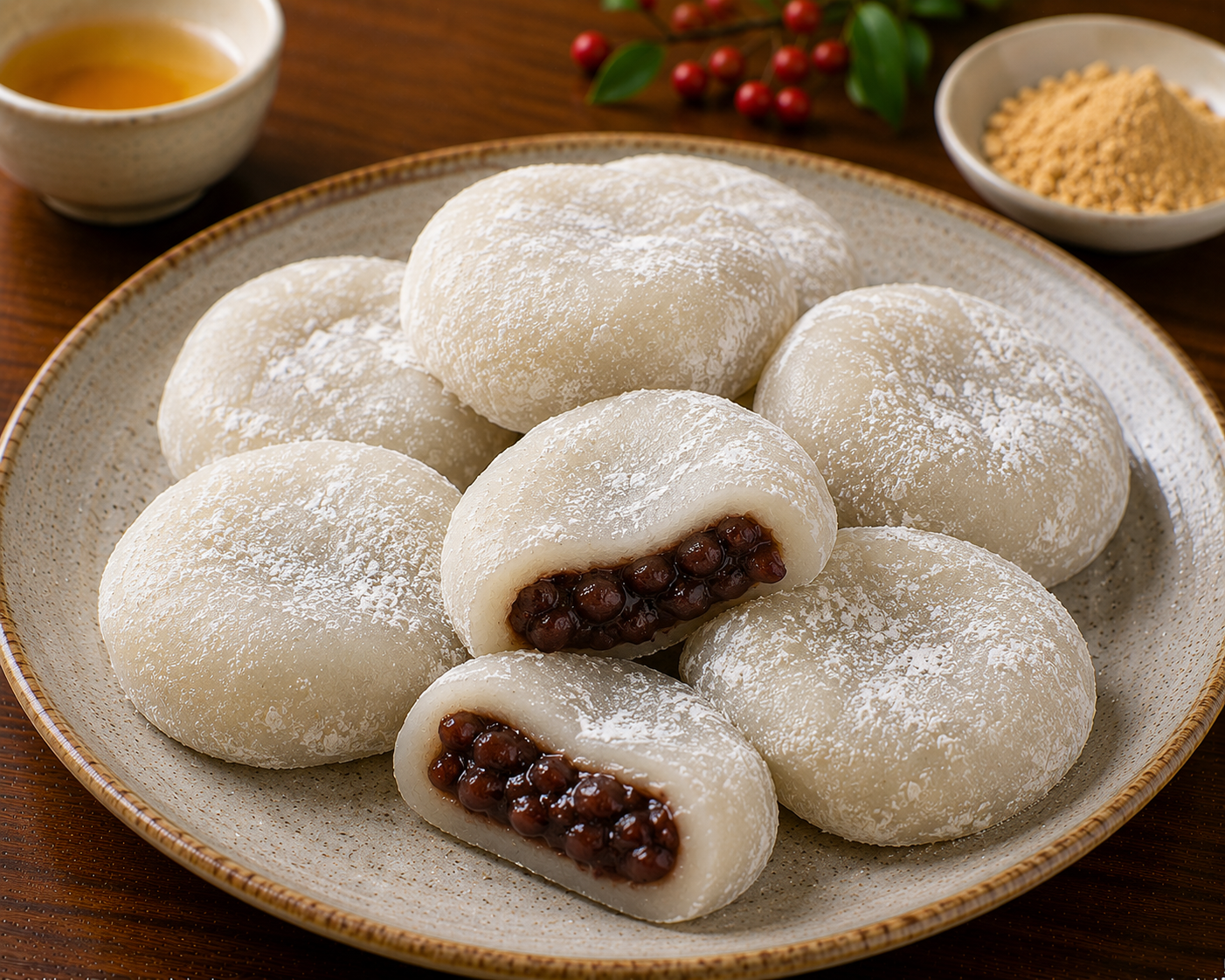
Chaltteok
찰떡 · chal-tteok
A chewy rice cake made by steaming glutinous rice and kneading it, then coating it with various powders. It is characterized by a sticky texture and subtle sweetness, making it great for snacks or desserts.
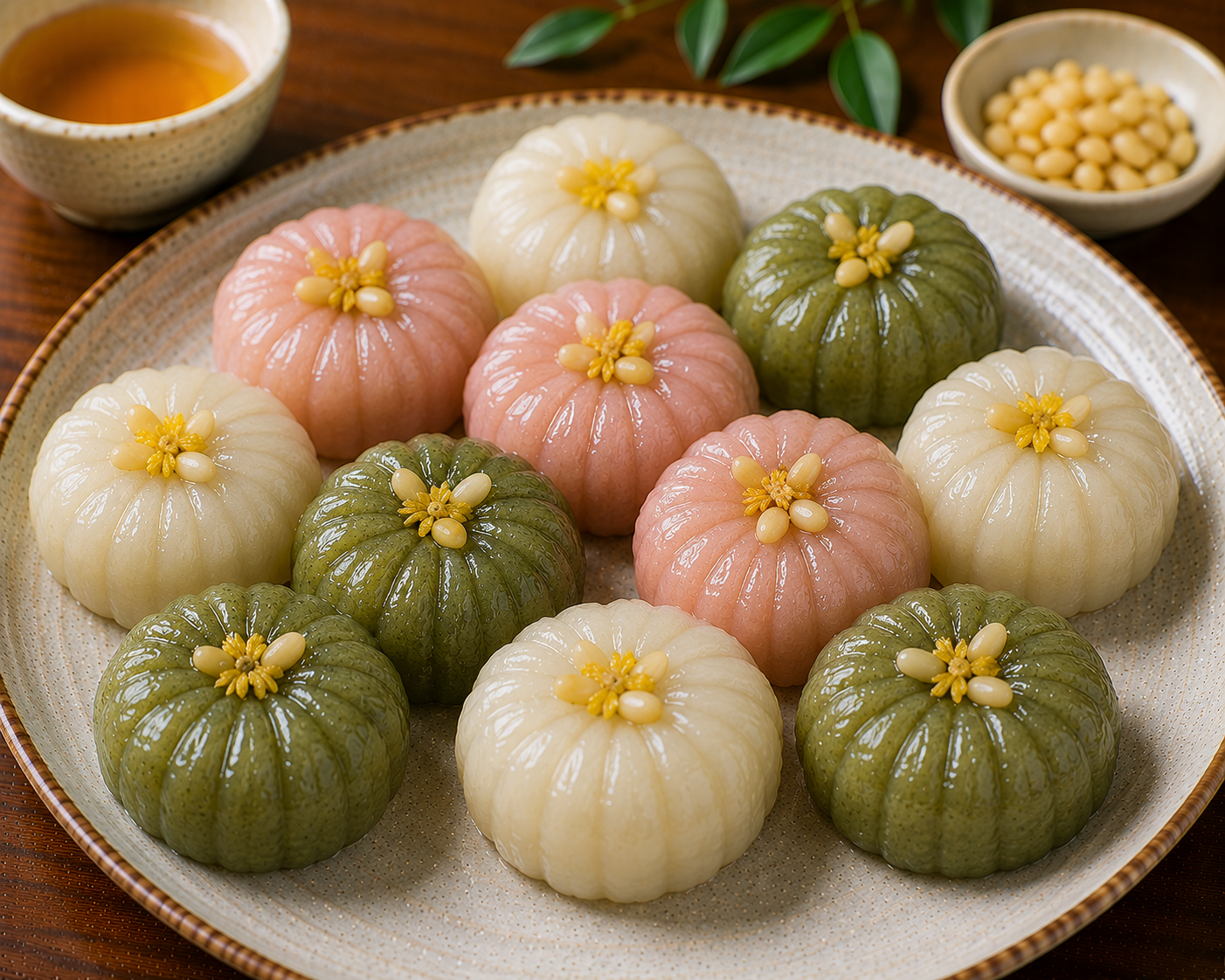
Danja
단자 · danja
A traditional rice cake made by kneading glutinous rice flour into round shapes and coating it with toppings, characterized by its chewy and sweet taste.
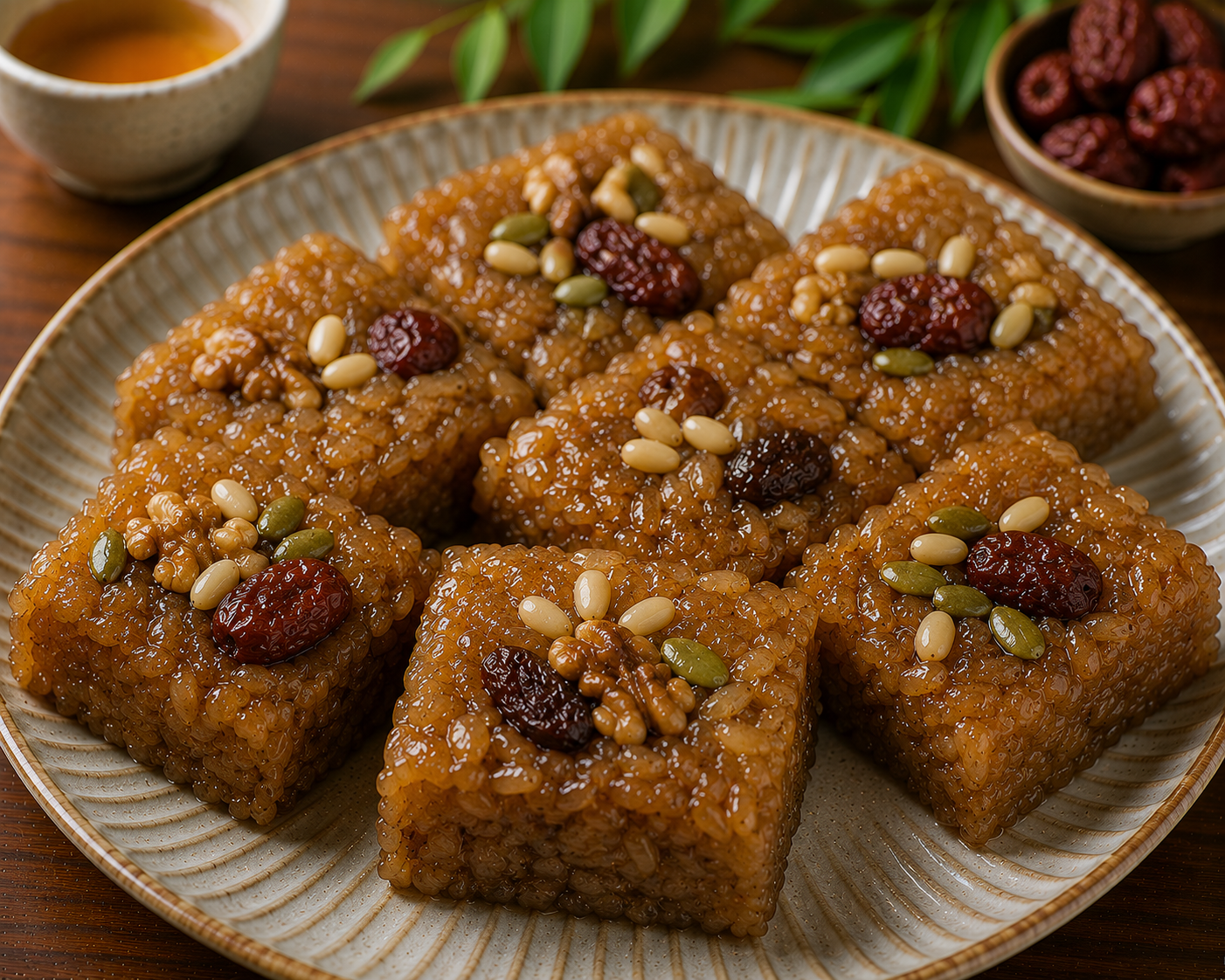
Yak-sik
약식 · yak-sik
A traditional Korean rice cake made by seasoning glutinous rice with honey and soy sauce, and steaming it with dates, chestnuts, and pine nuts.
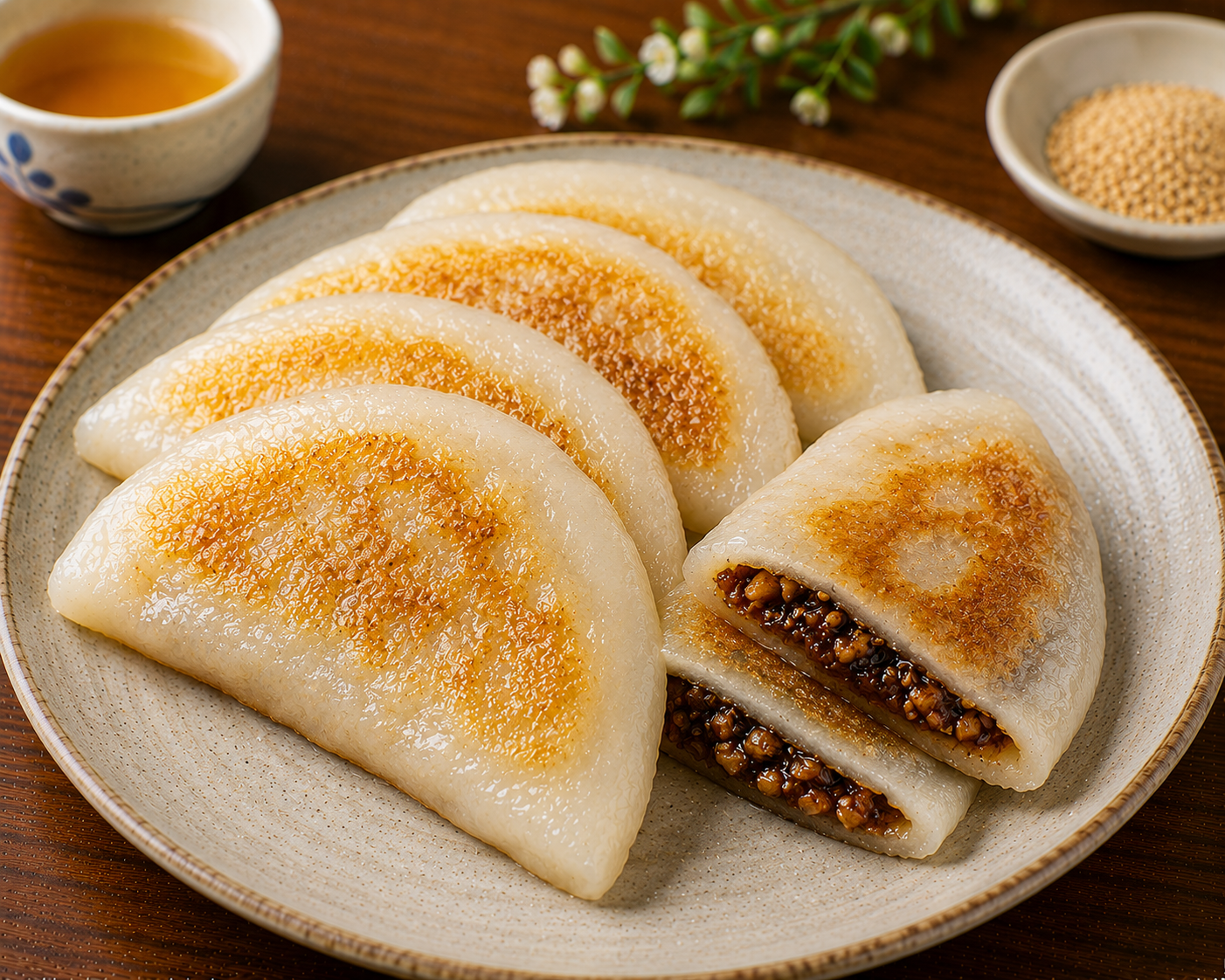
Bukkumi
부꾸미 · bukkumi
A traditional rice cake made by filling glutinous rice dough with red bean paste, shaped like a half-moon, and fried in oil.
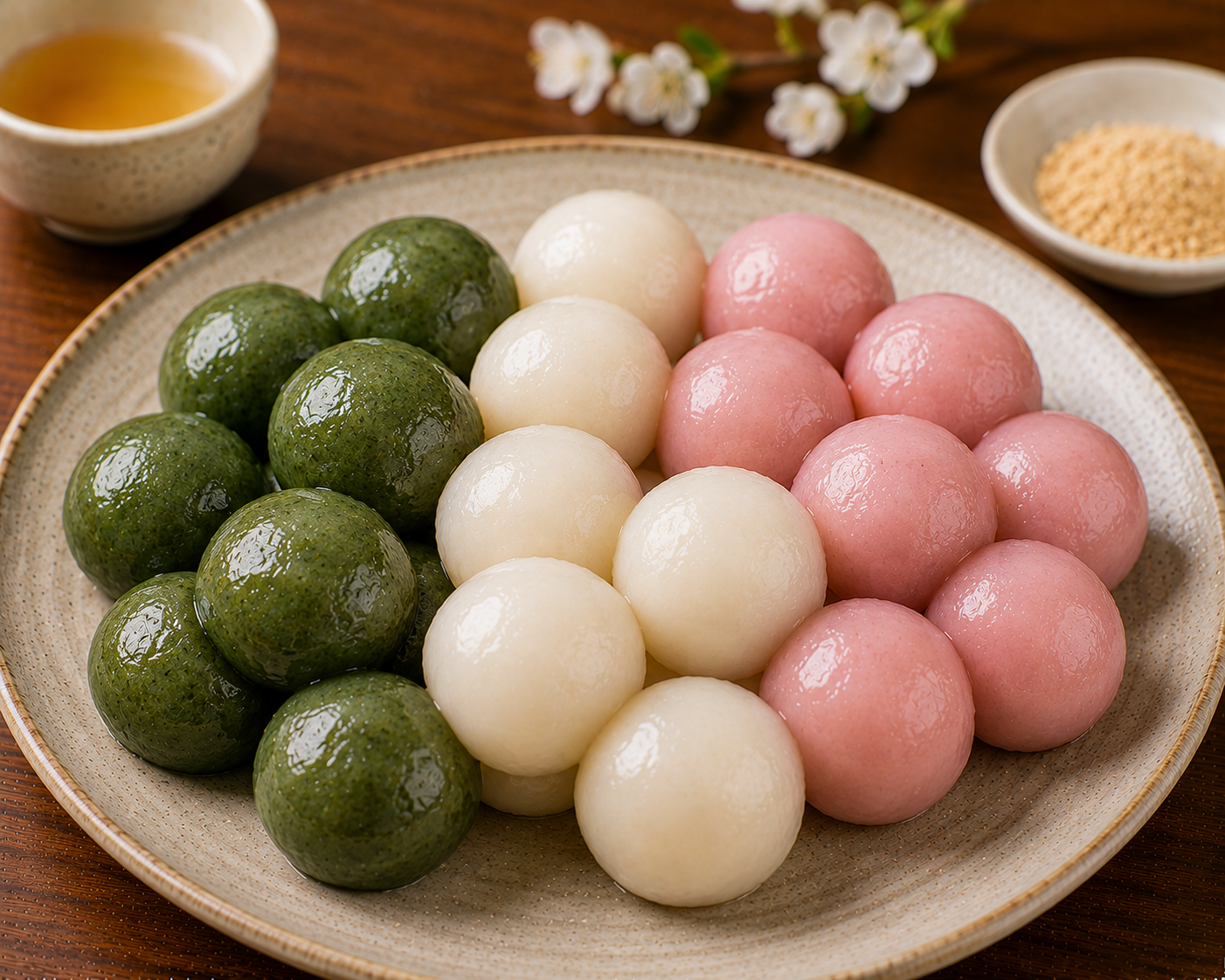
Gyeongdan
경단 · gyeongdan
A chewy and savory rice cake made by kneading glutinous rice flour into small balls, boiled, and then coated with soybean flour or red bean flour.
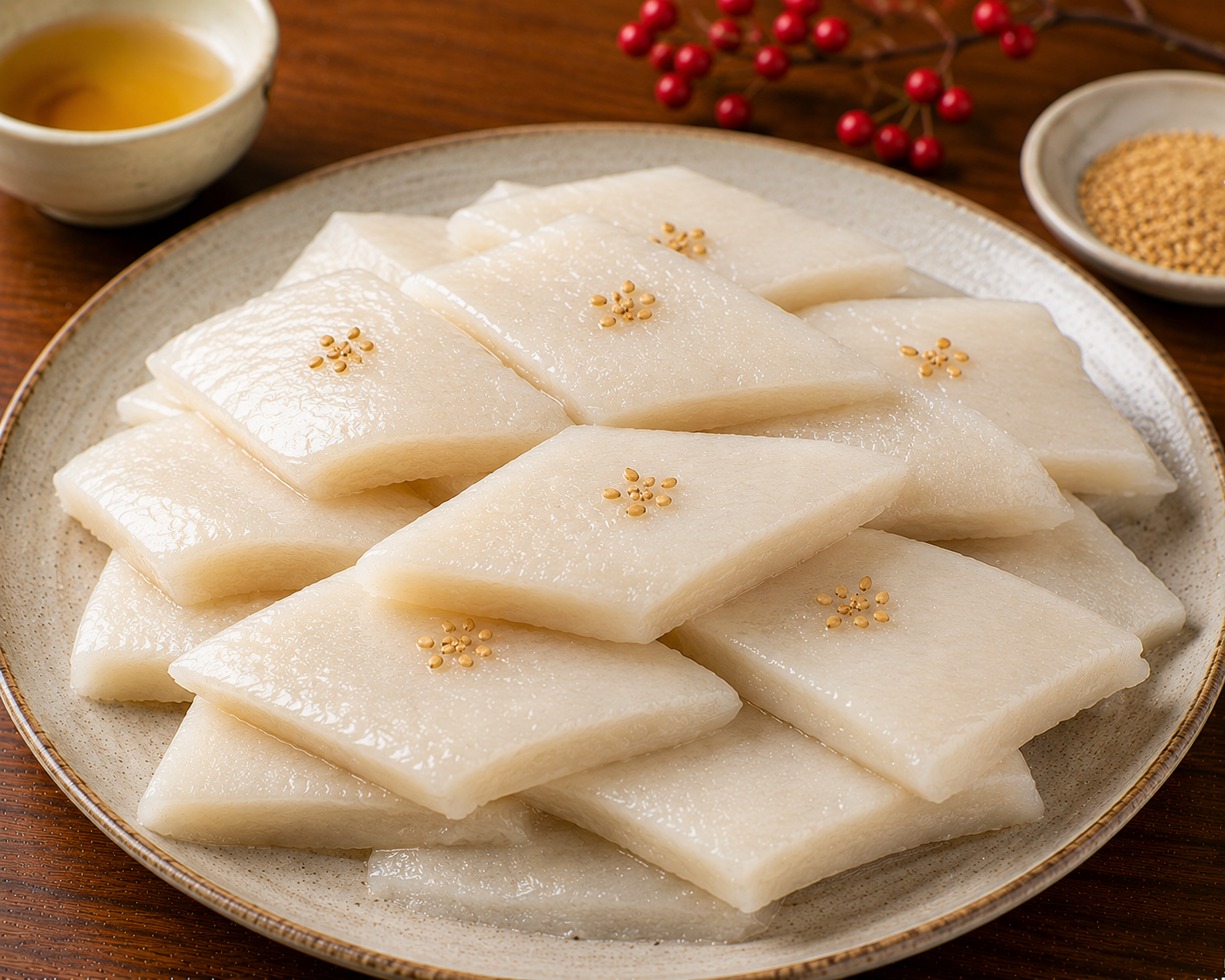
Jeolpyeon
절편 · jeolpyeon
A chewy rice cake made by steaming non-glutinous rice flour, pounding it until springy, rolling it out thin, and stamping it with patterns using a tteoksal (rice cake stamp). It is mainly used for holidays and celebrations.
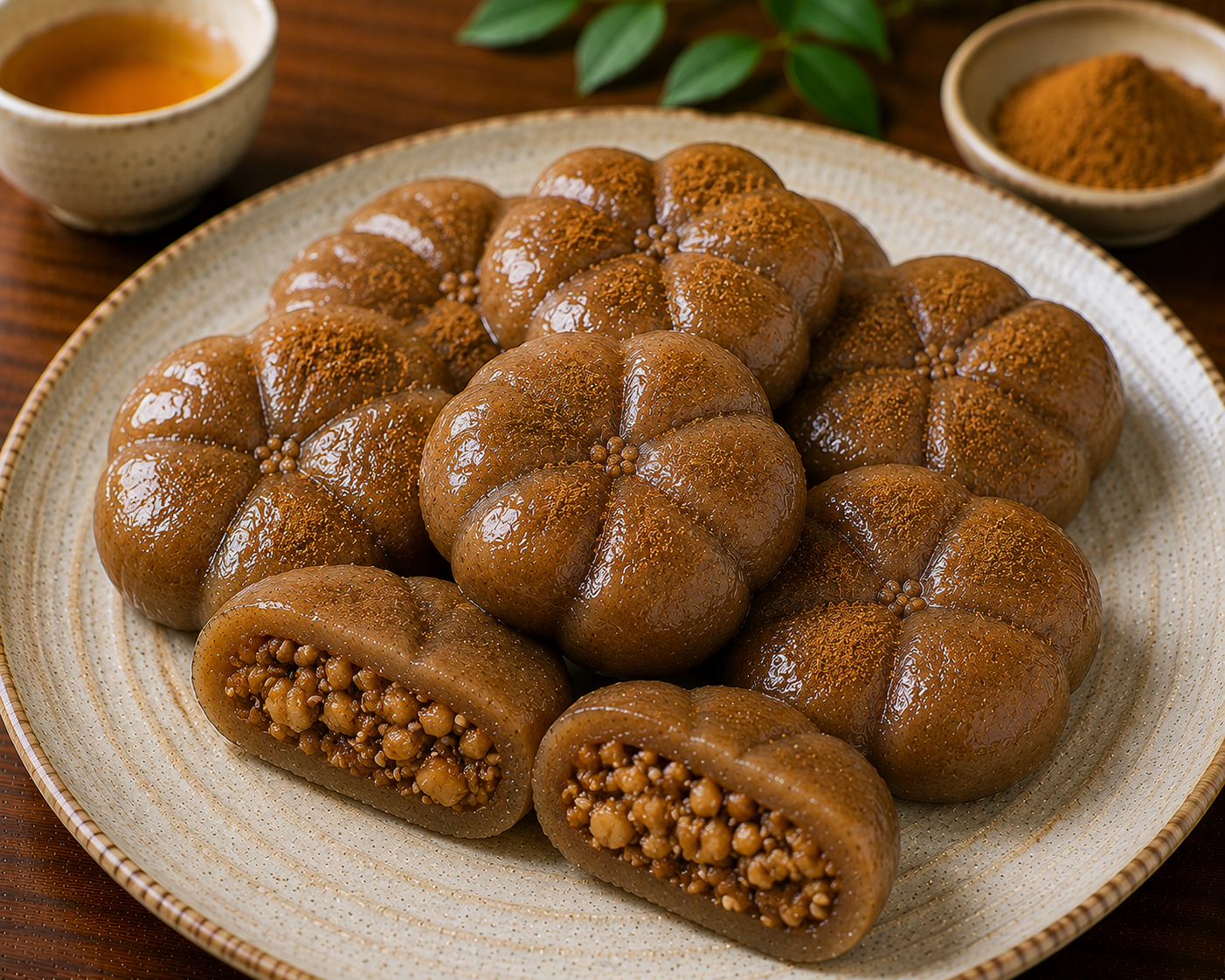
Gaepi-tteok
개피떡 · gae-pi-tteok
A rice cake made by steaming and pounding non-glutinous rice flour, rolling the dough out thin, filling it with red bean paste, and pressing it out into half-moon shapes. Because air is trapped inside and makes it puff up, it is also called baram-tteok (wind rice cake). It is known for its chewy texture and sweet taste.
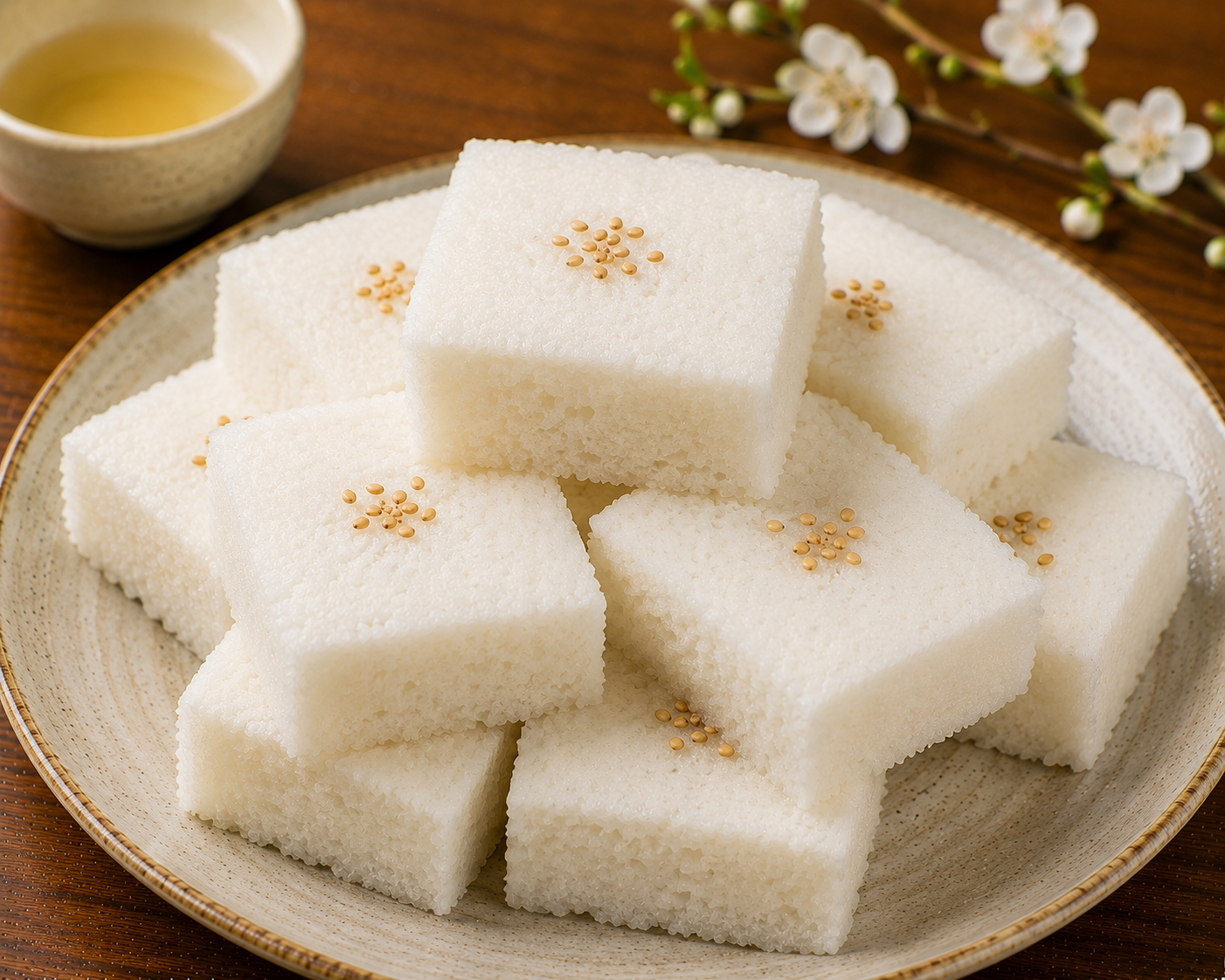
Baekseolgi (Snow White Rice Cake)
백설기 · baek-seol-gi
A white rice cake made by steaming non-glutinous rice flour, characterized by its crumbly, soft, and mild taste. It is mainly used for special occasions such as birthdays or first-birthday celebrations, and is also enjoyed as a snack or dessert.
Ingredients
How it's made
- 1Wash the glutinous rice thoroughly and soak it in water.
- 2Steam the soaked glutinous rice in a steamer until cooked.
- 3Put the cooked glutinous rice in a mortar and pound it to create a sticky texture.
- 4Cut the pounded glutinous rice into appropriate sizes and coat them with soybean powder.
Nutrition
* Estimated values per serving.
Allergens
Gluten-free as it contains no flour.
How to order
인절미 주세요
In-jeol-mi ju-se-yo
Please give me Injeolmi
Traveler tips
How to eat it
Frequently asked questions
- Why is it coated in soybean powder?
- The coating keeps the glutinous rice cake pieces from sticking to each other and also helps reduce drying on the surface. The nutty aroma of roasted soybean powder is also central to the flavor of Injeolmi.
- How do you eat Injeolmi after it hardens?
- Glutinous rice cake hardens over time. Once Injeolmi becomes firm, lightly grilling or warming it will soften it again, and the outside may turn a little crisp.
- Is soybean powder the same as peanut powder?
- Usually, it is powder made from roasted, ground soybeans. It is different from peanut powder, but anyone with a soybean allergy should be careful.
Last reviewed: 2026-10-07