
Cold Buckwheat Noodles
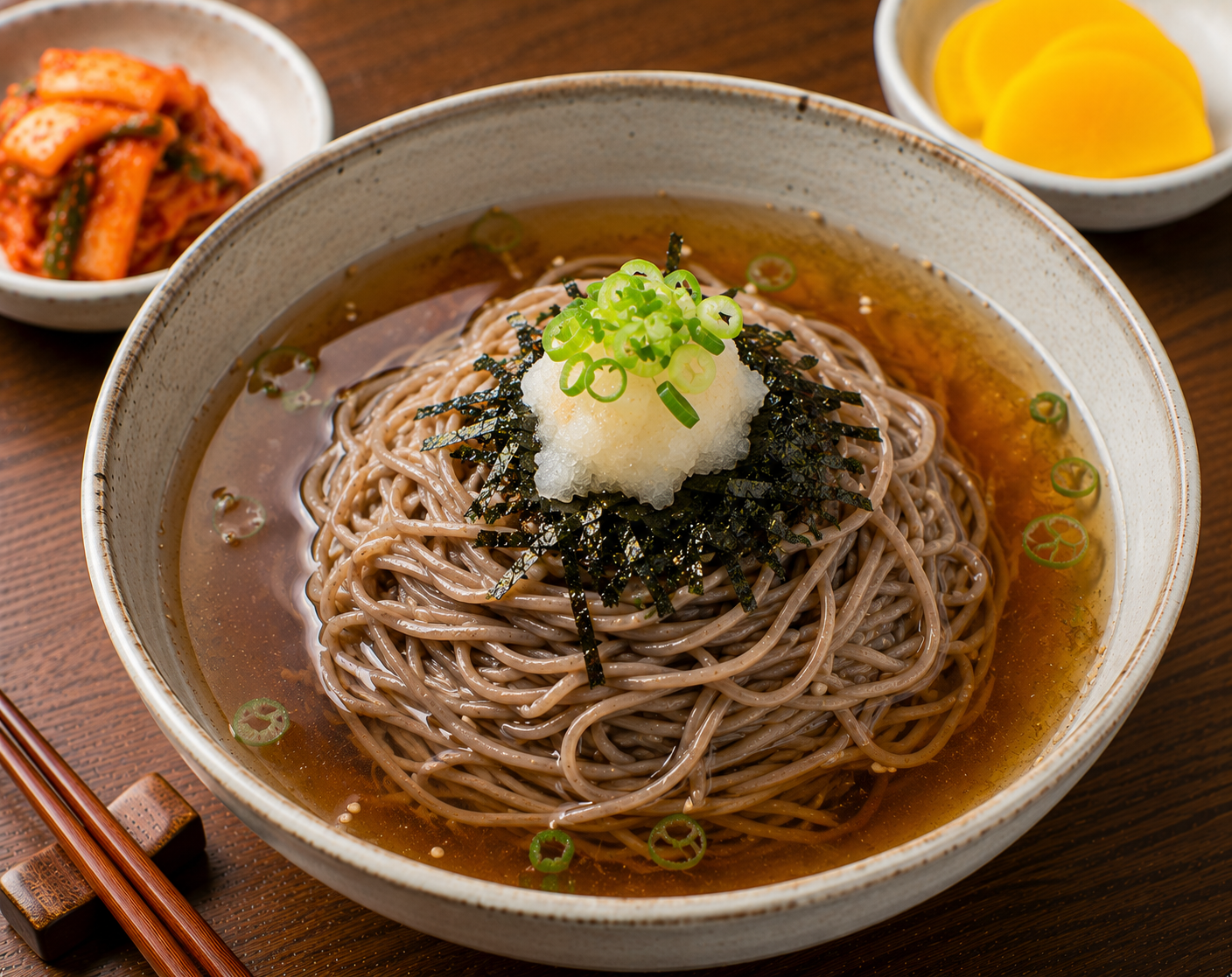
This dish features chewy noodles made from buckwheat that are served in a chilled broth, enjoyed with the cool, clear Dongchimi (radish water kimchi) or meat broth mixed with ice flakes. It's seasoned with mustard and vinegar to taste and is enjoyed not only in hot summer days but also as a refreshing finish to a meat meal.
Cultural background
Cold Buckwheat Noodles are a summer delicacy that can be enjoyed refreshingly in hot weather. It's often chosen as a conclusion to meals at Korean barbecue restaurants, and can be adjusted to individual taste with additional mustard and vinegar.
Origin & history
Cold Buckwheat Noodles are closely tied to the Naengmyeon culture of the northern Korean Peninsula. Buckwheat was widely eaten in colder regions, and one account says people would eat noodles in chilled winter Dongchimi broth. For that reason, although the dish now has a strong image as a summer food, it is often described as having originally belonged to the cold season.
After the Korean War, people from the North settled in the South, and Naengmyeon restaurants became more common. Cold Buckwheat Noodles then became a popular dining-out choice in Seoul and many other regions. Over time, each shop developed its own character through the balance of meat broth, Dongchimi broth, vinegar, and mustard.
Regional & modern variations
- Pyeongyang Naengmyeon — The aroma of buckwheat comes through relatively clearly, and the broth emphasizes clean, mild savoriness rather than strong sweetness or acidity. First-time diners may find the seasoning quite subtle.
- Jinju Naengmyeon — Known as the Naengmyeon of Jinju in Gyeongsangnam-do, this style often brings out the umami of seafood or meat broth as well. It also tends to come with relatively generous toppings such as egg garnish or meat.
- Hamheung-style Cold Buckwheat Noodles — Hamheung Naengmyeon is usually better known as spicy Bibim Naengmyeon, but some places serve it as Cold Buckwheat Noodles too. Because the noodles contain a lot of starch, they can feel chewier and more elastic than buckwheat noodles.
How Koreans eat it
At some Naengmyeon restaurants, a cup of warm meat broth is served before the noodles arrive. It helps warm the stomach before the cold Cold Buckwheat Noodles and is also treated like a small preview of the restaurant's broth style. When eating Cold Buckwheat Noodles as a meal on its own, many people also order mandu or Suyuk on the side.
Taste & how to choose
The heart of Cold Buckwheat Noodles lies not in strong seasoning but in the gentle umami of the cold broth and the aroma of the buckwheat noodles. On a first try, it may seem more understated than expected, so it is best to taste the broth before adding vinegar and mustard. In a good bowl of Cold Buckwheat Noodles, the broth is not murkily sweet or aggressive; it is cold, yet leaves a clean finish.
Similar dishes
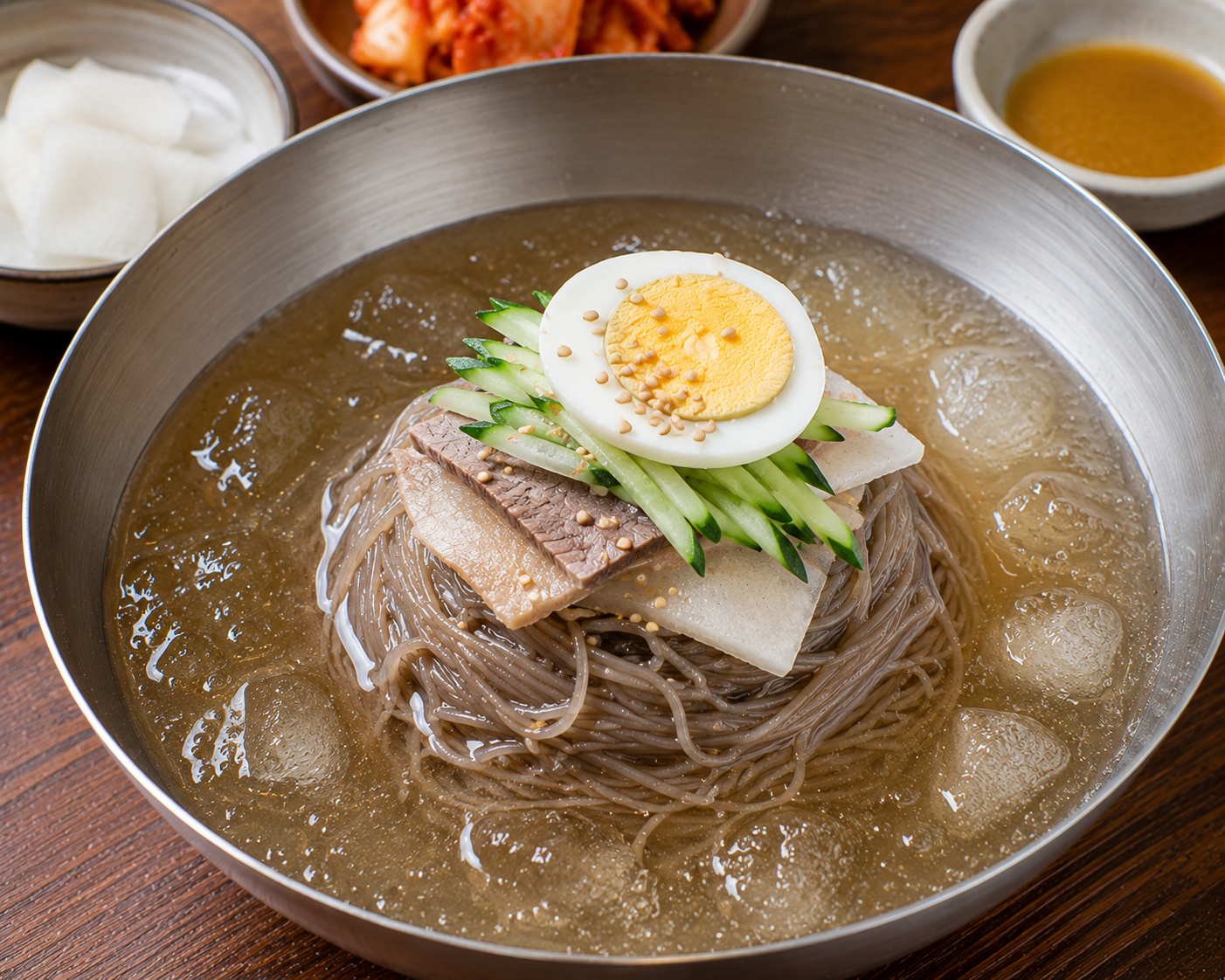
Naengmyeon
냉면 · naengmyeon
A dish made with chewy noodles made from buckwheat, served in chilled broth with floating ice, enjoyed by mixing the noodles with Dongchimi (radish water kimchi) and meat broth (mul-naengmyeon). Adjust the flavor with mustard and vinegar to your liking, perfect for hot summer days and often enjoyed as a meal finish at a barbecue restaurant.
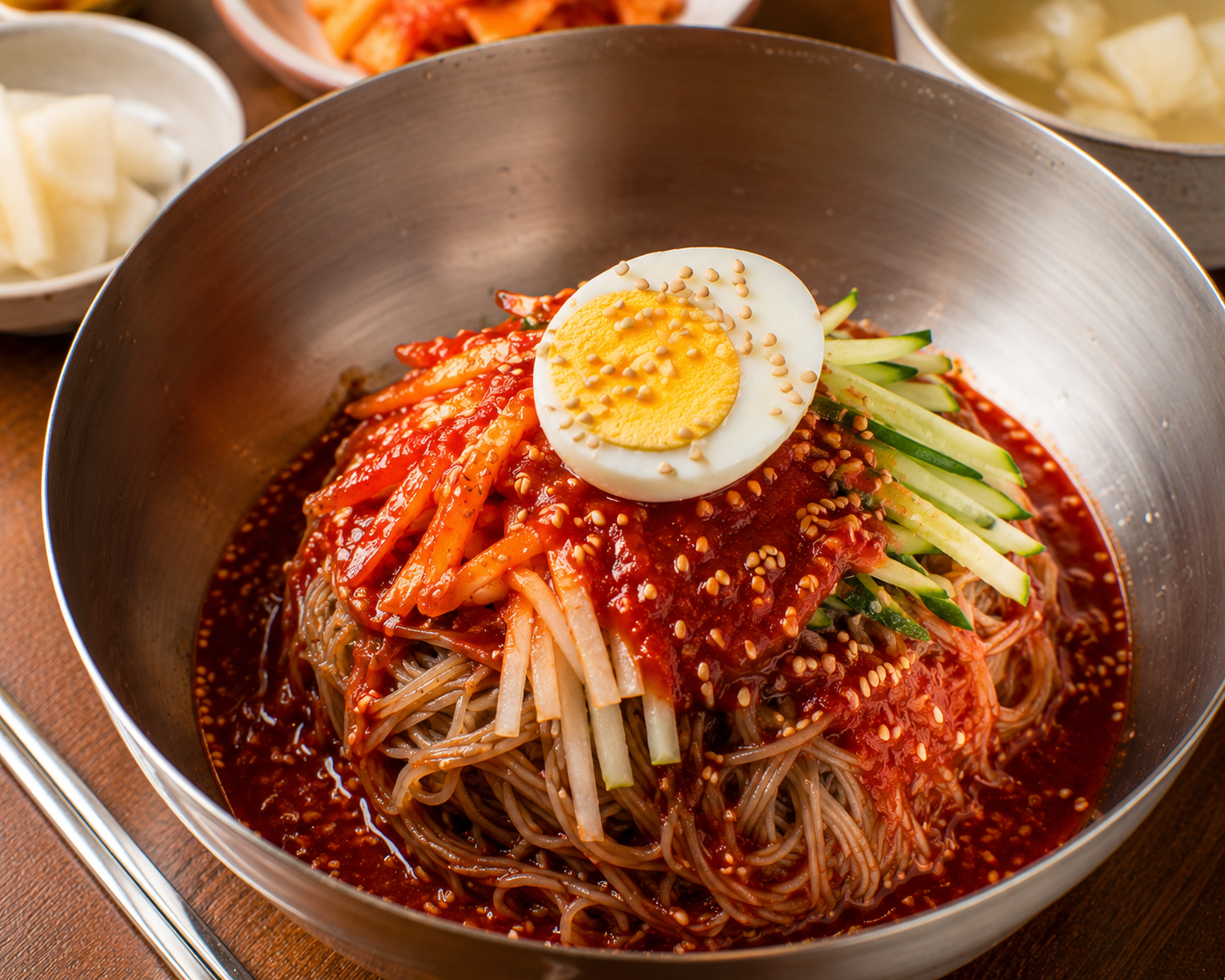
Bibim Naengmyeon
비빔냉면 · bi-bim-naeng-myeon
A cold noodle dish made with chewy buckwheat noodles mixed with a spicy sauce, enjoyed as a summer delicacy.
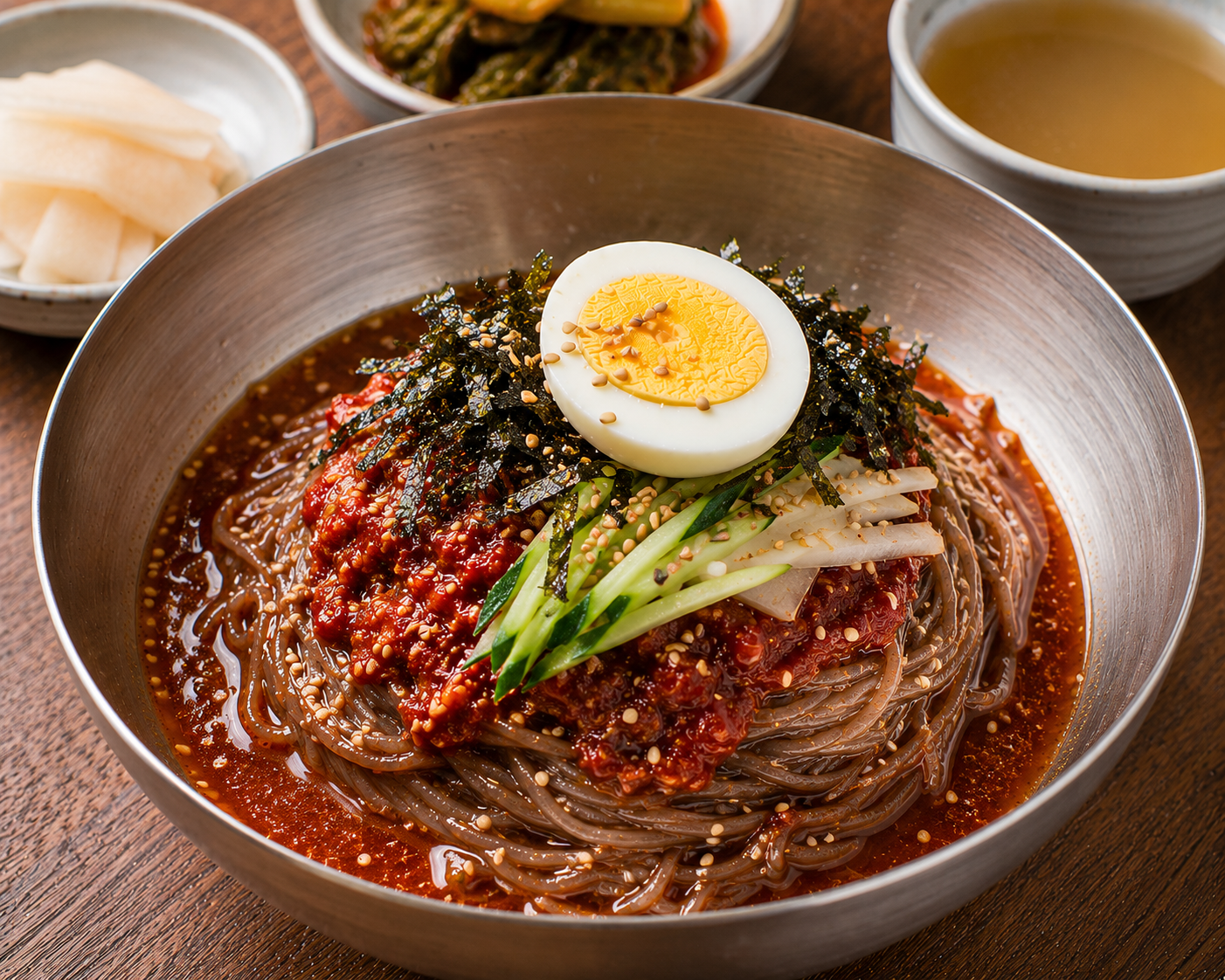
Buckwheat Noodles
막국수 · mak-guksu
A traditional noodle dish from Gangwon Province made by mixing buckwheat noodles with cold broth. It is characterized by its cool and nutty taste and is very popular as a summer delicacy.
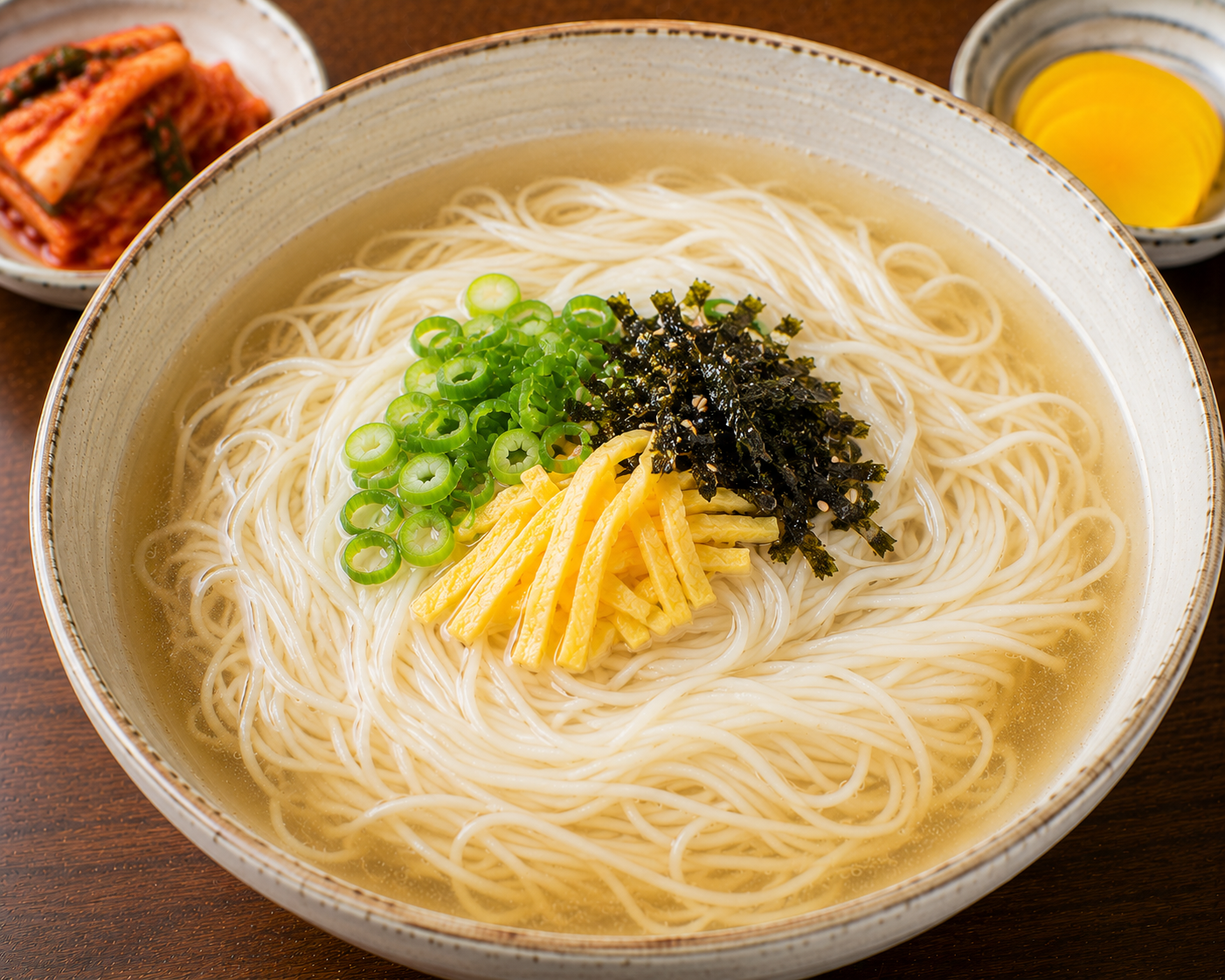
Somyeon (Thin Wheat Noodles)
소면 · somyeon
A traditional Korean noodle dish made by boiling thin wheat flour noodles and served with various broths or seasonings.
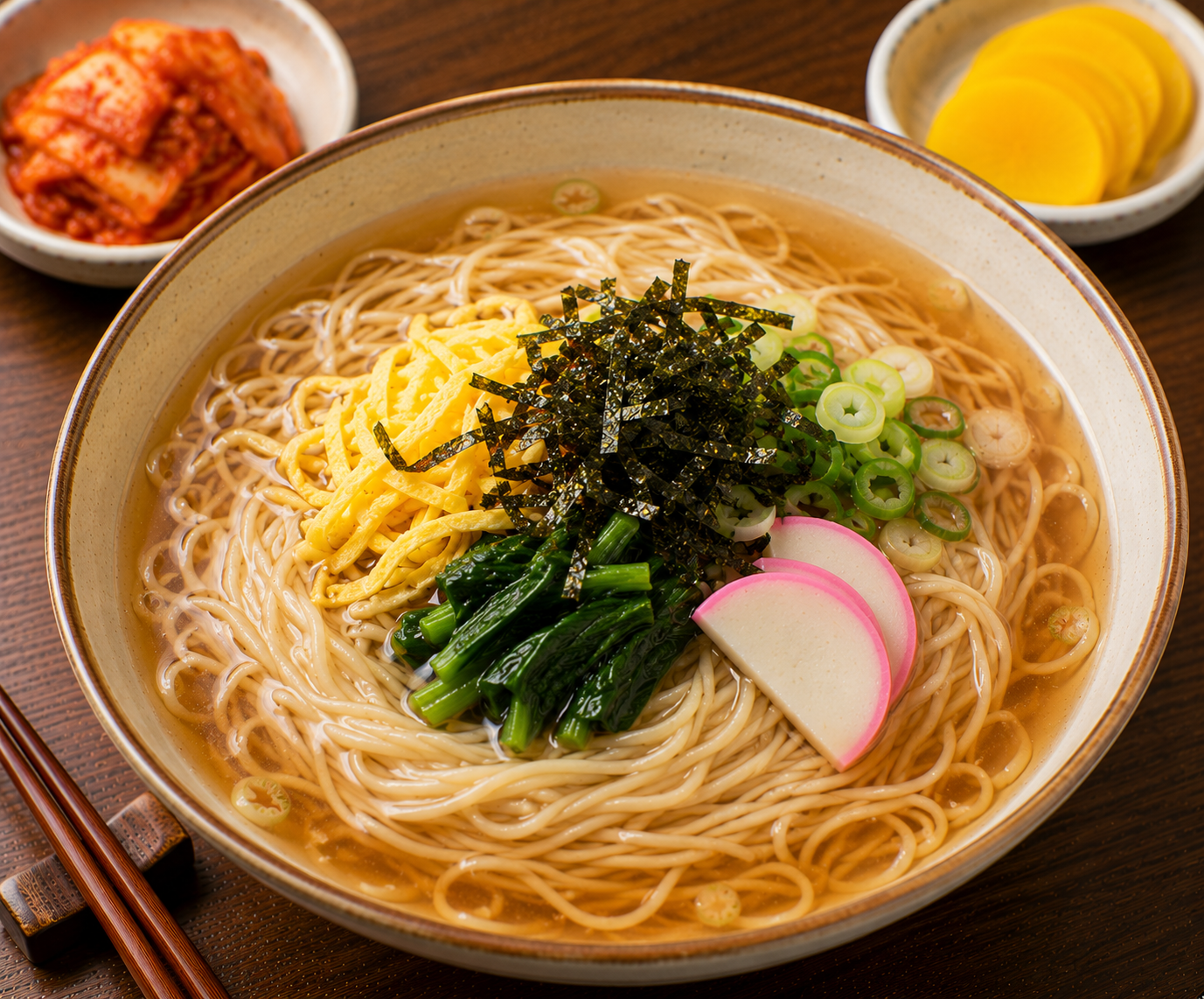
Warm Noodles
온면 · on-myeon
A traditional Korean noodle dish where boiled noodles are mixed in warm broth. You can enjoy a rich and light taste primarily using anchovy or beef bone stock.
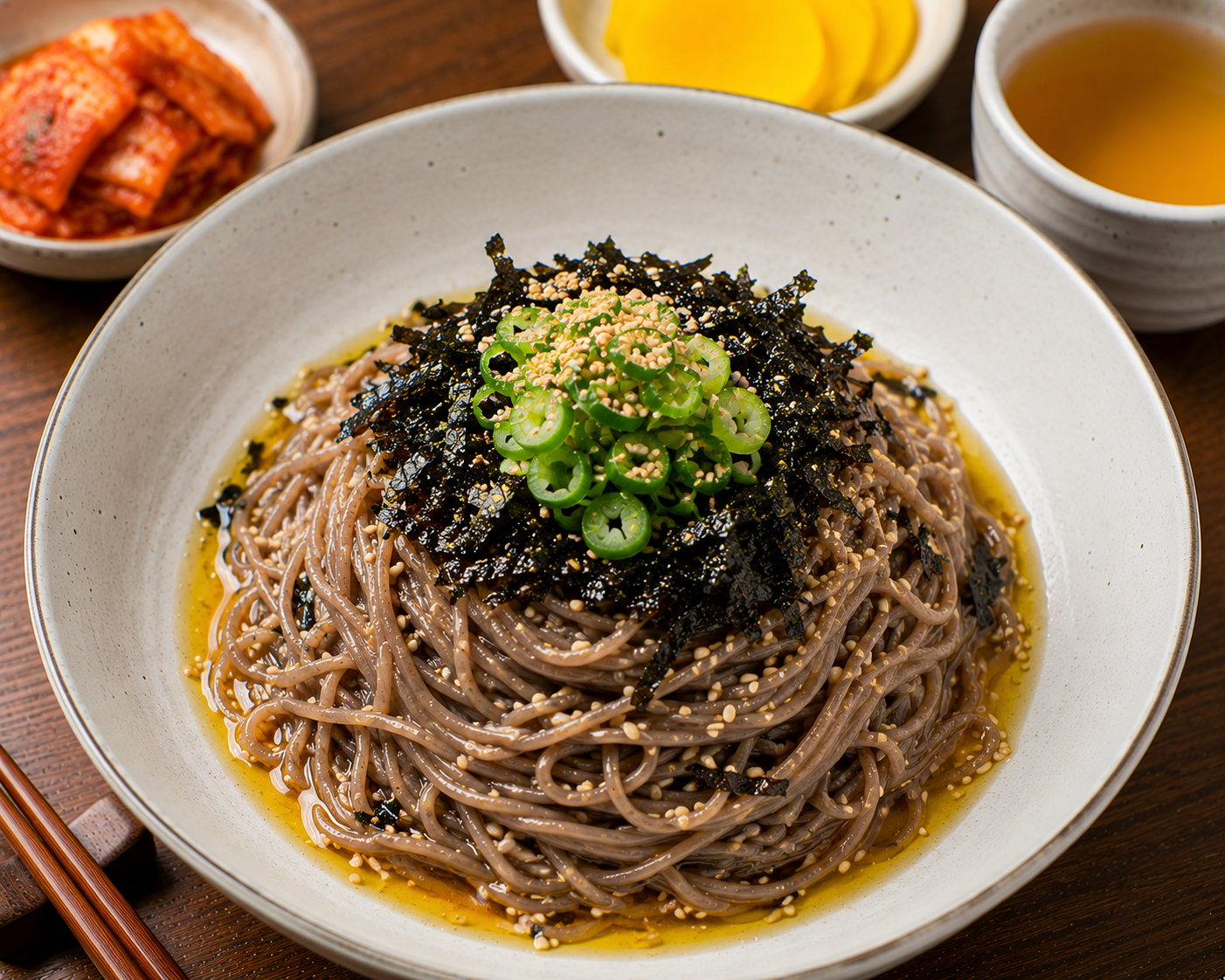
Perilla Oil Buckwheat Noodles
들기름막국수 · Deul-gi-reum Mak-guk-su
Korean-style bibim noodles mixed with buckwheat noodles, perilla oil, and soy sauce. The rich perilla oil seeps into the noodles, enhancing the flavor.
Goes well with
Ingredients
How it's made
- 1Cook the buckwheat noodles and rinse them in cold water to cool.
- 2Mix the Dongchimi broth and meat broth and prepare it cold.
- 3Place the noodles in a bowl and pour the cold broth over them.
- 4Top with boiled egg and sliced meat.
Nutrition
* Estimated values per serving.
Allergens
Not suitable for vegetarian and halal diets due to the use of meat broth.
How to order
물냉면 주세요
Mul-naeng-myeon ju-se-yo
Cold Buckwheat Noodles, please
Customize your order
Traveler tips
How to eat it
Frequently asked questions
- Why do people say it used to be a winter dish when it is a summer food?
- Naengmyeon is closely associated with cold Dongchimi broth, and one account says it was a dish eaten in winter. Today, thanks to refrigeration technology and dining-out culture, it has become a signature food for hot days.
- Can I add vinegar and mustard right away?
- First taste one or two spoonfuls of the broth, then add them if you like. Pyeongyang Naengmyeon in particular has a delicate broth, so adding too much from the start makes it hard to appreciate the difference.
- Is it rude to cut the noodles with scissors?
- At most restaurants, cutting the noodles is not considered rude. However, at Naengmyeon shops that place importance on the aroma of buckwheat and the texture of the noodles, some people prefer to eat them without cutting.
Last reviewed: 2026-10-07