
Cultural background
A common snack on the streets during winter, popular for being warm and comforting in cold weather.
Origin & history
Bungeo-ppang is widely said to have taken shape as a Korean street snack under the influence of taiyaki, Japan's fish-shaped confection. In Korea, the shape came to be associated not with sea bream but with bungeo, a more familiar freshwater fish, and the name became ‘붕어빵’ (Bungeo-ppang, “crucian carp bread”).
After the Korean War and through the years of economic growth, it spread as an inexpensive, warming snack. The image of Bungeo-ppang remains strongly tied to small street stalls that bake it to order in metal molds.
Regional & modern variations
- Custard Cream Bungeo-ppang — Bungeo-ppang filled with yellow custard cream instead of sweet red bean paste. Its sweetness is softer and milkier than the nutty sweetness of red beans.
- Mini Bungeo-ppang — Bungeo-ppang made small, close to bite-size. Vendors sell several pieces together in a bag, and the smaller size makes it easier to enjoy more of the crisp outer surface.
- Ingeo-ppang — Very similar to Bungeo-ppang, though it is often larger or has dough that feels chewier. The name is different, but travelers can think of it as the same family of winter fish-shaped bread.
How Koreans eat it
Bungeo-ppang is usually a snack bought while walking down the street rather than a dessert after a meal. Vendors often serve several pieces in a paper bag, and in Korea people also use the term ‘붕세권’ (Bungse-gwon, “Bungeo-ppang catchment area”) to talk about how hard it can be to find a nearby Bungeo-ppang stall. Whether to eat it head-first or tail-first is also a lighthearted topic of joking.
Taste & how to choose
Good Bungeo-ppang should not be soggy on the outside; the edges and fins should be slightly crisp. The inside is soft like bread, and the red bean filling is hot and sweet. Many people feel more satisfied when the filling reaches nearly all the way to the tail.
Similar dishes
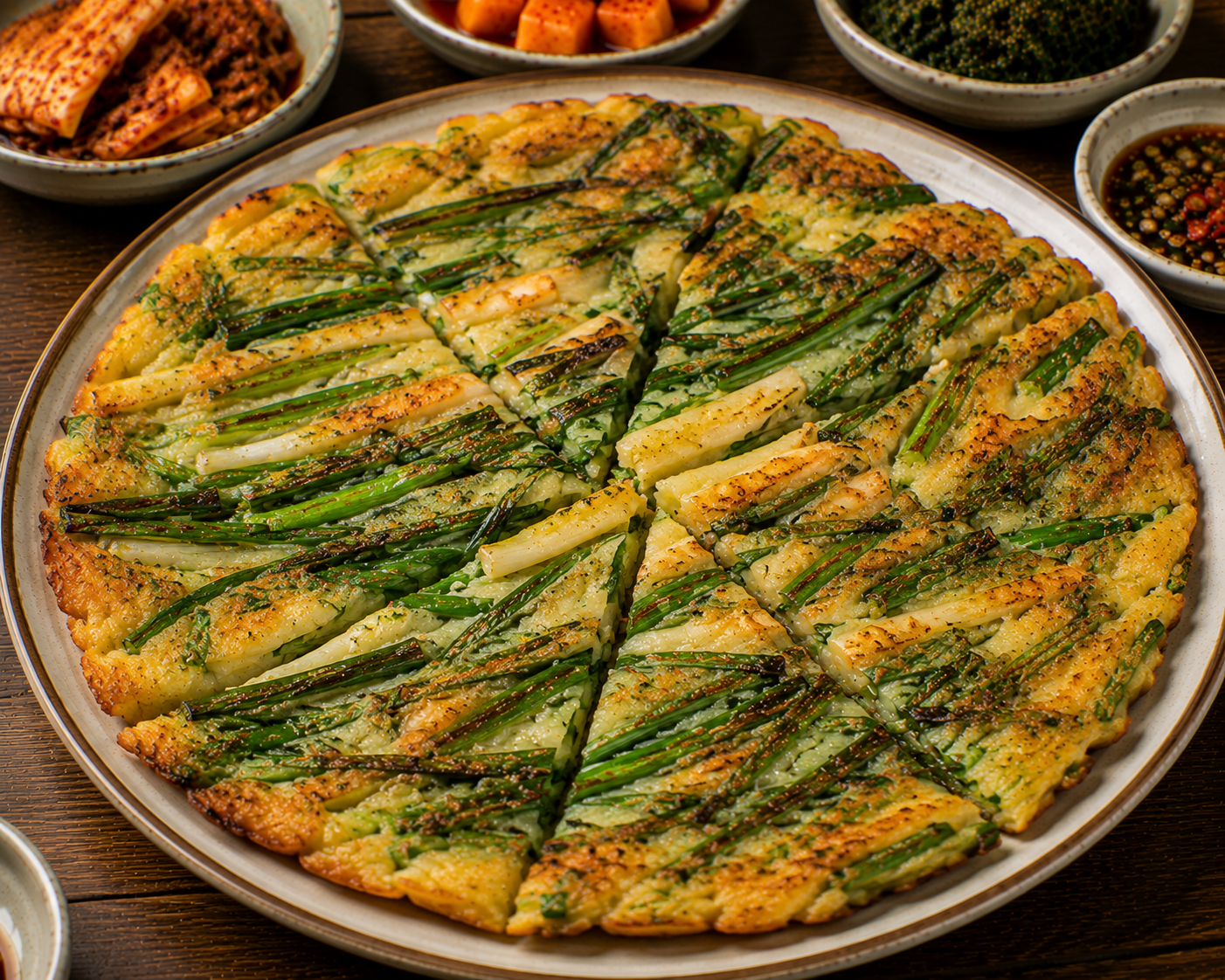
Pajeon
파전 · pa-jeon
A pancake made with plenty of chives, spread wide in a frying pan with a flour batter. The outside is golden and crispy while the inside is moist with a blend of chives. It is especially enjoyed as a side dish with Makgeolli on rainy days, cut and shared while dipped in vinegared soy sauce.
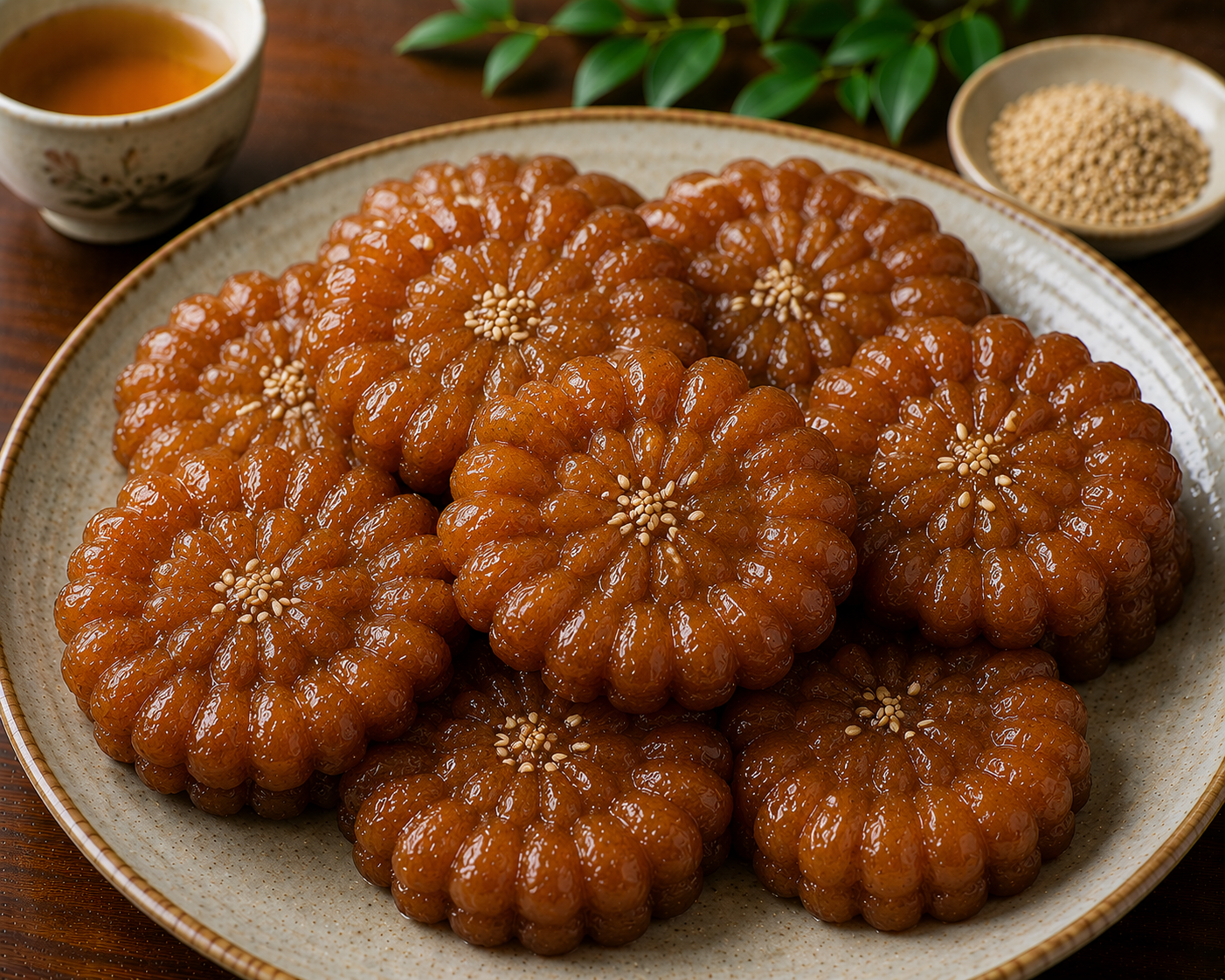
Yakgwa
약과 · yakgwa
A traditional snack made by kneading flour with honey and oil, then frying it to create a chewy and sweet treat. It is characterized by its sticky texture and sweet taste, often enjoyed during rituals or holidays as a snack.
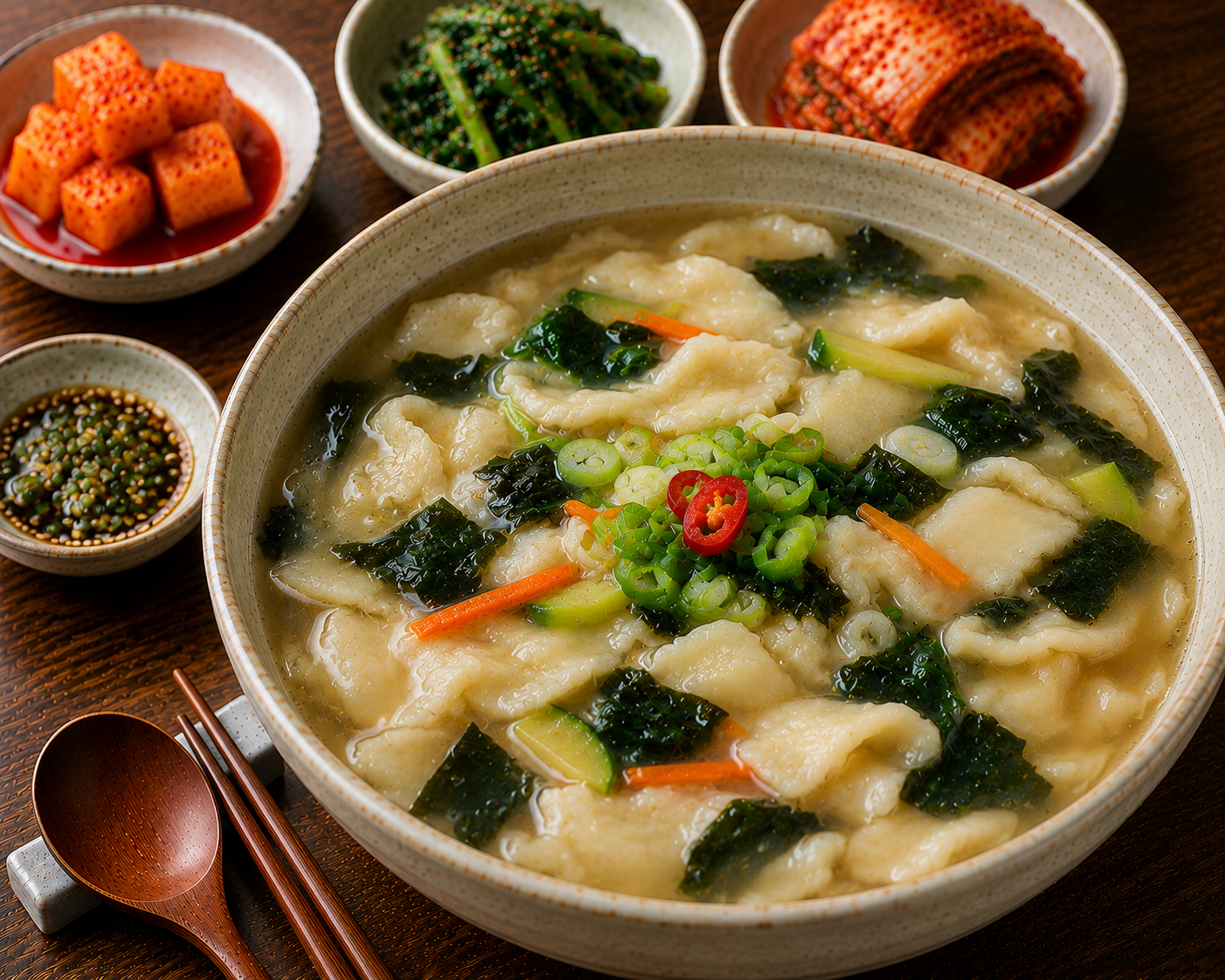
Sujebi
수제비 · su-je-bi
A broth dish made by tearing dough from flour and boiling it, characterized by its chewy texture and clear, mild broth.
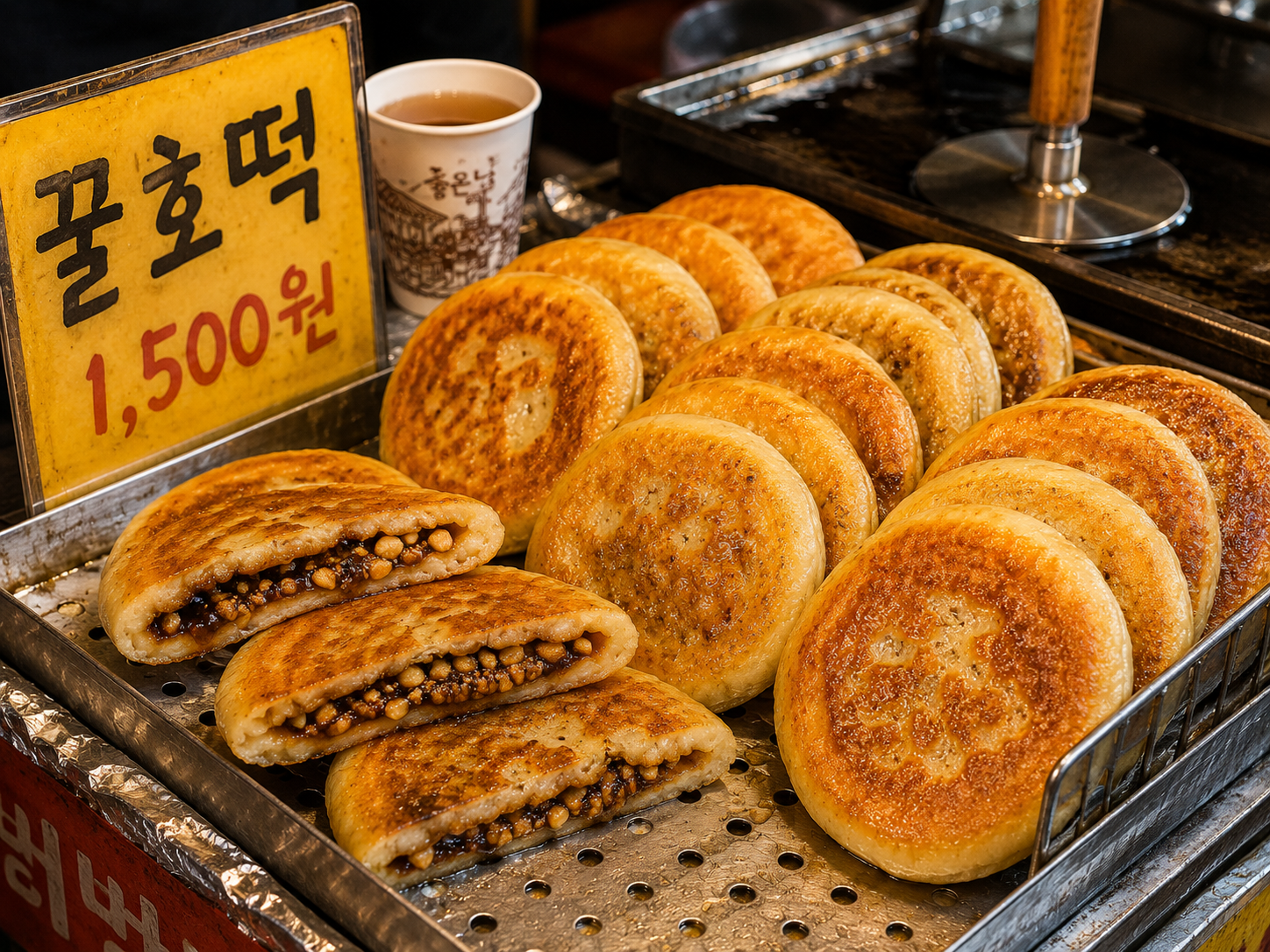
Hotteok
호떡 · ho-tteok
A warm street snack made by frying dough filled with brown sugar and nut syrup. It has a crispy exterior and a flowing brown sugar syrup interior, making it a representative winter treat that tastes even better when eaten warm right after it is freshly made.
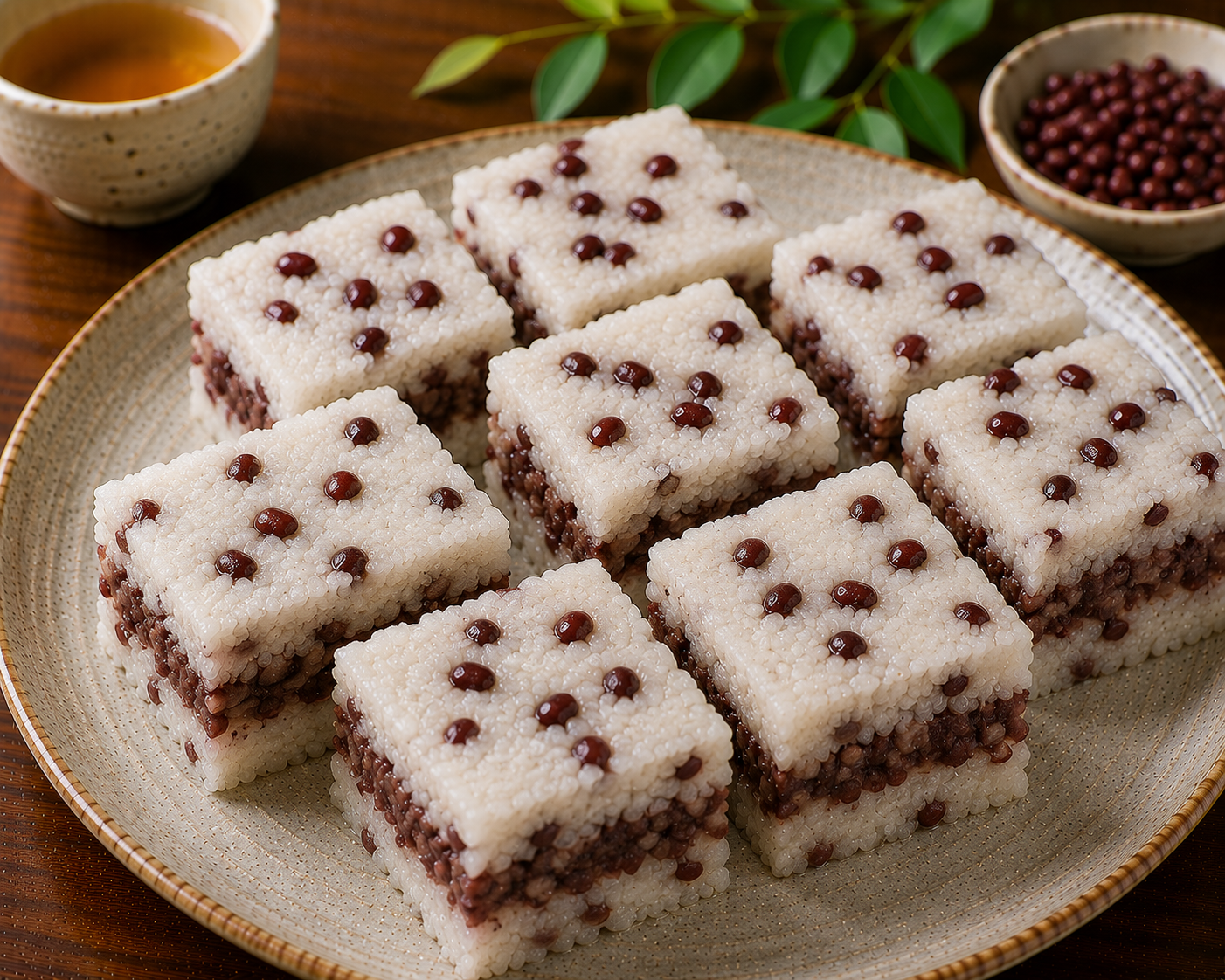
Red Bean Rice Cake
팥설기 · pat-seolgi
A steamed rice cake made by layering non-glutinous rice flour with sweetened red bean topping, characterized by its light, crumbly texture and subtle sweetness. It is typically enjoyed as a snack or dessert and often appears on holidays or special occasions.
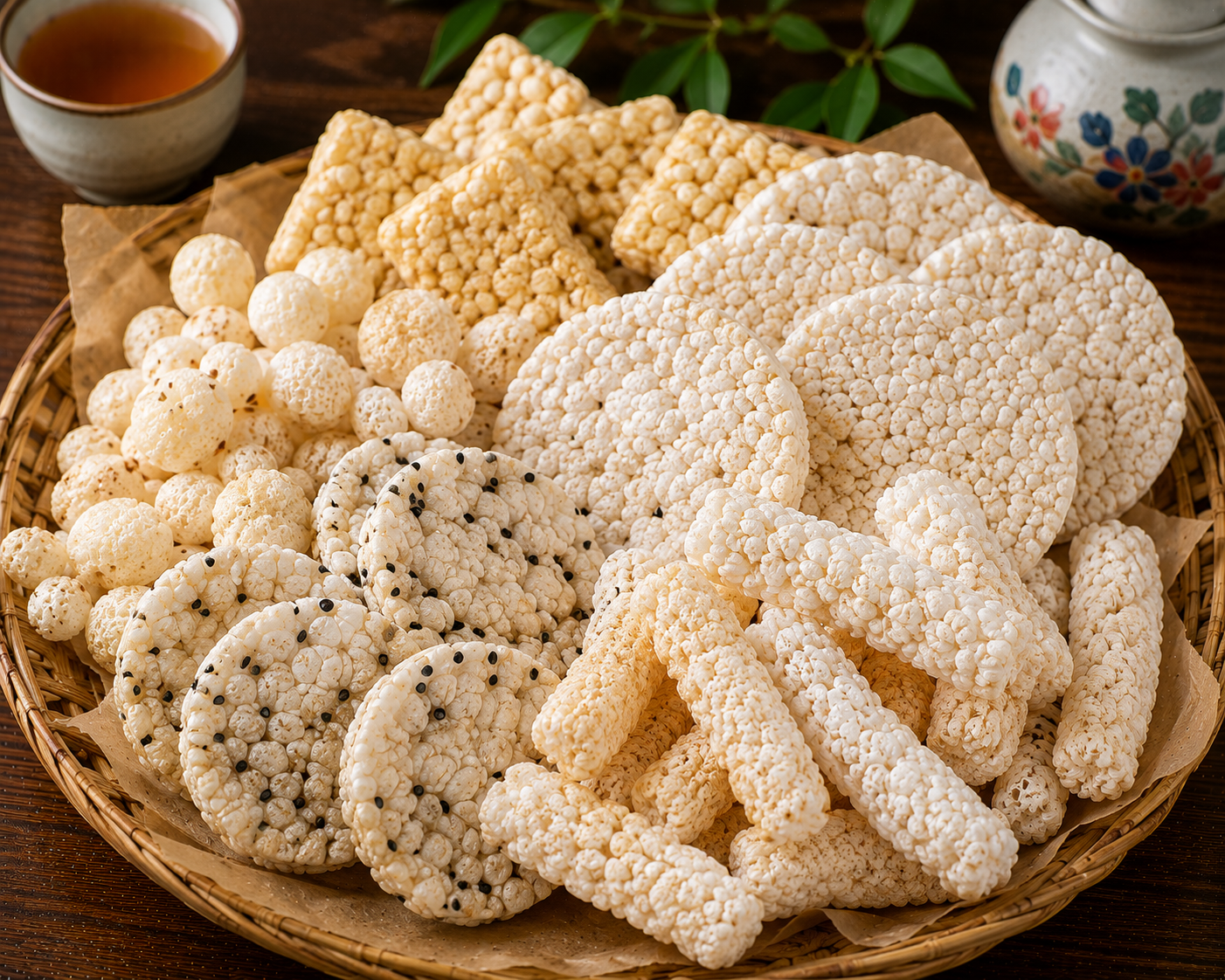
Puffed Rice
뻥튀기 · ppeong-twi-gi
A crispy and light snack made by puffing rice or corn at high temperature.
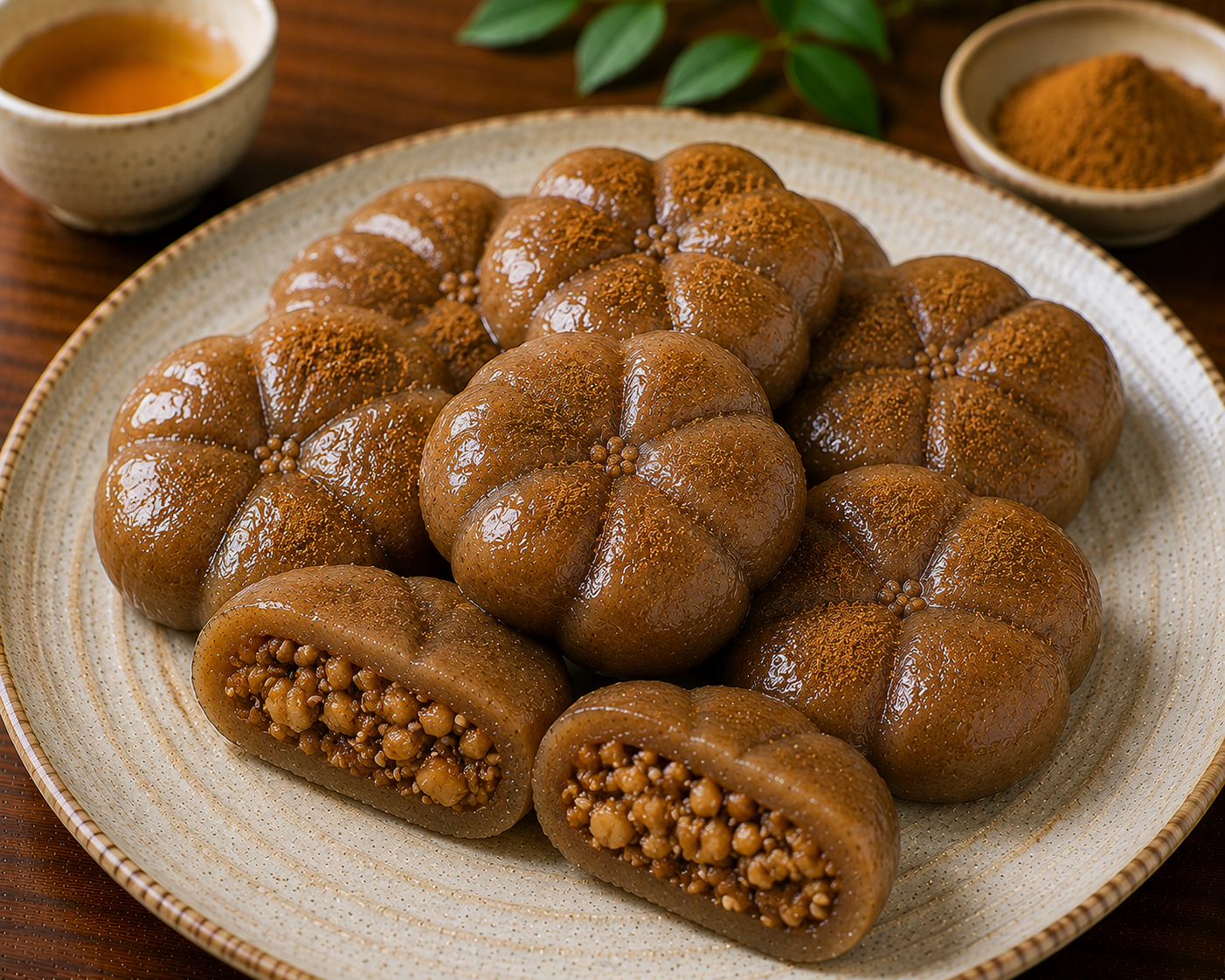
Gaepi-tteok
개피떡 · gae-pi-tteok
A rice cake made by steaming and pounding non-glutinous rice flour, rolling the dough out thin, filling it with red bean paste, and pressing it out into half-moon shapes. Because air is trapped inside and makes it puff up, it is also called baram-tteok (wind rice cake). It is known for its chewy texture and sweet taste.
Ingredients
How it's made
- 1Prepare the flour dough.
- 2Pour the dough into the fish-shaped mold, then add the red bean paste.
- 3Close the mold and bake until both sides are golden brown.
Nutrition
* Estimated values per serving.
Allergens
Contains gluten due to the use of flour.
How to order
붕어빵 주세요
Bung-eo-ppang ju-se-yo
Please give me Bungeo-ppang
Customize your order
Traveler tips
How to eat it
Frequently asked questions
- Does Bungeo-ppang contain real fish?
- No. The name comes from being baked in a bungeo-shaped mold. The standard filling is sweetened red bean paste.
- Should I eat it from the head or from the tail?
- There is no set etiquette. Whether you eat it from the head or the tail is a question people in Korea ask jokingly, too.
- Why do I see it especially often in winter?
- Because it is baked fresh on a hot griddle and eaten warm, it suits cold weather well. In summer, the number of stalls decreases, and in some areas it can be hard to find.
Last reviewed: 2026-10-07