Cultural background
It is enjoyed as a snack during rituals or holidays and is often used as a gift. It is a prime example of traditional Korean sweets with its chewy and sweet flavor.
Origin & history
Among traditional Korean confections, Yakgwa falls under the category known as yugmilgwa: sweets cooked in oil and coated with honey. When flour, oil, and honey were all precious ingredients, Yakgwa was a prized confection suited more to ceremonies and celebrations than to everyday snacking.
A widely known explanation says the “yak” in its name does not mean that medicinal herbs are added, but comes from the use of ingredients once considered beneficial to the body, such as honey and ginger. Stories say Yakgwa was enjoyed as a precious tea sweet from the Goryeo period, and by the Joseon period it had become a standard hangwa served on ancestral-rite and banquet tables.
Regional & modern variations
- Gaeseong Yakgwa — A style of Yakgwa associated with the Gaeseong region. It is usually thick, with distinct layers, and the syrup soaks in deeply, giving it a weighty texture.
- Mo Yakgwa — Yakgwa cut into squares or diamond shapes rather than stamped into round or flower shapes. Its simple shape makes it easy to prepare in batches, and it often appears on small tea tables.
- Mini Yakgwa — A modern, bite-size version of Yakgwa. Rather than feeling like a formal traditional tea sweet, it is also commonly seen as a snack sold at convenience stores or cafes.
How Koreans eat it
Yakgwa is not a sweet meant to fill you up, but a tea confection eaten in small portions for its intense sweetness. On ancestral-rite tables or holiday spreads, it is placed alongside fruit and rice cakes; when served to guests, only a few pieces are usually arranged on a small plate. Because the sweetness and oiliness are pronounced, Yakgwa pairs better with tea than immediately after a meal.
Taste & how to choose
At first glance, Yakgwa may look as if it will be crisp like a cookie, but good Yakgwa is moist and chewy inside. The surface is glossy, and as you bite into it, the sweetness of honey or jocheong syrup is followed by a faint lift of ginger. If it smells overly oily or the surface is dry and cracked, it feels less fresh.
Similar dishes
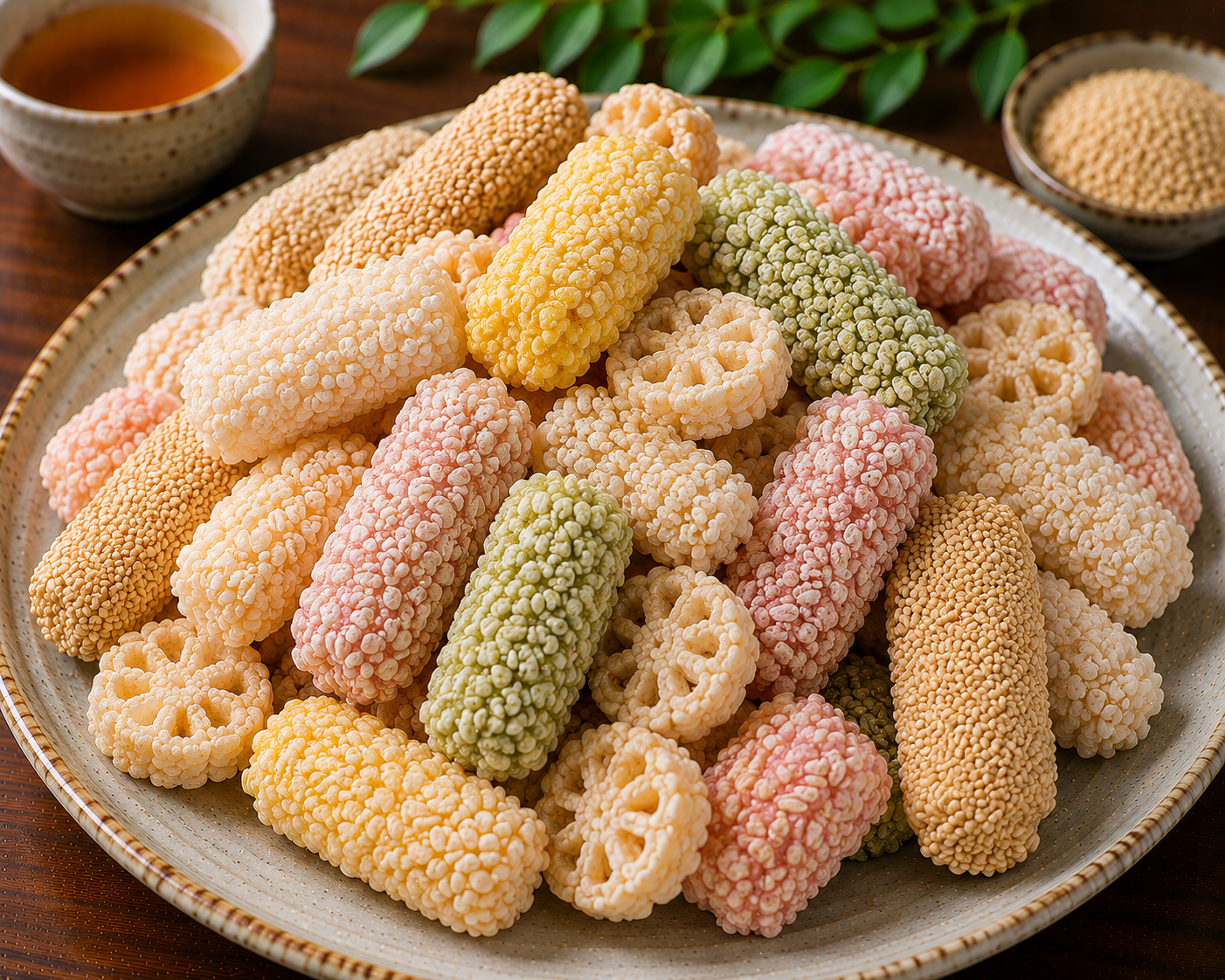
Yugwa
유과 · yugwa
A traditional snack made by kneading glutinous rice flour, frying it in oil, and coating it with honey or syrup. It features a crispy yet sweet taste.
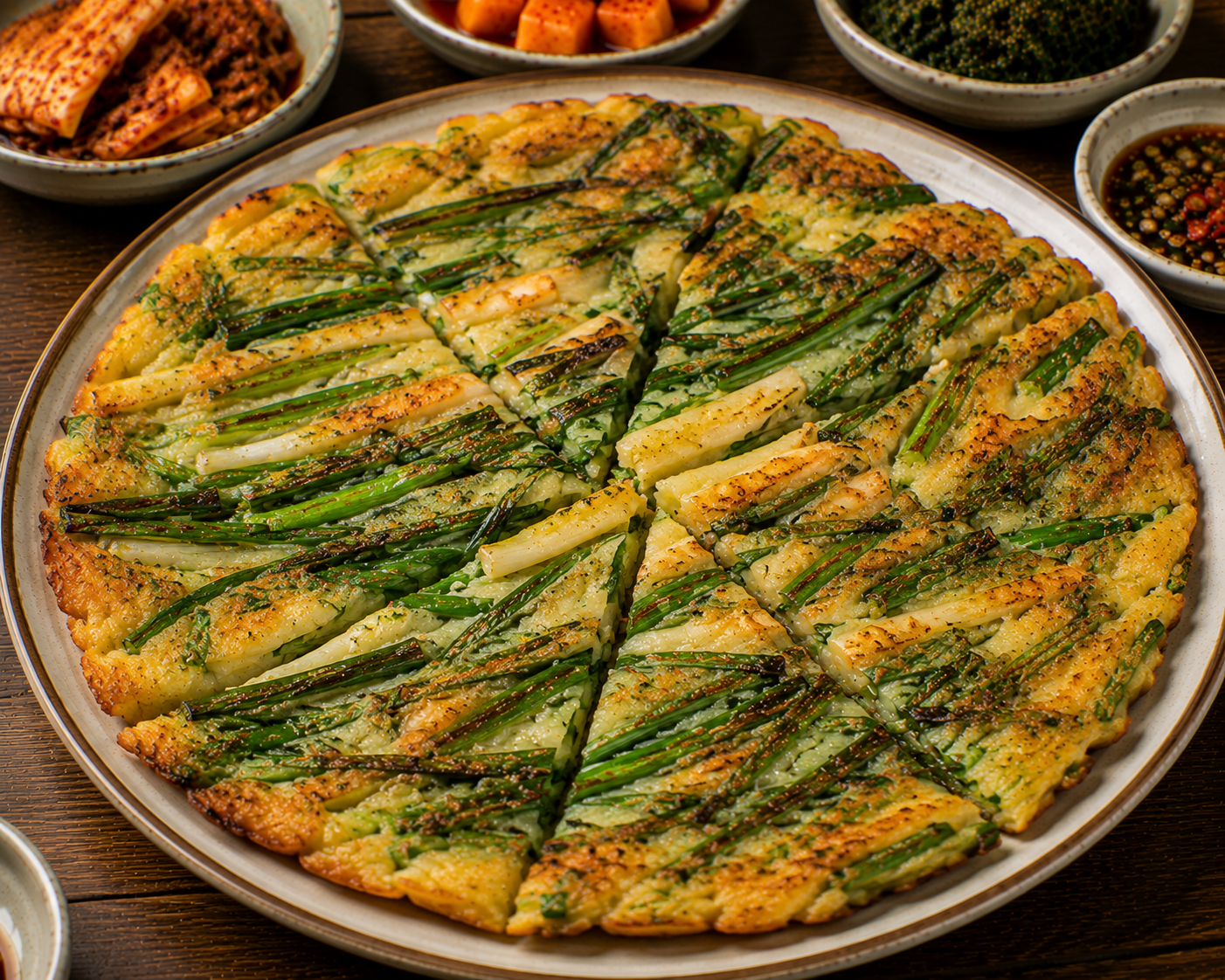
Pajeon
파전 · pa-jeon
A pancake made with plenty of chives, spread wide in a frying pan with a flour batter. The outside is golden and crispy while the inside is moist with a blend of chives. It is especially enjoyed as a side dish with Makgeolli on rainy days, cut and shared while dipped in vinegared soy sauce.
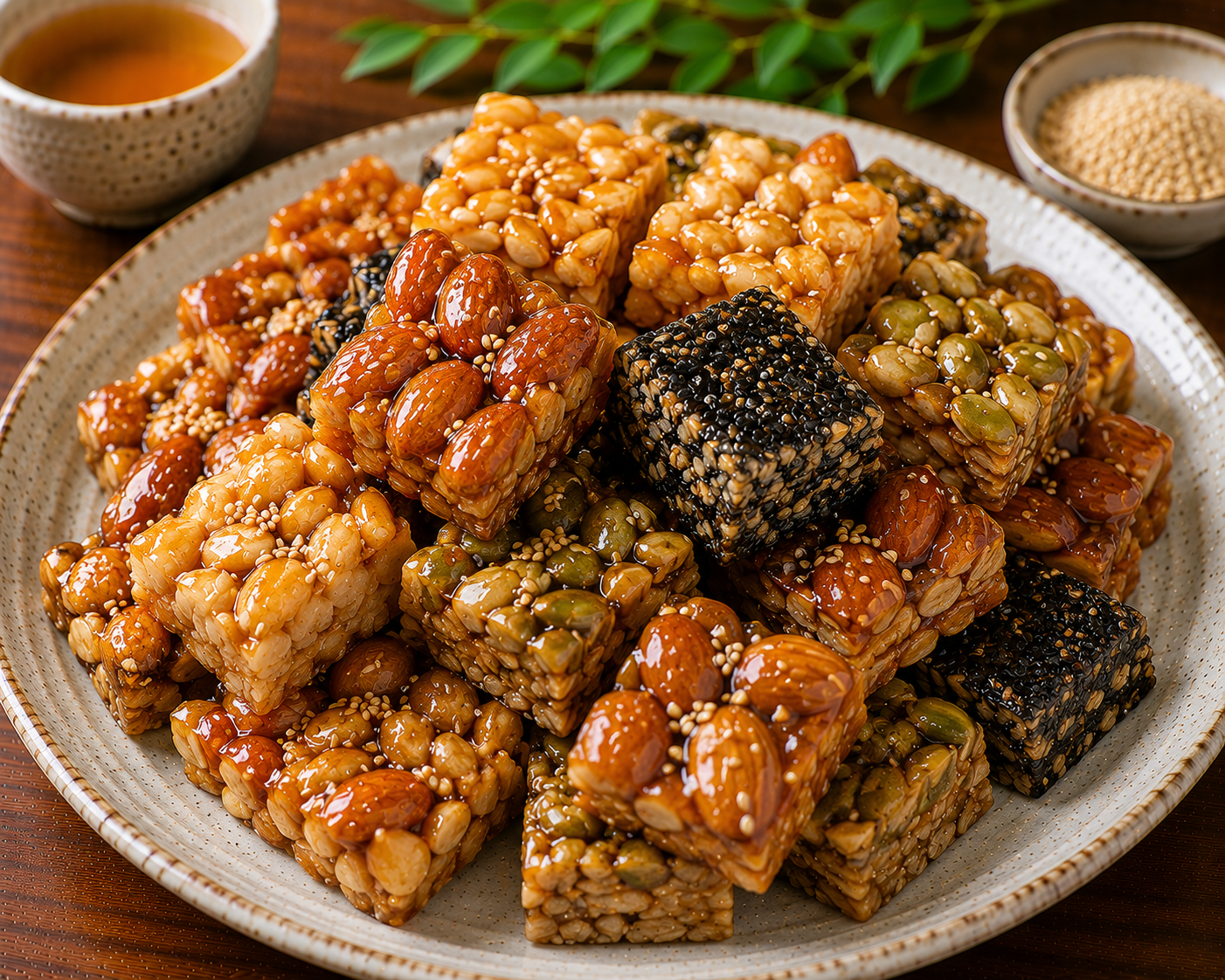
Gangjeong
강정 · gangjeong
A traditional snack made by kneading glutinous rice flour, frying it, and coating it with honey or syrup. It is characterized by a crispy and sweet taste, making it great to enjoy with tea.
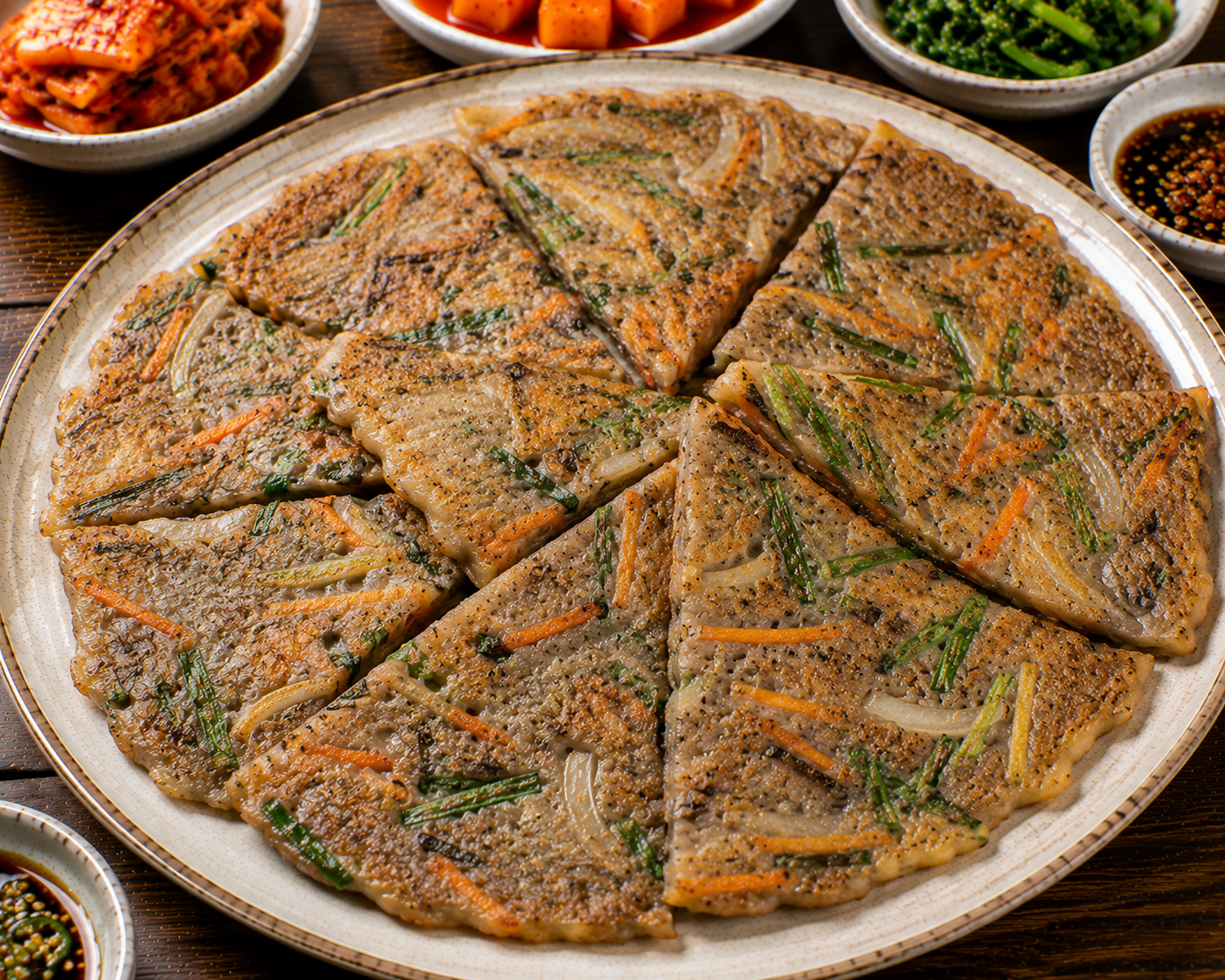
Buckwheat Pancake
메밀전 · memil-jeon
This is a savory pancake made by mixing buckwheat flour, characterized by its nutty and light taste. It is crispy on the outside and moist on the inside, typically served with a dipping sauce made of soy sauce and vinegar.
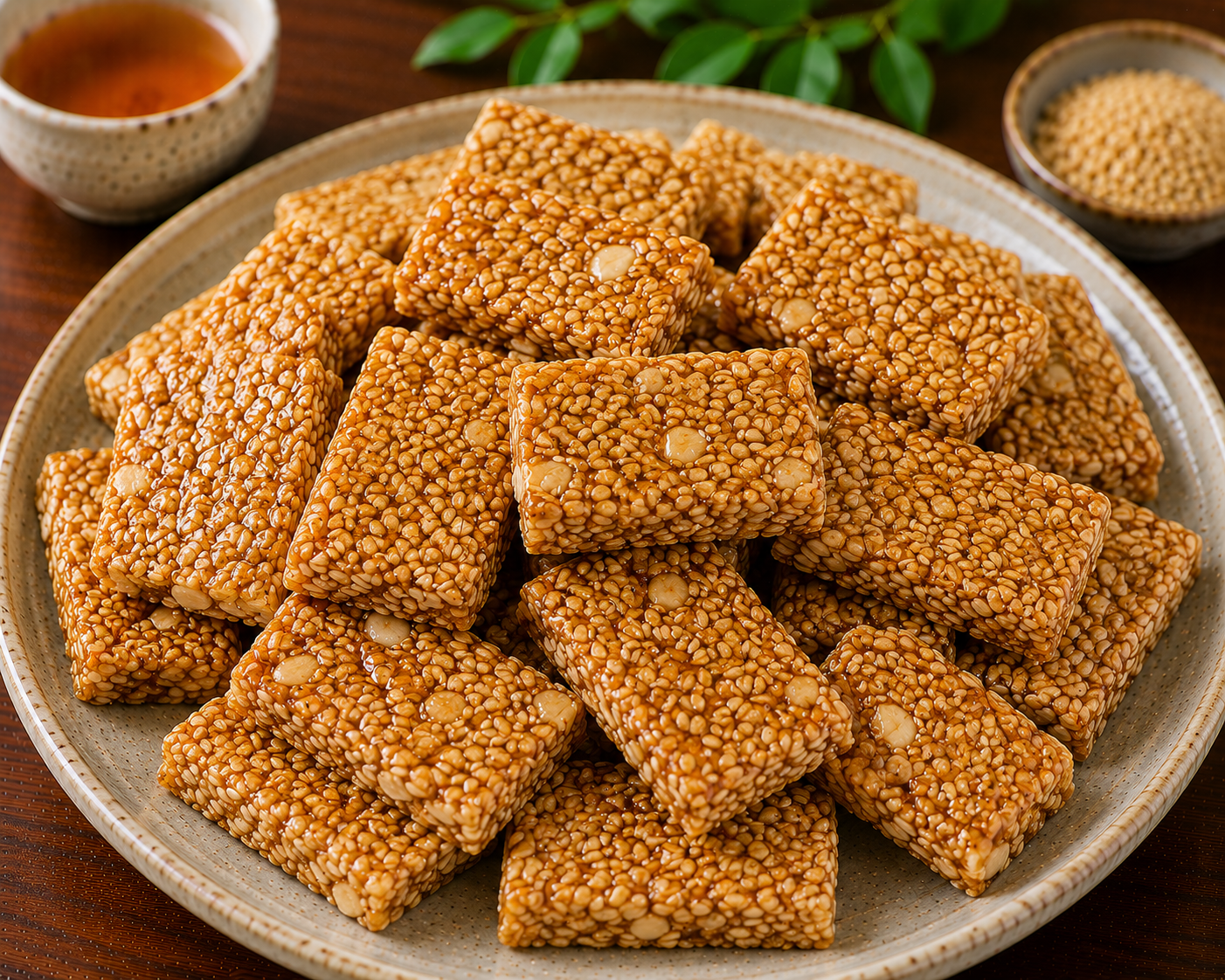
Kkaegangjeong
깨강정 · kkae-gang-jeong
A crispy and sweet traditional snack made by coating sesame seeds in syrup or honey and setting it.
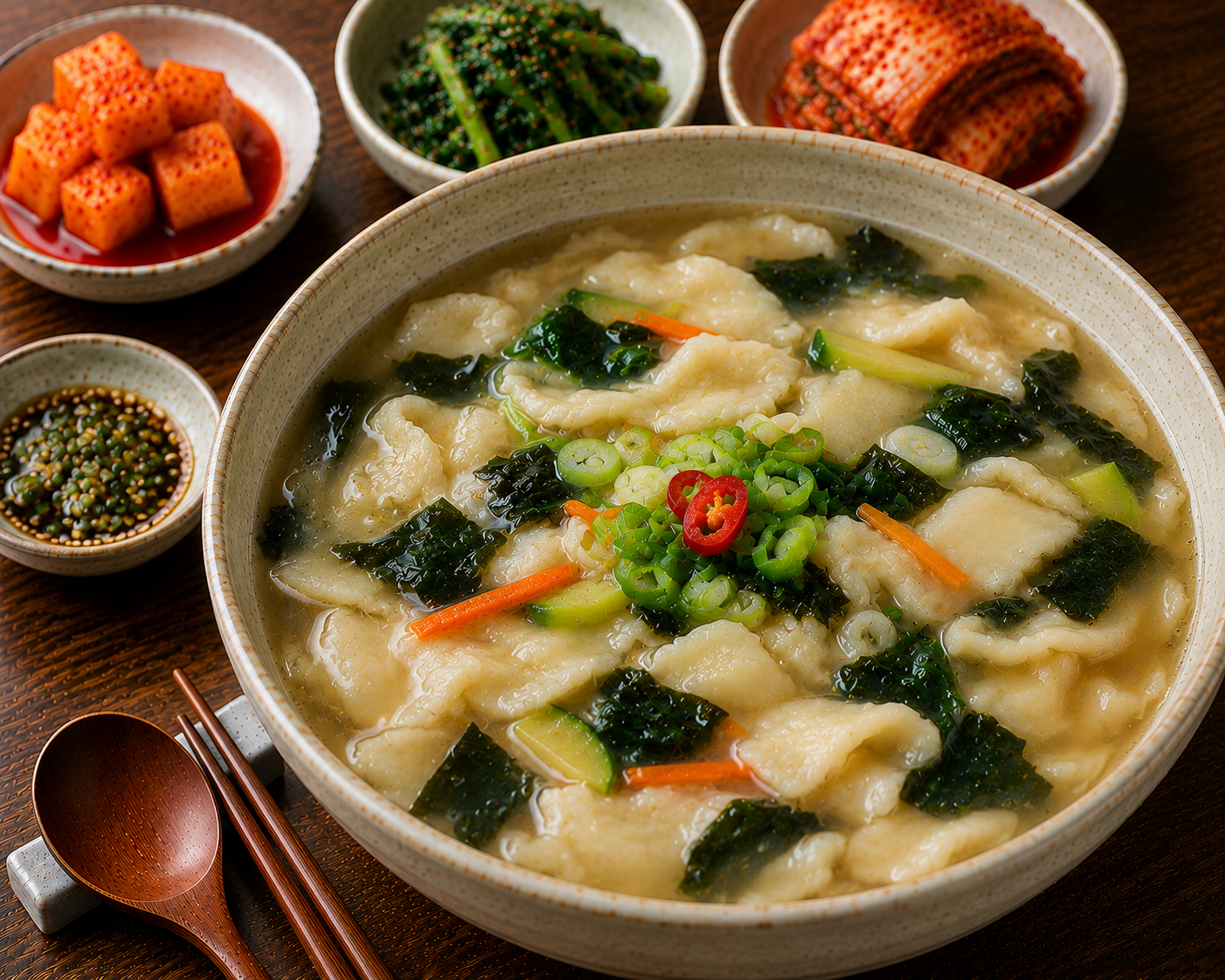
Sujebi
수제비 · su-je-bi
A broth dish made by tearing dough from flour and boiling it, characterized by its chewy texture and clear, mild broth.
Ingredients
How it's made
- 1Add honey and oil to the flour and knead.
- 2Cut the dough into appropriate sizes to shape it.
- 3Fry in oil until golden brown.
- 4Soak the fried Yakgwa in honey to enhance the flavor.
Nutrition
* Estimated values per serving.
Allergens
Contains gluten as it is made with flour.
How to order
약과 주세요
Yak-gwa ju-se-yo
Please give me Yakgwa
Traveler tips
How to eat it
Frequently asked questions
- Does Yakgwa really contain medicine?
- Yakgwa is not usually a sweet made with medicinal herbs. The name is explained as coming from ingredients such as honey and ginger, which were considered good for the body.
- Is it similar to a doughnut?
- It is similar in that both are flour-based sweets fried in oil, but Yakgwa is soaked after frying in honey or jocheong syrup so the sweetness penetrates all the way through. As a result, the texture is dense and chewy rather than fluffy.
- Why does it have a flower shape or pressed patterns?
- In traditional hangwa, shaping sweets attractively was important. The pressed patterns and grooves on Yakgwa are decorative, and they also help the syrup cling to the surface.
Last reviewed: 2026-10-07