
Cultural background
A stew commonly eaten in Korean home cooking, characterized by the unique aroma and taste of fermented soybeans. It is particularly enjoyed during winter.
Origin & history
Cheonggukjang is a fermented paste made by briefly fermenting cooked soybeans. Unlike pastes such as Doenjang, which are aged for a long time to develop seasoning, Cheonggukjang keeps the beans largely intact and develops sticky strands.
Several stories explain its origins. One says cooked soybeans fermented quickly in straw during wartime or while people were on the move; another says the name came from a paste introduced from Qing China. Rather than pointing to one definite origin, it is more natural to see Cheonggukjang as a quickly made fermented soybean food that became established over time.
Regional & modern variations
- Kimchi Cheonggukjang — Cheonggukjang simmered with ripe kimchi. The sourness and sharp heat of the kimchi soften the heavy aroma of the fermented soybeans a little.
- Cheonggukjang Bibimbap — A way of eating Cheonggukjang by adding a small amount to rice and namul, seasoned vegetable side dishes, then mixing everything together. Compared with eating it as a soup or stew, the beans and the paste’s flavor come through more directly.
How Koreans eat it
Cheonggukjang leaves behind a strong smell, so even at home people often cook it with the windows open or the ventilation on. In restaurants, it often appears as a lunchtime baekban set meal, served with rice and several side dishes; diners spoon small amounts onto their rice as they eat. First-timers may be startled by the smell, but the flavor itself is closer to salty and earthy than the aroma suggests.
Taste & how to choose
Good Cheonggukjang has soybeans that are not too hard and chew softly. When you scoop it with a spoon, you may see fine, threadlike stickiness stretching between the beans, a common sign of fermentation. If the smell is overly sharp and ammonia-like, or the bitterness is strong, it can be difficult for beginners to enjoy.
Similar dishes
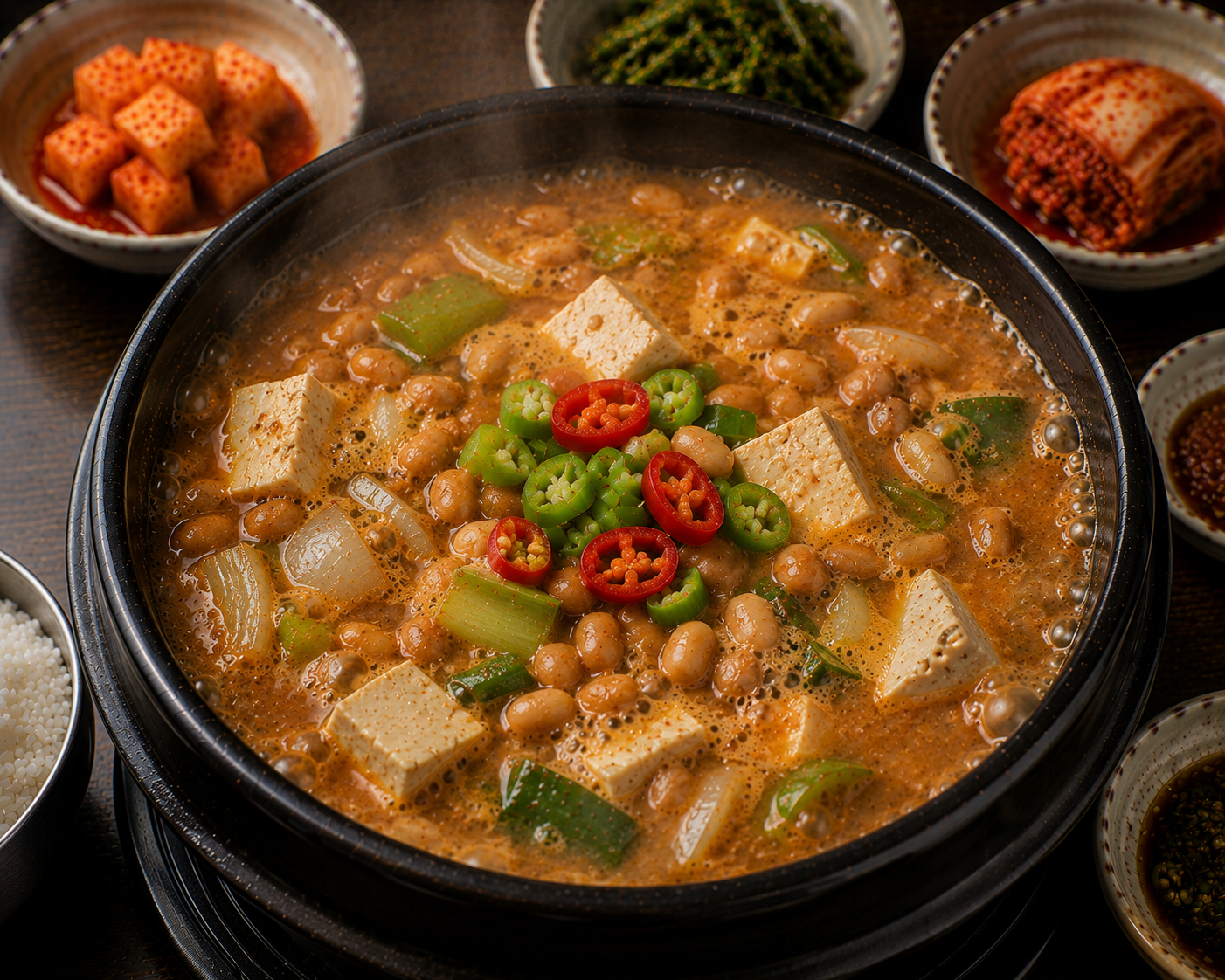
Cheonggukjang Jjigae
청국장찌개 · cheong-guk-jang-jji-gae
A rich Korean-style stew made by boiling Cheonggukjang, tofu, and vegetables in a thick broth.
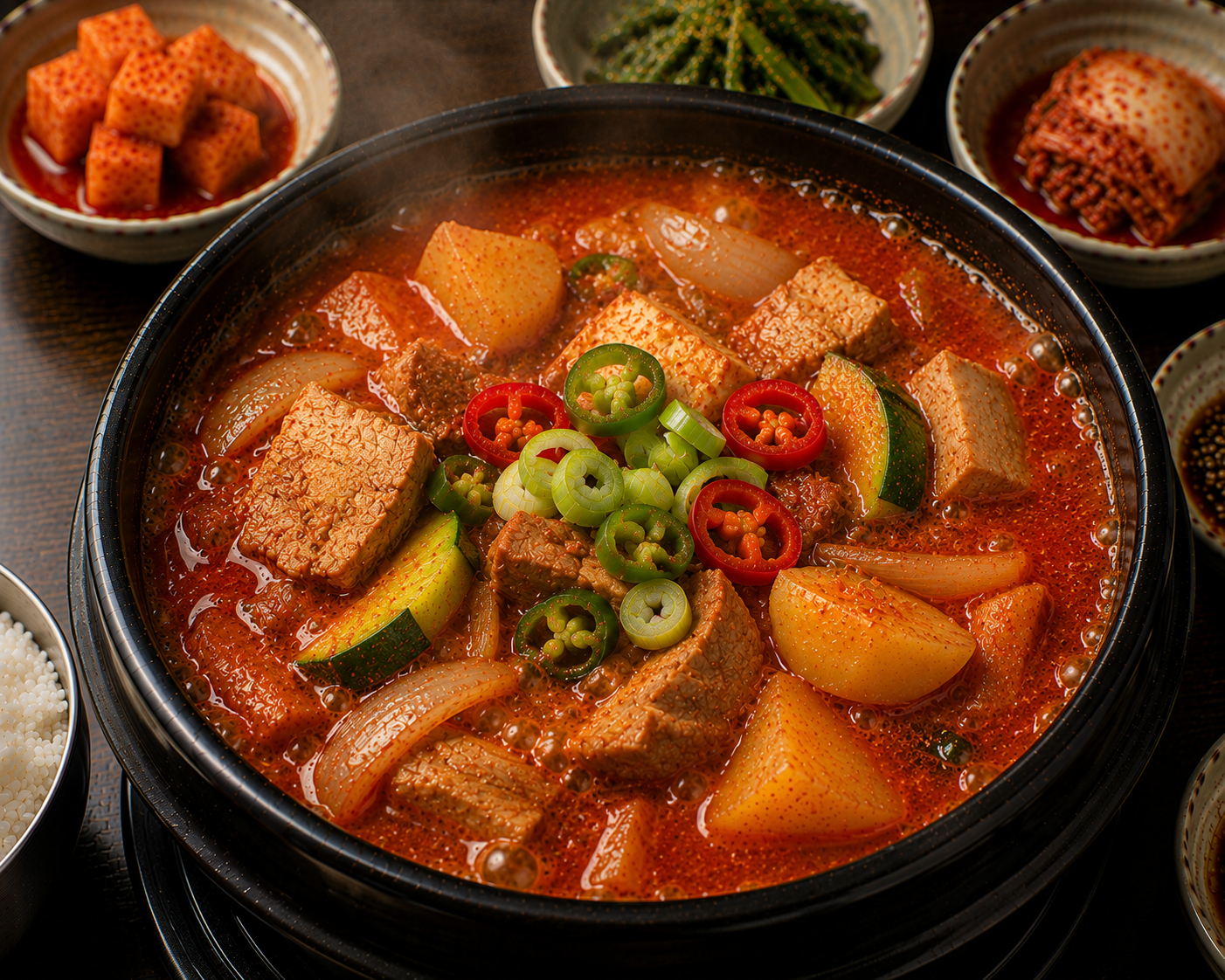
Gochujang-jjigae
고추장찌개 · gochu-jang-jjigae
A spicy Korean stew made with gochujang as the base seasoning, pork, tofu, and vegetables cooked together.
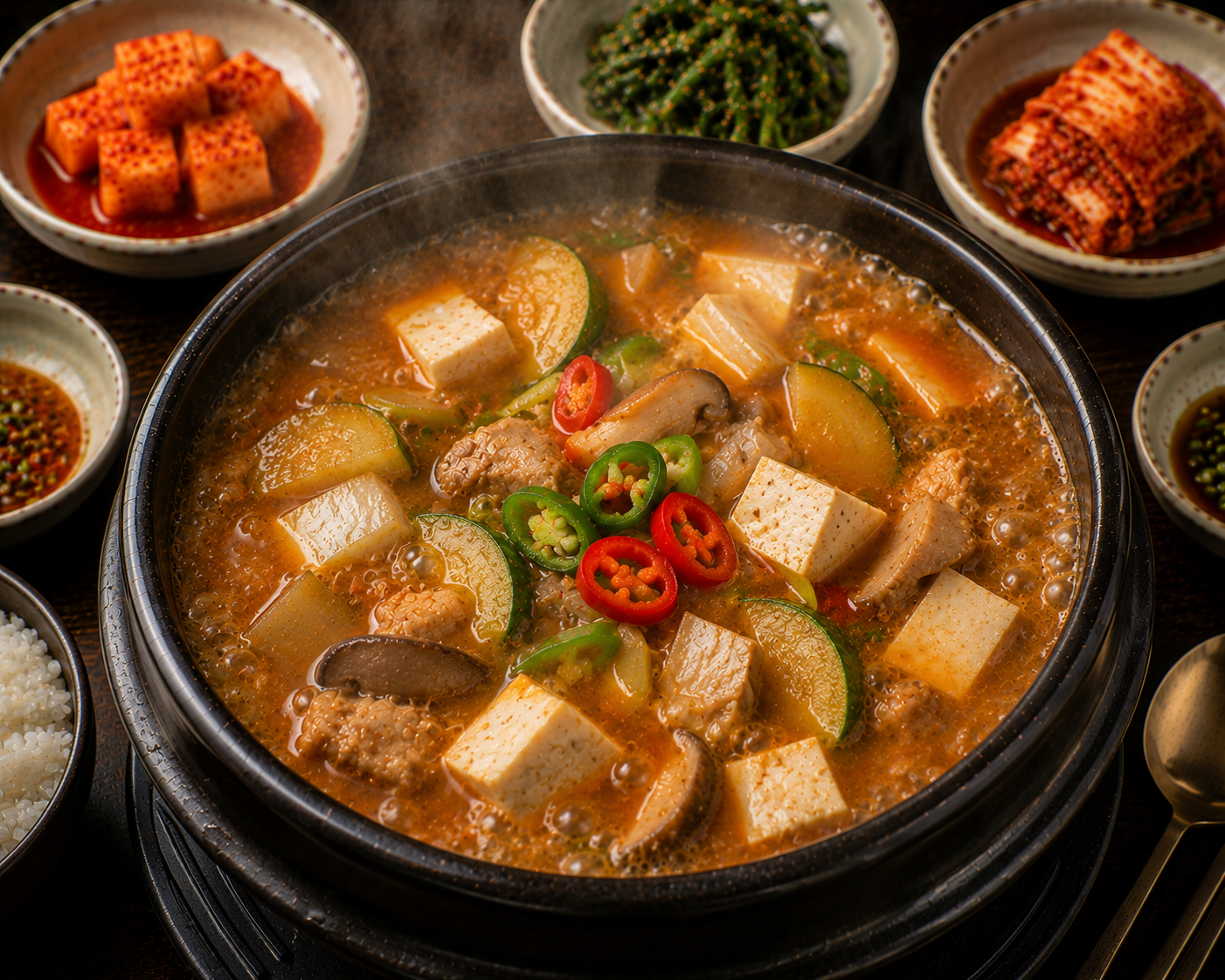
Doenjang Jjigae
된장찌개 · doenjang-jjigae
A traditional Korean stew made by simmering fermented soybean paste with tofu and vegetables.
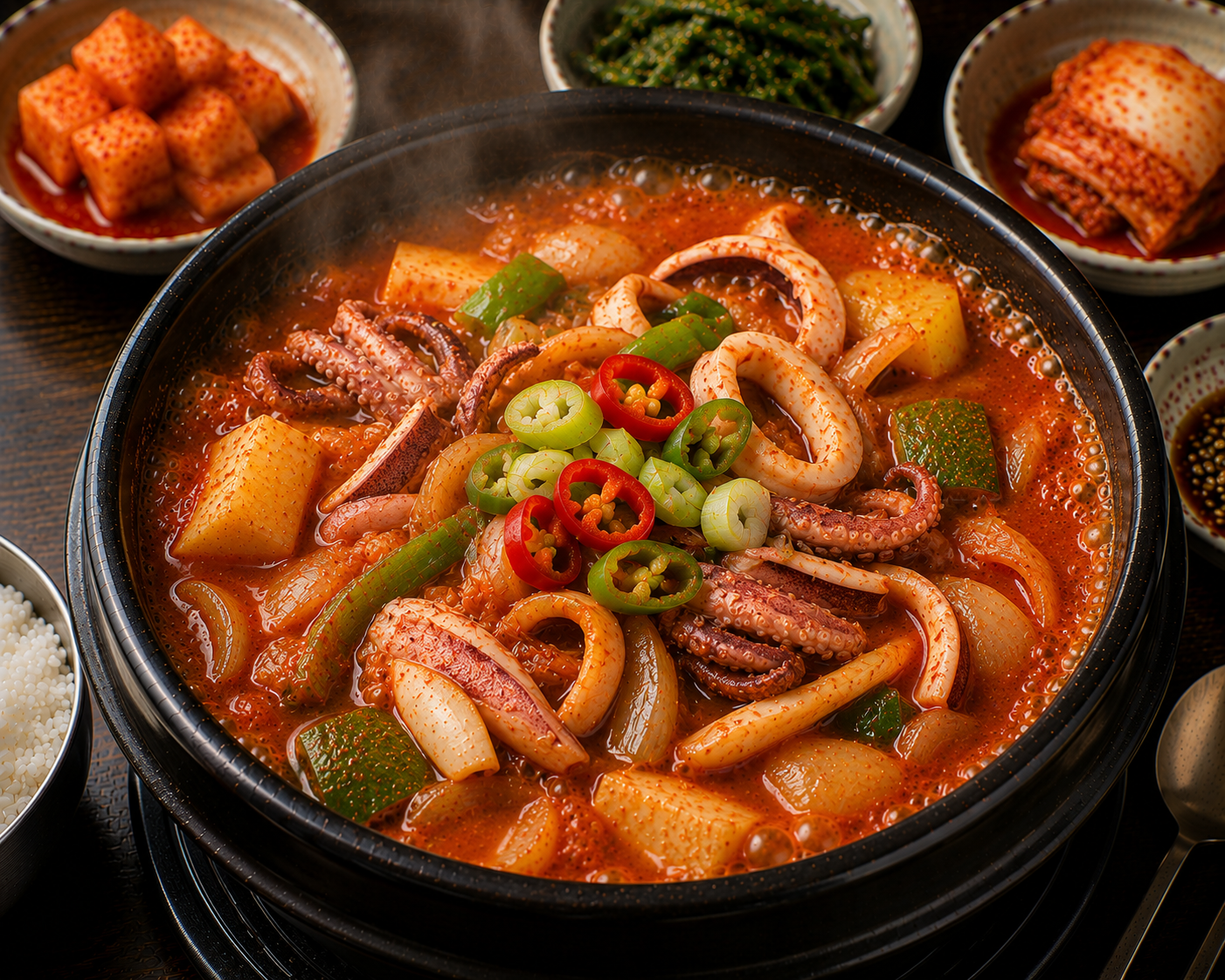
Squid Stew
오징어찌개 · o-jing-eo-jji-gae
A spicy and savory Korean-style stew made by boiling squid and various vegetables in a thick broth.
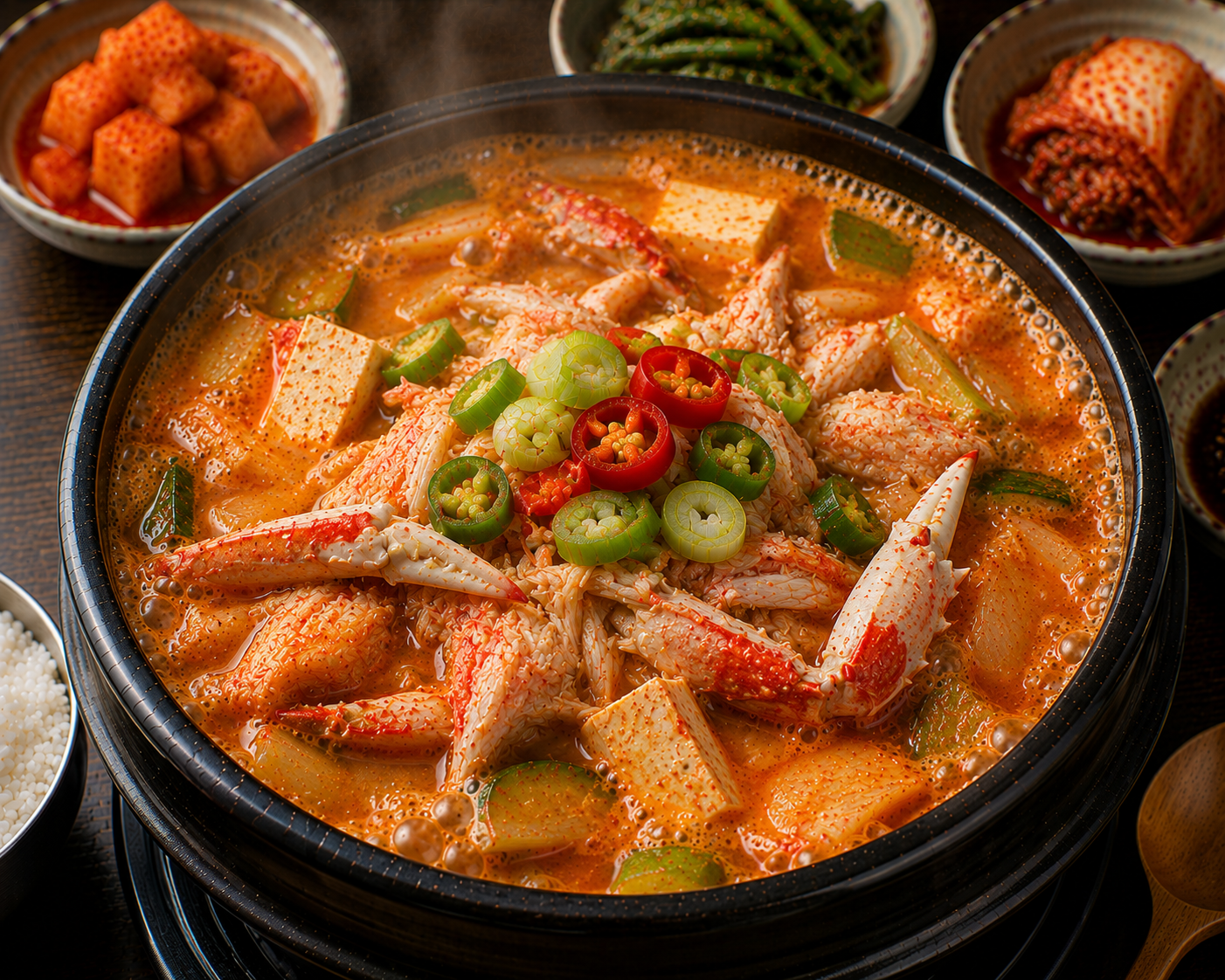
Crab Soup
게살찌개 · ge-sal-jjigae
A Korean-style stew made by boiling crab meat and various vegetables in a rich broth. The sweet and tender taste of the crab meat enhances the umami of the broth.
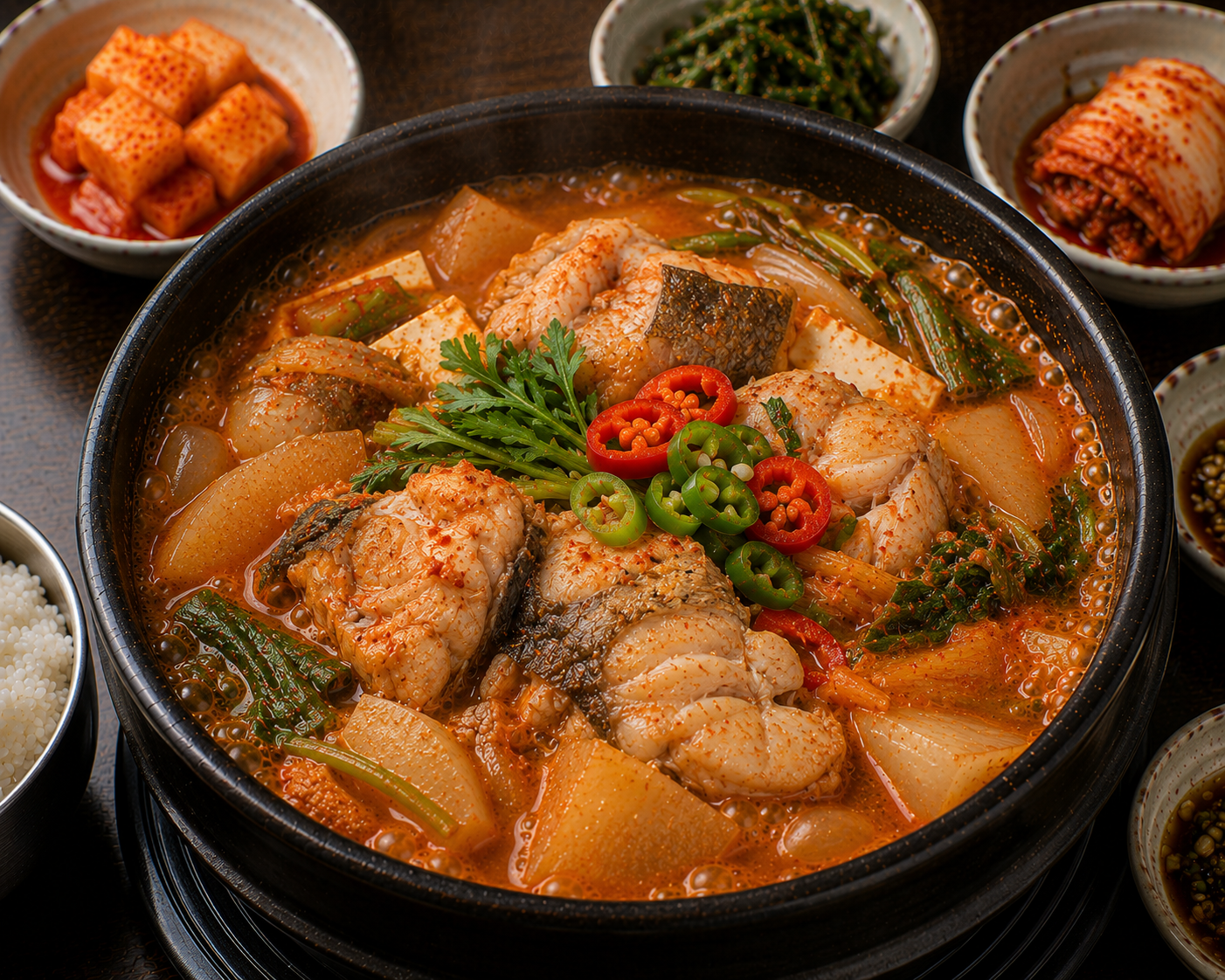
Dongtae Jjigae
동태찌개 · dong-tae-jji-gae
A spicy Korean-style stew made by simmering frozen pollack, tofu, radish, and green onions in a rich broth. The broth is thick and savory, making it perfect to eat with rice.
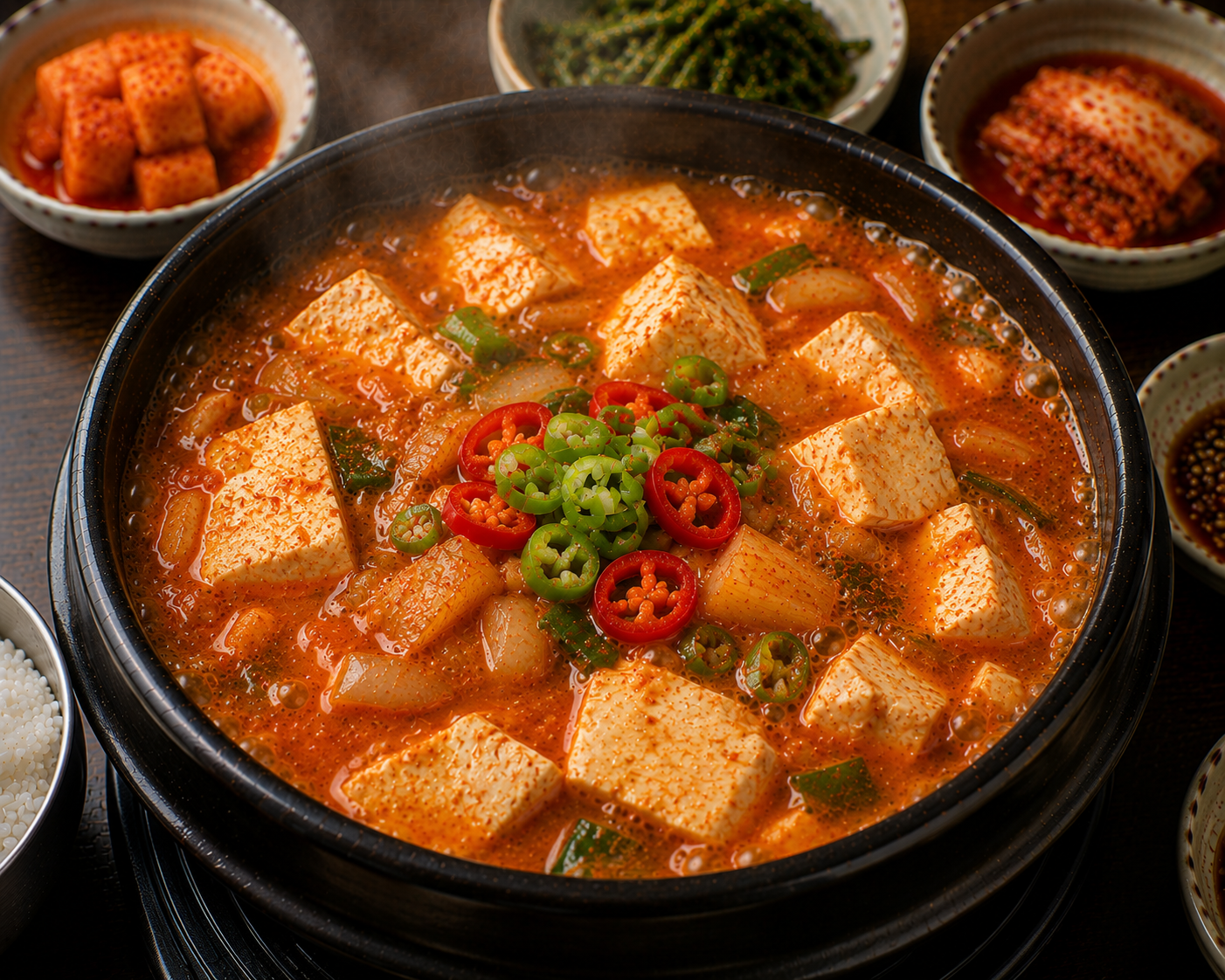
Tofu Stew
두부찌개 · dubu-jjigae
A traditional Korean stew made by boiling tofu and various vegetables in a light broth.
Doenjang Jjigae Baekban (Soybean Paste Stew Set Meal)
된장찌개백반 · doenjang-jjigae-baekban
This is a traditional Korean meal served with a soybean paste stew, rice, and a variety of side dishes. The rich and savory doenjang jjigae pairs perfectly with the rice, and an assortment of banchan is provided.
Goes well with
Ingredients
How it's made
- 1Prepare Cheonggukjang and slice the tofu and vegetables.
- 2Pour water into a pot and add Cheonggukjang to boil.
- 3Add tofu and vegetables and season with red pepper flakes.
- 4Boil until all ingredients are cooked.
Nutrition
* Estimated values per serving.
Allergens
The fermented soybean paste itself is plant-based, but the stew is often cooked with pork or meat broth, so it may not suit vegetarian or vegan diets.
How to order
청국장 주세요
Cheong-guk-jang ju-se-yo
Please bring Cheonggukjang
Customize your order
Traveler tips
How to eat it
Frequently asked questions
- How is Cheonggukjang different from Doenjang Jjigae?
- Both use fermented soybean foods, but in different ways. Cheonggukjang has intact beans and a strong aroma from short fermentation, while Doenjang centers on the deep, salty flavor of a paste aged for a long time with salt.
- Why does Cheonggukjang have something that stretches like threads?
- Those strands come from sticky compounds produced as the cooked soybeans ferment. In Cheonggukjang, they are a natural feature and make the beans look as if they are clinging to one another.
- What is a good way to eat it if the smell feels too strong?
- At first, it is easiest to put just a little on rice and eat it with kimchi or namul, seasoned vegetable side dishes. Kimchi Cheonggukjang is less intimidating for beginners because the sourness and heat help subdue the aroma.
Last reviewed: 2026-10-07