
Cultural background
A stew commonly eaten at home, characterized by the spiciness and umami of gochujang. It is usually eaten with rice and is suitable for sharing in a communal meal.
Similar dishes
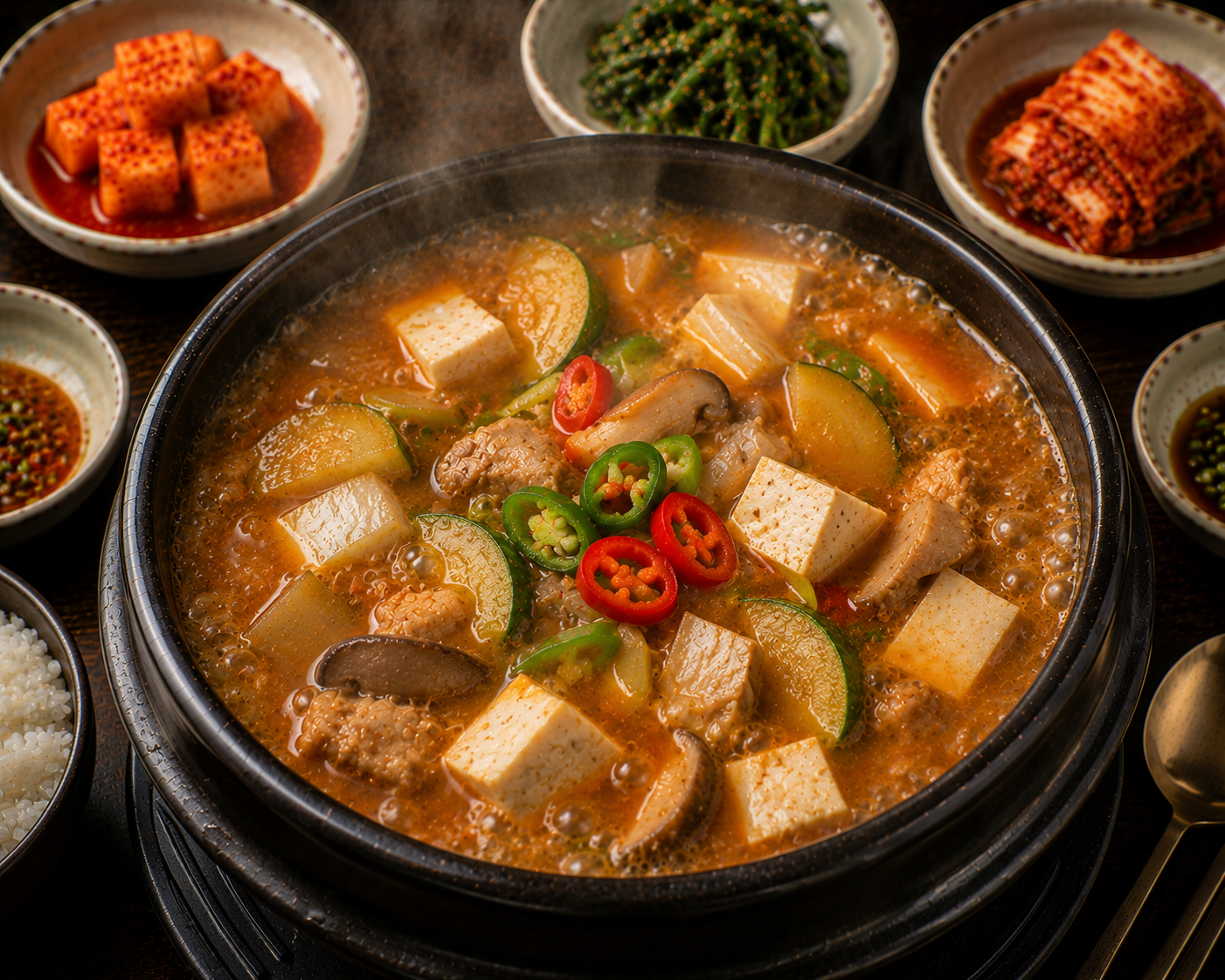
Doenjang Jjigae
된장찌개 · doenjang-jjigae
A traditional Korean stew made by simmering fermented soybean paste with tofu and vegetables.
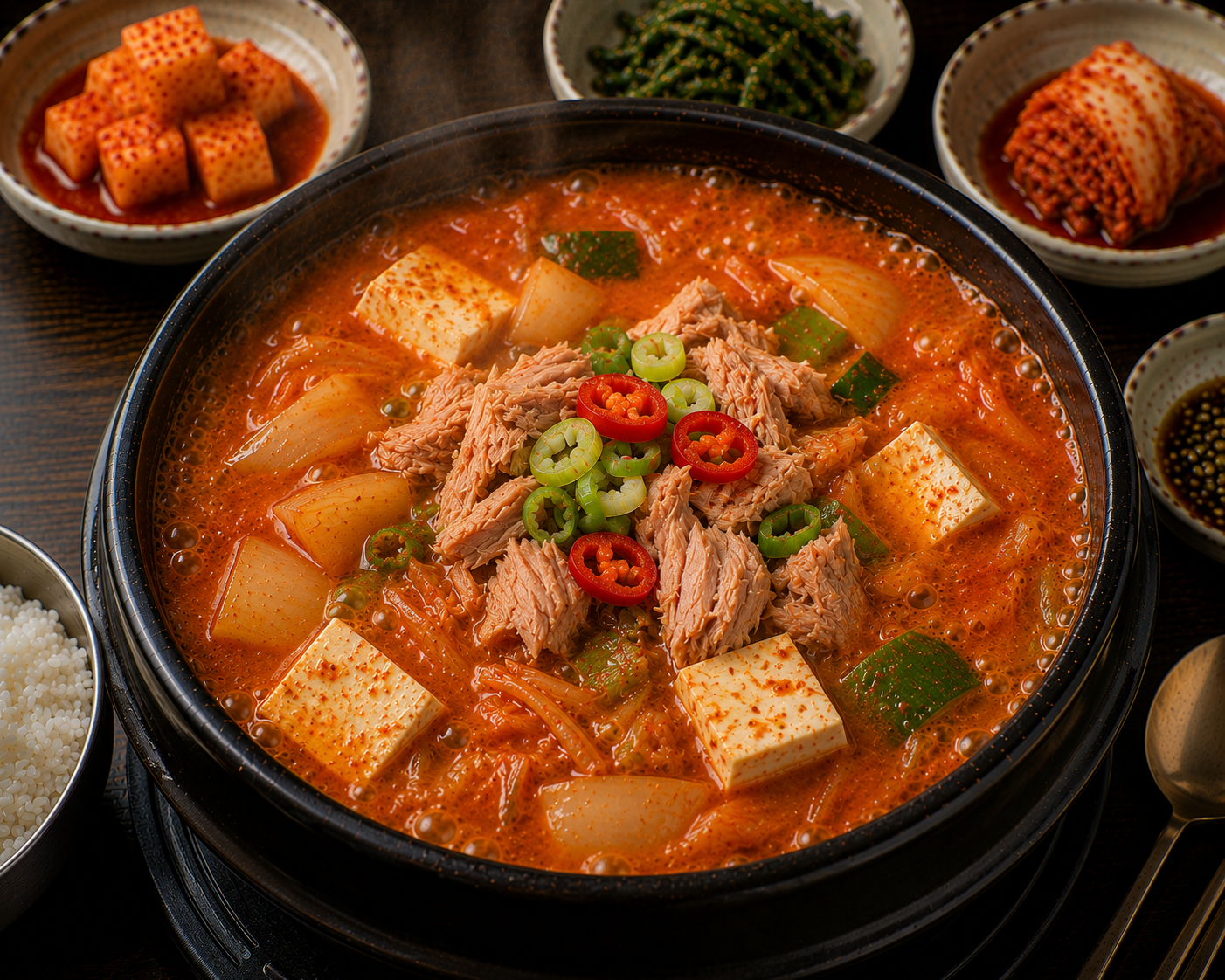
Tuna Stew
참치찌개 · chamchi-jjigae
A savory and spicy Korean stew made with tuna and kimchi in a rich broth.
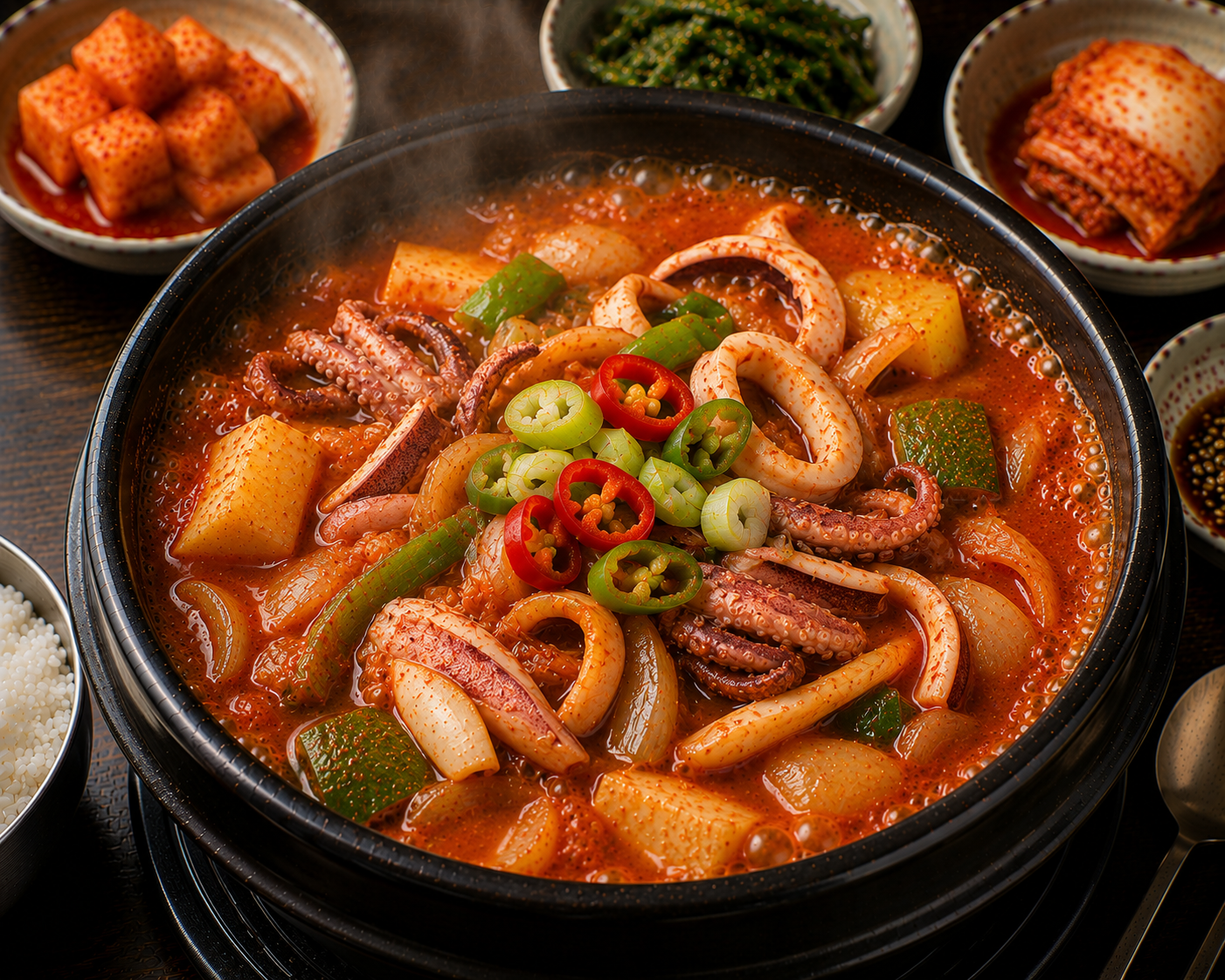
Squid Stew
오징어찌개 · o-jing-eo-jji-gae
A spicy and savory Korean-style stew made by boiling squid and various vegetables in a thick broth.
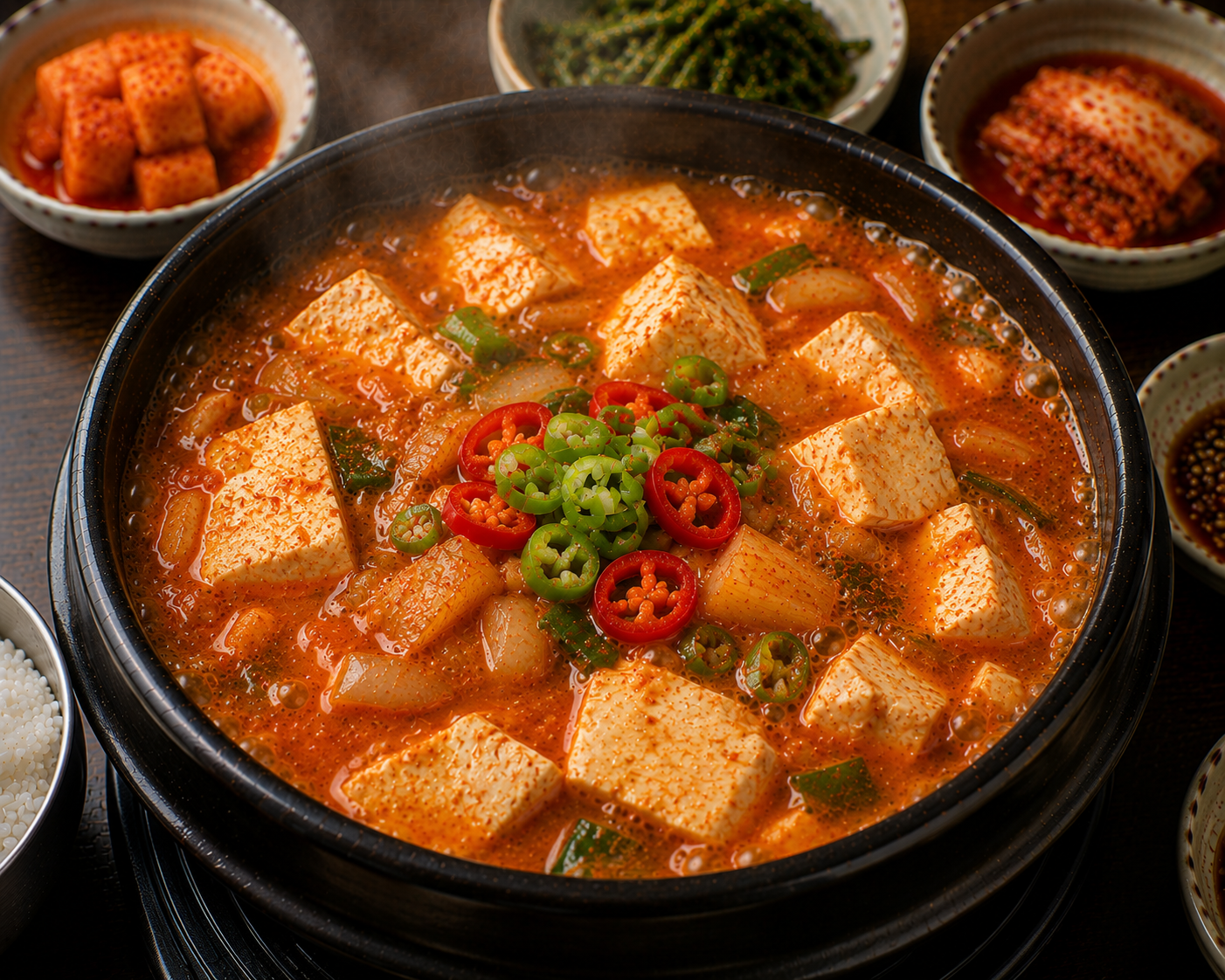
Tofu Stew
두부찌개 · dubu-jjigae
A traditional Korean stew made by boiling tofu and various vegetables in a light broth.
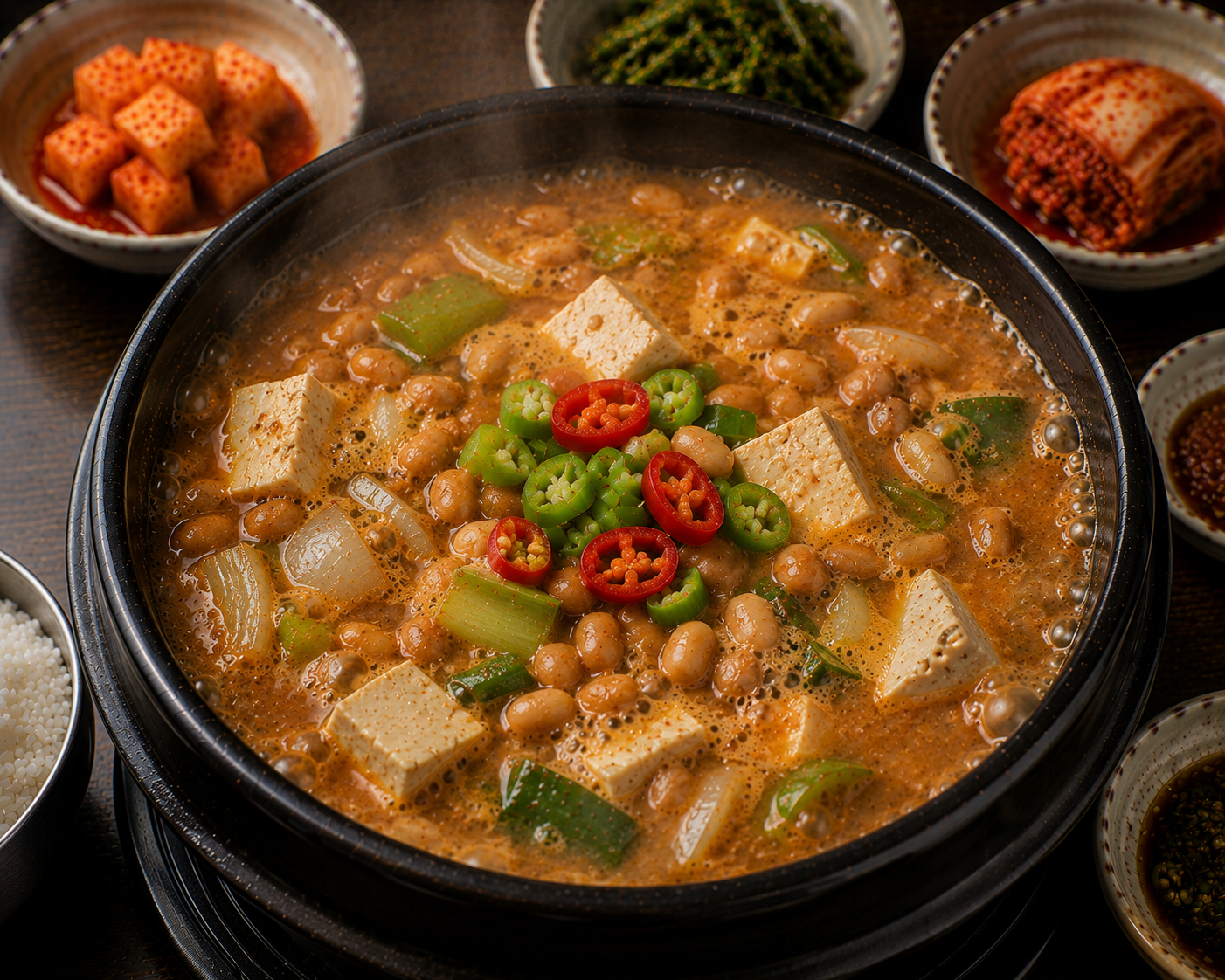
Cheonggukjang Jjigae
청국장찌개 · cheong-guk-jang-jji-gae
A rich Korean-style stew made by boiling Cheonggukjang, tofu, and vegetables in a thick broth.
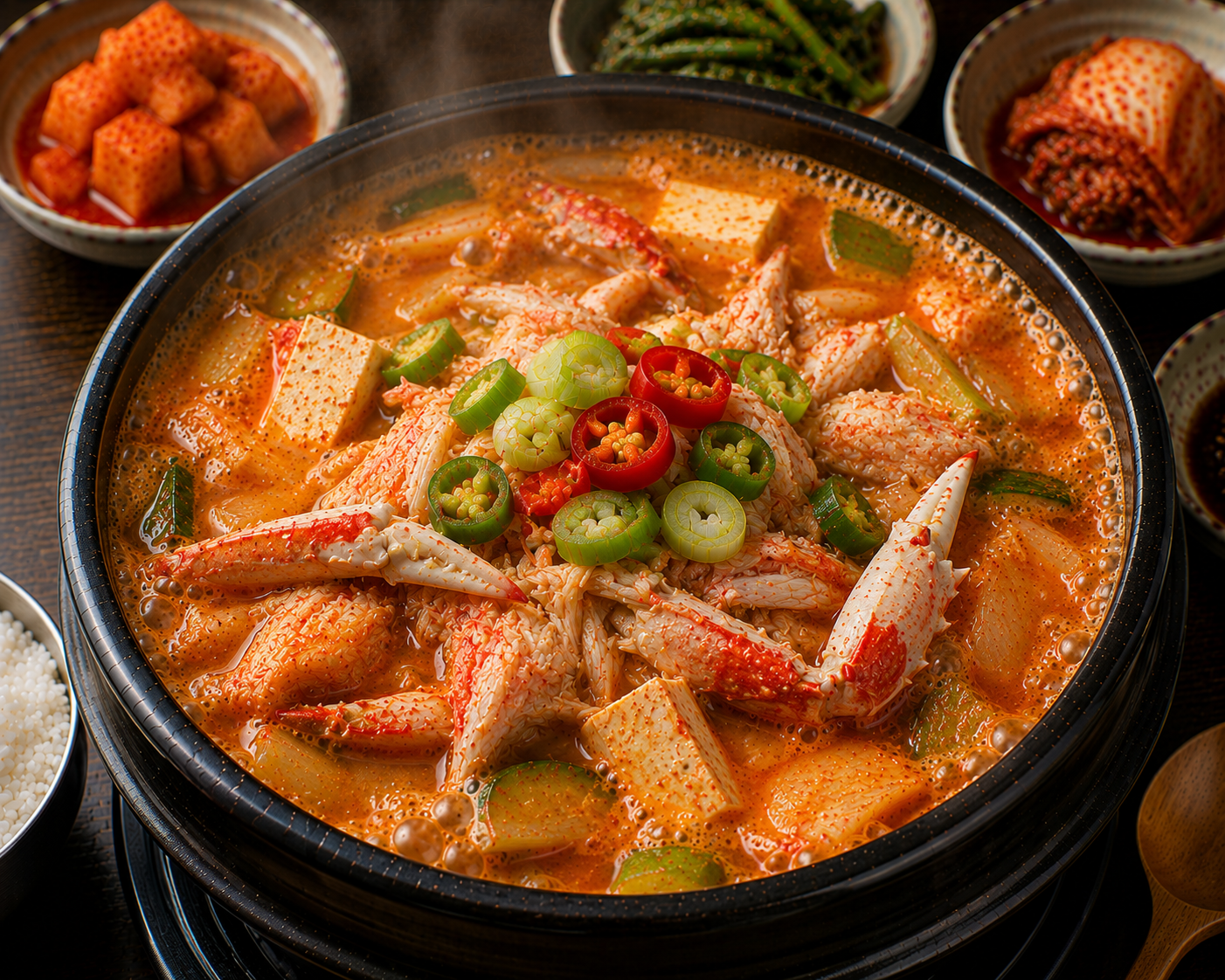
Crab Soup
게살찌개 · ge-sal-jjigae
A Korean-style stew made by boiling crab meat and various vegetables in a rich broth. The sweet and tender taste of the crab meat enhances the umami of the broth.
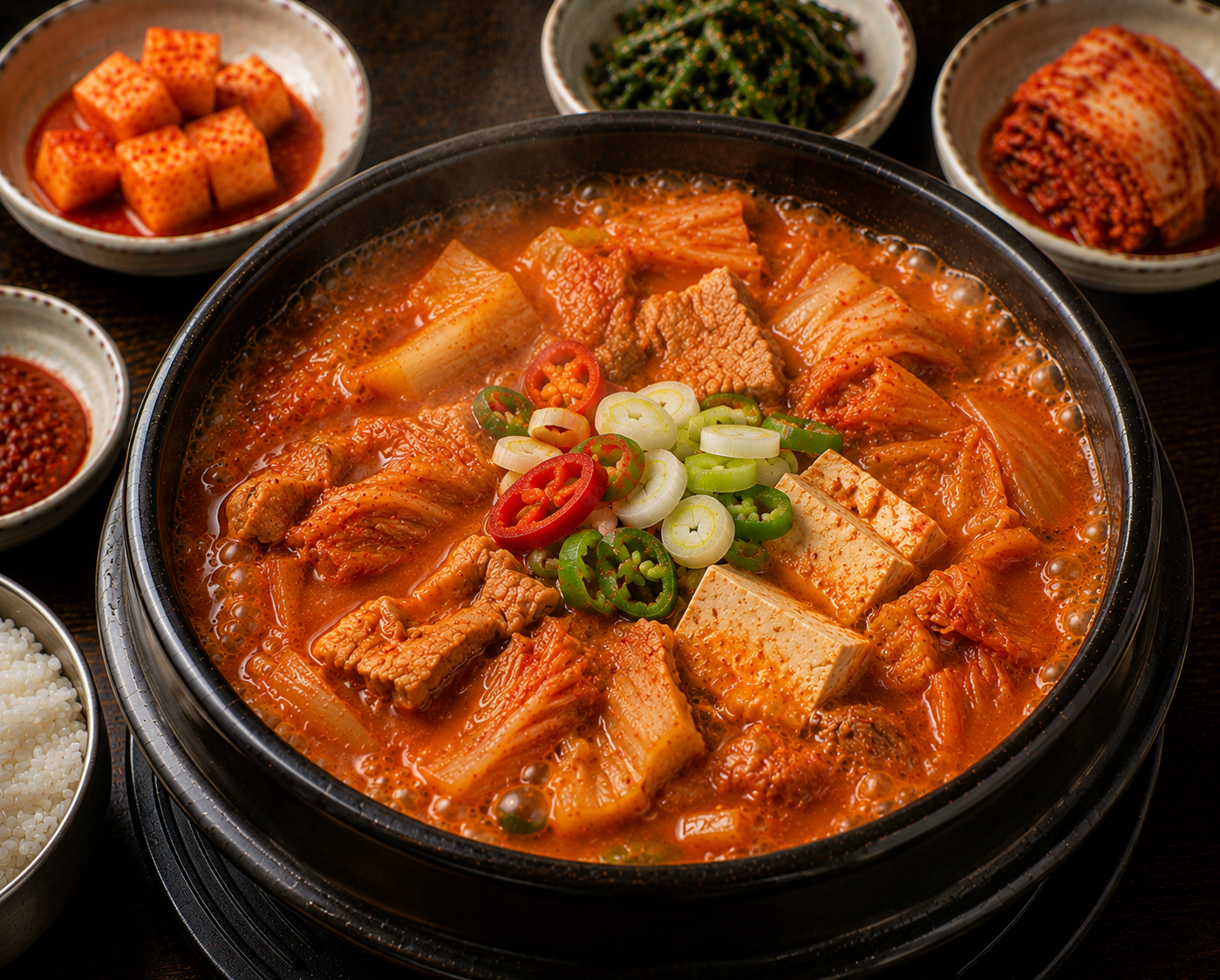
Kimchi Jjigae
김치찌개 · kimchi-jjigae
A communal stew made with well-fermented kimchi and pork simmered in a rich broth, seasoned to perfection, salty and spicy. Unlike soup, it is served bubbling in an earthenware pot and enjoyed by ladling the broth and ingredients over rice, shared among many. The fermented sourness of the kimchi combines with the pork fat to create a deep flavor that complements the rice.
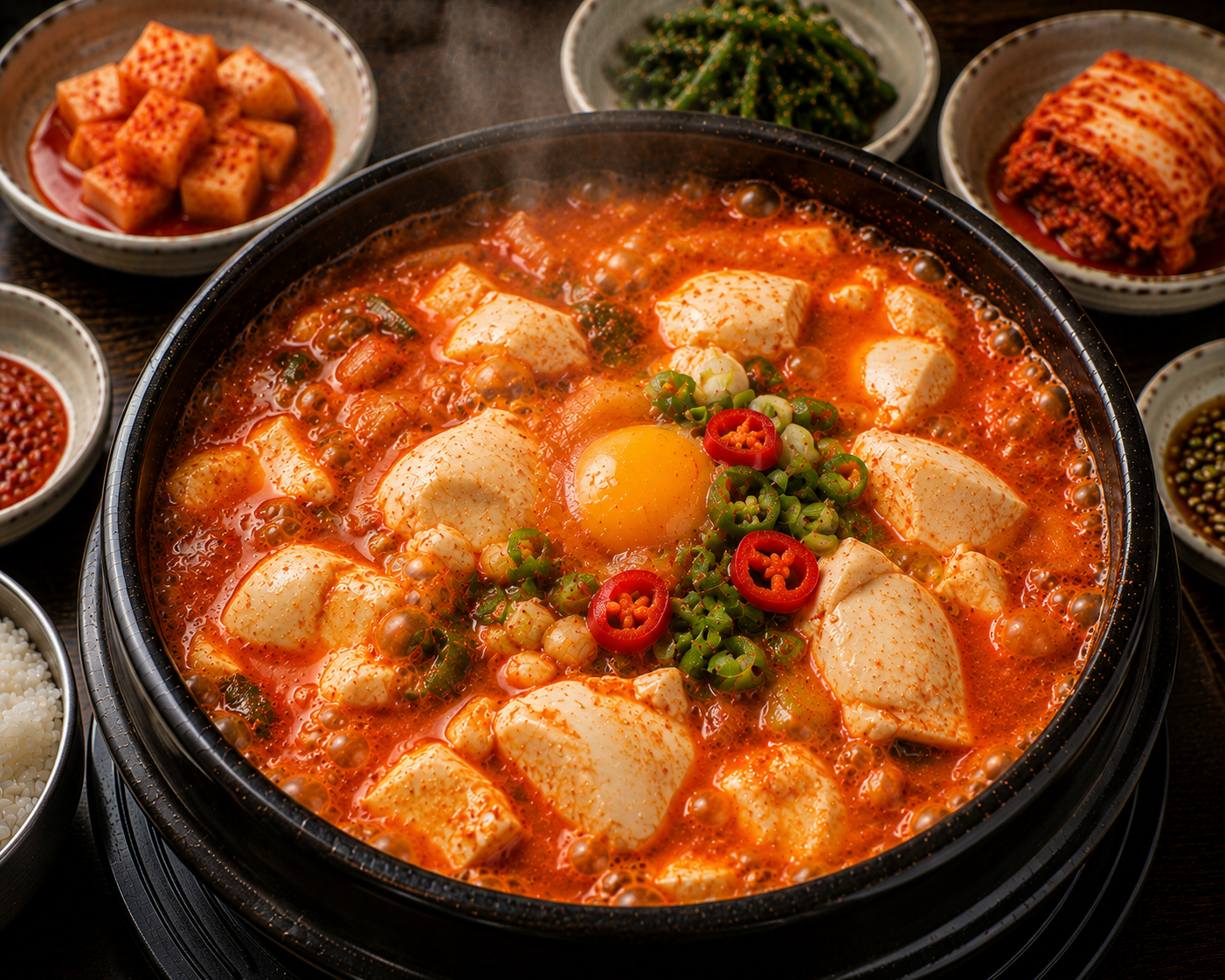
Goes well with
Ingredients
How it's made
- 1Cut the pork and vegetables into appropriate sizes for preparation.
- 2Stir-fry the pork in a pot, then add gochujang and stir-fry together.
- 3Pour in water and add onion and potato to bring to a boil.
- 4Add tofu and green onion and simmer for a while longer.
Nutrition
* Estimated values per serving.
Allergens
Contains pork, therefore not halal or vegetarian-friendly.
How to order
고추장찌개 주세요
Go-chu-jang-jji-gae ju-se-yo
Please give me Gochujang-jjigae