Kimchi Jjigae
A communal stew made with well-fermented kimchi and pork simmered in a rich broth, seasoned to perfection, salty and spicy. Unlike soup, it is served bubbling in an earthenware pot and enjoyed by ladling the broth and ingredients over rice, shared among many. The fermented sourness of the kimchi combines with the pork fat to create a deep flavor that complements the rice.
Cultural background
The most commonly consumed stew on everyday tables, with different recipes in every household.
Origin & history
Kimchi Jjigae took hold as a way to make well-fermented Napa Cabbage Kimchi even tastier by simmering it rather than eating it as is. When kimchi turned sour, people did not throw it away; they simmered it with pork, tofu, and green onions and ate it as a side dish with rice.
What sets it apart from other jjigae, or Korean stews, is that the fermented sourness of the kimchi forms the heart of the broth. For that reason, aged kimchi works better than freshly made kimchi, and because every household's kimchi tastes different, the flavor can vary widely even under the same name.
Regional & modern variations
- Tuna Kimchi Jjigae — This version uses canned tuna instead of pork. The flavor is lighter than pork fat, and people often make it when they want to cook something quickly at home.
- Mukeunji Kimchi Jjigae — This version centers on Mukeunji, kimchi that has been aged for a long time. The sourness and deep fermented aroma are stronger, giving the broth a rich, weighty flavor.
- Pacific Saury Kimchi Jjigae — This variation is simmered with canned Pacific saury or fish. The sourness of the kimchi helps cut through the oily flavor of the fish and tame any fishy smell.
How Koreans eat it
In Korean homes, kimchi that has become too sour is often turned into Kimchi Jjigae. Restaurants may serve it as a solo ttukbaegi, or earthenware-bowl, dish, but most restaurants specializing in Kimchi Jjigae also serve it in a hot pot pan for two or more people to cook at the table.
Taste & how to choose
Good Kimchi Jjigae is not just spicy; the sourness, saltiness, and savory richness of pork fat should be in balance. First-time eaters may mistake the sourness of the kimchi for a spoiled taste, but it is a characteristic of fermented kimchi. When the kimchi has softened rather than staying too crunchy and has absorbed the flavor of the broth, the stew has usually been cooked well.
Similar dishes
Kimchi Jjigae Baekban (Kimchi Stew Set Meal)
김치찌개백반 · kimchi-jjigae-baekban
This is a traditional Korean meal served with kimchi stew, rice, and various side dishes. The stew, made with well-fermented kimchi and pork, is prepared to be enjoyed with rice.
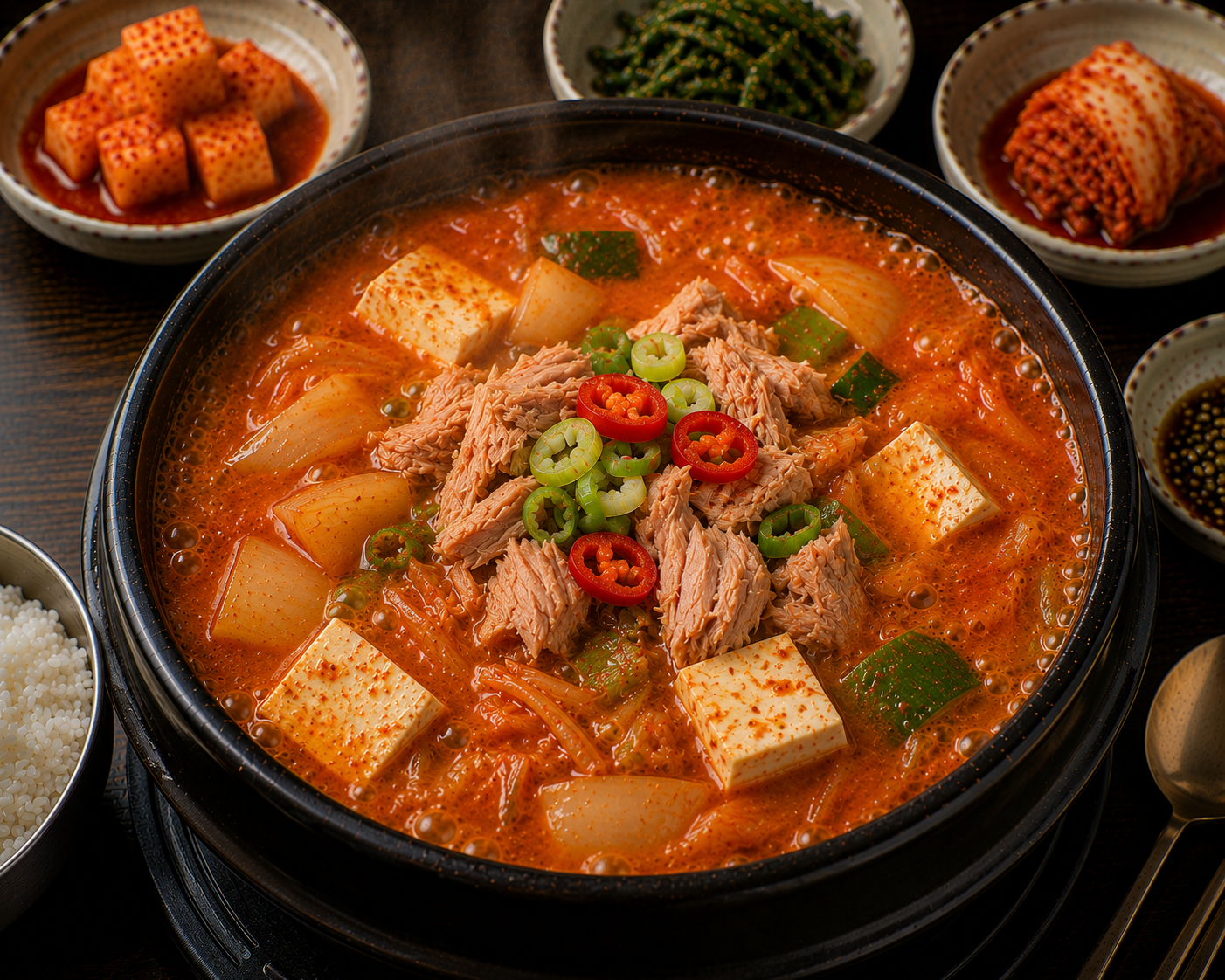
Tuna Stew
참치찌개 · chamchi-jjigae
A savory and spicy Korean stew made with tuna and kimchi in a rich broth.
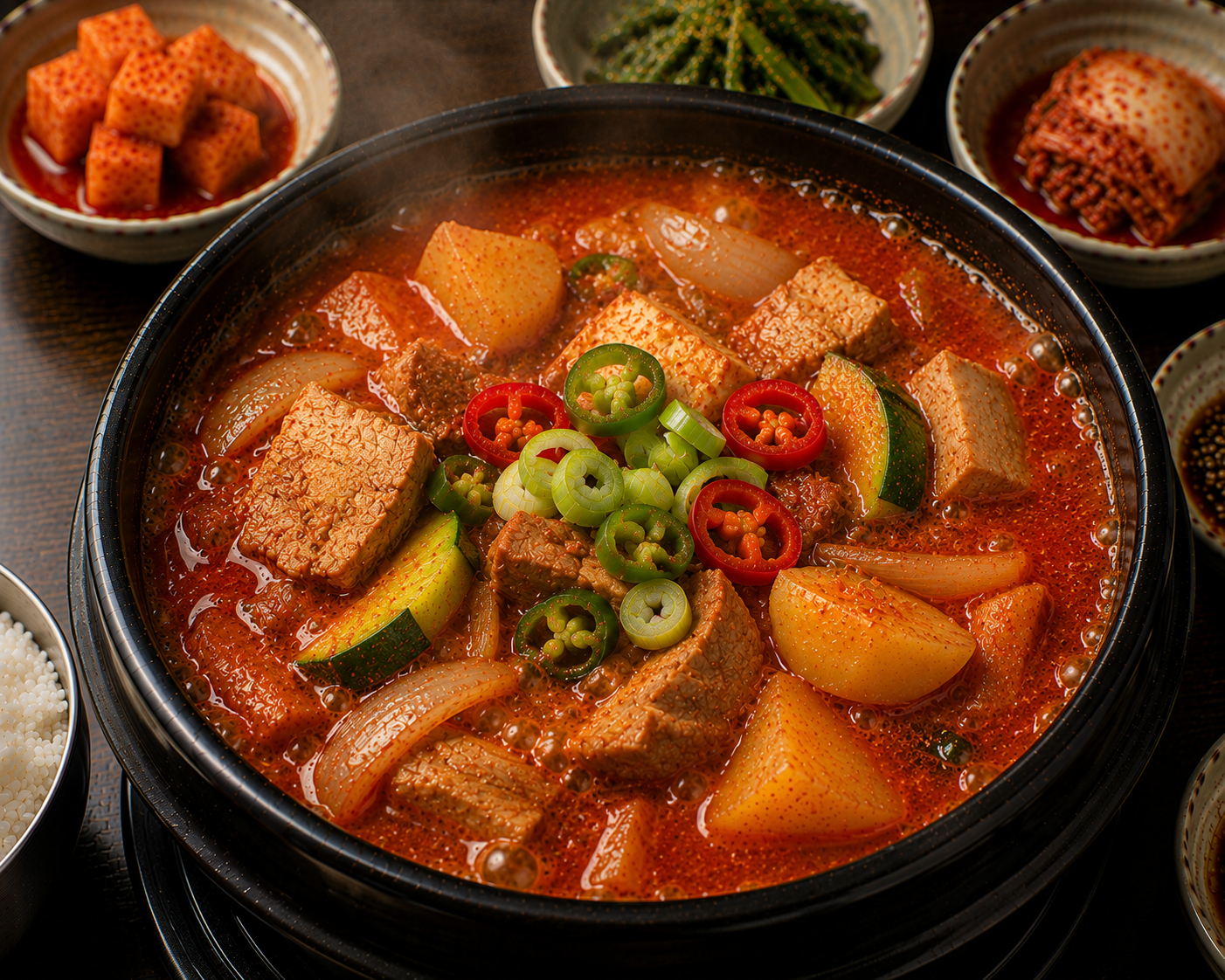
Gochujang-jjigae
고추장찌개 · gochu-jang-jjigae
A spicy Korean stew made with gochujang as the base seasoning, pork, tofu, and vegetables cooked together.
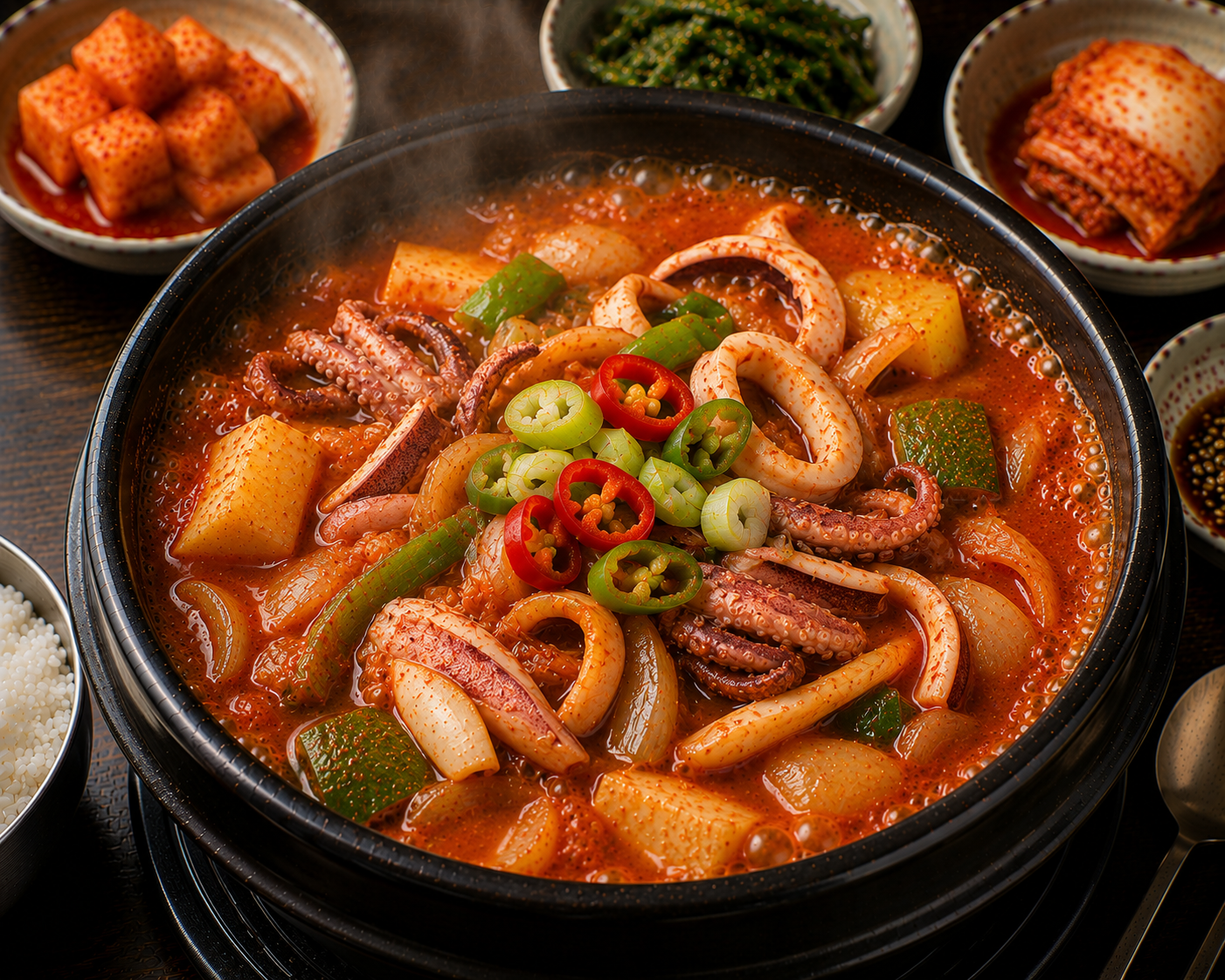
Squid Stew
오징어찌개 · o-jing-eo-jji-gae
A spicy and savory Korean-style stew made by boiling squid and various vegetables in a thick broth.
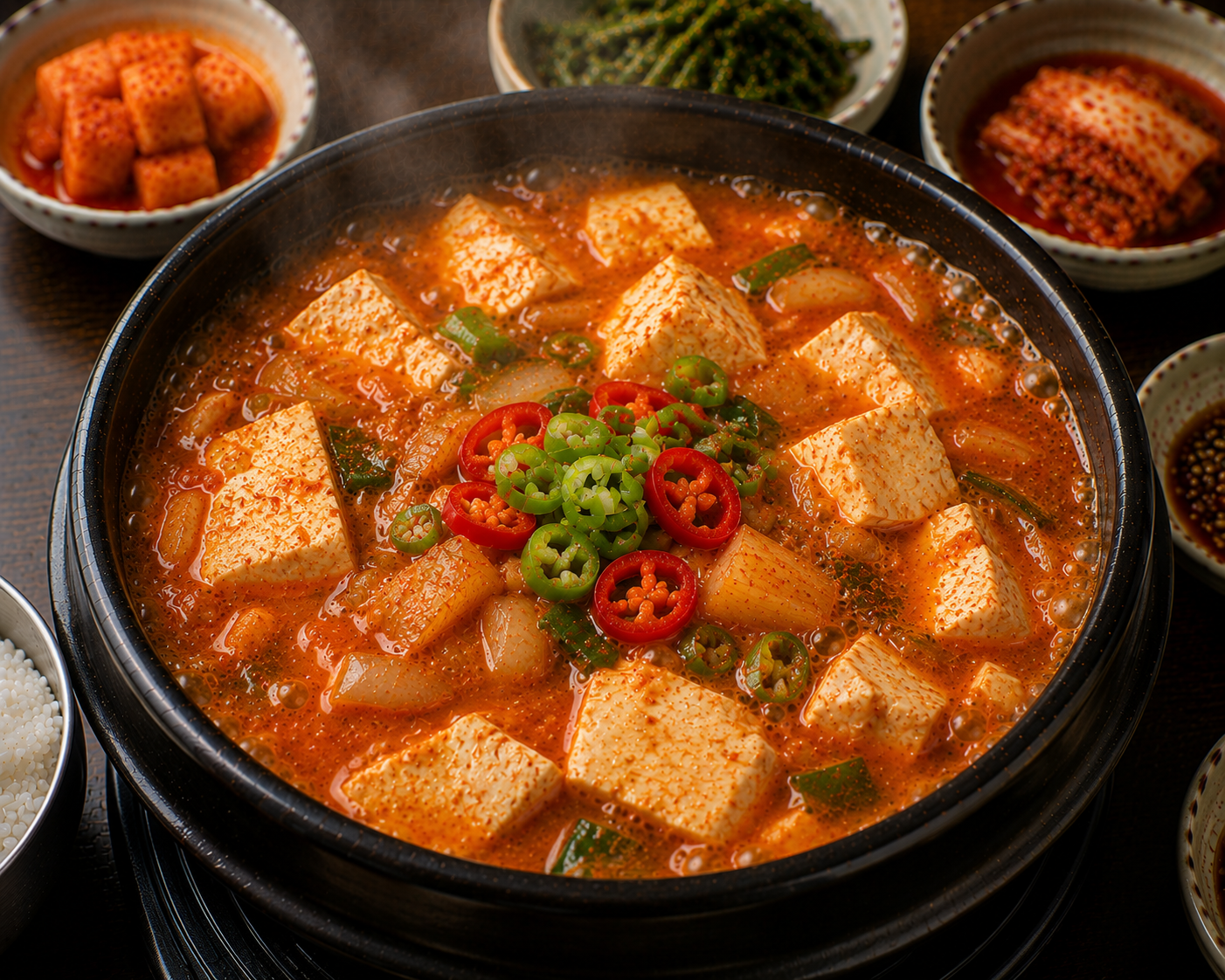
Tofu Stew
두부찌개 · dubu-jjigae
A traditional Korean stew made by boiling tofu and various vegetables in a light broth.
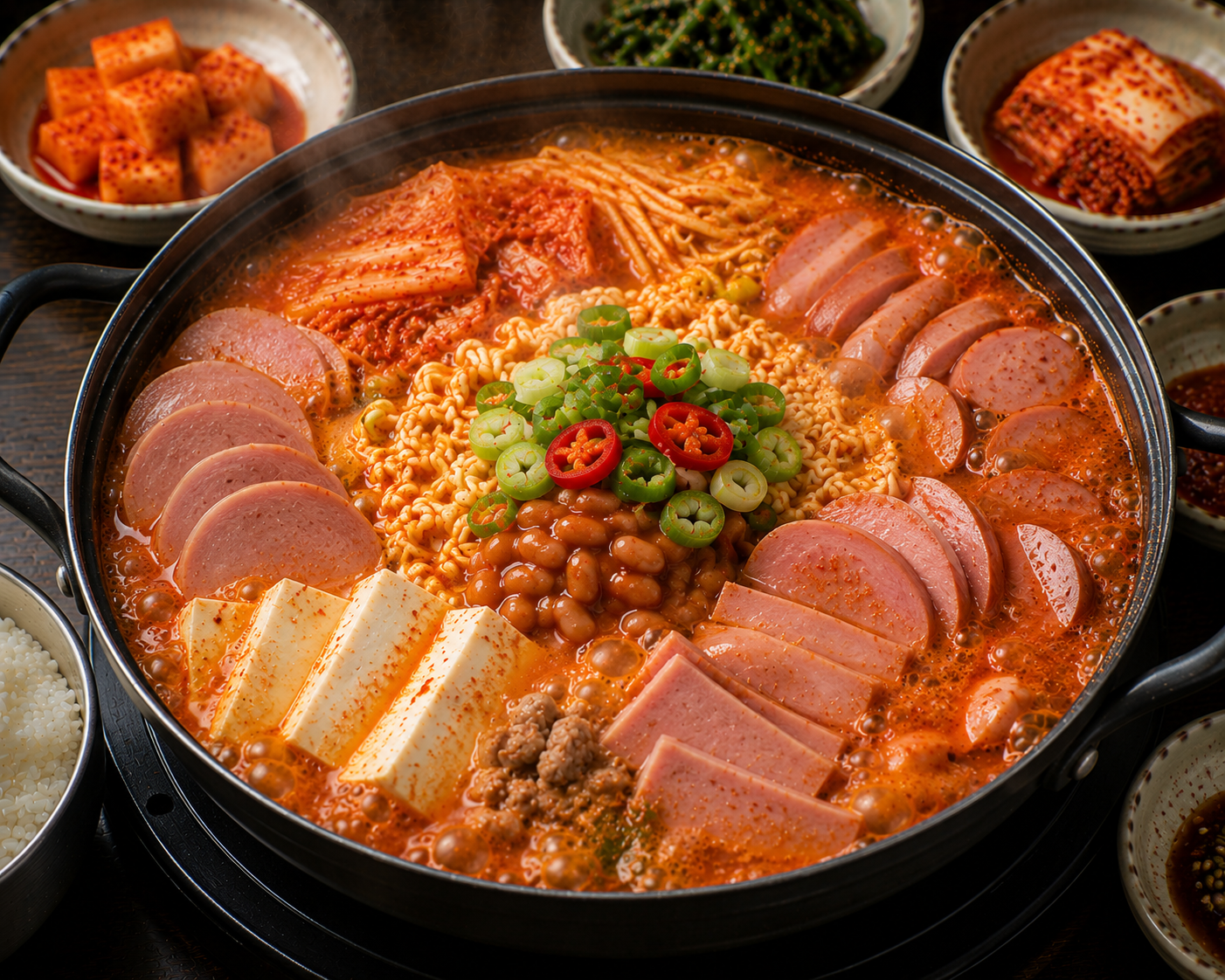
Budae Jjigae
부대찌개 · bu-dae-jji-gae
A stew where ham, sausages, and ramen noodles are boiled directly at the table in a broth. Various ingredients blend to create a rich flavor, and the broth reduces to offer a deep taste experience.
Goes well with
Ingredients
How it's made
- 1Chop kimchi into appropriate sizes and prepare the pork.
- 2Stir-fry the pork in a pot, then add the kimchi and stir-fry together.
- 3Pour in water and add red pepper powder to boil.
- 4Add tofu and green onions and simmer a bit more.
Nutrition
* Estimated values per serving.
Allergens
Contains pork, not suitable for halal or vegetarian diets.
How to order
김치찌개 주세요
Gim-chi-jji-gae ju-se-yo
Please give me Kimchi Jjigae
Customize your order
Traveler tips
How to eat it
Frequently asked questions
- Why is it made with sour kimchi?
- In Kimchi Jjigae, the fermented sourness of the kimchi creates the flavor of the broth. Freshly made kimchi is refreshing and crunchy, but when simmered as a stew, it can lack depth.
- How are Kimchi Jjigae and gimchitguk different?
- Gimchitguk has more broth and is closer to a relatively light soup. Kimchi Jjigae has less broth and stronger seasoning, making it more like a main side dish served over rice.
- Doesn't the kimchi get too mushy if you simmer it for a long time?
- In Kimchi Jjigae, the kimchi naturally softens to some extent. The longer it simmers, the more the kimchi flavor soaks into the broth, while the crunchy texture decreases.
Last reviewed: 2026-10-07