Cultural background
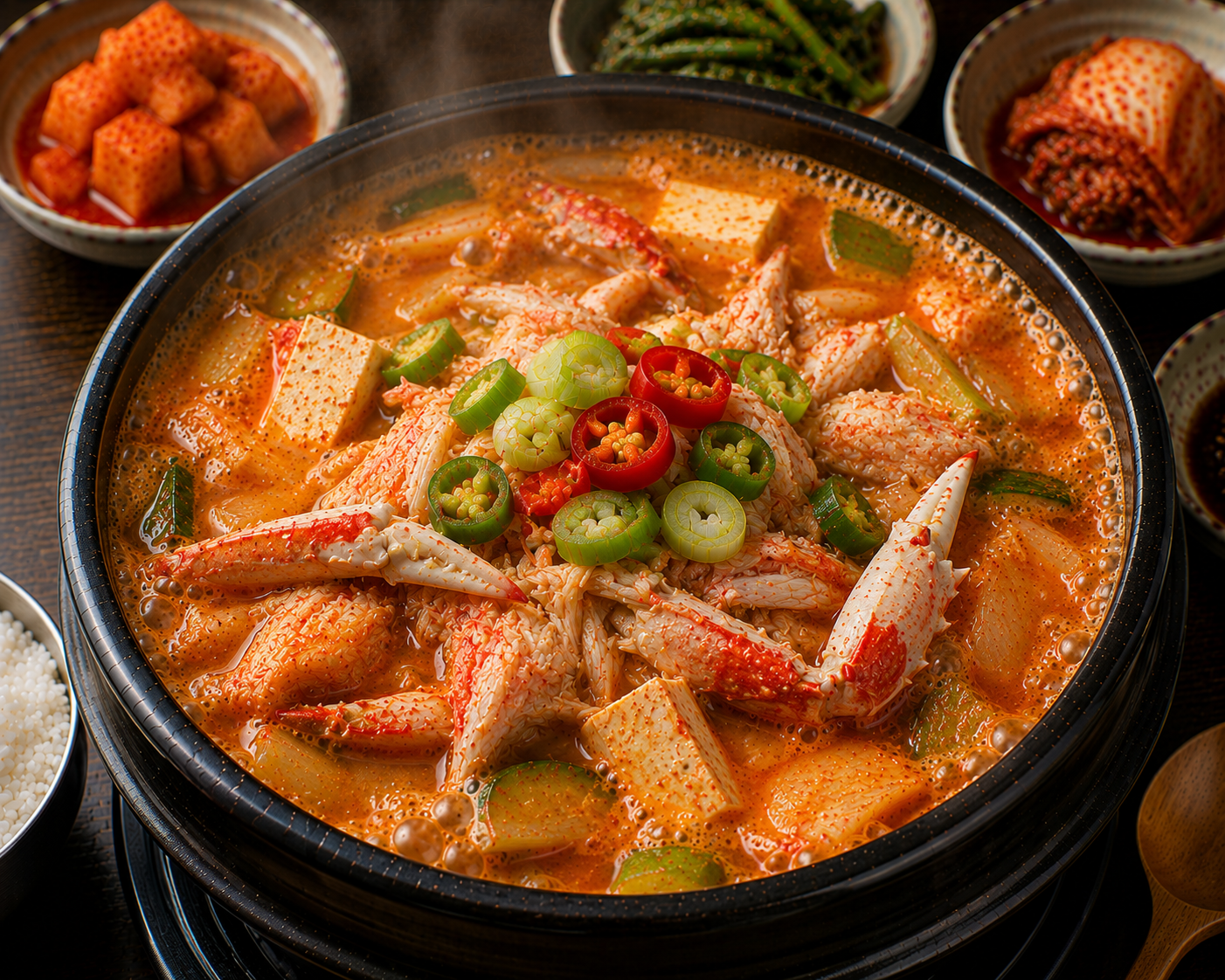
Sundubu-jjigae is a dish that is especially enjoyable in cold weather and is commonly found in Korean home cooking.
Origin & history
Sundubu is tofu made by coagulating soy milk without draining off much of the moisture. Instead of being cut into neat squares like firm tofu, it is known for its soft texture and is usually scooped with a spoon.
A well-known regional story says that sundubu such as Chodang Sundubu in Gangneung, Gangwon-do, was made using seawater as the coagulant. Today’s red Sundubu-jjigae, however, is less the original dish of one specific region than a widely enjoyed way of simmering soft sundubu with gochugaru seasoning in a ttukbaegi earthenware pot.
Regional & modern variations
- Seafood Sundubu-jjigae — The most familiar version includes seafood such as Manila clams, shrimp, and squid. The broth has a strong savory depth from the shellfish and seafood.
- Kimchi Sundubu-jjigae — Ripened kimchi gives this version a more pronounced sourness and heat. Compared with Kimchi Jjigae, the tofu is much softer and the broth tends to be less plentiful.
- White Sundubu-jjigae — Made with little or no gochugaru, so the broth is not red. This style can be easier for children or people avoiding spicy food to eat.
How Koreans eat it
Sundubu-jjigae is usually served as a single portion in a small ttukbaegi. If it is still bubbling when it reaches the table, many people crack in a raw egg and let it cook in the heat. The egg slightly softens the broth’s spiciness and forms tender curds together with the sundubu.
Taste & how to choose
Sundubu is less about the chew of firm tofu and more about a soft, cloudlike texture that gently falls apart. Even a large spoonful breaks down easily in the mouth. A good Sundubu-jjigae gives off the aroma of chili oil first, followed by the nutty richness of soybeans and the savory depth of seafood.
Similar dishes
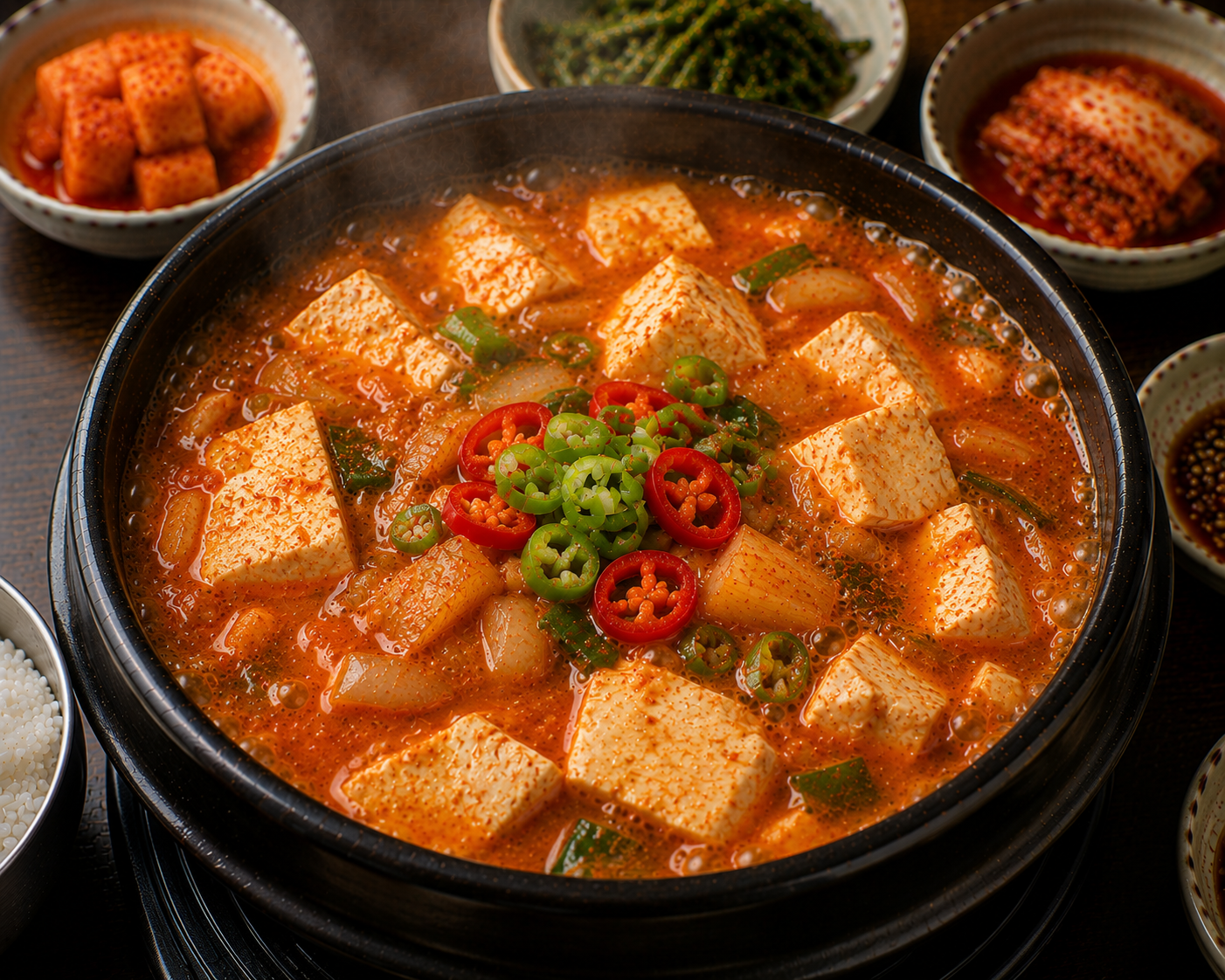
Tofu Stew
두부찌개 · dubu-jjigae
A traditional Korean stew made by boiling tofu and various vegetables in a light broth.
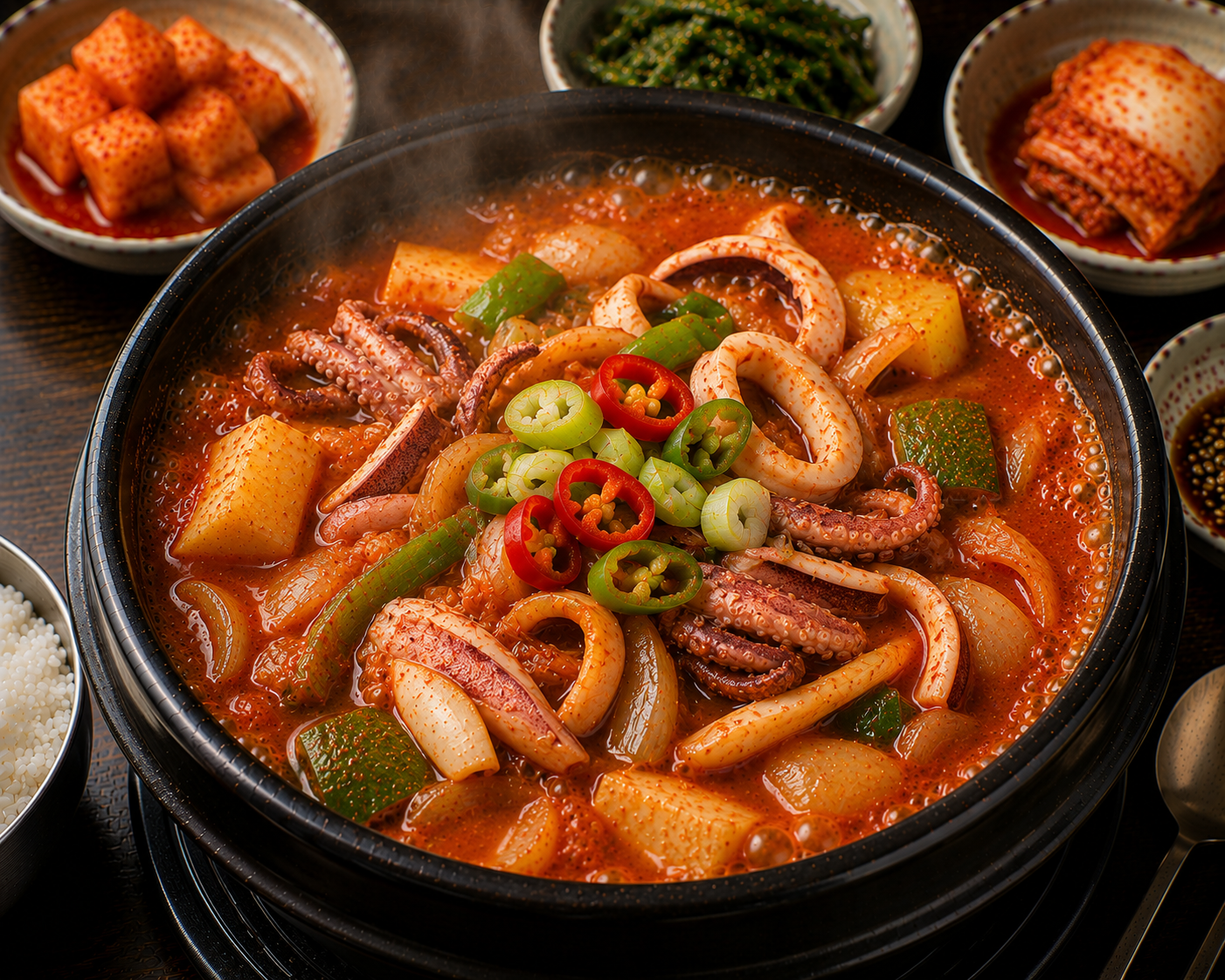
Squid Stew
오징어찌개 · o-jing-eo-jji-gae
A spicy and savory Korean-style stew made by boiling squid and various vegetables in a thick broth.
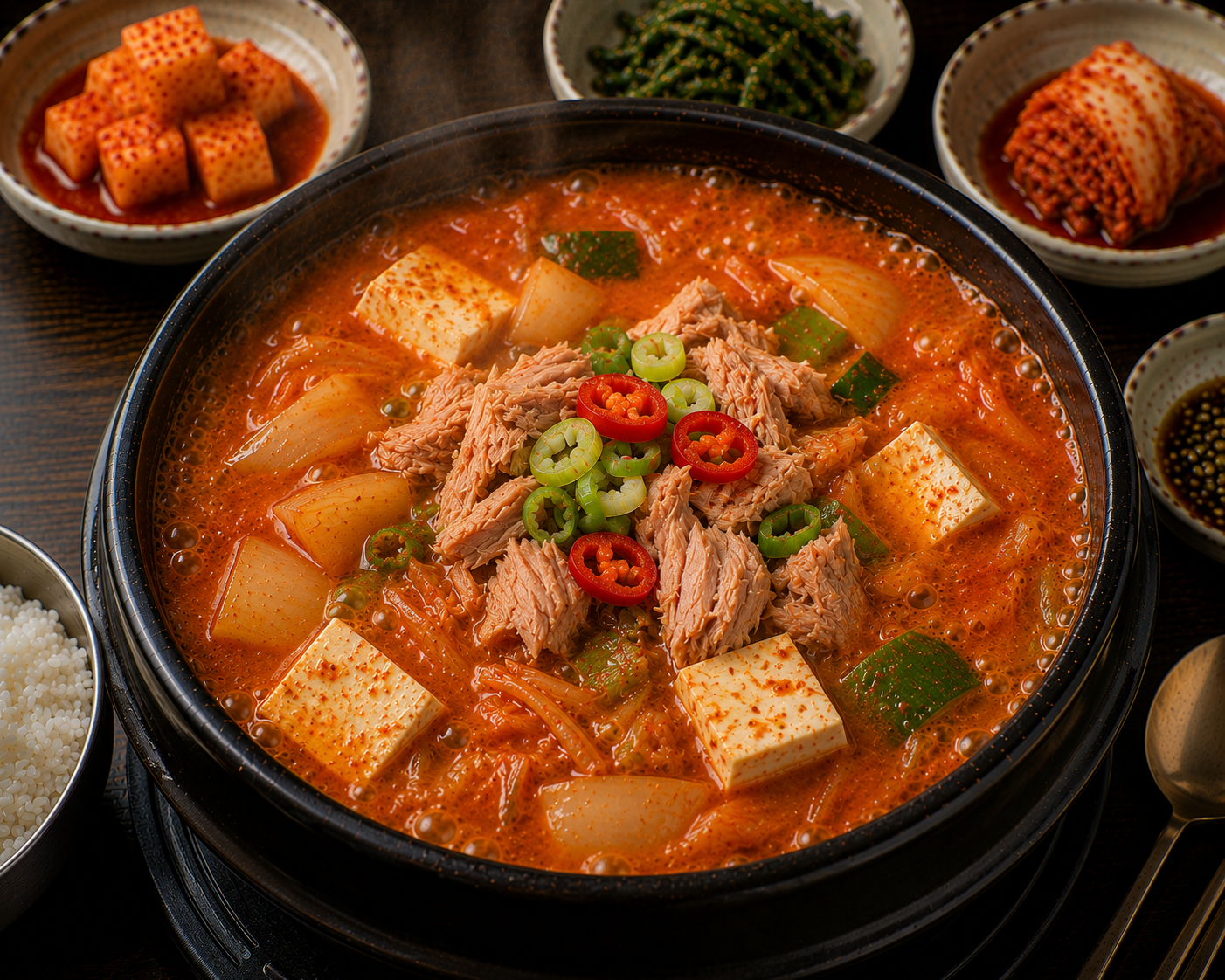
Tuna Stew
참치찌개 · chamchi-jjigae
A savory and spicy Korean stew made with tuna and kimchi in a rich broth.
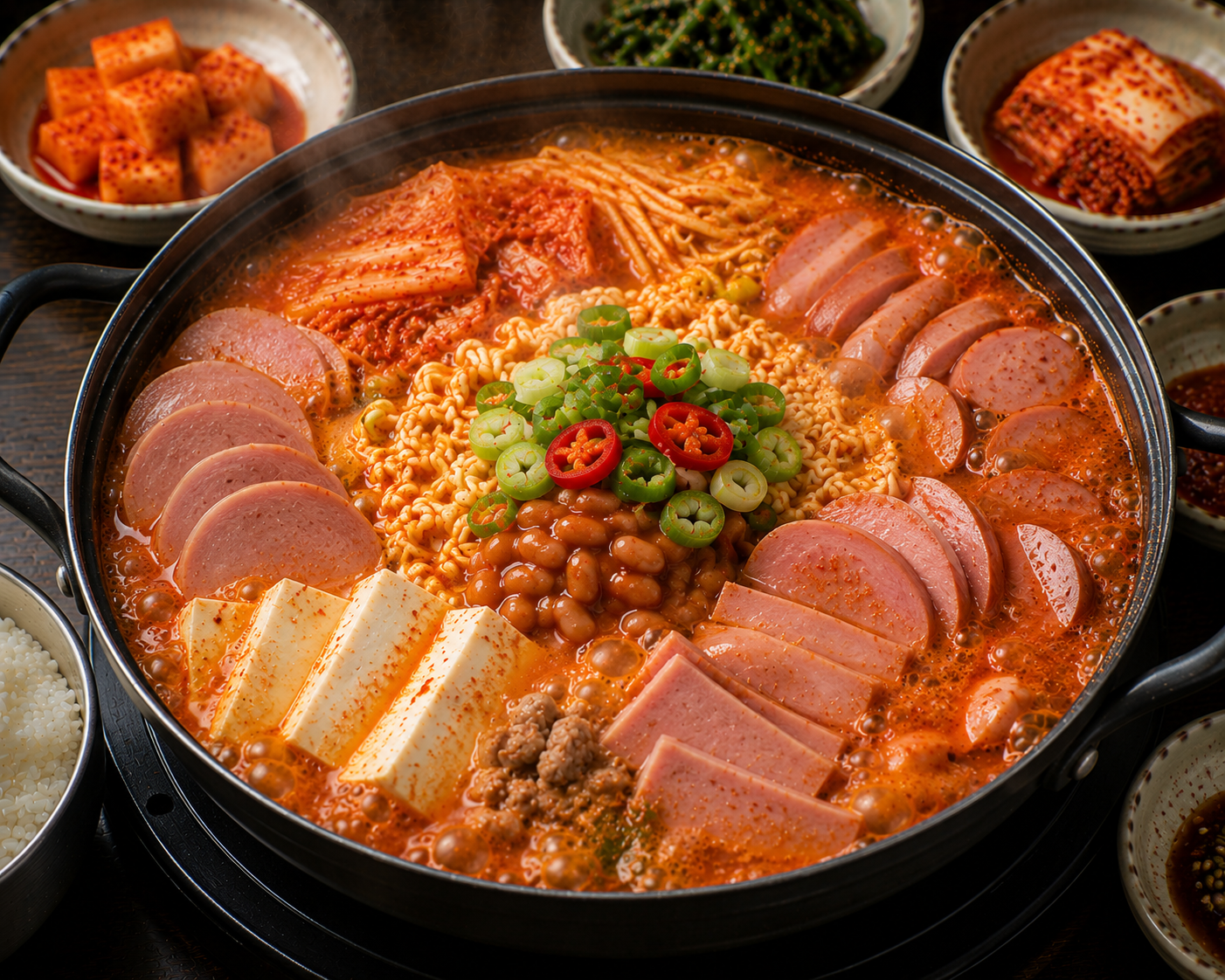
Budae Jjigae
부대찌개 · bu-dae-jji-gae
A stew where ham, sausages, and ramen noodles are boiled directly at the table in a broth. Various ingredients blend to create a rich flavor, and the broth reduces to offer a deep taste experience.
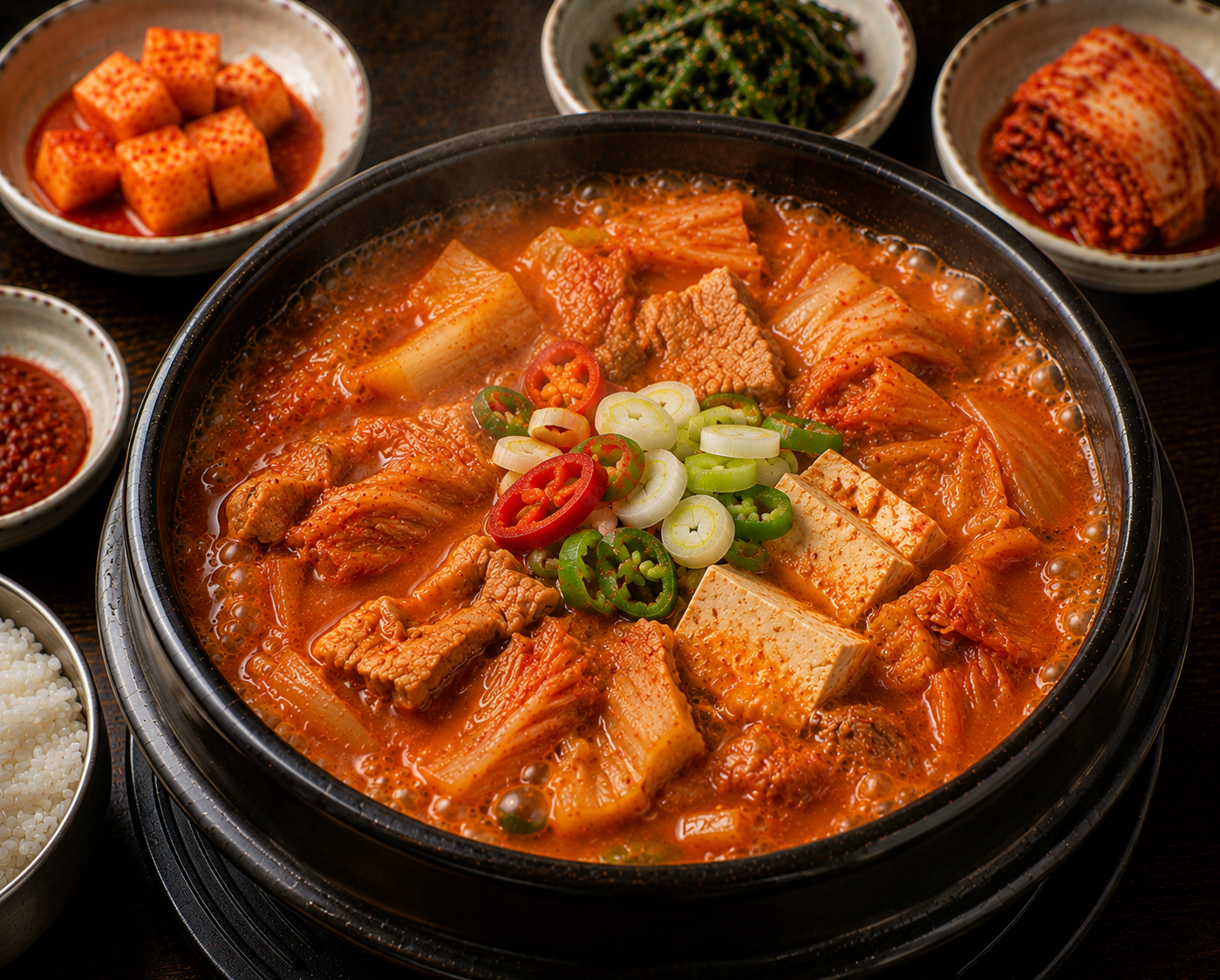
Kimchi Jjigae
김치찌개 · kimchi-jjigae
A communal stew made with well-fermented kimchi and pork simmered in a rich broth, seasoned to perfection, salty and spicy. Unlike soup, it is served bubbling in an earthenware pot and enjoyed by ladling the broth and ingredients over rice, shared among many. The fermented sourness of the kimchi combines with the pork fat to create a deep flavor that complements the rice.
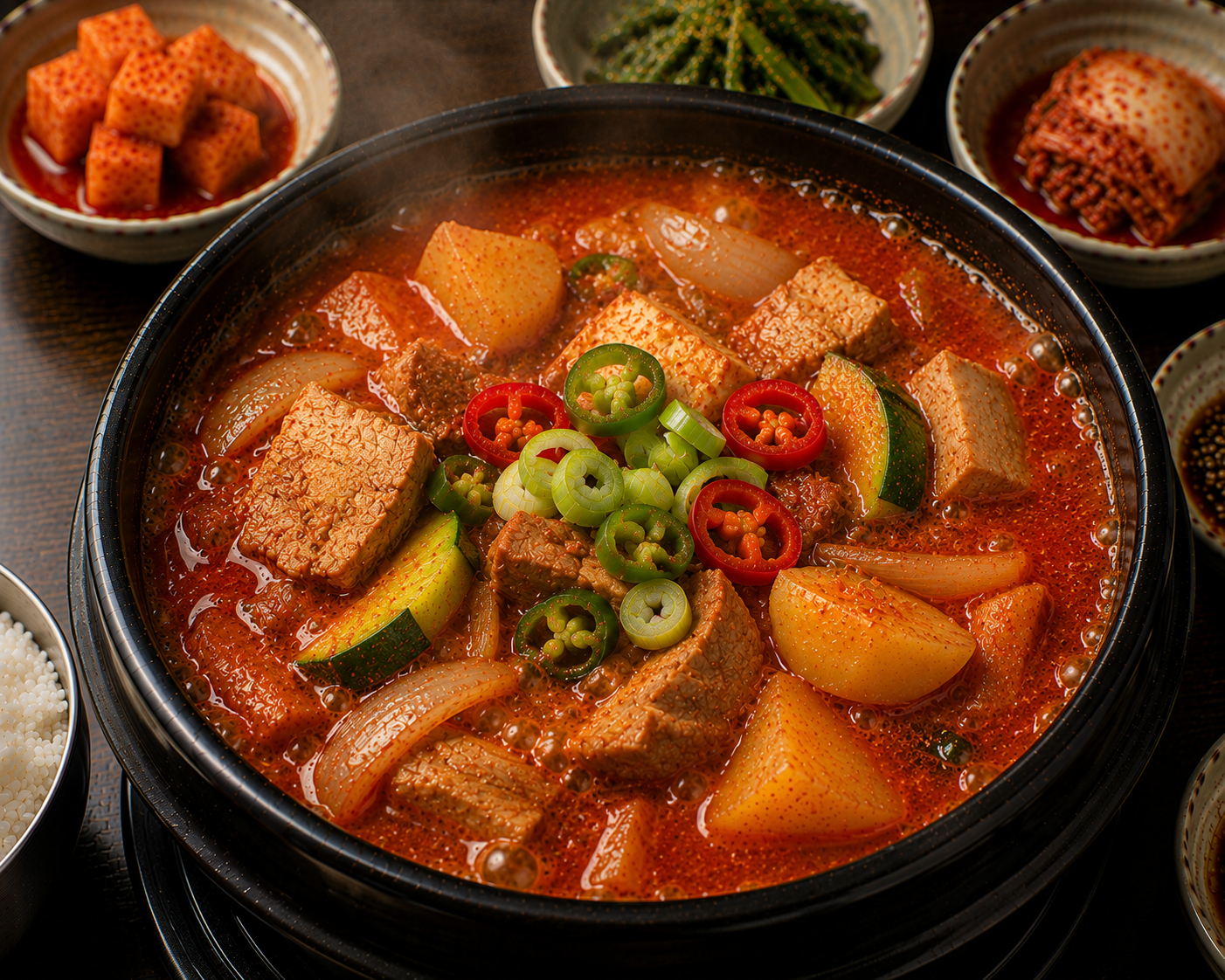
Gochujang-jjigae
고추장찌개 · gochu-jang-jjigae
A spicy Korean stew made with gochujang as the base seasoning, pork, tofu, and vegetables cooked together.
Goes well with
Ingredients
How it's made
- 1Prepare the sundubu and clean the seafood.
- 2In a pot, heat sesame oil and stir-fry garlic and green onion.
- 3Add the seafood and stir-fry with red pepper powder.
- 4Pour in water and add sundubu to boil.
Nutrition
* Estimated values per serving.
Allergens
Not suitable for vegetarian and halal diets due to the use of seafood and red pepper powder.
How to order
순두부찌개 주세요
Sun-du-bu-jji-gae ju-se-yo
Please give me sundubu-jjigae
Customize your order
Traveler tips
How to eat it
Frequently asked questions
- Do I have to add a raw egg to Sundubu-jjigae?
- Not necessarily. Many people choose to add one because the egg cooks inside the hot ttukbaegi and makes the broth a little softer.
- What is the difference between sundubu and regular tofu?
- Sundubu is tofu at the stage before much of the moisture is pressed out to make it firm. That is why it is eaten with a spoon rather than cut with a knife, and why it breaks apart easily even inside the stew.
- Why is it served in a ttukbaegi?
- A ttukbaegi retains heat for a long time, so the stew stays warm at the table.
Last reviewed: 2026-10-07