Cultural background
A dish made with ingredients from U.S. military bases after the Korean War, it is a type of hot pot stew where various ingredients are boiled together at the table.
Origin & history
The “부대” (budae, “military unit/base”) in Budae Jjigae means a military base or unit. A widely known account says that after the Korean War, people living near U.S. military bases boiled processed meats that were easy to obtain, such as ham and sausages, with kimchi and gochugaru-based chili seasoning.
Areas close to U.S. bases, especially Uijeongbu and Songtan, are particularly famous for Budae Jjigae. Because American canned ingredients were folded into the grammar of Korean jjigae, or stew, the dish is often described as a menu item that reflects everyday life in postwar Korean society.
Regional & modern variations
- Uijeongbu-style Budae Jjigae — Known for a relatively clear, spicy broth that lets the flavor of the ham and sausages stand out. The style is often introduced together with the area’s image as a famous Budae Jjigae street.
- Songtan-style Budae Jjigae — Known as a richer, heavier style made with ingredients such as cheese, baked beans, and minced meat. The influence of food culture around U.S. military bases comes through strongly.
- Cheese Budae Jjigae — Sliced cheese or mozzarella is placed on top of the bubbling stew. The heat and saltiness become smoother, and the broth turns thicker.
How Koreans eat it
At Budae Jjigae specialty restaurants, the pot usually comes sized for the number of diners, and you can order extra ingredients such as ham, sausages, instant noodle add-ons, tteok rice cakes, and cheese separately. Instant noodle add-ons absorb the broth quickly if boiled too long, so it is best to add them once the stew starts bubbling and pull them out to eat first.
Taste & how to choose
First-time diners may be surprised by the salty, smoky taste of the ham and sausages alongside the sourness of kimchi and the heat of gochugaru chili flakes. The broth is much richer than a clear soup, and as it continues to boil, it thickens from the instant noodle starch and cheese. A good Budae Jjigae does not taste only of processed meat; the acidity of the kimchi brings it into balance.
Similar dishes
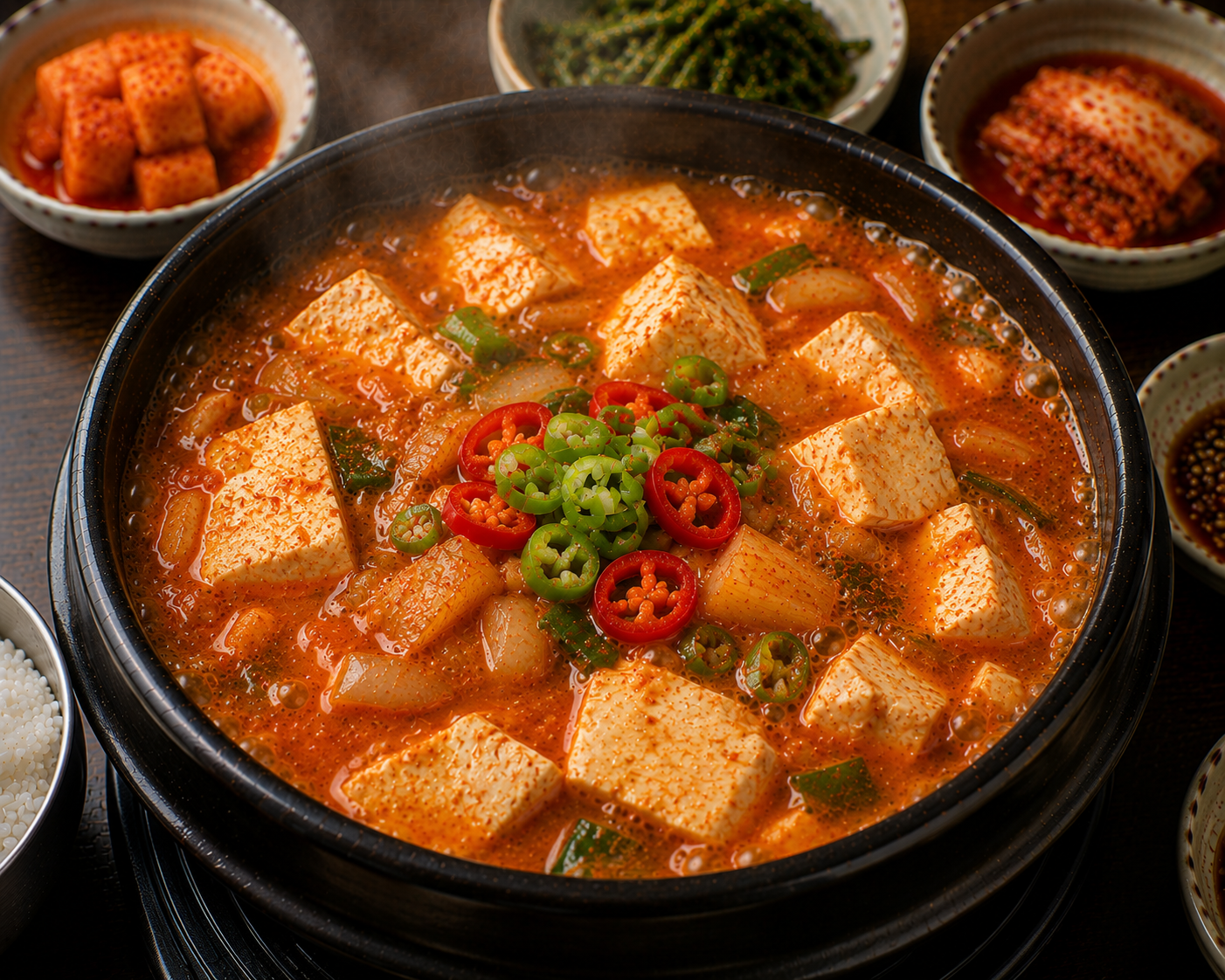
Tofu Stew
두부찌개 · dubu-jjigae
A traditional Korean stew made by boiling tofu and various vegetables in a light broth.
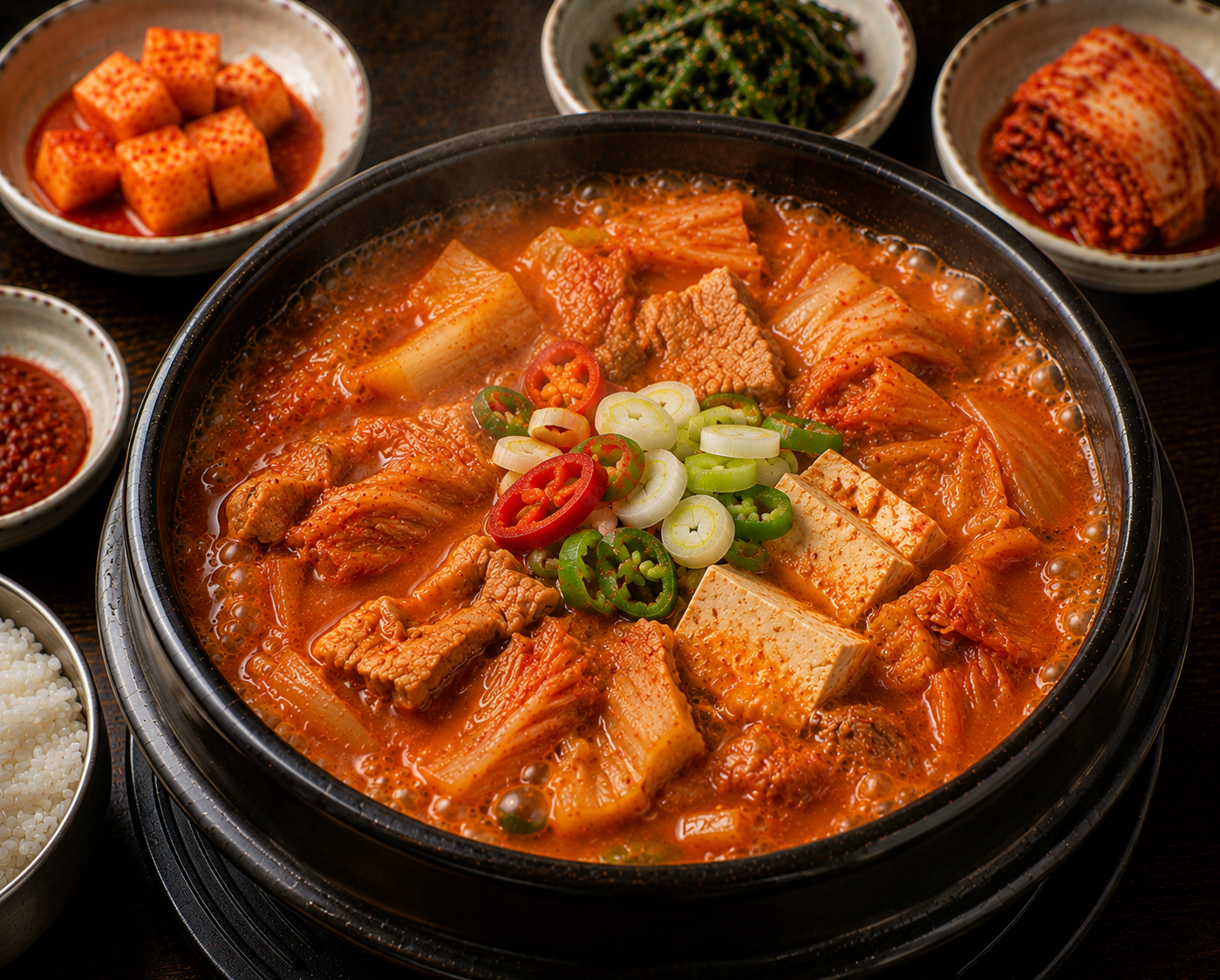
Kimchi Jjigae
김치찌개 · kimchi-jjigae
A communal stew made with well-fermented kimchi and pork simmered in a rich broth, seasoned to perfection, salty and spicy. Unlike soup, it is served bubbling in an earthenware pot and enjoyed by ladling the broth and ingredients over rice, shared among many. The fermented sourness of the kimchi combines with the pork fat to create a deep flavor that complements the rice.
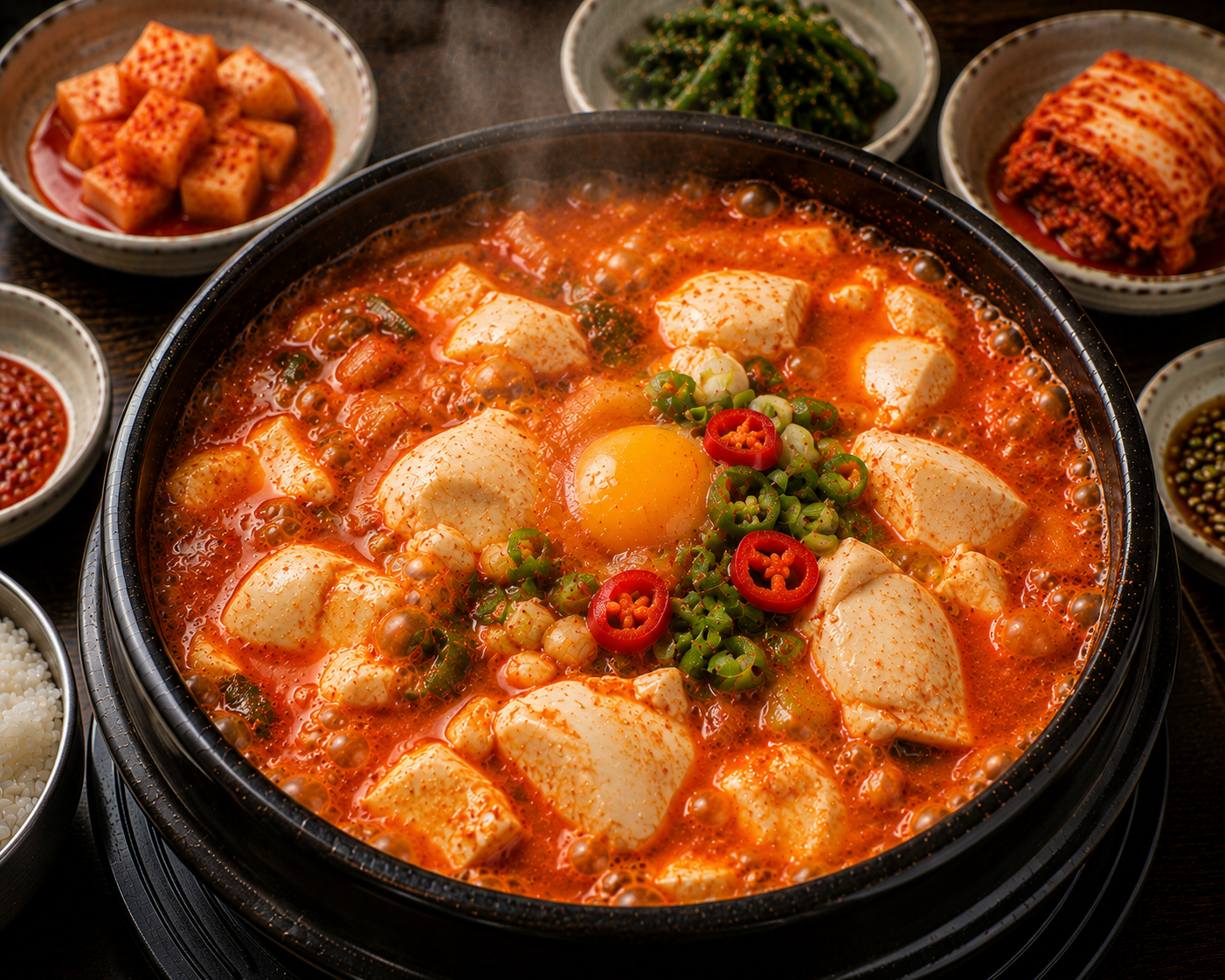
Sundubu-jjigae
순두부찌개 · sundubu-jjigae
A spicy Korean stew simmered with soft sundubu (tofu), seafood, and red pepper powder.
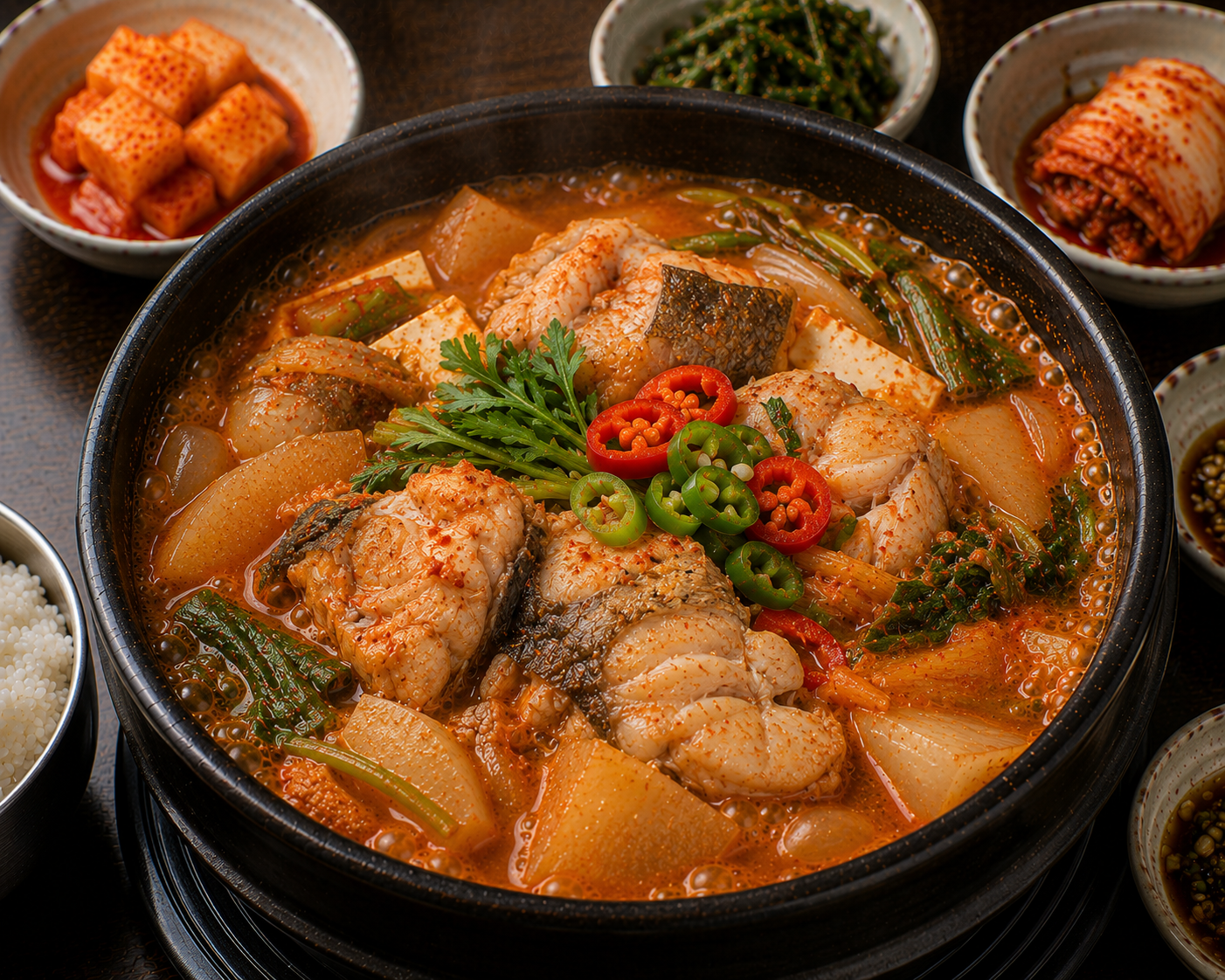
Dongtae Jjigae
동태찌개 · dong-tae-jji-gae
A spicy Korean-style stew made by simmering frozen pollack, tofu, radish, and green onions in a rich broth. The broth is thick and savory, making it perfect to eat with rice.
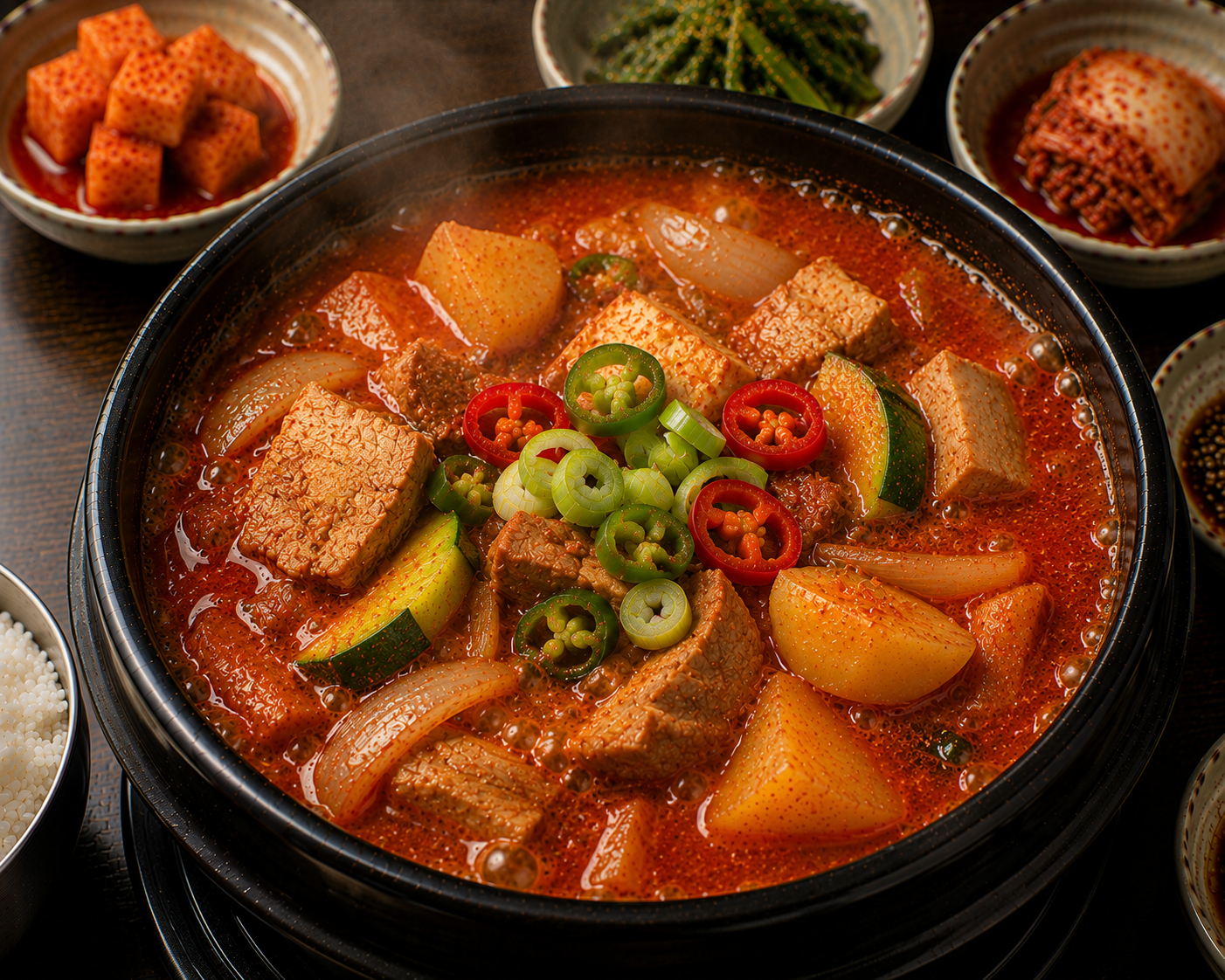
Gochujang-jjigae
고추장찌개 · gochu-jang-jjigae
A spicy Korean stew made with gochujang as the base seasoning, pork, tofu, and vegetables cooked together.
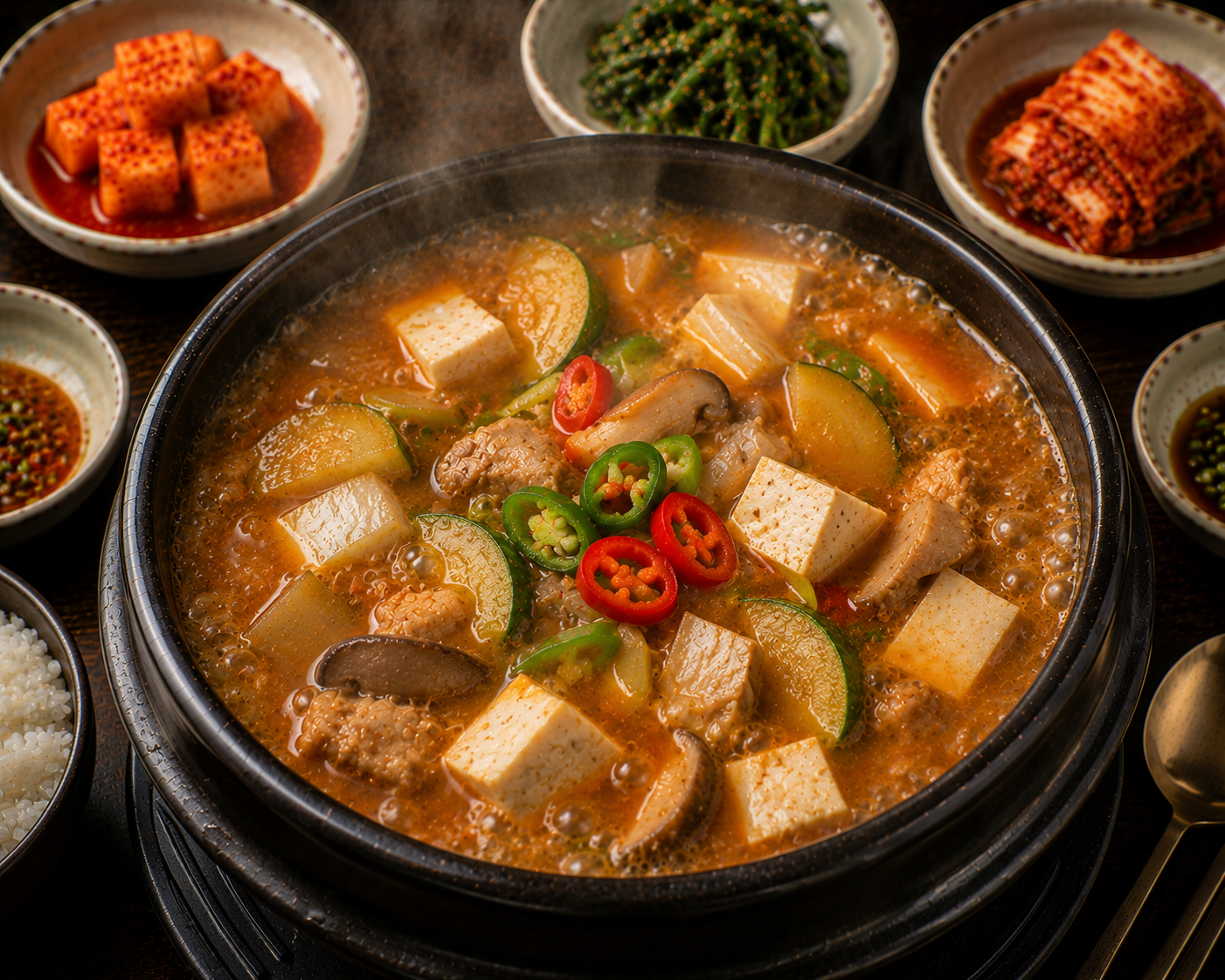
Doenjang Jjigae
된장찌개 · doenjang-jjigae
A traditional Korean stew made by simmering fermented soybean paste with tofu and vegetables.
Goes well with
Ingredients
How it's made
- 1Chop kimchi and green onion into suitable sizes and prepare them.
- 2Put ham and sausages in a pot and lightly stir-fry them.
- 3Add kimchi and green onion and stir-fry together before pouring in the broth.
- 4Add ramen noodles and tofu and bring to a boil.
- 5Add red pepper powder to adjust the seasoning and boil a little longer.
Nutrition
* Estimated values per serving.
Allergens
Not suitable for vegetarian and halal diets as it contains ham and sausage.
How to order
부대찌개 주세요
Bu-dae-jji-gae ju-se-yo
Please give me Budae Jjigae
Customize your order
Traveler tips
How to eat it
Frequently asked questions
- Why does the name include “부대” (budae, “military unit/base”)?
- The name comes from the dish’s background as something made with ingredients such as ham and sausages that came from around military bases. Here, “부대” (budae) means a military unit or base.
- How is it different from Kimchi Jjigae?
- Kimchi Jjigae often centers on kimchi with pork or tuna. Budae Jjigae centers on processed foods such as ham, sausages, and instant noodle add-ons, so it tastes saltier and richer.
- Isn’t it an odd combination to add cheese or baked beans?
- In Budae Jjigae, they are a natural combination. The mix of American-style ingredients with Korean spicy broth is what defines the dish.
Last reviewed: 2026-10-07