
Cultural background
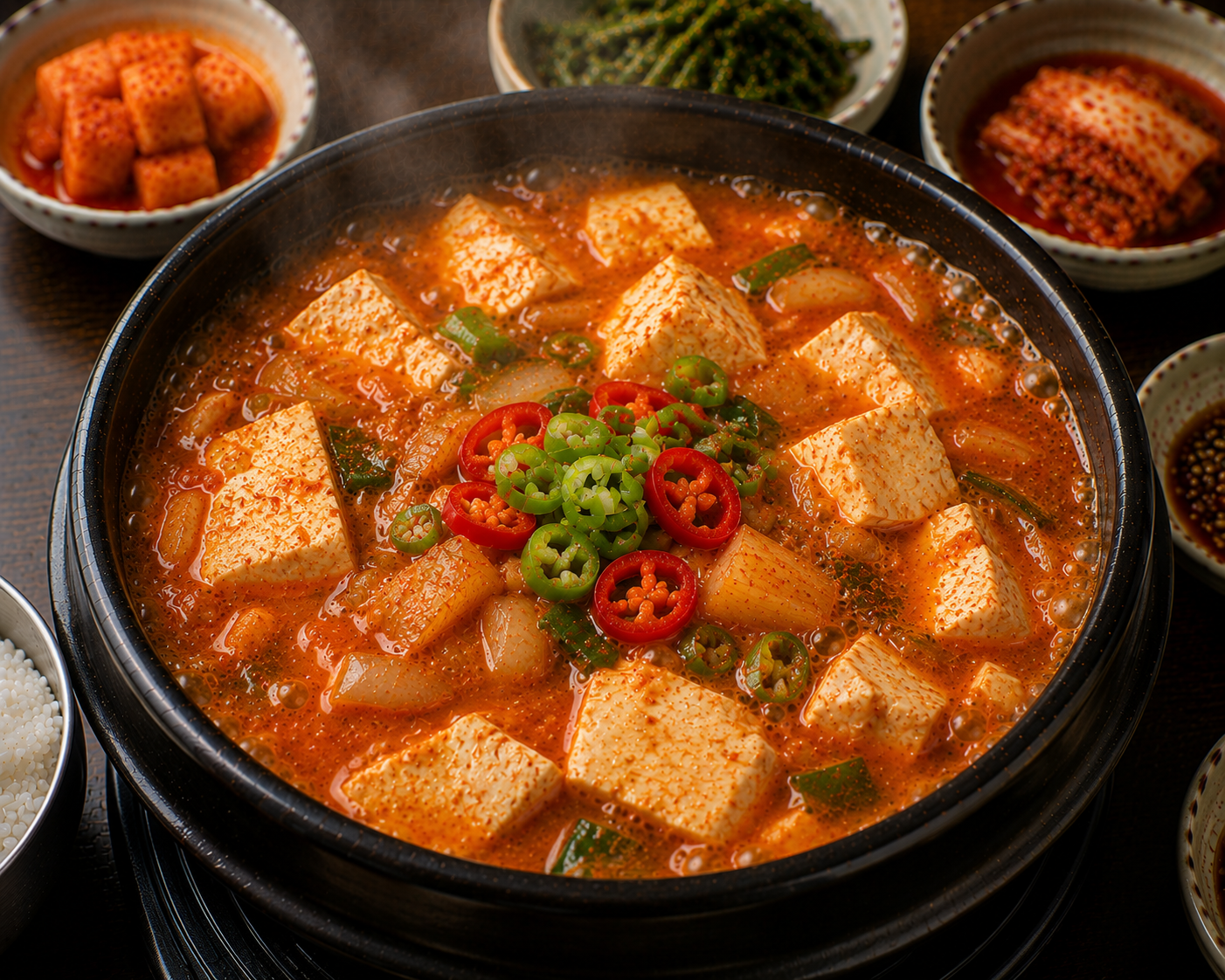
A representative home-cooked dish, the ratio of doenjang and ingredients varies from household to household and is commonly enjoyed as everyday food.
Origin & history
Doenjang Jjigae starts with Doenjang, a fermented soybean paste made from soybeans, dissolved in water and simmered. Along with Soy Sauce, Doenjang sits at the heart of Korea's jang culture, and because it keeps well for a long time, it has been used on the table in every season.
As a jjigae, or Korean stew, it balances Doenjang's saltiness and fermented aroma with ingredients such as tofu, vegetables, and potatoes. Many people believe that simmering it with rice-rinsing water lets the starch lightly thicken the broth and soften Doenjang's rougher edge.
Regional & modern variations
- Chadolbagi Doenjang Jjigae — Doenjang Jjigae made with thinly sliced beef Chadolbagi. The beef fat seeps into the broth, making it richer and more savory.
- Haemul Doenjang Jjigae — Simmered with seafood such as bajirak clams, shrimp, and other shellfish. The cool, refreshing flavor of seafood is added to Doenjang's earthy depth.
- Naengi Doenjang Jjigae — A seasonal version made with naengi, a spring green. Naengi has a strong earthy smell and aroma, so first-time eaters may notice the herb's scent more than the Doenjang.
How Koreans eat it
At Korean barbecue restaurants, people often order Doenjang Jjigae with rice after eating grilled meat. After the richness of grilled meat, the salty, hot Doenjang broth helps reset the palate. At home, it is also a common quick dish made with leftover vegetables.
Taste & how to choose
Doenjang Jjigae has less broth than a clear soup, and the seasoning is stronger. Because of Doenjang's fermented aroma, the smell can seem strong at first, but the flavor combines saltiness, earthiness, and a gentle sweetness. A good Doenjang Jjigae is not just salty; it keeps the nutty aroma of soybeans and the sweetness of the vegetables alive.
Similar dishes
Doenjang Jjigae Baekban (Soybean Paste Stew Set Meal)
된장찌개백반 · doenjang-jjigae-baekban
This is a traditional Korean meal served with a soybean paste stew, rice, and a variety of side dishes. The rich and savory doenjang jjigae pairs perfectly with the rice, and an assortment of banchan is provided.
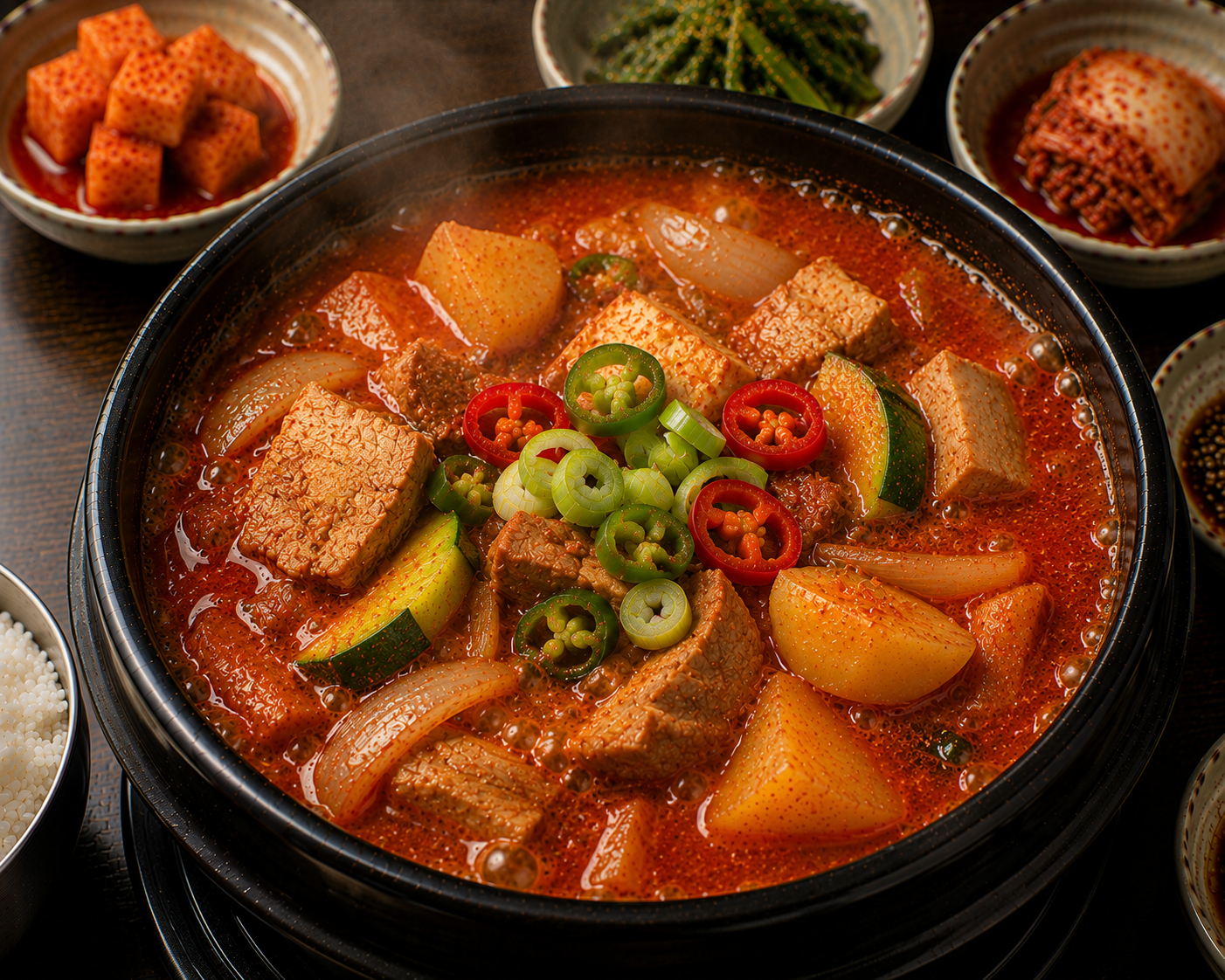
Gochujang-jjigae
고추장찌개 · gochu-jang-jjigae
A spicy Korean stew made with gochujang as the base seasoning, pork, tofu, and vegetables cooked together.
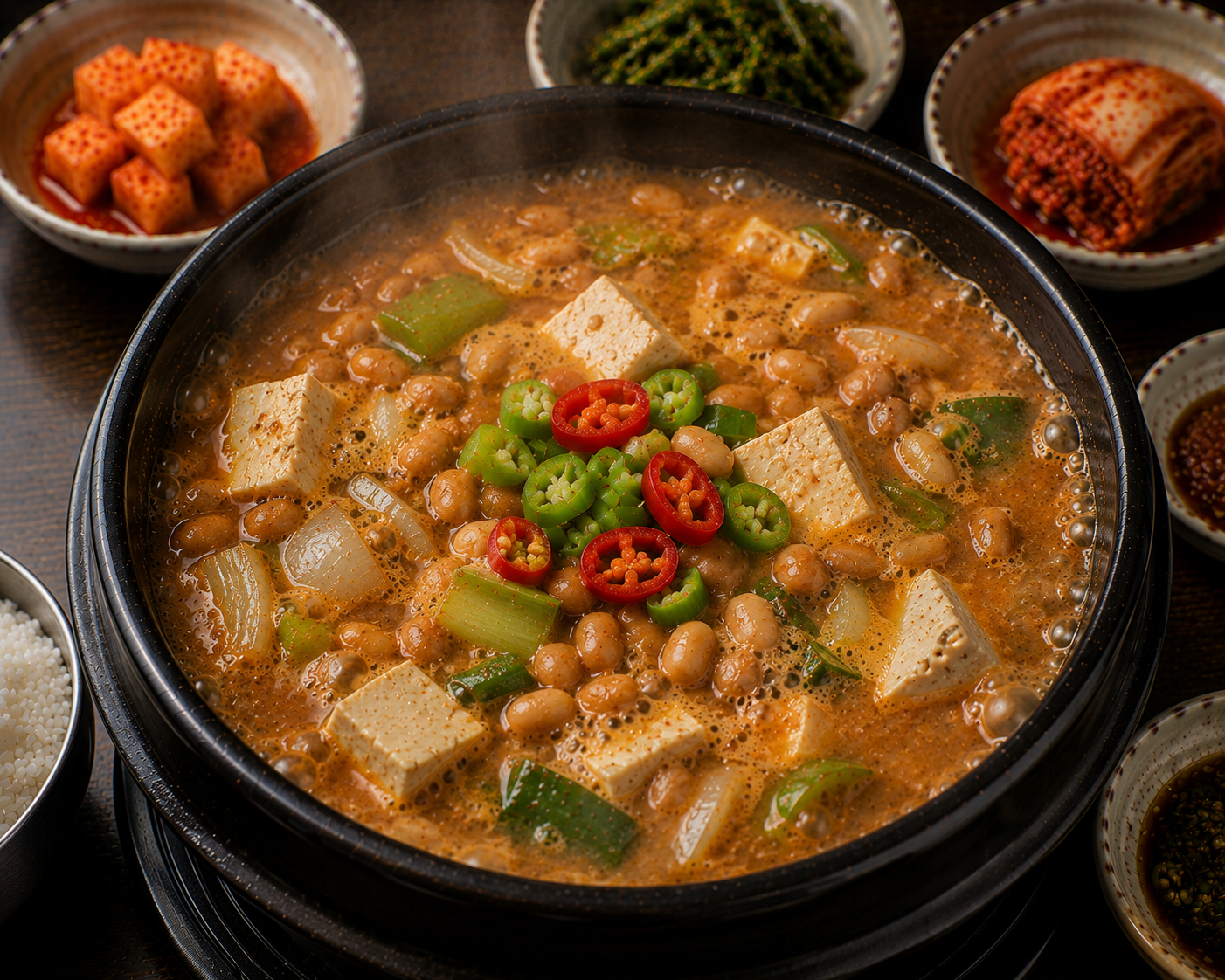
Cheonggukjang Jjigae
청국장찌개 · cheong-guk-jang-jji-gae
A rich Korean-style stew made by boiling Cheonggukjang, tofu, and vegetables in a thick broth.
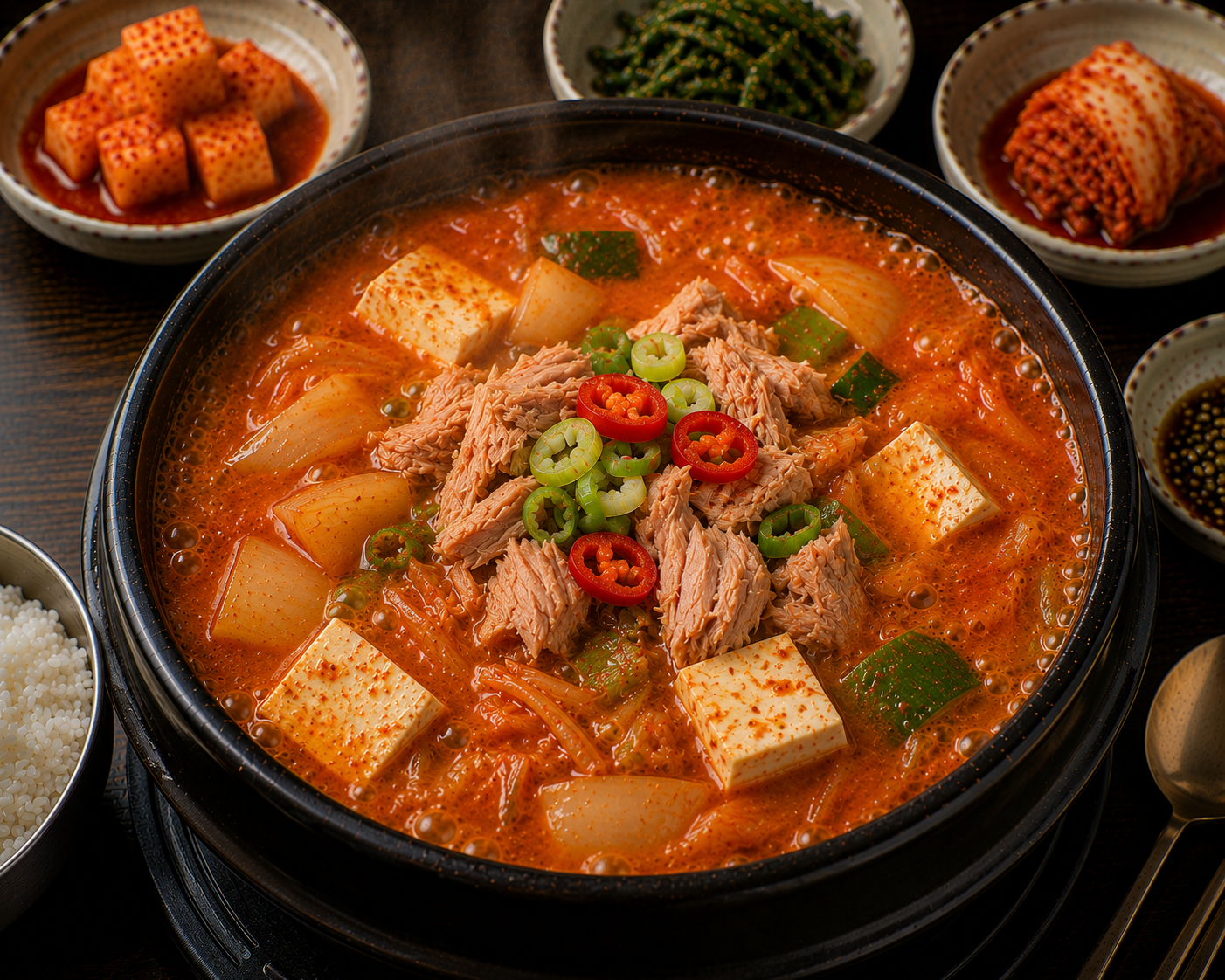
Tuna Stew
참치찌개 · chamchi-jjigae
A savory and spicy Korean stew made with tuna and kimchi in a rich broth.
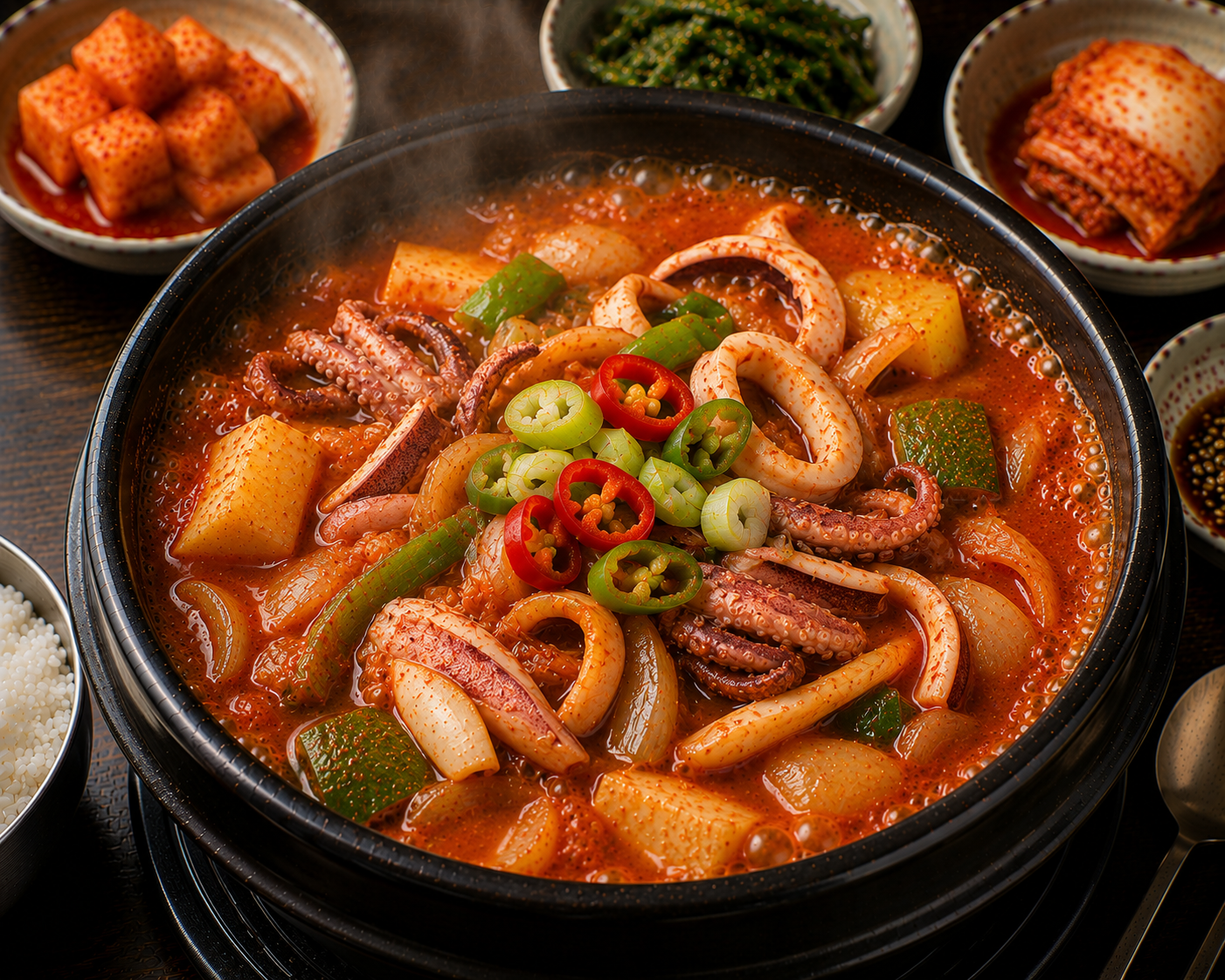
Squid Stew
오징어찌개 · o-jing-eo-jji-gae
A spicy and savory Korean-style stew made by boiling squid and various vegetables in a thick broth.
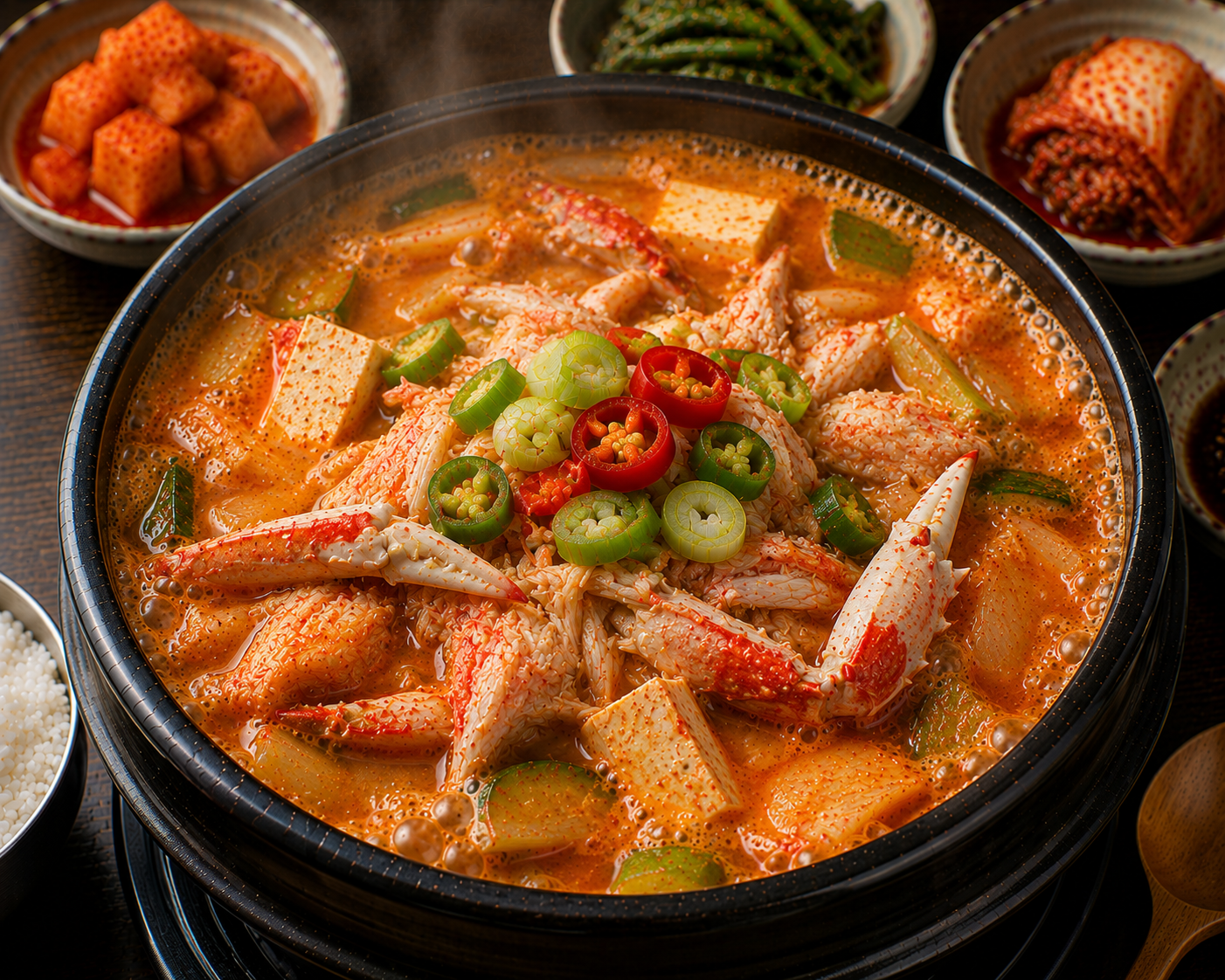
Crab Soup
게살찌개 · ge-sal-jjigae
A Korean-style stew made by boiling crab meat and various vegetables in a rich broth. The sweet and tender taste of the crab meat enhances the umami of the broth.
Goes well with
Ingredients
How it's made
- 1Add fermented soybean paste and water to a pot and mix well.
- 2Chop zucchini, potato, onion, etc., into appropriate sizes and add them.
- 3Add tofu and bring to a boil.
- 4Finish by adding green onion and pepper.
Nutrition
* Estimated values per serving.
Allergens
Fermented soybean paste may contain seafood broth, making it unsuitable for vegetarians.
How to order
된장찌개 주세요
Doen-jang-jji-gae ju-se-yo
Please give me Doenjang Jjigae
Customize your order
Traveler tips
How to eat it
Frequently asked questions
- How is Doenjang Jjigae different from miso soup?
- Both use fermented soybean paste, but Doenjang Jjigae is a Korean jjigae, or stew, cooked down with plenty of ingredients. It is more strongly seasoned than miso soup and tends to have more solids, such as tofu, potatoes, and aehobak, a Korean zucchini.
- Only vegetables and tofu are visible, so can I eat it as a vegetarian dish?
- Caution is needed. The broth may be made with anchovies, clams, or beef, and at barbecue restaurants, meat fat may be added. If you are vegetarian, check whether the broth or the Doenjang seasoning contains seafood or meat.
- Why does Doenjang Jjigae at barbecue restaurants taste richer?
- Many restaurants season it strongly so it tastes good after grilled meat, or add Chadolbagi, meat fat, or seafood broth. Because it is meant to be eaten with rice, the broth alone can taste salty.
Last reviewed: 2026-10-07