Cultural background
In Korea, the culture of enjoying chicken with beer, known as 'chimaek', is popular, and it can be enjoyed with various sauces and styles.
Origin & history
Korean-style chicken took its current form as two cultures grew together: the ‘통닭’ (tongdak, “whole fried chicken”) culture of frying whole chickens at markets, and the broader culture of food delivery. Tongdak centered on relatively simple salt seasoning and a thin coating.
Later, frying cut-up pieces of chicken to a crisper finish and tossing them in a spicy-sweet sauce became widespread. Korean chicken developed into a food enjoyed less for the chicken itself than for ‘튀김옷의 바삭함’ (twigimot-ui basakham, “the crispness of the coating”) and ‘소스 조합’ (soseu johap, “sauce combinations”).
Regional & modern variations
- Yennal Tongdak — The chicken is split open in large sections or fried whole. Compared with today's chicken, the coating is thinner, and people often dip it in salt or seasoned salt.
- Yangnyeom Chicken — Fried chicken is tossed in a red sauce based on Gochujang, starch syrup, garlic, and other ingredients. Although it looks very spicy, the sweetness usually comes first.
- Soy Sauce Garlic Chicken — Chicken coated in a salty-sweet sauce with the aroma of Soy Sauce and garlic. Less spicy than chili seasoning, it also goes well with rice or carbonated drinks.
- Padak — A generous amount of thinly sliced raw scallions is piled over fried chicken. The sharp aroma and crunch of the scallions cut through the rich, oily taste.
How Koreans eat it
In Korea, chicken is the quintessential late-night delivery food. Sports games, drama-watching sessions, and gatherings with friends often call for it, especially when people sit for a long time and share. When ordering, many people choose ‘반반’ (banban, “half-and-half”), splitting the order into two flavors, rather than picking just one.
Taste & how to choose
Good Korean-style chicken has a crisply fried coating. Even sauced chicken, if eaten right away, should not have gone completely soggy on the outside. The white chikinmu served alongside is similar to danmuji, but cooler and more tart, helping clear away the greasy richness.
Similar dishes
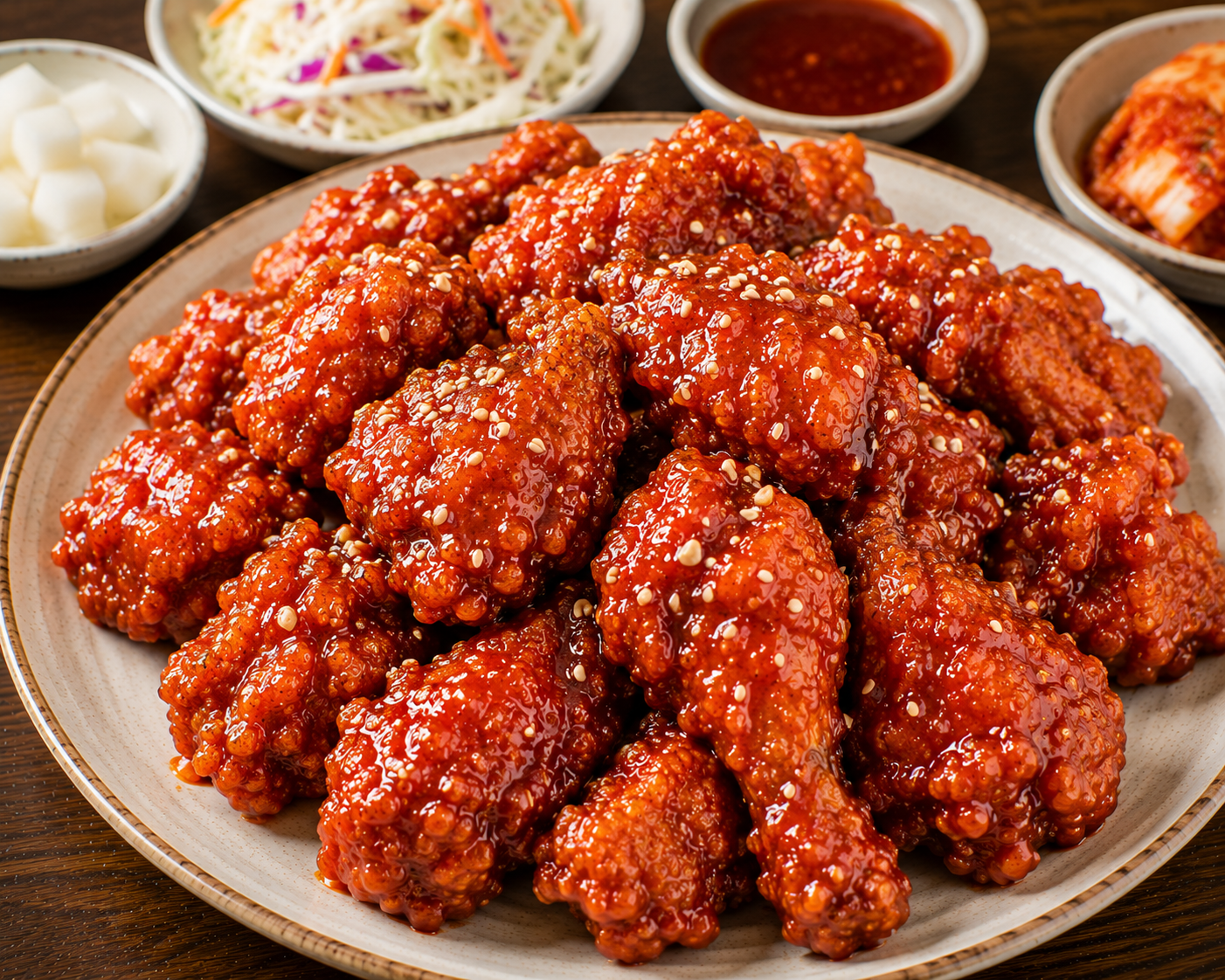
Yangnyeom Chicken
양념치킨 · yangnyeom-chikin
Korean-style chicken dish coated with spicy and sweet seasoning sauce on fried chicken. The crispy batter is well soaked with the seasoning, making it easy to eat by hand.
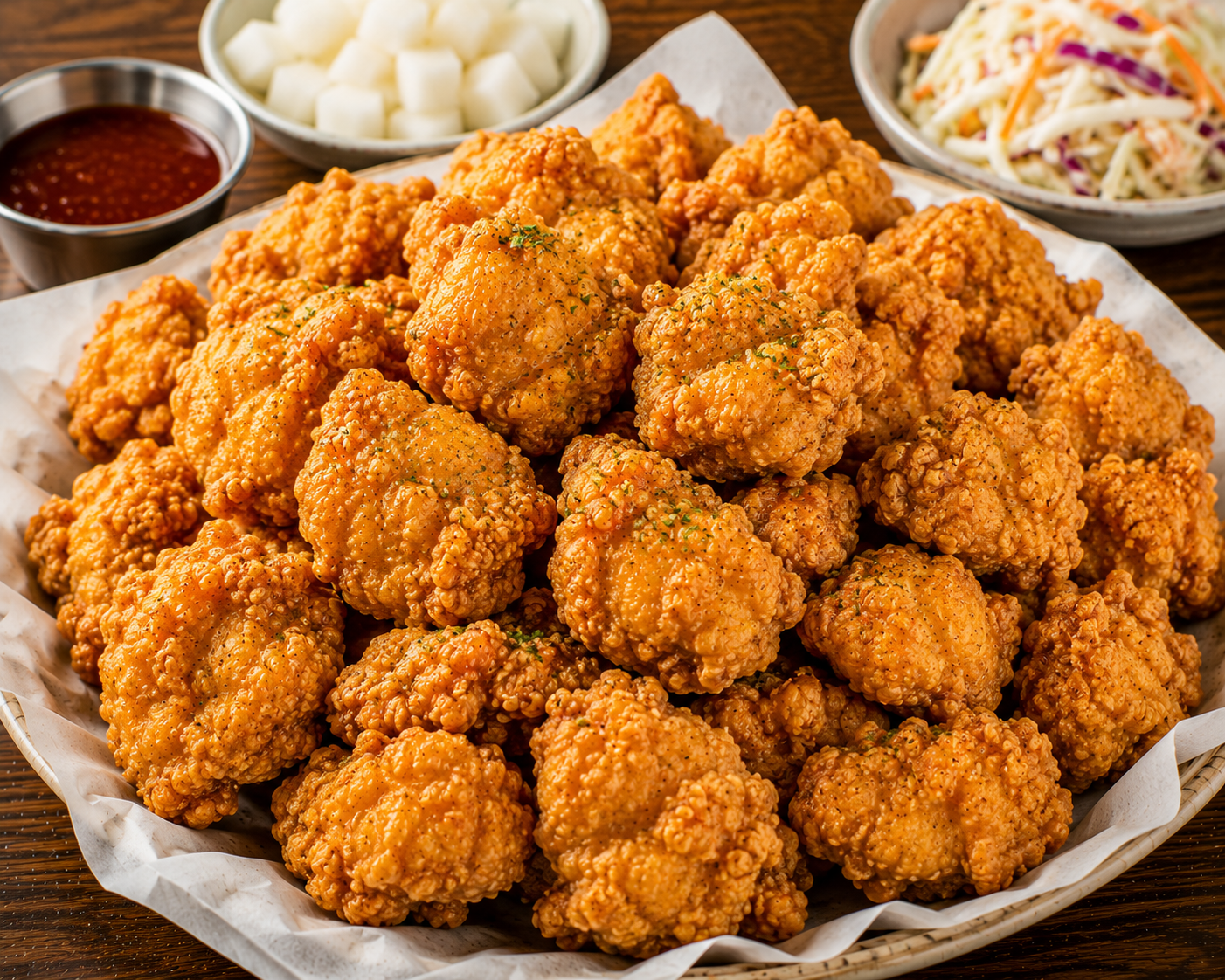
Boneless Chicken
순살 치킨 · sun-sal chi-kin
A dish made with chicken that has the bones removed, coated in batter, and fried until crispy, enjoyed with a variety of sauces.
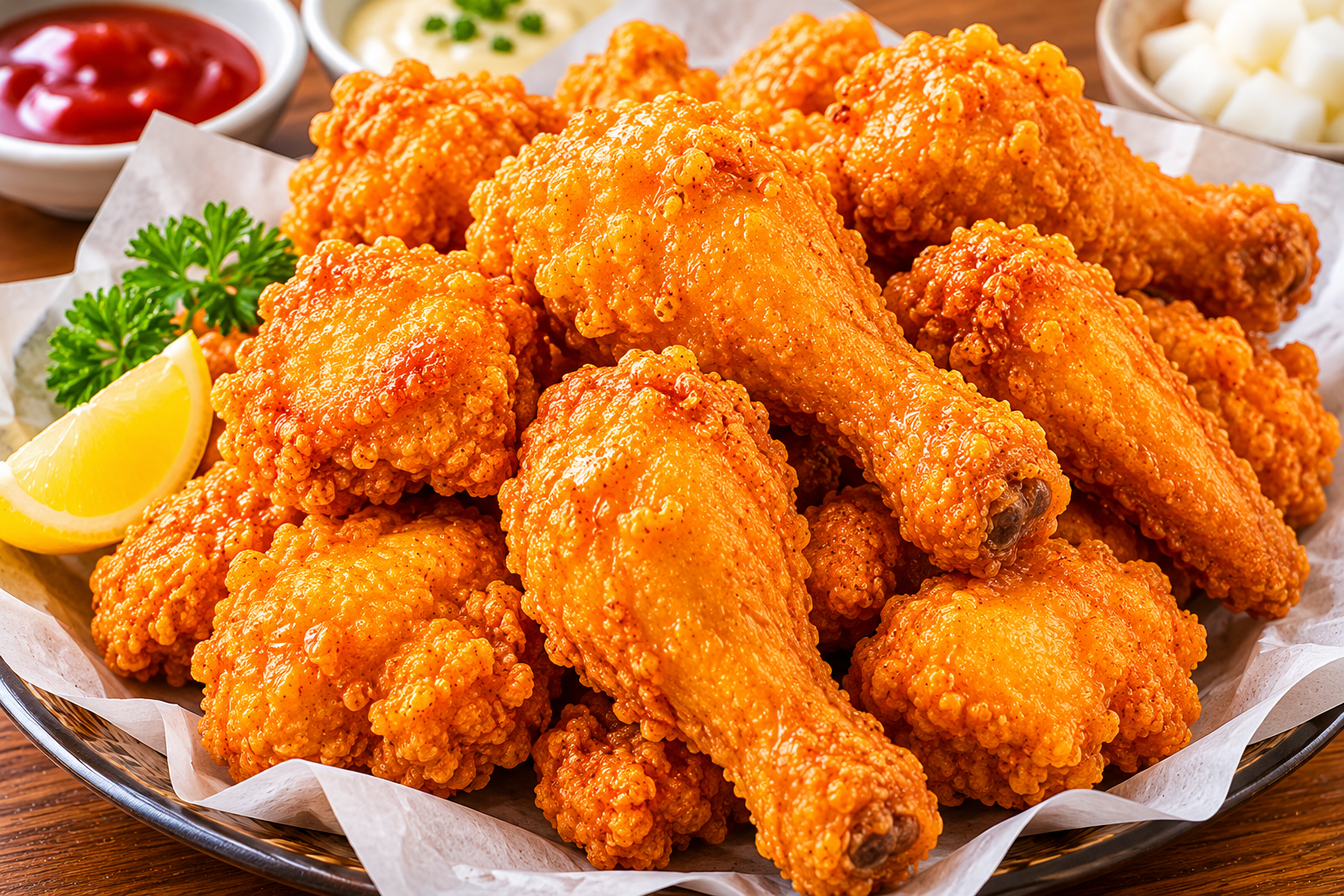
Fried Chicken
닭튀김 · dak-twigim
A dish where chicken is coated and deep-fried until crispy, often enjoyed with soy sauce or spicy sauce.
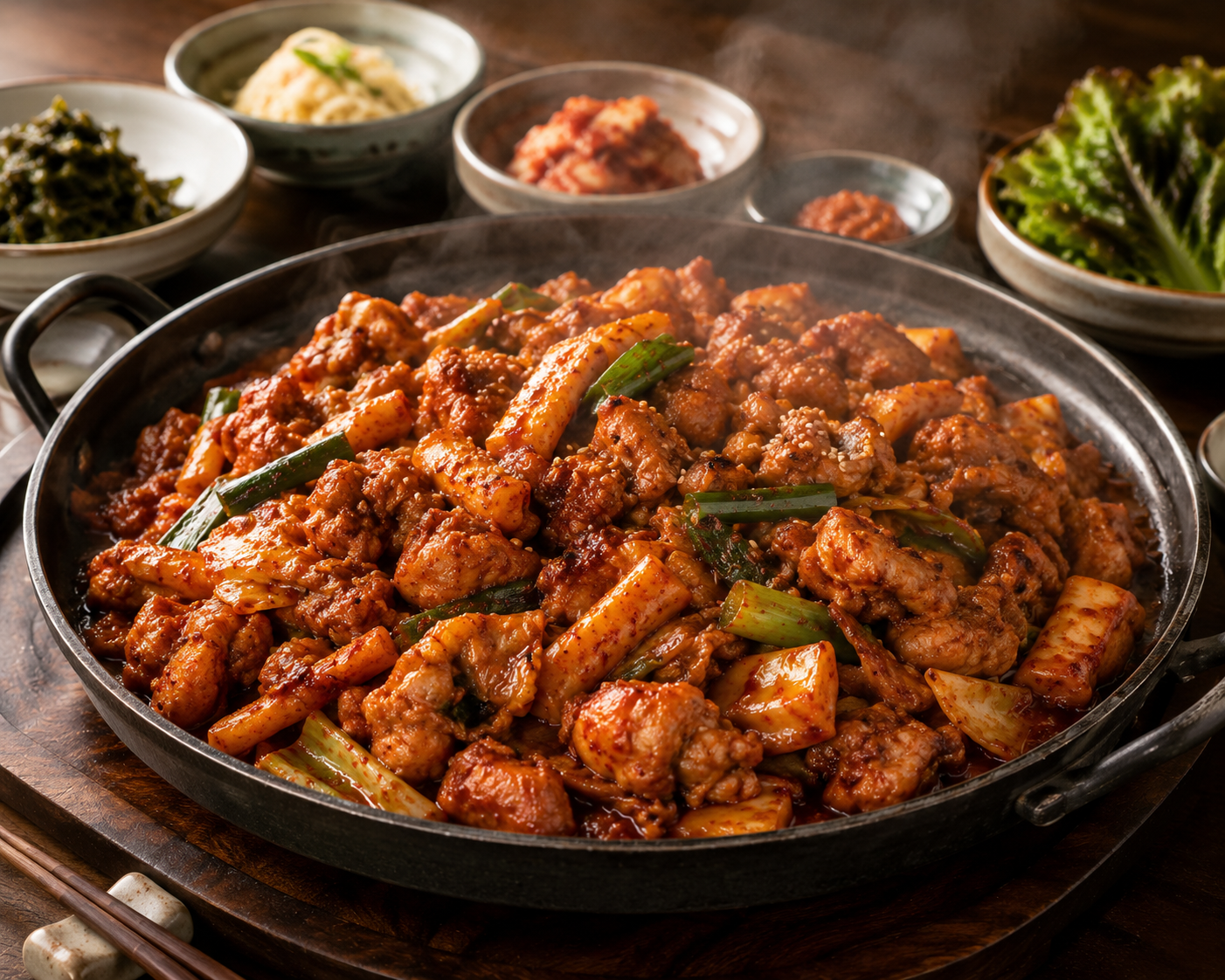
Dak-galbi
닭갈비 · dak-galbi
A spicy grilled dish made by marinating chicken in gochujang and stir-frying it on a hot plate. It is usually stir-fried with cabbage, sweet potato, and rice cakes for a rich flavor.
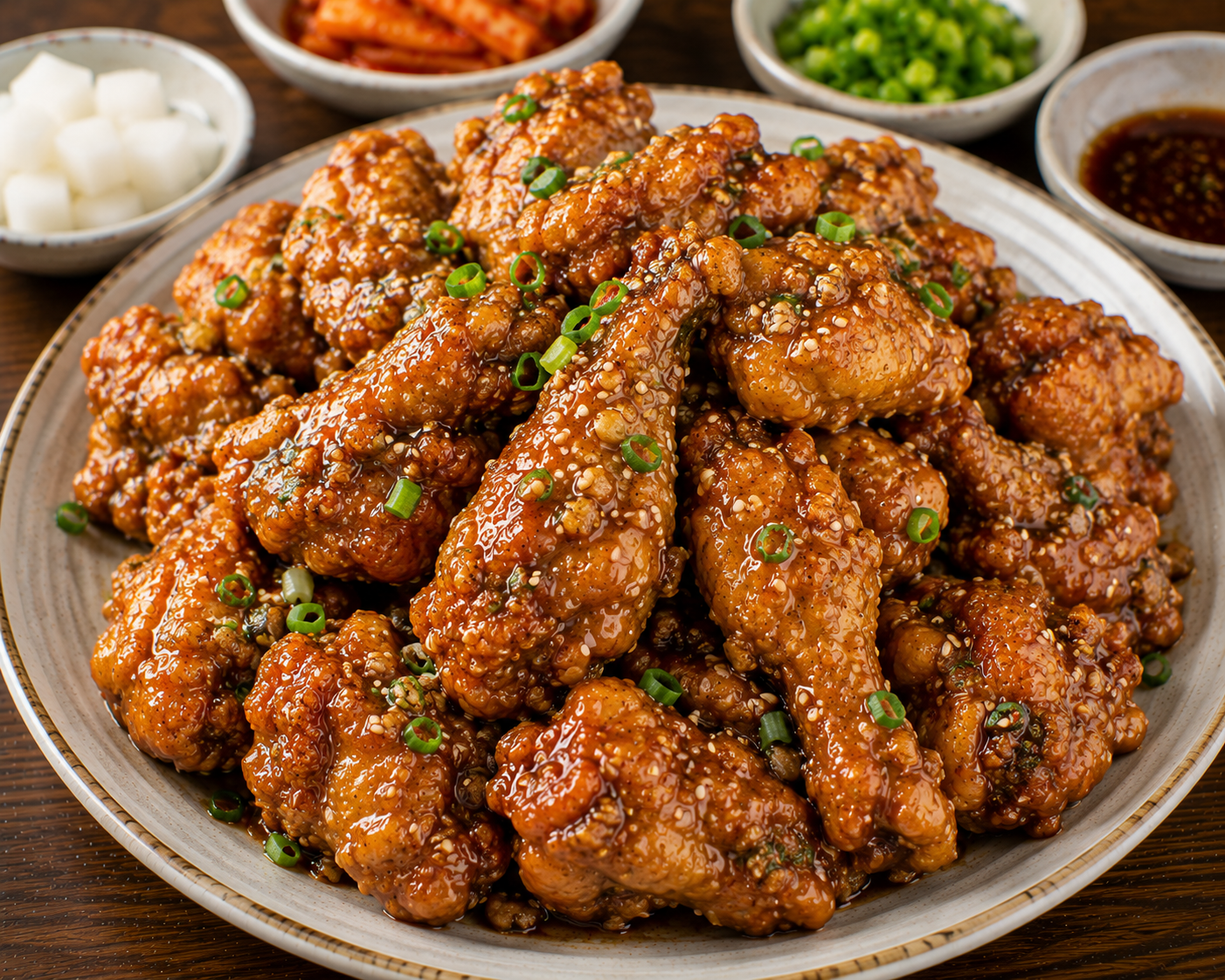
Soy Sauce Chicken
간장치킨 · ganjang-chikin
A Korean-style chicken dish made by frying chicken and coating it in a sweet soy sauce glaze.
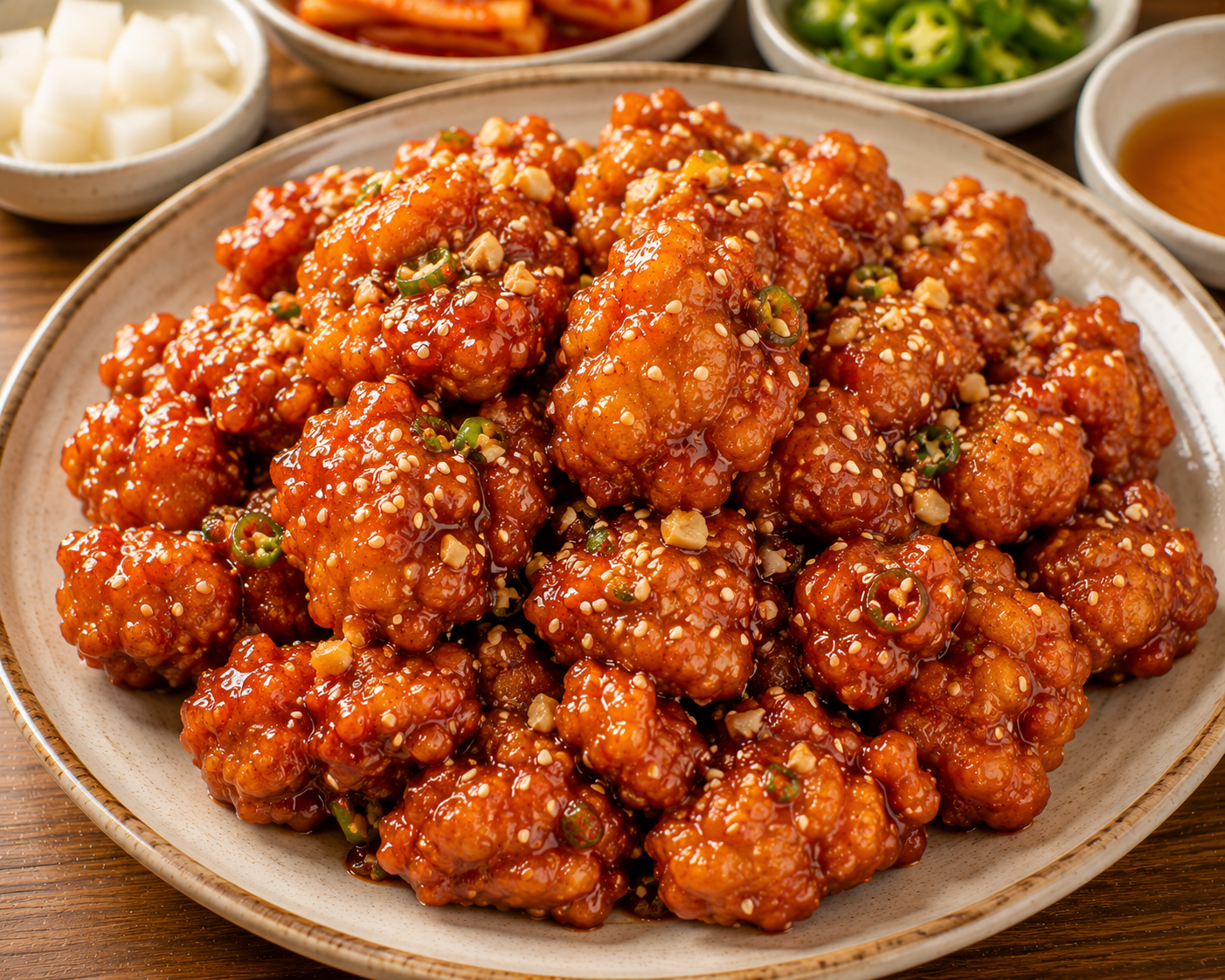
Dakgangjeong
닭강정 · dak-gang-jeong
Korean-style snack or appetizer made with fried chicken tossed in a sweet and spicy sauce.
Ingredients
How it's made
- 1Clean the chicken and cut it into appropriate sizes.
- 2Mix flour and batter mix to evenly coat the chicken.
- 3Heat oil and fry the chicken until crispy.
- 4Serve the fried chicken with sauce drizzled on top or on the side.
Nutrition
* Estimated values per serving.
Allergens
Not suitable for vegetarian and gluten-free diets as it contains chicken and flour.
How to order
치킨 주세요
Chi-kin ju-se-yo
Please give me chicken
Customize your order
Traveler tips
How to eat it
Frequently asked questions
- What does ‘반반’ (banban, “half-and-half”) mean?
- A single whole-chicken order is split into two flavors. The most common combination is half fried, half Yangnyeom Chicken.
- Do you have to eat chikinmu with chicken?
- No need to eat it, but Korean chicken almost always comes with it. Chikinmu helps wash away the oiliness of the fried coating and the sweetness of the sauce between bites.
- Does ‘순살’ (sunsal, “boneless meat”) mean there are no bones at all?
- The term usually means boneless pieces. Depending on the shop, though, some use tender cuts such as thigh meat, while others use leaner cuts such as breast, so the texture can vary.
Last reviewed: 2026-10-07