
Galbi
A dish made by marinating beef short ribs in a sauce of soy sauce, pear, sugar, and garlic, then grilling them on a grill, resulting in a caramelized seasoning with a sweet flavor and a contrast between the smoky exterior and tender meat inside. It is usually grilled directly on the table's grill and eaten at the moment it is perfectly cooked, wrapped in lettuce or perilla leaves with grilled meat, garlic, and ssamjang.
Cultural background
Galbi is primarily enjoyed during dinner, corporate gatherings, or family events, with the act of grilling and sharing the dish itself signifying friendship and bonding. It frequently comes up in special meals and carries a meaning of more formal hospitality.
Origin & history
Galbi literally means “meat attached to the ribs.” In Korea, bone-in beef Galbi takes a lot of work to trim and does not yield a large amount of meat, so it has long carried an image closer to a dish served for guests than an everyday side dish.
Today, marinated Galbi is widely known as ribs soaked in a Soy Sauce-based marinade sweetened with fruit and scented with garlic. Among regional specialties, the large grilled beef Galbi of Suwon in Gyeonggi Province is especially famous, and some versions emphasize a long, generous bone, as in “왕갈비” (wang-galbi, “king Galbi”).
Regional & modern variations
- Saeng Galbi — Galbi grilled with little to no seasoning, or simply served with salt. The flavor of the meat’s fat and its chew come through more clearly.
- LA Galbi — Rather than being cut lengthwise along the ribs, the bones are sliced across into thin pieces. One account says it became widely known through Korean immigrant communities, and its defining feature is the sight of several short bone pieces.
- Pork Ribs — Pork Ribs are marinated in a similarly sweet Soy Sauce-based sauce and grilled instead of beef Galbi. They are relatively affordable and very common at Korean barbecue restaurants.
How Koreans eat it
Galbi is usually ordered in “몇 인분” (myeot inbun, “how many servings”), but because the bone weight is included, the actual amount of meat can seem to vary depending on the cut and how it has been trimmed. Staff often cut the meat around the bone with tongs and scissors, and even at places where diners grill the meat themselves, the meat closest to the bone is usually left to cook a little longer at the end.
Taste & how to choose
With marinated Galbi, the sweet-salty surface hits first, while the meat near the bone has a deeper beef aroma. Because the marinade is sweet, it burns easily over a strong flame. Good Galbi should not taste only of marinade; the grain of the meat should be visible, with plenty of meat attached around the bone.
Similar dishes
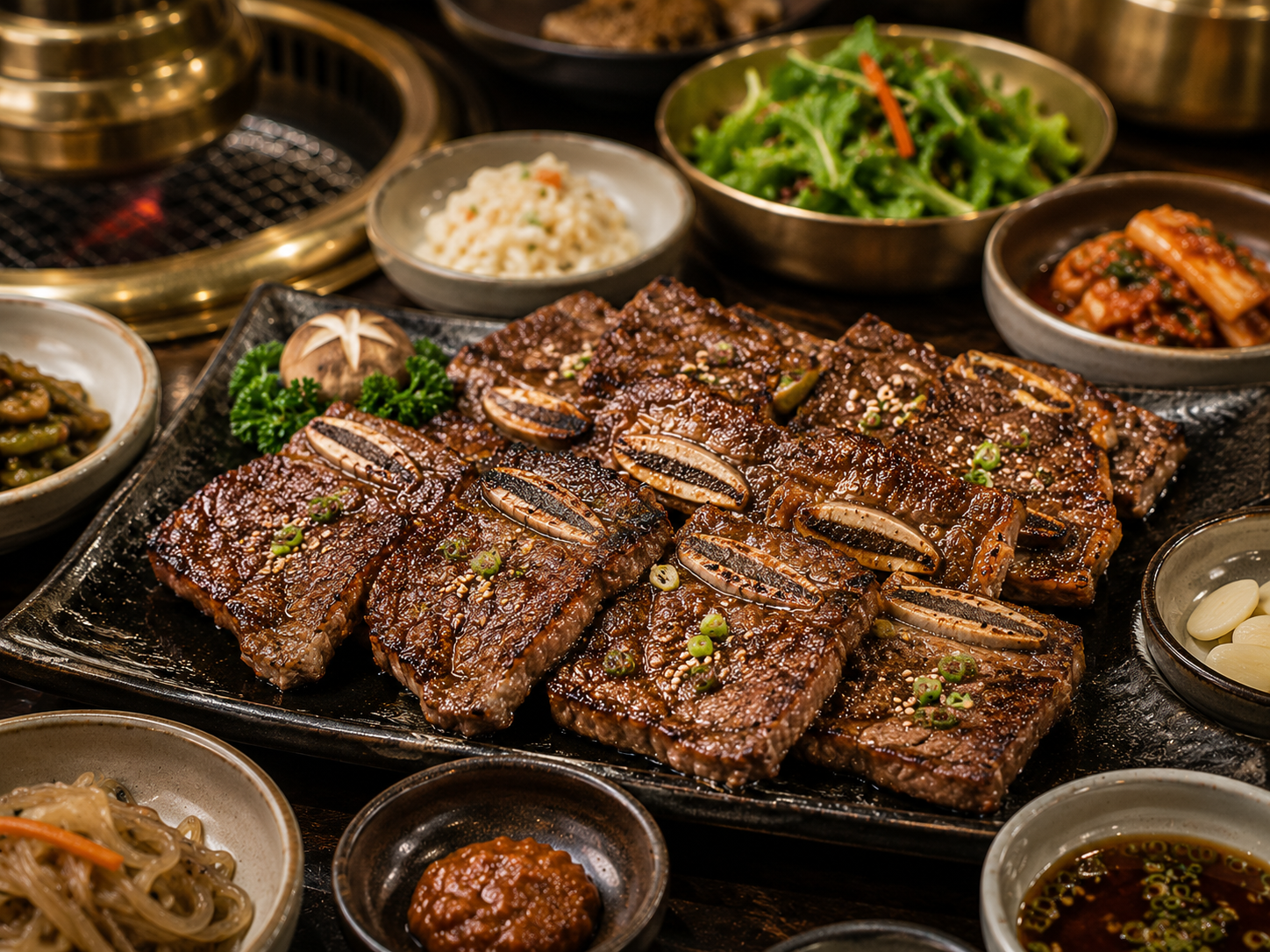
Grilled Short Ribs
소갈비구이 · so-galbi-gui
A dish where beef short ribs are marinated in soy sauce, pear, sugar, and garlic before being grilled on a griddle, creating a caramelized glaze and a contrast between the sweet, smoky exterior and tender interior. It is typically grilled right at the table, consumed at the perfect moment, wrapped in lettuce or perilla leaves with garlic and ssamjang.
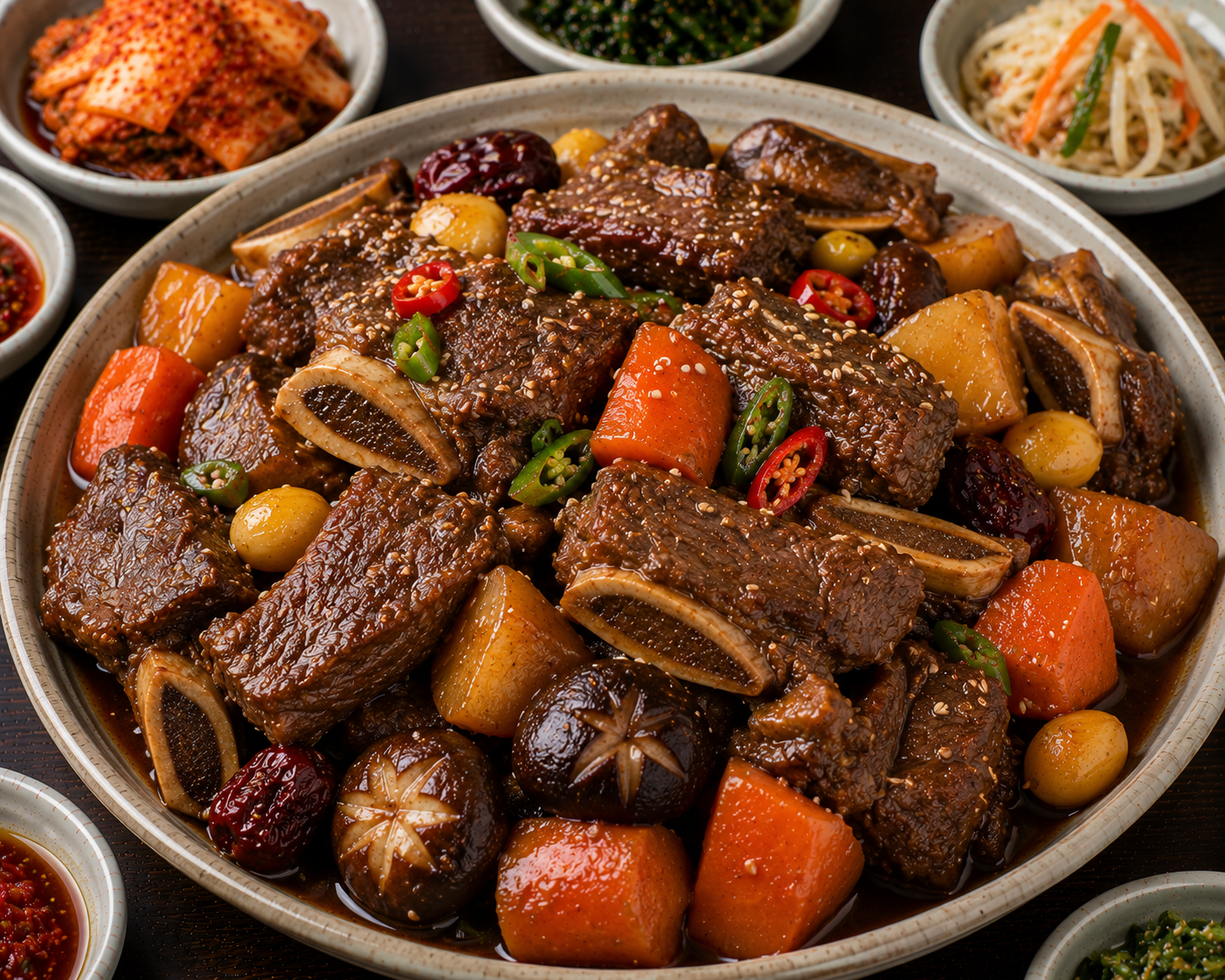
Galbijjim
갈비찜 · galbi-jjim
A sweet and tender dish made by marinating beef short ribs in a mixture of soy sauce, pear, and garlic, then steaming it with radish, carrots, and jujubes until fully cooked. The broth thickens and infuses the meat deeply with flavor, making it so tender that the meat easily falls off the bone. It is served as a celebratory dish during holidays like Seollal and Chuseok, typically shared on a large platter among many people.
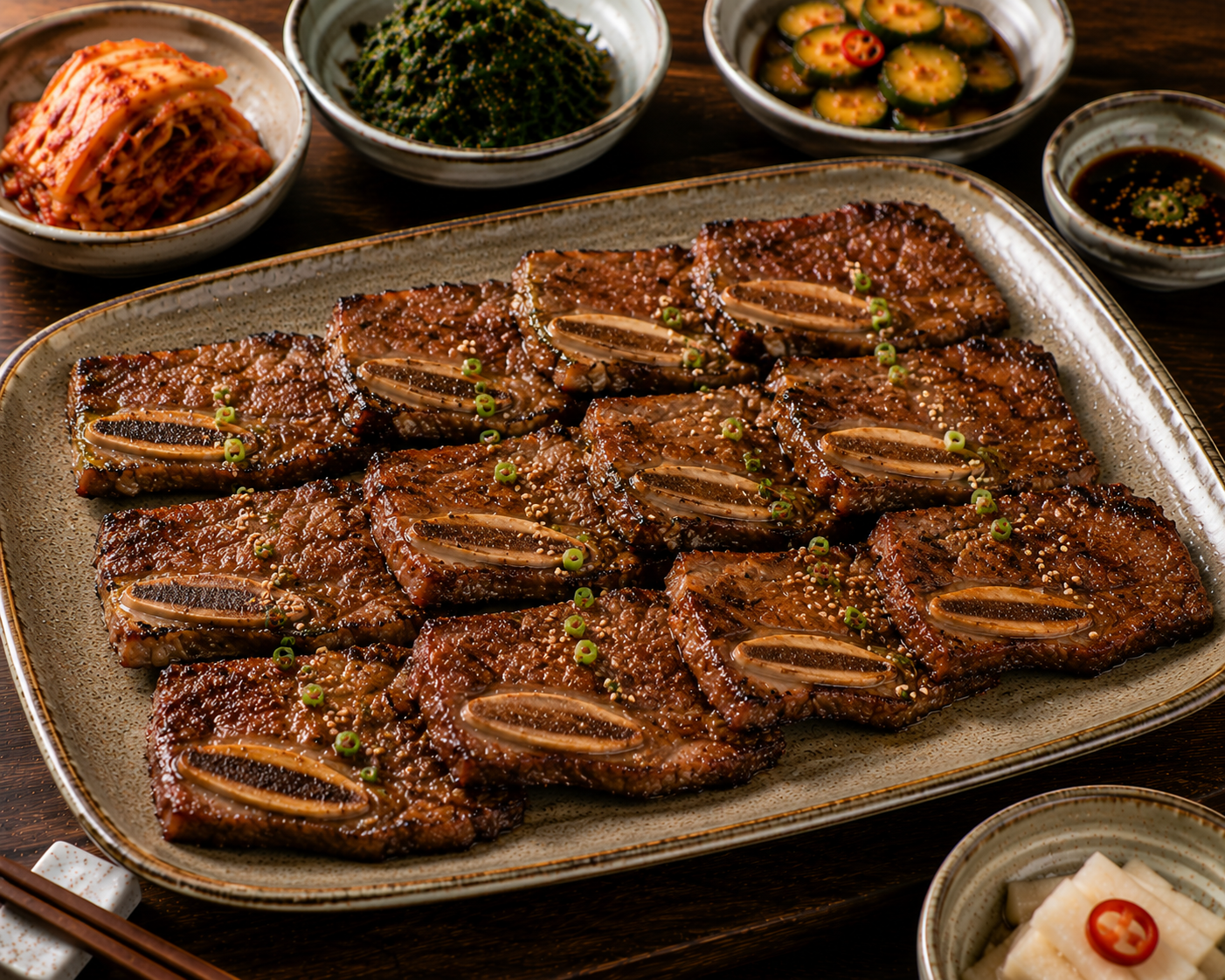
LA Galbi
LA갈비 · LA-galbi
Grilled dish made by seasoning beef ribs with soy sauce, sugar, garlic, and other ingredients, resulting in a sweet and savory flavor that seeps into the meat. Typically grilled at the table and eaten wrapped in lettuce or perilla leaves with ssamjang.
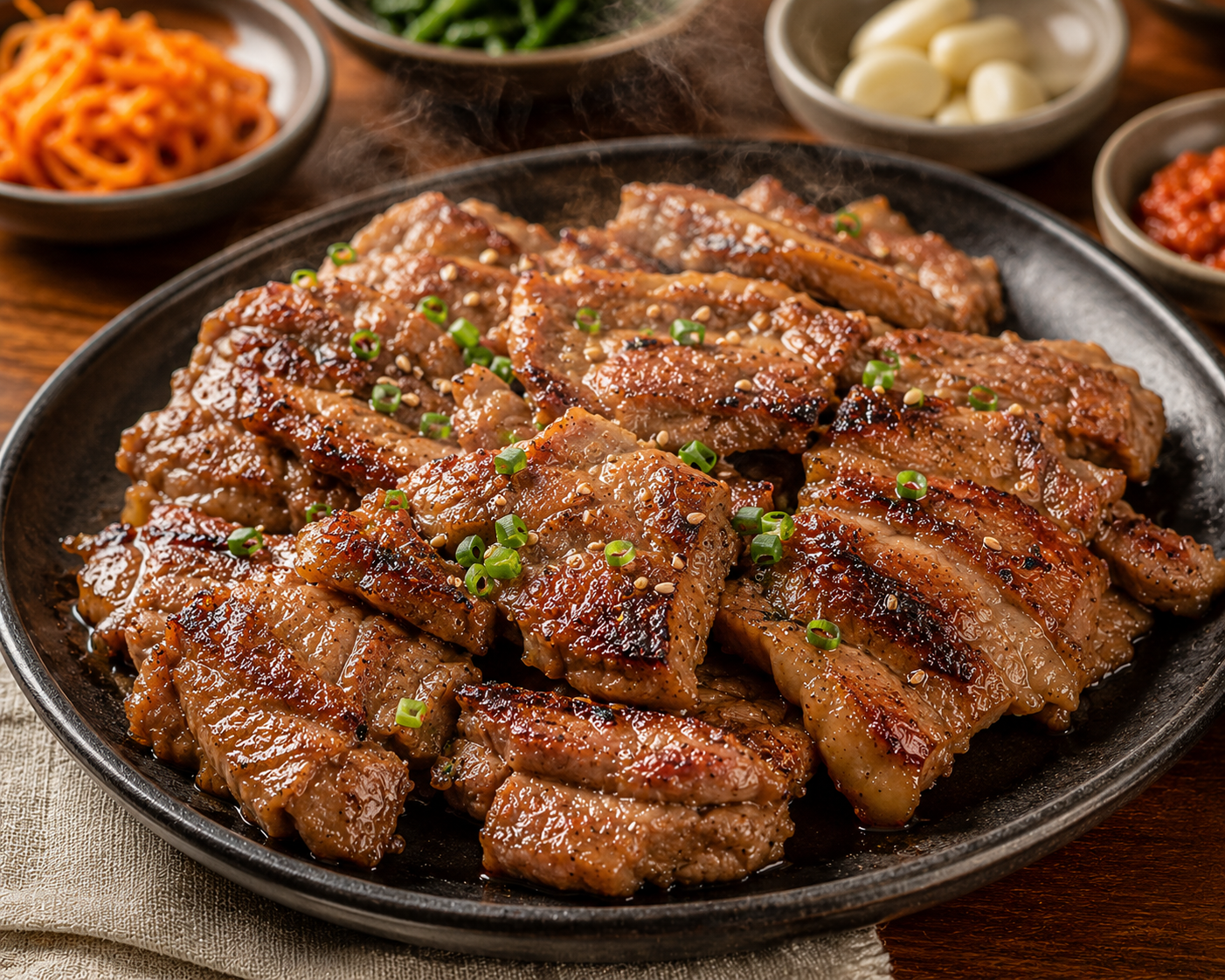
Pork Ribs
돼지갈비 · dwaeji-galbi
Pork ribs marinated with soy sauce, sugar, garlic, and other ingredients, grilled on a hot plate, is a traditional Korean barbecue dish. The marinade caramelizes, resulting in a sweet and savory flavor, and the meat is juicy. It is usually grilled at the table and eaten with wrapped vegetables.
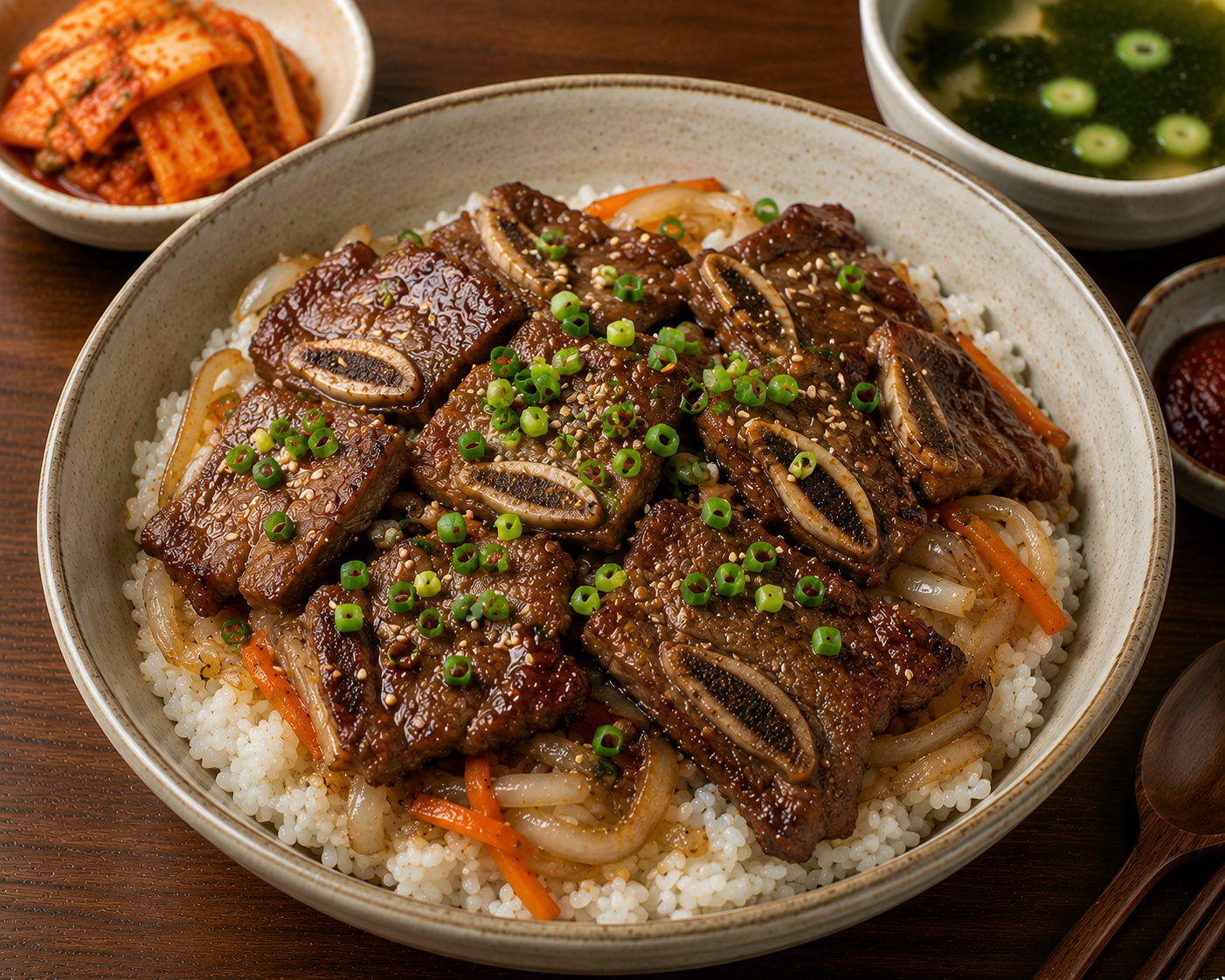
Galbi-bap
갈비밥 · galbi-bap
A single rice dish with seasoned short ribs placed on top of steamed rice, eaten with a dipping sauce.
Tteokgalbi Jeongsik (Grilled Short Rib Patties Set Meal)
떡갈비정식 · tteokgalbi-jeongsik
Tteokgalbi Jeongsik is a traditional Korean set meal served with rice, soup, and various side dishes, featuring delicious grilled short rib patties made primarily from minced beef marinated in a flavorful sauce.
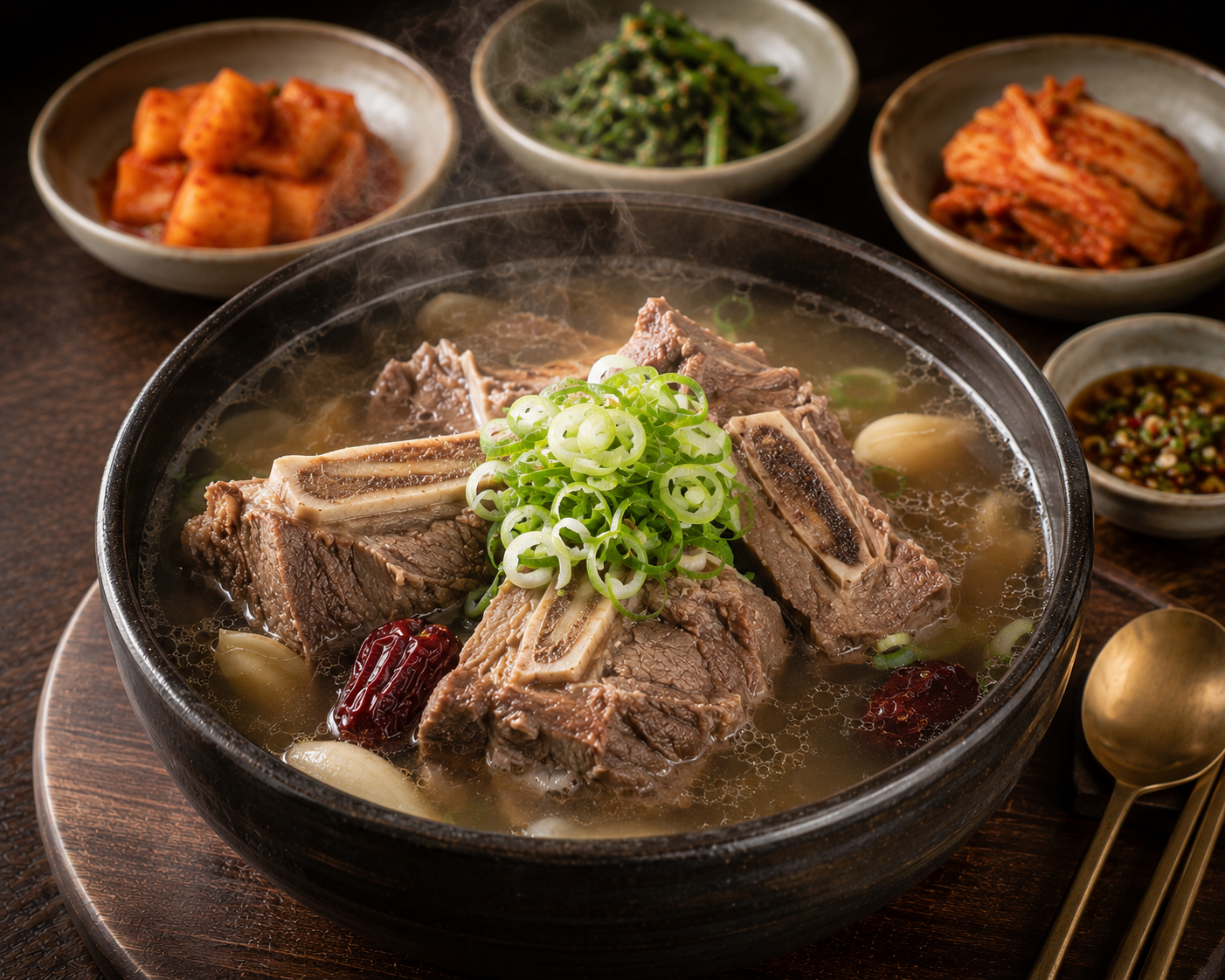
Galbitang
갈비탕 · galbi-tang
Galbitang is a traditional Korean soup characterized by its rich broth and tender beef ribs simmered for a long time. The broth is clear and has a deep umami flavor, usually enjoyed with rice.
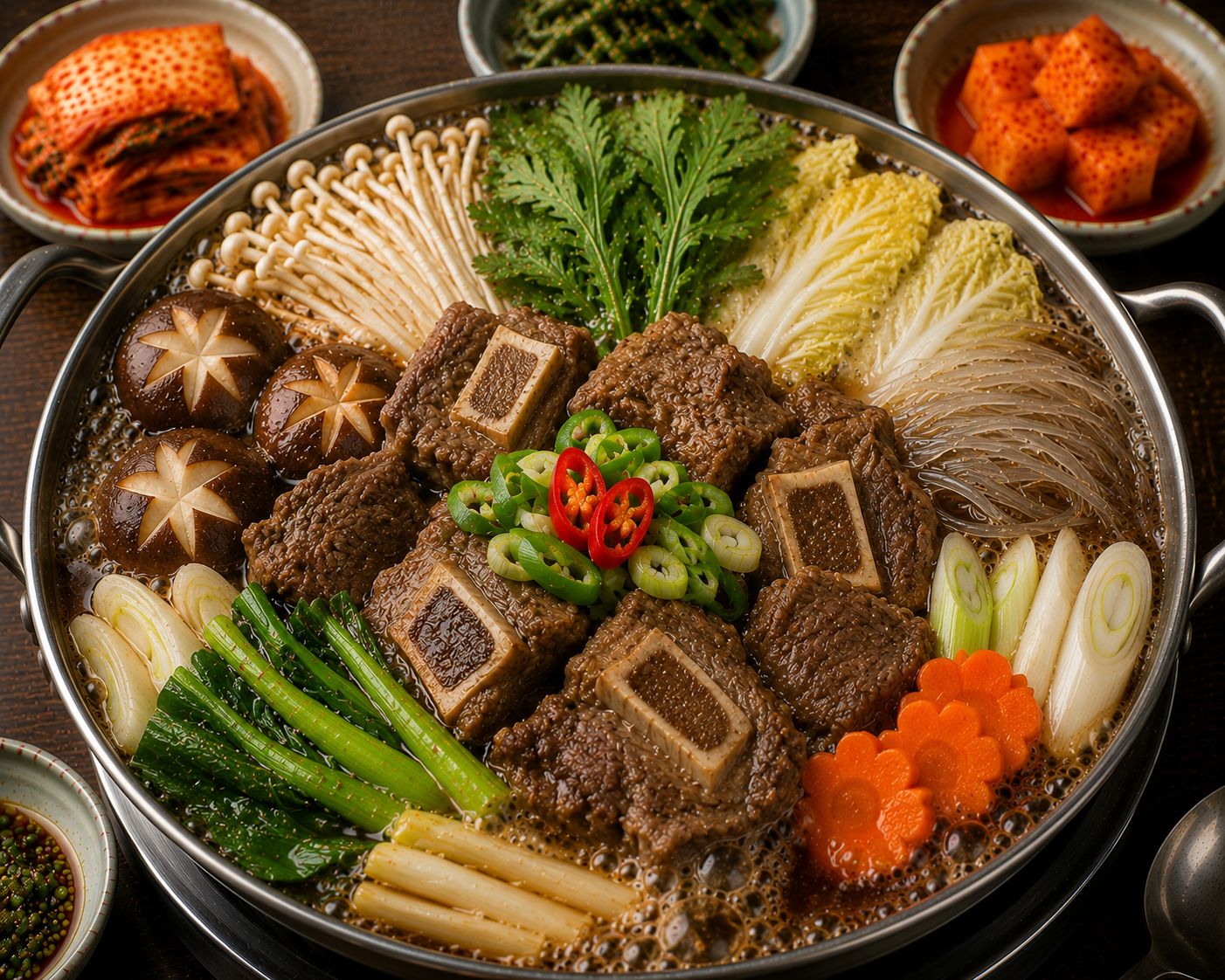
Galbi-jeongol
갈비전골 · galbi-jeongol
A Korean hot pot dish made by placing beef short ribs and various vegetables and mushrooms in a large pot, then pouring in broth to cook directly at the table. The meat cooks tenderly, and the broth reduces, creating a deep flavor. Enjoy the cooked ingredients first, and finish with rice or noodles added to the pot.
Goes well with
Ingredients
How it's made
- 1Clean the beef short ribs thoroughly.
- 2Mix soy sauce, pear, sugar, and garlic to make the marinade.
- 3Marinate the ribs sufficiently for flavoring.
- 4Grill the ribs on the grill.
- 5Once cooked properly, wrap in lettuce or perilla leaves to eat.
Nutrition
* Estimated values per serving.
Allergens
Not suitable for vegetarian or halal diets as it contains beef.
How to order
갈비 주세요
Gal-bi ju-se-yo
Please give me galbi
Customize your order
Traveler tips
How to eat it
Frequently asked questions
- Is it rude to cut Galbi with scissors?
- No. At Korean barbecue restaurants, cutting long pieces of Galbi with scissors into sizes that are easier to grill and eat is common.
- How do you eat the meat attached to the bone?
- Some people cut it with scissors to eat it, and in casual settings people may also pick up the bone and gnaw the meat off. In a more formal setting, separating as much meat as possible with tongs or scissors feels more natural.
- How is LA Galbi different from regular Galbi?
- The biggest difference is the direction of the cut. LA Galbi is sliced thinly across the bone, so several short cross-sections of bone are visible; the marinade penetrates quickly, and the grilling time is relatively short.
Last reviewed: 2026-10-07