
Galbijjim
A sweet and tender dish made by marinating beef short ribs in a mixture of soy sauce, pear, and garlic, then steaming it with radish, carrots, and jujubes until fully cooked. The broth thickens and infuses the meat deeply with flavor, making it so tender that the meat easily falls off the bone. It is served as a celebratory dish during holidays like Seollal and Chuseok, typically shared on a large platter among many people.
Cultural background
Galbijjim is a dish served during celebrations like Seollal and Chuseok, commonly enjoyed during family gatherings.
Origin & history
Galbijjim is defined by using bone-in rib cuts in pieces that are easy to eat. In agrarian society, cattle were vital working animals, and beef was not an ingredient people ate often. For that reason, large meat dishes such as ribs became foods served to guests or prepared for major occasions.
‘찜’ (jjim, a steaming or braising cooking method) refers to a cooking method that tenderizes tough cuts by cooking them for a long time. Galbijjim is strongly associated with the Seoul and Gyeonggi-style feast dish seasoned with Soy Sauce, but the level of sweetness and the additional ingredients vary slightly from household to household.
Regional & modern variations
- Maeun Galbijjim — Galbijjim made spicy by adding red pepper powder or Gochujang to the Soy Sauce seasoning. Spicy Galbijjim from places such as Daegu is especially well known, with a sharp, spicy seasoning flavor taking the lead over sweetness.
- Braised Pork Ribs — A version made with pork ribs instead of beef ribs. The rich, fatty flavor is more pronounced than in beef Galbijjim, and because it is relatively less expensive, people often make it as a home-style dish as well.
How Koreans eat it
At restaurants, Galbijjim is usually ordered in a medium or large pot or platter rather than as a single serving. Since the meat is served on the bone, tongs and scissors may come with it; diners cut off the meat and place it on top of rice. The remaining sauce is rich enough to make you want to mix it into rice, but Galbijjim is not eaten like a soup.
Taste & how to choose
Good Galbijjim has glossy meat on the outside, and when pressed with chopsticks, the flesh pulls away from the bone easily. The first flavor you notice may be sweetness rather than saltiness. Because the sweetness comes from pear and jujube, it has a subtle fruit aroma unlike Western barbecue sauce. Radish and carrot are not just garnish; they soak up the seasoning and are meant to be eaten with the meat.
Similar dishes
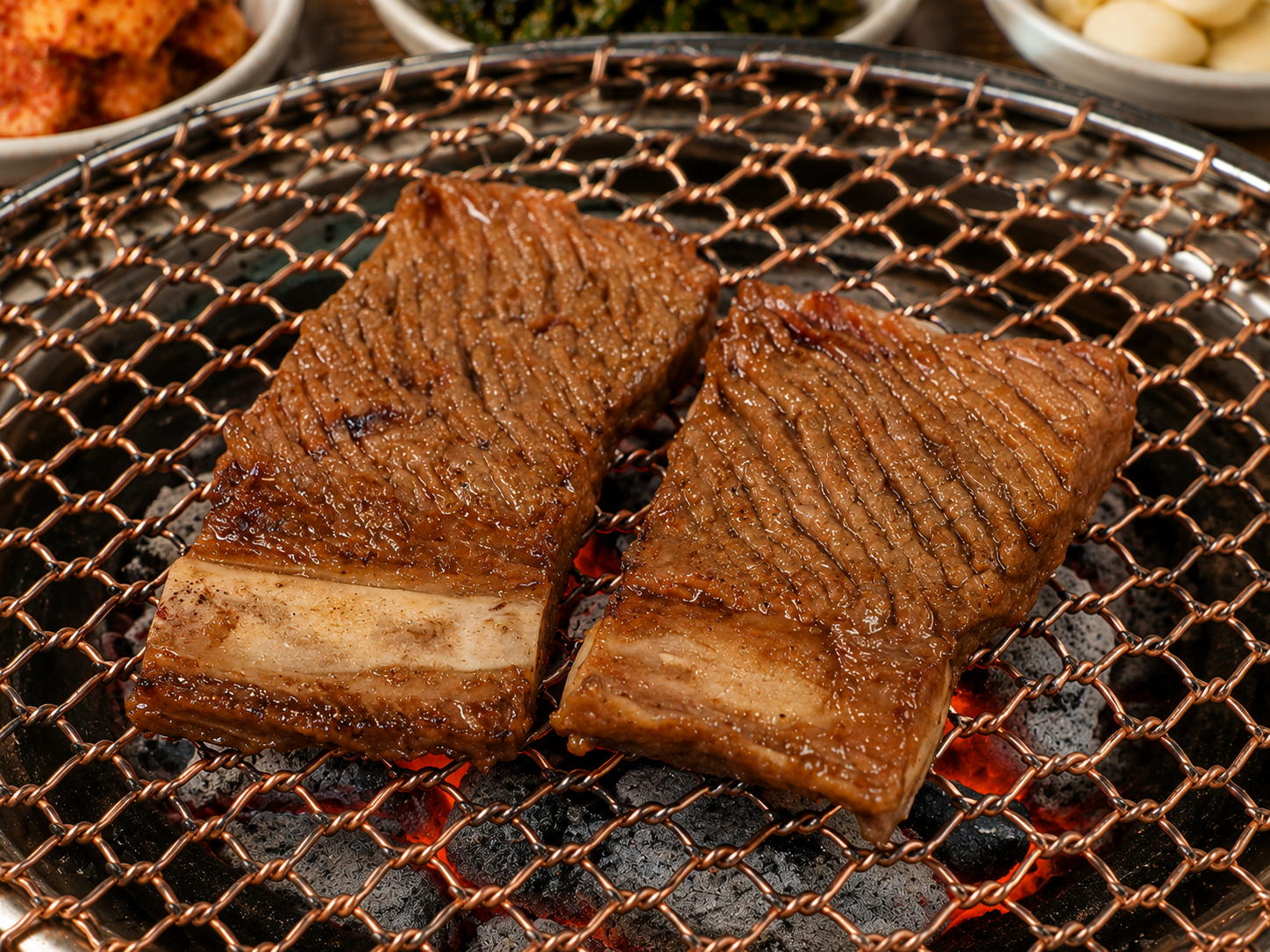
Galbi
갈비 · galbi
A dish made by marinating beef short ribs in a sauce of soy sauce, pear, sugar, and garlic, then grilling them on a grill, resulting in a caramelized seasoning with a sweet flavor and a contrast between the smoky exterior and tender meat inside. It is usually grilled directly on the table's grill and eaten at the moment it is perfectly cooked, wrapped in lettuce or perilla leaves with grilled meat, garlic, and ssamjang.
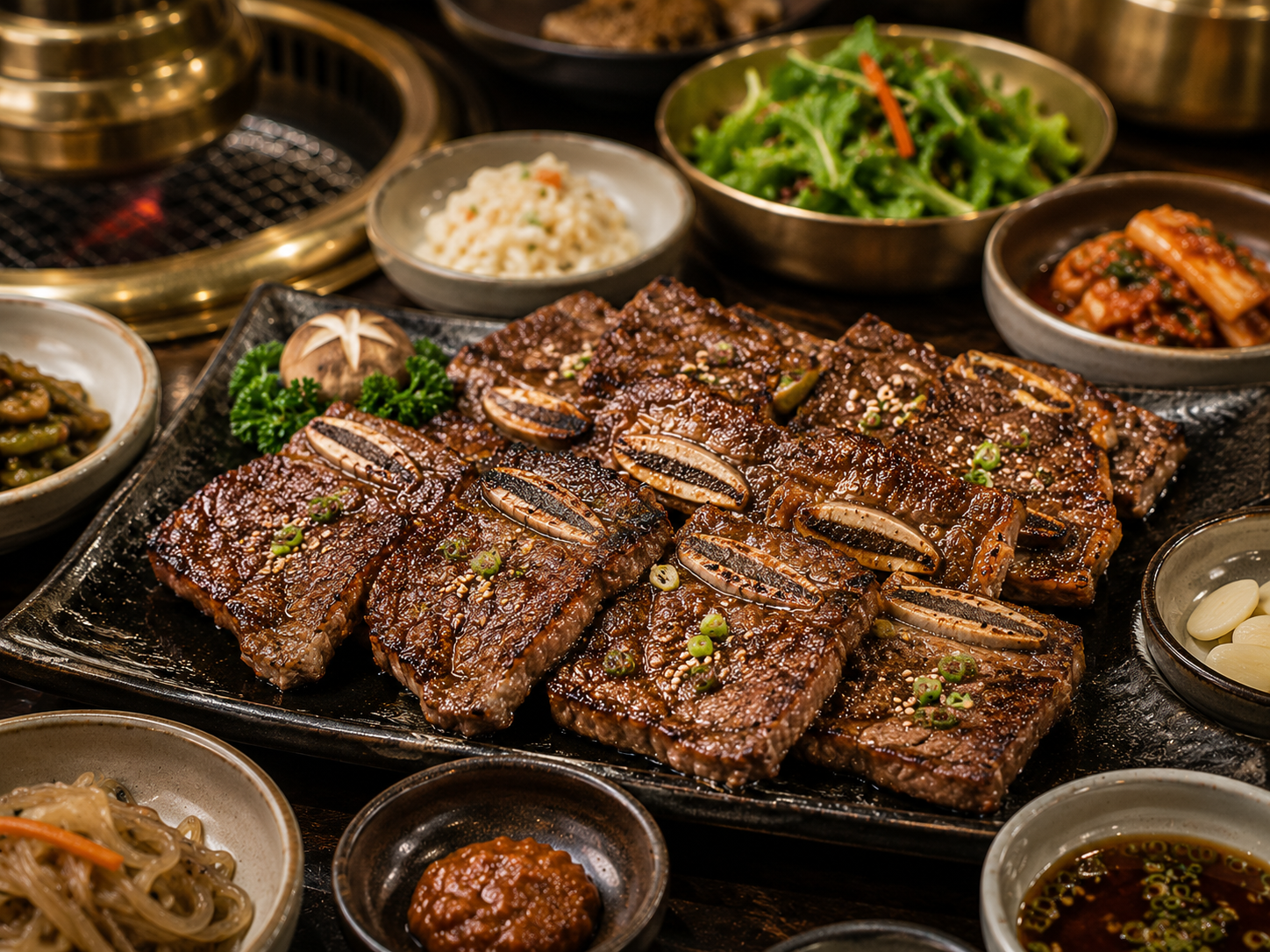
Grilled Short Ribs
소갈비구이 · so-galbi-gui
A dish where beef short ribs are marinated in soy sauce, pear, sugar, and garlic before being grilled on a griddle, creating a caramelized glaze and a contrast between the sweet, smoky exterior and tender interior. It is typically grilled right at the table, consumed at the perfect moment, wrapped in lettuce or perilla leaves with garlic and ssamjang.
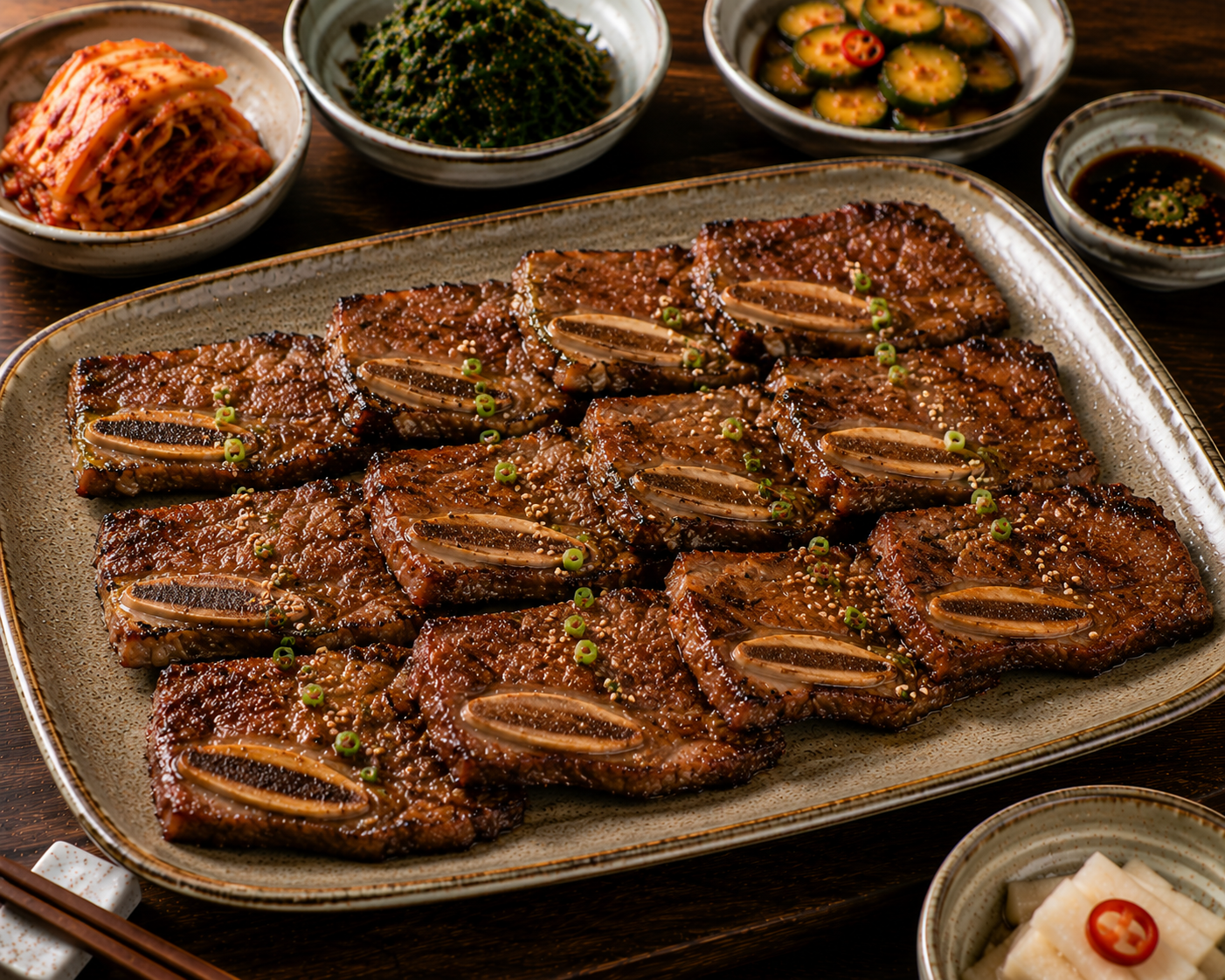
LA Galbi
LA갈비 · LA-galbi
Grilled dish made by seasoning beef ribs with soy sauce, sugar, garlic, and other ingredients, resulting in a sweet and savory flavor that seeps into the meat. Typically grilled at the table and eaten wrapped in lettuce or perilla leaves with ssamjang.
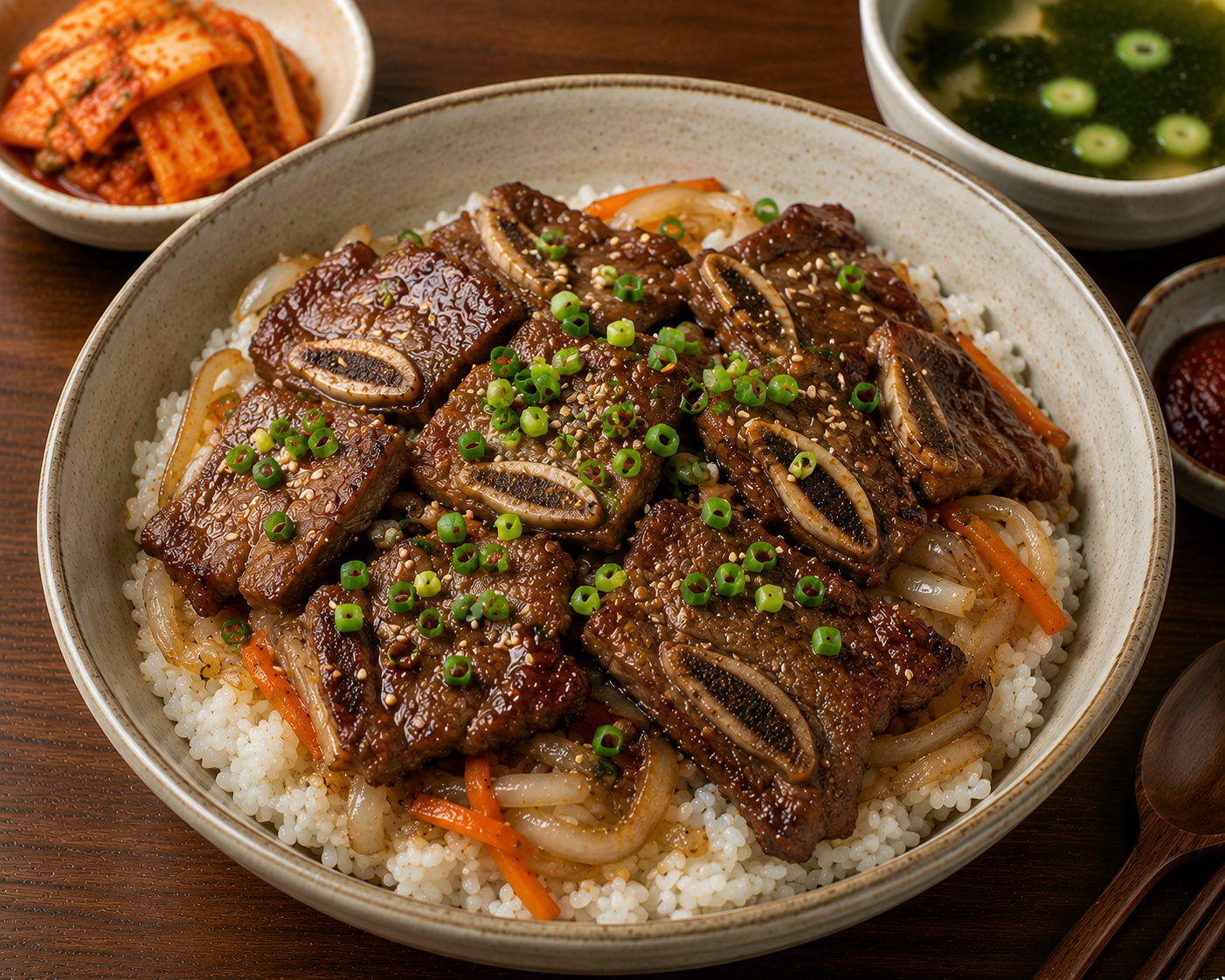
Galbi-bap
갈비밥 · galbi-bap
A single rice dish with seasoned short ribs placed on top of steamed rice, eaten with a dipping sauce.
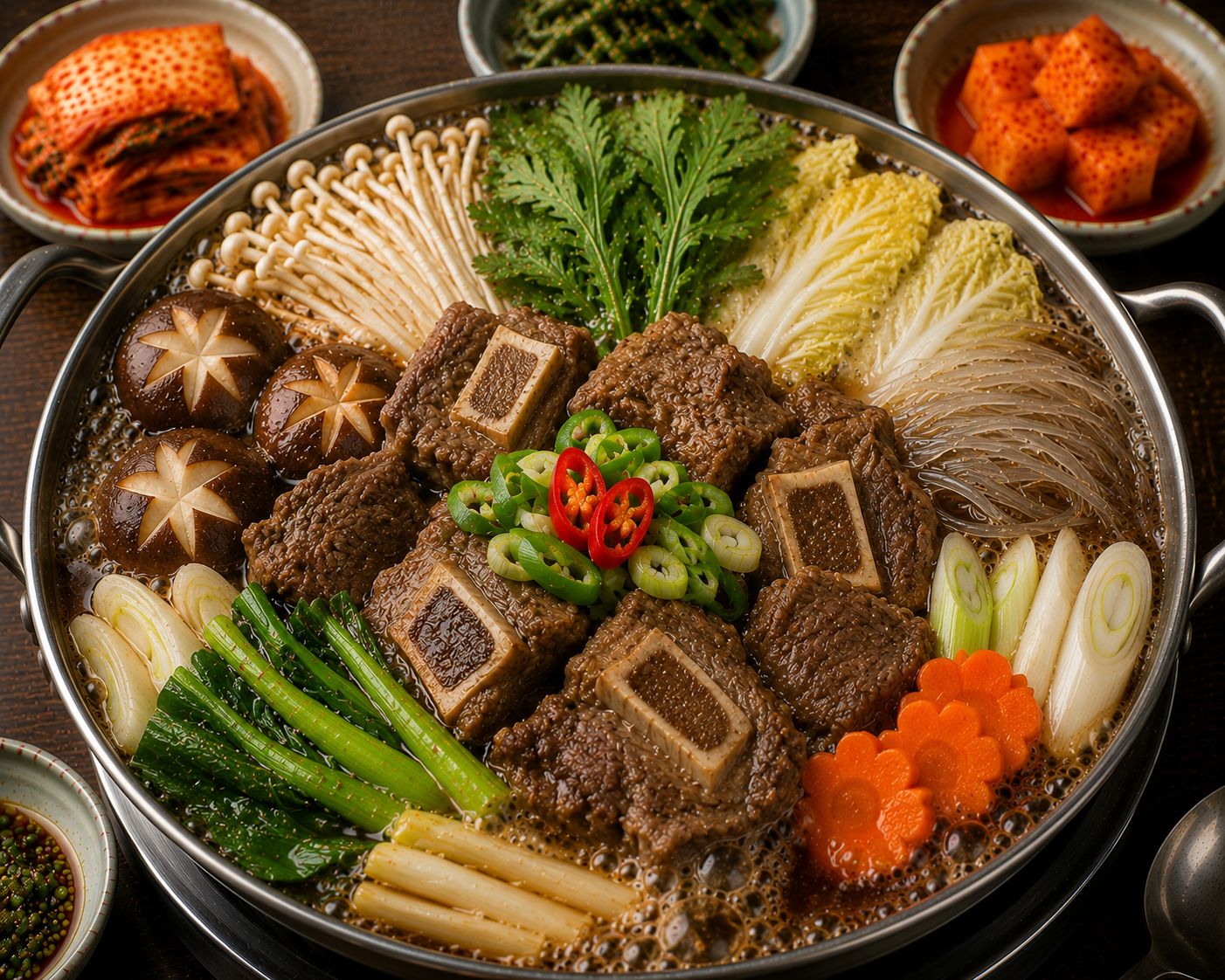
Galbi-jeongol
갈비전골 · galbi-jeongol
A Korean hot pot dish made by placing beef short ribs and various vegetables and mushrooms in a large pot, then pouring in broth to cook directly at the table. The meat cooks tenderly, and the broth reduces, creating a deep flavor. Enjoy the cooked ingredients first, and finish with rice or noodles added to the pot.
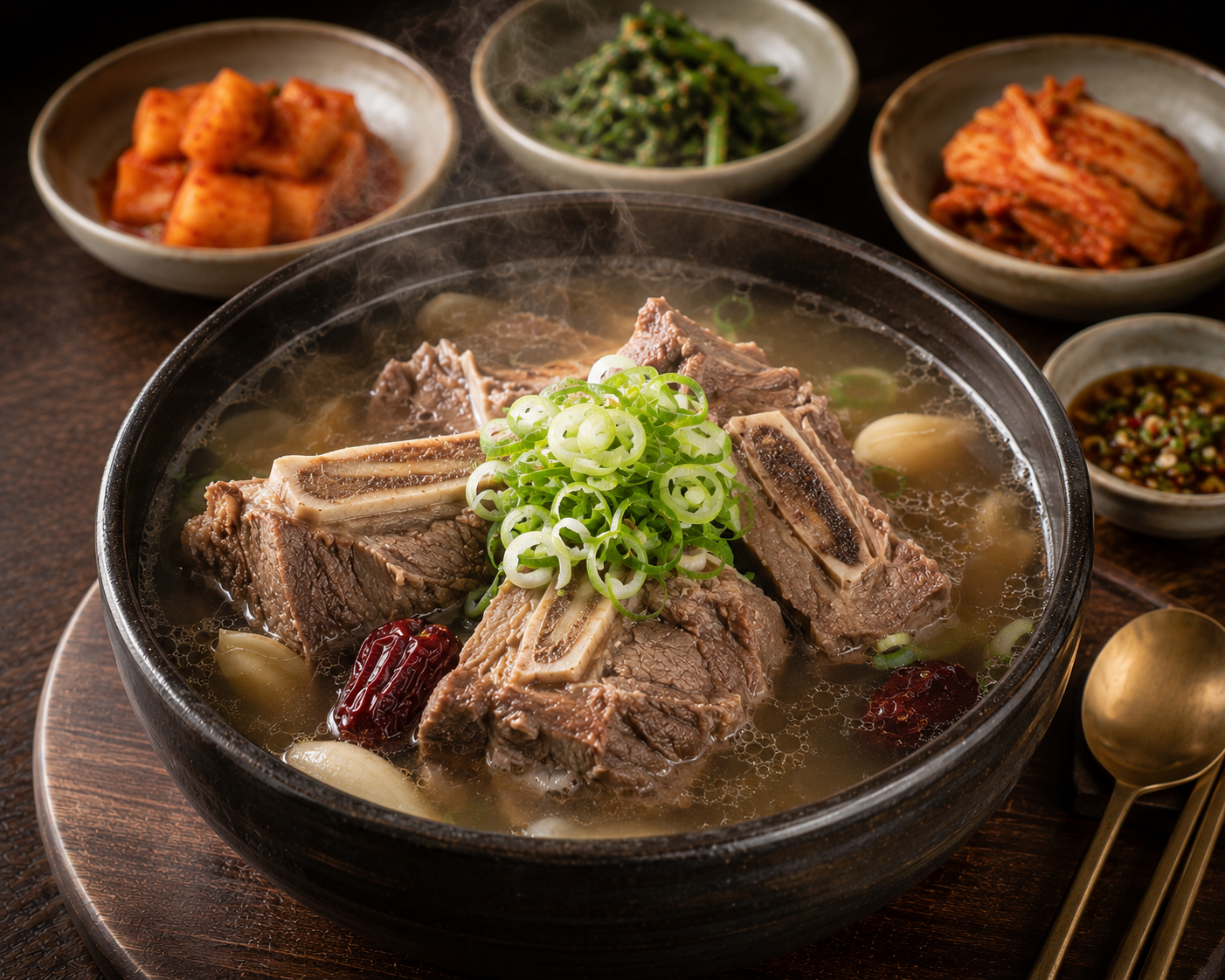
Galbitang
갈비탕 · galbi-tang
Galbitang is a traditional Korean soup characterized by its rich broth and tender beef ribs simmered for a long time. The broth is clear and has a deep umami flavor, usually enjoyed with rice.
Tteokgalbi Jeongsik (Grilled Short Rib Patties Set Meal)
떡갈비정식 · tteokgalbi-jeongsik
Tteokgalbi Jeongsik is a traditional Korean set meal served with rice, soup, and various side dishes, featuring delicious grilled short rib patties made primarily from minced beef marinated in a flavorful sauce.
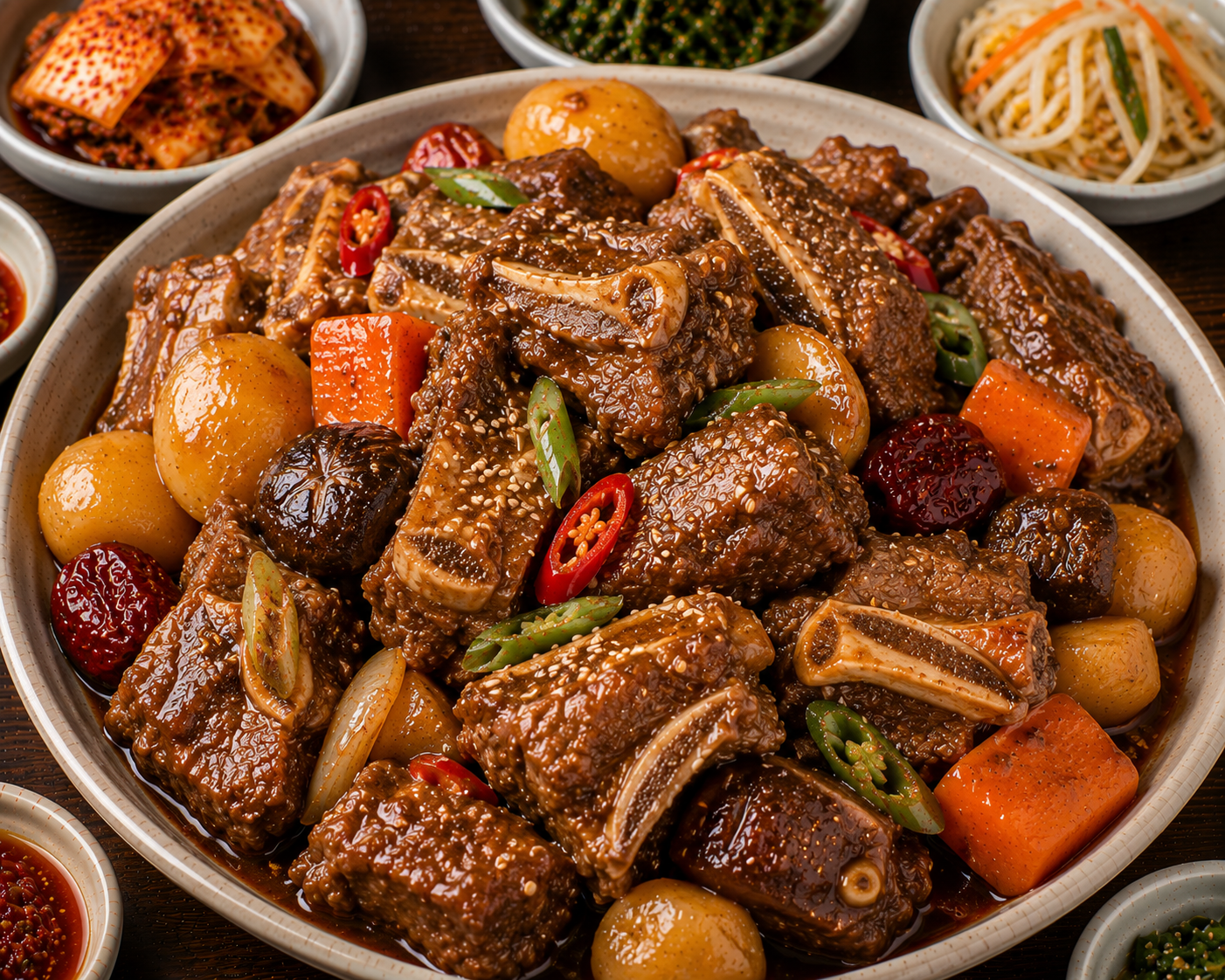
Braised Pork Ribs
돼지갈비찜 · dwaeji-galbi-jjim
A dish made by braising pork ribs in soy sauce and various seasonings, characterized by its sweet and tender texture. The broth reduces to a rich sauce that deeply flavors the meat, and the meat falls off the bone easily. Usually served on a large plate to share with many people.
Goes well with
Ingredients
How it's made
- 1Soak the beef short ribs in water to remove blood.
- 2Make a marinade with soy sauce, pear, and garlic and coat the ribs in it.
- 3Cut the radish and carrots into appropriate sizes and prepare them.
- 4Place the ribs and vegetables in a pot and simmer gently.
- 5Add jujubes and steam until the meat easily falls off the bone.
Nutrition
* Estimated values per serving.
Allergens
It uses beef short ribs, so it's not suitable for vegetarians or halal diets.
How to order
갈비찜 주세요
Gal-bi-jjim ju-se-yo
Please give me Galbijjim
Customize your order
Traveler tips
How to eat it
Frequently asked questions
- How is Galbijjim different from Galbitang?
- Galbitang is a soup made by simmering ribs in a clear broth. Galbijjim is cooked down with little broth left, so the Soy Sauce seasoning soaks into the meat.
- How should I eat the bones?
- The bones themselves are not meant to be eaten. Pull the meat off with chopsticks or scissors, and leave the bones on one side of the plate.
- Why is pear added to the seasoning?
- Pear is used to add sweetness and to tenderize the meat through protein-breaking enzymes. Depending on the home or restaurant, other fruits or sugar may be used instead of pear.
Last reviewed: 2026-10-07