Cultural background
Galbitang is typically enjoyed on special occasions or as a health food. It is especially popular in winter, providing warmth to the body.
Origin & history
The “갈비” (galbi, beef ribs) in Galbitang refers to the beef rib section with the bone attached. Beef has long been an expensive ingredient in Korea, and especially large bone-in ribs felt closer to feast food than to an everyday side dish.
Rather than soaking the meat in a rich seasoning the way Galbijjim does, Galbitang serves the flavor drawn from the bones and meat as a clear broth. For that reason, it became established as a formal soup suited to serving one bowl at a time to many people, such as at wedding halls or family gatherings.
Regional & modern variations
- Wang Galbitang — A version of Galbitang that emphasizes large beef ribs. The flavor profile is similar to regular Galbitang, but the size and quantity of the bone-in meat stand out.
- Galnaktang — A form of Galbitang with nakji, a small octopus-like seafood, added. The aroma of seafood joins the savory depth of the beef broth, giving it a strong feel as a restorative dish.
- Eolkeun Galbitang — A variation that makes clear Galbitang spicy and sharp by adding gochutgaru, Korean red pepper powder, or seasoning. Since basic Galbitang is not spicy, people order this separately when they want a spicy broth.
How Koreans eat it
Because Galbitang is served with bone-in meat in a bowl, it feels a little more like being treated well than a simple gukbap. Many people know it as a wedding-hall meal or a family dining-out option. Restaurants often bring a small plate or bowl for the bones.
Taste & how to choose
Good Galbitang has a clear, nutty broth rather than a cloudy or greasy one. Unlike the milky broth of Seolleongtang, its defining quality is a transparent taste, achieved by carefully skimming off blood residue and fat. The meat is pleasant to eat when it comes away from the bone relatively easily as you pull it with chopsticks.
Similar dishes
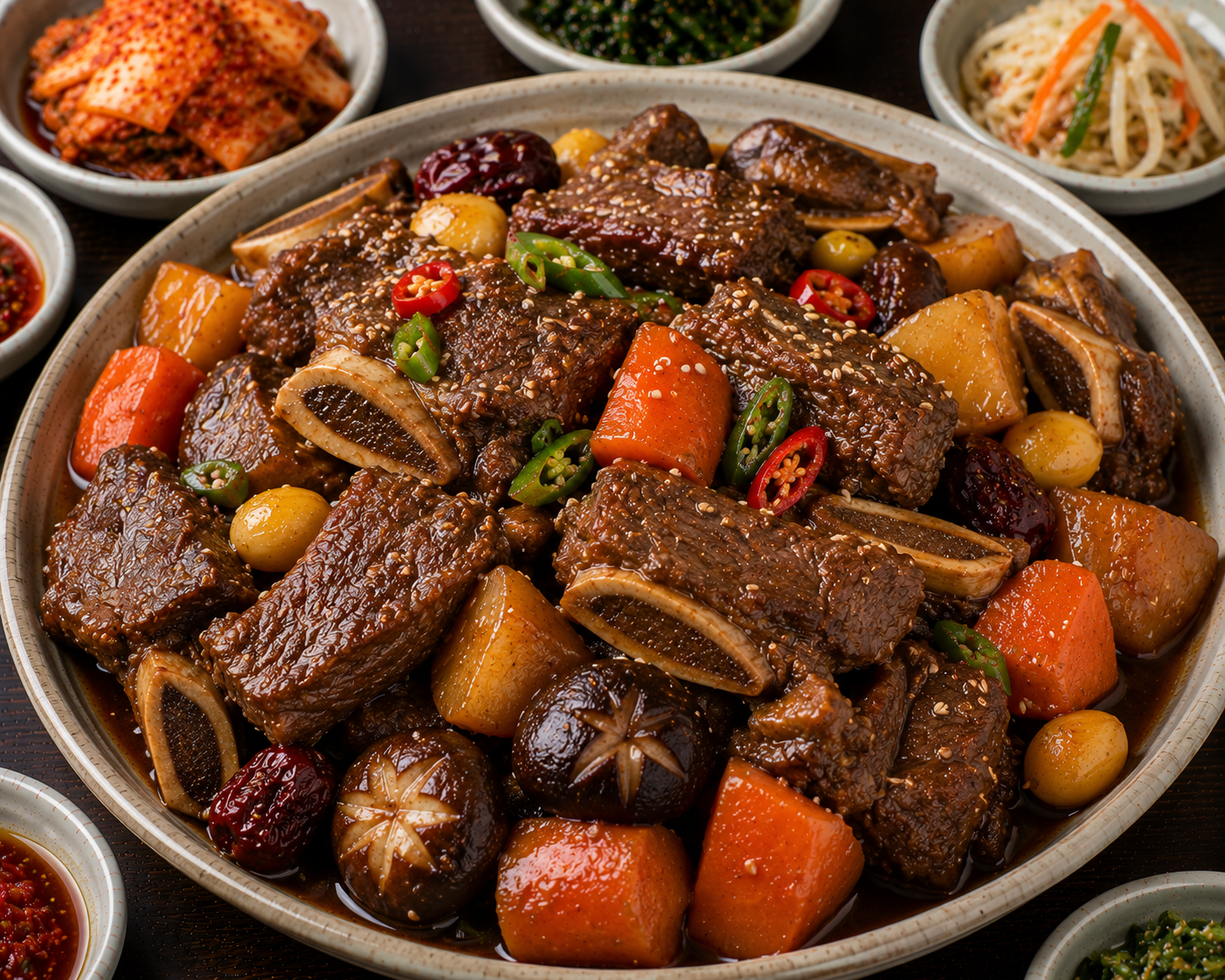
Galbijjim
갈비찜 · galbi-jjim
A sweet and tender dish made by marinating beef short ribs in a mixture of soy sauce, pear, and garlic, then steaming it with radish, carrots, and jujubes until fully cooked. The broth thickens and infuses the meat deeply with flavor, making it so tender that the meat easily falls off the bone. It is served as a celebratory dish during holidays like Seollal and Chuseok, typically shared on a large platter among many people.
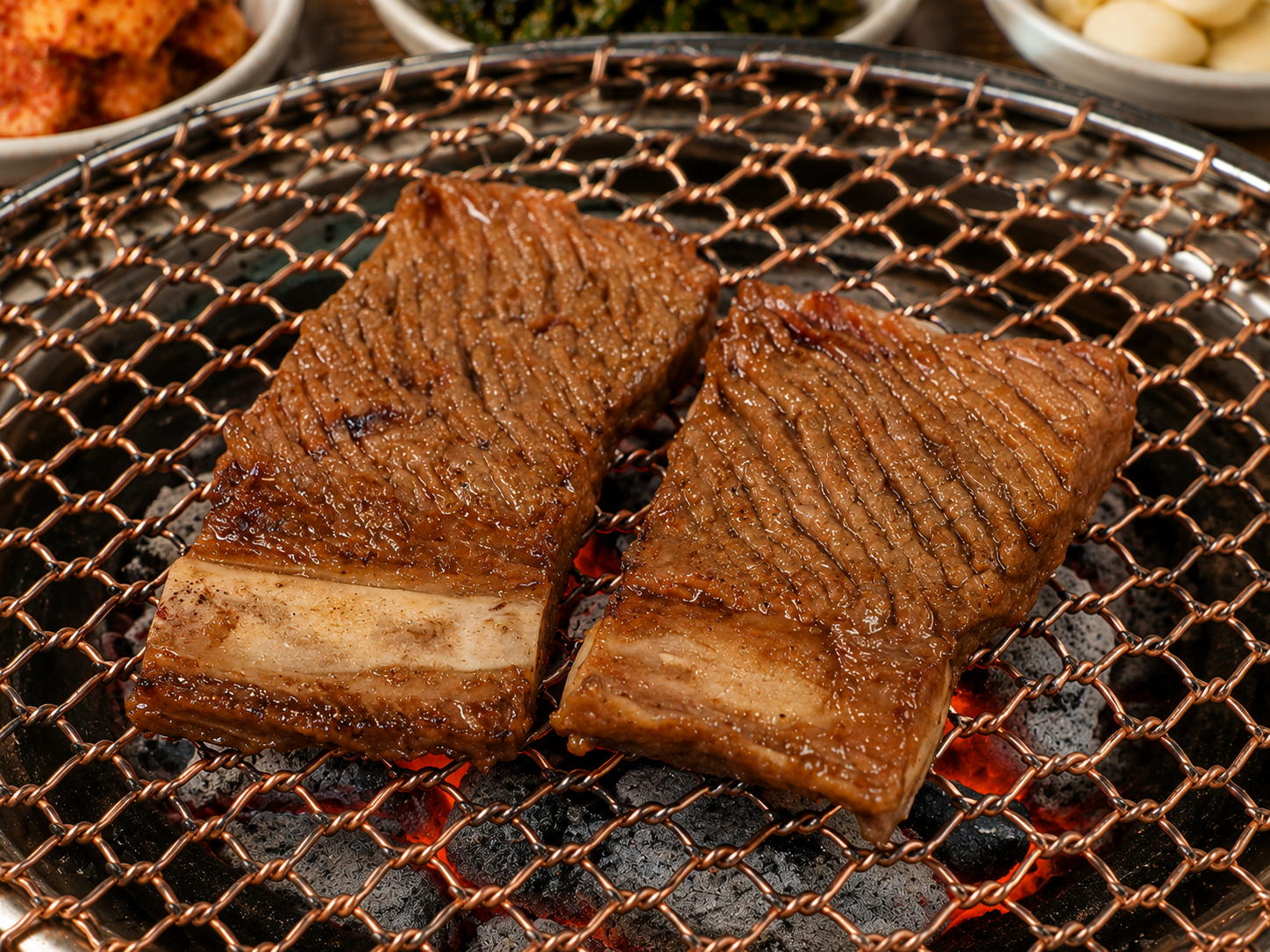
Galbi
갈비 · galbi
A dish made by marinating beef short ribs in a sauce of soy sauce, pear, sugar, and garlic, then grilling them on a grill, resulting in a caramelized seasoning with a sweet flavor and a contrast between the smoky exterior and tender meat inside. It is usually grilled directly on the table's grill and eaten at the moment it is perfectly cooked, wrapped in lettuce or perilla leaves with grilled meat, garlic, and ssamjang.
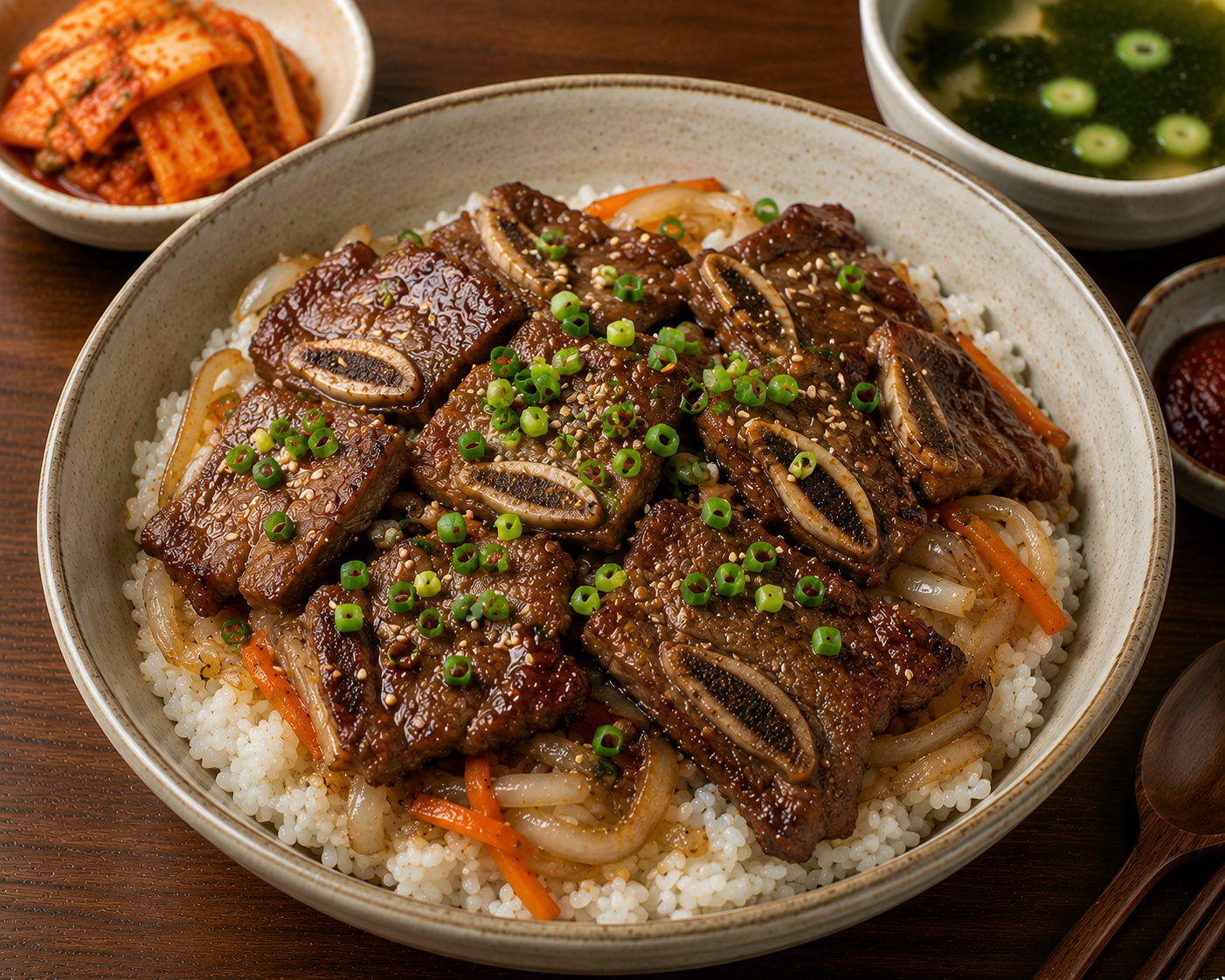
Galbi-bap
갈비밥 · galbi-bap
A single rice dish with seasoned short ribs placed on top of steamed rice, eaten with a dipping sauce.
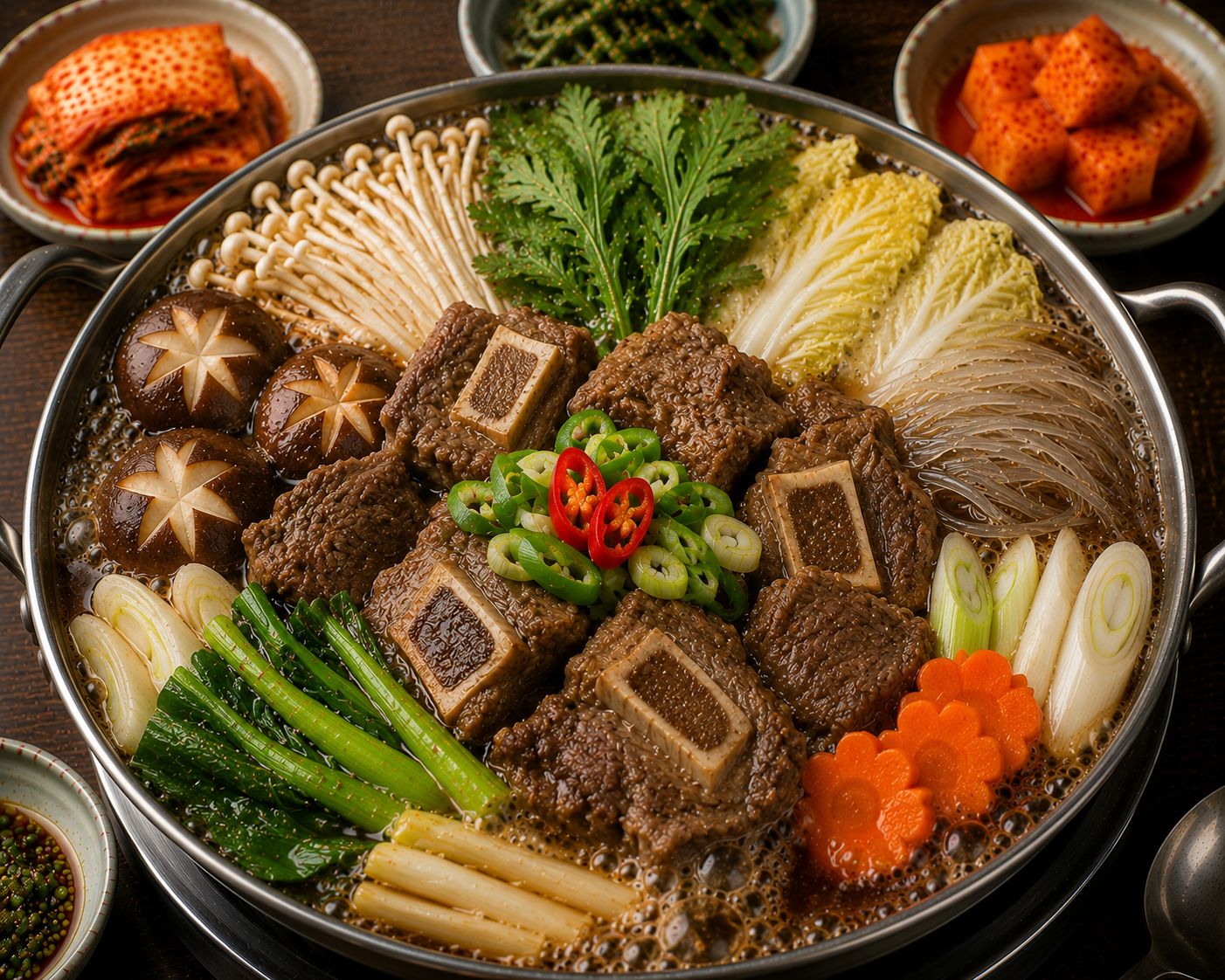
Galbi-jeongol
갈비전골 · galbi-jeongol
A Korean hot pot dish made by placing beef short ribs and various vegetables and mushrooms in a large pot, then pouring in broth to cook directly at the table. The meat cooks tenderly, and the broth reduces, creating a deep flavor. Enjoy the cooked ingredients first, and finish with rice or noodles added to the pot.
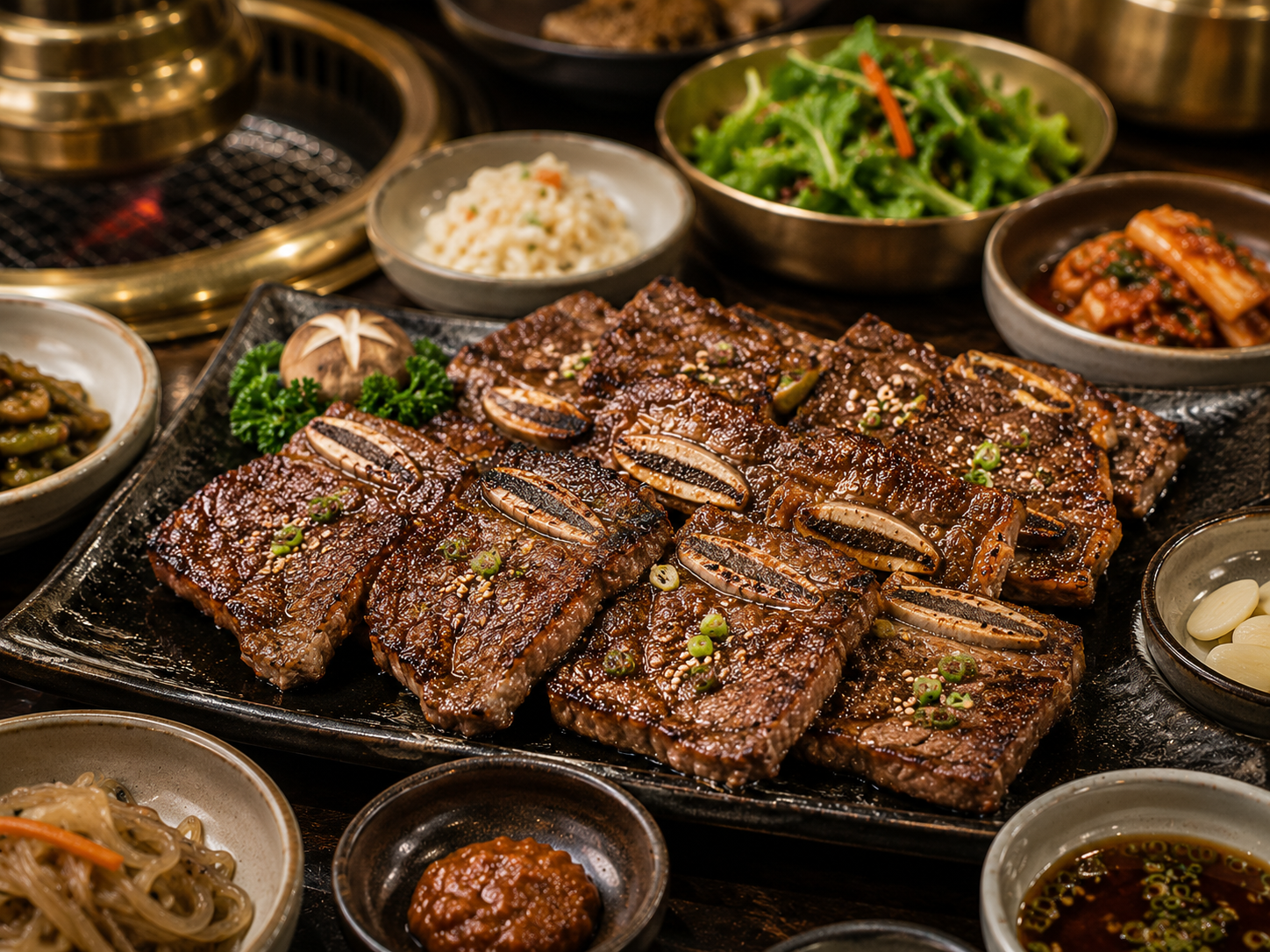
Grilled Short Ribs
소갈비구이 · so-galbi-gui
A dish where beef short ribs are marinated in soy sauce, pear, sugar, and garlic before being grilled on a griddle, creating a caramelized glaze and a contrast between the sweet, smoky exterior and tender interior. It is typically grilled right at the table, consumed at the perfect moment, wrapped in lettuce or perilla leaves with garlic and ssamjang.
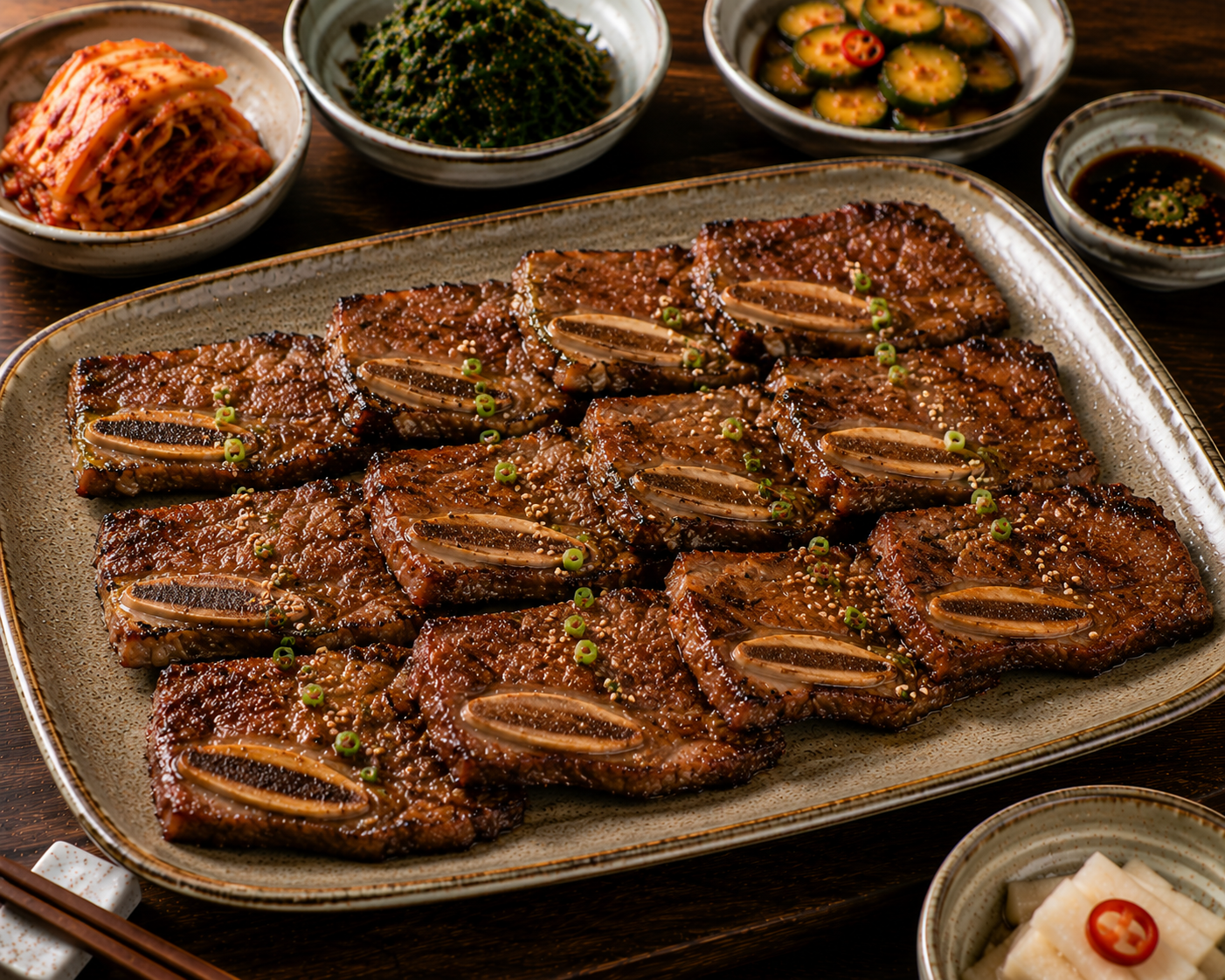
LA Galbi
LA갈비 · LA-galbi
Grilled dish made by seasoning beef ribs with soy sauce, sugar, garlic, and other ingredients, resulting in a sweet and savory flavor that seeps into the meat. Typically grilled at the table and eaten wrapped in lettuce or perilla leaves with ssamjang.
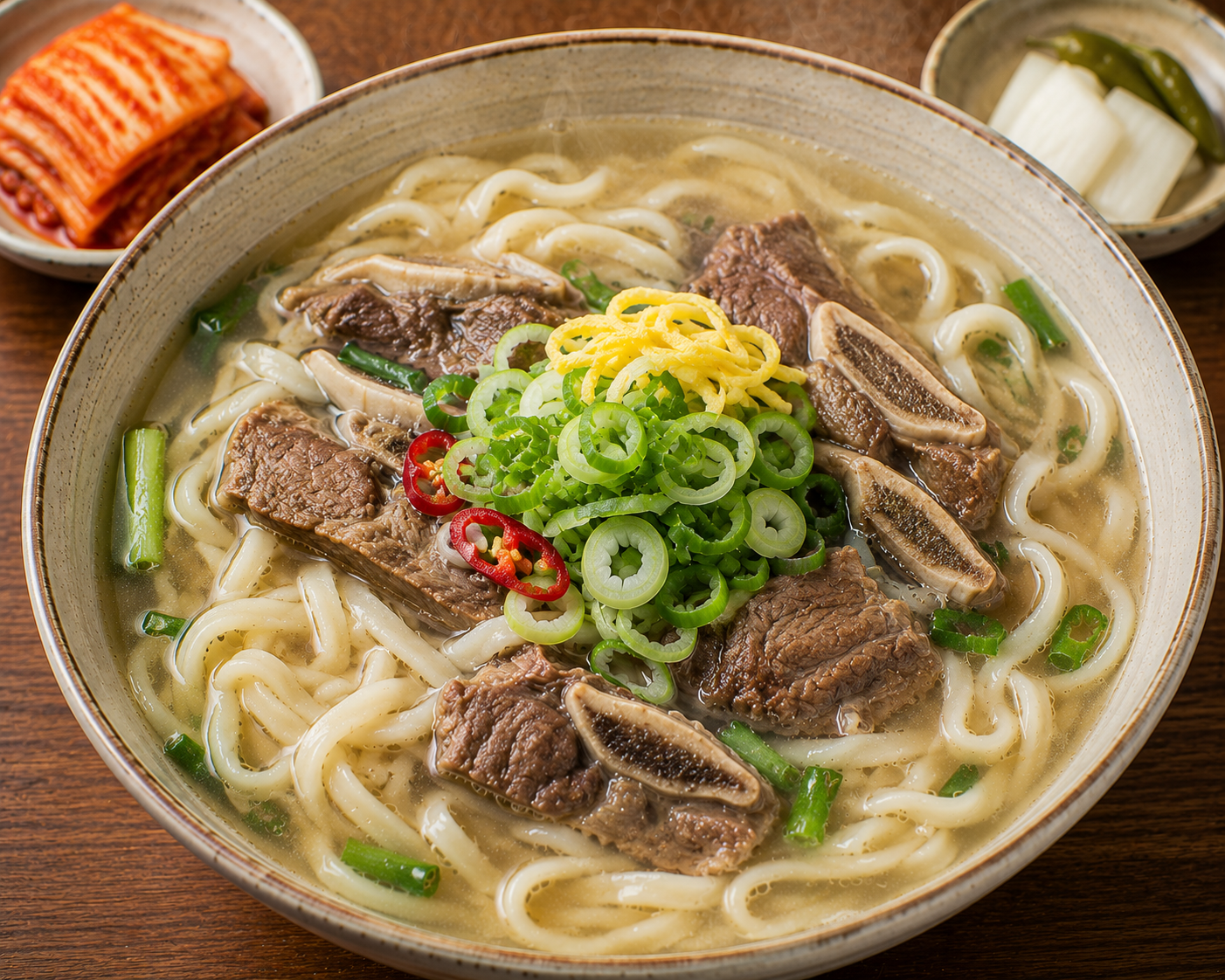
Galbitang Kalguksu
갈비탕칼국수 · galbi-tang kal-guksu
A warm noodle dish boiled with chewy noodles cut with a knife in the rich broth of galbitang.
Tteokgalbi Jeongsik (Grilled Short Rib Patties Set Meal)
떡갈비정식 · tteokgalbi-jeongsik
Tteokgalbi Jeongsik is a traditional Korean set meal served with rice, soup, and various side dishes, featuring delicious grilled short rib patties made primarily from minced beef marinated in a flavorful sauce.
Goes well with
Ingredients
How it's made
- 1Soak the beef ribs in cold water to remove blood.
- 2Boil water in a pot and add the beef ribs, bringing it to a boil.
- 3Add radish and green onion and simmer on low heat for a long time.
- 4Season with garlic and pepper.
Nutrition
* Estimated values per serving.
Allergens
Not suitable for vegetarians as it contains beef.
How to order
갈비탕 주세요
Gal-bi-tang ju-se-yo
Please give me Galbitang
Customize your order
Price range
₩16,000 ~ ₩19,000
Traveler tips
How to eat it
Where to try it
Frequently asked questions
- What is the difference between Galbitang and Galbijjim?
- Galbitang is a soup made by simmering beef ribs in water for a long time and eating it with the broth. Galbijjim is braised with Soy Sauce seasoning, so the dish is about the meat infused with a sweet-salty seasoning rather than the broth.
- How do I eat the meat attached to the bone?
- Pull the meat off with chopsticks, and if it does not come away easily, using tongs or scissors is perfectly normal. In casual restaurants, some people pick up the bones to eat, but in a formal setting, removing the meat first is the safer choice.
- Can I add more salt to the broth?
- Depending on the restaurant, Galbitang may come out relatively mild. People usually adjust it to their own taste by adding small amounts of the salt, pepper, minced scallions, and other seasonings on the table.
Last reviewed: 2026-10-07