Cultural background
Often appears as a home-style side dish and is a popular menu item included in lunch boxes.
Regional & modern variations
- Cheese Rolled Omelette (Gyeran-mari) — Cheese is placed in the center before the omelette is rolled. When sliced, the cheese stretches or melts softly, so this version often appears on children’s menus and as a drinking snack.
- Seaweed Rolled Omelette (Gyeran-mari) — Sheets of seaweed are rolled between the layers of egg, creating black stripes in the cross-section. The seaweed adds a salty aroma, giving the flavor definition without heavy seasoning.
- Myeongnan-jeot Rolled Omelette (Gyeran-mari) — A Rolled Omelette (Gyeran-mari) made with salty myeongnan-jeot (salted pollock roe). Because it is more strongly seasoned than a standard Rolled Omelette (Gyeran-mari), it pairs especially well with rice or drinks.
How Koreans eat it
Rolled Omelette (Gyeran-mari) holds up well even after cooling, making it a common lunchbox item. Restaurants may serve a small portion as a basic side dish, while pubs or pojangmacha (street food tents) sometimes roll it large and serve it like a full plate. In those cases, ketchup or mayonnaise may come alongside.
Taste & how to choose
A good Rolled Omelette (Gyeran-mari) is not deeply browned or burnt on the outside, and the inside stays moist and connected. Because the egg is poured in thin layers and rolled several times, the cut surface shows distinct layers. First-time eaters may notice that, compared with sweet Japanese-style rolled egg, the Korean version tastes more lightly seasoned and carries the aroma of vegetables.
Similar dishes
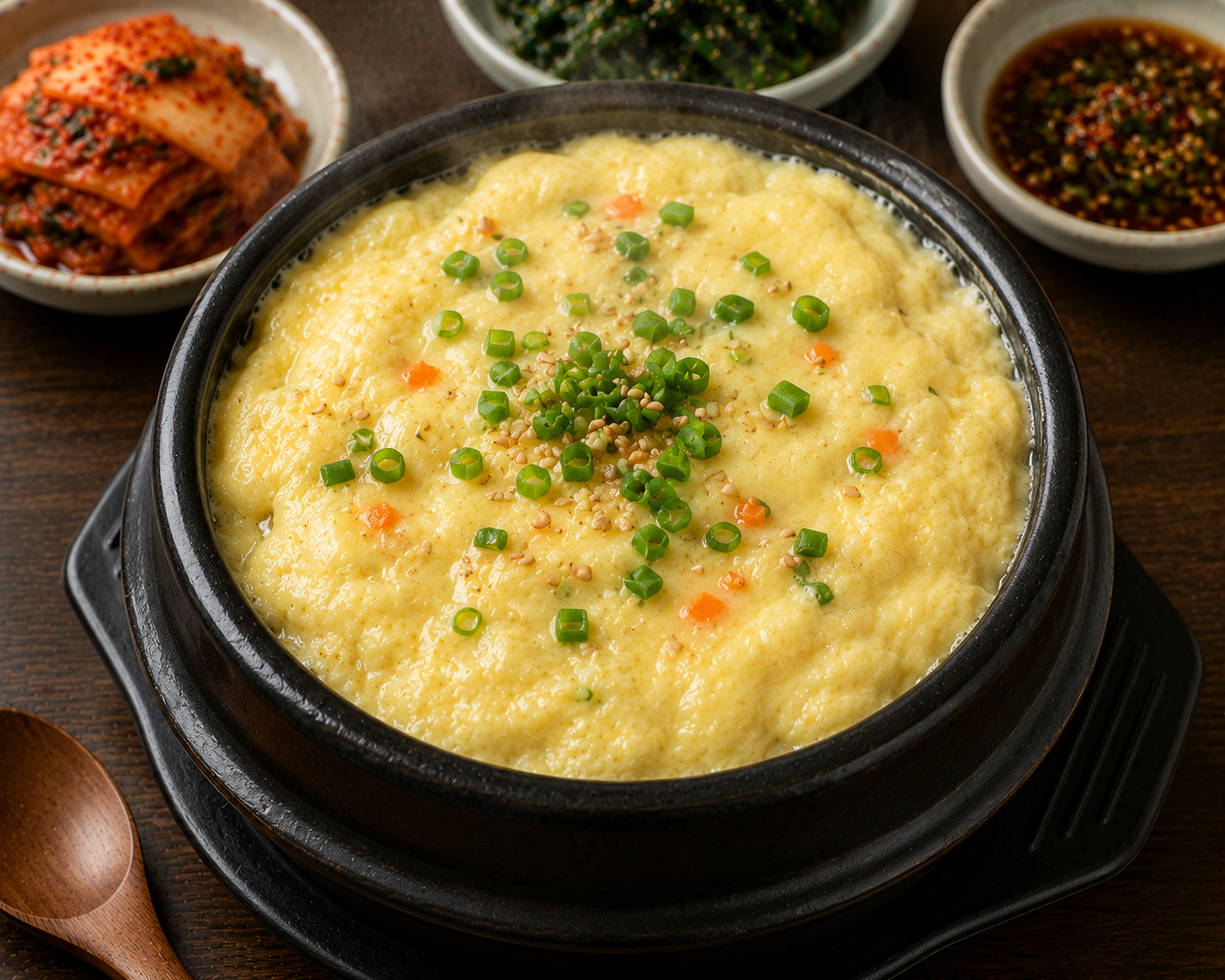
Steamed Egg
계란찜 · Gye-ran-jjim
A traditional Korean steamed dish made by thoroughly steaming eggs to become soft and moist.
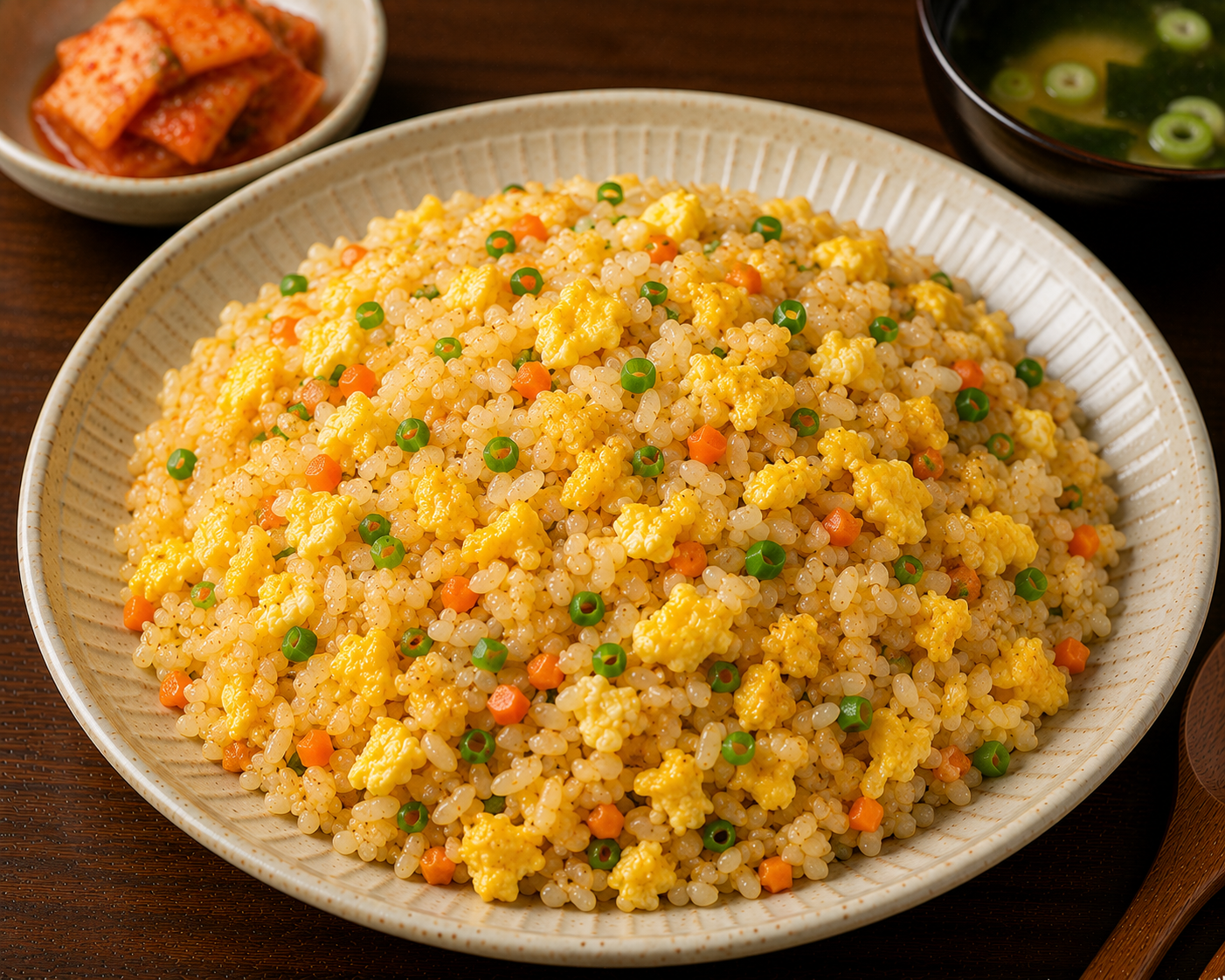
Egg Fried Rice
계란볶음밥 · Gye-ran-bokkeum-bap
A simple and quick one-bowl dish made by stir-frying rice and eggs together.
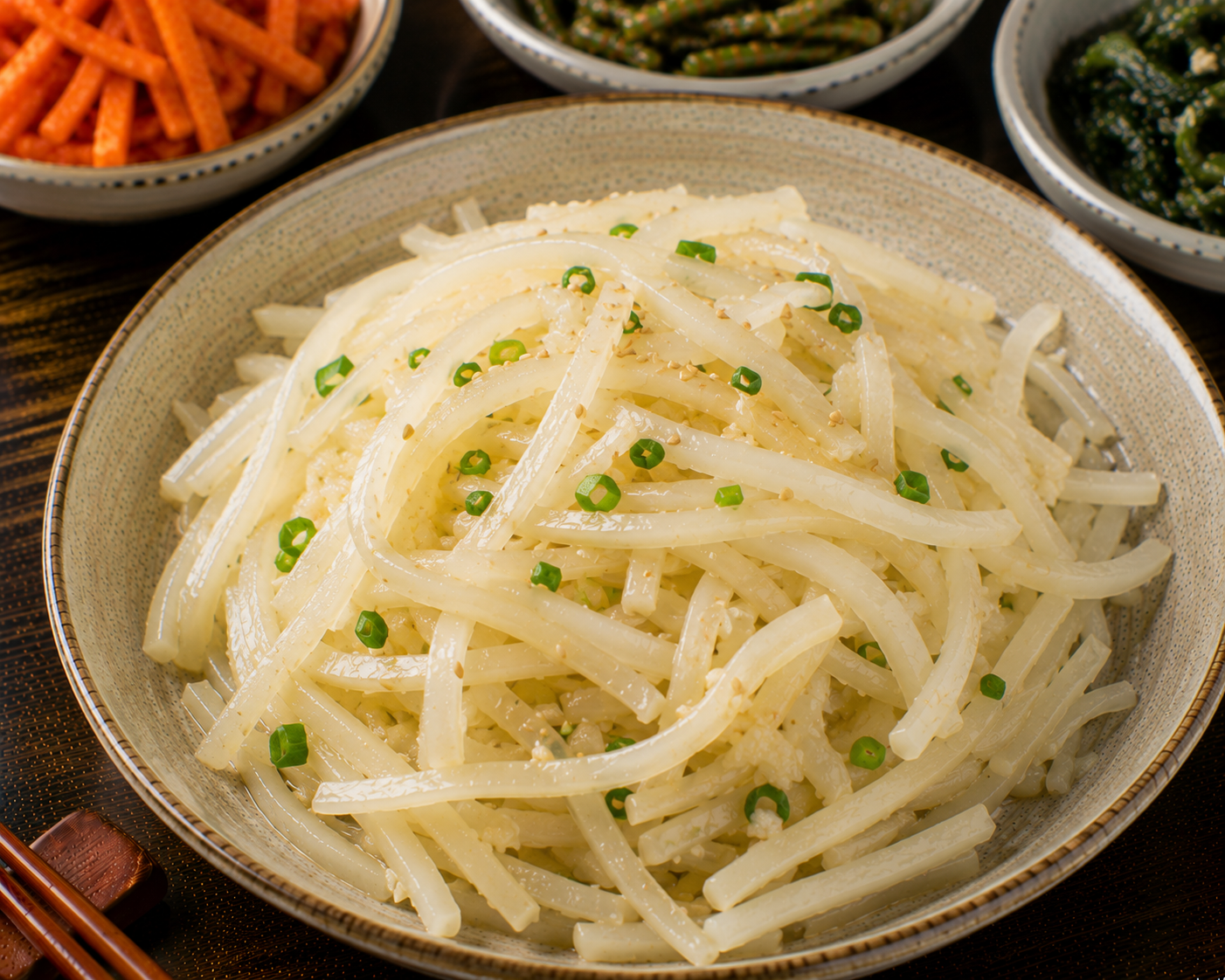
Seasoned Radish Namul
무나물 · mu-namul
A light and simple side dish made from julienned radish tossed with soy sauce and sesame oil. Characterized by its soft and nutty flavor, it is typically served with rice.
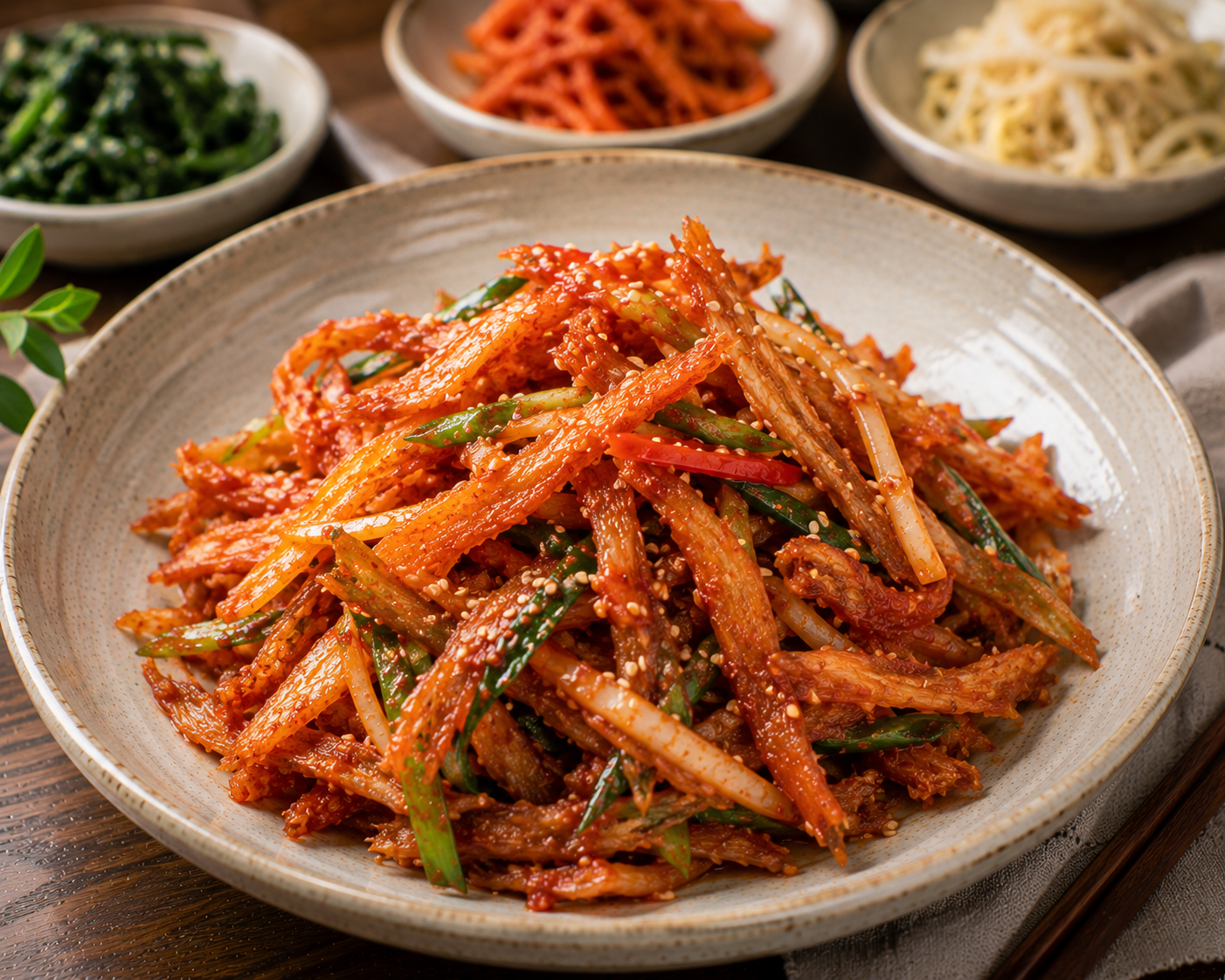
Dried Pollock Salad
북어무침 · Bugeo-muchim
A spicy and chewy side dish made by mixing dried pollock with gochujang and seasonings.
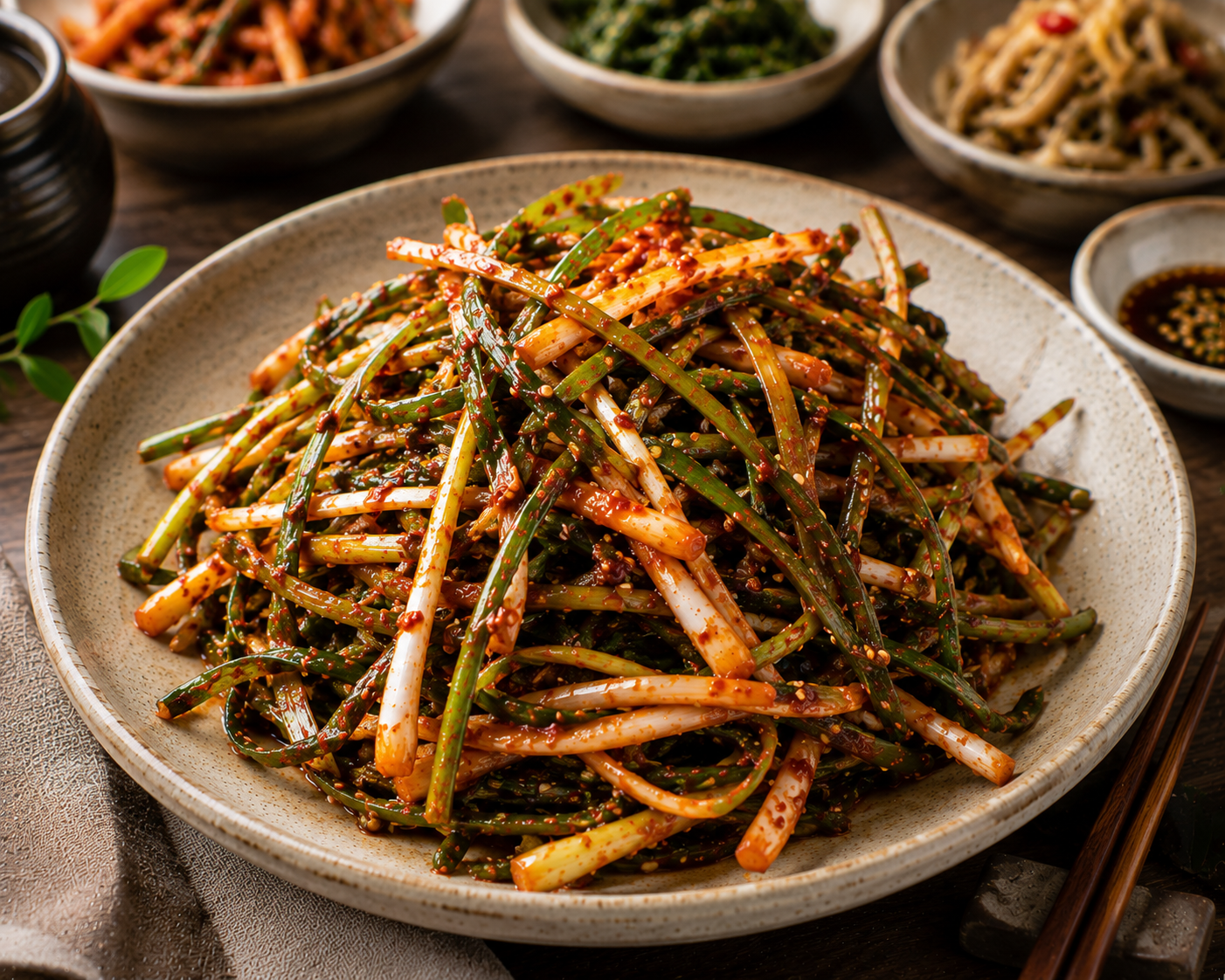
Spicy Seasoned Scallions
파무침 · pa-mu-chim
A tangy and spicy side dish made with long slices of green onion mixed with red pepper powder and seasonings.
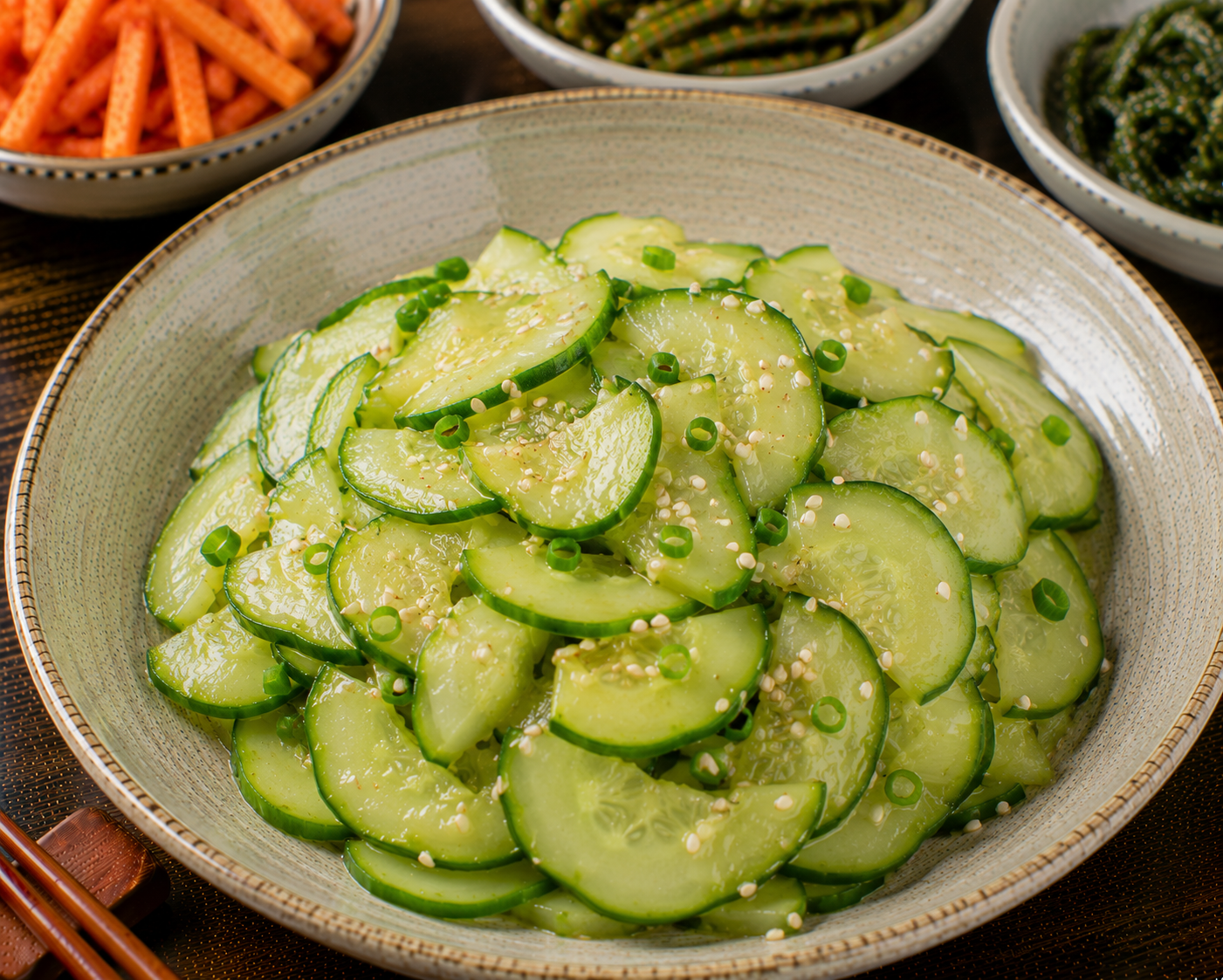
Cucumber Namul
오이나물 · oi-na-mul
Thinly sliced cucumbers seasoned with salt and tossed with sesame oil and garlic, creating a light and refreshing side dish.
Goes well with
Ingredients
How it's made
- 1Beat the eggs and season them with salt.
- 2Finely chop the carrots and green onions and mix them into the egg mixture.
- 3Heat oil in a frying pan and pour in the egg mixture thinly.
- 4When the eggs are half cooked, roll them up.
- 5Cut into appropriate sizes and serve on a plate.
Nutrition
* Estimated values per serving.
Allergens
Not suitable for a vegan diet as it contains eggs.
How to order
계란말이 주세요
Gye-ran-mal-i ju-se-yo
Please give me the egg roll
Customize your order
Traveler tips
How to eat it
Frequently asked questions
- Is it the same as a Western “egg roll”?
- No. Korean Rolled Omelette (Gyeran-mari) is not a fried dish with filling wrapped in a flour skin; it is a side dish made by rolling beaten eggs in a pan.
- Why is it rolled little by little instead of cooked in one thick layer?
- Pouring in the egg mixture a little at a time helps it cook evenly all the way through and creates layers when sliced. This method also makes it easier to form a shape that is both soft and firm.
- Is it strange to dip it in ketchup?
- Not at all. Ketchup is commonly served with Rolled Omelette (Gyeran-mari), especially in lunchboxes, children’s side dishes, and pub versions. However, not every restaurant provides it by default.
Last reviewed: 2026-10-07