Cultural background
Stir-fried anchovies are commonly found in Korean home meals and are great to enjoy with rice. They are served with a variety of side dishes and are easy to make, making them a regular favorite.
Regional & modern variations
- Janmyeolchi Stir-fried Anchovies — Made with very small dried anchovies. They are often eaten whole without separately removing the heads or innards, which gives them a crisp texture.
- Stir-fried Anchovies with Nuts — A version stir-fried with nuts such as almonds, peanuts, or walnuts. The nuts add richness between the salty and sweet flavors, but anyone with a nut allergy should check first.
- Stir-fried Anchovies with Kkwarigochu — Stir-fried with kkwarigochu, small wrinkled green chilies. They are usually not intensely spicy, but the heat varies from chili to chili, so an occasional hot one may be mixed in.
How Koreans eat it
Stir-fried Anchovies are often served as ‘밑반찬’ (mitbanchan, a make-ahead side dish), prepared once and eaten over several days. With little moisture and a flavor that does not change much when cold, they also work well in lunch boxes. In Korean homes, people often take them from the refrigerator, portion them onto a small plate, and set them on the table with rice.
Taste & how to choose
Good Stir-fried Anchovies smell nutty and toasted before they smell fishy. Versions made with sugar or mullyeot, a Korean starch syrup, may look glossy on the surface and feel slightly sticky. If stir-fried too long, they become hard, and larger anchovies can leave a bitter finish from the innards.
Similar dishes
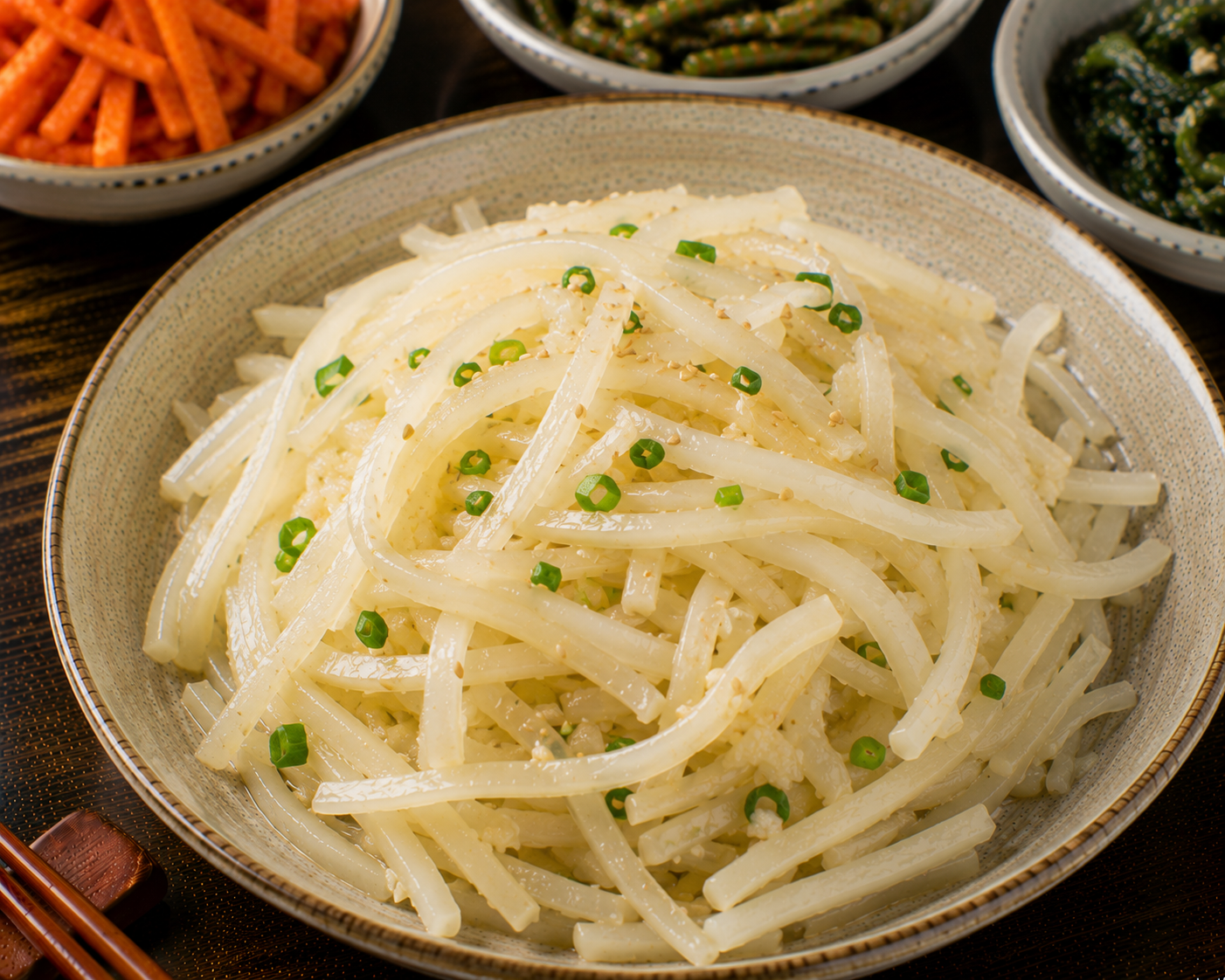
Seasoned Radish Namul
무나물 · mu-namul
A light and simple side dish made from julienned radish tossed with soy sauce and sesame oil. Characterized by its soft and nutty flavor, it is typically served with rice.
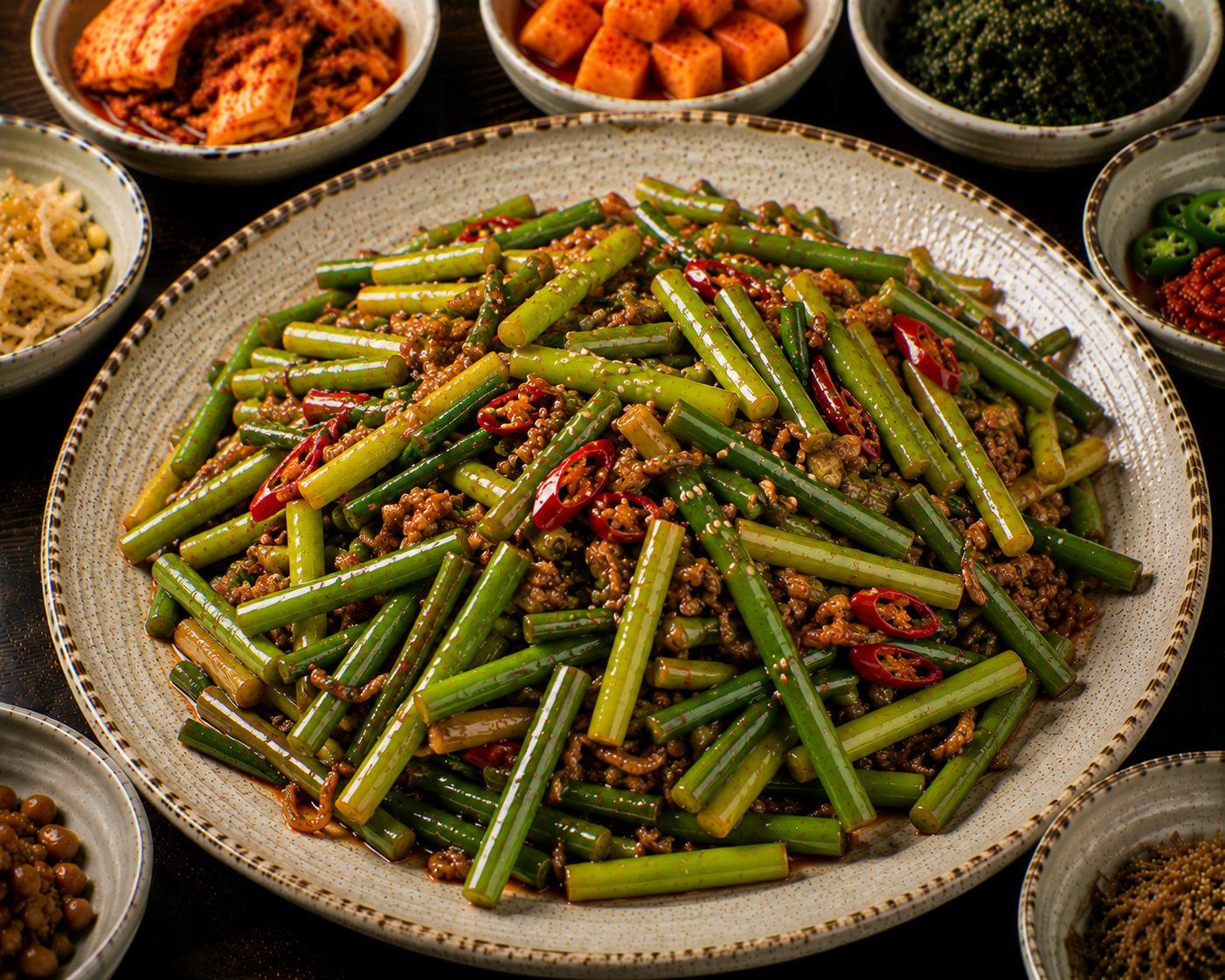
Stir-fried Garlic Scapes
마늘쫑볶음 · maneul-zzong-bokkeum
A savory and nutty side dish made by stir-frying garlic scapes with soy sauce and sesame oil.
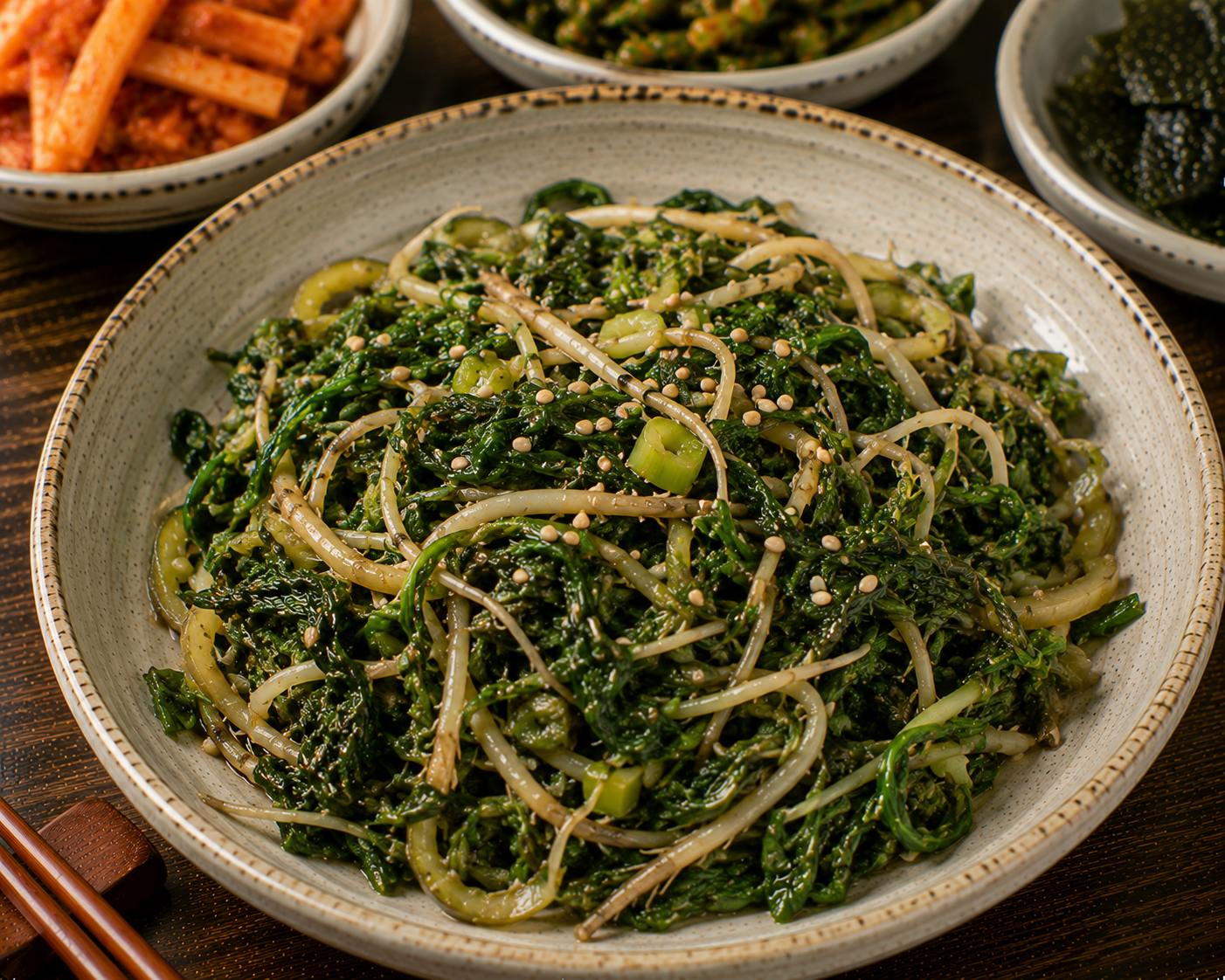
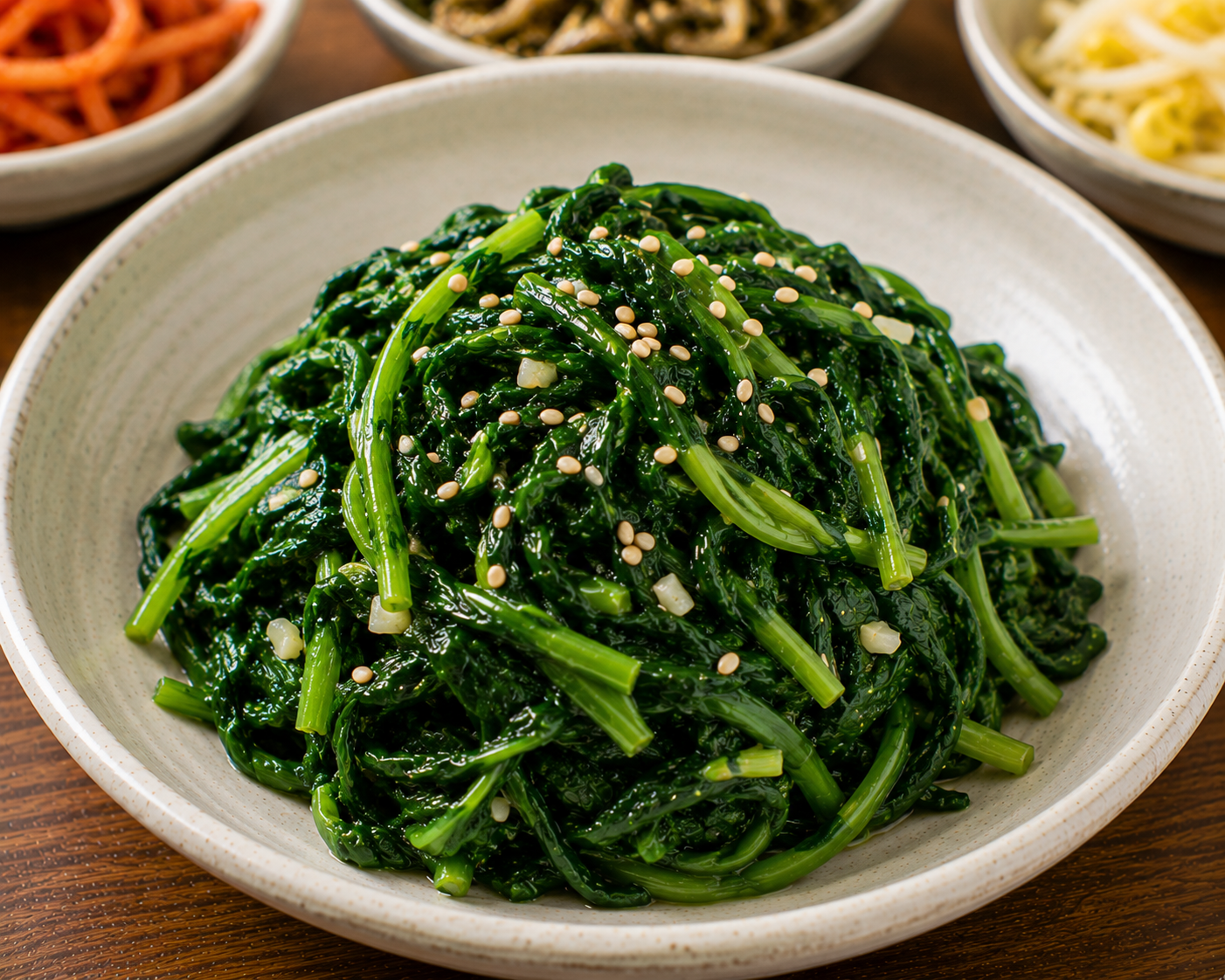
Naeng-i-namul
냉이나물 · naeng-i-na-mul
Blanched naengi seasoned with soy sauce and sesame oil, a light and nutty vegetable side dish.
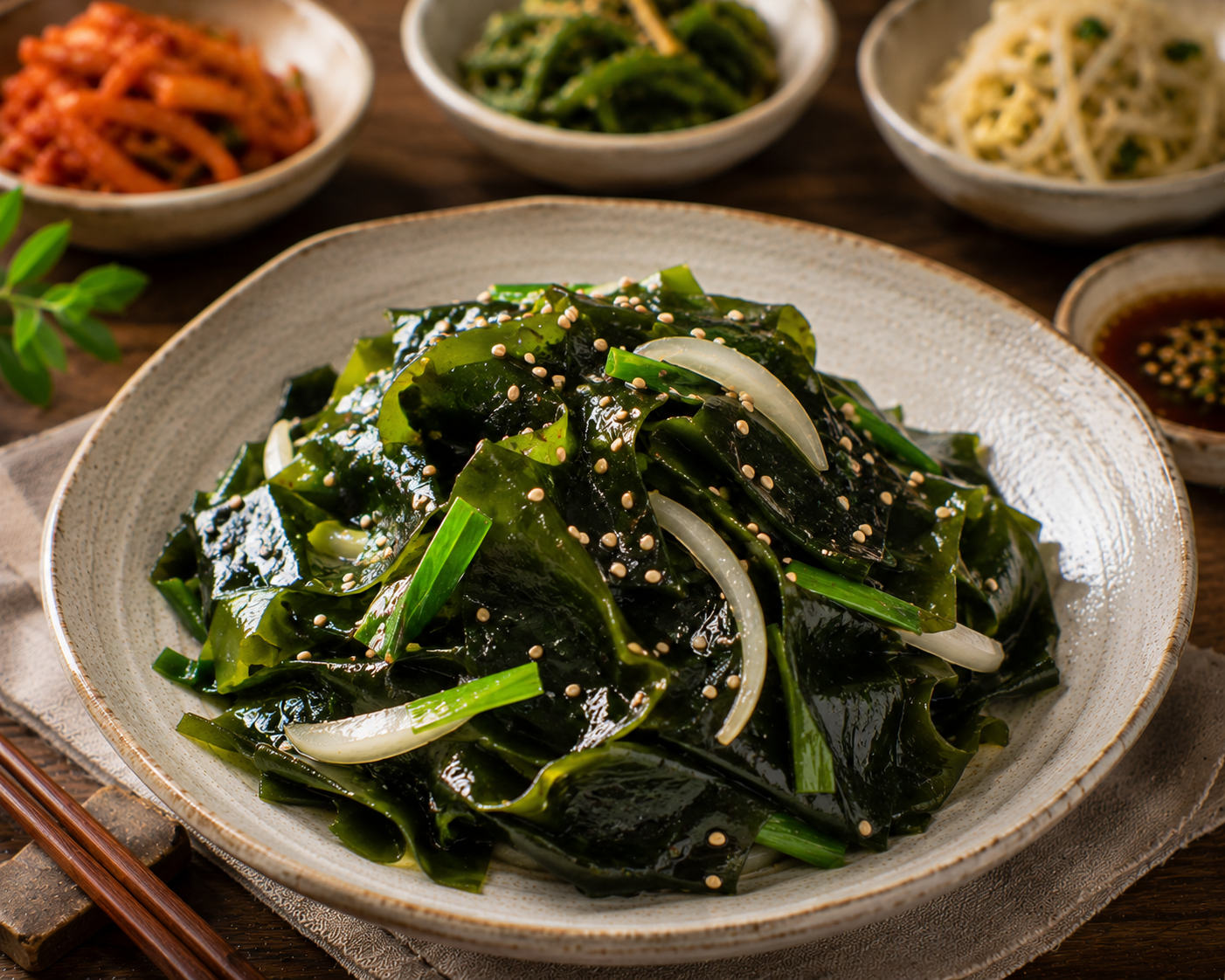
Seaweed Salad
미역무침 · mi-yeok-mu-chim
A side dish made by seasoning soaked seaweed sweet and sour; it features a crunchy and refreshing taste. It is enjoyed with rice, and the umami of seafood makes it even tastier.
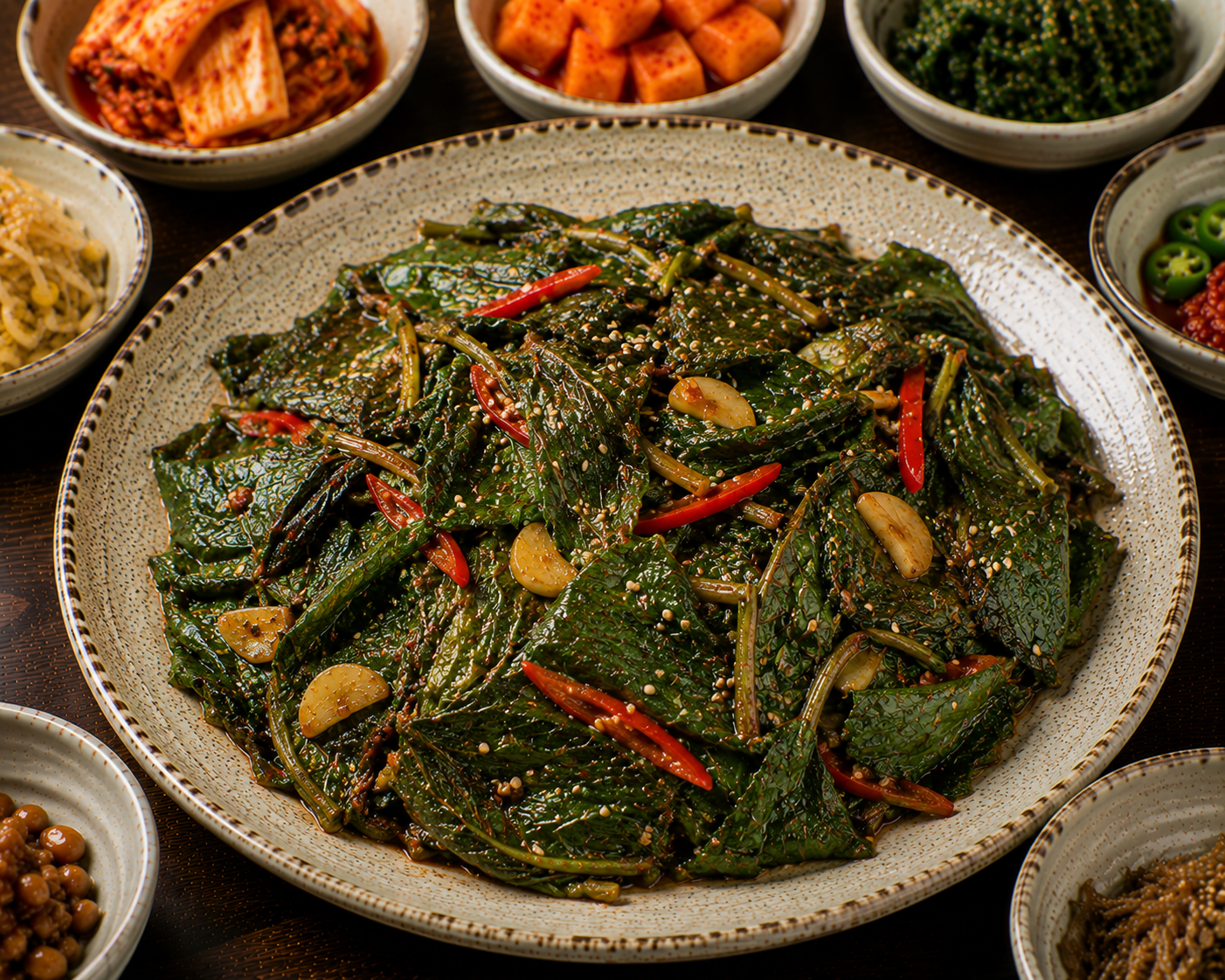
Stir-fried Perilla Leaves
깻잎볶음 · kkaennip-bokkeum
Stir-fried side dish made with perilla leaves stir-fried in soy sauce and garlic seasoning, salty and nutty in flavor.
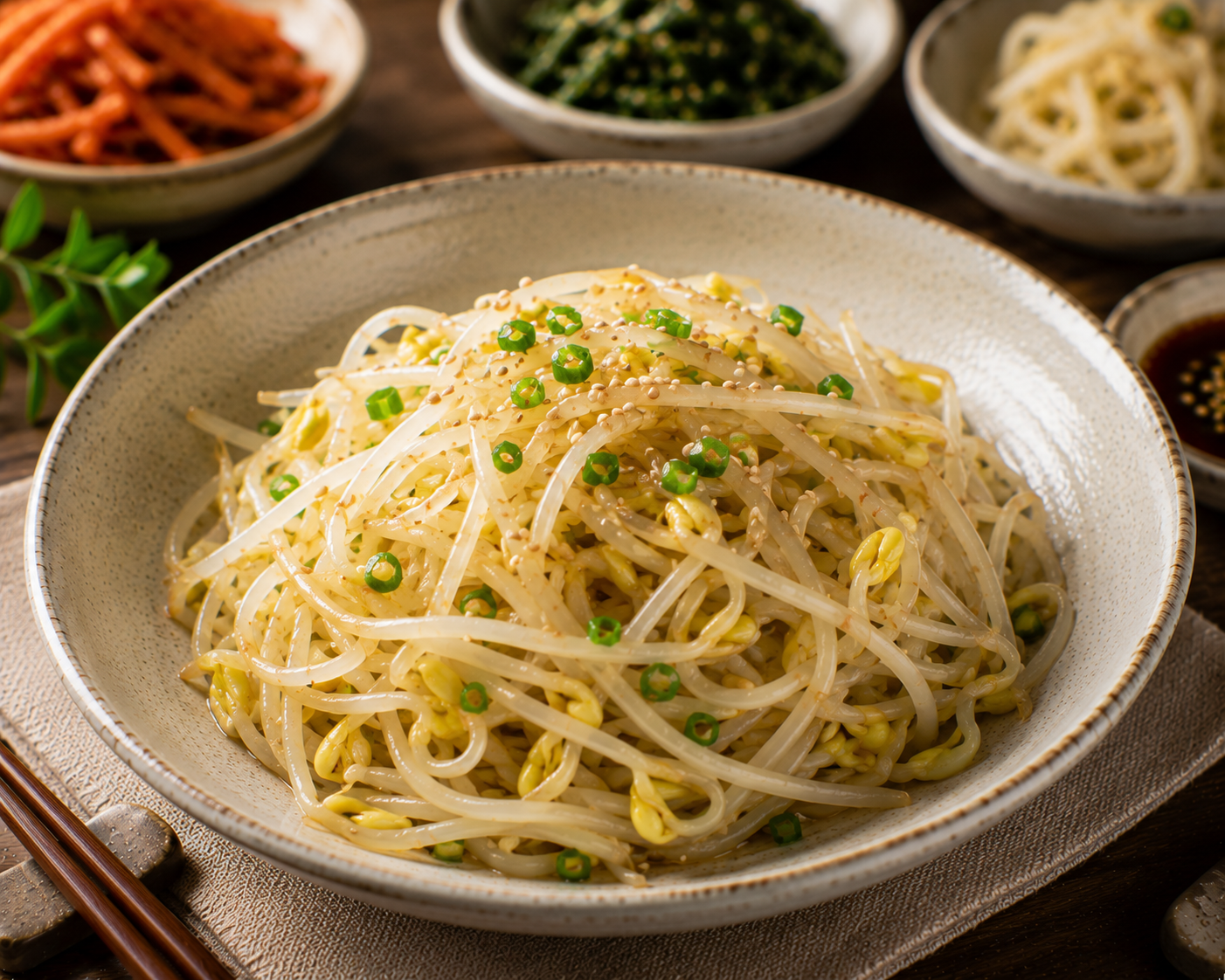
Bean Sprouts Salad
숙주나물 · Sukju-namul
A light and savory side dish made by blanching bean sprouts and seasoning with soy sauce and sesame oil. It features a crunchy texture and nutty flavor, and is typically enjoyed with rice.
Goes well with
Ingredients
How it's made
- 1Put the anchovies in a pan and stir-fry them until crispy over medium heat.
- 2Add soy sauce, sugar, and garlic, and mix well.
- 3Add sesame oil and stir-fry once more to finish.
Nutrition
* Estimated values per serving.
Allergens
It is not suitable for vegetarian or vegan diets as it uses anchovies.
How to order
멸치볶음 주세요
Myeol-chi-bok-keum ju-se-yo
Please give me stir-fried anchovies
Customize your order
Traveler tips
How to eat it
Frequently asked questions
- Do you eat the whole anchovy, including the head?
- Stir-fried Anchovies made with janmyeolchi, very small dried anchovies, are usually eaten whole, heads and bones included. The anchovies are small enough that they are not difficult to chew, and the crisp texture is considered part of their appeal.
- Why do some Stir-fried Anchovies stick together?
- As sugar or starch syrup cools, it makes the anchovies stick lightly together. Just separate a little at a time with chopsticks and eat them with rice.
- Since they are small fish, will the bones get stuck?
- Stir-fried Anchovies are usually made with very small dried anchovies, so the bones are soft and break apart easily. Versions made with larger anchovies, however, can feel firmer.
Last reviewed: 2026-10-07