
Cultural background
A common snack found in snack bars or markets, known for its distinctive flavor and aroma that may divide opinions.
Origin & history
Sundae is a Korean blood sausage made by stuffing pig intestines with blood, grains, vegetables, and other ingredients, then cooking them. It reflects a food culture tied to farming households, where many parts of a slaughtered pig were used rather than wasted.
The Sundae commonly found on streets today usually contains a lot of dangmyeon, or glass noodles. After the Korean War and through the years of economic growth, inexpensive and easy-to-find dangmyeon became the main filling, and Sundae established itself as a bunsik shop staple.
Regional & modern variations
- Abai Sundae — A style of Sundae associated with Sokcho in Gangwon-do and the culture of displaced people from Hamgyeong-do. Thicker than ordinary bunsik-style Sundae, it is filled with glutinous rice, vegetables, meat, and other ingredients, making it closer to a meal.
- Ojingeo Sundae — Instead of pig intestine, a squid body is stuffed and cooked. Well known along the east coast, it reveals the filling inside squid rings when sliced.
- Byeongcheon Sundae — A widely known Sundae named after the Byeongcheon area of Cheonan, Chungcheongnam-do. The flavors of seonji, or coagulated blood, and vegetables are relatively distinct, and it is often eaten with Sundaeguk.
- Pi Sundae — A higher proportion of seonji gives it a darker color and a richer flavor. It is often mentioned in connection with Jeolla-do-style Sundae or Sundaeguk.
How Koreans eat it
At markets or bunsik shops, ordering Sundae often brings not only Sundae itself but also pork offal such as liver, lung, and heart. Foreign travelers can say “Sundae-man juseyo” (“Sundae only, please”) or “Naejangdo gachi juseyo” (“Please include the offal too”). Dipping it in Tteokbokki sauce is also common.
Taste & how to choose
Good Sundae has a casing that is not tough and a moist filling. Dangmyeon Sundae is less strongly scented than many people expect, with a subtle iron-like aroma from the seonji. First-time eaters are sometimes more surprised by the dry, crumbly texture of the liver served alongside than by the Sundae itself.
Similar dishes
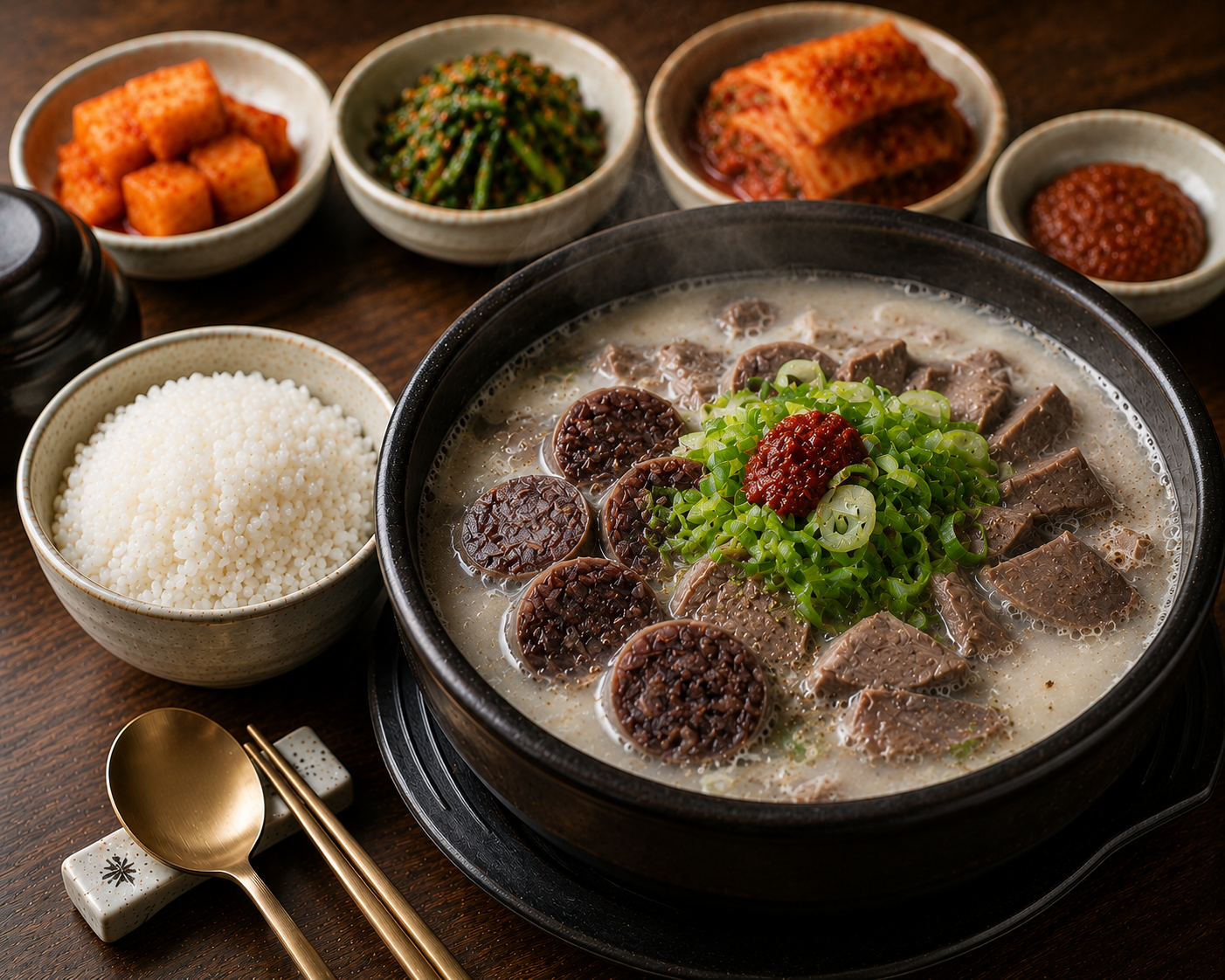
Sundae-guk (Korean Blood Sausage Soup)
순대국 · sun-dae-guk
A soup dish made by boiling pork intestines and sundae (blood sausage) in pork bone broth, characterized by its milky, rich broth and the chewy texture of the sundae. It is usually eaten with rice mixed in, seasoned to taste with salt or salted shrimp, and topped with perilla seed powder and a spicy seasoning paste.

Korean-style Hot Dog
한국식 핫도그 · Han-guk-sik hot-dog
A Korean snack made by wrapping a sausage in flour batter and frying it, then sprinkling it with sugar. It is characterized by its crispy texture and sweet flavor.
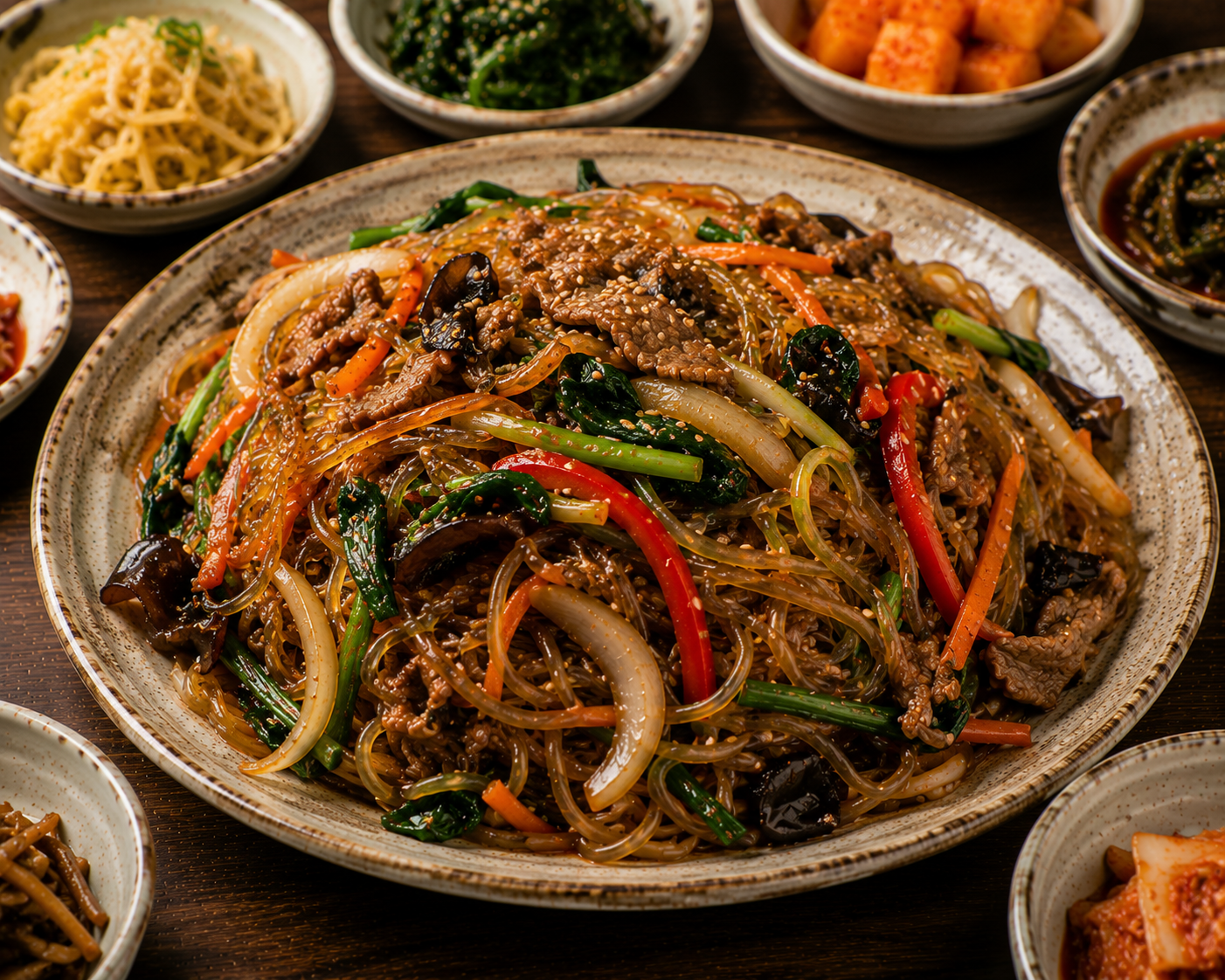
Japchae
잡채 · japchae
A traditional Korean stir-fried dish made with glass noodles and various vegetables and meat, seasoned with soy sauce. The chewy noodles and crunchy vegetables create a rich and savory taste.
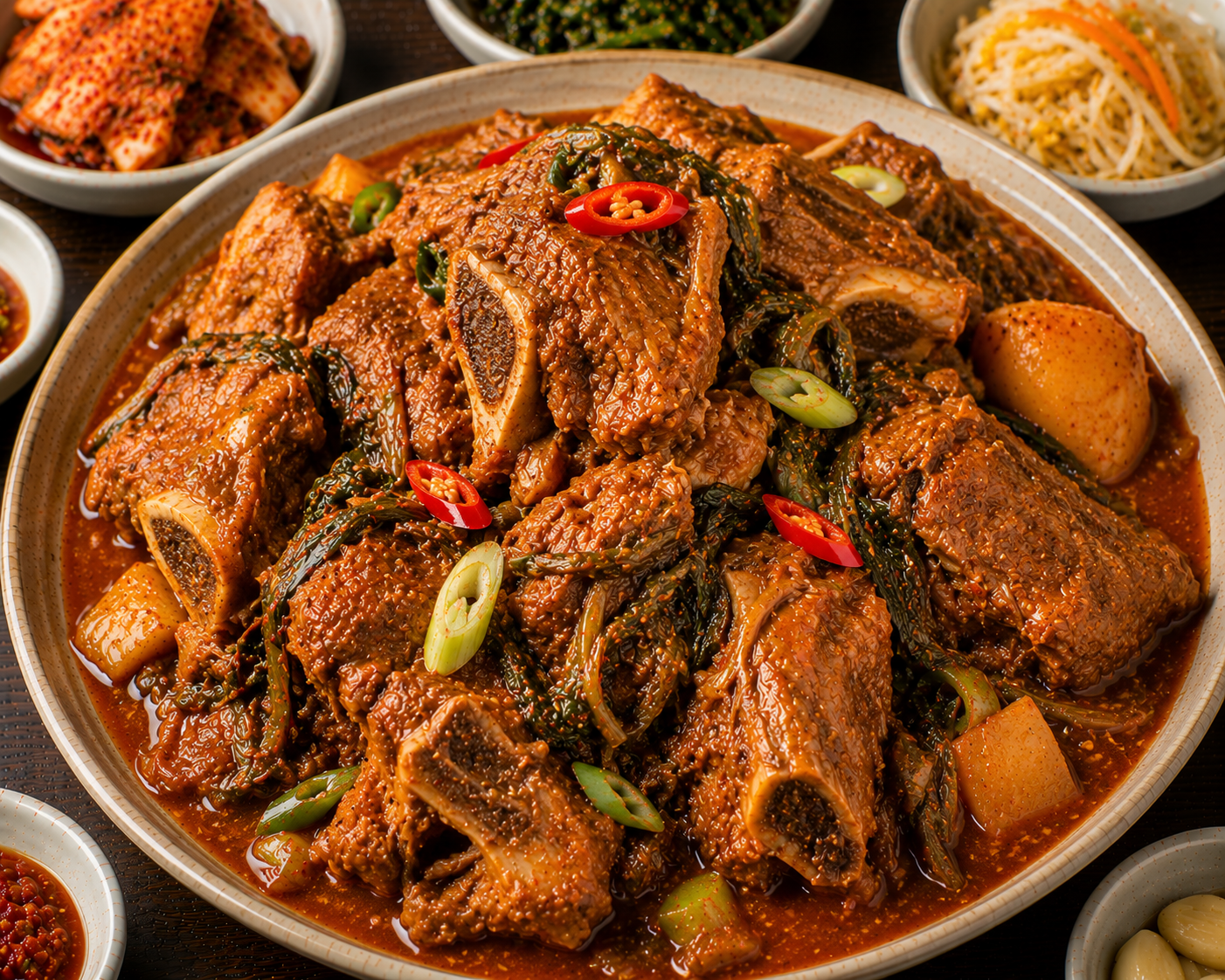
Braised Pork Backbones
뼈다귀찜 · Ppyeo-da-gwi-jjim
A spicy and tender dish made by steaming pork backbones in gochujang seasoning, with rich flavors as the broth reduces and infuses into the meat.
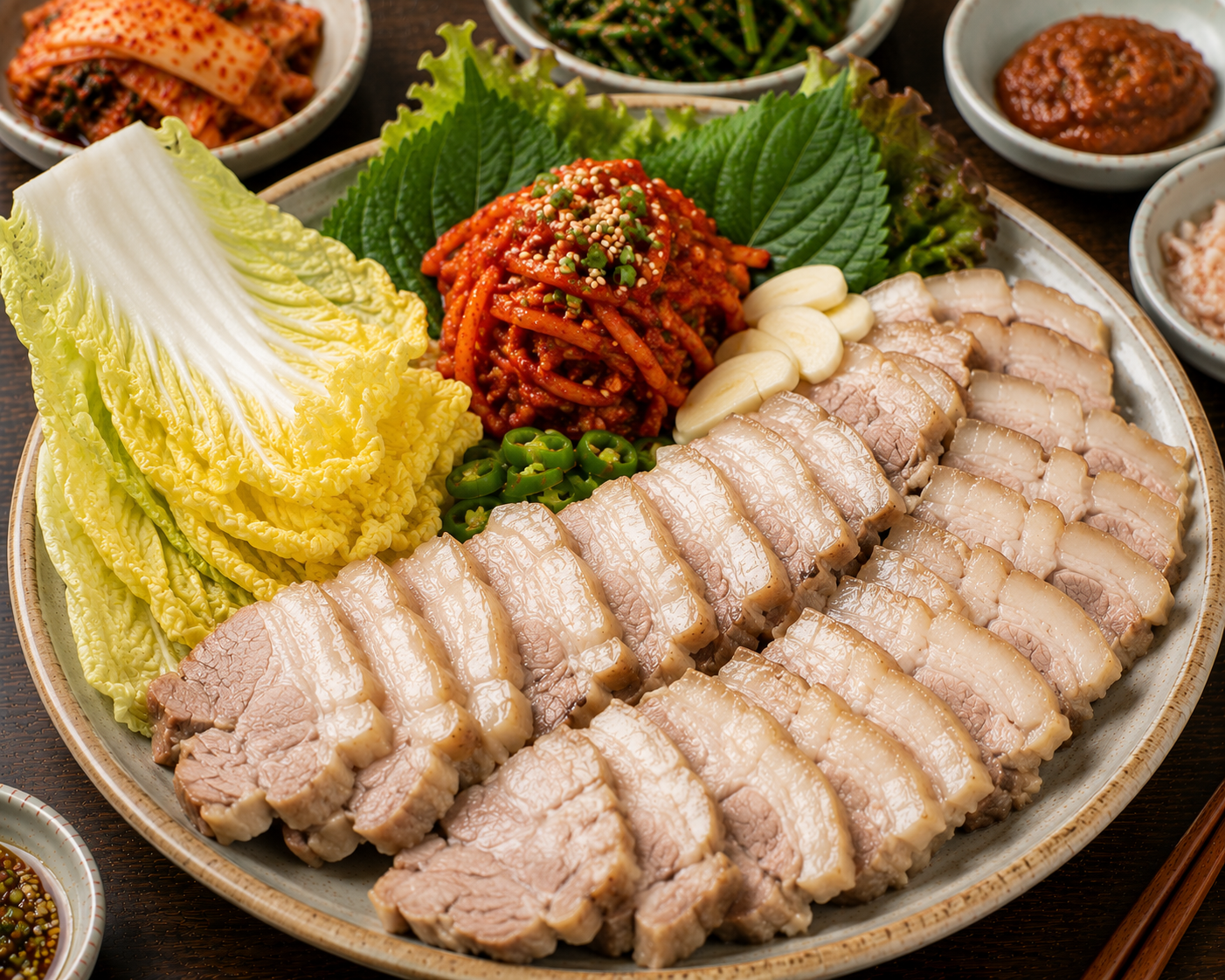
Bossam
보쌈 · bossam
A Korean dish made by wrapping thin slices of boiled pork in kimchi and leafy vegetables.

Soddeok-Soddeok
소떡소떡 · so-tteok-so-tteok
A convenient snack made by alternating skewering sausages and rice cakes and then grilling them with sauce.
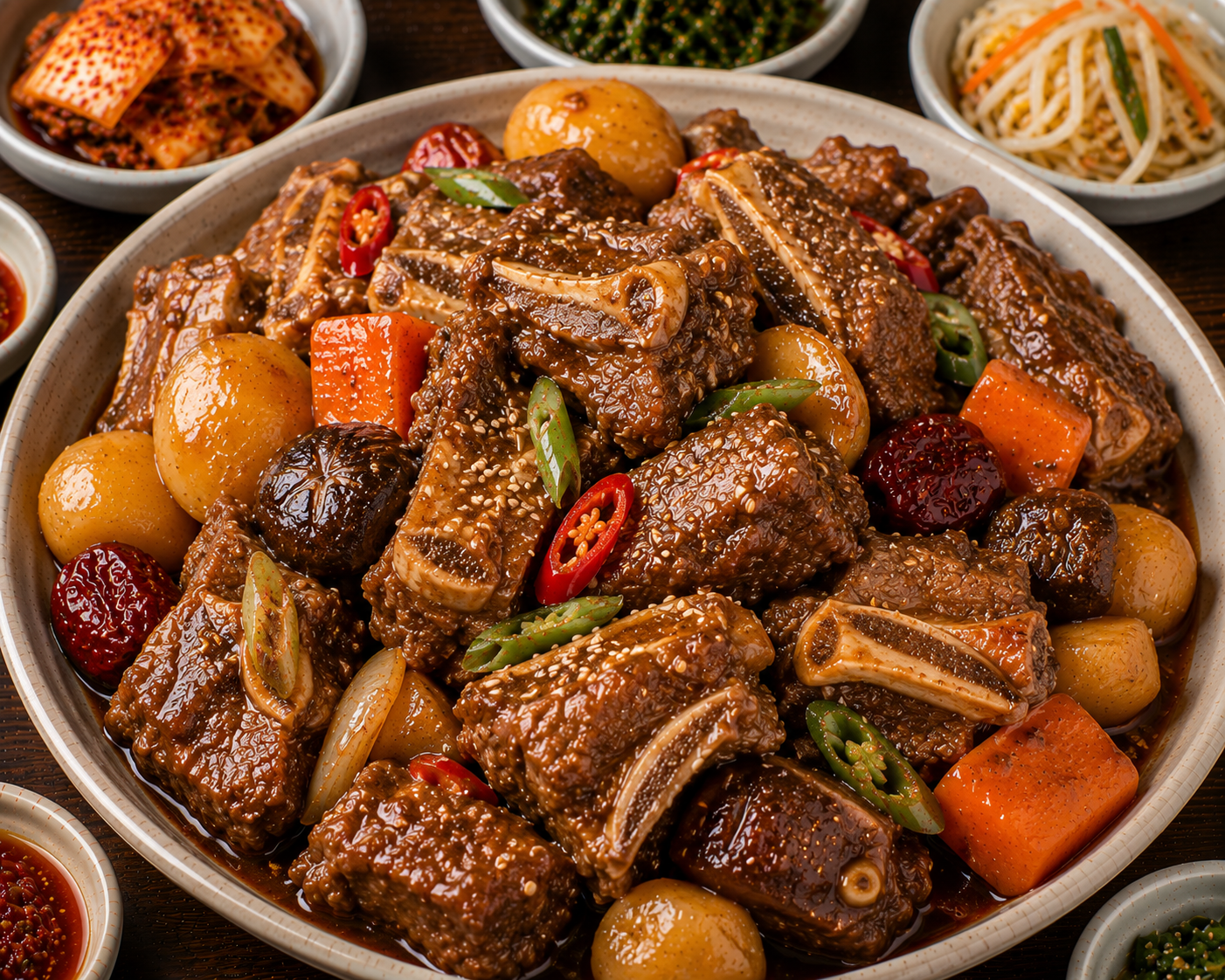
Braised Pork Ribs
돼지갈비찜 · dwaeji-galbi-jjim
A dish made by braising pork ribs in soy sauce and various seasonings, characterized by its sweet and tender texture. The broth reduces to a rich sauce that deeply flavors the meat, and the meat falls off the bone easily. Usually served on a large plate to share with many people.
Goes well with
Ingredients
How it's made
- 1Soak the sweet potato noodles in water.
- 2Clean the pig intestines and prepare them.
- 3Mix the sweet potato noodles and blood and stuff them into the intestines.
- 4Steam them in a steamer.
Nutrition
* Estimated values per serving.
Allergens
Not vegetarian or halal due to the use of pig intestines and blood.
How to order
순대 주세요
Sun-dae ju-se-yo
Please give me Sundae
Customize your order
Traveler tips
How to eat it
Frequently asked questions
- Is it the same as the English Ice Cream “sundae”?
- No. Written in the Roman alphabet, the Korean word Sundae becomes “sundae,” but it has nothing to do with the Ice Cream dessert. It is a savory food made with pig intestine and seonji.
- Why do the dipping sauces differ by region?
- Salt is common in Seoul and the surrounding capital region, while in Busan and Gyeongnam, people often use a sauce closer to Makjang or Ssamjang. In some parts of Jeolla-do, Sundae is also dipped in chogochujang, a vinegared Gochujang sauce.
- When ordering, what does “naejang” mean?
- Naejang refers to parts such as pork liver, lung, heart, and stomach that are sliced and served with Sundae. If that feels like too much, say “Naejang ppaego Sundae-man juseyo” (“No offal, just Sundae, please”).
Last reviewed: 2026-10-07