
Cultural background
Bossam is a dish typically eaten with kimchi during the kimjang season and has a culture of sharing among family and friends.
Origin & history
In Bossam, the word ssam means wrapping ingredients in leafy vegetables or kimchi before eating them. The name points less to the cooking method than to the way the dish is eaten. In many cases, boiled pork, or Suyuk, wrapped with kimchi is called Bossam.
The dish is tied to the custom of eating freshly made kimchi filling with boiled pork during kimchi-making season. On kimchi-making days, salted napa cabbage, seasonings, and pork were likely to be gathered in one place, and one account says Bossam became a food shared after the hard work was done.
Regional & modern variations
- Gul Bossam — A style of Bossam served with raw oysters alongside the boiled pork. It is especially common in winter, when the briny aroma of the oysters makes a strong contrast with the rich fattiness of the pork.
- Maneul Bossam — A version eaten with finely ground garlic or a sweet garlic sauce placed on top of the meat. The bite is softer than raw garlic, but the aroma remains distinct.
- Bossam Kimchi — Kimchi made to go with Bossam, with generous filling and a relatively sweet, deep seasoning. Compared with ordinary Napa Cabbage Kimchi, the seasoning and shredded radish have a stronger presence, making it a good match for the meat.
How Koreans eat it
At Bossam restaurants, orders are usually placed by size, such as small, medium, and large. The plate often comes not just with meat, but also Bossam Kimchi, seasoned dried radish strips, and Salted Fermented Shrimp. Although Bossam still carries the image of a kimchi-making season dish, it is now also common as delivery food or as a drinking snack.
Taste & how to choose
Good Bossam stays intact even after the meat cools, while still chewing tenderly. Samgyeopsal cuts are fatty and savory, while front leg or neck cuts taste leaner. First-time eaters may find the saltiness of the kimchi and Salted Fermented Shrimp stronger than the meat itself, so it is best to add them little by little.
Similar dishes
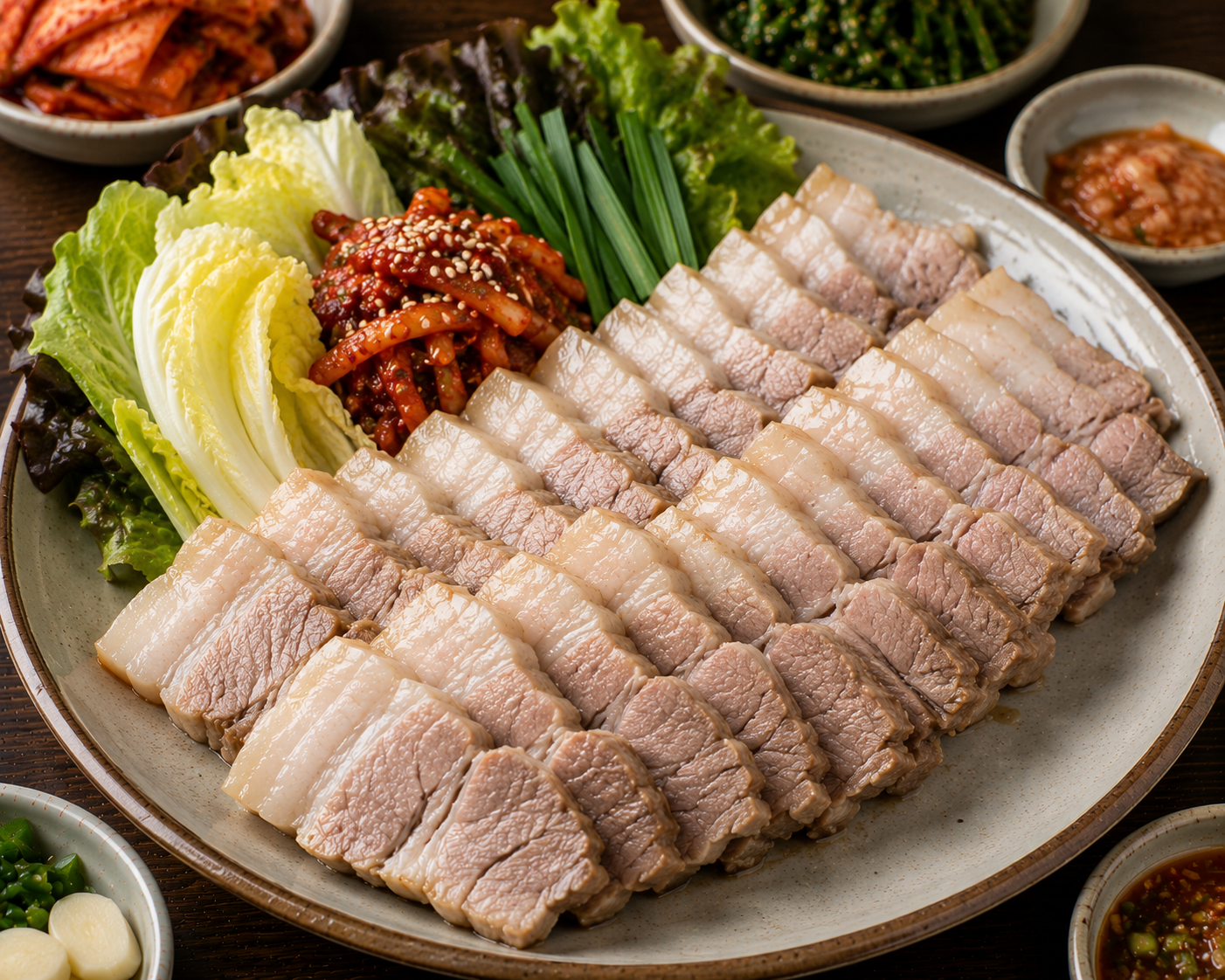
Suyuk
수육 · su-yuk
This dish is made by boiling pork without seasoning, characterized by its tender and mild flavor. It is usually eaten wrapped with kimchi or ssamjang.
Bossam Jeongsik (Bossam Set Meal)
보쌈정식 · bossam-jeongsik
This dish features boiled pork sliced thinly and served with wrapping vegetables, accompanied by a variety of side dishes.
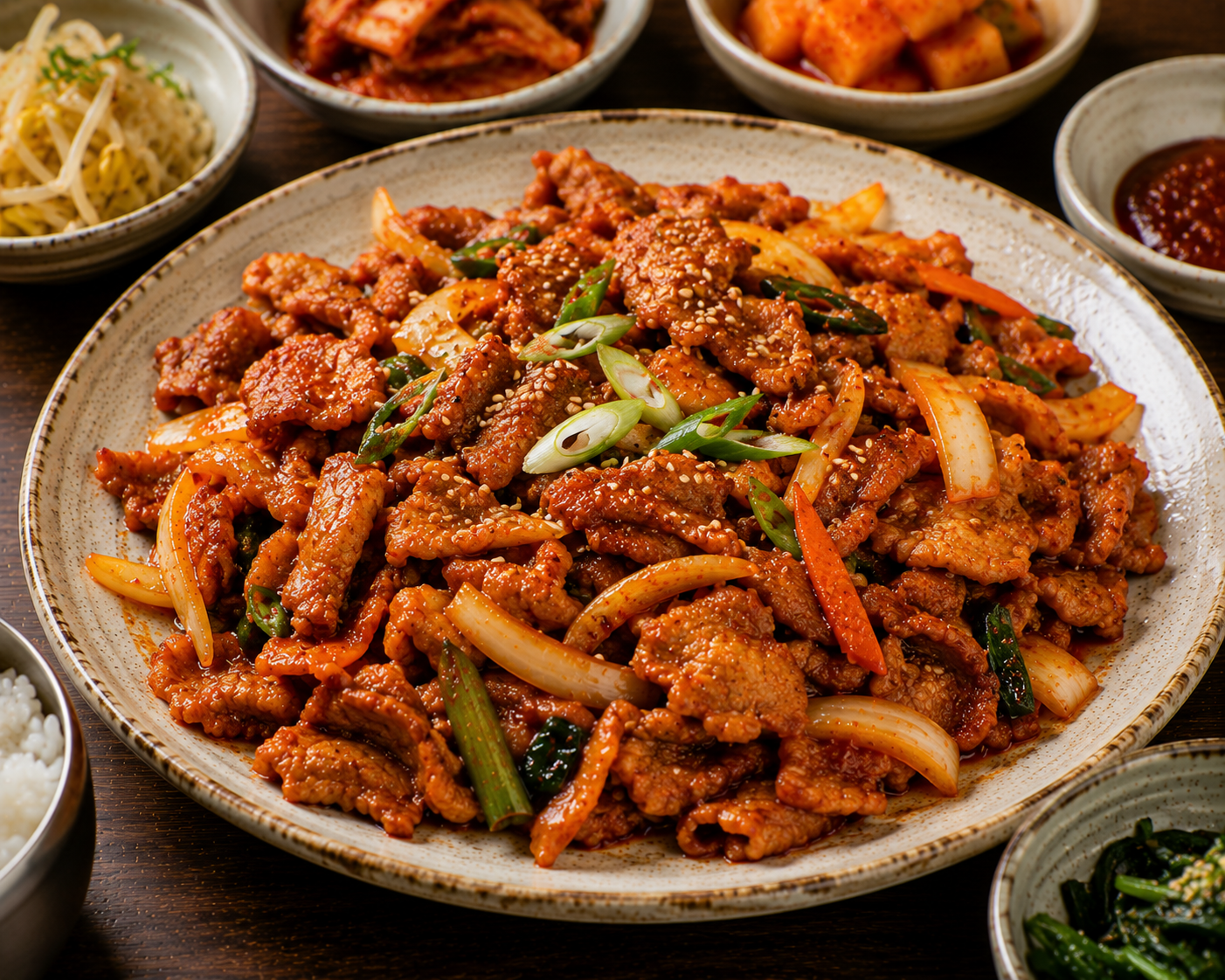
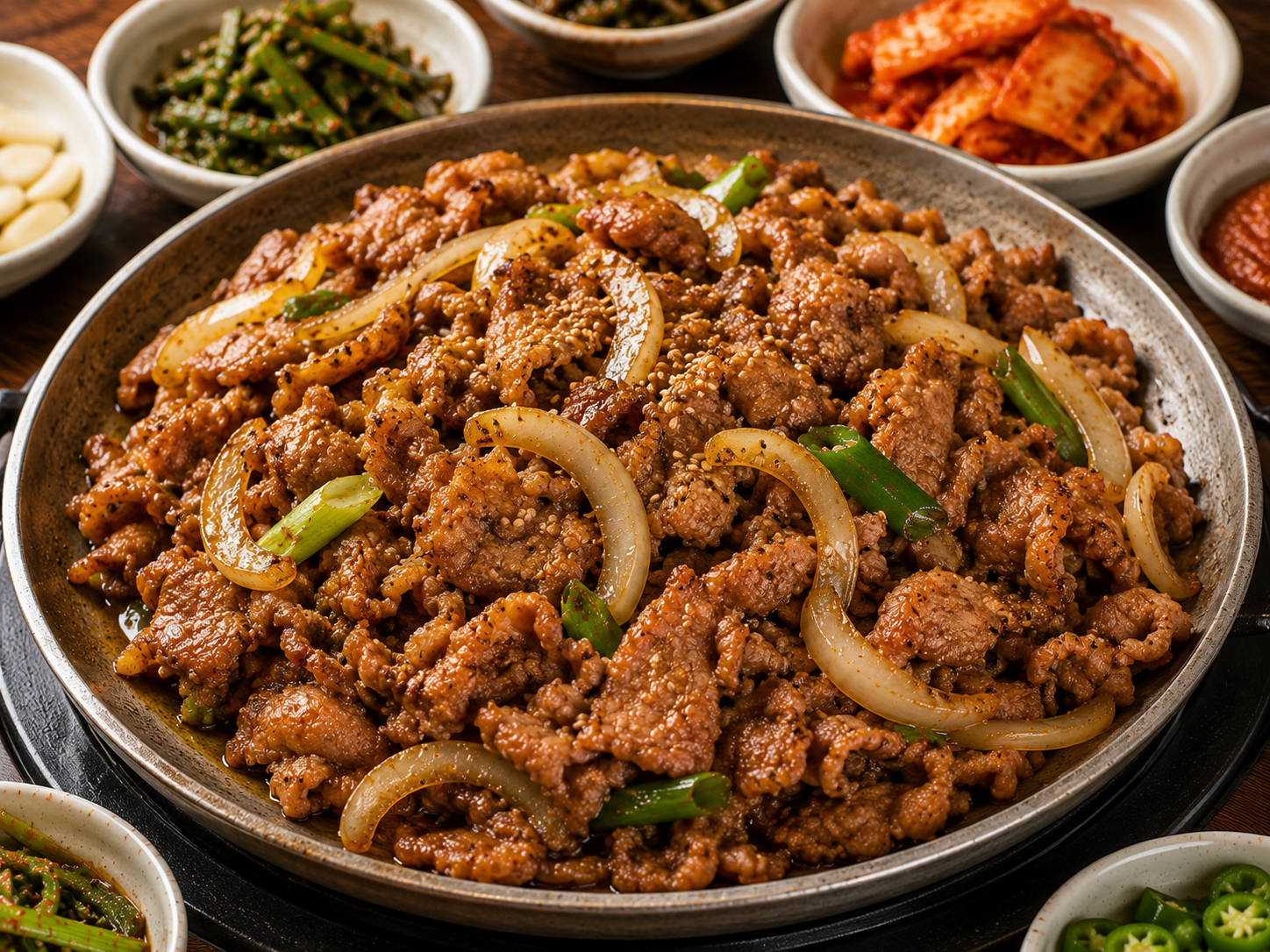
Stir-fried Spicy Pork
제육볶음 · je-yuk-bokkeum
This is a sweet and spicy dish made by marinating pork in gochujang and gochugaru, then stir-frying it over high heat with onions and green onions. The smoky flavor permeates as the seasoning coats the meat, and it is enjoyed either mixed with rice or wrapped in lettuce or perilla leaves.
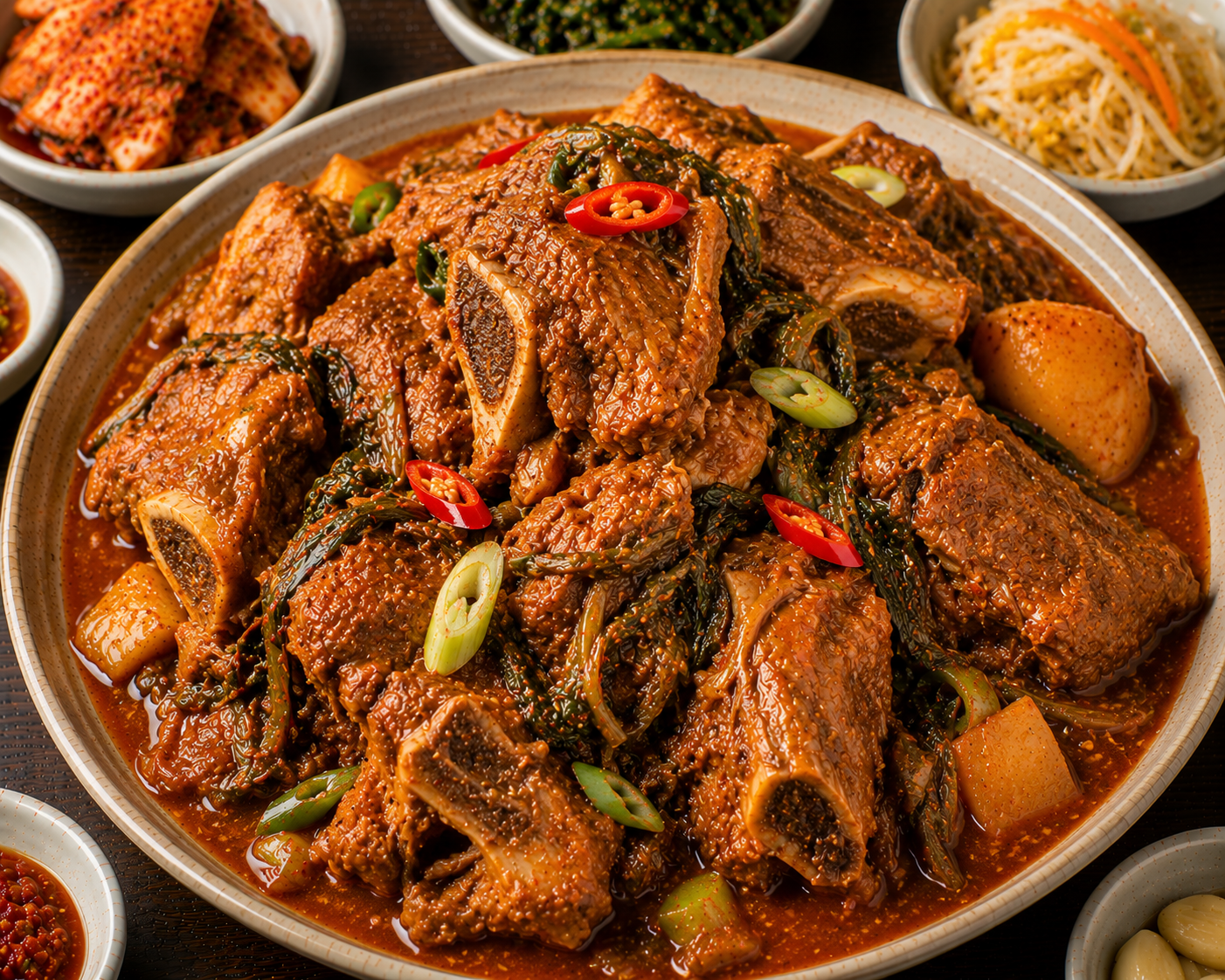
Braised Pork Backbones
뼈다귀찜 · Ppyeo-da-gwi-jjim
A spicy and tender dish made by steaming pork backbones in gochujang seasoning, with rich flavors as the broth reduces and infuses into the meat.
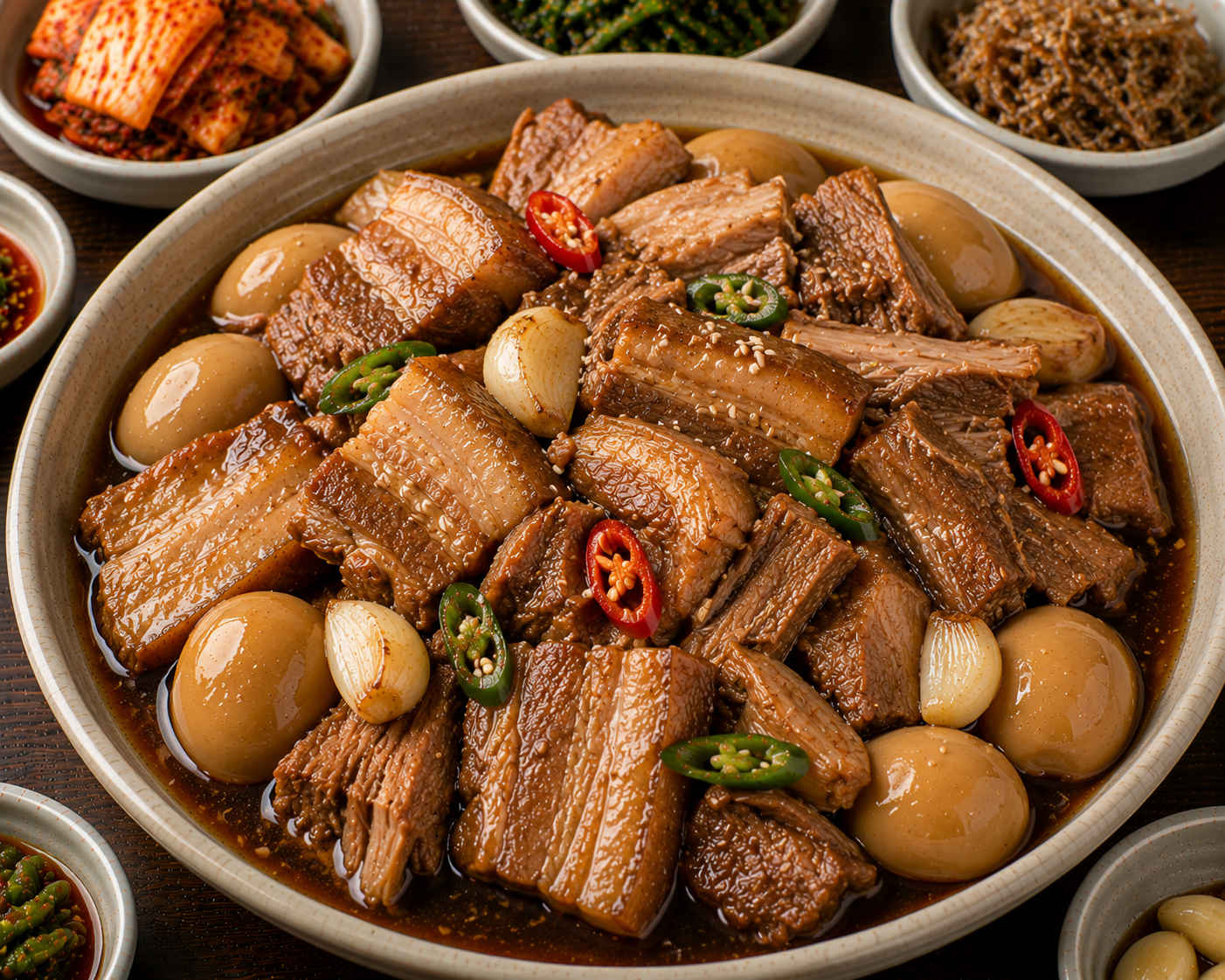
Soy-Braised Pork
돼지고기장조림 · dwaeji-gogi-jang-jo-rim
A side dish made by simmering pork in a savory soy sauce seasoning. It is common to shred it along the grain and serve it with rice.
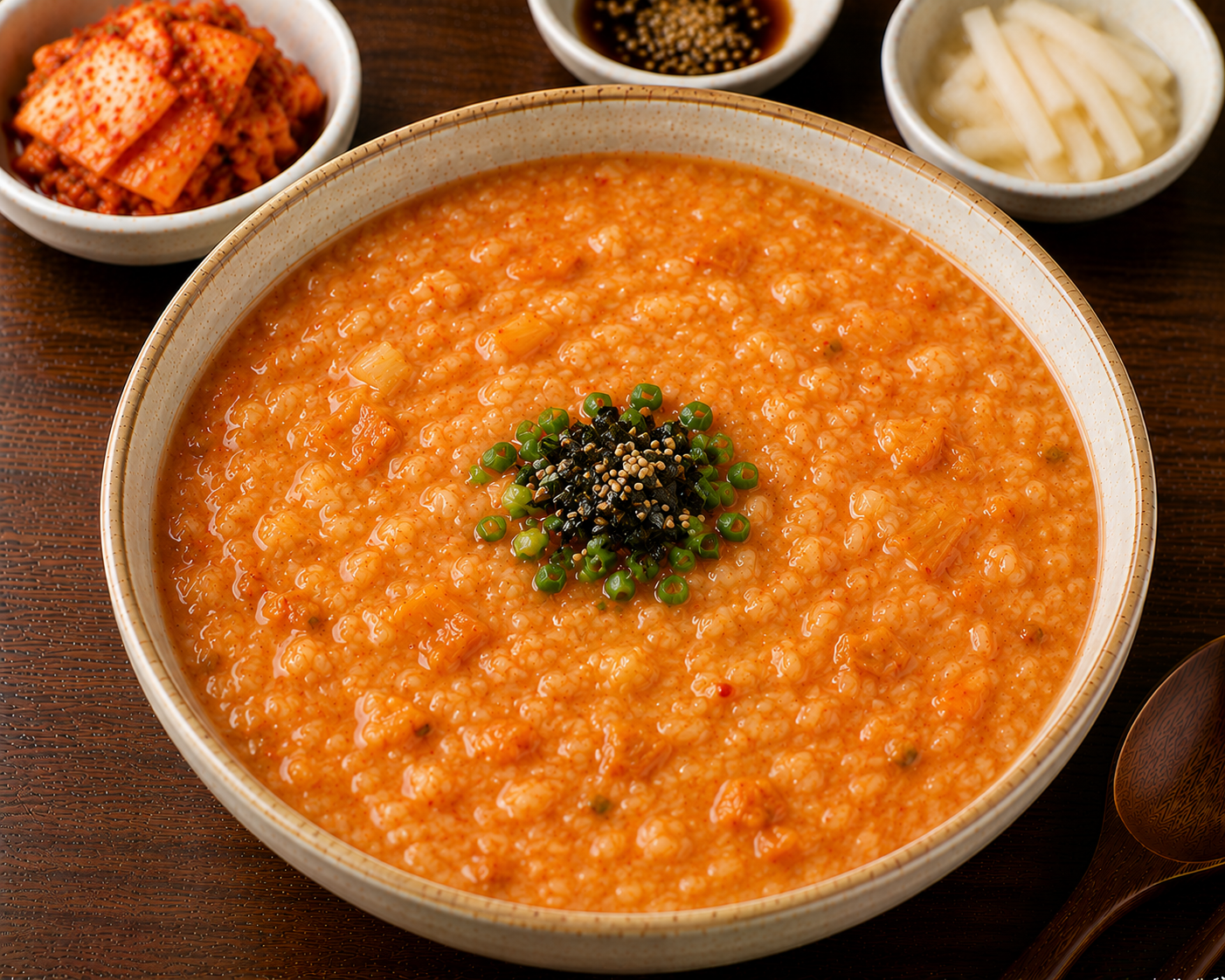
Kimchi Porridge
김치죽 · kimchi-juk
A porridge made by boiling well-fermented kimchi and rice together, characterized by its spicy and savory flavor.
Goes well with
Ingredients
How it's made
- 1Boil the pork in water until cooked.
- 2Slice the boiled pork thinly and prepare.
- 3Prepare the baechu kimchi and wrapping vegetables.
- 4Wrap the pork and kimchi in lettuce or perilla leaves and eat.
Nutrition
* Estimated values per serving.
Allergens
Contains pork, not halal or vegetarian.
How to order
보쌈 주세요
Bo-ssam ju-se-yo
Please give me bossam
Customize your order
Traveler tips
How to eat it
Frequently asked questions
- Are Bossam and Suyuk the same dish?
- Not exactly. Suyuk refers to the boiled meat itself, while Bossam is used for the whole setup and eating style of wrapping that meat in kimchi or vegetables.
- Why is Salted Fermented Shrimp served with it?
- Salted Fermented Shrimp has a strong salty, savory flavor that cuts through the greasiness of boiled pork. Even a tiny amount adds a lot of seasoning, so beginners should start with just a bean-sized dab.
- If I order Gul Bossam, are the oysters cooked?
- In most cases, they are served raw. Anyone sensitive to raw seafood or who is pregnant should check before ordering to be safe.
Last reviewed: 2026-10-07