
Napa Cabbage Kimchi
Kimchi made by fermenting salted napa cabbage with ingredients such as chili powder, garlic, and seafood sauce. As fermentation progresses, it becomes more sour and umami-rich, changing from a crunchy texture to a softer one. It can be eaten as a side dish or used as an ingredient in stews and stir-fries.
Cultural background
A basic side dish on the dining table, served with every meal. Kimjang takes place in late autumn to early winter, and it holds great significance in the culture of community sharing.
Origin & history
The red Napa Cabbage Kimchi familiar today took shape when the practice of preserving cabbage in salt was combined with seasonings made from chili powder and salted fermented seafood. Many accounts describe kimchi before chili peppers came into wide use as closer to a pale pickle or one with a clear broth.
The method of keeping the cabbage whole, or splitting it into large sections and layering seasoning between the leaves, suited the culture of gimjang, the large-scale kimchi-making season. Families could make a big batch at once for the winter, and as it aged, the kimchi developed a sourness that made it good for stews and stir-fries.
Regional & modern variations
- Pogi Kimchi — Large lengthwise sections of cabbage are seasoned by tucking the spice mixture between the leaves. Before serving, people often cut it into bite-size pieces at the table.
- Mak Kimchi — The cabbage is cut into bite-size pieces first, then mixed with the seasoning. Compared with Pogi Kimchi, it is easier to make and easier to take out and eat.
- Geotjeori — A fresh style of seasoned cabbage eaten right away. The fermented aroma is mild, the texture is crisp, and it often comes with Kalguksu or Bossam.
- Mukeunji — Napa Cabbage Kimchi aged for a long time until its sourness and deep aroma become pronounced. Rather than eating it as is, people commonly use it in Kimchi Jjigae, kimchi jjim, and Fried Rice.
How Koreans eat it
On the day of gimjang, people often eat freshly made Napa Cabbage Kimchi with Suyuk, boiled pork. At this stage the kimchi has not fermented much yet, so its saltiness, heat, and fermented-seafood aroma are distinct. Just as homemade Napa Cabbage Kimchi varies from household to household, the level of ripeness in restaurant versions can differ widely from place to place.
Taste & how to choose
On the first bite, the crispness of the white stem tends to stand out more than the leaves. Freshly made kimchi has a vivid seasoning aroma, while ripened kimchi has stronger acidity and umami. If it is too soft and limp or has a pronounced bitterness, it may not have been stored well.
Similar dishes
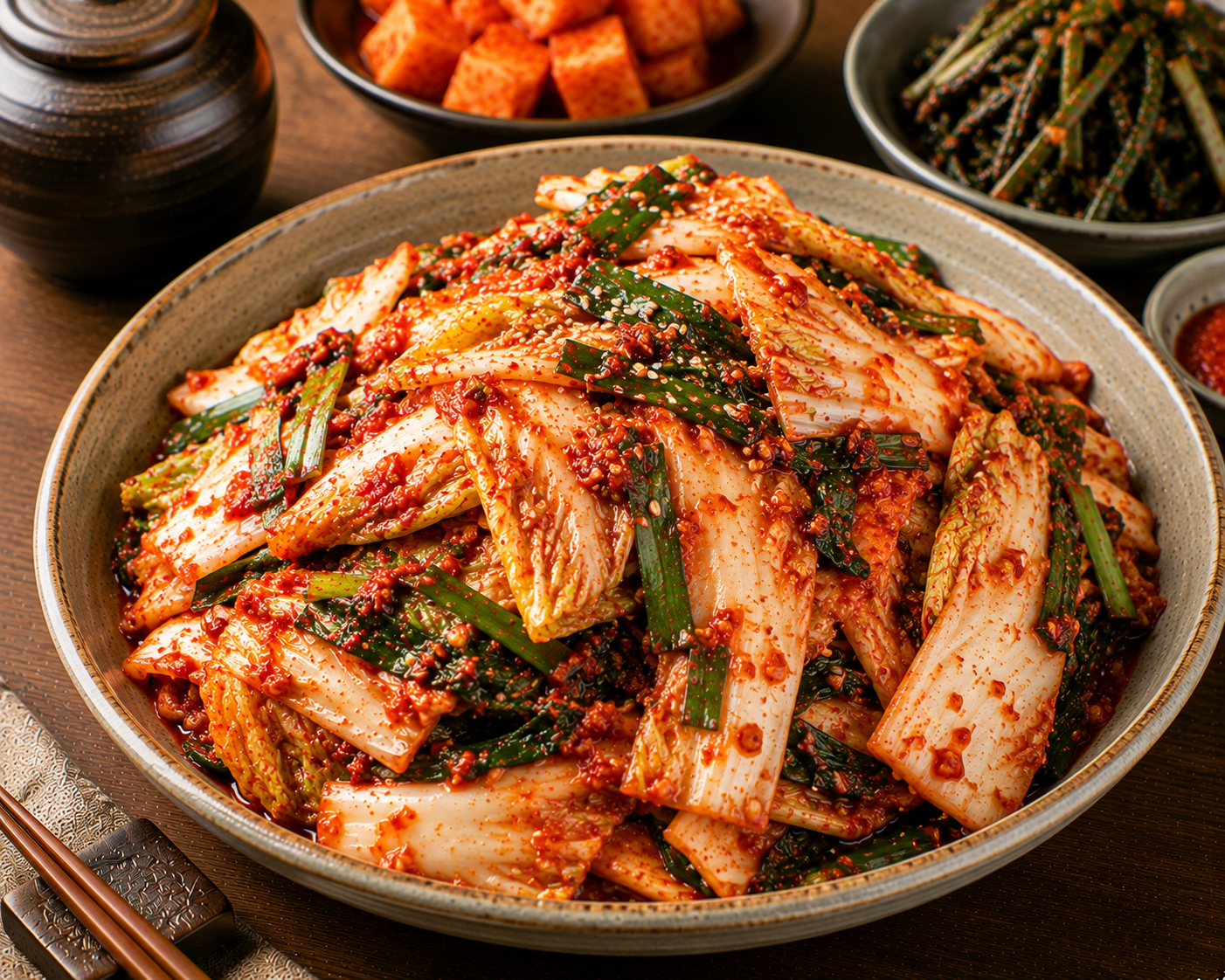
Geotjeori
겉절이 · Geot-jeo-ri
A type of kimchi made with napa cabbage tossed with gochugaru, garlic, and salted seafood, characterized by its crunchy and fresh taste as it is not fermented.
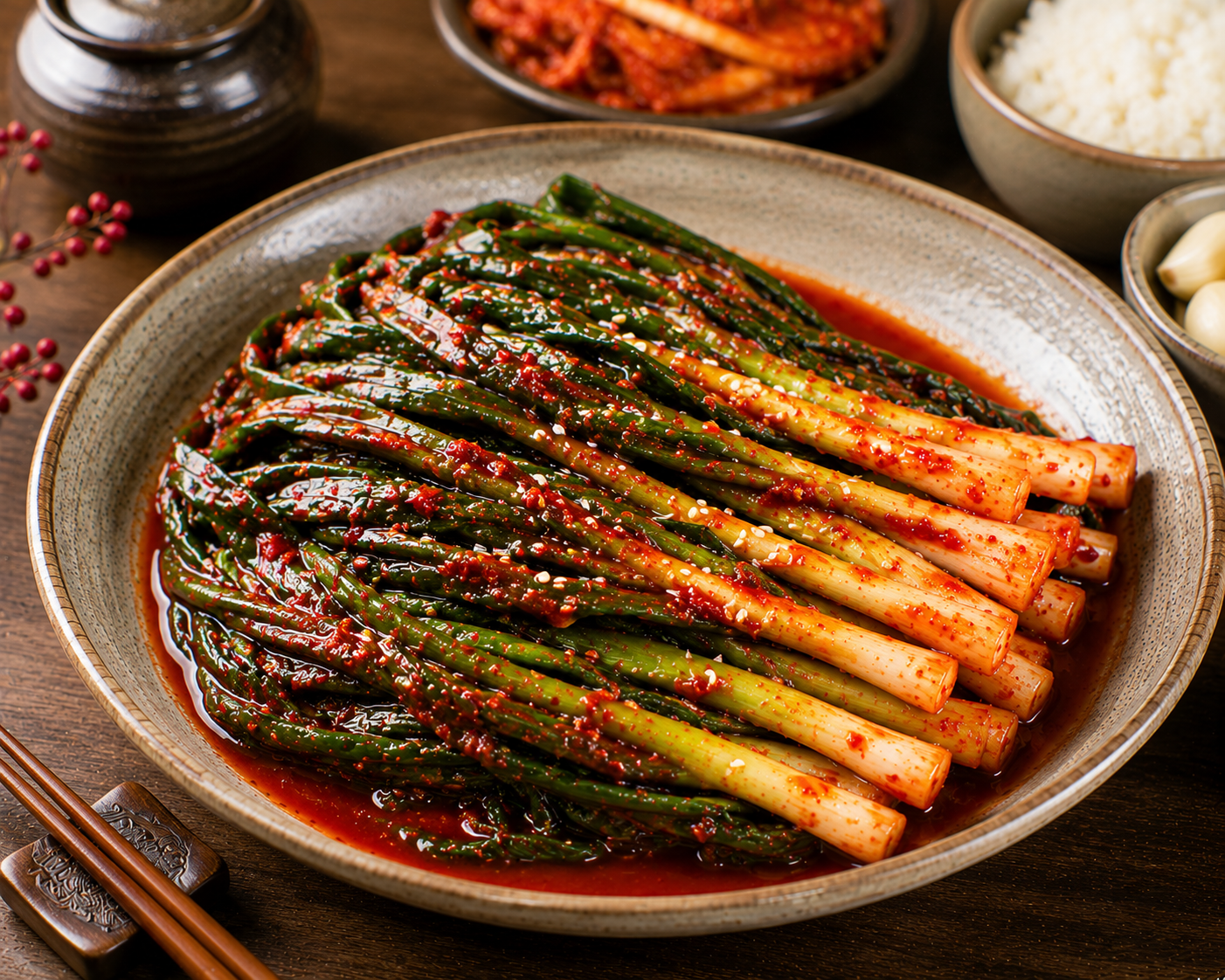
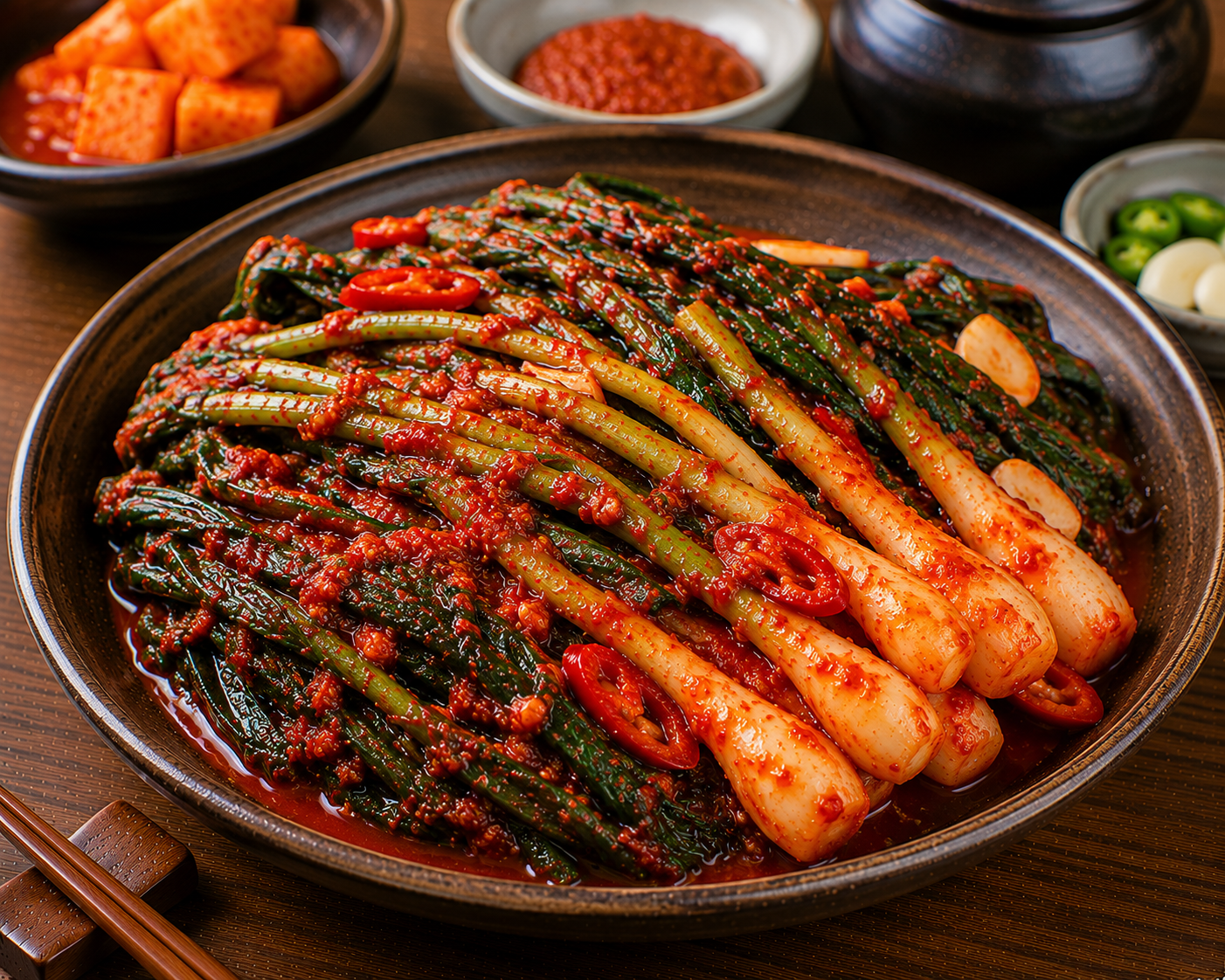
Scallion Kimchi
파김치 · pa-gimchi
Scallion kimchi is made by seasoning scallions with red pepper powder and salted seafood, then fermenting them, characterized by a crunchy texture and spicy flavor. As fermentation progresses, it develops a sour taste and umami. It is typically served as a side dish with meat dishes.
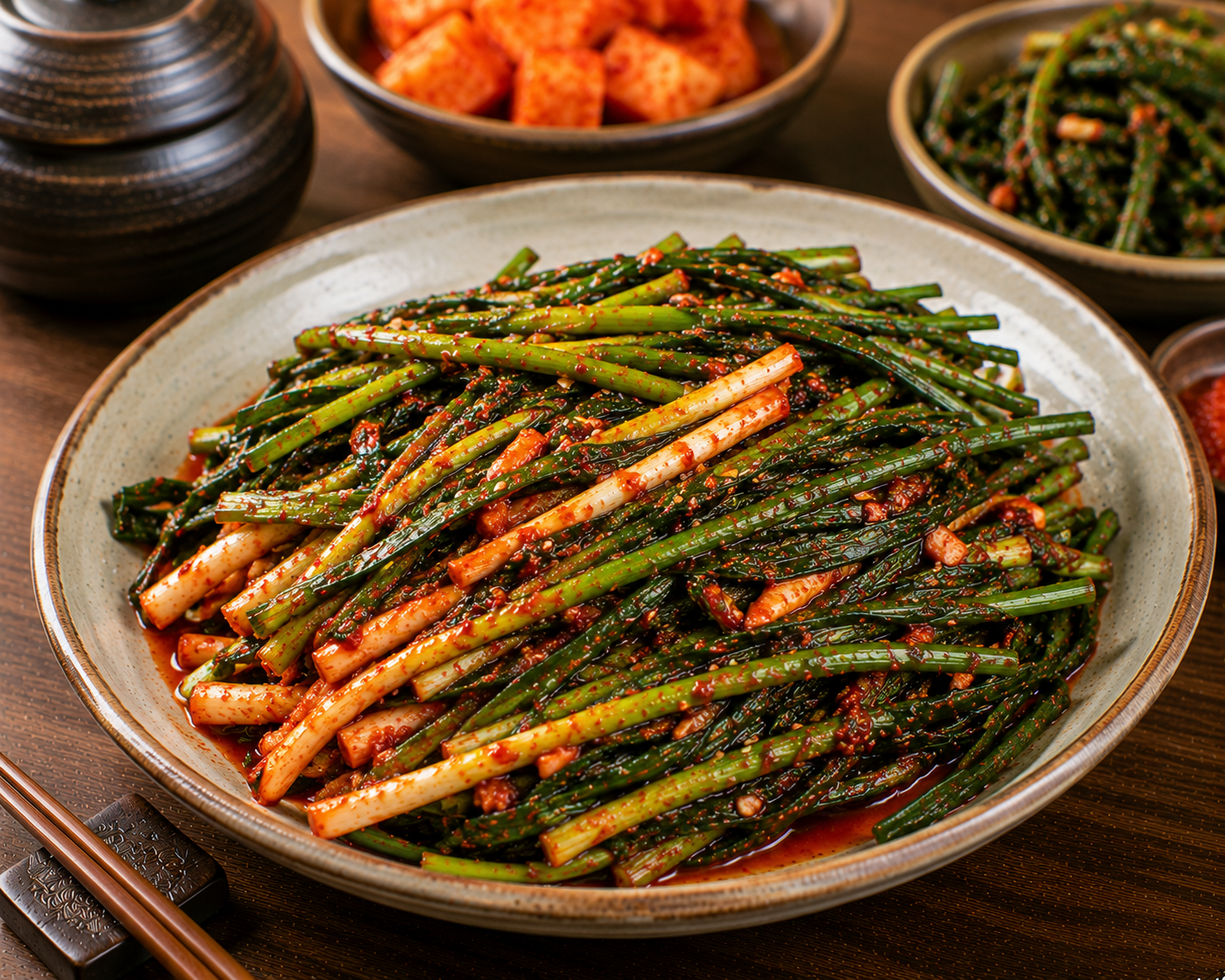
Chive Kimchi
부추김치 · buchu-kimchi
Kimchi made by mixing chives with red pepper powder, garlic, and fermented seafood, then fermenting. It is crunchy, spicy, and rich in umami.
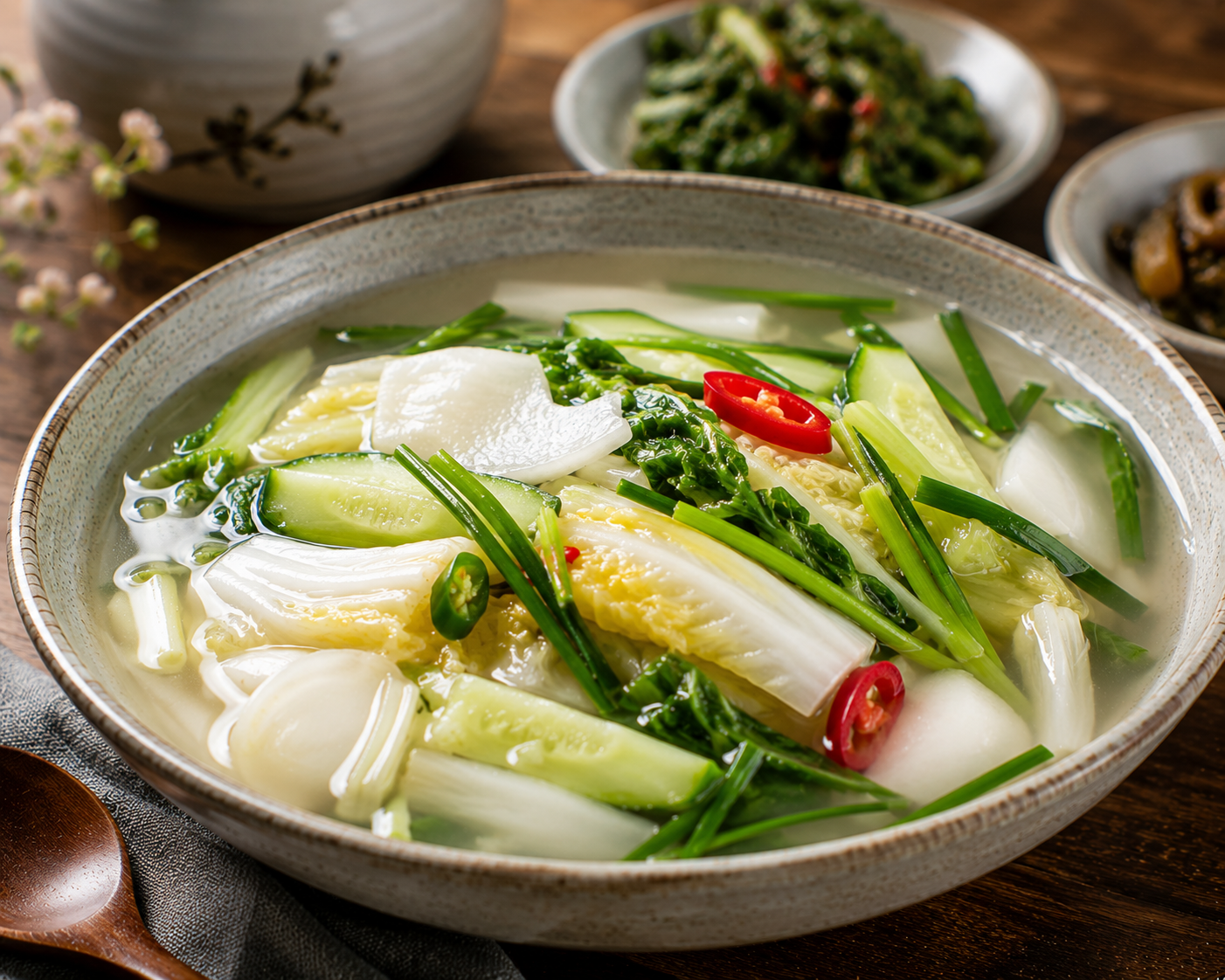
Mul Kimchi
물김치 · mul-gimchi
This kimchi is made by soaking radish and napa cabbage in salted water, characterized by its abundant broth, coolness, and sour taste. As fermentation progresses, the broth becomes more sour and tangy. It is mainly eaten as a side dish and is kept cool in the refrigerator during summer.
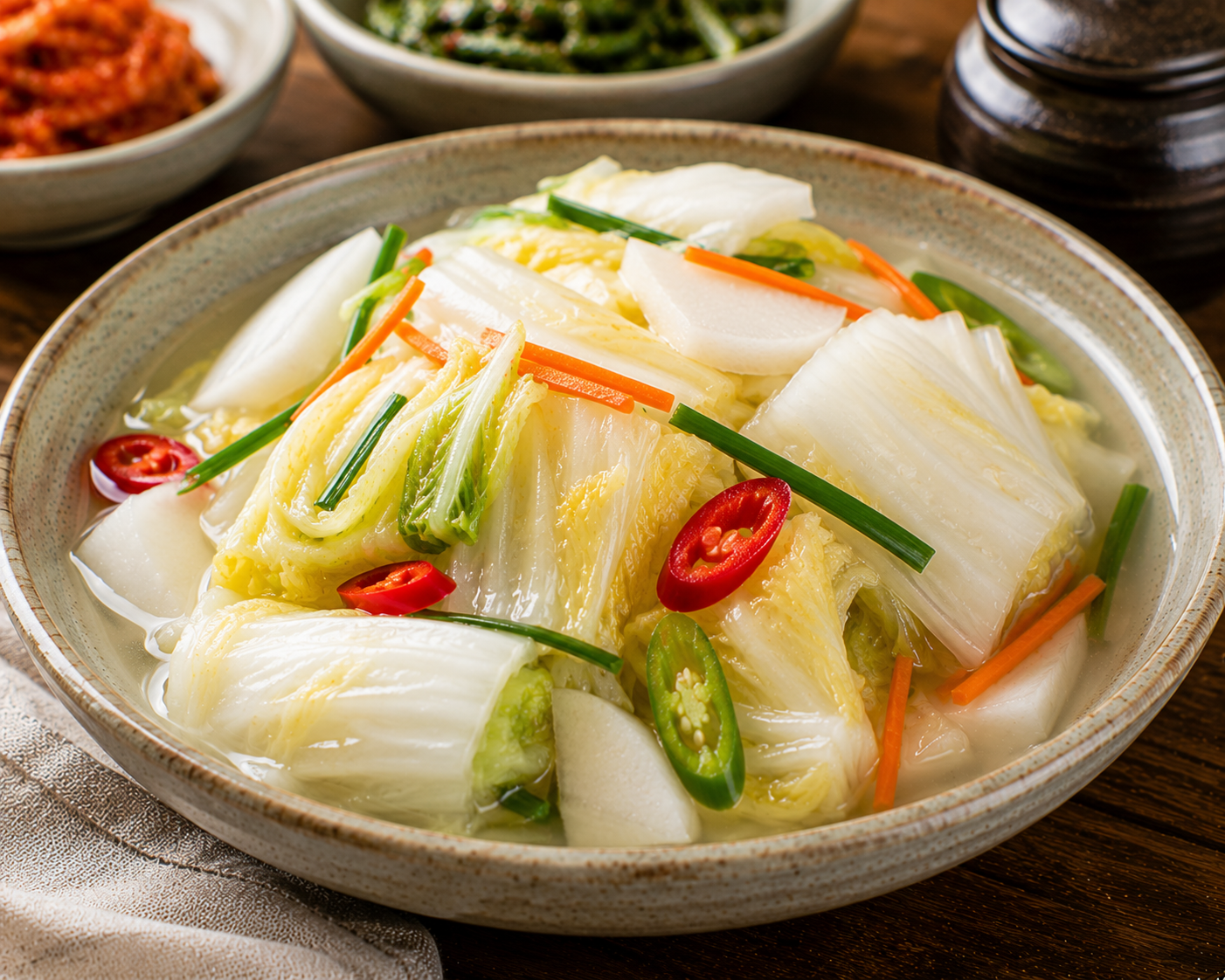
Baekkimchi
백김치 · baek-kimchi
Baekkimchi is a type of kimchi made by salting napa cabbage and seasoning it without red pepper powder, characterized by a mild and refreshing taste. As fermentation progresses, it becomes more sour and is primarily eaten as a side dish.
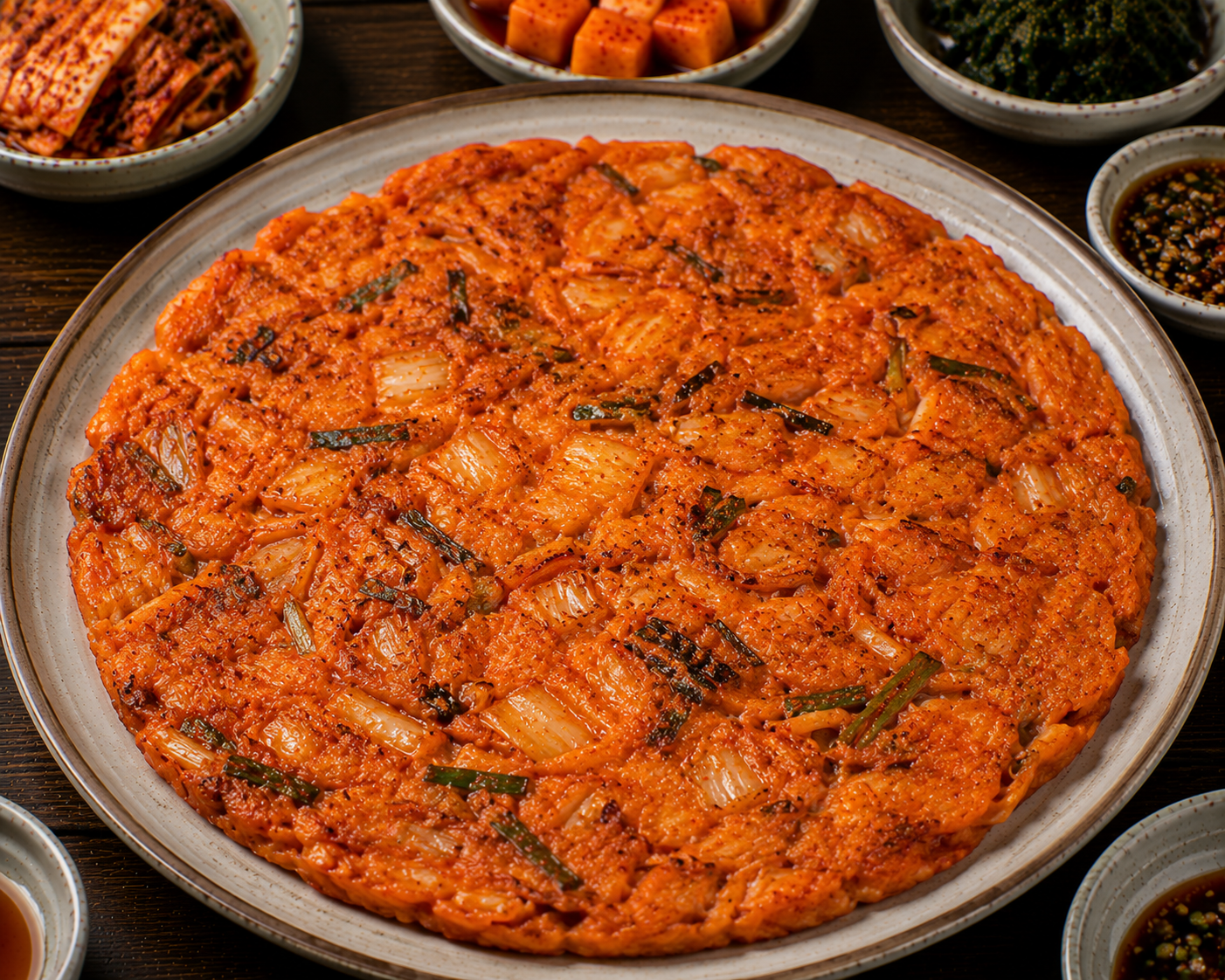
Kimchi Jeon
김치전 · kimchi-jeon
A savory pancake made by mixing well-fermented kimchi with flour batter and pan-frying it wide. The sourness and nuttiness of the kimchi blend together to create a crispy and moist texture. It is enjoyed by dipping in a simple vinegared soy sauce and is perfect as a light snack or paired with makgeolli (rice wine).
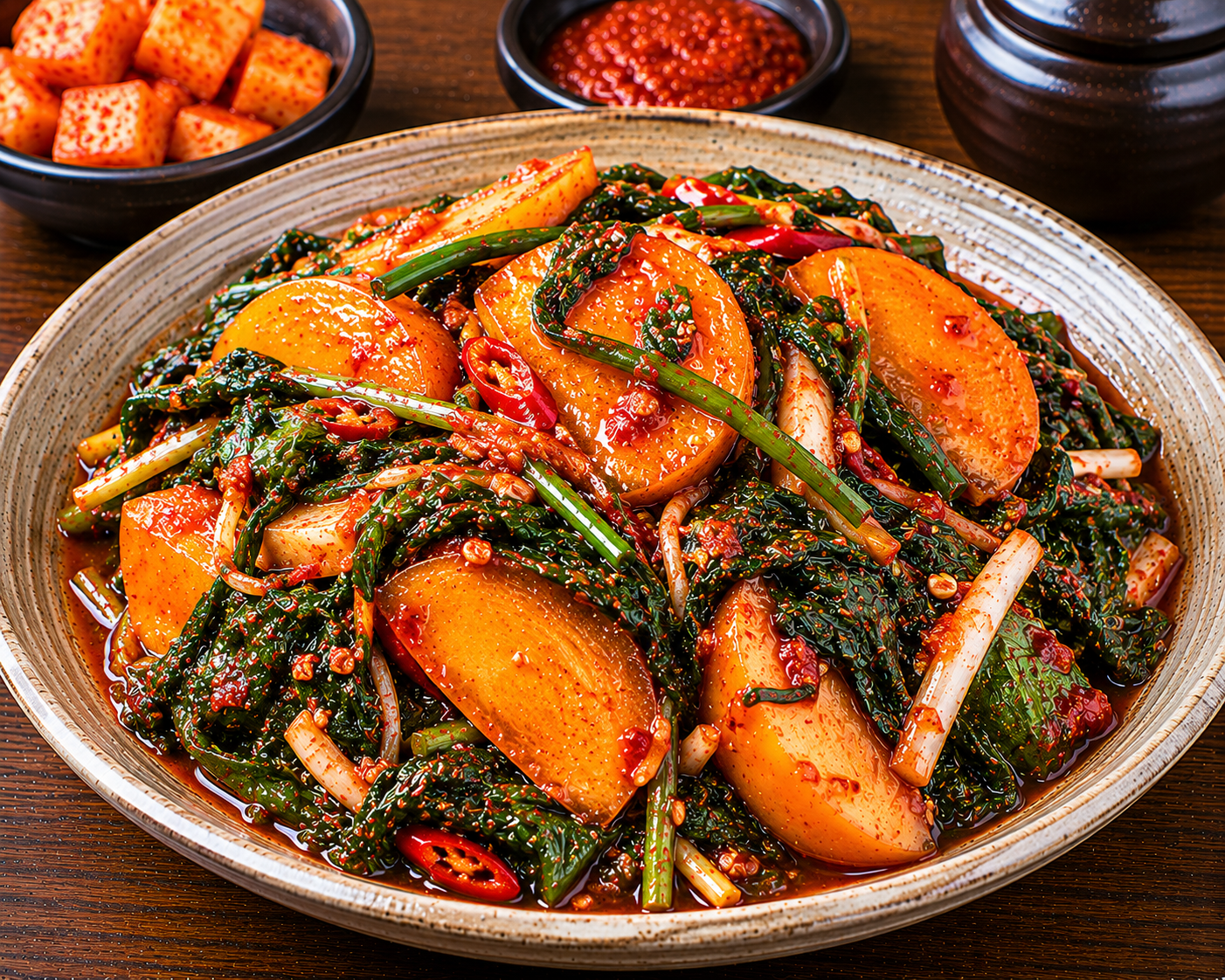
Goes well with
Ingredients
How it's made
- 1Cut the napa cabbage in half and soak it in salted water to remove moisture.
- 2Mix chili powder, garlic, shrimp sauce, and fish sauce to make the seasoning paste.
- 3Evenly coat the salted napa cabbage with the seasoning paste.
- 4Pack the kimchi into a container, layer by layer, for fermentation.
Nutrition
* Estimated values per serving.
Allergens
Contains seafood sauce, so caution is needed for vegans and those with certain allergies.
How to order
배추김치 주세요
Bae-chu-gim-chi ju-se-yo
Please give me napa cabbage kimchi
Traveler tips
How to eat it
Frequently asked questions
- Can I cut Napa Cabbage Kimchi with scissors before eating it?
- Yes. Pogi Kimchi may be served as large leaves, and cutting it with scissors at the table is common.
- Why are some versions of Napa Cabbage Kimchi very sour?
- Because it has fermented considerably. In Korea, people do not throw away sour kimchi like this; they often use it in stews, kimchi jjim, and stir-fried dishes.
- Which tastes better, the white stem or the green leaves?
- It depends on personal taste. The white stem is refreshing and crunchy, while the leaves absorb the seasoning well and have a richer flavor.
Last reviewed: 2026-10-07