Kimchi Jeon
A savory pancake made by mixing well-fermented kimchi with flour batter and pan-frying it wide. The sourness and nuttiness of the kimchi blend together to create a crispy and moist texture. It is enjoyed by dipping in a simple vinegared soy sauce and is perfect as a light snack or paired with makgeolli (rice wine).
Cultural background
Kimchi Jeon is famous for being enjoyed with Makgeolli on rainy days, and it is a simple snack that can be easily made at home.
Origin & history
Kimchi Jeon is known less as a ceremonial food than as a home-style pancake that developed as a way to enjoy sour, strongly flavored kimchi in another form. Adding even the kimchi brine to the batter gives it a red color and salty flavor without much extra seasoning.
After wheat flour became easier to use at home, the dish became even more widely established as a quick way to use up leftover kimchi. So even though it appears on restaurant menus, it still strongly carries the image of something you can fry up right away with kimchi from the fridge.
Regional & modern variations
- Tuna Kimchi Jeon — Canned tuna is added for a richer, oilier, and more savory pancake. The sourness of the kimchi pairs well with the saltiness of the tuna, making this a variation often prepared at home.
- Squid Kimchi Jeon — Kimchi Jeon with finely chopped squid mixed in. It adds a chewier texture and gives the dish more of a drinking-snack feel.
- Cheese Kimchi Jeon — Cheese is placed on top of the batter or tucked inside so it melts as the pancake cooks. The spicy, sour edge of the kimchi becomes milder, making this a relatively familiar variation for foreign travelers as well.
How Koreans eat it
Kimchi Jeon is often made when kimchi has become too sour to eat comfortably as a regular side dish. A large pancake is cooked, set on a plate, then torn apart with chopsticks or cut with scissors for sharing. Since kimchi is already salty, when eating it as a side dish with rice, a light dip in vinegared soy sauce is usually best.
Taste & how to choose
Good Kimchi Jeon has thin, crisp edges, while the center stays slightly moist because of the kimchi. The acidity of sour kimchi is essential, so using freshly made kimchi can make the flavor seem flat. If the batter is too thick, the flour flavor becomes stronger and the crispness drops off.
Similar dishes
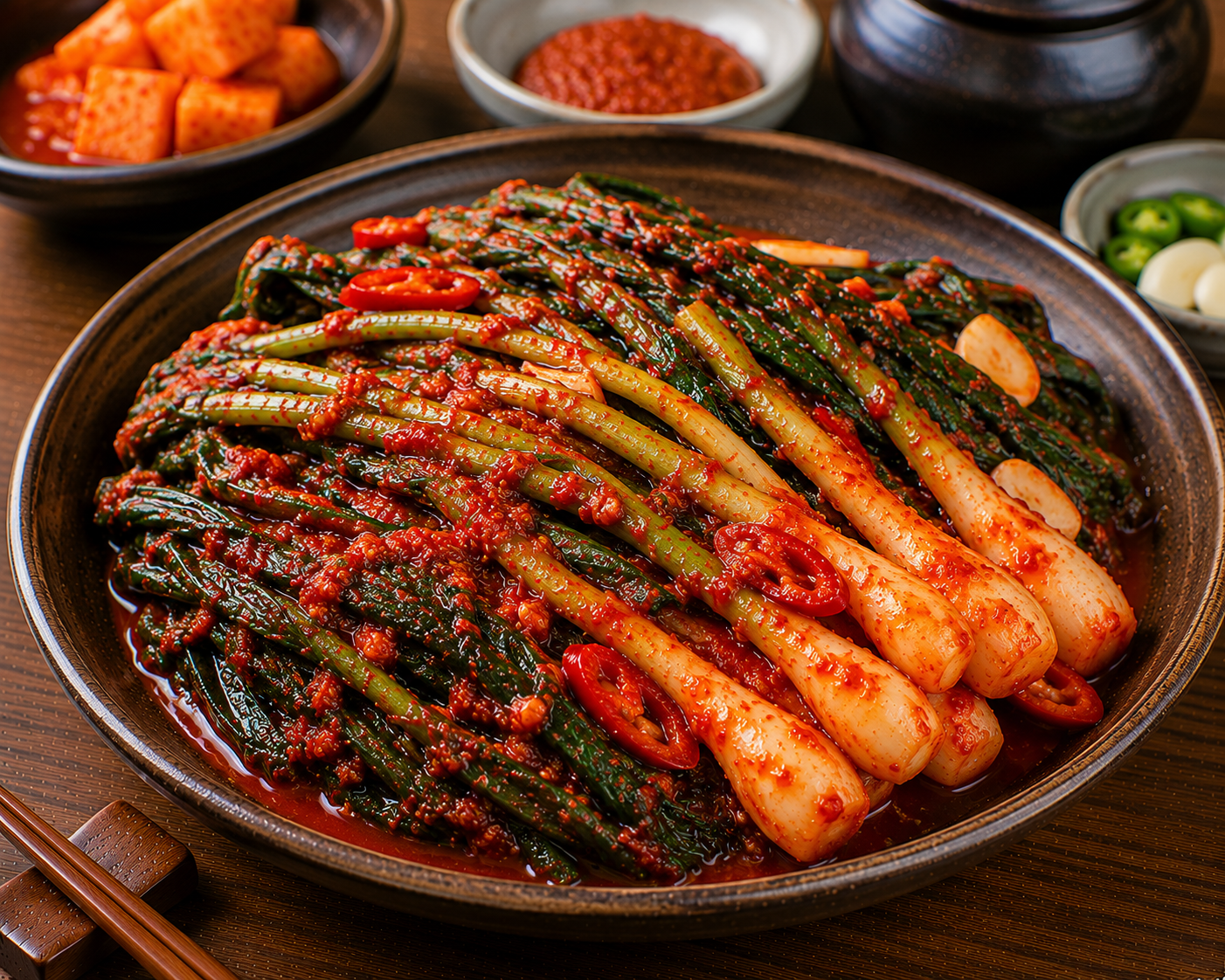
Jang Kimchi
장김치 · jang-gimchi
Kimchi made by salting napa cabbage or radish with soy sauce, characterized by a less spicy and salty flavor compared to regular kimchi. As fermentation progresses, umami is enhanced.
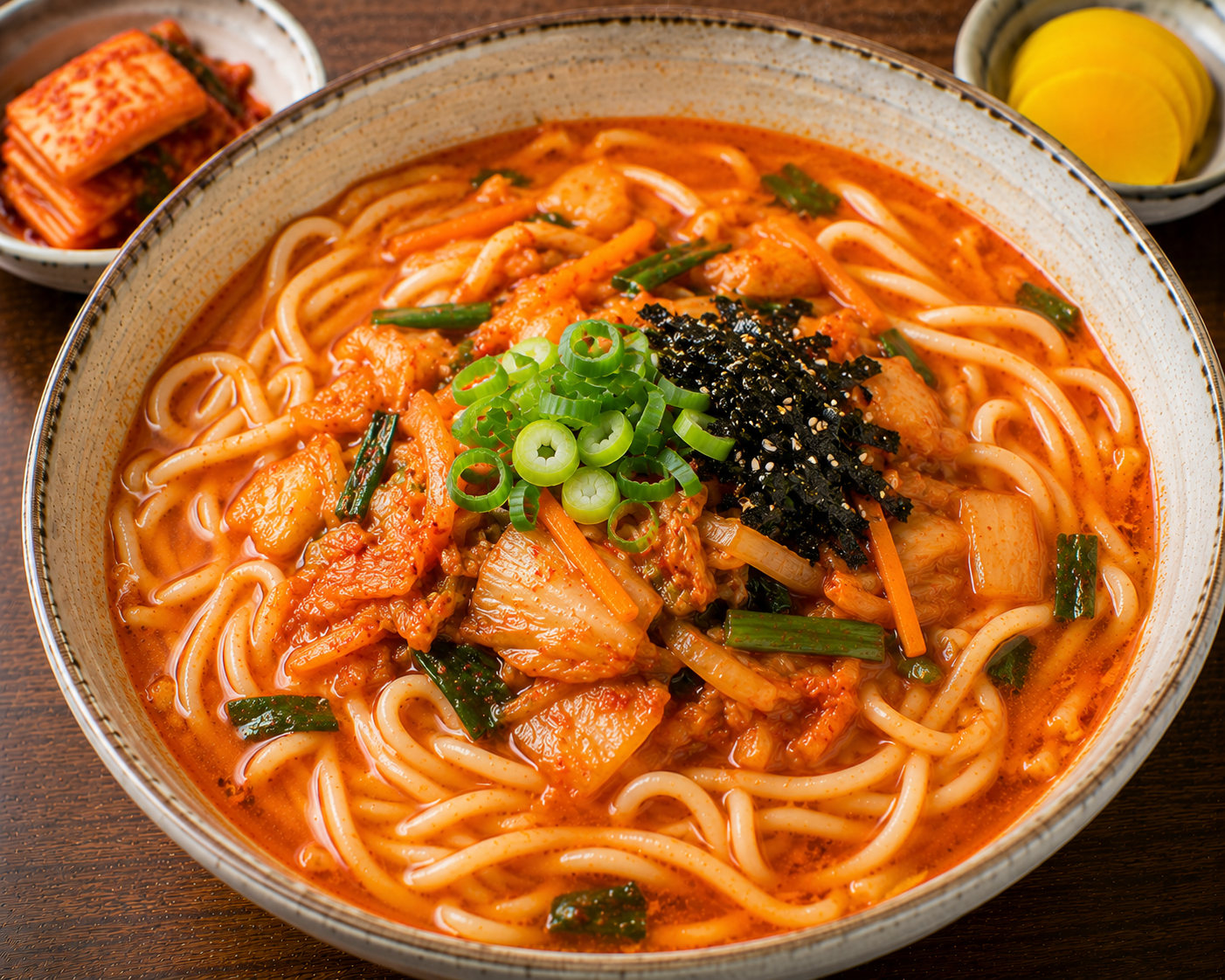
Kimchi Kalguksu
김치칼국수 · kimchi-kal-guksu
A warm noodle dish made with knife-cut flour noodles boiled in anchovy broth with well-fermented kimchi. The spicy and refreshing taste of kimchi blends into the broth and combines with the noodles.
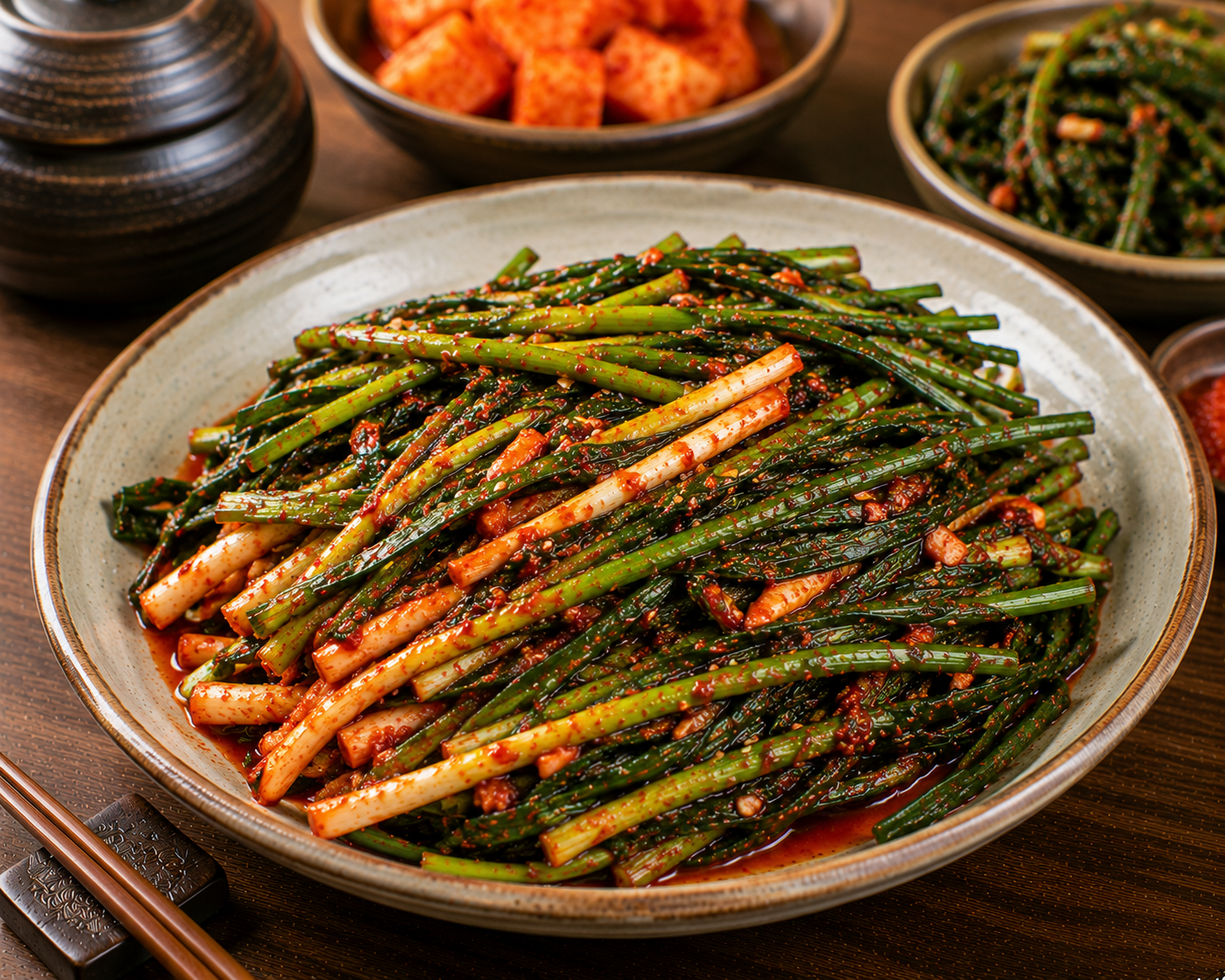
Chive Kimchi
부추김치 · buchu-kimchi
Kimchi made by mixing chives with red pepper powder, garlic, and fermented seafood, then fermenting. It is crunchy, spicy, and rich in umami.
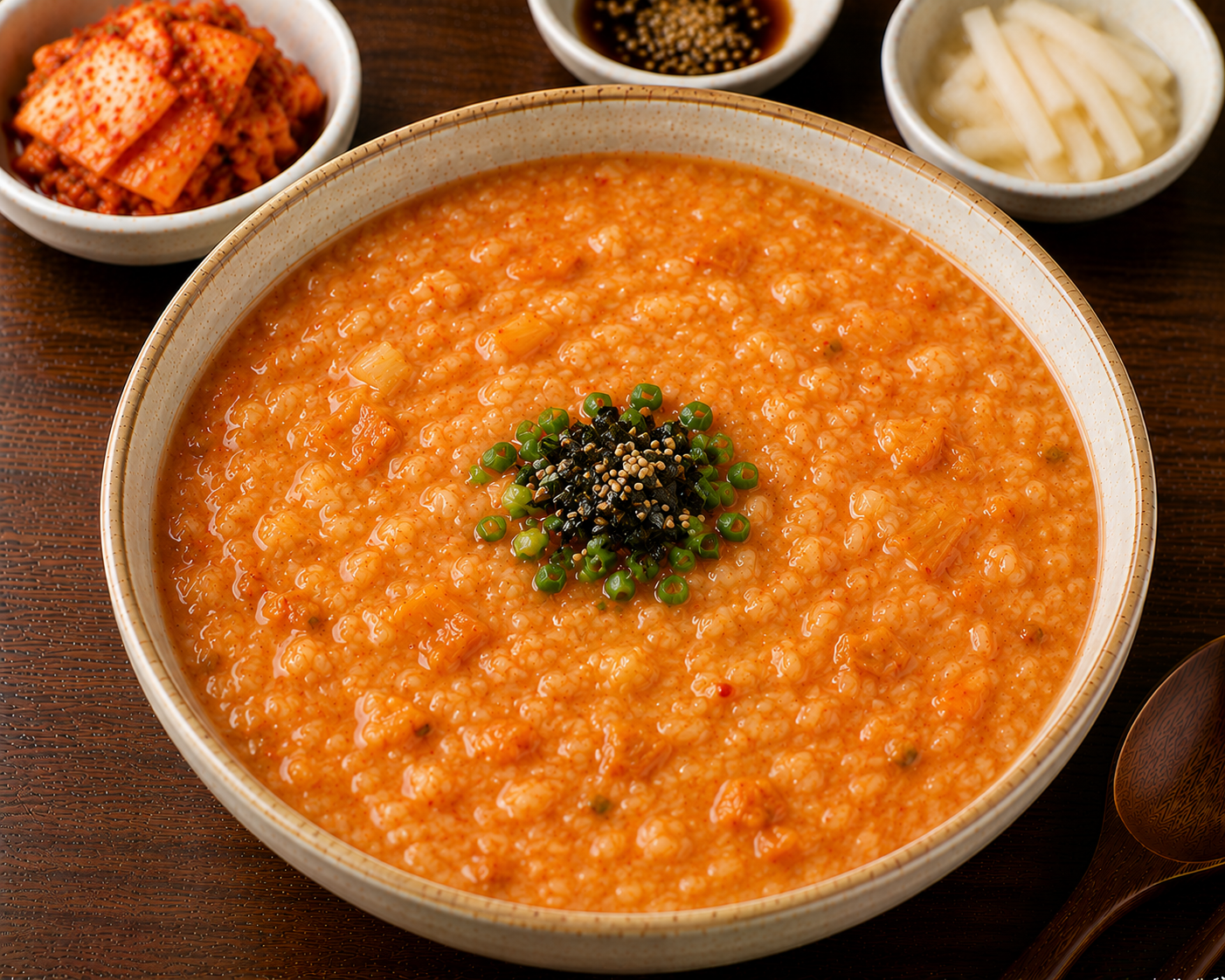
Kimchi Porridge
김치죽 · kimchi-juk
A porridge made by boiling well-fermented kimchi and rice together, characterized by its spicy and savory flavor.
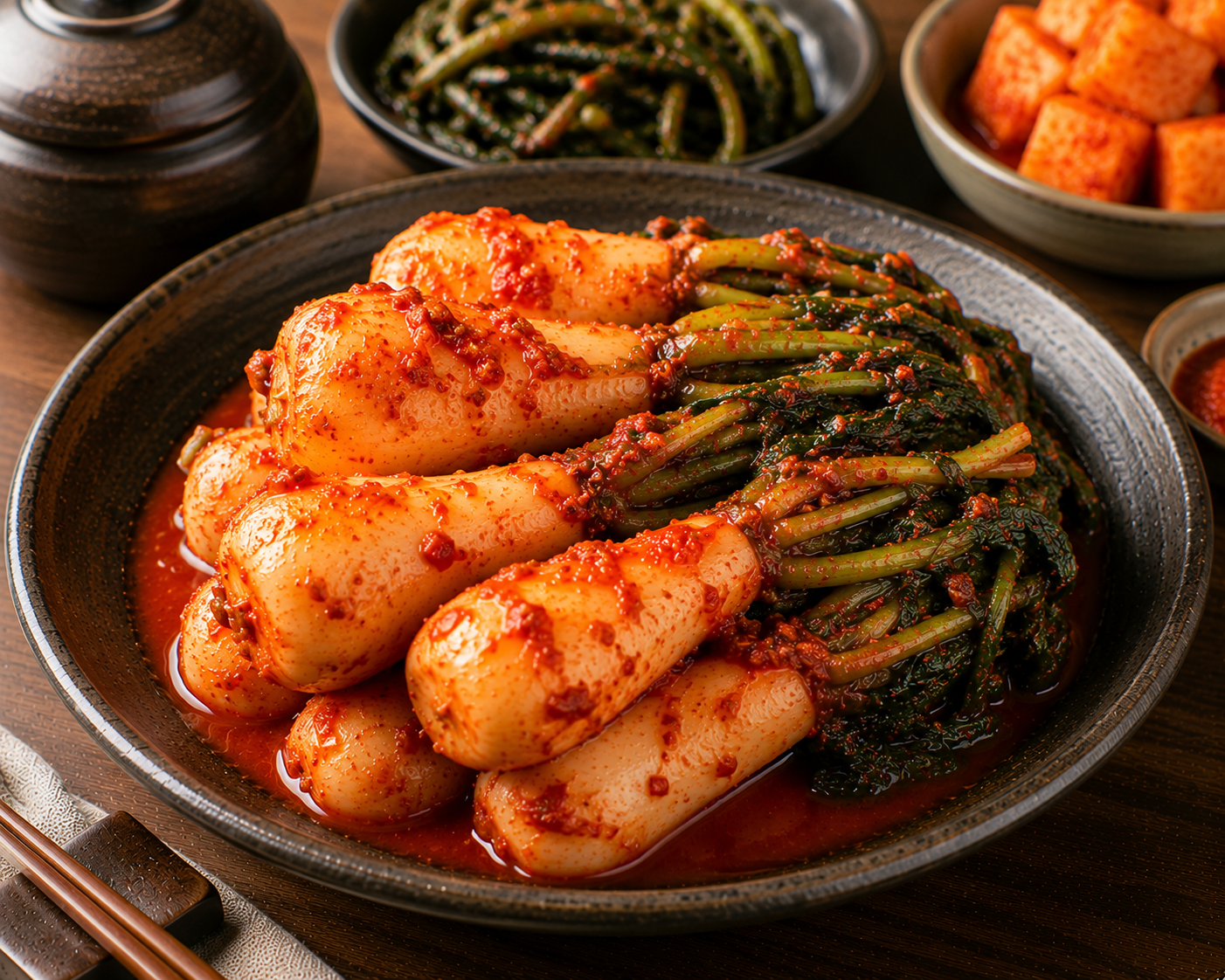
Chonggak Kimchi
총각김치 · chonggak-kimchi
Kimchi made by fermenting whole radishes with chili pepper powder, garlic, and salted seafood. It is characterized by a crunchy texture and spicy flavor, and as fermentation progresses, it becomes more sour and savory.
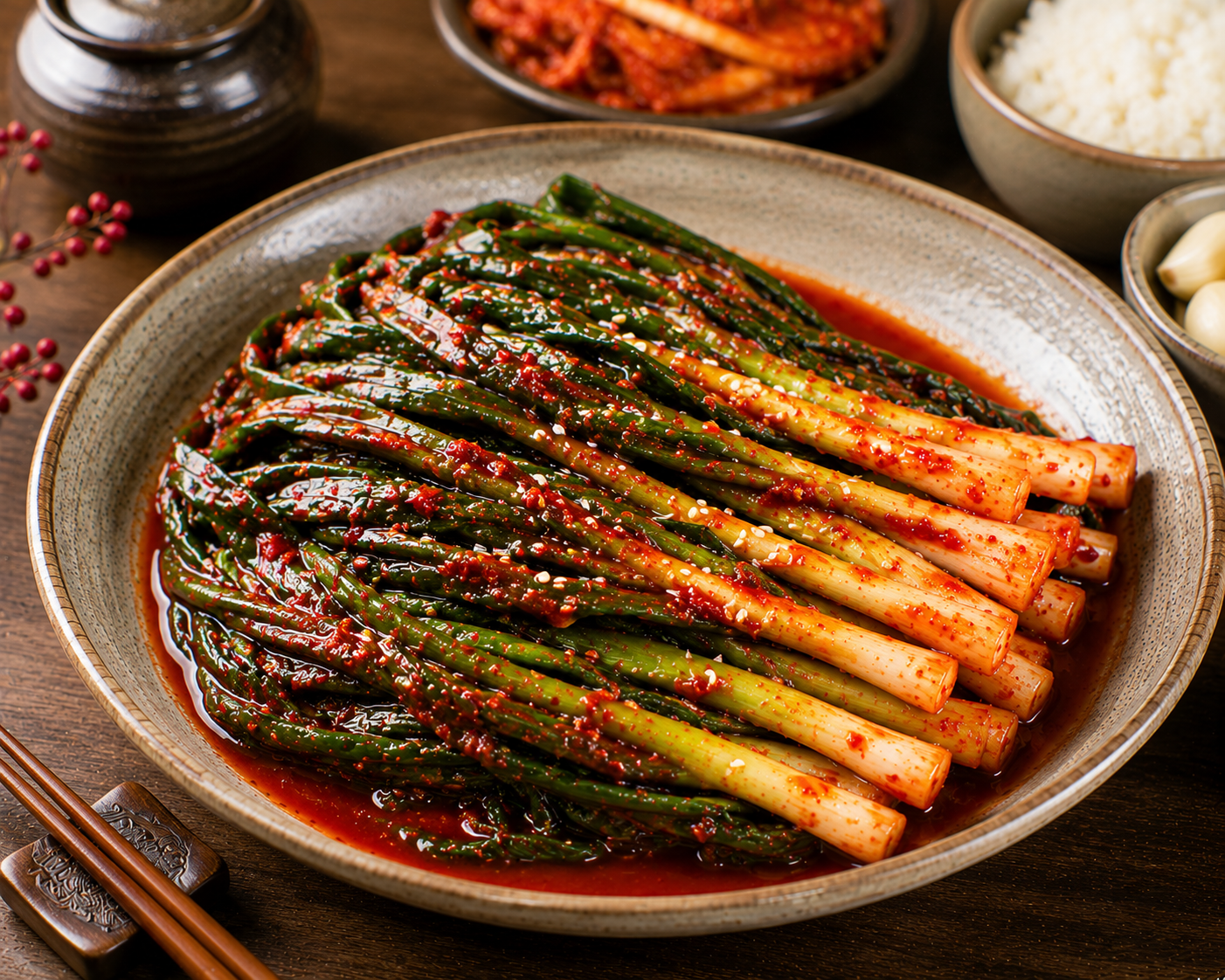
Scallion Kimchi
파김치 · pa-gimchi
Scallion kimchi is made by seasoning scallions with red pepper powder and salted seafood, then fermenting them, characterized by a crunchy texture and spicy flavor. As fermentation progresses, it develops a sour taste and umami. It is typically served as a side dish with meat dishes.
Ingredients
How it's made
- 1Chop the kimchi finely and prepare it.
- 2Mix flour and water to make the batter.
- 3Add the kimchi to the batter and mix well.
- 4Heat cooking oil in a pan and spread the batter wide.
- 5Once browned, flip to cook the other side.
Nutrition
* Estimated values per serving.
Allergens
Contains gluten due to the use of flour.
How to order
김치전 주세요
Gim-chi-jeon ju-se-yo
Please give me Kimchi Jeon
Customize your order
Traveler tips
How to eat it
Frequently asked questions
- Why should it be made with sour kimchi?
- Sour kimchi has continued to ferment, giving it a pronounced tang. That acidity cuts through the richness when the pancake is fried in oil and creates the deep flavor characteristic of Kimchi Jeon.
- Can Kimchi Jeon be less red in color?
- Yes. If only a little kimchi brine is added, or mostly the cabbage stems are used, the color will be pale. Adding more kimchi brine makes it redder and gives it a stronger flavor.
- Is it okay to cut it with scissors?
- Yes. Kimchi Jeon is cooked as a large pancake and shared, so restaurants often cut it with scissors. Tearing it apart with chopsticks is also perfectly natural.
Last reviewed: 2026-10-07