
Cultural background
Baekkimchi is a popular choice for those who want to avoid spicy food, especially among children and foreigners who cannot handle spicy dishes.
Origin & history
Baekkimchi is kimchi made without gochugaru, or red pepper powder. Many explanations connect it to the forms of kimchi that existed before chili peppers became widely used on the Korean table. Although that is why it was given the name ‘하얀 김치’ (hayan gimchi, “white kimchi”), it is not simply kimchi with the seasoning left out.
Stories also say it was served as a clean, elegant kimchi on tables where color and presentation mattered, such as royal court meals or banquet spreads. A style remains in which shredded radish, pear, jujube, pine nuts, and similar ingredients are tucked between the napa cabbage leaves for an attractive finish.
Regional & modern variations
- Royal-style Baekkimchi — This version is made with ingredients that add fragrance and visual appeal, such as pear, jujube, and pine nuts. The broth is clear with a gentle sweetness, so it often appears at banquets or in Hanjeongsik (Korean traditional full-course meal) settings.
- Nabak Kimchi — A type of Mul Kimchi made by cutting napa cabbage and radish into thin squares and fermenting them in a clear broth. Like Baekkimchi, it is not spicy, but it is more of a broth-based kimchi eaten by the spoonful than a whole-head cabbage kimchi.
- Dongchimi — A clear, broth-based kimchi centered on radish. Strongly associated with winter food, its cold broth is also used in Naengmyeon or noodles.
How Koreans eat it
Baekkimchi gives the palate a break from spicy side dishes. Served alongside rich or sweet-savory foods such as Bulgogi, Galbijjim, or jeon, it leaves the mouth feeling clean. In Hanjeongsik (Korean traditional full-course meal), it is served with red kimchi to create a contrast in color and flavor.
Taste & how to choose
Good Baekkimchi has napa cabbage stems that stay crisp rather than turning soft. The broth should be clear, not cloudy, and the aromas of garlic and ginger should not be too sharp. First-time eaters often find the idea — ‘김치인데 맵지 않고 국물이 달큰하다’ (gimchi-inde maepji anko gungmuri dalkkeunhada, “it is kimchi, but it is not spicy and the broth is sweetish”) — surprising. As it ferments longer, it develops a tangy acidity that prickles like carbonation.
Similar dishes
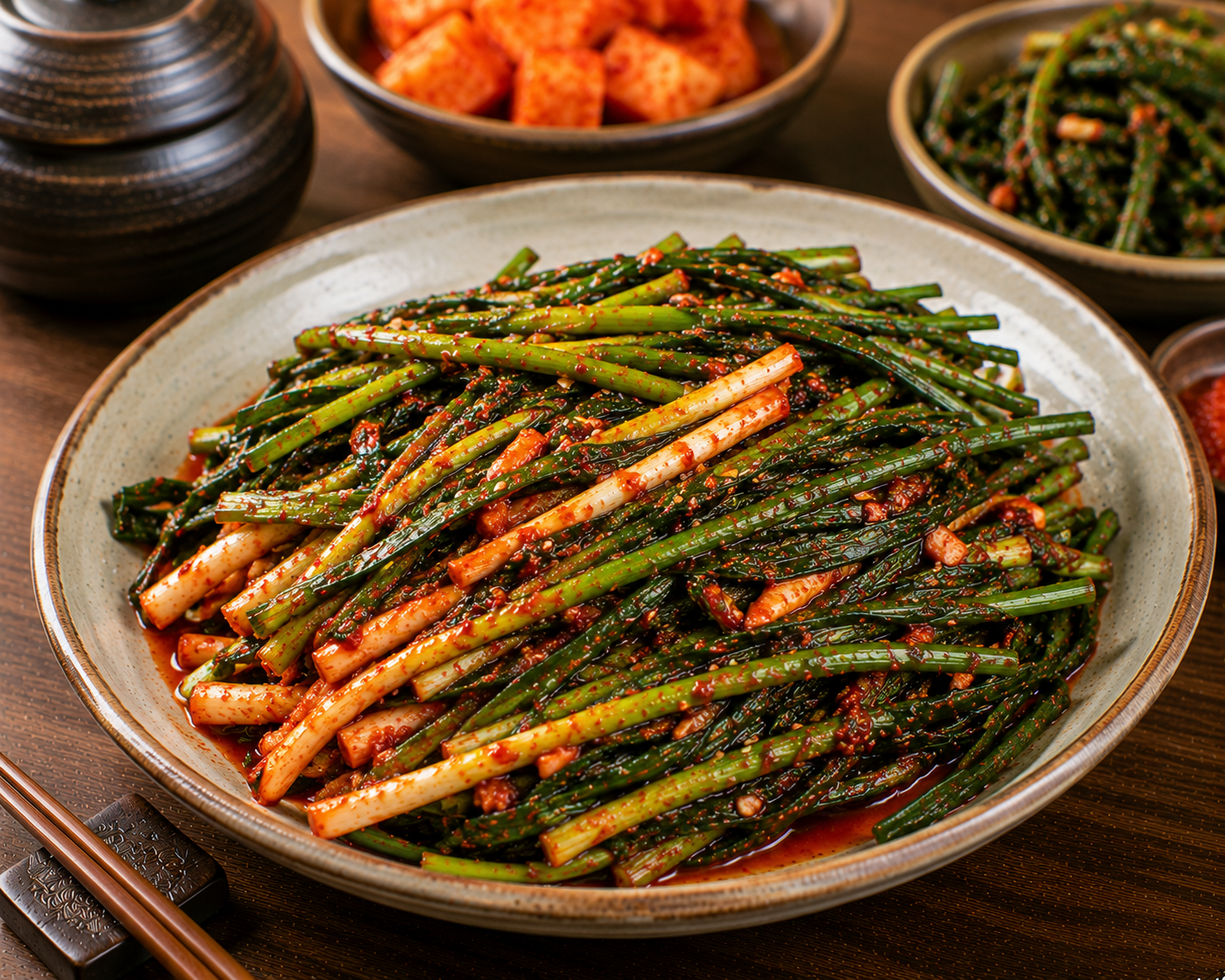
Chive Kimchi
부추김치 · buchu-kimchi
Kimchi made by mixing chives with red pepper powder, garlic, and fermented seafood, then fermenting. It is crunchy, spicy, and rich in umami.
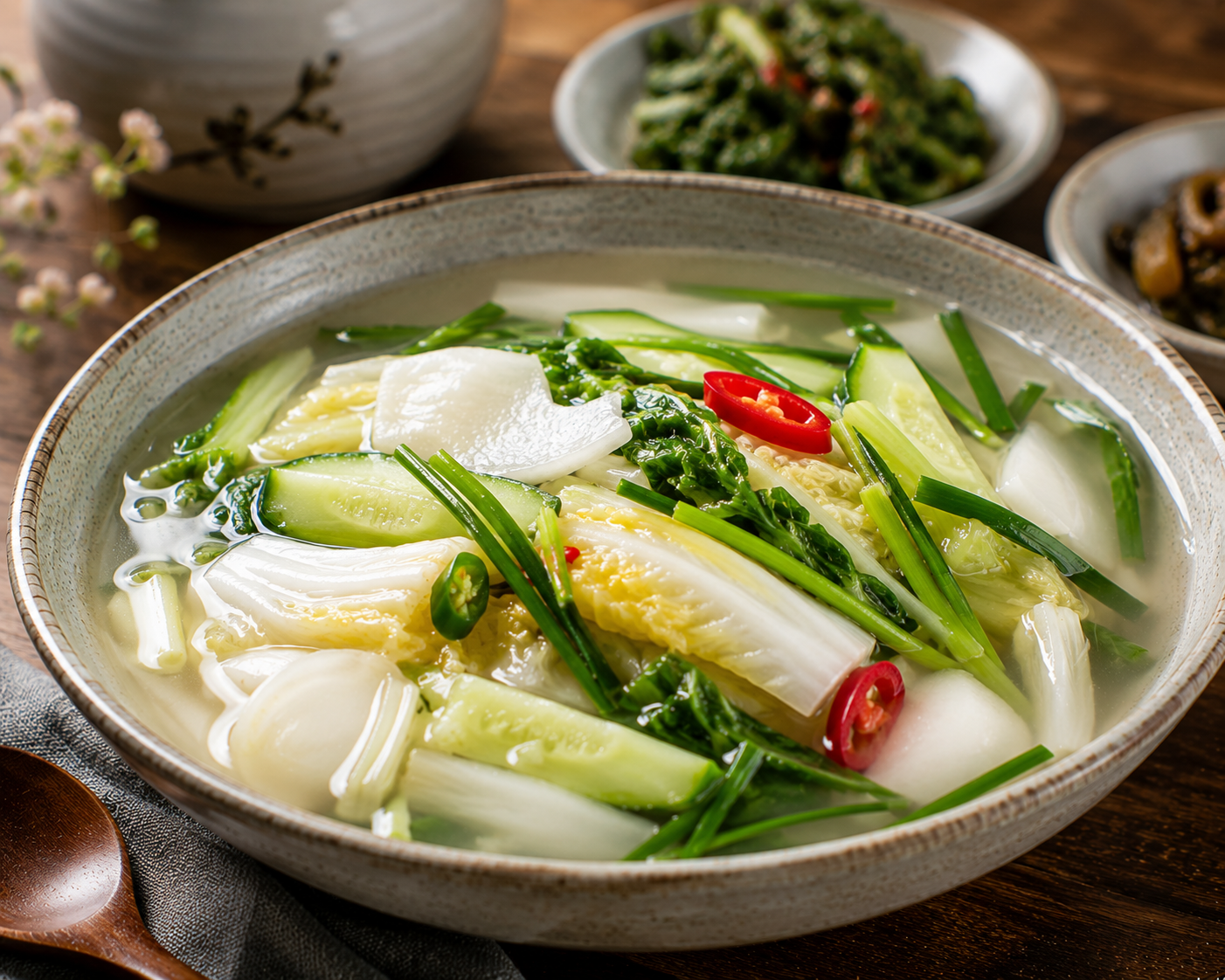
Mul Kimchi
물김치 · mul-gimchi
This kimchi is made by soaking radish and napa cabbage in salted water, characterized by its abundant broth, coolness, and sour taste. As fermentation progresses, the broth becomes more sour and tangy. It is mainly eaten as a side dish and is kept cool in the refrigerator during summer.
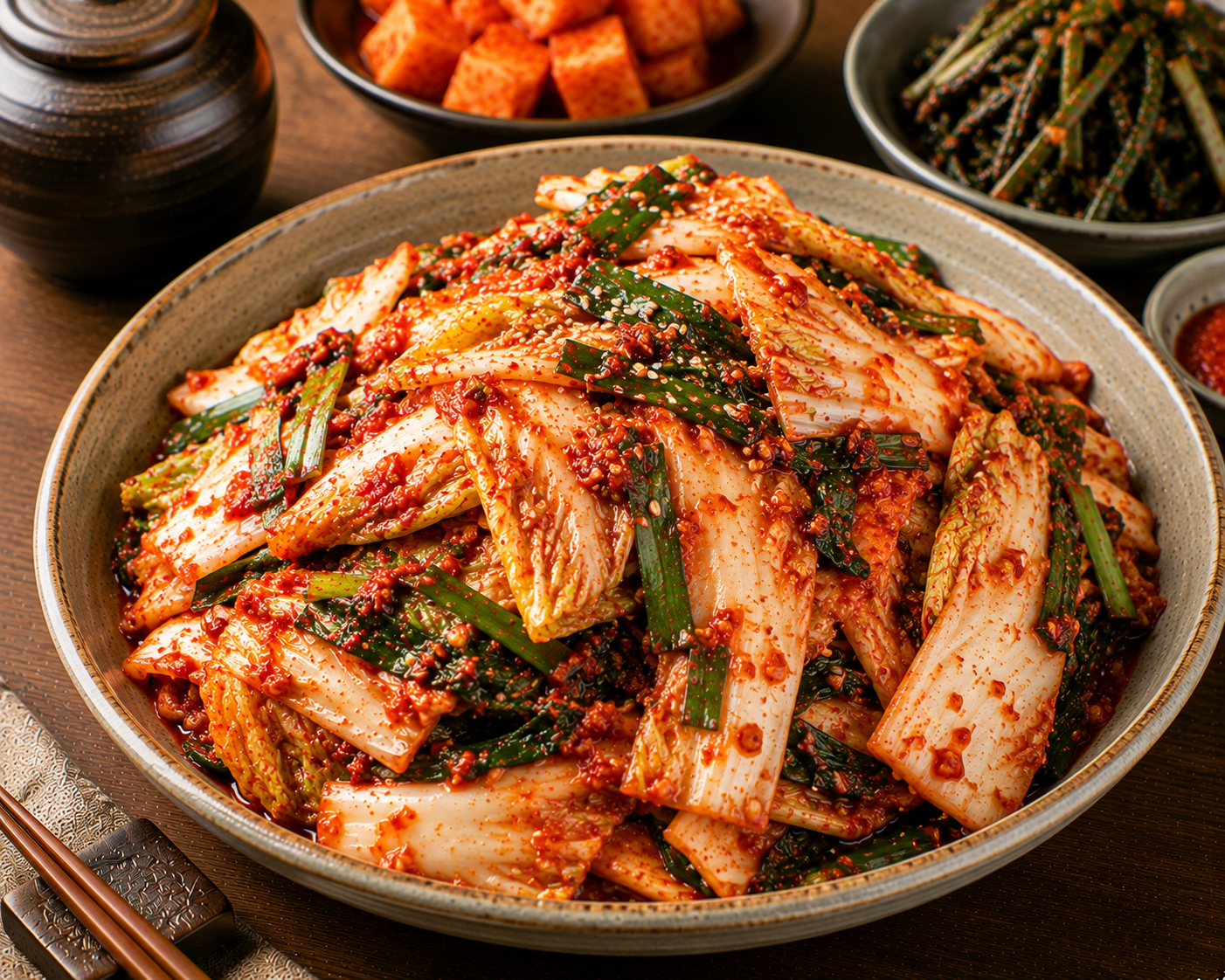
Geotjeori
겉절이 · Geot-jeo-ri
A type of kimchi made with napa cabbage tossed with gochugaru, garlic, and salted seafood, characterized by its crunchy and fresh taste as it is not fermented.
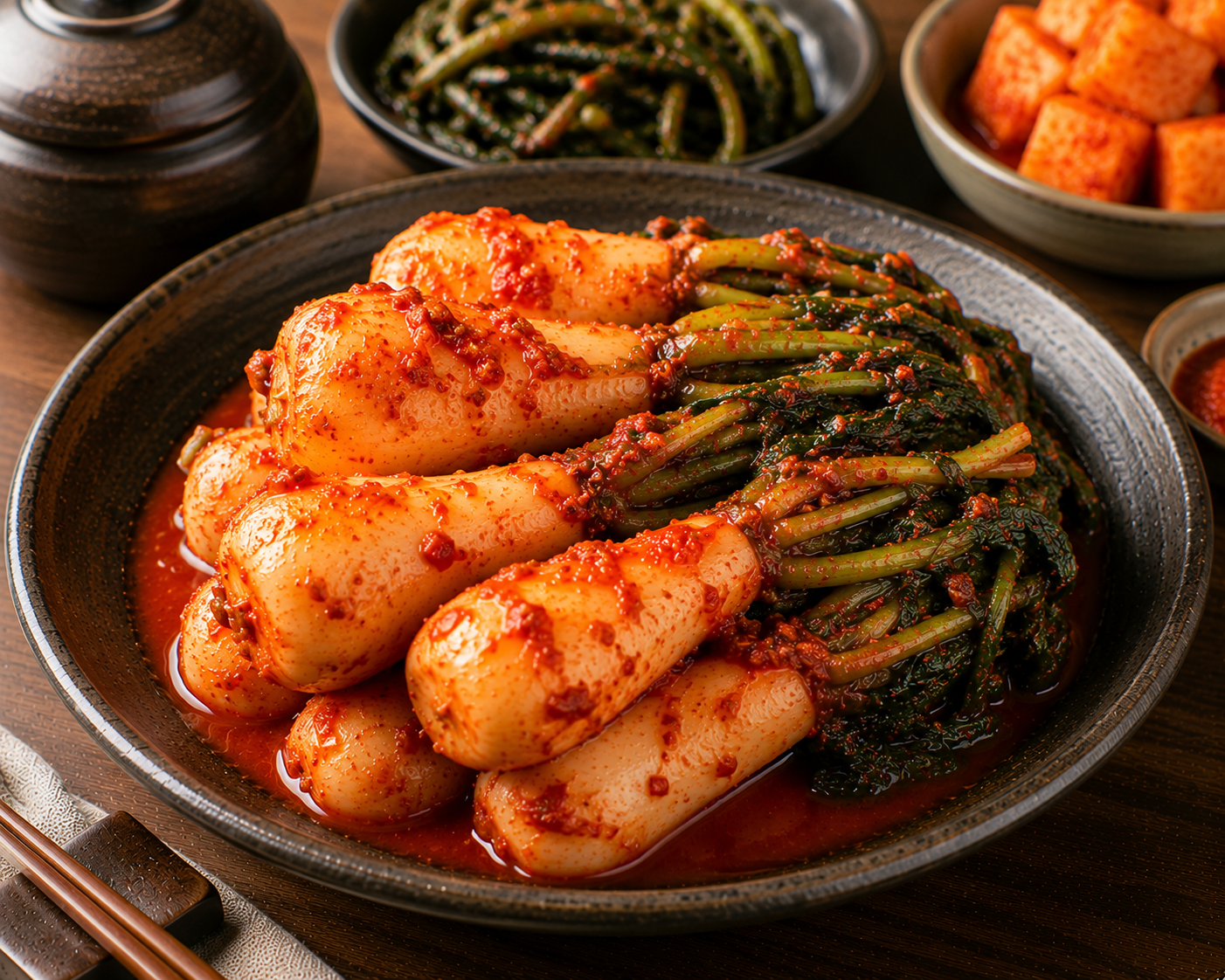
Chonggak Kimchi
총각김치 · chonggak-kimchi
Kimchi made by fermenting whole radishes with chili pepper powder, garlic, and salted seafood. It is characterized by a crunchy texture and spicy flavor, and as fermentation progresses, it becomes more sour and savory.
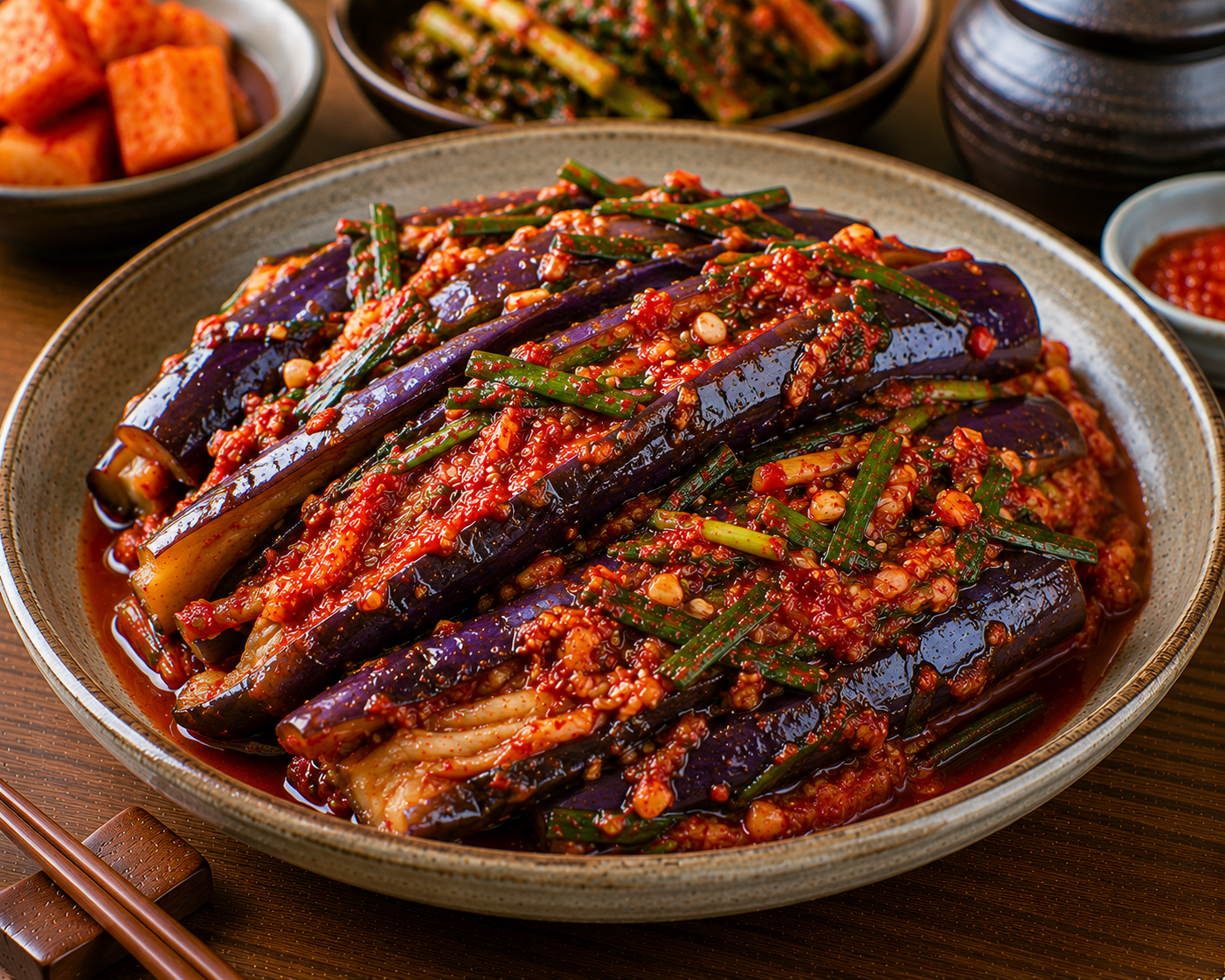
Eggplant Kimchi
가지김치 · gaji-gimchi
Kimchi made by seasoning eggplant with red pepper powder, garlic, and salted seafood, then fermenting it. It features a crunchy texture and a spicy taste, and the sour flavor intensifies as fermentation progresses.
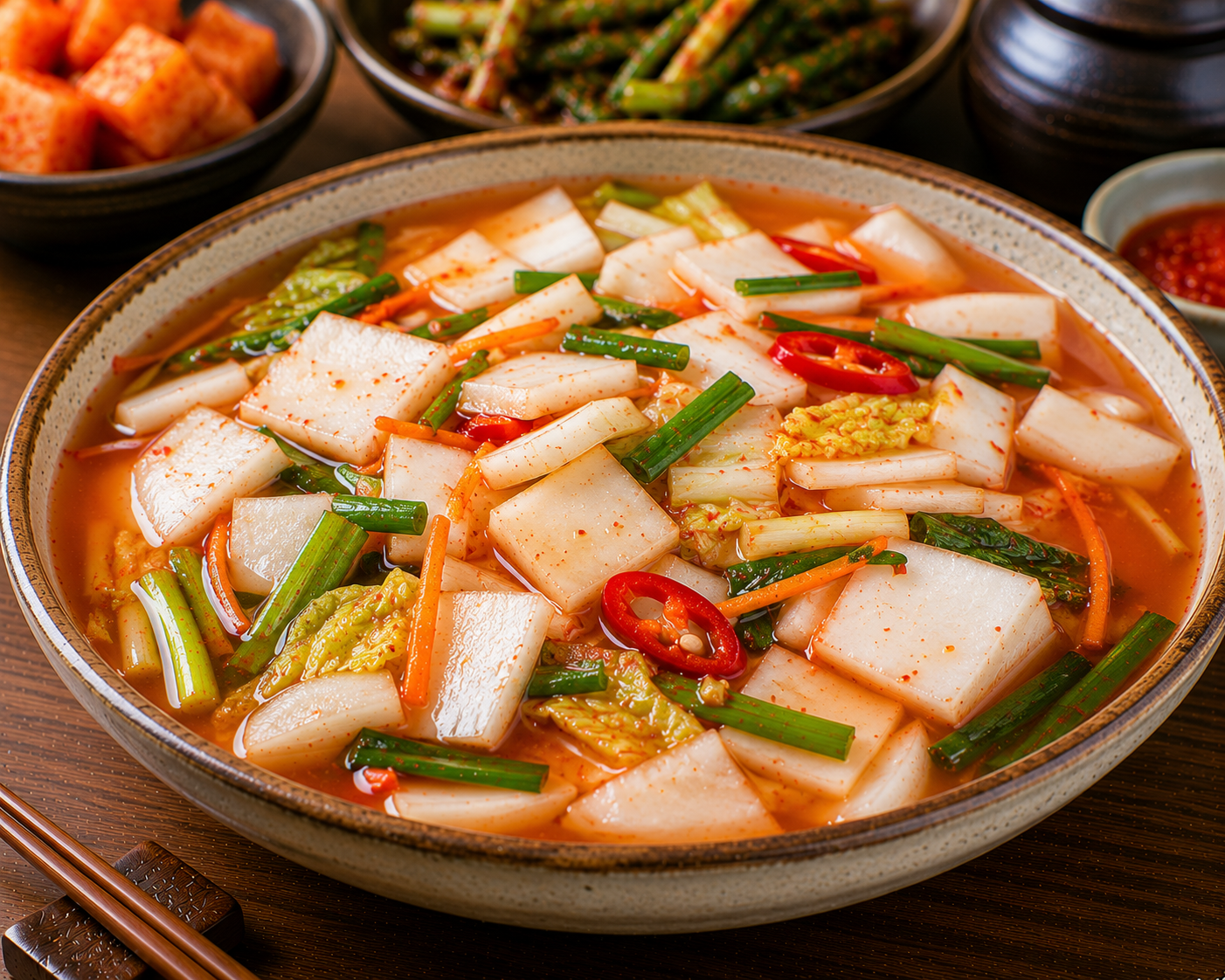
Nabak Kimchi
나박김치 · nabak-kimchi
Kimchi made by thinly slicing radish and napa cabbage, seasoning them with red pepper powder and garlic, and then fermenting them with added water. It is characterized by its abundant broth, refreshing taste, and sour flavor.
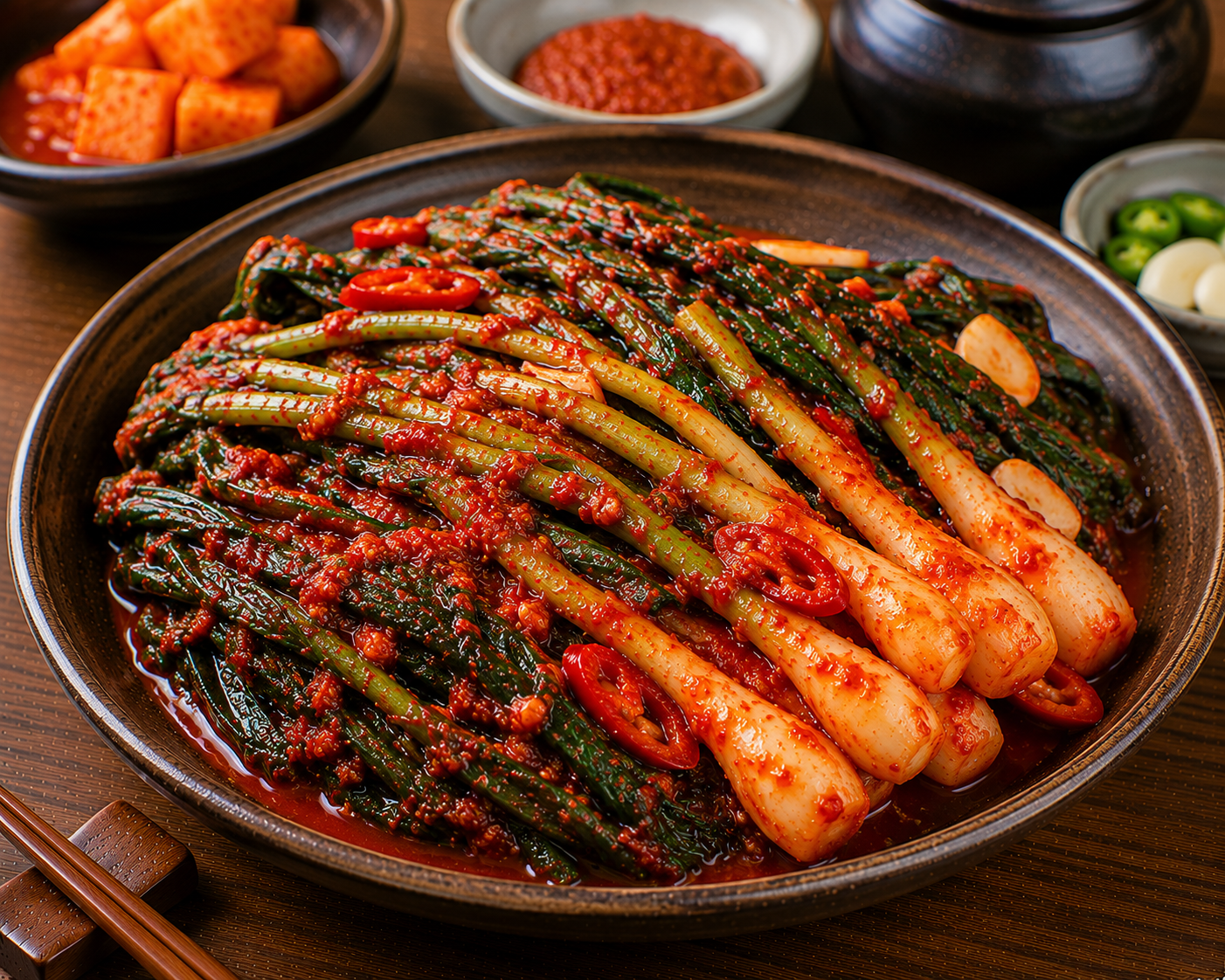
Jang Kimchi
장김치 · jang-gimchi
Kimchi made by salting napa cabbage or radish with soy sauce, characterized by a less spicy and salty flavor compared to regular kimchi. As fermentation progresses, umami is enhanced.
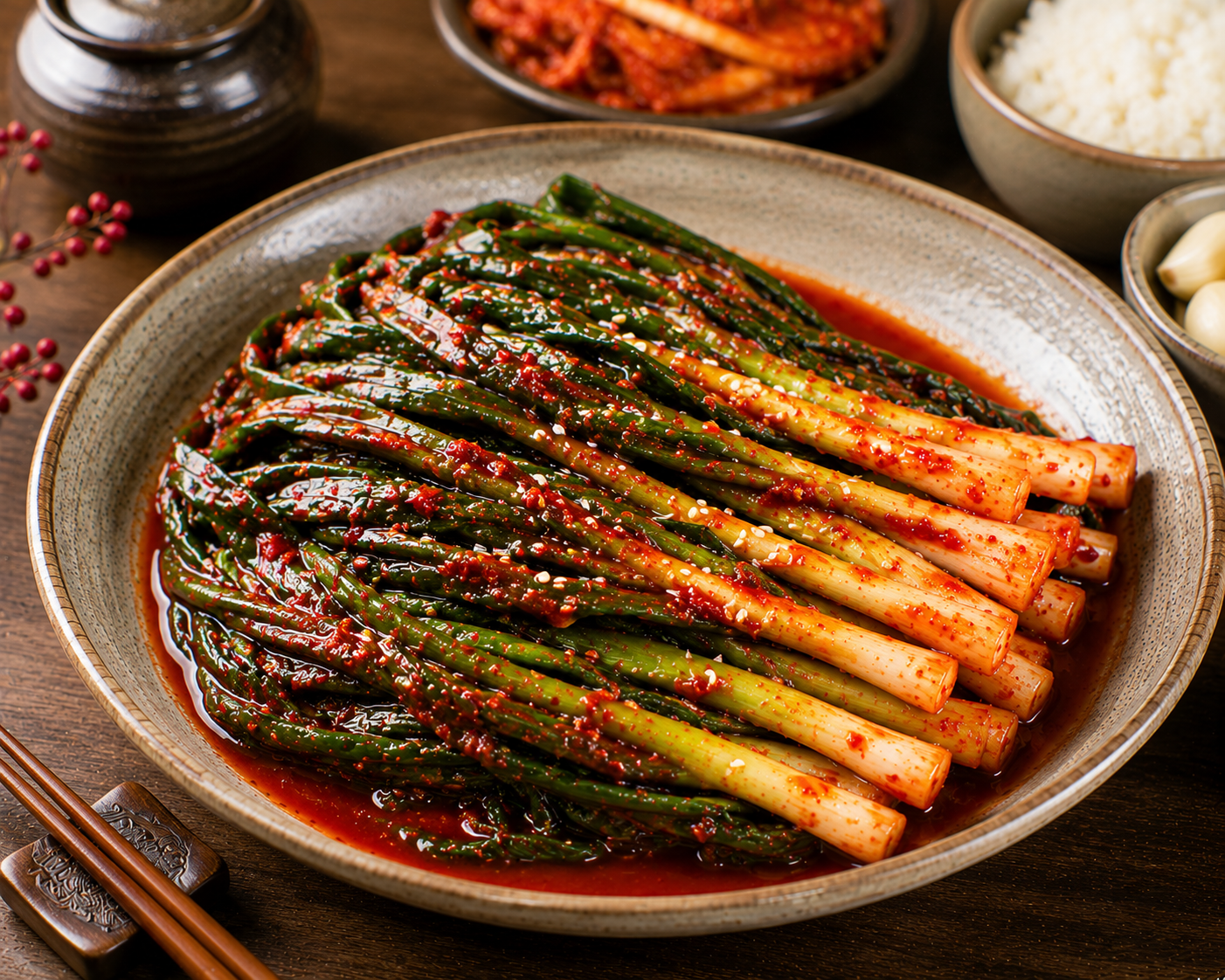
Scallion Kimchi
파김치 · pa-gimchi
Scallion kimchi is made by seasoning scallions with red pepper powder and salted seafood, then fermenting them, characterized by a crunchy texture and spicy flavor. As fermentation progresses, it develops a sour taste and umami. It is typically served as a side dish with meat dishes.
Goes well with
Ingredients
How it's made
- 1Cut the napa cabbage in half and soak it in saltwater.
- 2Slice the radish, garlic, and ginger thinly.
- 3Mix the salted napa cabbage with the radish and seasoning thoroughly.
- 4Pack it into a kimchi container and allow it to ferment.
Nutrition
* Estimated values per serving.
Allergens
No allergen data.
It does not use red pepper powder or fish sauce, making it suitable for vegetarians.
How to order
백김치 주세요
Baek-kimchi ju-se-yo
Please give me Baekkimchi
Traveler tips
How to eat it
Frequently asked questions
- Do you drink the broth in Baekkimchi too?
- Yes. Since the clear broth is an important part of Baekkimchi, spooning up a little broth with the cabbage lets you taste its refreshing quality more fully.
- Why is it kimchi if it is not red?
- Gochugaru is not a requirement for kimchi. Any dish made by salting vegetables, seasoning them, and fermenting them belongs to the kimchi family. Baekkimchi is one type that does not use gochugaru.
- Can Baekkimchi contain nuts or fruit?
- They can be included. Some Baekkimchi, in particular, is made with pine nuts, jujube, and pear. If you have a nut allergy, it is best to check the ingredients when eating Baekkimchi at upscale Hanjeongsik (Korean traditional full-course meal) restaurants or in house-made styles.
Last reviewed: 2026-10-07