
Cultural background
A common snack found on the streets of Korea, it evokes memories of childhood.
Origin & history
Dalgona is known as a snack once sold outside schools or in market alleys, made with a small ladle and a metal griddle. Rather than a luxury sweet from a time when sugar was scarce, it was closer to an inexpensive street snack made on the spot with just a few ingredients.
Depending on the region and generation, some people distinguish between “달고나 (dalgona, Dalgona)” and “뽑기 (ppopgi, ‘picking out’),” while others use the names almost interchangeably. One account says the name “뽑기 (ppopgi, ‘picking out’)” came from the game: if you could pick out a star or umbrella shape without breaking it, you got another one.
Regional & modern variations
- Ppopgi — A play-based form of Dalgona, stamped with a mold before it hardens so you can try to pick out the shape along the lines without breaking it. In Korea, the word is often used almost synonymously with Dalgona.
- Dalgona Topping — Crushed Dalgona is sprinkled over Ice Cream, lattes, or bingsu. The format brings the flavor of a street snack into cafe desserts.
How Koreans eat it
Dalgona is less a confection to keep and eat over time than a snack best eaten right where it is made. At tourist-area street stalls, vendors sometimes sell it together with the game: you choose a shape, then use a small needle or toothpick to pick around the outline. Whether you get a prize for succeeding depends on the shop.
Taste & how to choose
The flavor is sweet like caramel, with a faintly burnt sugar aroma at the end. Baking soda makes the inside puff up lightly and turn crisp, but it becomes sticky quickly if it absorbs moisture from the air. Pieces that are too dark brown can taste strongly bitter; a light brown color with evenly visible bubbles is best for eating.
Similar dishes
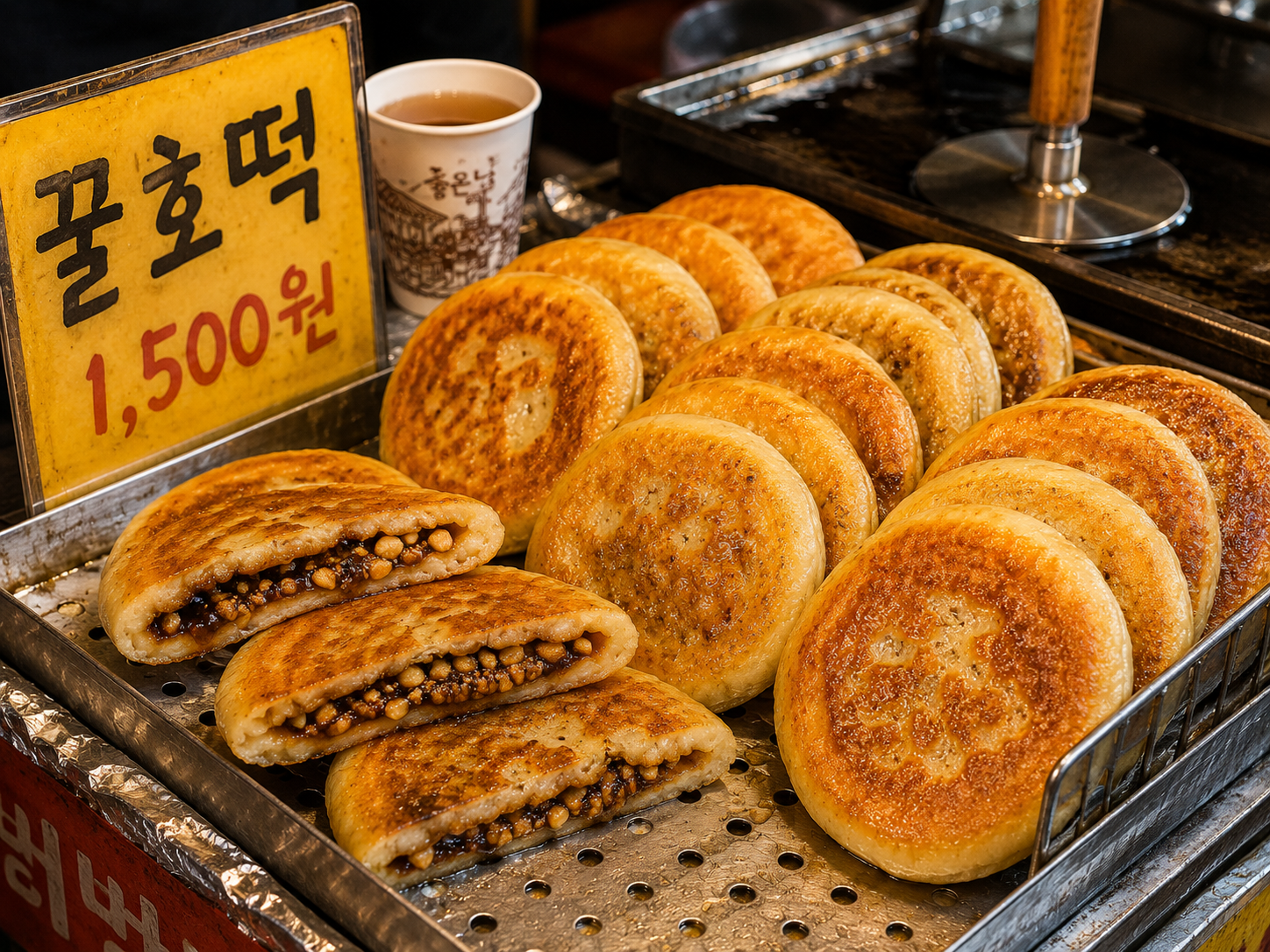
Hotteok
호떡 · ho-tteok
A warm street snack made by frying dough filled with brown sugar and nut syrup. It has a crispy exterior and a flowing brown sugar syrup interior, making it a representative winter treat that tastes even better when eaten warm right after it is freshly made.
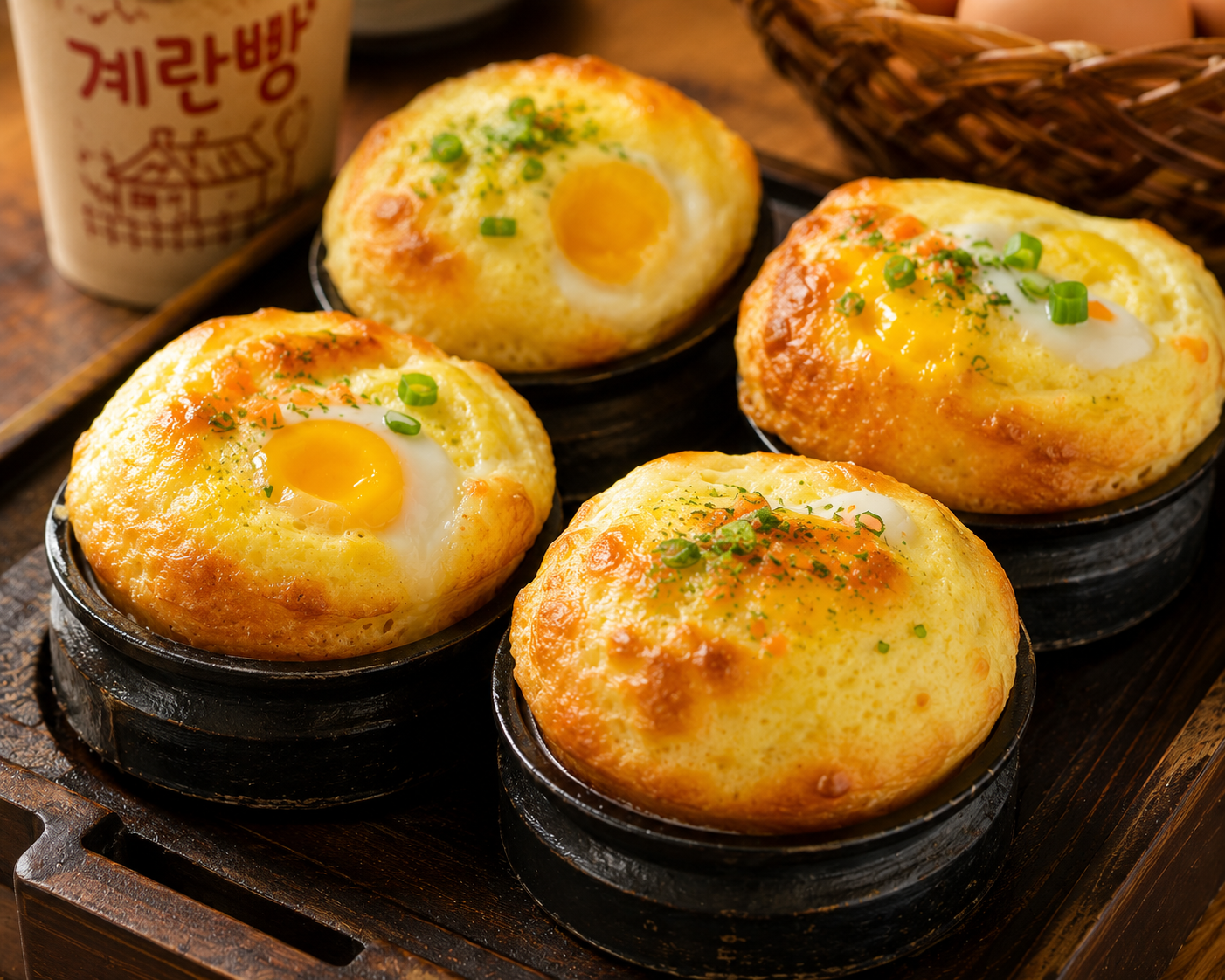
Egg Bread
계란빵 · gye-ran-ppang
A snack made by placing an egg on top of a flour dough and baking it, characterized by its soft and savory flavor.
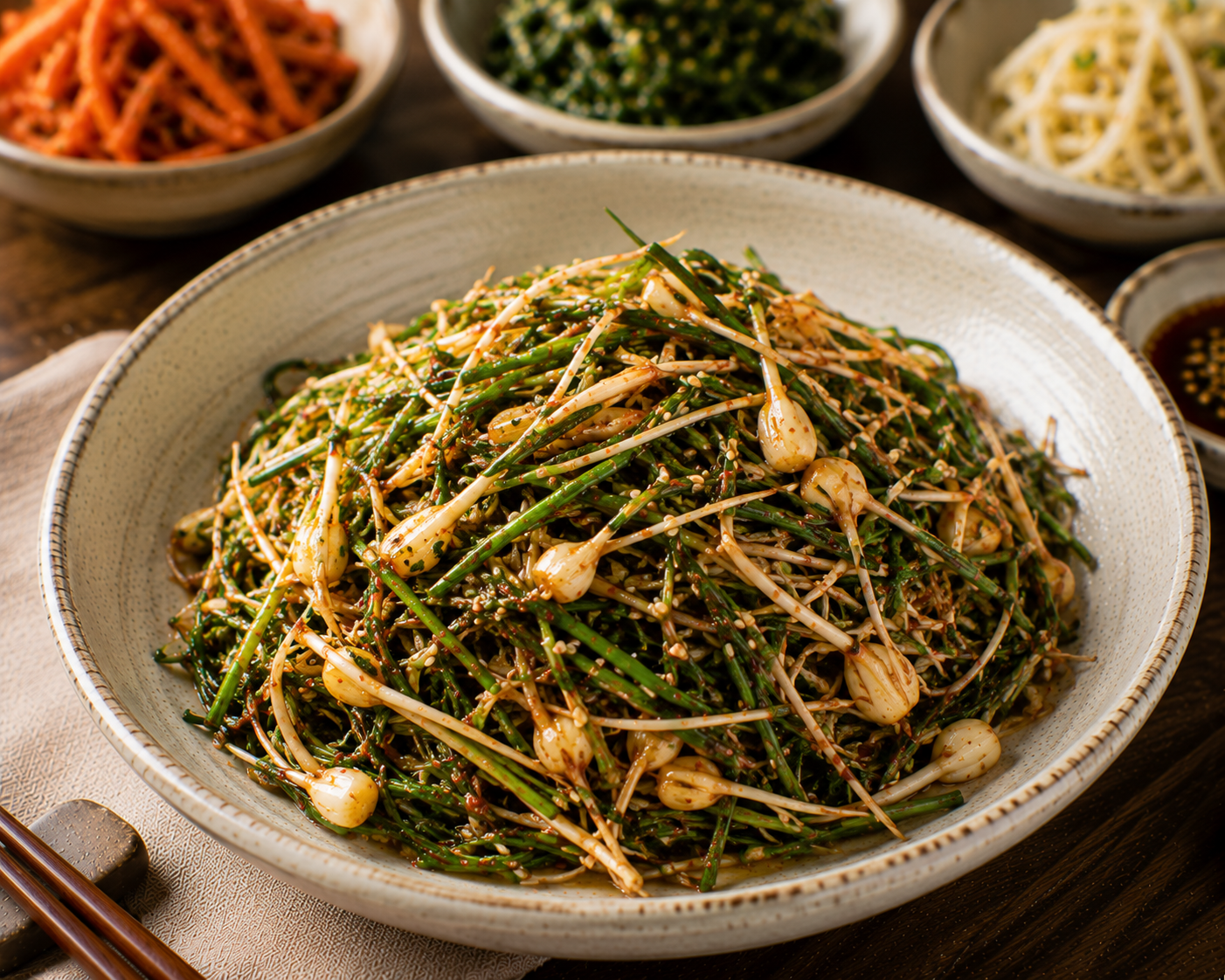
Seasoned Wild Chives
달래무침 · dal-lae-mu-chim
A tangy and spicy side dish made by mixing wild chives (dallae) with red pepper powder, soy sauce, and sesame oil. It features the crunchy texture of the wild chives and the aromatic scent of sesame oil.
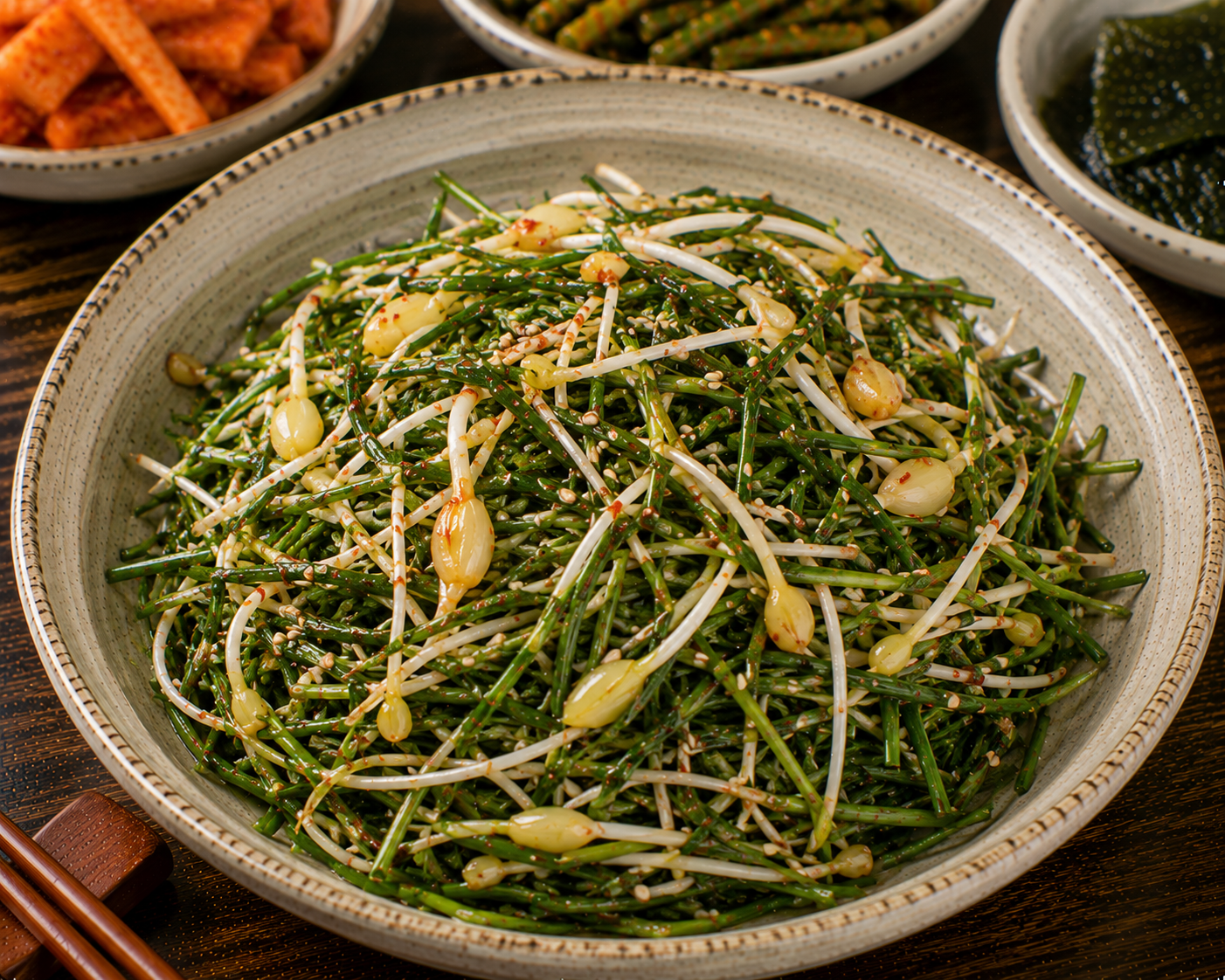
Wild Chive Namul
달래나물 · dallae-namul
A soft and fragrant side dish made by blanching wild chives and mixing them with soy sauce and sesame oil.
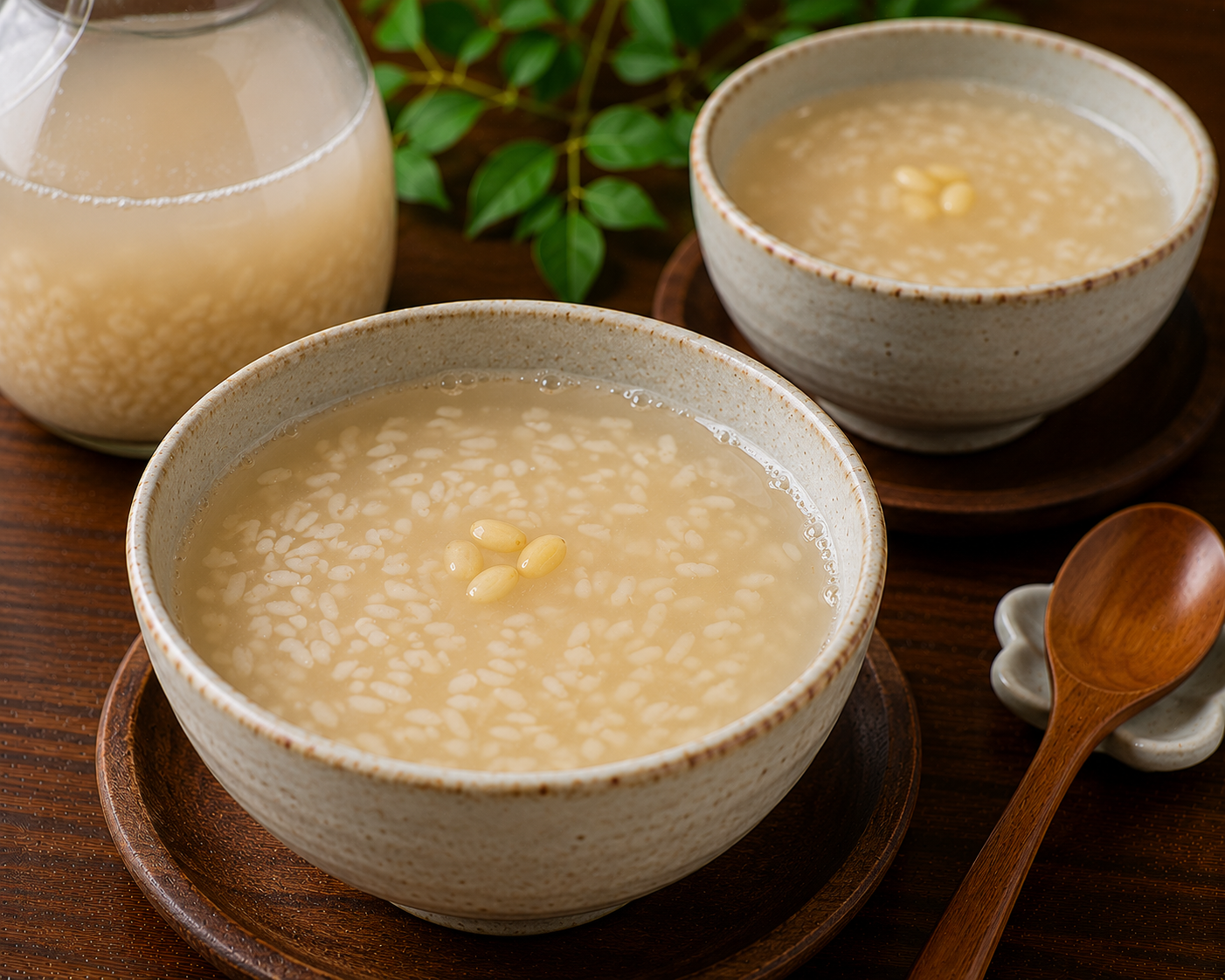
Sikhye
식혜 · sikhye
A sweet rice drink made by fermenting cooked rice with malted barley, served cold with floating rice grains in a clear and refreshing broth. It has a cool and clean sweetness, often enjoyed as a dessert beverage during holidays or after meals in restaurants.
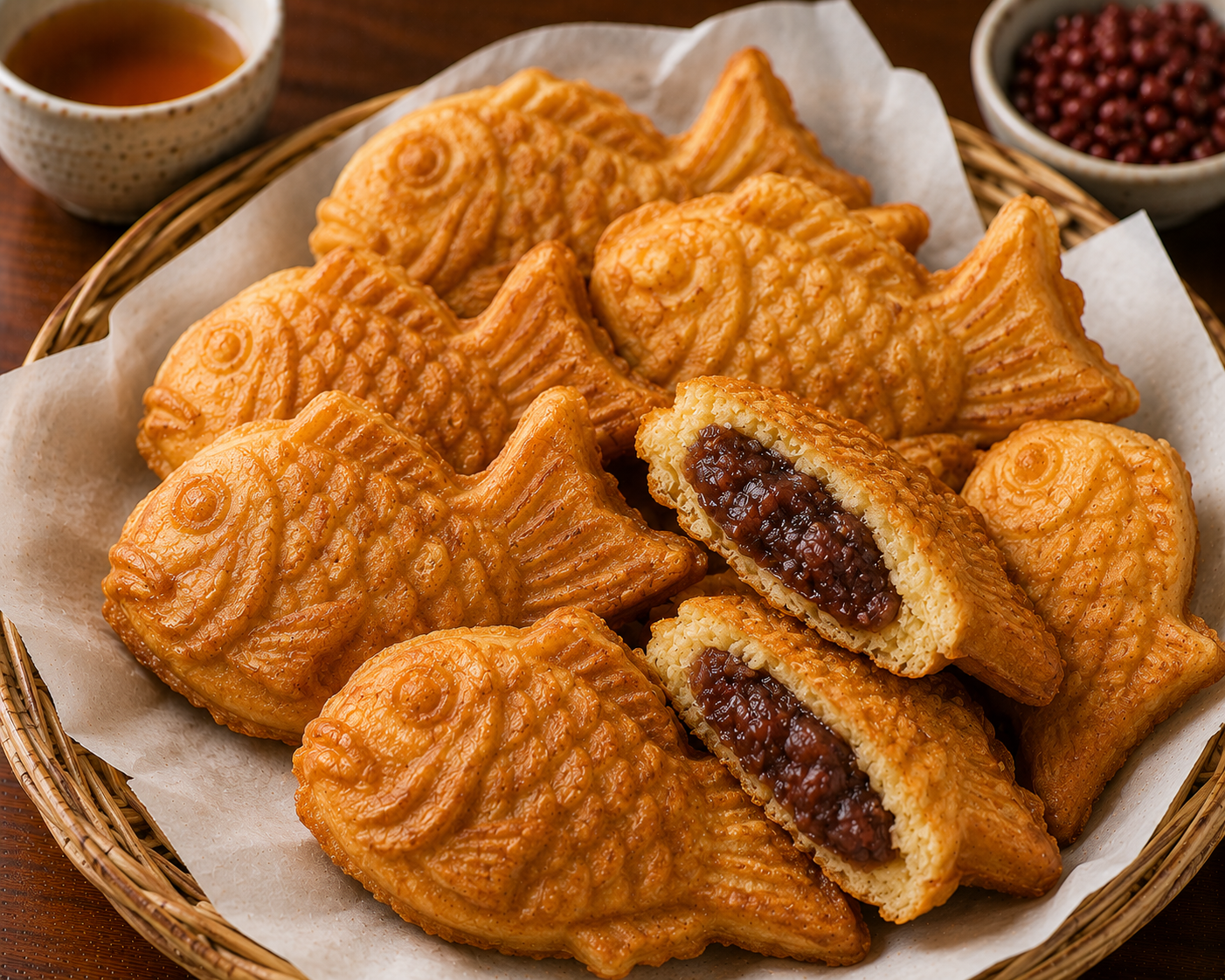
Bungeo-ppang
붕어빵 · bungeo-ppang
A Korean street snack made by filling a flour dough with red bean paste and baking it in a fish-shaped mold.
Ingredients
How it's made
- 1Put sugar in a pan and melt it.
- 2Once the sugar is melted, add baking soda and stir to puff it up.
- 3Pour the puffed mixture onto a flat surface to harden.
- 4Press into desired shapes before it hardens.
Nutrition
* Estimated values per serving.
Allergens
No allergen data.
Made with only sugar and baking soda, suitable for most diets.
How to order
달고나 주세요
Dal-go-na ju-se-yo
Please give me Dalgona
Traveler tips
How to eat it
Frequently asked questions
- Why do people pick out the shape with a needle?
- Dalgona was both a simple sweet and a game. A common setup was that if you kept the stamped shape intact along the lines, you received another piece or a small reward.
- Are Dalgona and Dalgona coffee the same food?
- They are not the same food. Dalgona coffee got its name because the color and aroma of whipped coffee bring Dalgona to mind; it usually does not contain actual pieces of sugar Dalgona.
- Can you eat the black, burnt parts?
- Slightly darkened parts are edible, but they taste strongly bitter. Because the sugar in Dalgona burns quickly, pieces that are too black do not taste as good.
Last reviewed: 2026-10-07