Cultural background
Stewed chicken is a dish typically enjoyed during family gatherings or special occasions, making it great for sharing among many people.
Origin & history
Jjimdak (Braised Chicken) is also widely known by the regional name ‘안동찜닭’ (Andong-jjimdak, "Andong Jjimdak (Braised Chicken)"). In the chicken alley of a market in Andong, North Gyeongsang Province, it took shape as a soy-sauce-seasoned chicken dish, and later became a restaurant menu item across the country.
Its exact beginnings cannot be reduced to a single story. One account says market vendors made it by putting chicken, vegetables, and dangmyeon glass noodles into one pot so several people could share it easily; another says it developed as a generous chicken dish distinct from fried chicken.
Regional & modern variations
- Andong Jjimdak (Braised Chicken) — The best-known version is based on a soy sauce seasoning and includes dangmyeon glass noodles, potatoes, carrots, and onions. Its dark sauce and sweet-salty flavor define the dish.
- Spicy Jjimdak (Braised Chicken) — Extra Cheongyang chilies or chili powder give this version a stronger heat. Compared with basic Jjimdak (Braised Chicken), it is often redder in color or has a more pronounced chili aroma.
- Cheese Jjimdak (Braised Chicken) — A restaurant-style variation topped with melted cheese after the Jjimdak (Braised Chicken) is finished. The cheese gently softens the salty, spicy seasoning.
How Koreans eat it
At restaurants, Jjimdak (Braised Chicken) is usually served in a large platter or shallow pot set in the middle of the table for everyone to share. Many places let you choose between ‘뼈’ (ppyeo, "bone-in") and ‘순살’ (sunsal, "boneless") chicken when ordering. Dangmyeon glass noodles absorb the sauce and can swell easily over time, so eating them first is a good idea.
Taste & how to choose
The dark soy sauce color can make the dish look very salty, but the actual flavor is closer to ‘단짠’ (danjjan, "sweet-salty"), with soy sauce, garlic, sweetness, and chili heat mixed together. Good Jjimdak (Braised Chicken) has chicken that is not dry, potatoes that do not fall apart, and dangmyeon glass noodles that soak up the seasoning without turning too mushy.
Similar dishes
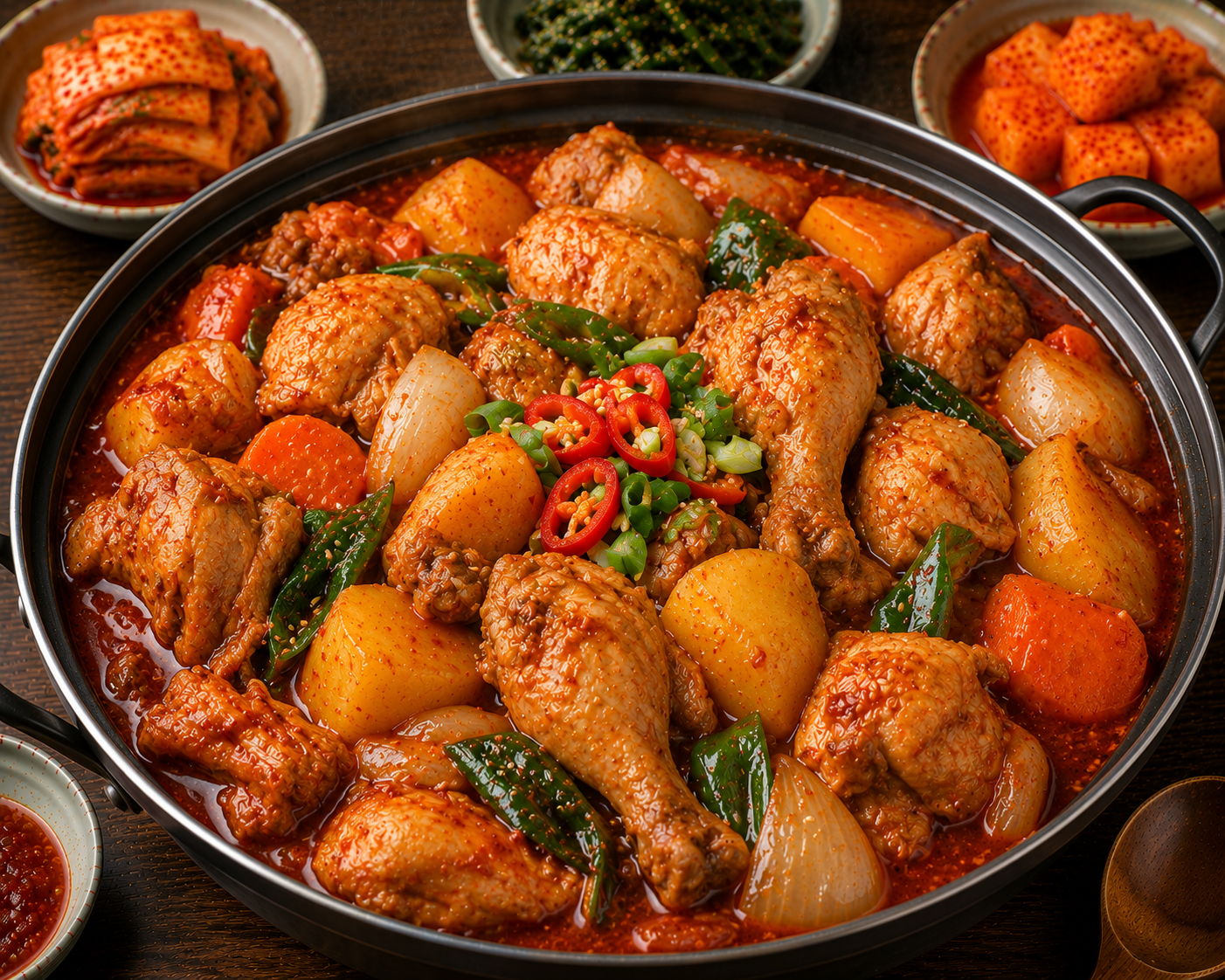
Spicy Braised Chicken
닭볶음탕 · dak-bokkeum-tang
A spicy braised dish made with chicken, potatoes, and carrots simmered in gochujang and gochugaru seasoning.
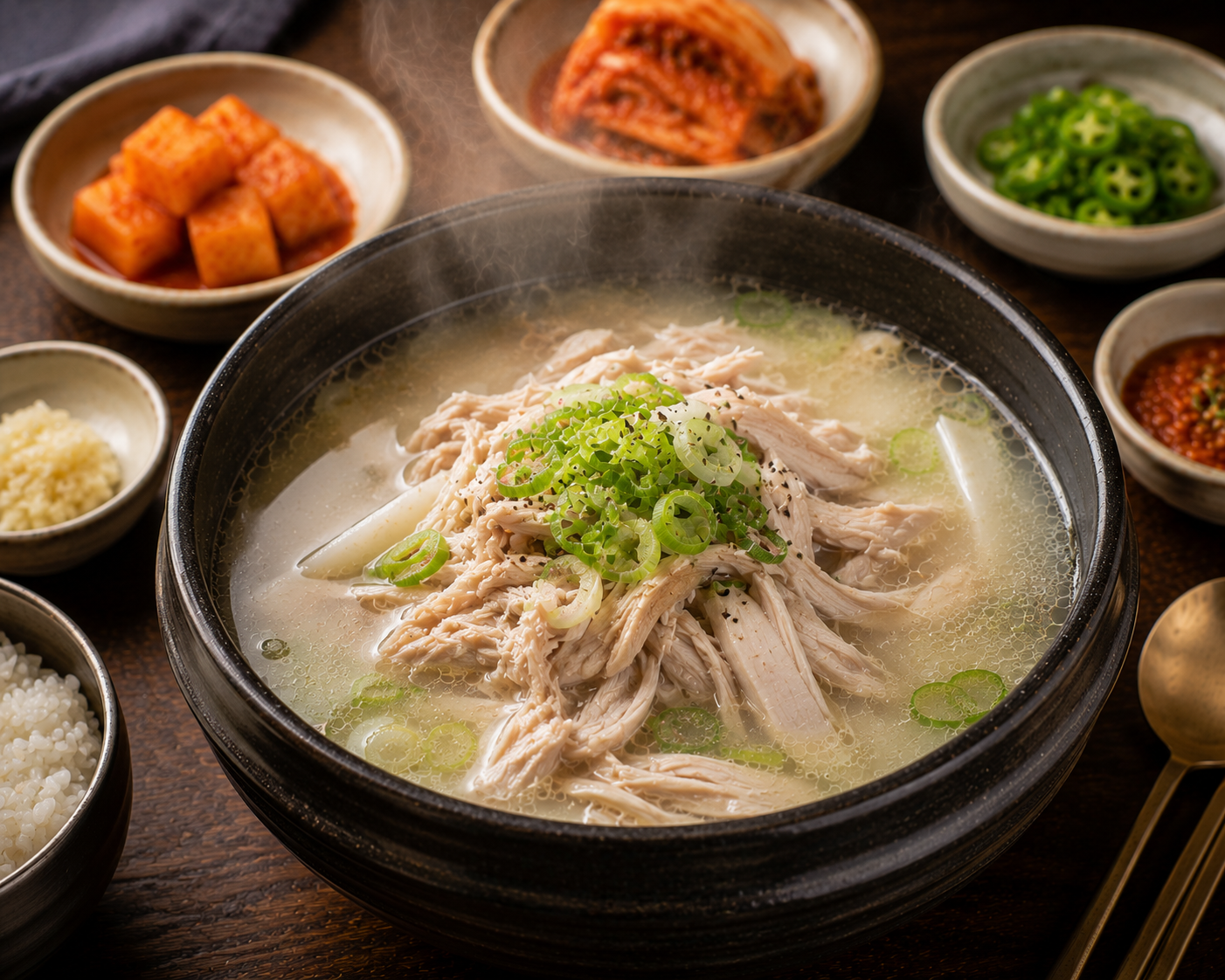
Chicken Gomtang
닭곰탕 · dak-gomtang
A traditional Korean soup dish made by simmering chicken for a long time to produce a milky, delicate broth, featuring tender chicken and green onions among other ingredients.
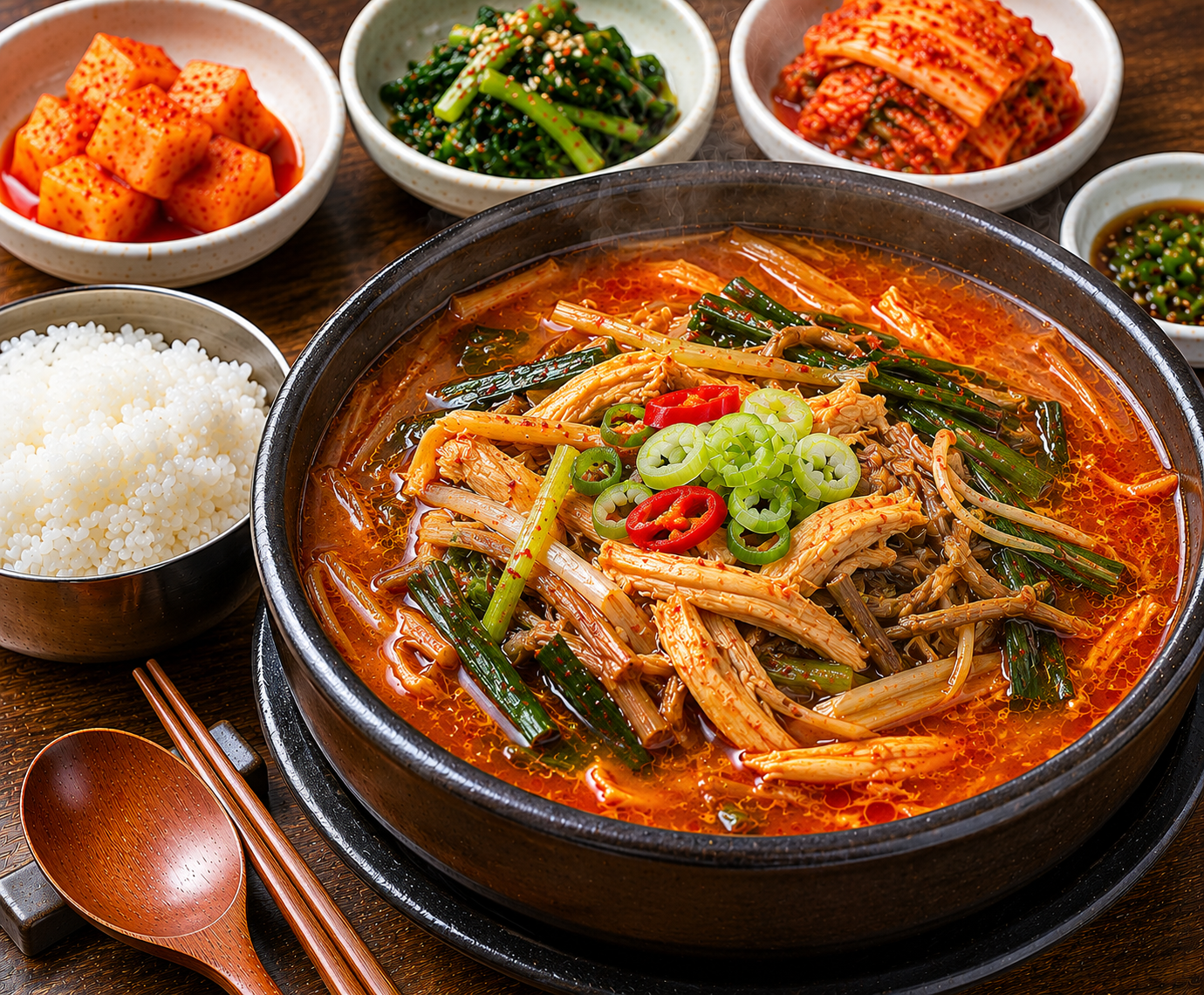
Dakgaejang
닭개장 · dak-gae-jang
A soup dish made by boiling chicken and a variety of vegetables with red chili powder for a hearty kick, characterized by its spicy and deep flavor.
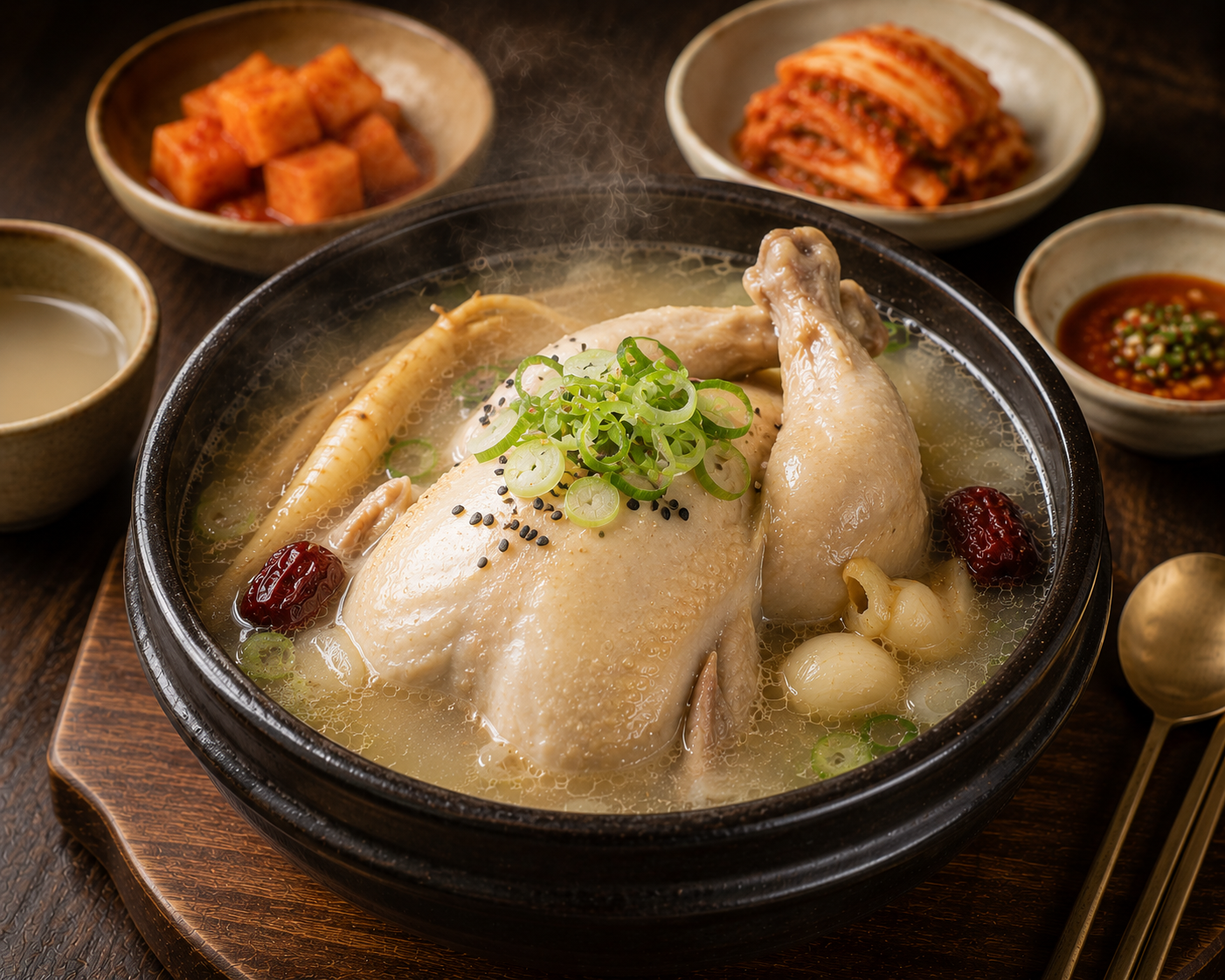
Samgyetang
삼계탕 · sam-gye-tang
A traditional Korean health food made with a young chicken stuffed with ginseng, jujube, garlic, and simmered until tender, featuring a milky broth and tender chicken meat.
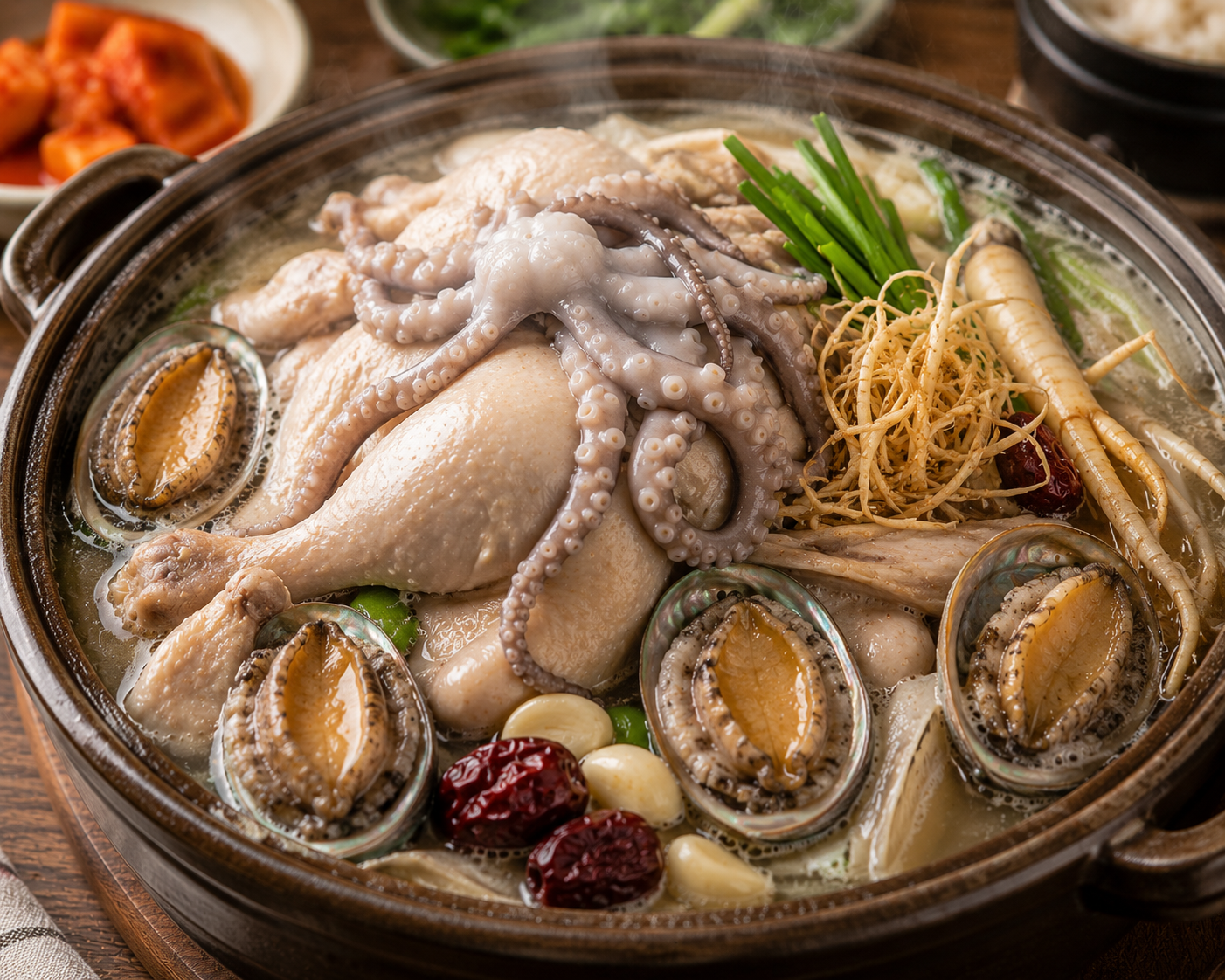
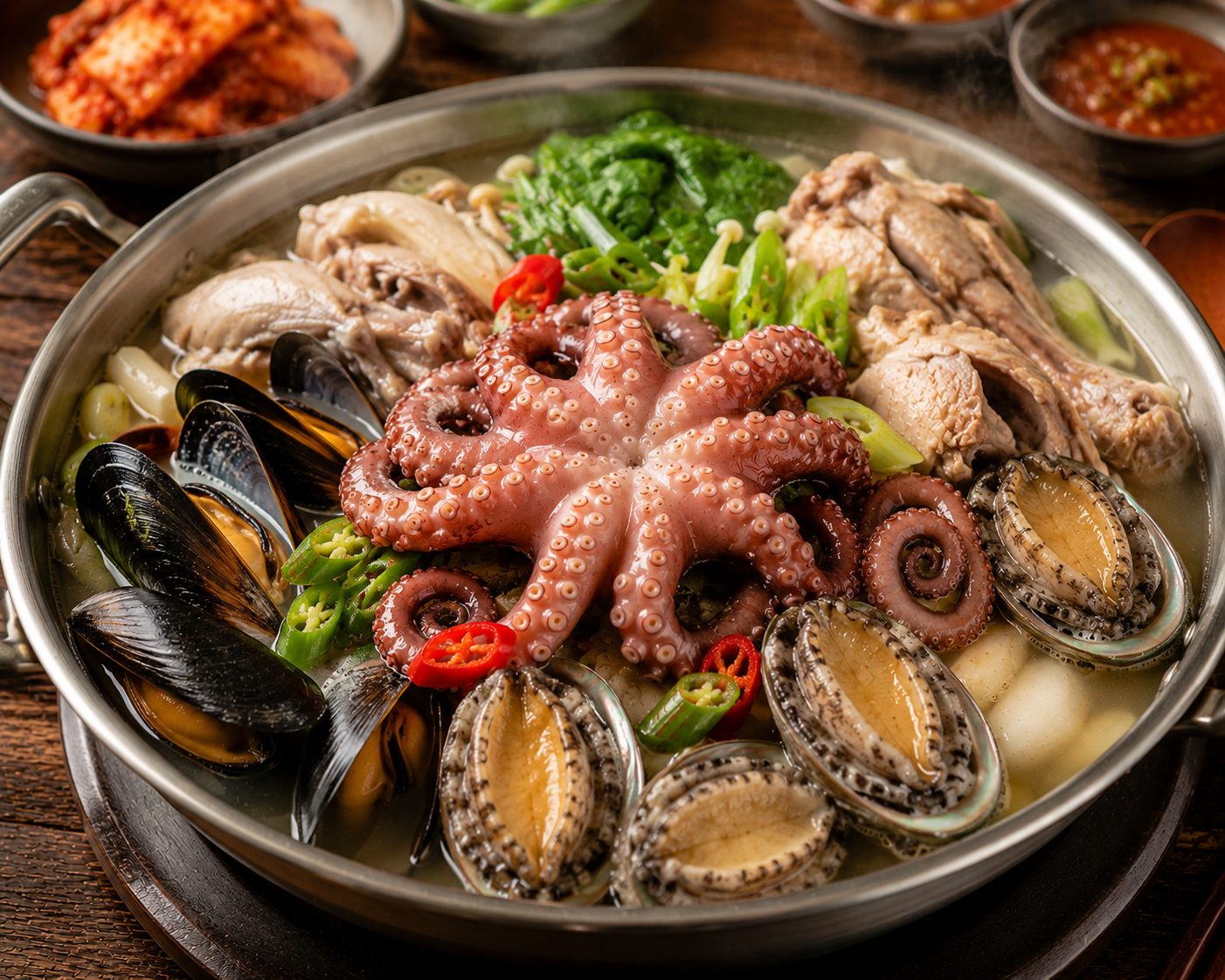
Chicken and Seafood Soup
해신탕 · hae-sin-tang
A nourishing soup made by simmering chicken with seafood (mainly octopus and abalone), where the umami of the seafood blends with the tender texture of the chicken.
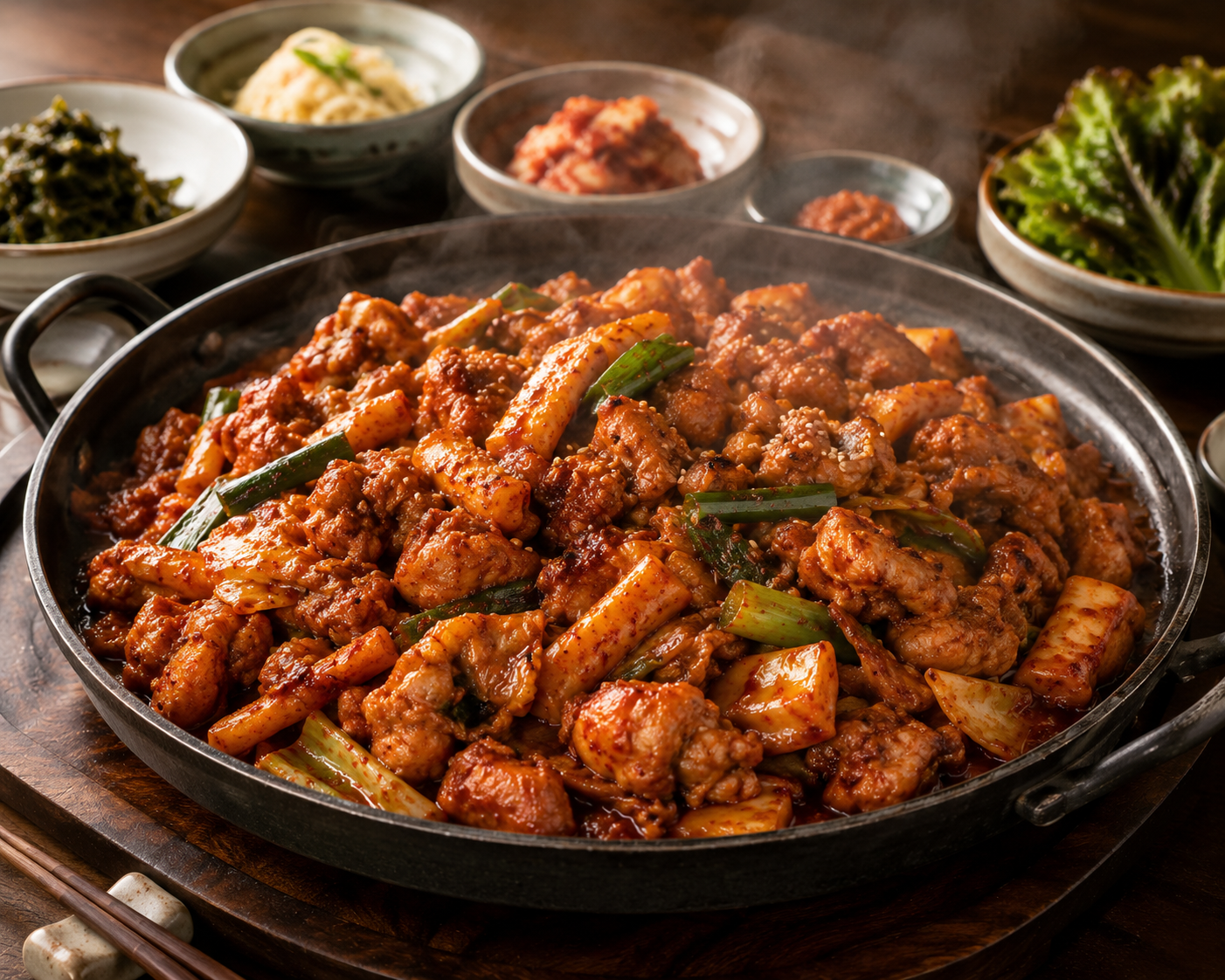
Dak-galbi
닭갈비 · dak-galbi
A spicy grilled dish made by marinating chicken in gochujang and stir-frying it on a hot plate. It is usually stir-fried with cabbage, sweet potato, and rice cakes for a rich flavor.
Goes well with
Ingredients
How it's made
- 1Trim the chicken into bite-sized pieces and blanch it.
- 2Mix soy sauce, sugar, garlic, ginger, and chili peppers to make the seasoning sauce.
- 3Put the chicken, potatoes, carrots, and onion in a pot, pour in the sauce and water, and bring to a boil.
- 4When the broth has reduced, add soaked glass noodles and green onion and simmer down to finish.
Nutrition
* Estimated values per serving.
Allergens
Contains chicken, not suitable for vegetarians.
How to order
닭찜 주세요
Dak-jjim ju-se-yo
Please give me stewed chicken
Customize your order
Traveler tips
How to eat it
Frequently asked questions
- Are Jjimdak (Braised Chicken) and Andong Jjimdak (Braised Chicken) the same dish?
- In everyday use, the two names often mean almost the same thing. However, ‘안동찜닭’ (Andong-jjimdak, "Andong Jjimdak (Braised Chicken)") more strongly evokes the image of the soy-sauce-based Jjimdak (Braised Chicken) served in the style of Andong markets.
- Why are dangmyeon glass noodles added to Jjimdak (Braised Chicken)?
- Dangmyeon glass noodles absorb the soy sauce seasoning well, making the flavor of Jjimdak (Braised Chicken) feel richer. If left too long, however, they soak up a lot of the broth and seasoning and can swell easily.
- Which is more common, bone-in Jjimdak (Braised Chicken) or boneless Jjimdak (Braised Chicken)?
- Traditional large-platter Jjimdak (Braised Chicken) is often served with bone-in chicken. If you want something easier to eat, choose boneless, though many people prefer bone-in chicken for the deeper flavor it gives the seasoning.
Last reviewed: 2026-10-07