Cultural background
It is famous as a health food in the summer, especially enjoyed during the hottest days of the year. It is good for warming the body and replenishing energy with its hot broth.
Origin & history
Samgyetang is known for using a whole chicken, with glutinous rice and medicinal ingredients stuffed inside before it is simmered. Korea has a tradition of restorative dishes made by slowly boiling chicken, and chicken soup with ginseng is generally seen as the basis for today’s Samgyetang.
Many explanations say the now-familiar restaurant style, served as one individual earthenware pot per person, spread widely after the Korean War and through the years of economic growth. With ginseng, young chicken, and glutinous rice all in one bowl, it developed a strong image as an expensive restorative dish.
Regional & modern variations
- Hanbang Samgyetang — Extra medicinal herbs such as astragalus, kalopanax, and angelica root give it a deeper aroma. If you are not used to the scent of medicinal herbs, it may taste more bitter than basic Samgyetang.
- Jeonbok Samgyetang — This version adds abalone to the chicken. It brings in a hint of the sea, and the price is usually higher than basic Samgyetang.
- Deulkkae Samgyetang — Perilla seed powder makes the broth thicker and nuttier. It suits people who prefer a creamy texture to a clear broth.
How Koreans eat it
At Samgyetang restaurants, each person usually gets an individual earthenware pot with a whole chicken inside. Rather than sharing, everyone eats their own bowl. On Bongnal, the traditional hottest days of summer, lines often get long at lunchtime, so travelers may want to avoid peak meal times.
Taste & how to choose
On a first try, the broth may taste less salty than expected. The dish is meant to be seasoned to your own taste with salt and pepper served on the side. The glutinous rice inside the chicken absorbs the broth and turns soft like porridge, while the ginseng adds a gentle bitterness. If the chicken comes apart easily with chopsticks, it has usually been simmered well.
Similar dishes
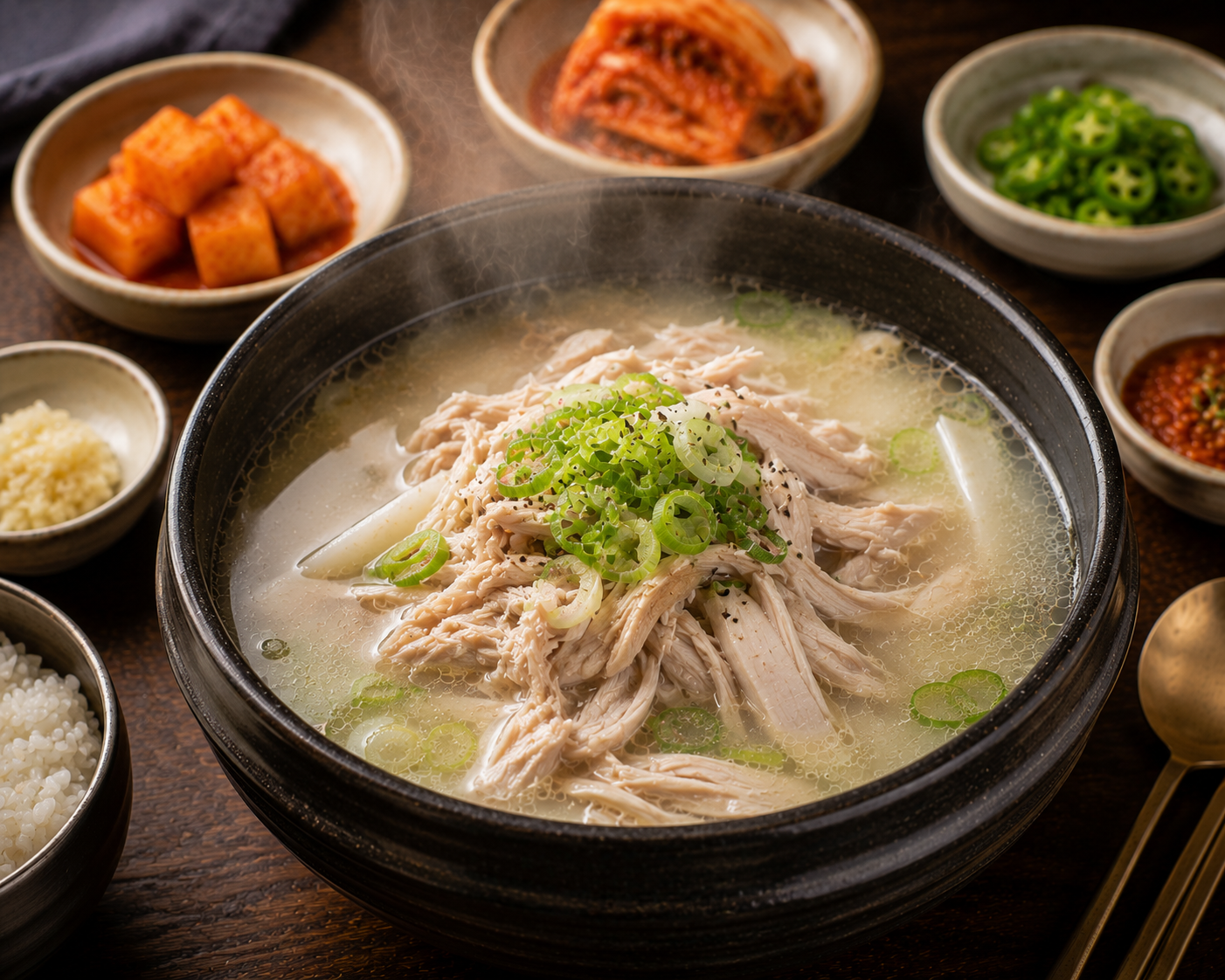
Chicken Gomtang
닭곰탕 · dak-gomtang
A traditional Korean soup dish made by simmering chicken for a long time to produce a milky, delicate broth, featuring tender chicken and green onions among other ingredients.
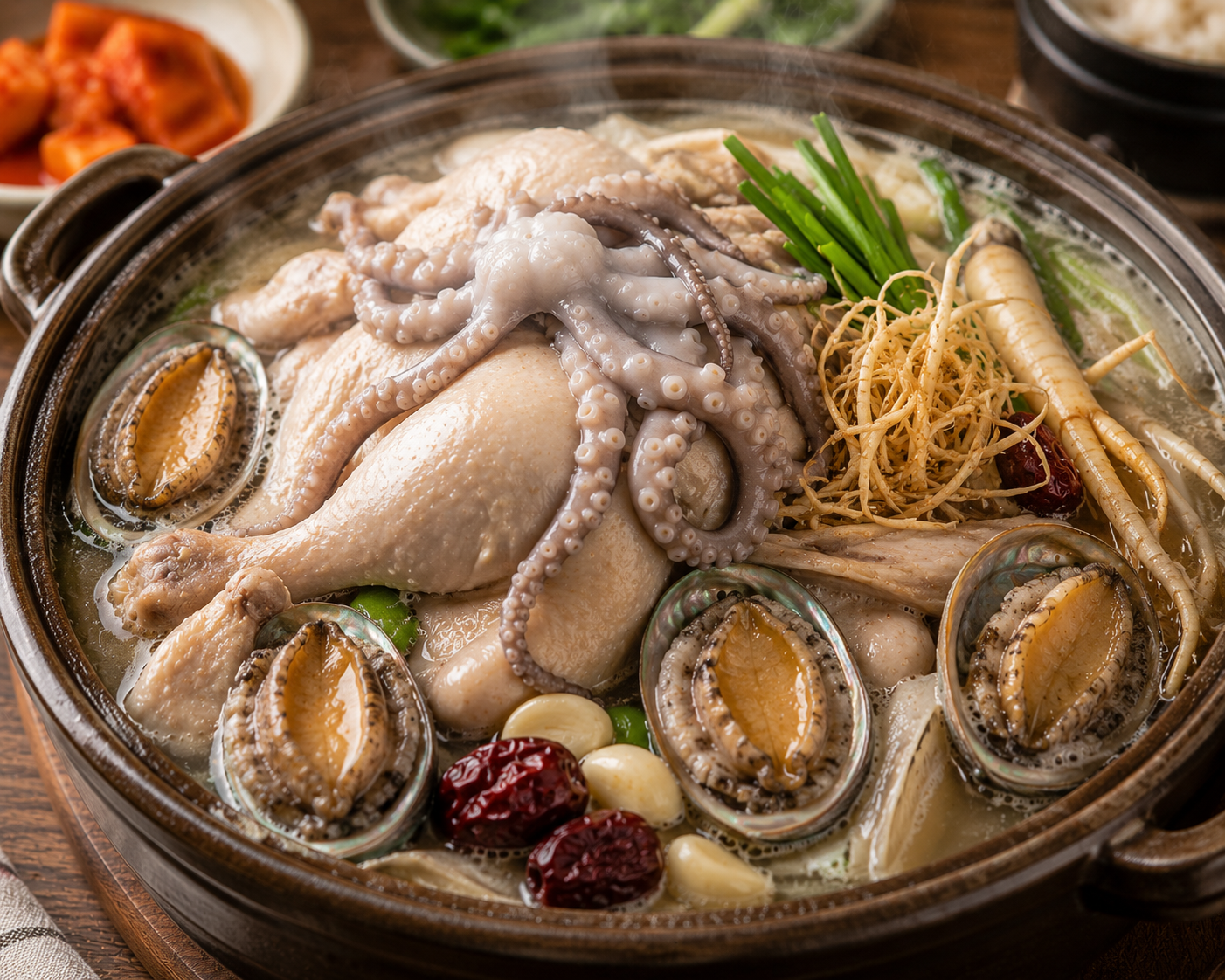
Chicken and Seafood Soup
해신탕 · hae-sin-tang
A nourishing soup made by simmering chicken with seafood (mainly octopus and abalone), where the umami of the seafood blends with the tender texture of the chicken.
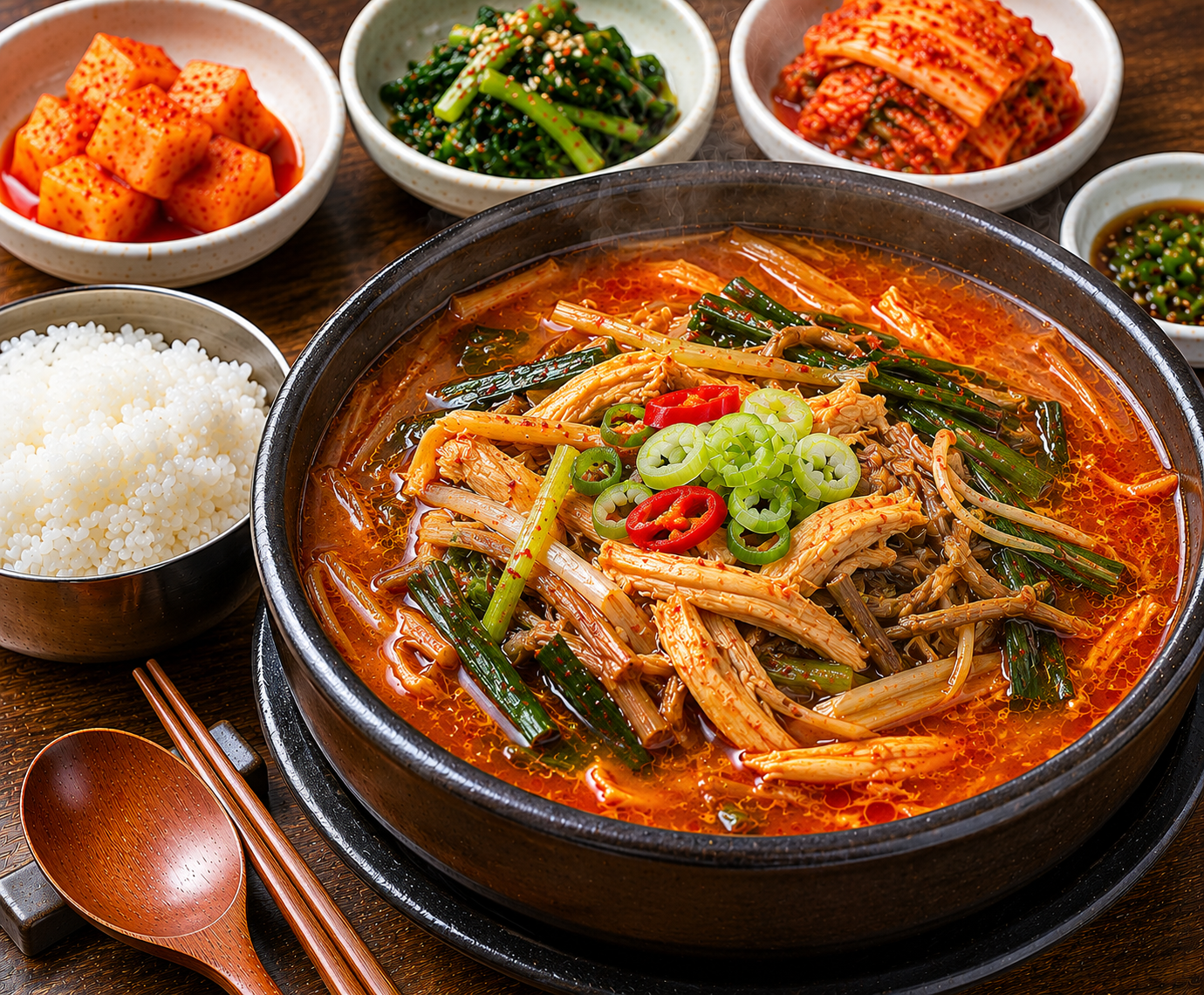
Dakgaejang
닭개장 · dak-gae-jang
A soup dish made by boiling chicken and a variety of vegetables with red chili powder for a hearty kick, characterized by its spicy and deep flavor.
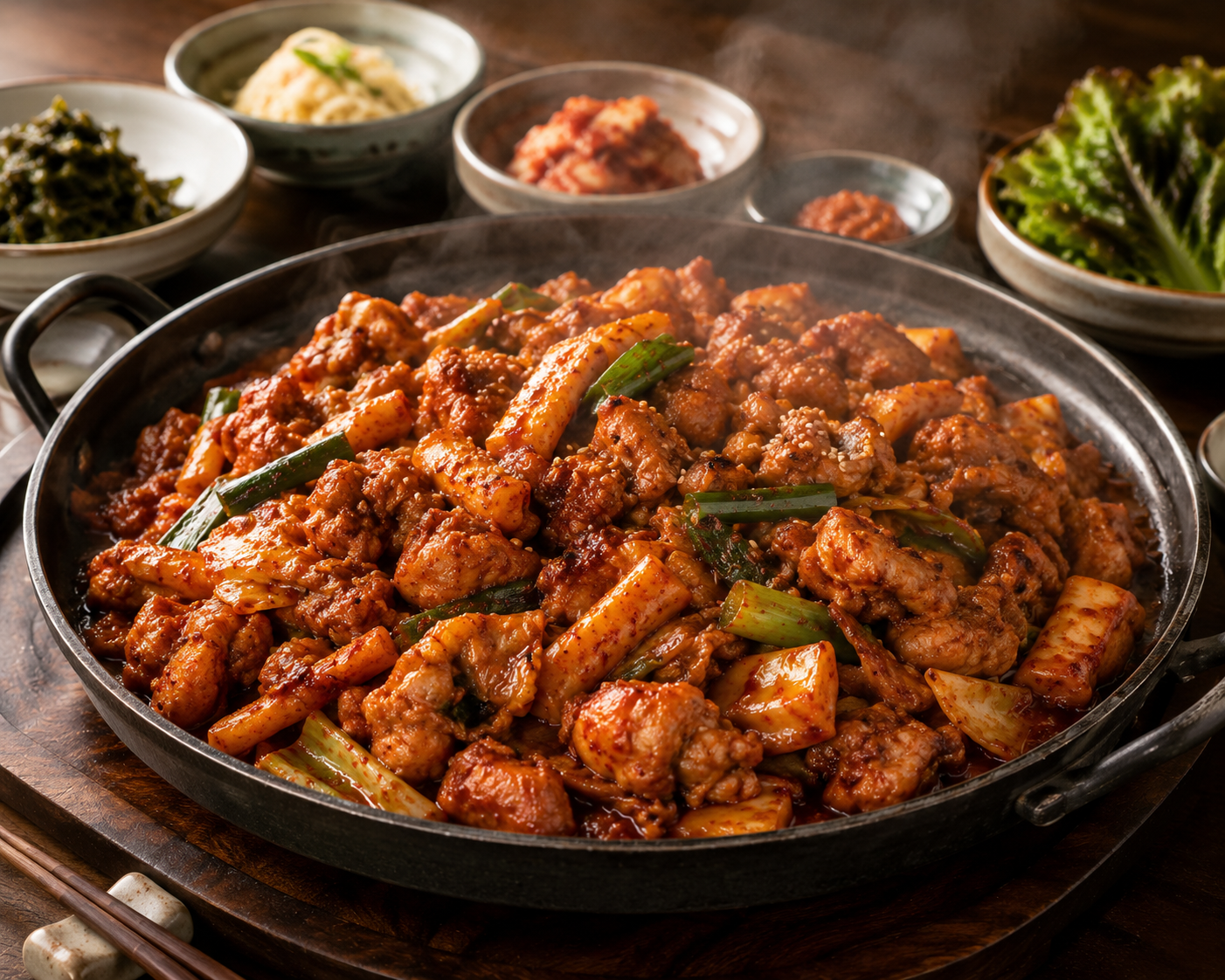
Dak-galbi
닭갈비 · dak-galbi
A spicy grilled dish made by marinating chicken in gochujang and stir-frying it on a hot plate. It is usually stir-fried with cabbage, sweet potato, and rice cakes for a rich flavor.
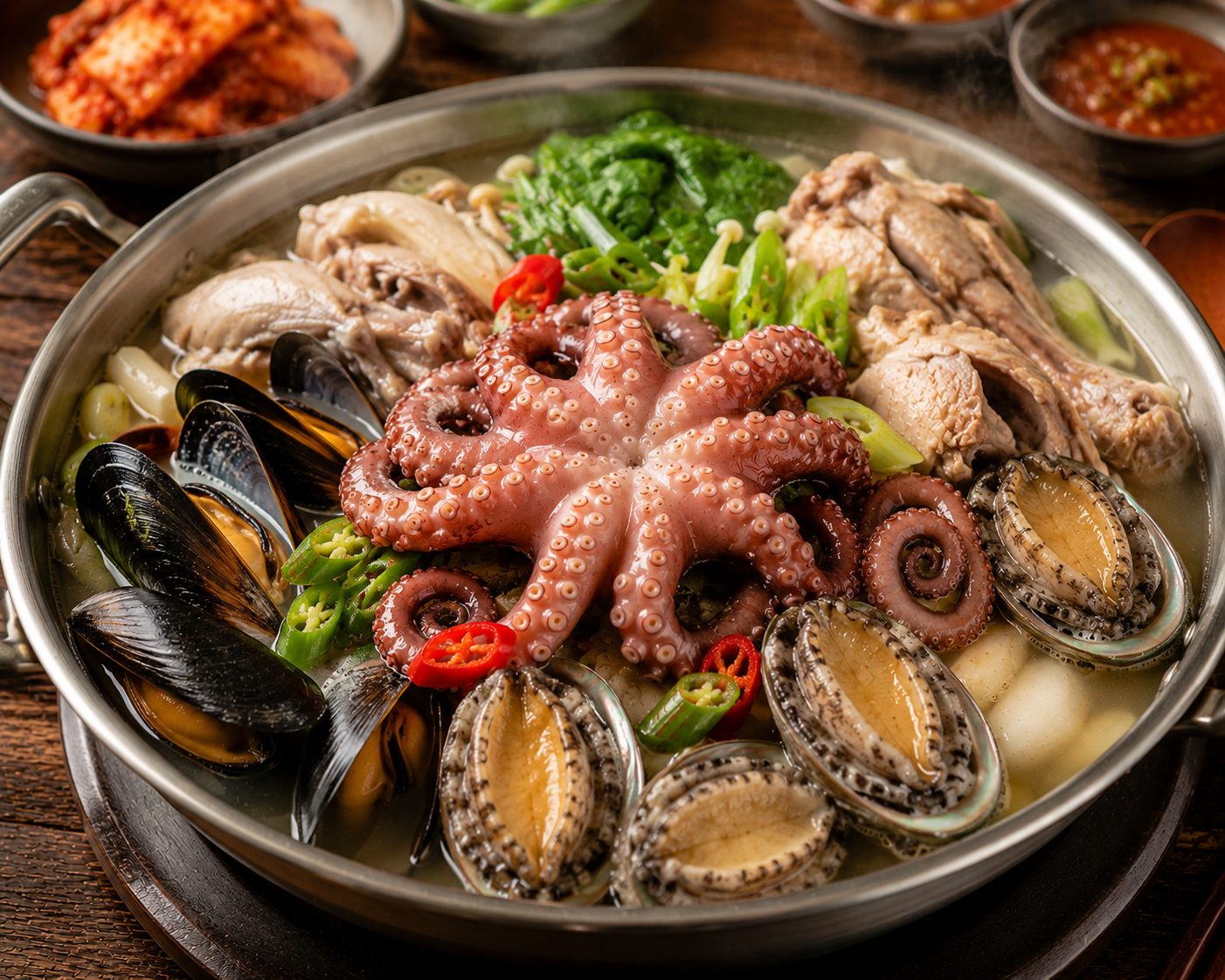
Chicken, Octopus and Abalone Soup
해천탕 · hae-cheon-tang
A soup dish made by simmering chicken, octopus, abalone, and other ingredients together, where the umami of the seafood blends with the rich flavor of the chicken.
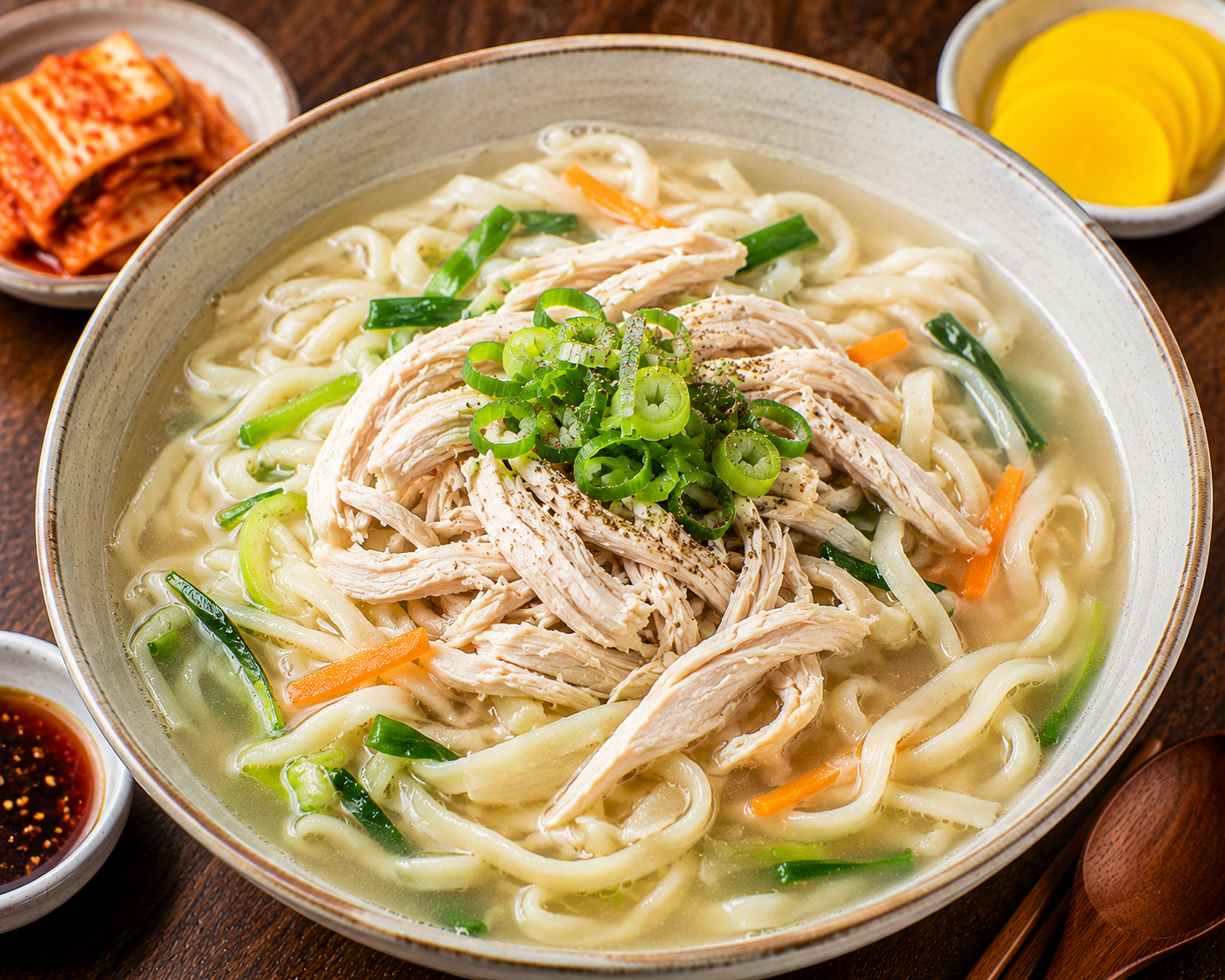
Chicken Kalguksu
닭칼국수 · dak-kal-guksu
A warm noodle dish made by boiling knife-cut wheat flour noodles in a rich chicken broth simmered slowly from whole chicken.
Goes well with
Ingredients
How it's made
- 1Clean the chicken thoroughly and stuff it with glutinous rice, ginseng, jujube, and garlic.
- 2Pour water into a large pot and add the chicken to boil.
- 3Once it starts boiling, reduce the heat and simmer until the chicken is tender.
- 4Season with salt and serve hot.
Nutrition
* Estimated values per serving.
Allergens
It is not suitable for vegetarian or halal diets as it uses chicken and ginseng.
How to order
삼계탕 주세요
Sam-gye-tang ju-se-yo
Please give me Samgyetang
Customize your order
Traveler tips
How to eat it
Frequently asked questions
- Why eat hot Samgyetang in the heat of summer?
- In Korea, there is an idea known as ‘이열치열’ (iyeolchiyeol, “fighting heat with heat”), where people eat hot food in hot weather to sweat and support the body. Samgyetang is especially known as a Bongnal food, so it is seen almost as a symbol of summer restorative eating.
- How do I eat the glutinous rice inside the chicken?
- After eating some of the chicken, loosen the glutinous rice from inside the cavity into the broth and eat it like porridge. It is also fine to take the rice out and mix it with the broth from the start.
- Can I add a lot of salt to the broth?
- Samgyetang is usually seasoned lightly at the start, and diners often adjust it with salt themselves. Since kimchi or Kkakdugi adds saltiness when eaten alongside it, add salt little by little.
Last reviewed: 2026-10-07