
Cultural background
A warm meal for the common people, often enjoyed for lunch and especially popular in cold weather.
Origin & history
The name Kalguksu comes from the way the dough is rolled thin and then cut with a knife. Compared with machine-made noodles, the strands vary slightly in width, and that irregularity is considered a hallmark of hand-cut Kalguksu.
When wheat flour was scarce, even a bowl of noodles was a relatively special meal. After the Korean War, as wheat flour became more widely used, Kalguksu took root as a warm, easy-to-find meal in markets and neighborhood restaurants.
Regional & modern variations
- Clam Kalguksu — Kalguksu boiled with clams. The broth is clearer and more refreshing, and the dish is especially common in coastal areas or places where shellfish are abundant.
- Chicken Kalguksu — Noodles are added to broth made by boiling chicken. Compared with anchovy broth, it tastes richer and smoother, and shredded chicken is sometimes added as a garnish.
- Jang Kalguksu — Known as a Gangwon-do-style Kalguksu simmered with Gochujang or Doenjang for a spicy kick. Unlike regular Kalguksu, the broth is red or deep brown.
- Pat Kalguksu — Kalguksu noodles are added to a thick broth made by boiling red beans. Some places serve it savory, while others serve it sweet with sugar on the side.
How Koreans eat it
Many people seek out Kalguksu on rainy days, drawn by the warmth of the broth and the filling quality of wheat noodles. Depending on the restaurant, it may arrive bubbling in a large pot to be shared, or served individually by the bowl.
Taste & how to choose
Good Kalguksu has noodle edges that have not gone too soft, with a slight springiness when you bite into them. Starch released from the noodles naturally gives the broth a bit of body. First-time eaters may mistake the uneven noodle thickness for a flaw, but in hand-cut Kalguksu it is actually a natural feature.
Similar dishes
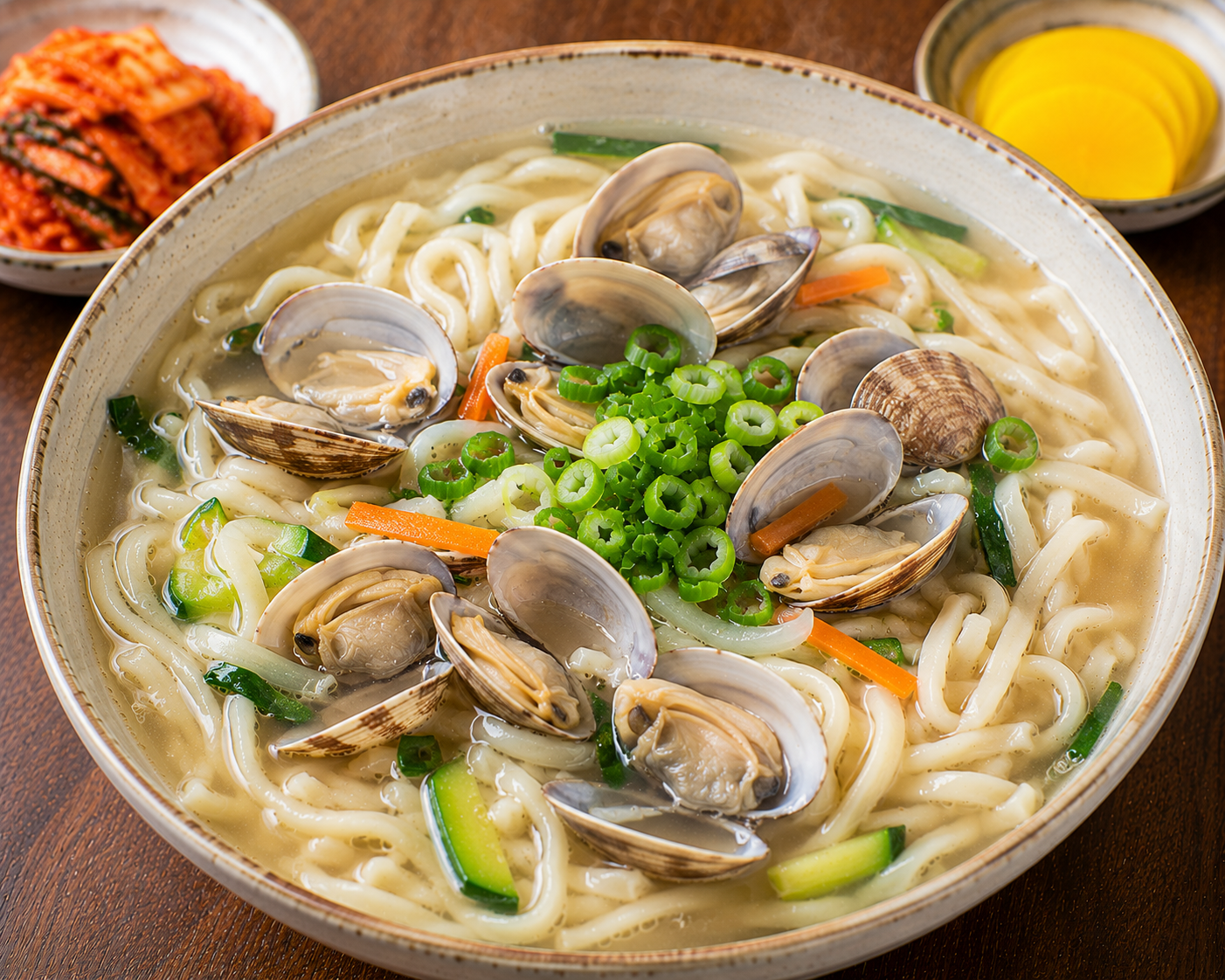
Clam Kalguksu
바지락칼국수 · ba-ji-rak-kal-guk-su
A warm noodle dish made with clams and wheat dough cut into noodles, boiled in anchovy broth. The chewy noodles and the umami of the clams combine to create a rich flavor.
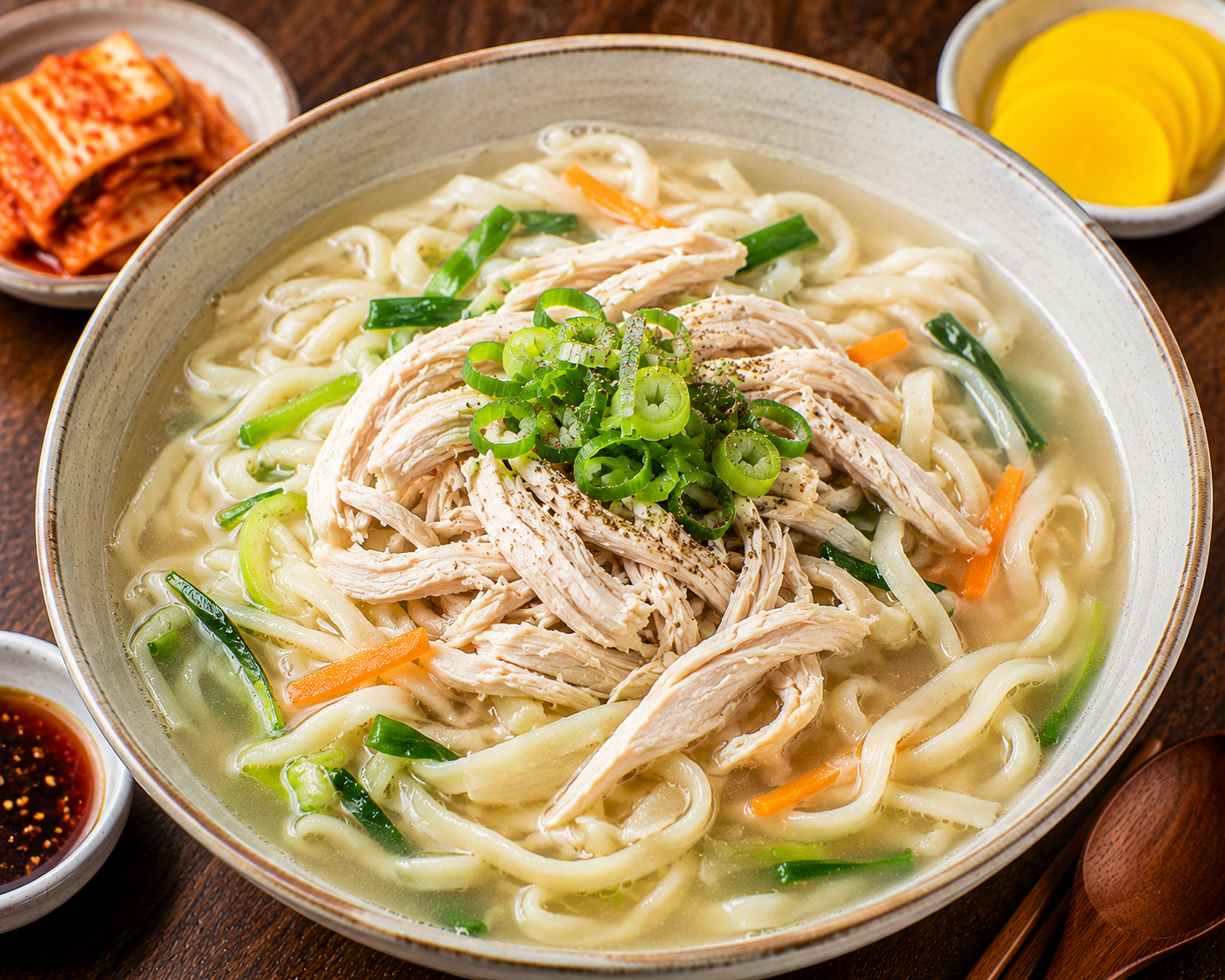
Chicken Kalguksu
닭칼국수 · dak-kal-guksu
A warm noodle dish made by boiling knife-cut wheat flour noodles in a rich chicken broth simmered slowly from whole chicken.
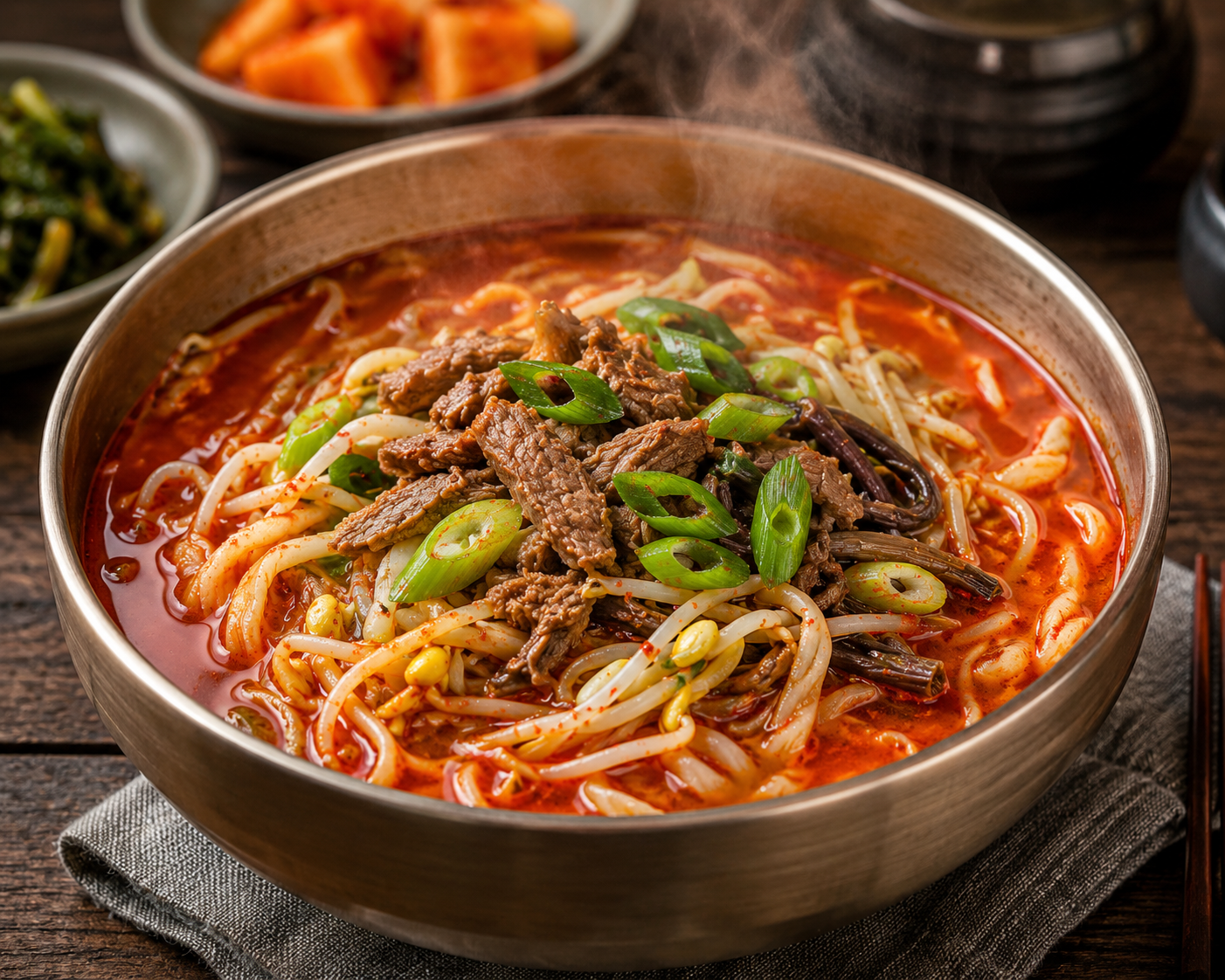
Beef noodles soup
육칼국수 · yuk-kal-guksu
Spicy noodle dish made with chewy knife-cut noodles in a rich beef broth simmered with chili powder and green onions.
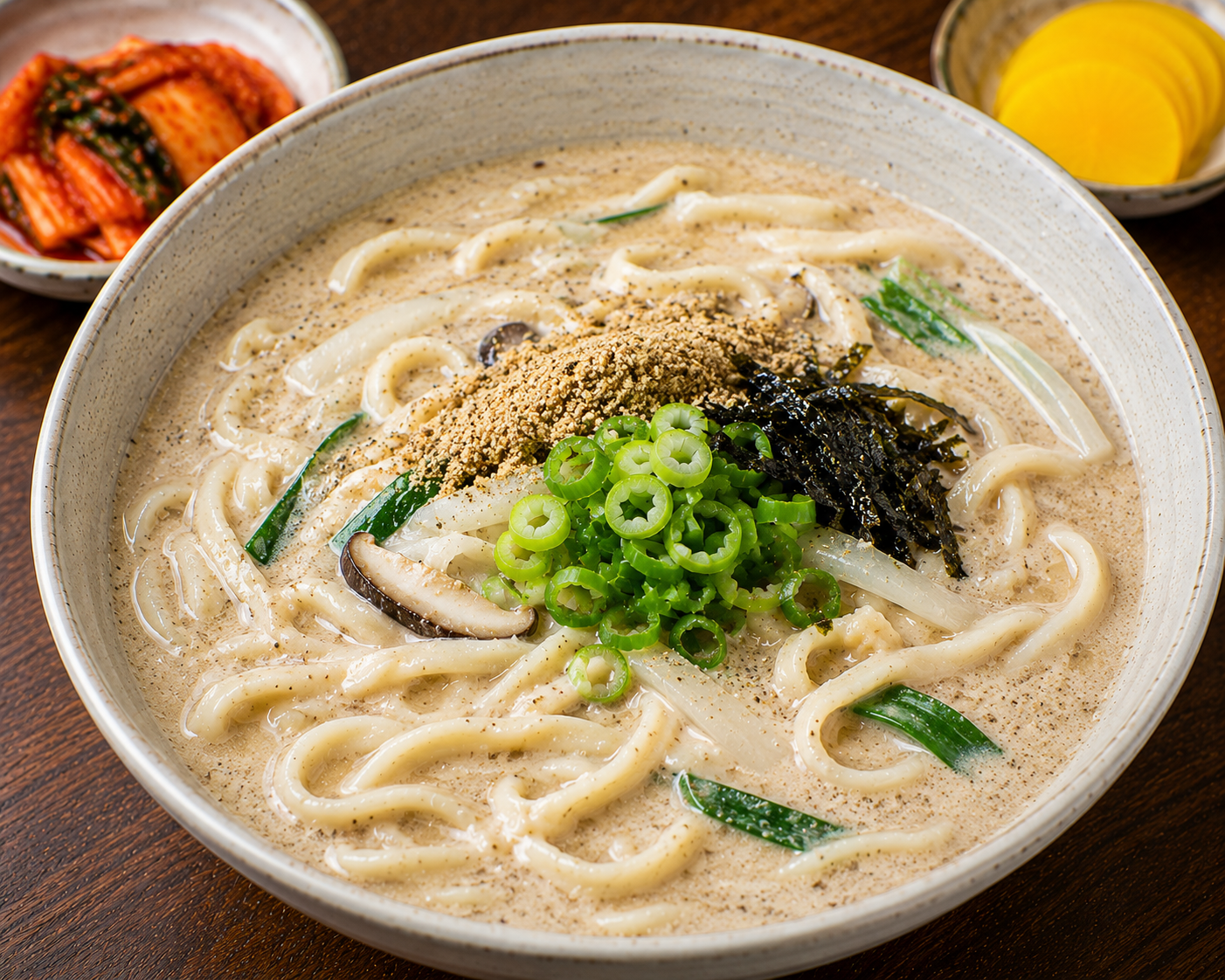
Perilla Seed Kalguksu
들깨칼국수 · Deulkkae-kalguksu
A warm noodle dish made from flour dough cut into strips and boiled in a rich broth with perilla seed powder. The nutty flavor of perilla seeds and the chewy noodles create a harmonious dish that warms the body with its hot soup.
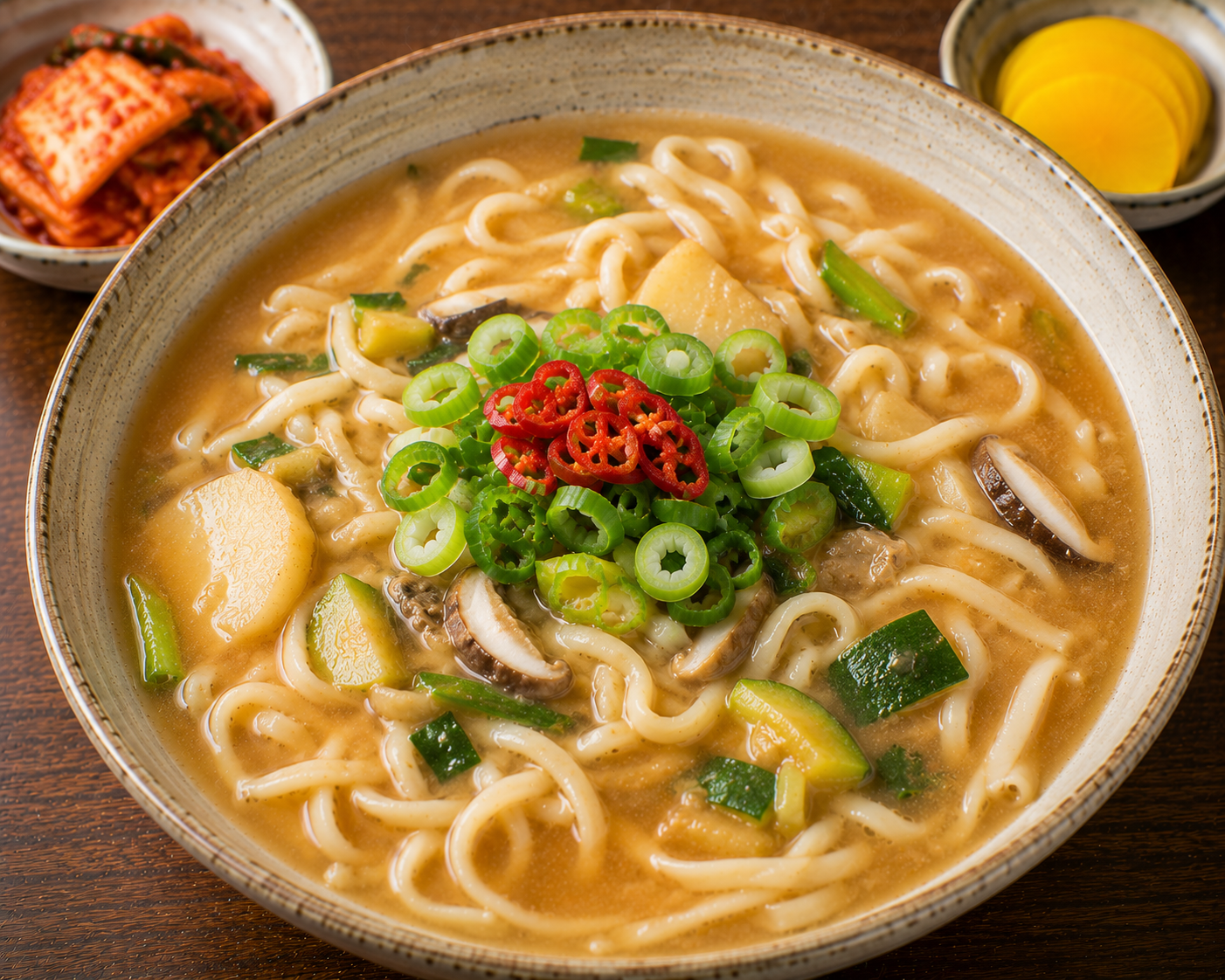
Soybean Paste Knife Noodle Soup
된장칼국수 · doenjang-kalguksu
A warm noodle dish made with wheat flour dough cut into noodles and boiled in broth seasoned with soybean paste.
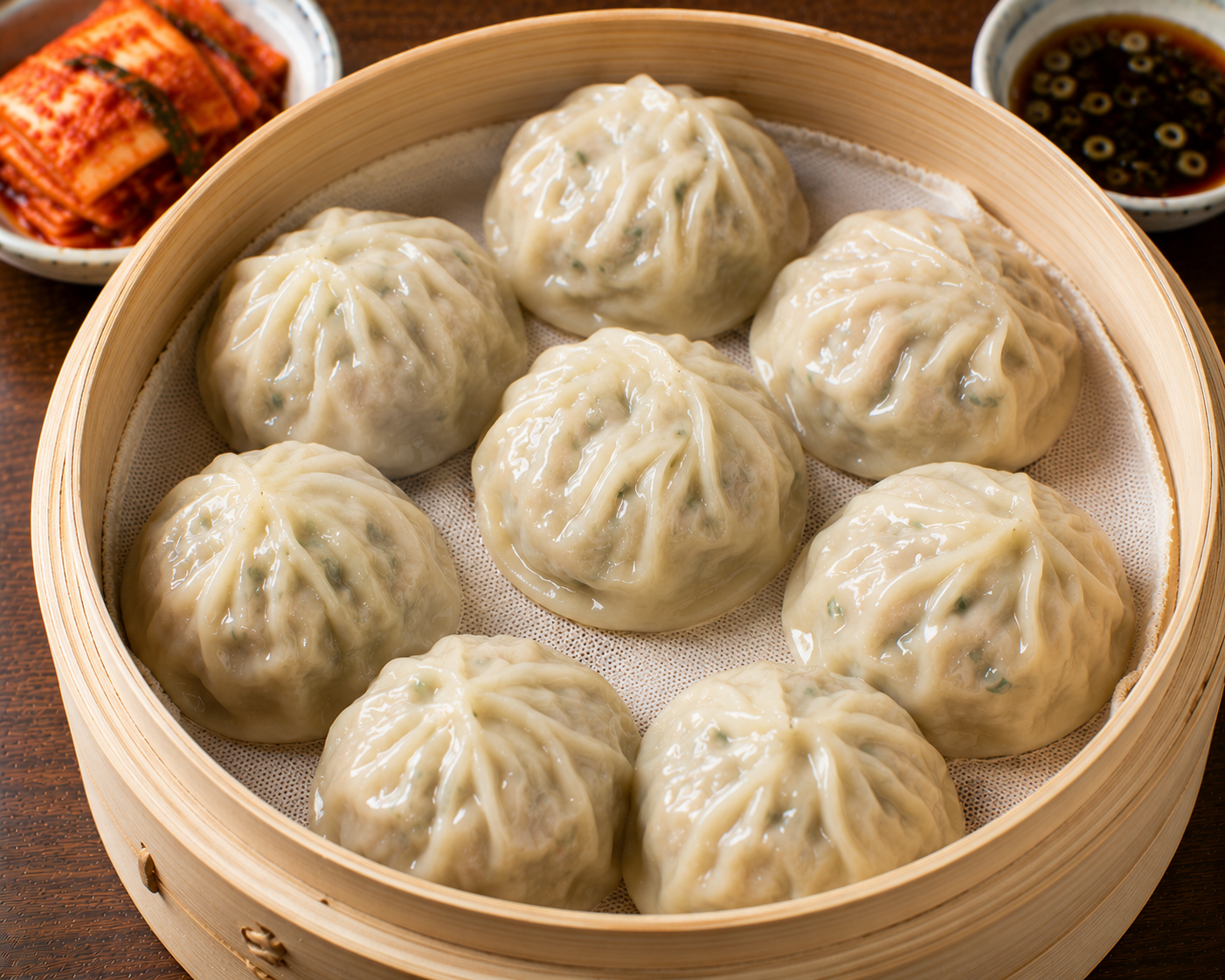
Steamed Dumplings
찐만두 · Jjin-mandu
A dish made by steaming dumplings filled with meat, kimchi, tofu, and other ingredients, characterized by its chewy skin and juicy filling. It tastes even better when dipped in soy sauce.
Goes well with
Ingredients
How it's made
- 1Make the flour dough and let it rest.
- 2Roll the dough thin and cut into noodles.
- 3Boil broth with anchovies and kelp.
- 4Add noodles and vegetables to the boiling broth and cook.
- 5Adjust seasoning and serve in a bowl.
Nutrition
* Estimated values per serving.
Allergens
Vegetarian options may vary depending on the broth.
How to order
칼국수 주세요
Kal-guk-su ju-se-yo
Please give me Kalguksu
Customize your order
Traveler tips
How to eat it
Frequently asked questions
- Why does the name include “칼 (kal, knife)”?
- The name does not mean you eat it with a knife; it refers to cutting the dough with a knife to make the noodles. That is why Kalguksu noodles are not perfectly uniform in shape like Ramen or Somen.
- Is Kalguksu always vegetarian?
- Even if it looks like just vegetables and noodles, the broth may contain anchovies, clams, chicken, or beef bones. If you want a vegetarian version, it is best to check the broth ingredients before ordering.
- What is the difference between Sujebi and Kalguksu?
- Both are made by cooking wheat-flour dough in broth, but their shapes differ. Kalguksu uses dough rolled out and cut into noodles with a knife, while Sujebi uses pieces of dough torn by hand or pulled off in thin pieces and added to the broth.
Last reviewed: 2026-10-07