
Kkakdugi
Kimchi made by cutting radish into large cubes and mixing it with red pepper powder, garlic, and fermented shrimp. It has more moisture and a crunchier texture than Napa cabbage kimchi, and the longer it ferments, the more sour and effervescent the broth becomes.
Cultural background
It is a staple side dish on family dining tables and is usually provided as a standard side at almost every restaurant, served without special order. Kimjang (the preparation of fermented vegetables) is done in late autumn to early winter, and each household has its own unique taste, symbolizing 'mother’s hand taste.'
Origin & history
The name Kkakdugi is thought to come from the cube-like shape of radish cut into ‘깍둑썰기’ (kkakduk-sseolgi, dicing). Rather than thin slices, the kimchi is made in bite-size chunks, which brings out more of the radish's natural sweetness and satisfying crunch.
Several theories have been passed down, including one account that says it was made in the royal court, but its exact beginnings remain unclear. In Korean food culture, where radish is eaten often, Kkakdugi became widely established as a radish kimchi that, unlike Napa Cabbage Kimchi, is easy to make and eat after a relatively short time.
Regional & modern variations
- Seolleongtang-Restaurant Kkakdugi — A style often served at Seolleongtang or Gomtang restaurants. Made to go with soupy dishes, it tends to have relatively pronounced sweetness and saltiness, with a generous amount of kimchi brine.
- Oyster Cubed Radish Kimchi — Kkakdugi made with raw oysters. The oysters add a briny aroma and umami, but the kimchi ferments quickly and has a distinct seafood scent.
- Seokbakji — A radish kimchi made by cutting radish into pieces that are larger and flatter than standard dice. Closely related to Kkakdugi, it can be found at gukbap restaurants or places specializing in tang soups.
How Koreans eat it
Kkakdugi pairs especially well with milky meat broths. Between spoonfuls of rich, mellow soups such as Seolleongtang, Gomtang, and Galbitang, the crisp, tangy radish refreshes the palate. In Korean restaurants, some diners add a little Kkakdugi brine to gukbap or Seolleongtang for extra seasoning and acidity.
Taste & how to choose
Good Kkakdugi should not be mushy; the radish should break with a firm bite. If the pieces are too large, the seasoning may not penetrate all the way through and the inside can taste bland; if it is over-fermented, the sourness becomes strong. Kkakdugi is at its best when the surface has not dried out and the red seasoning and brine have soaked in evenly.
Similar dishes
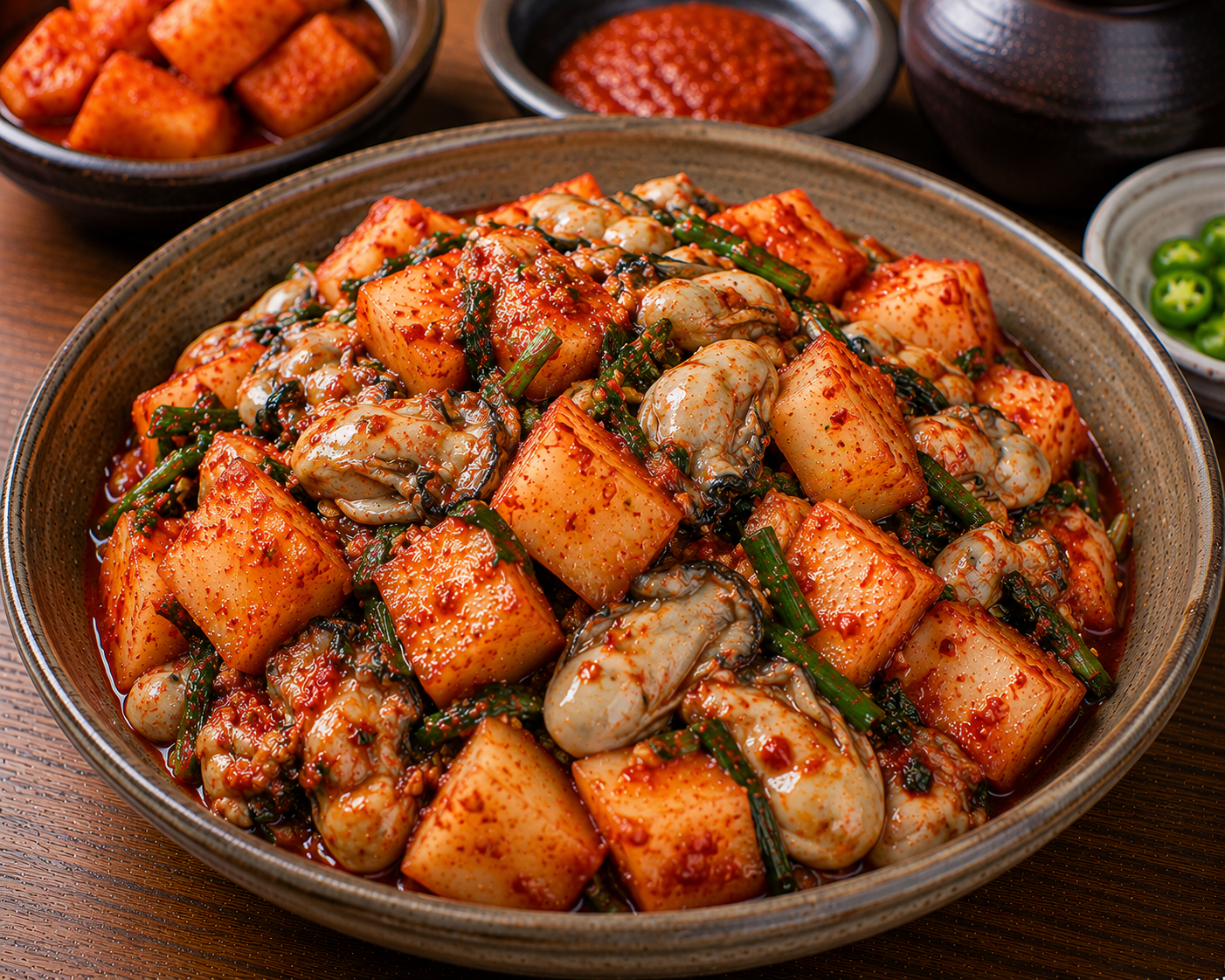
Oyster Cubed Radish Kimchi
굴깍두기 · gul-kkakdugi
Kimchi made by cutting radishes into cubes and seasoning them with red pepper powder, garlic, and salted seafood, then adding oysters to ferment. It features a harmony of crunchy radish and soft oysters, and the flavors deepen and sourness increases as fermentation progresses.
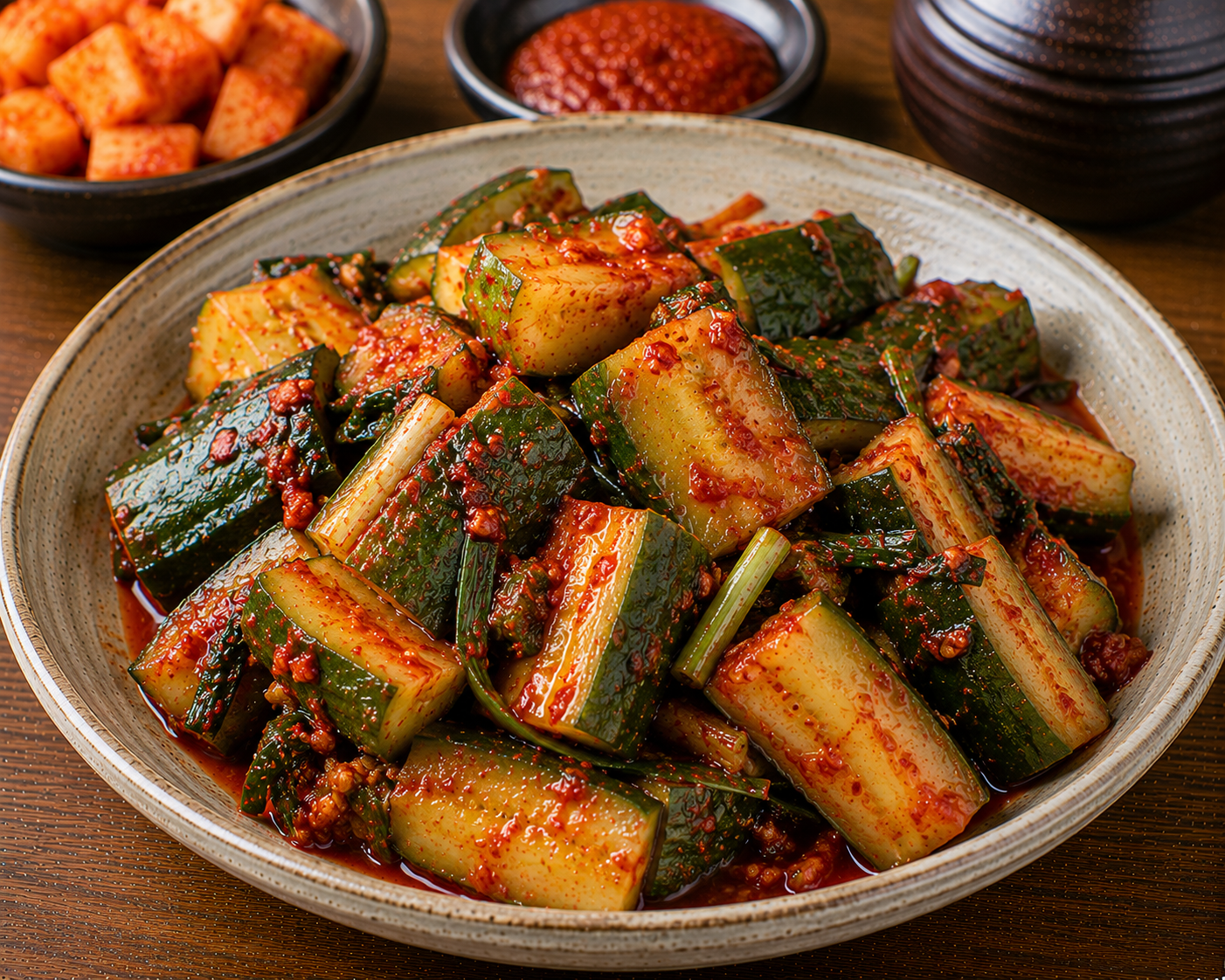
Cucumber Kkakdugi
오이깍두기 · oi-kkakdugi
A type of kimchi made by cutting cucumbers into cubes and mixing them with gochugaru, garlic, and fermented seafood, then fermenting it. It features a crunchy texture and spicy flavor, with a sour taste developing as it ferments.
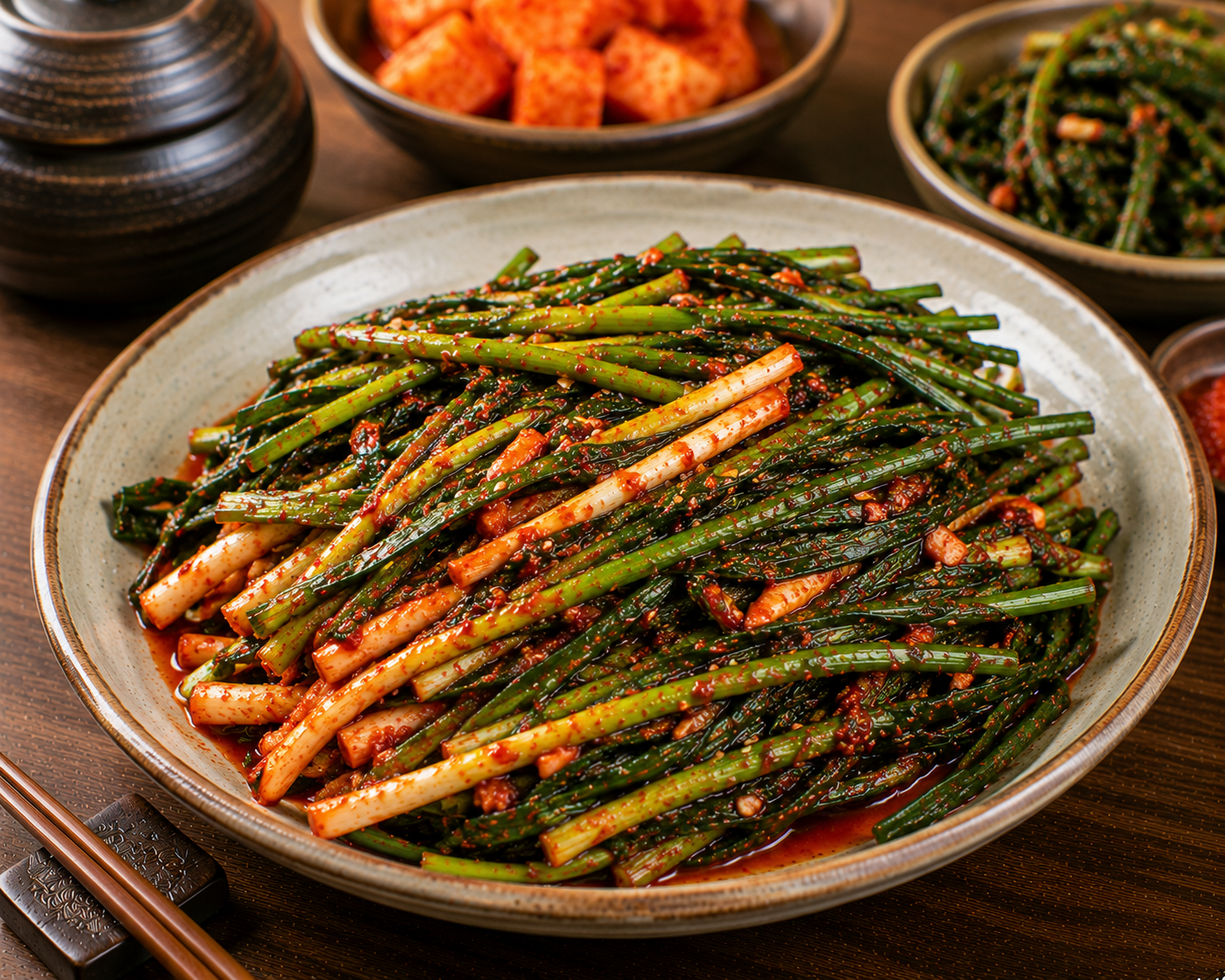
Chive Kimchi
부추김치 · buchu-kimchi
Kimchi made by mixing chives with red pepper powder, garlic, and fermented seafood, then fermenting. It is crunchy, spicy, and rich in umami.
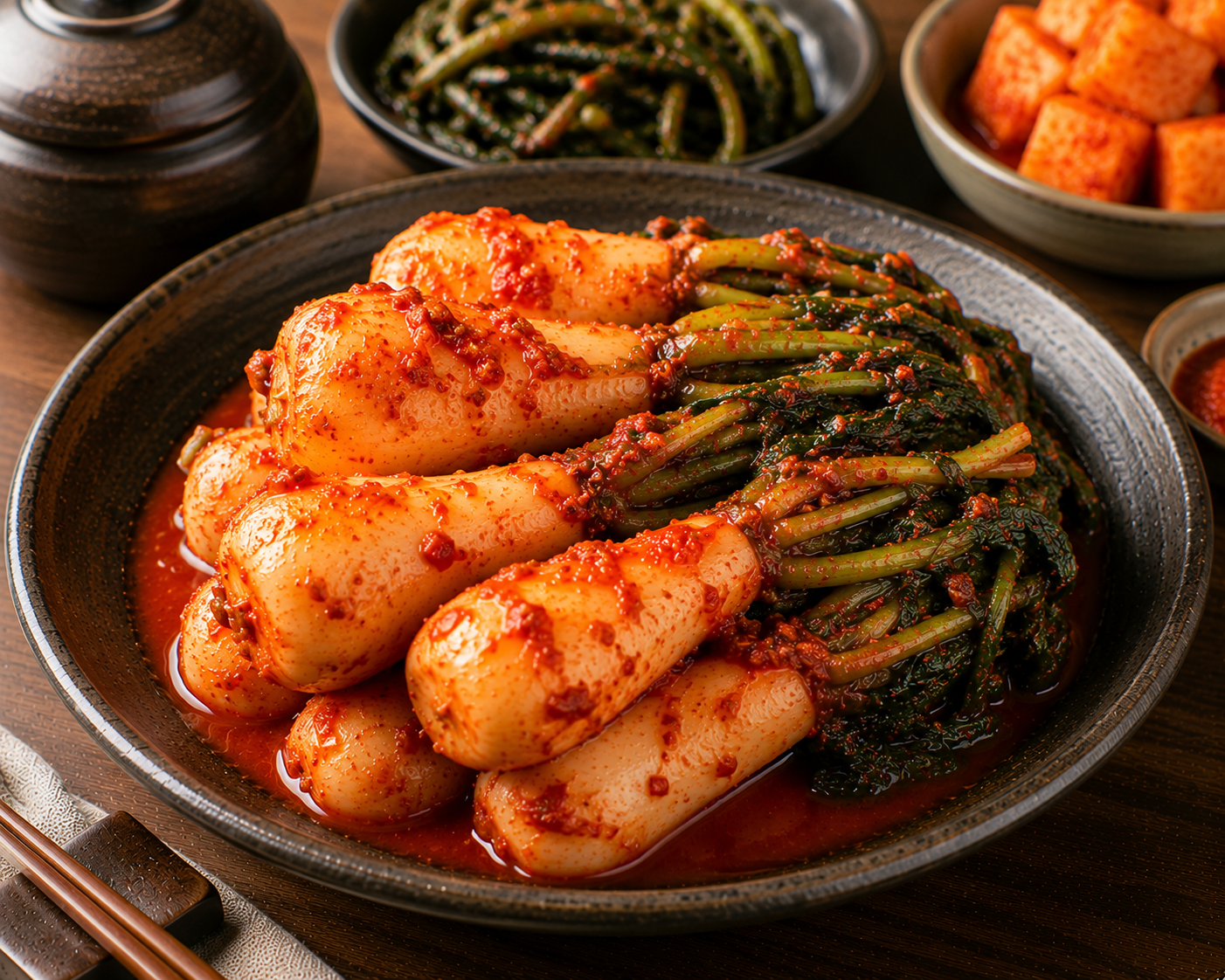
Chonggak Kimchi
총각김치 · chonggak-kimchi
Kimchi made by fermenting whole radishes with chili pepper powder, garlic, and salted seafood. It is characterized by a crunchy texture and spicy flavor, and as fermentation progresses, it becomes more sour and savory.
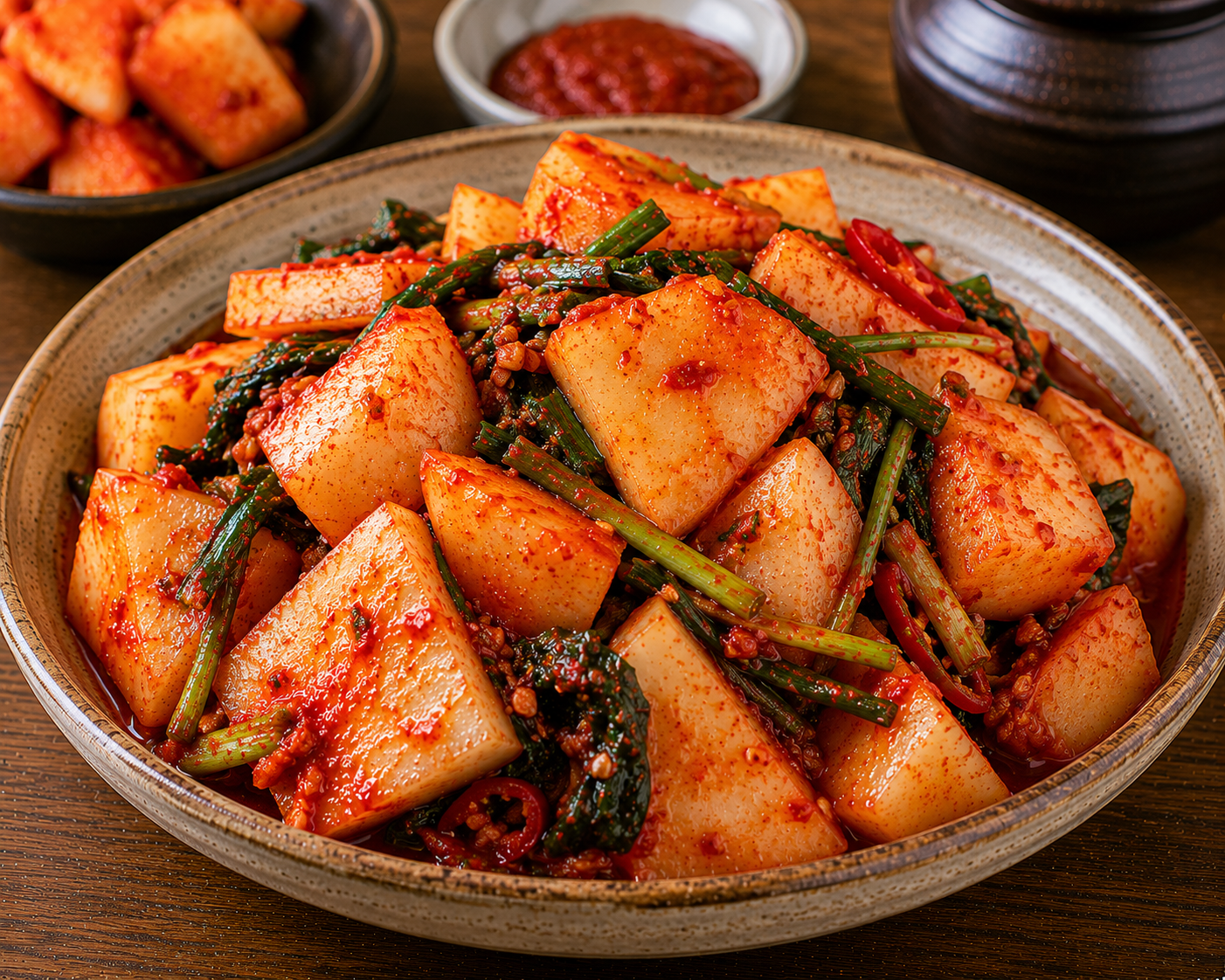
Seokbakji
섞박지 · Seokbakji
A kimchi made by fermenting radish and napa cabbage with red pepper powder, garlic, and salted seafood, characterized by a crunchy texture and spicy taste. The sour taste becomes stronger as fermentation progresses and is enjoyed as a side dish or used as an ingredient in stews.
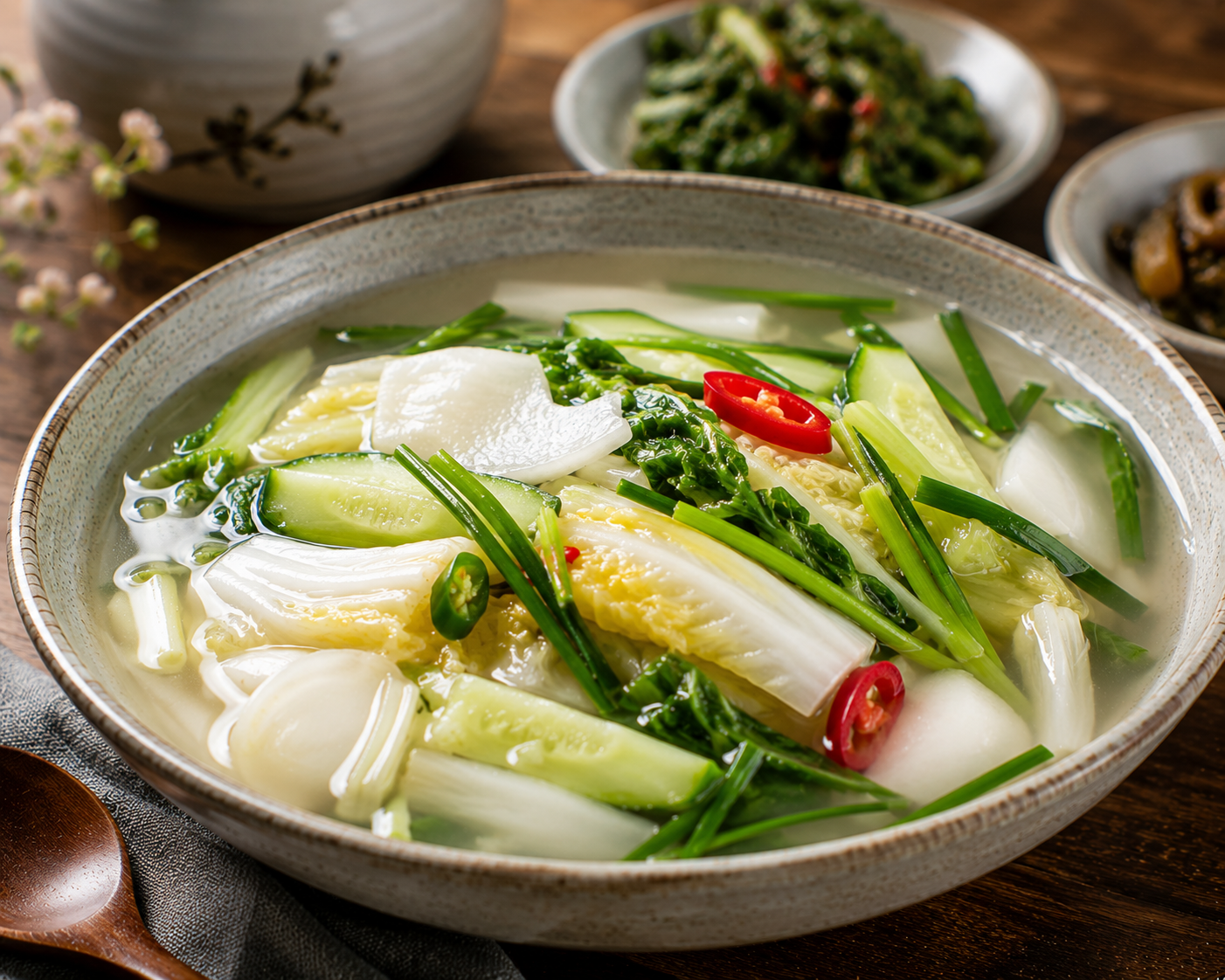
Mul Kimchi
물김치 · mul-gimchi
This kimchi is made by soaking radish and napa cabbage in salted water, characterized by its abundant broth, coolness, and sour taste. As fermentation progresses, the broth becomes more sour and tangy. It is mainly eaten as a side dish and is kept cool in the refrigerator during summer.
Goes well with
Ingredients
How it's made
- 1Wash the radish thoroughly and cut it into large cubes.
- 2Add red pepper powder, garlic, and fermented shrimp, and mix evenly.
- 3Ferment at room temperature for about a day and then refrigerate.
Nutrition
* Estimated values per serving.
Allergens
Contains fermented shrimp, caution for vegans and shellfish allergies.
How to order
깍두기 주세요
Kkak-du-gi ju-se-yo
Please give me Kkakdugi
Traveler tips
How to eat it
Frequently asked questions
- Can I add Kkakdugi brine to soup?
- With Seolleongtang or gukbap, this is a common way to eat it. Since the broth's flavor changes immediately, though, it is best to start with just one or two spoonfuls.
- Why is Kkakdugi crunchier than Napa Cabbage Kimchi?
- Because the radish is cut into thick cubes before being made into kimchi. Radish has a firmer structure than leafy Napa cabbage, so it keeps its bite for a long time even after fermentation.
- If Kkakdugi tastes slightly fizzy, has it gone bad?
- A light fizz and sourness can be signs that fermentation is under way. If you notice mold, a strong foul smell, or an overly mushy texture, it is better not to eat it.
Last reviewed: 2026-10-07