
Cultural background
It is primarily eaten on birthdays or special occasions, and is also served to mothers as a recovery meal after childbirth.
Origin & history
Seaweed Soup is made by soaking dried seaweed and simmering it into a soup. The practice suited coastal households well, where sea vegetables were easy to gather and store, and the soup became a common part of everyday home cooking.
A long-standing custom is to serve Seaweed Soup to mothers after childbirth. The seaweed is soft, the broth is warm and easy to eat, and the dish has been regarded as food that helps the body recover. For that reason, eating Seaweed Soup on a birthday is more than a simple celebration; it is a way to remember the day of one's birth and one's mother at the same time.
Regional & modern variations
- Beef Seaweed Soup — The most common version in home cooking. The beef is stir-fried first, giving the broth a nutty richness and savory depth.
- Clam Seaweed Soup — This version is simmered with shellfish such as bajirak clams or mussels. Rather than meaty richness, the aroma of the sea and a clean, refreshing broth flavor stand out more clearly.
- Perilla Seed Seaweed Soup — Ground perilla seeds make the broth slightly milky and nutty. Compared with clear Seaweed Soup, the texture is softer and heavier.
How Koreans eat it
Birthday Seaweed Soup is usually less like a cake at the center of a party and more like a symbolic bowl placed on the breakfast table. On the other hand, some people avoid Seaweed Soup on the day of an important exam. The slippery texture of the seaweed is linked to a pun-like superstition about “시험에 미끄러진다” (siheom-e mikkeureojinda, “to slip/fail on an exam”).
Taste & how to choose
Seaweed has a soft, slightly slippery texture when chewed. First-time eaters may find its distinctive ocean aroma unfamiliar. A good Seaweed Soup is not too oily, the seaweed is not tough, and a warm, savory aroma comes through before any fishy smell.
Similar dishes
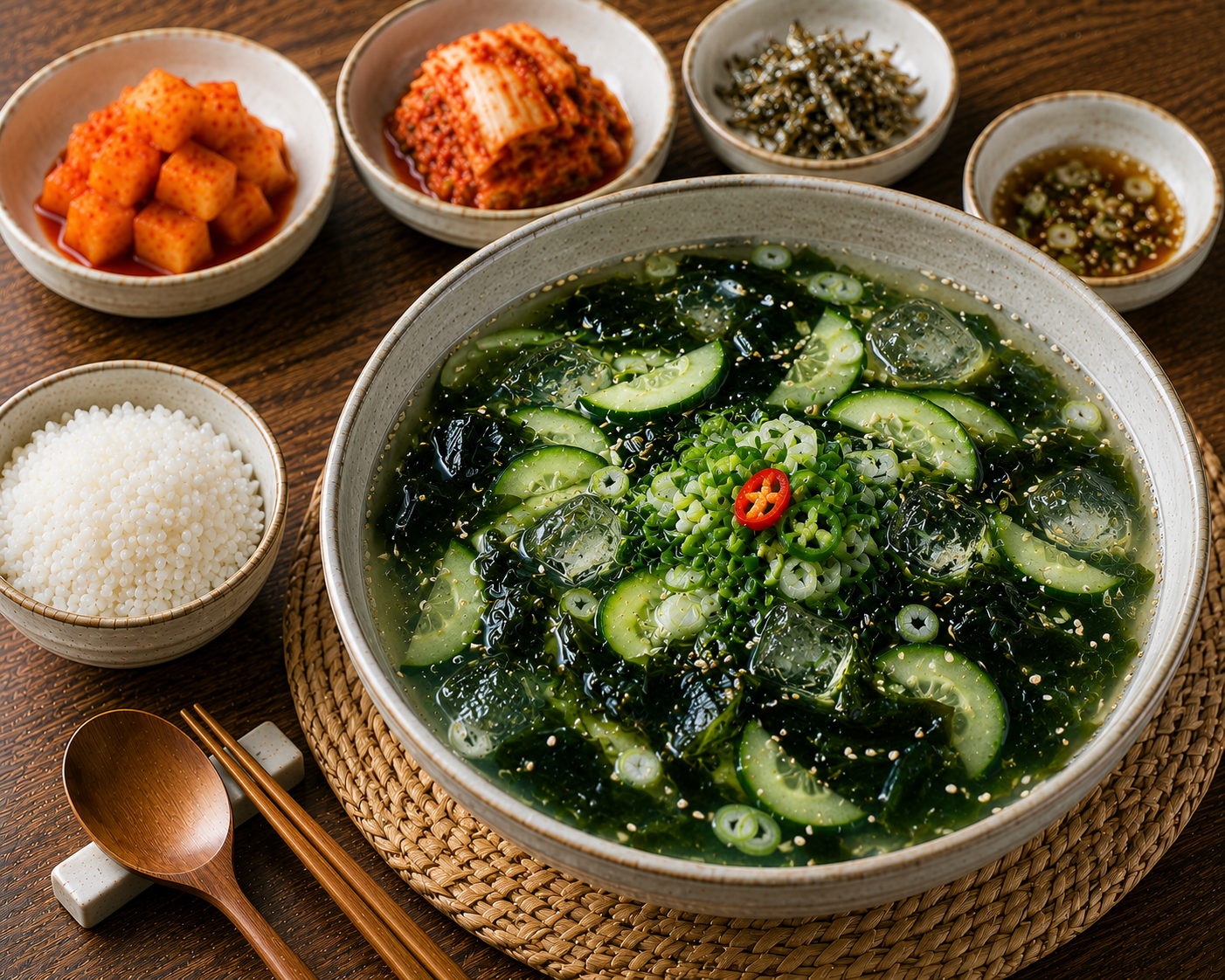
Seaweed Cucumber Cold Soup
미역오이냉국 · mi-yeok-o-i-naeng-guk
A summer cold soup dish made by soaking seaweed and cucumber in chilled broth for a refreshing taste.
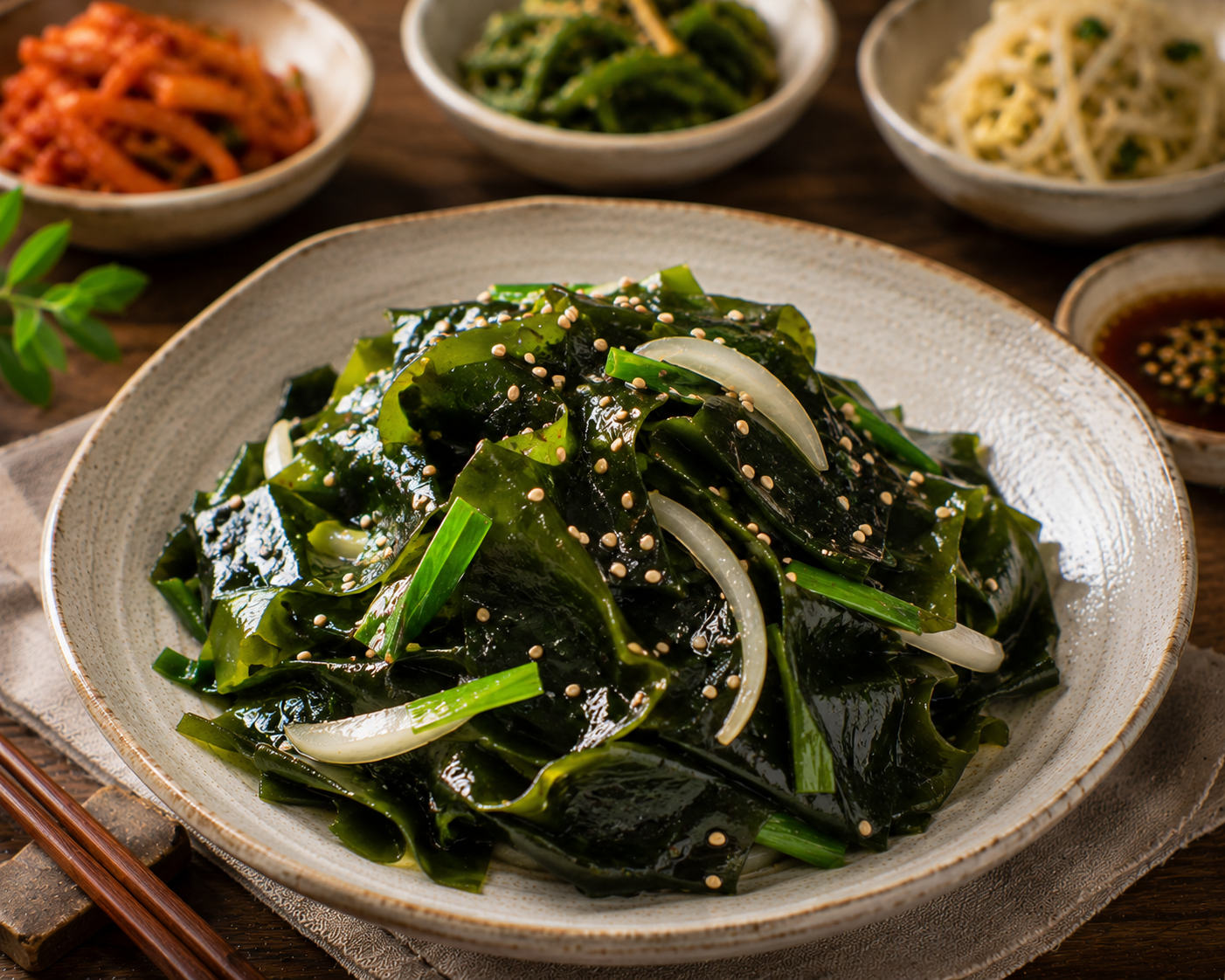
Seaweed Salad
미역무침 · mi-yeok-mu-chim
A side dish made by seasoning soaked seaweed sweet and sour; it features a crunchy and refreshing taste. It is enjoyed with rice, and the umami of seafood makes it even tastier.
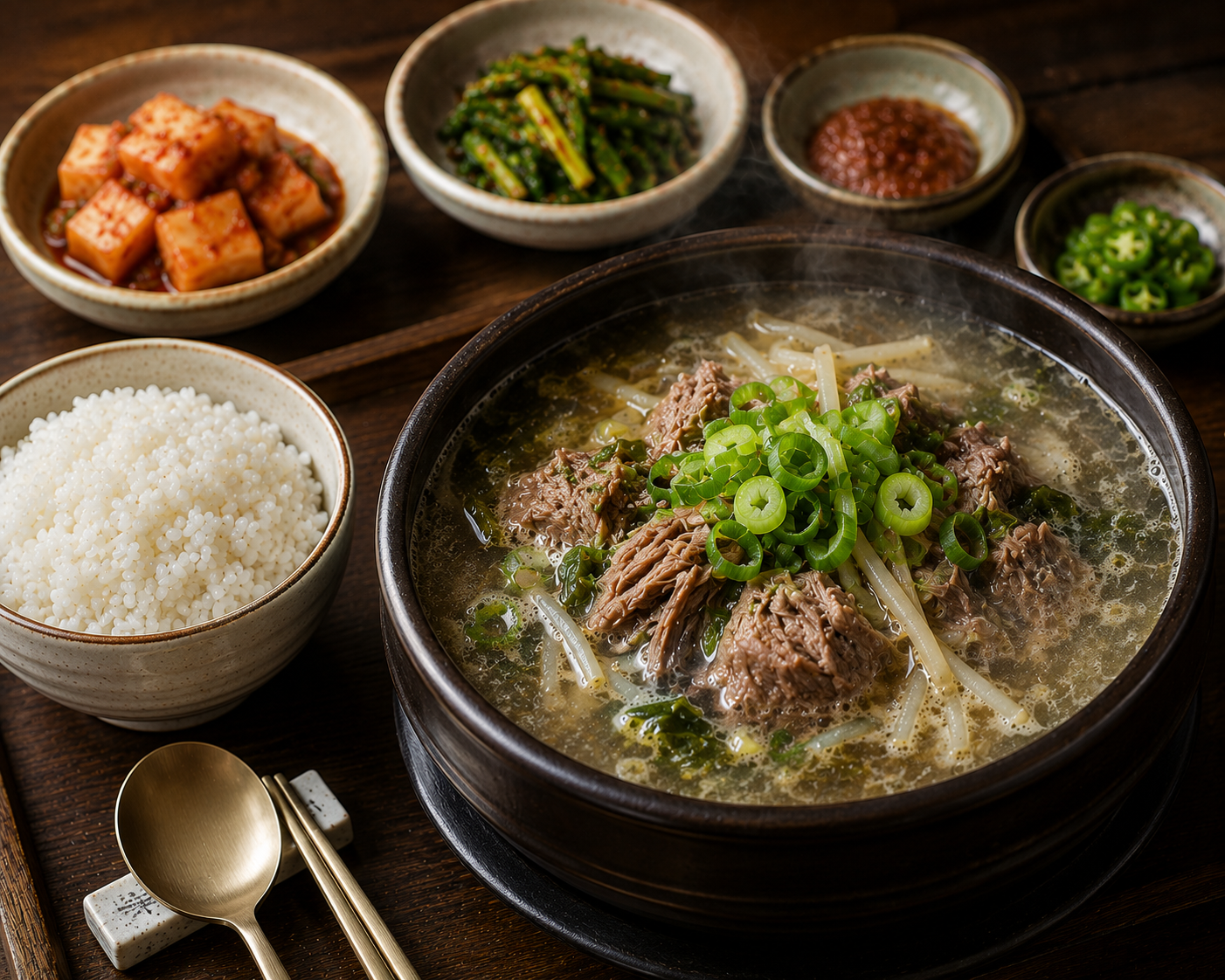
Haejang-guk
해장국 · hae-jang-guk
A soup dish made by boiling beef bones and brisket with ingredients such as bean sprouts and greens for a spicy flavor, this dish is great for easing hangovers.
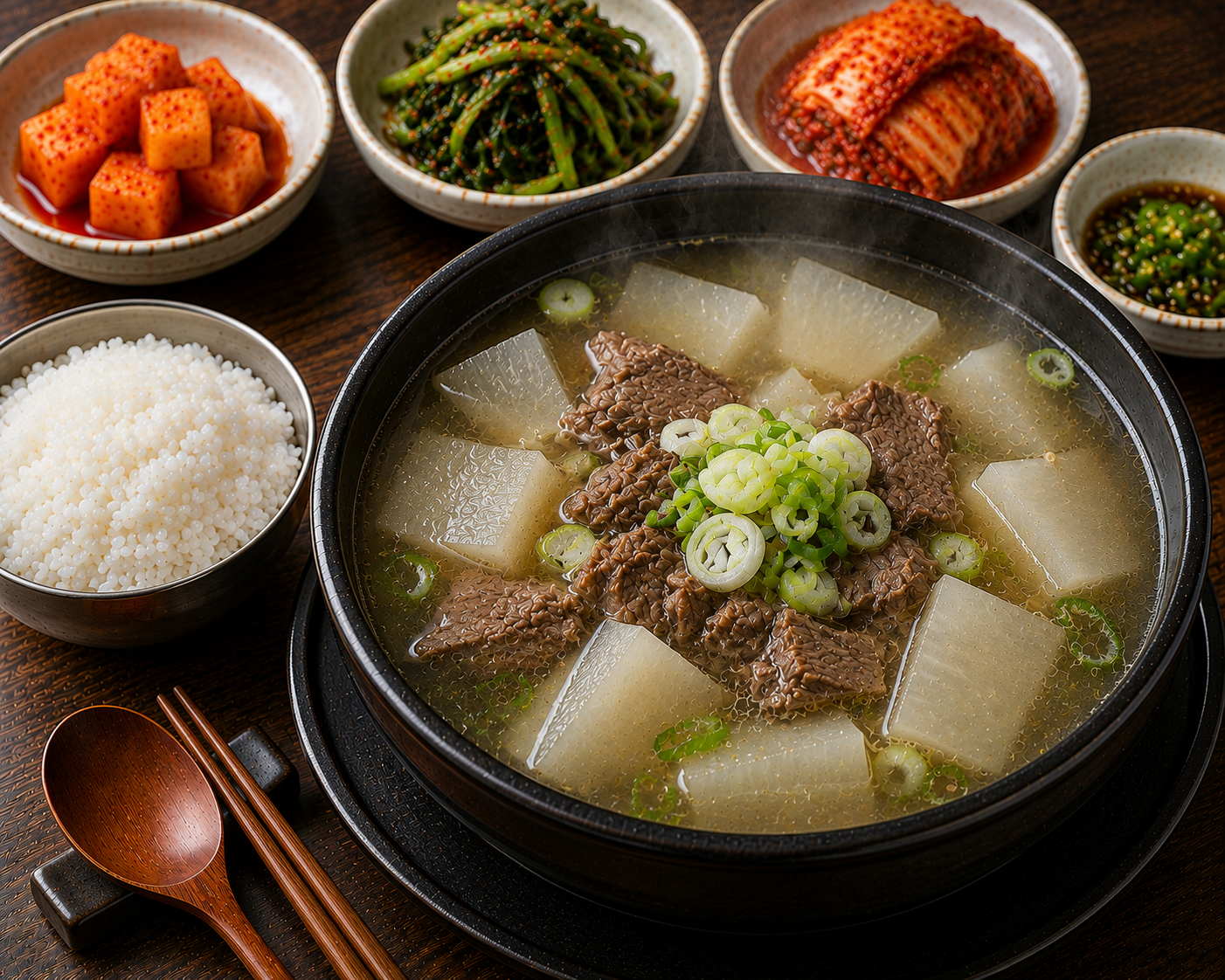
Beef Mu-guk
소고기뭇국 · so-go-gi-mut-guk
A traditional Korean soup dish made by boiling beef and radish in a clear broth. It features a light and refreshing taste, and is enjoyed with rice.
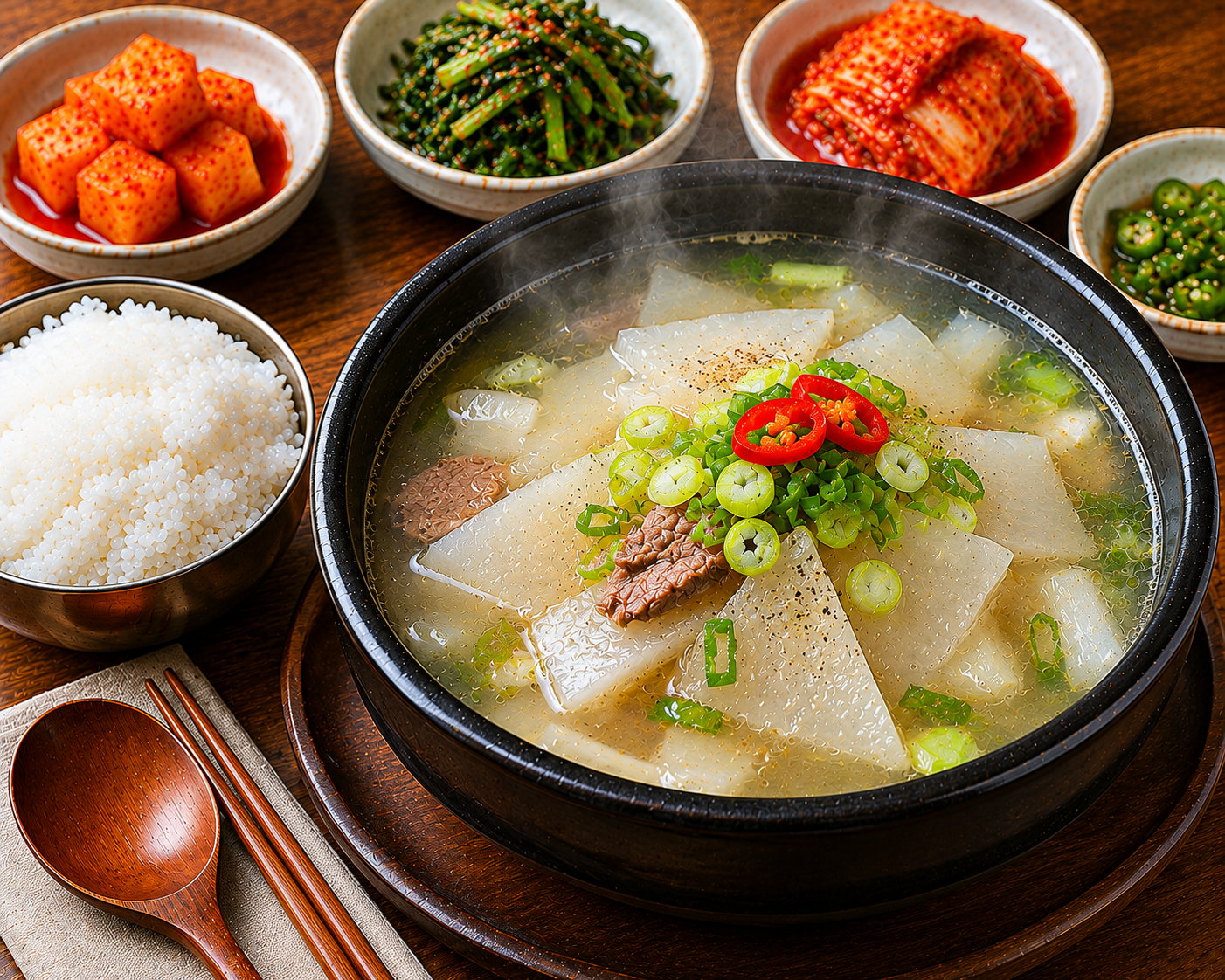
Radish Soup
무국 · mu-guk
A clear soup dish made with radish and beef, characterized by a light and refreshing taste. It is usually enjoyed with rice, and salt or soy sauce can be added at the table to adjust the seasoning.
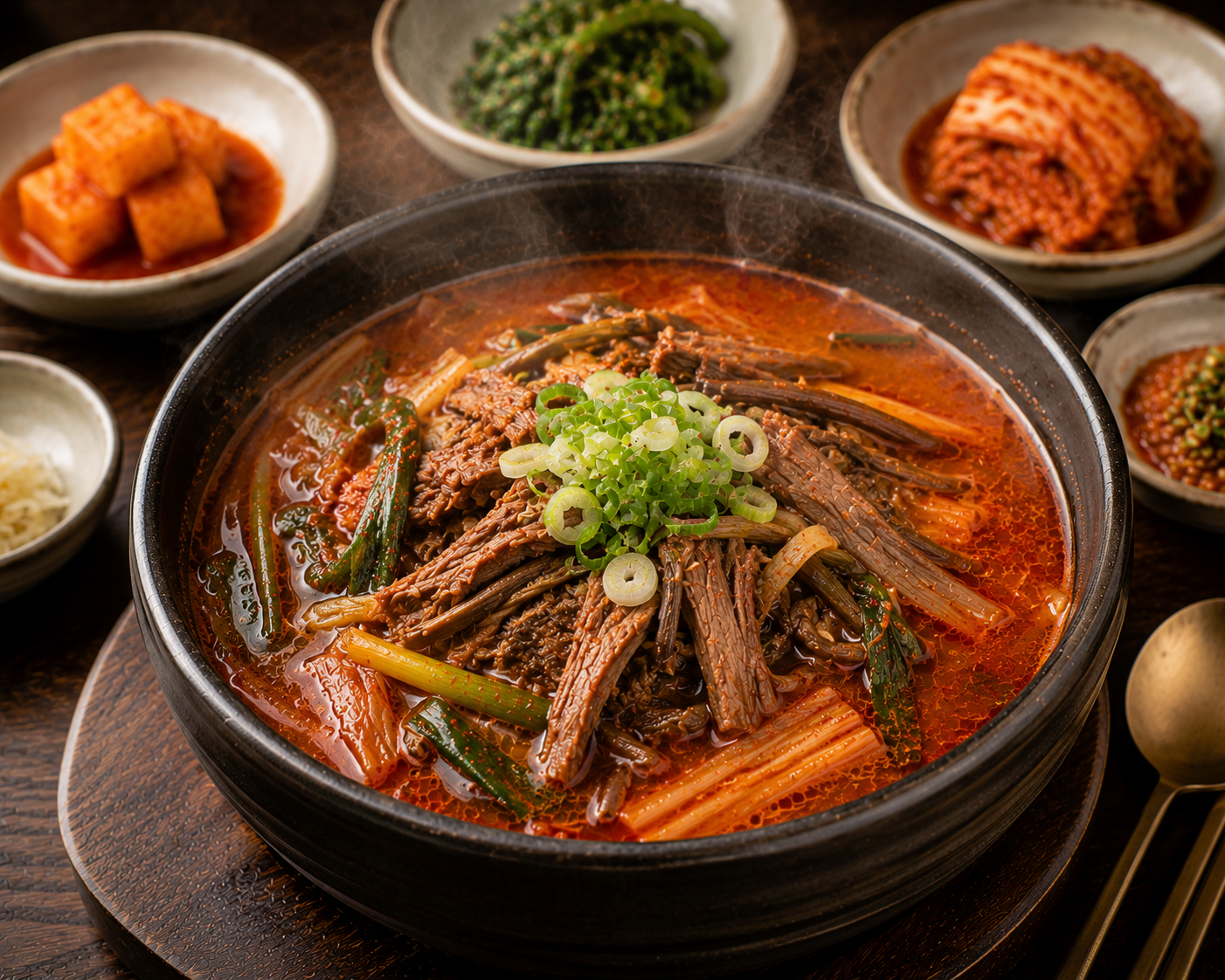
Yukgaejang
육개장 · yuk-gae-jang
A spicy soup dish made with beef, fernbrake, and bean sprouts cooked in hot pepper oil. The broth is rich and spicy, and it tastes even better when eaten with rice.
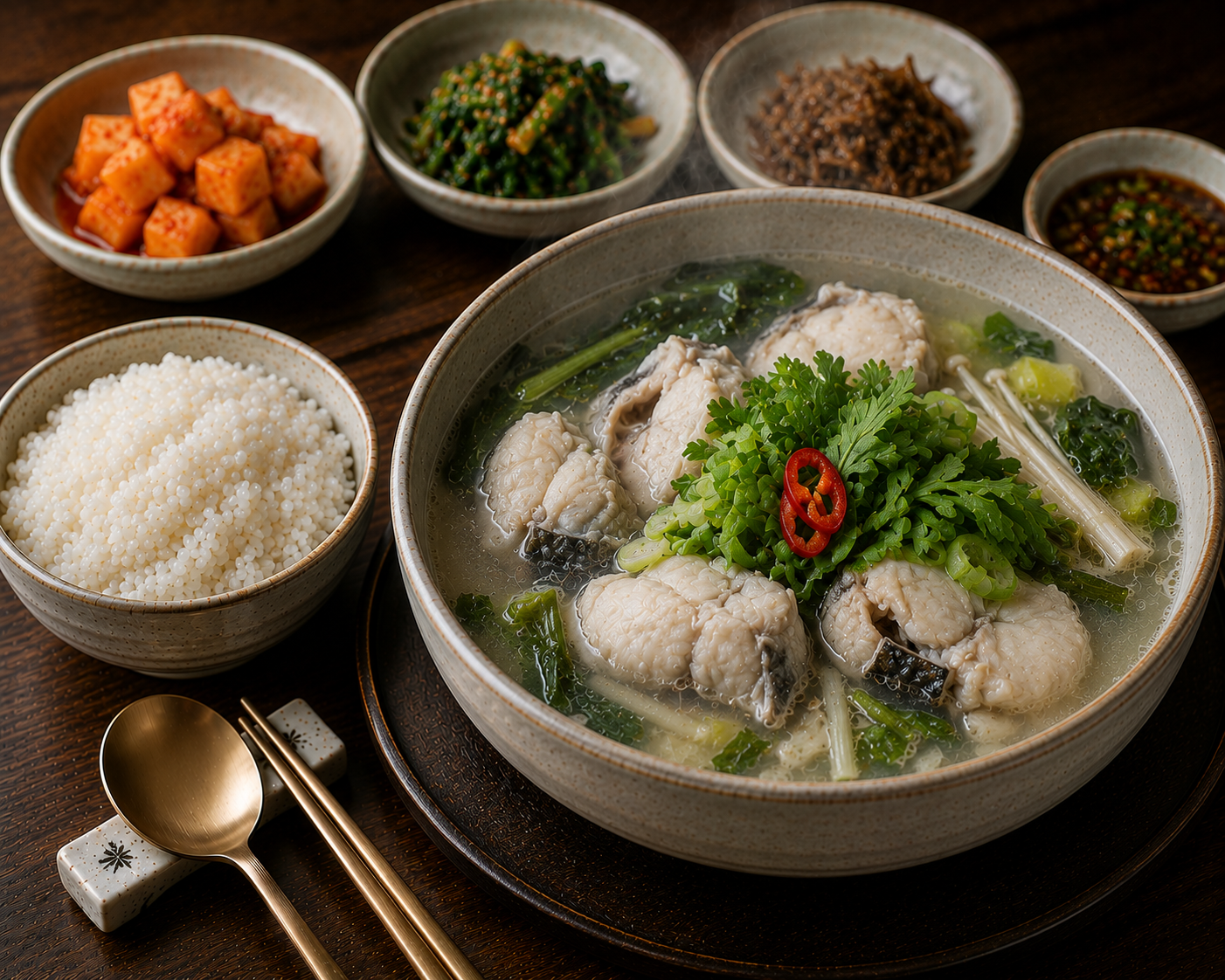
Pufferfish Soup
복국 · bok-guk
A clear and light soup dish primarily made with pufferfish, popular for hangover recovery. It features soft-cooked pufferfish meat and a refreshing broth after removing the fish's toxins. It is usually eaten with steamed rice and seasoned with salt at the table.
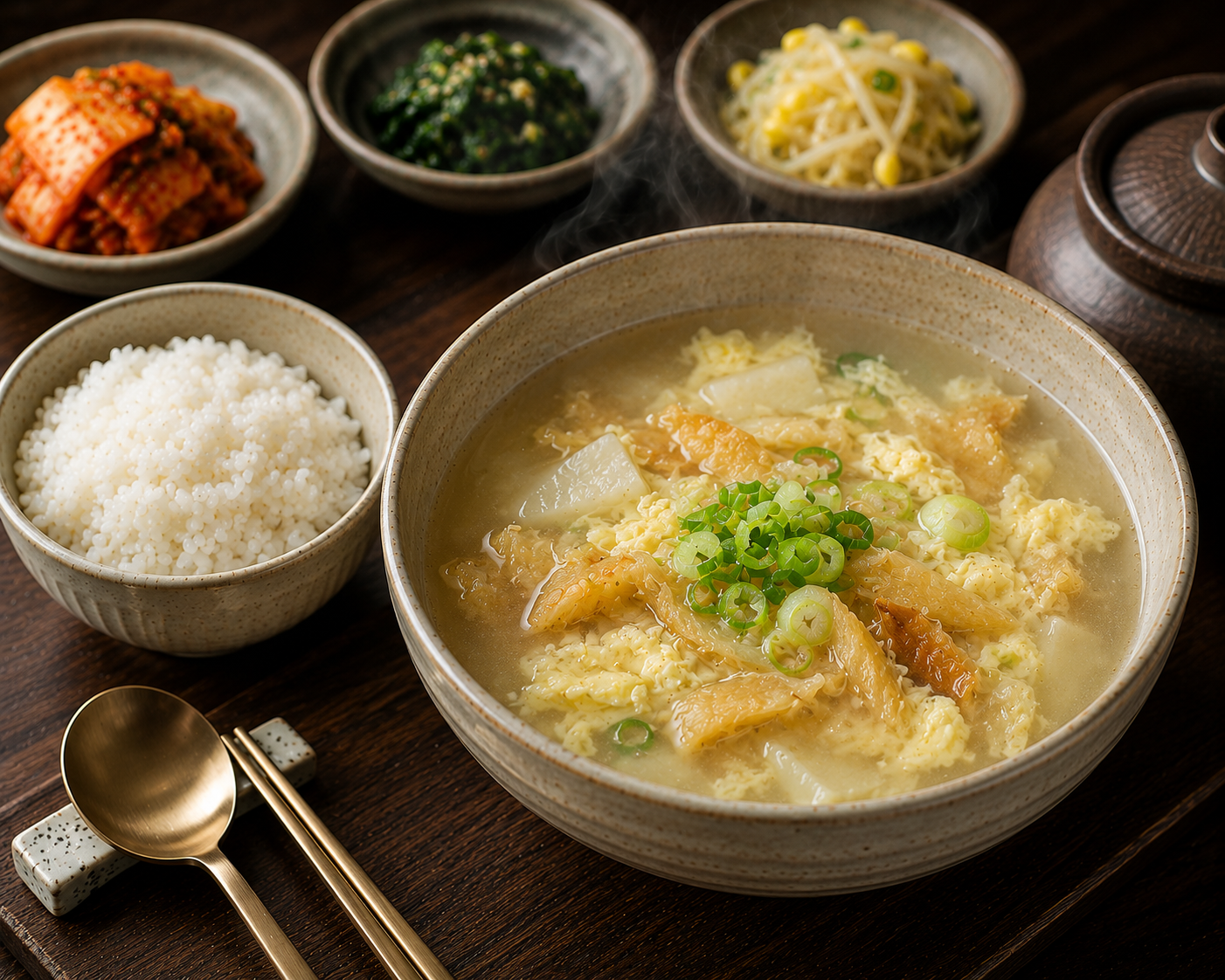
Goes well with
Ingredients
How it's made
- 1Soak the seaweed in water to prepare.
- 2Stir-fry the beef in sesame oil, then add the seaweed and stir-fry together.
- 3Pour in water and boil, then season with soy sauce.
- 4Once the broth is flavorful, add garlic and let it boil again briefly.
Nutrition
* Estimated values per serving.
Allergens
Not vegetarian as it contains beef.
How to order
미역국 주세요
Mi-yeok-guk ju-se-yo
Please give me seaweed soup
Customize your order
Traveler tips
How to eat it
Frequently asked questions
- Why do Koreans eat Seaweed Soup on birthdays?
- The custom is connected to mothers eating Seaweed Soup after childbirth. Eating Seaweed Soup on a birthday carries the meaning of remembering the day you were born and your mother at that time.
- Should I avoid Seaweed Soup on exam day?
- No strict taboo requires you to avoid it. The idea comes from a superstition that links the slippery feel of seaweed with “시험에서 미끄러진다” (siheom-eseo mikkeureojinda, “to slip/fail on an exam”), so many people do not worry about it.
- Is the seaweed in Seaweed Soup the same as gim or dasima?
- They are all sea vegetables, but they are used differently. Seaweed for Seaweed Soup is soaked and eaten as the main ingredient in the soup, while gim is usually dried into thin sheets and eaten with rice, and dasima is often used to flavor broth.
Last reviewed: 2026-10-07