
Cultural background
Oisobagi is a refreshing kimchi perfect for summer, as its crunchy texture and spicy flavor pair well with hot weather.
Origin & history
The “소박이” (sobagi, “stuffed/packed-in”) in Oisobagi is known to come from the method of making slits in a vegetable and packing the filling inside. Unlike Napa Cabbage Kimchi, where seasoning is spread between the leaves, the seasoning is stuffed into the cucumber, so the name and the form explain each other.
Because cucumbers are watery and soften quickly, this style of kimchi developed as one meant to be lightly fermented and eaten soon rather than stored for a long time. For that reason, it is less a long-keeping kimchi like kimjang kimchi and more a seasonal kimchi made and eaten right away during the hot months when cucumbers are abundant.
Regional & modern variations
- Chive Oisobagi — This version fills the cucumber with plenty of chives instead of green onion. The strong aroma of the chives creates a clearer contrast with the cucumber’s cool, refreshing taste.
- White Oisobagi — A pale, clean-looking Oisobagi made with little or no gochugaru, Korean red pepper flakes. Rather than heat, the cucumber’s aroma and the salty flavors of jeotgal, or salted seafood, and garlic come through more clearly.
How Koreans eat it
Oisobagi is often eaten before it ferments for too long. Freshly made, it is crisp like a salad; after a day or two, it turns lightly tangy. Served cold, the spicy seasoning and the cucumber’s moisture come through together, so alongside a hot soup or noodle dish it helps cool the palate.
Taste & how to choose
Good Oisobagi has firm cucumber and a filling packed in well enough that it does not fall out. When you bite into it, the cucumber’s juices burst first, followed by the flavors of garlic, jeotgal, and gochugaru. As time passes, the flavor grows tangier, but the cucumber can soften, so if you want crunch, choose one that has not fermented too much.
Similar dishes
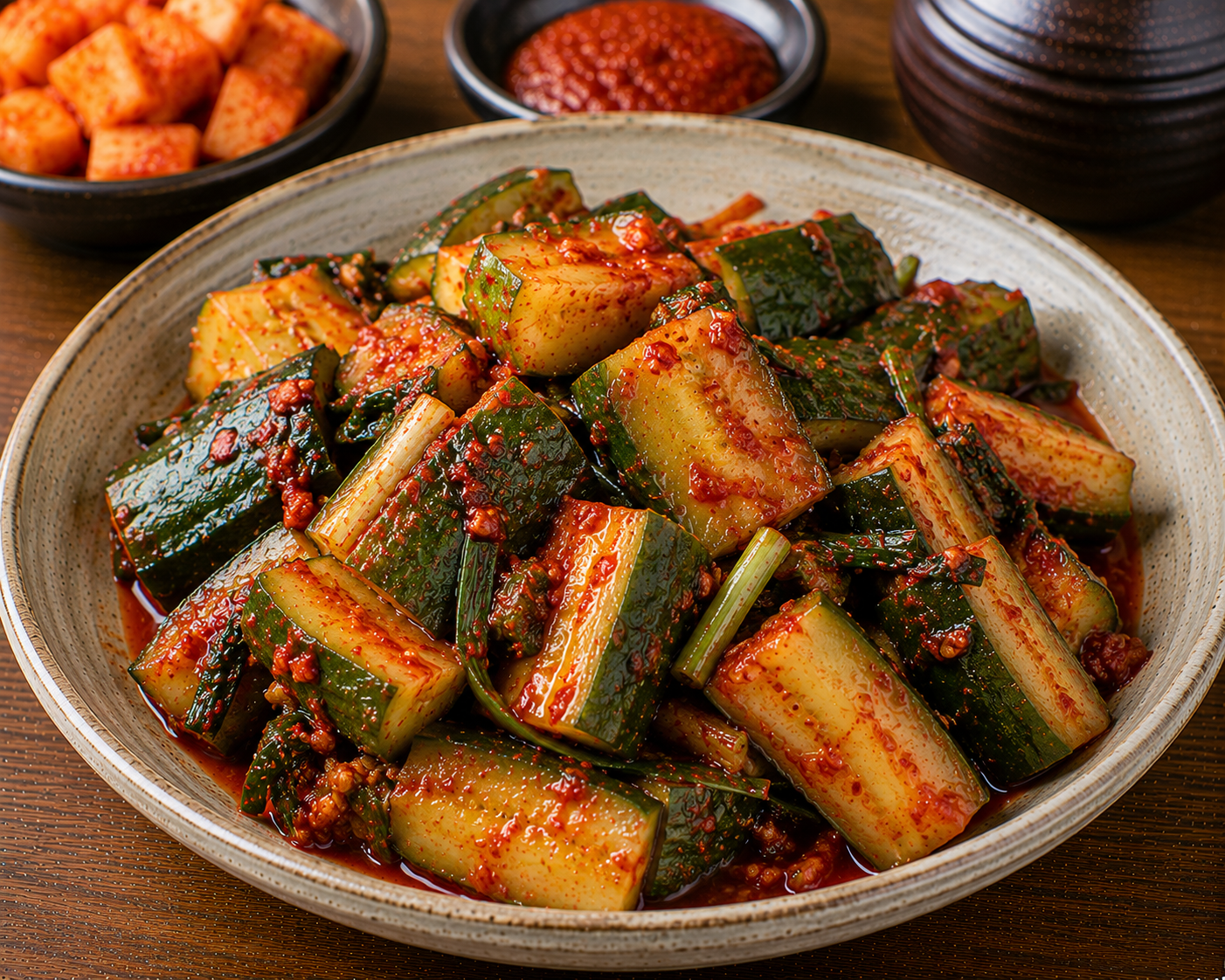
Cucumber Kkakdugi
오이깍두기 · oi-kkakdugi
A type of kimchi made by cutting cucumbers into cubes and mixing them with gochugaru, garlic, and fermented seafood, then fermenting it. It features a crunchy texture and spicy flavor, with a sour taste developing as it ferments.
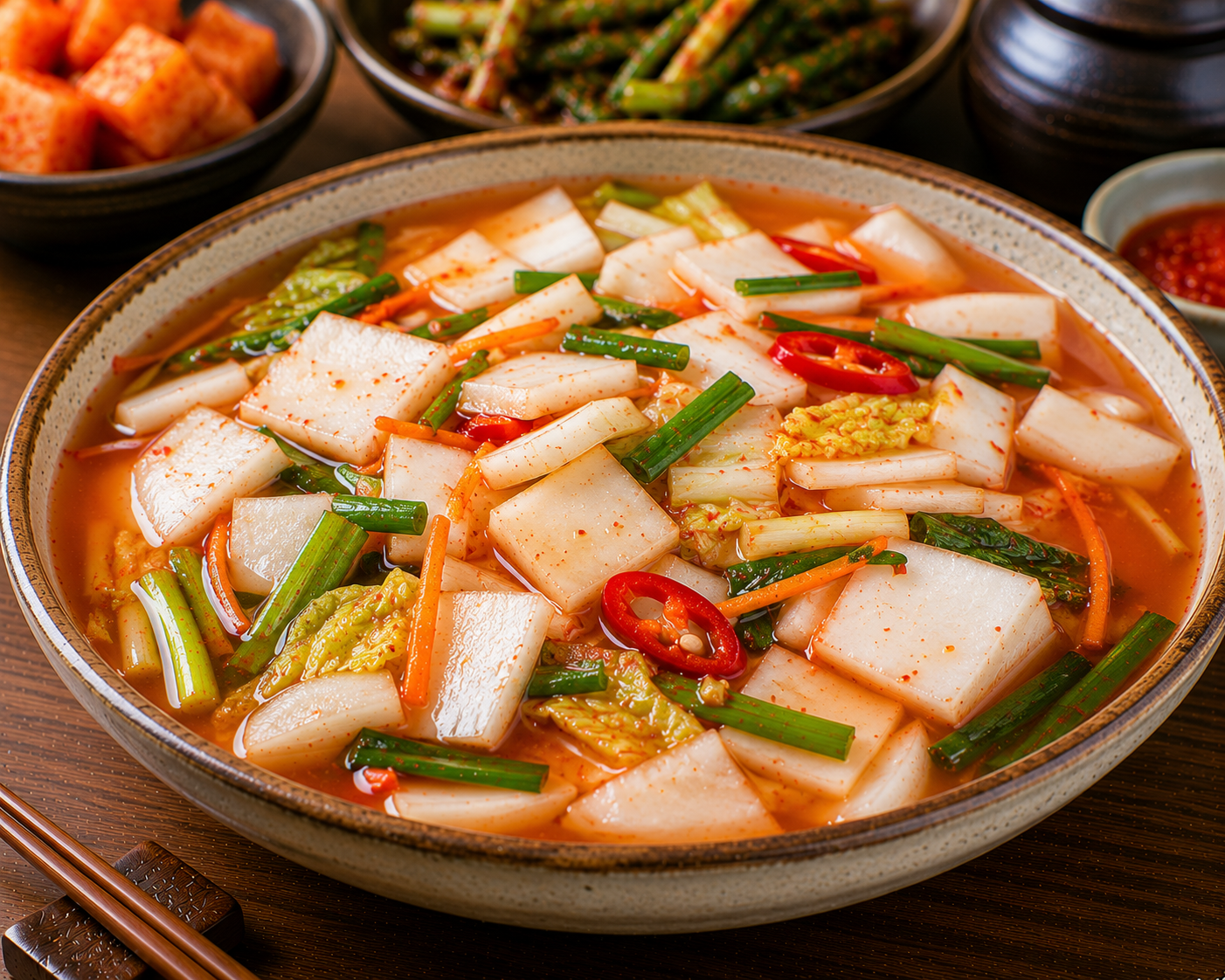
Nabak Kimchi
나박김치 · nabak-kimchi
Kimchi made by thinly slicing radish and napa cabbage, seasoning them with red pepper powder and garlic, and then fermenting them with added water. It is characterized by its abundant broth, refreshing taste, and sour flavor.
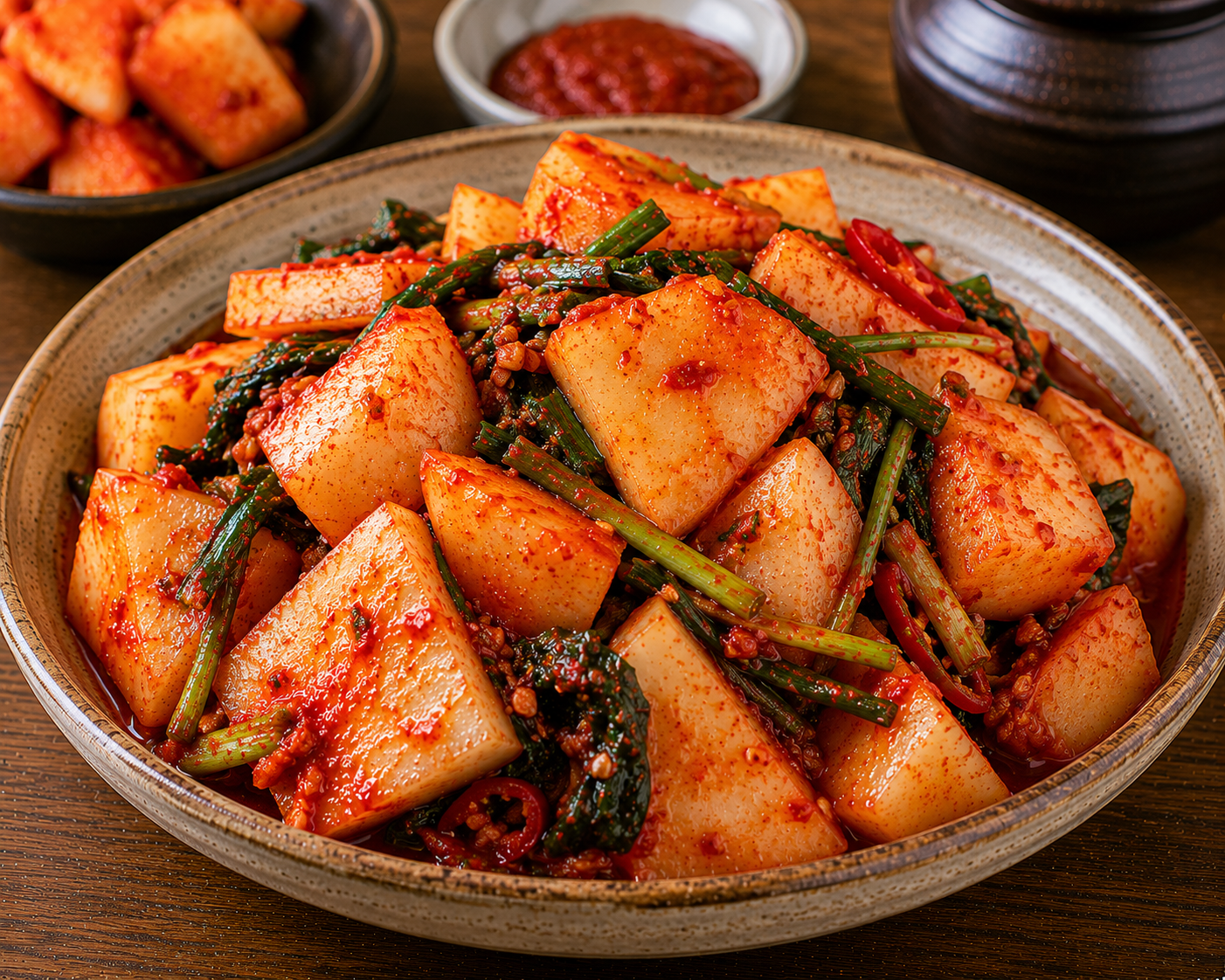
Seokbakji
섞박지 · Seokbakji
A kimchi made by fermenting radish and napa cabbage with red pepper powder, garlic, and salted seafood, characterized by a crunchy texture and spicy taste. The sour taste becomes stronger as fermentation progresses and is enjoyed as a side dish or used as an ingredient in stews.
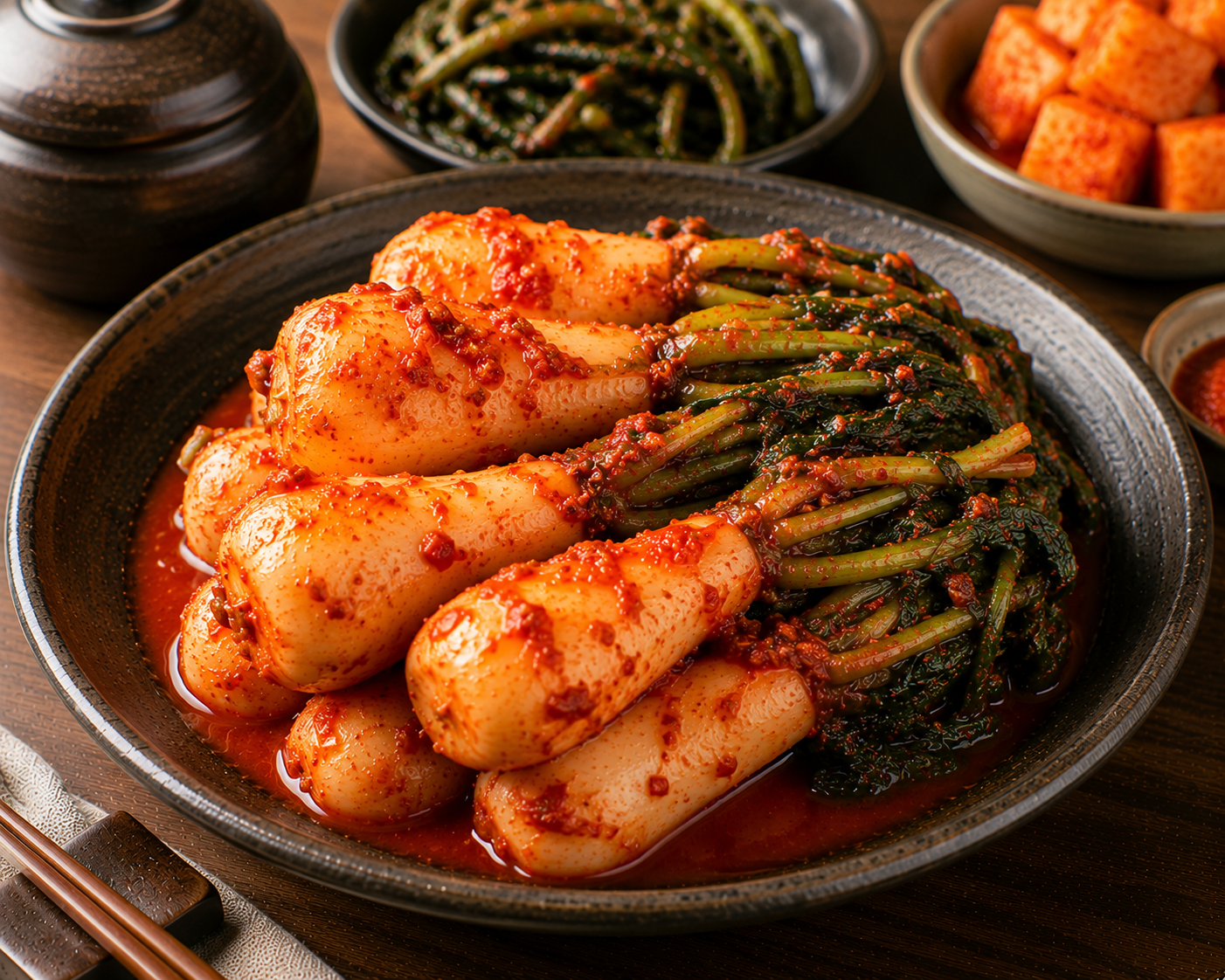
Chonggak Kimchi
총각김치 · chonggak-kimchi
Kimchi made by fermenting whole radishes with chili pepper powder, garlic, and salted seafood. It is characterized by a crunchy texture and spicy flavor, and as fermentation progresses, it becomes more sour and savory.
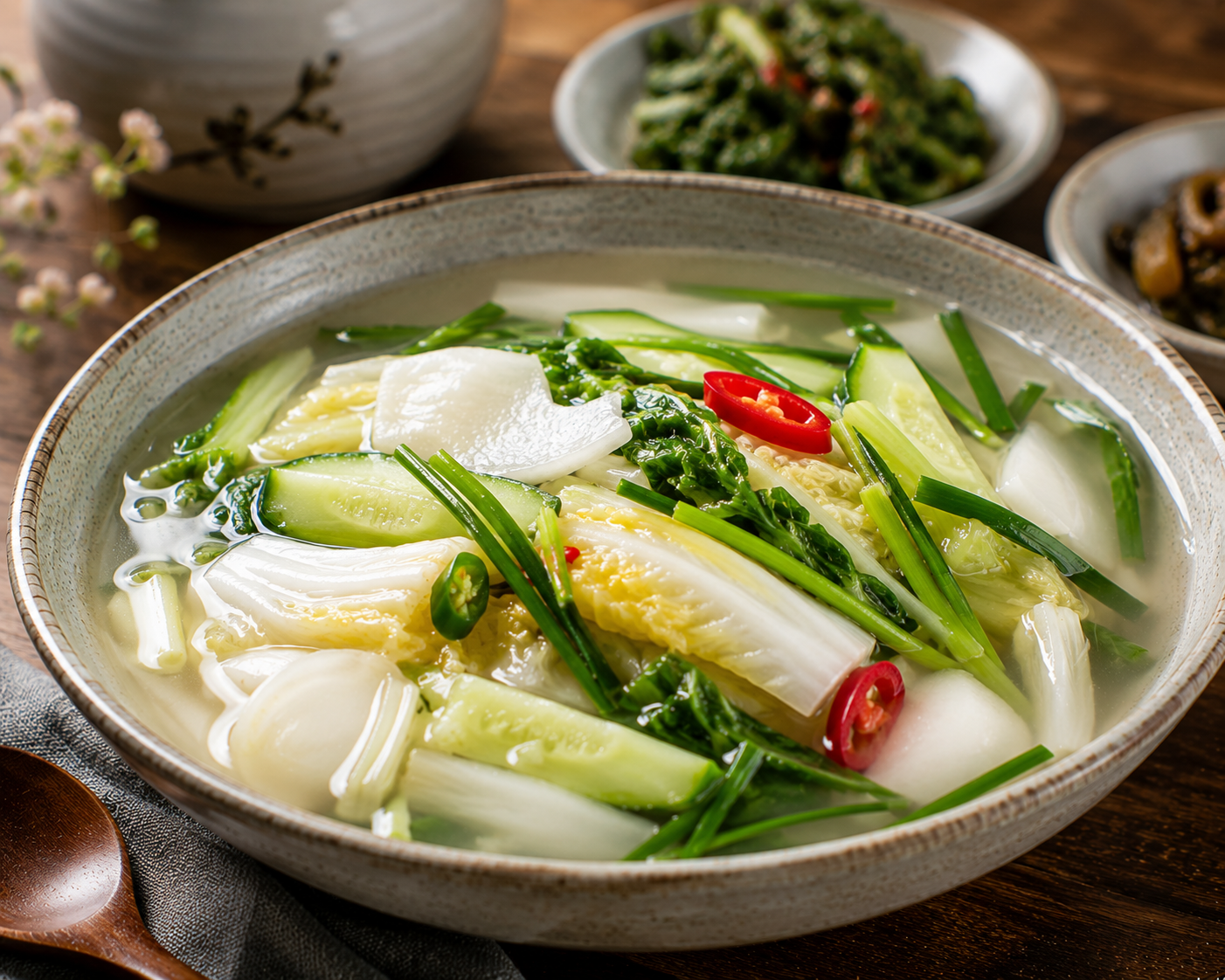
Mul Kimchi
물김치 · mul-gimchi
This kimchi is made by soaking radish and napa cabbage in salted water, characterized by its abundant broth, coolness, and sour taste. As fermentation progresses, the broth becomes more sour and tangy. It is mainly eaten as a side dish and is kept cool in the refrigerator during summer.
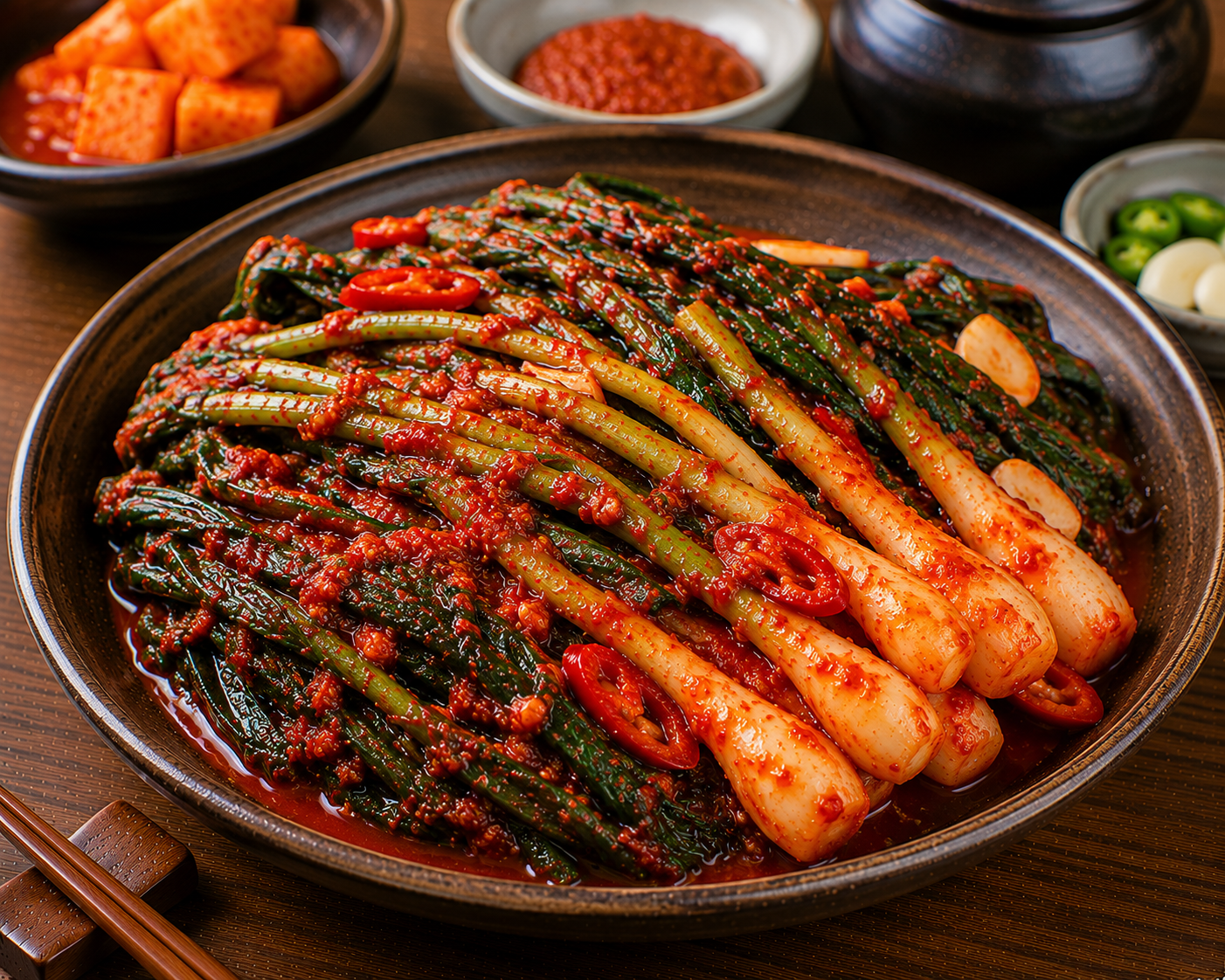
Jang Kimchi
장김치 · jang-gimchi
Kimchi made by salting napa cabbage or radish with soy sauce, characterized by a less spicy and salty flavor compared to regular kimchi. As fermentation progresses, umami is enhanced.
Goes well with
Ingredients
How it's made
- 1Wash the cucumbers thoroughly and pickle them in salt.
- 2Make slits in the salted cucumbers to prepare them.
- 3Prepare the seasoning filling using red pepper flakes, garlic, green onion, and shrimp paste.
- 4Stuff the seasoning filling into the slits of the cucumbers.
- 5Ferment at room temperature, then store in the refrigerator.
Nutrition
* Estimated values per serving.
Allergens
Not vegan or vegetarian due to the use of shrimp paste.
How to order
오이소박이 주세요
Oi-so-ba-gi ju-se-yo
Oisobagi, please
Traveler tips
How to eat it
Frequently asked questions
- Why are cucumbers slit in a cross shape instead of being cut all the way through?
- The cross-shaped cuts let the cucumber hold the seasoning without losing its shape. That way, each piece gives you both the cucumber’s crunch and the seasoned filling in one bite.
- Can Oisobagi be kept and eaten for a long time like Napa Cabbage Kimchi?
- Oisobagi is generally not considered a kimchi for long storage. Cucumbers contain a lot of moisture and soften easily over time, so the appeal lies in eating it while it is still crisp after a short fermentation.
- If Oisobagi is served in long pieces at a restaurant, how should I eat it?
- You can pick up a whole piece with chopsticks and bite into it, or cut it with scissors if it is awkward to eat. Since the filling can fall out, placing it on top of rice makes it easier to eat without spilling.
Last reviewed: 2026-10-07