
Cultural background
Kimchi eaten with bossam, which offsets the rich flavor of the meat. It is especially popular during the kimjang season.
Similar dishes
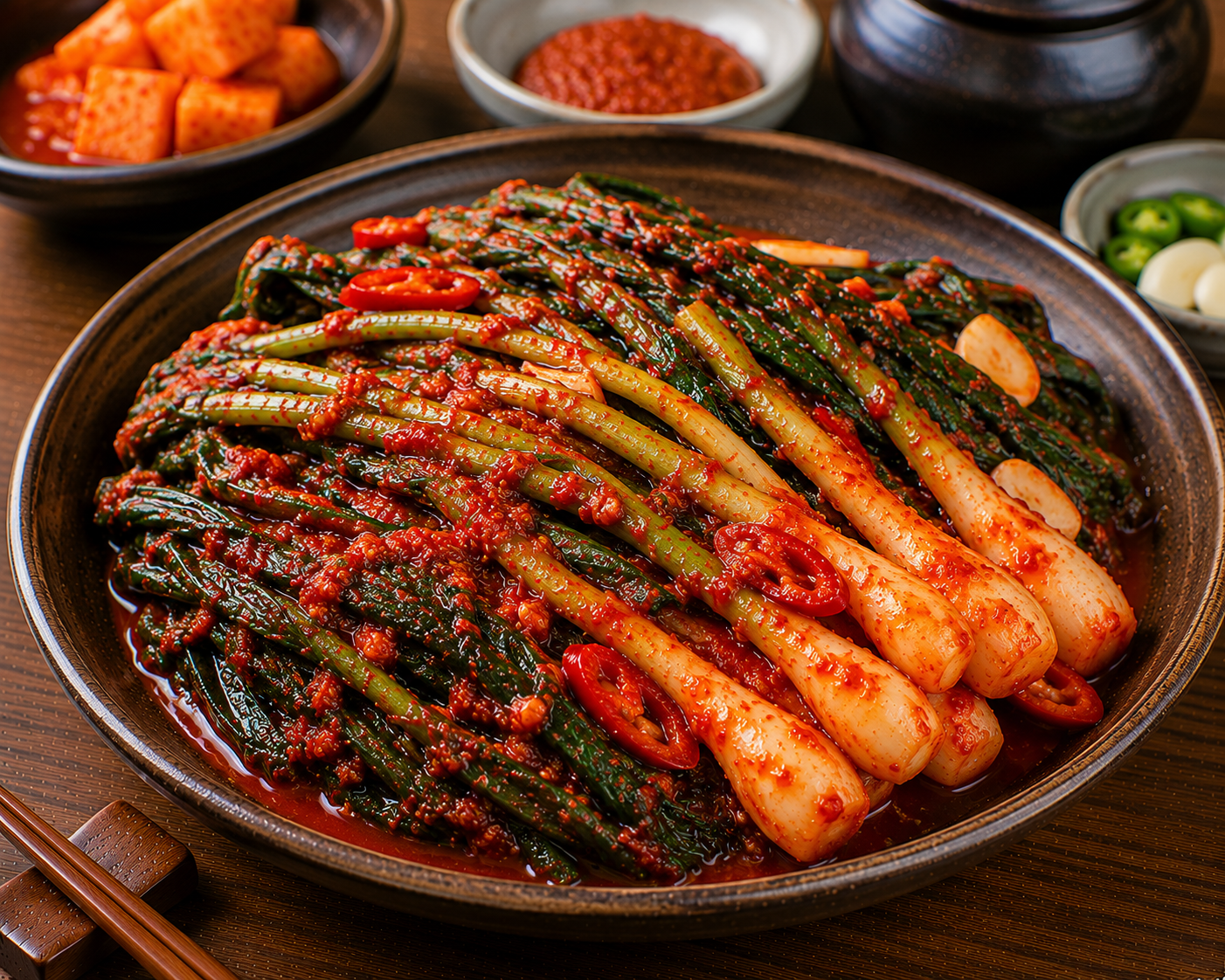
Jang Kimchi
장김치 · jang-gimchi
Kimchi made by salting napa cabbage or radish with soy sauce, characterized by a less spicy and salty flavor compared to regular kimchi. As fermentation progresses, umami is enhanced.
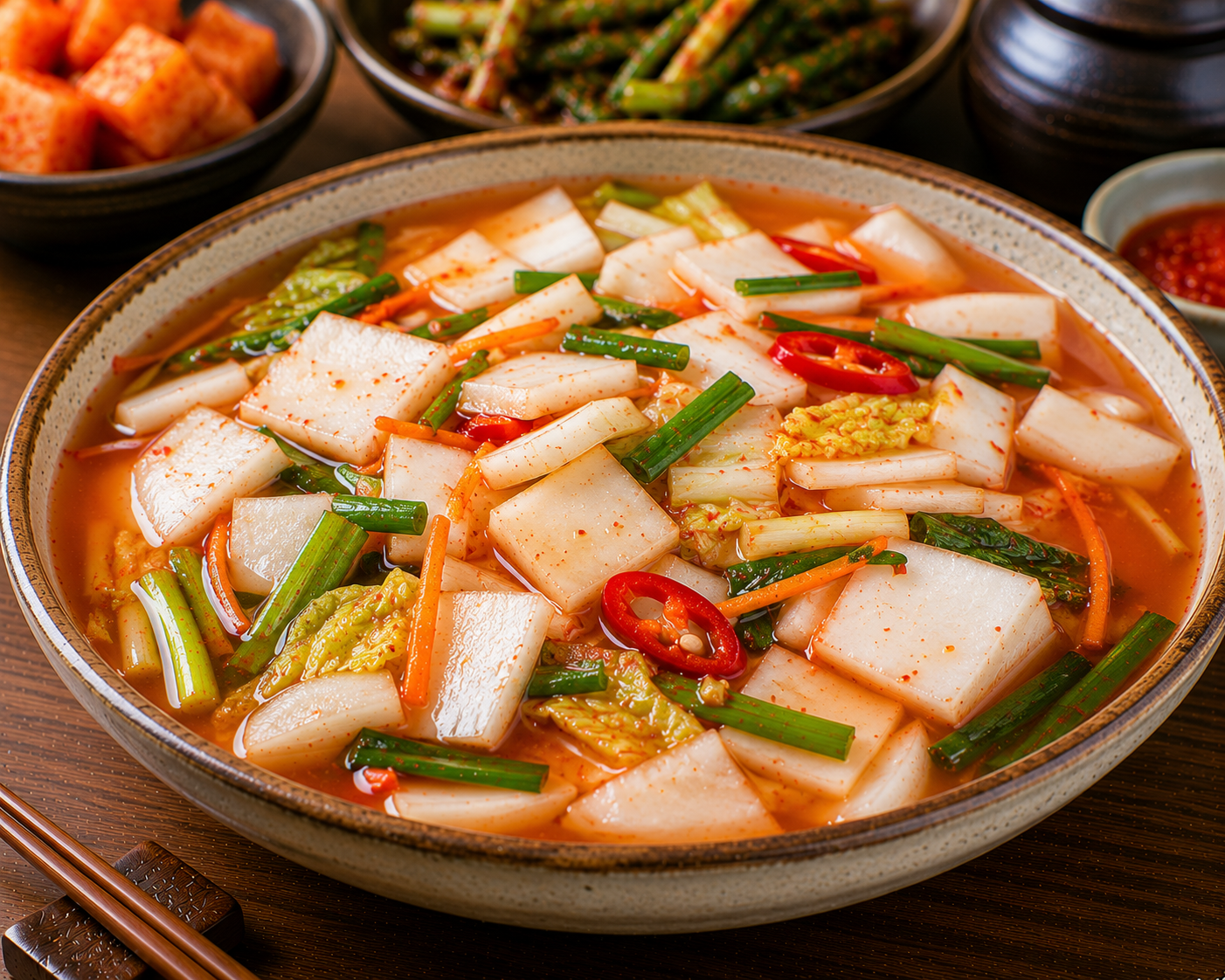
Nabak Kimchi
나박김치 · nabak-kimchi
Kimchi made by thinly slicing radish and napa cabbage, seasoning them with red pepper powder and garlic, and then fermenting them with added water. It is characterized by its abundant broth, refreshing taste, and sour flavor.
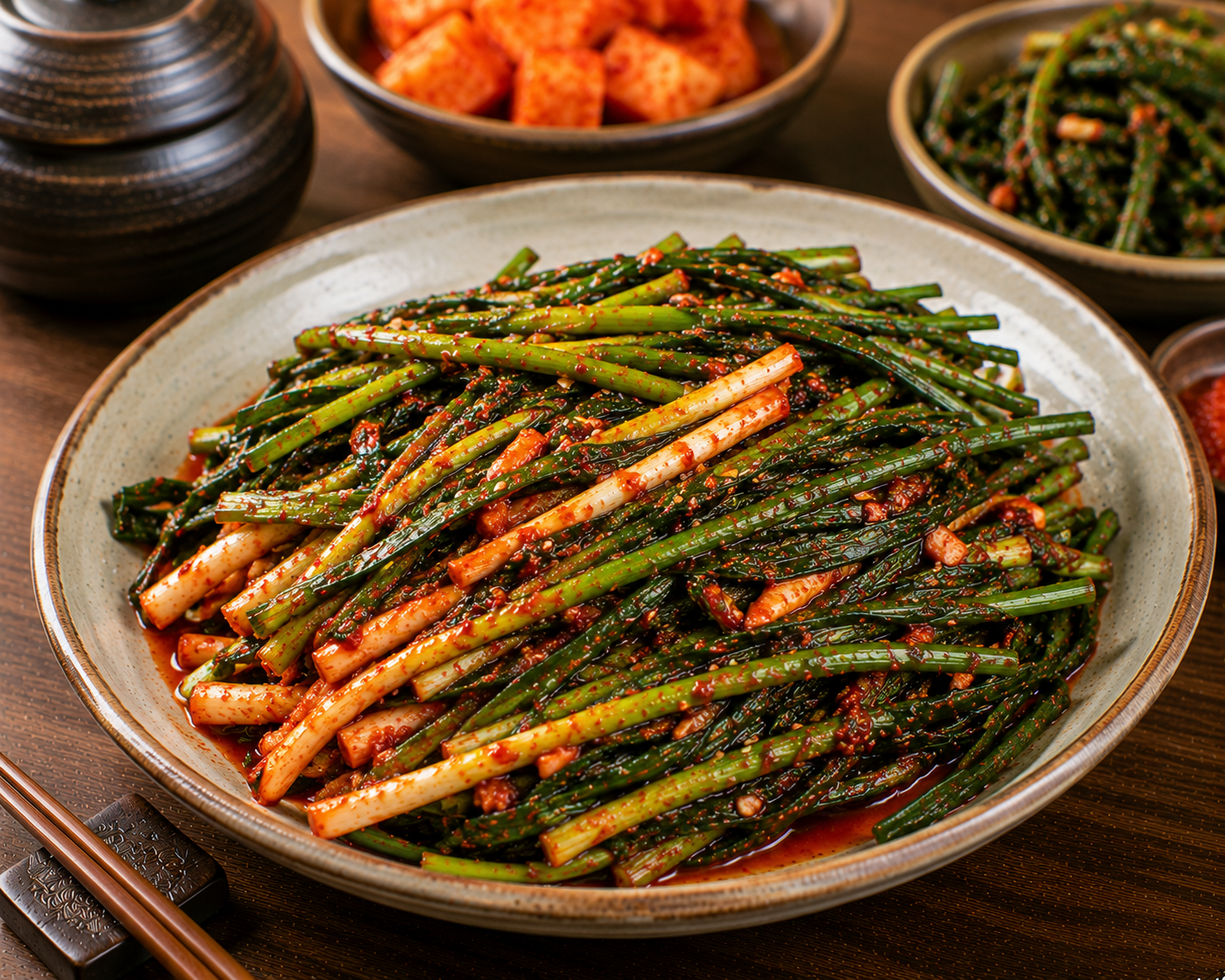
Chive Kimchi
부추김치 · buchu-kimchi
Kimchi made by mixing chives with red pepper powder, garlic, and fermented seafood, then fermenting. It is crunchy, spicy, and rich in umami.
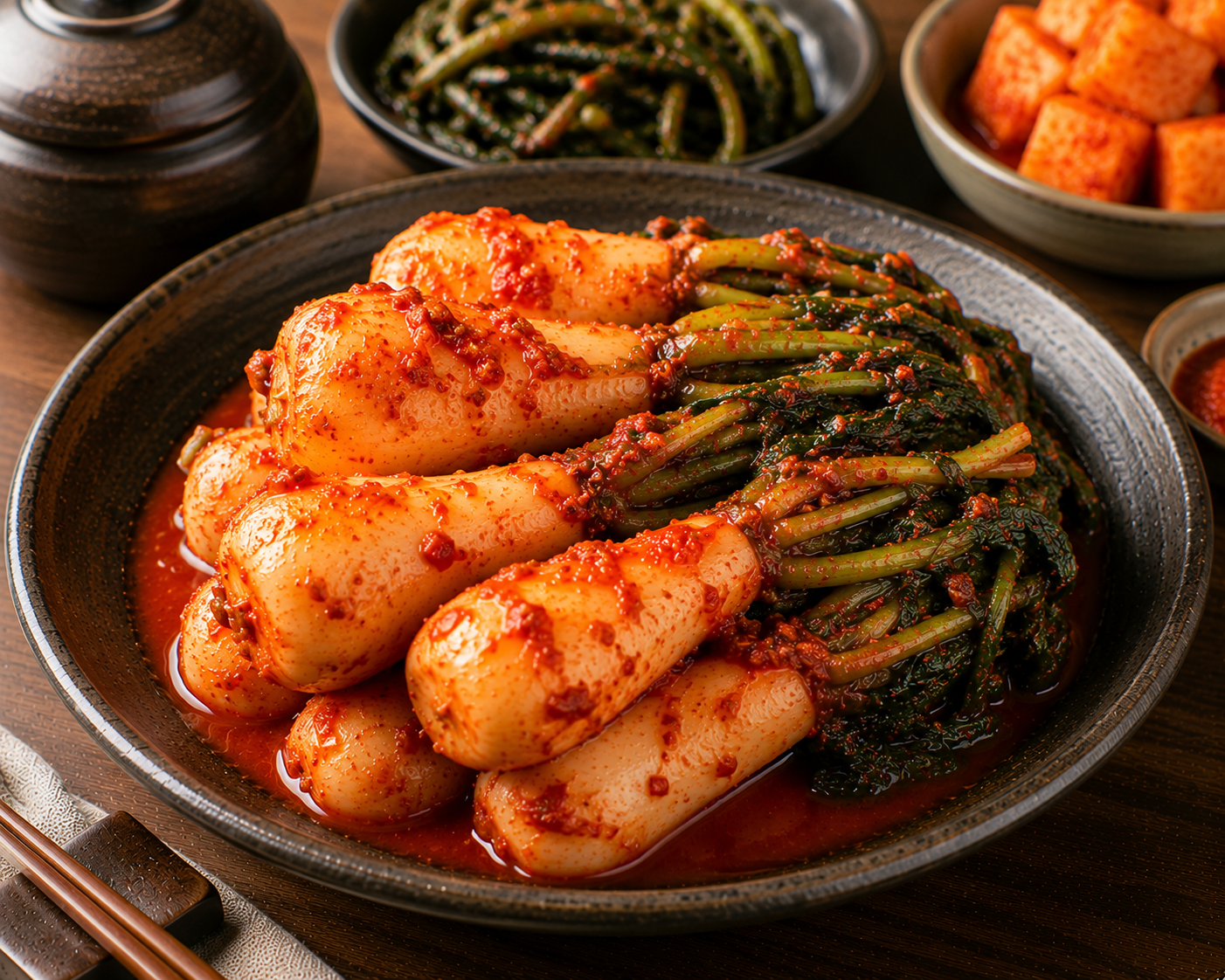
Chonggak Kimchi
총각김치 · chonggak-kimchi
Kimchi made by fermenting whole radishes with chili pepper powder, garlic, and salted seafood. It is characterized by a crunchy texture and spicy flavor, and as fermentation progresses, it becomes more sour and savory.
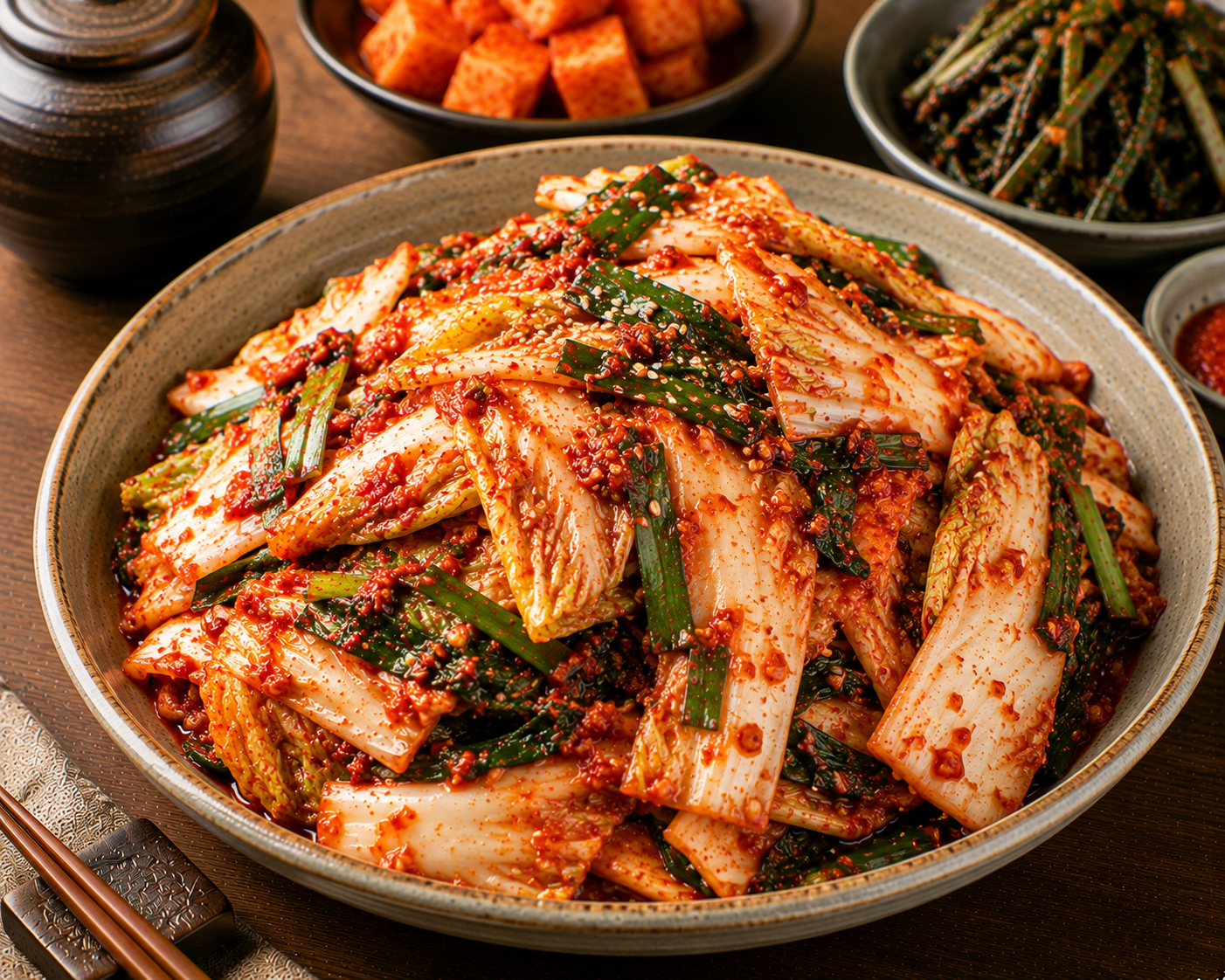
Geotjeori
겉절이 · Geot-jeo-ri
A type of kimchi made with napa cabbage tossed with gochugaru, garlic, and salted seafood, characterized by its crunchy and fresh taste as it is not fermented.
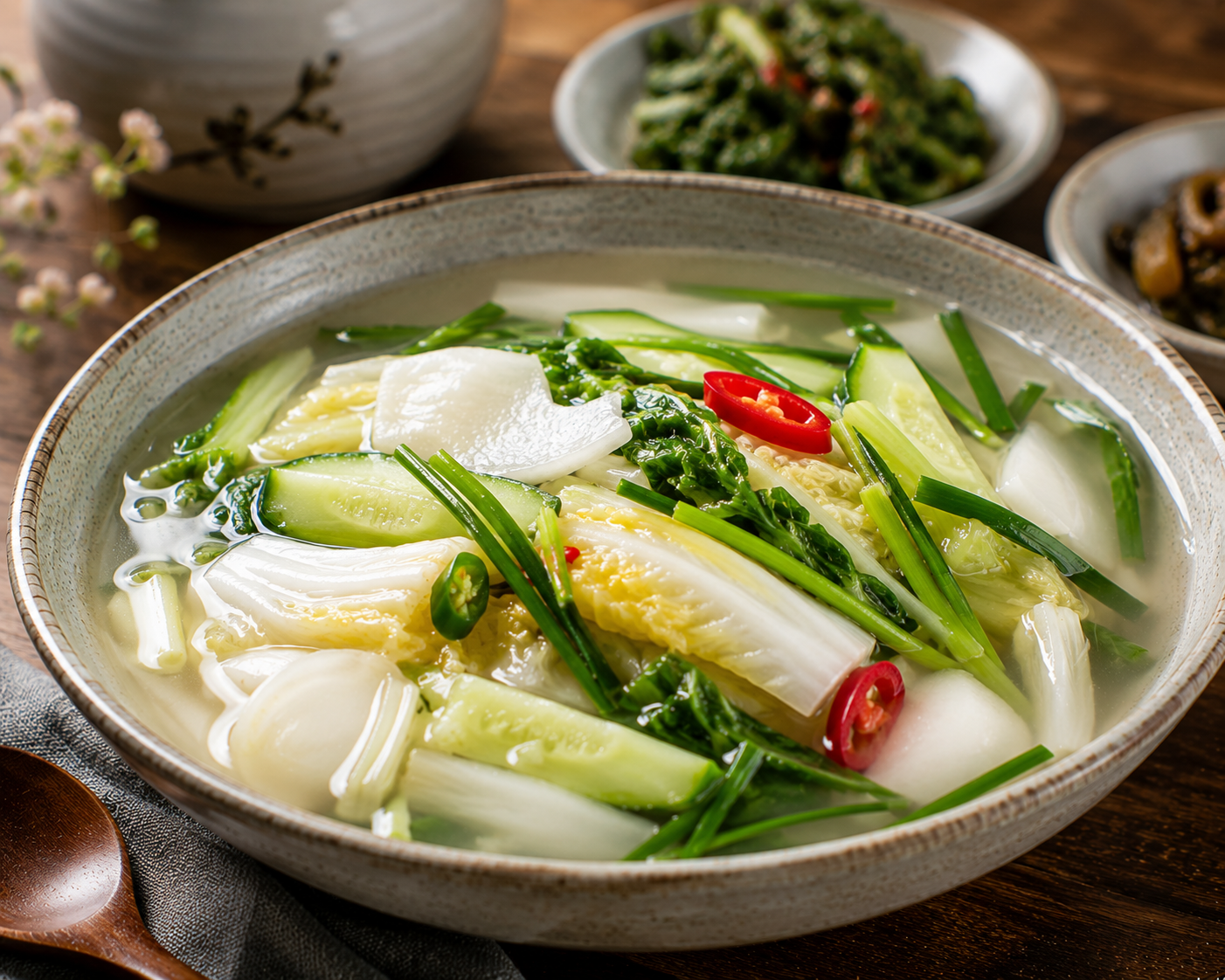
Mul Kimchi
물김치 · mul-gimchi
This kimchi is made by soaking radish and napa cabbage in salted water, characterized by its abundant broth, coolness, and sour taste. As fermentation progresses, the broth becomes more sour and tangy. It is mainly eaten as a side dish and is kept cool in the refrigerator during summer.
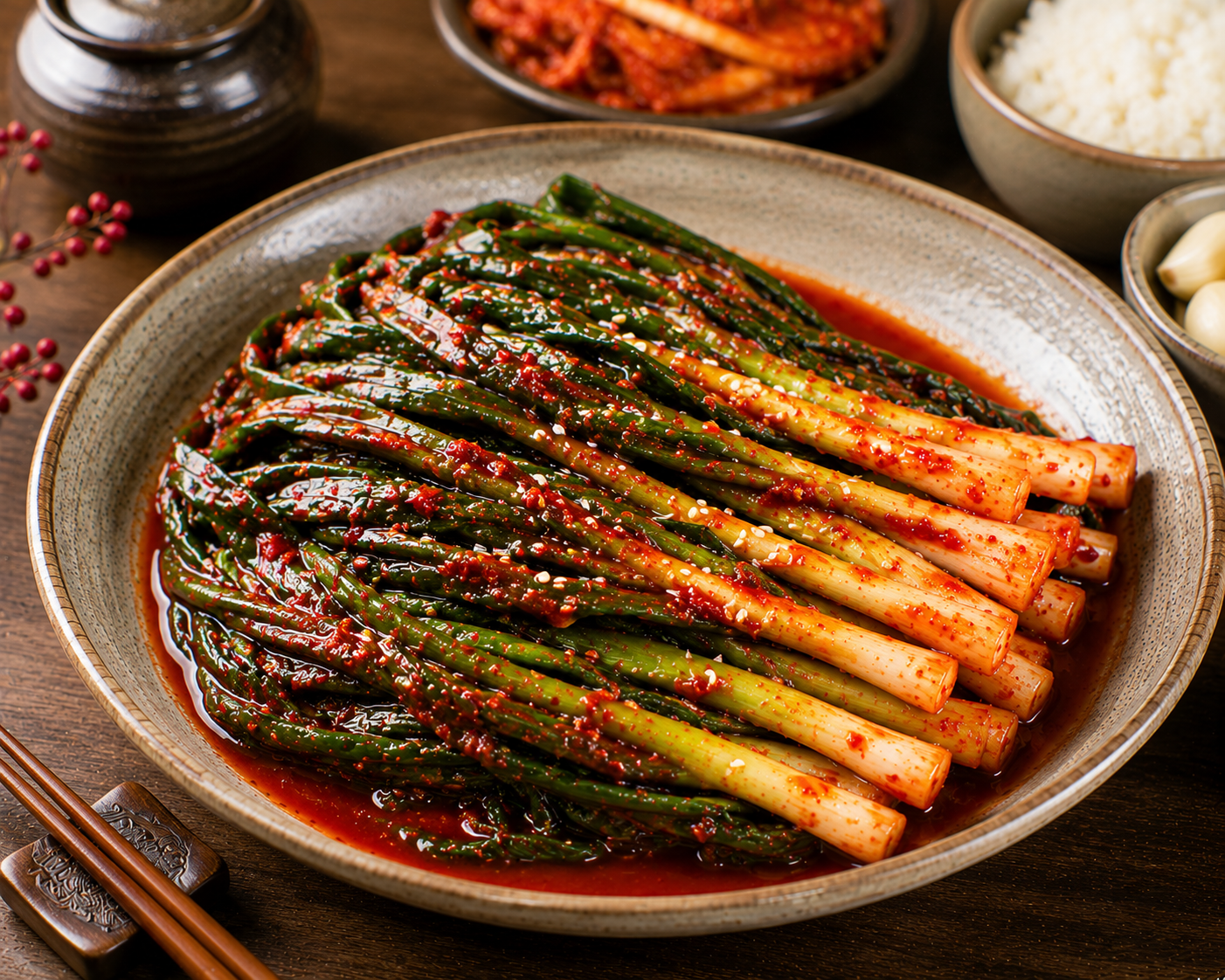
Scallion Kimchi
파김치 · pa-gimchi
Scallion kimchi is made by seasoning scallions with red pepper powder and salted seafood, then fermenting them, characterized by a crunchy texture and spicy flavor. As fermentation progresses, it develops a sour taste and umami. It is typically served as a side dish with meat dishes.
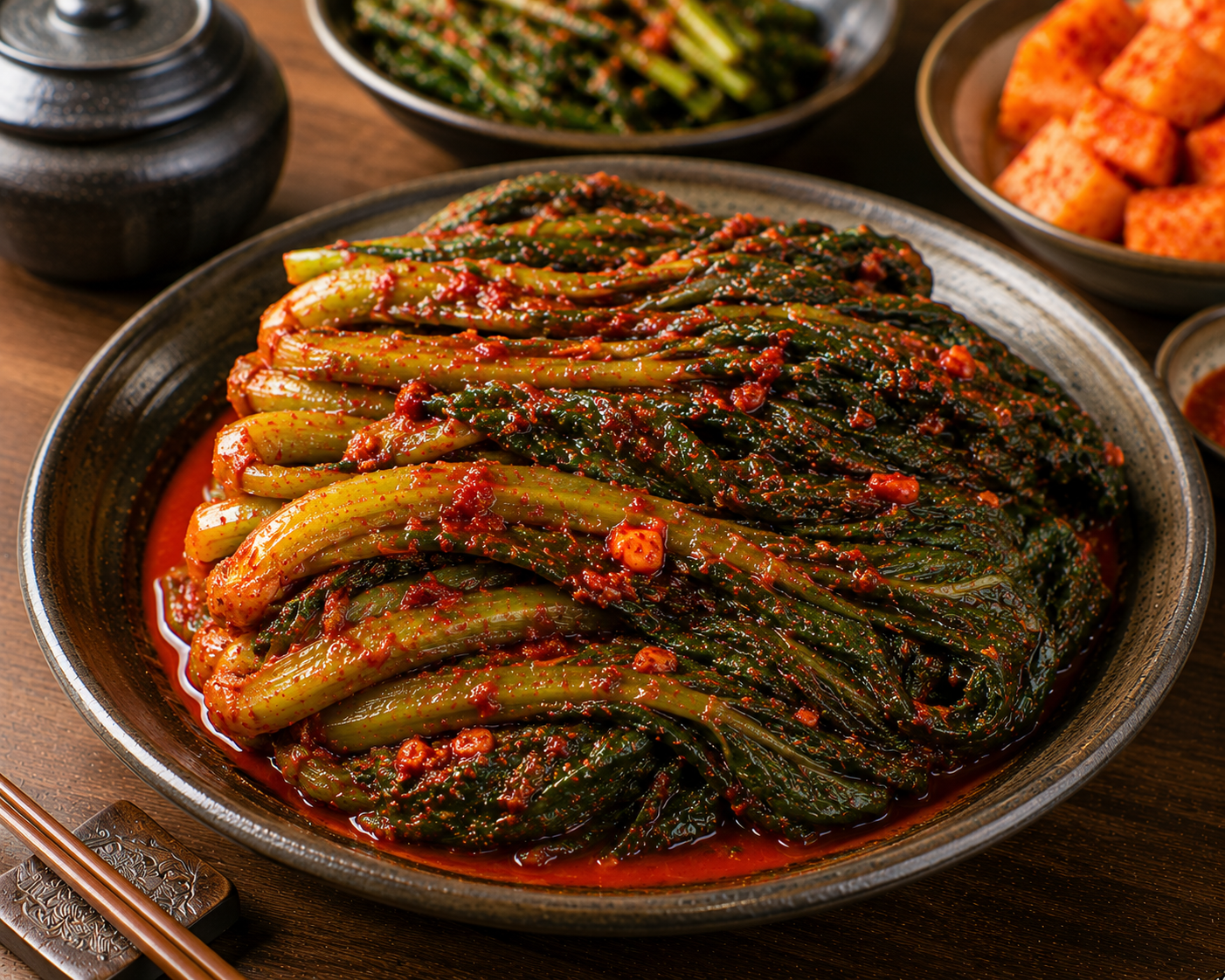
Gatkimchi
갓김치 · gat-gimchi
Gatkimchi is a type of kimchi made by seasoning gat (a type of leaf mustard) with red pepper powder, garlic, and fermented seafood, then fermenting it. It is characterized by its unique spicy and tangy flavor. As fermentation progresses, it develops a sour and deep taste. It can be eaten as a side dish or, when well-fermented, used as an ingredient in stews or stir-fries.
Goes well with
Ingredients
How it's made
- 1Salt the Napa cabbage to remove moisture.
- 2Make the seasoning with gochugaru, garlic, ginger, and salted seafood.
- 3Evenly coat the salted cabbage with the seasoning.
- 4Place in a kimchi container to ferment.
Nutrition
* Estimated values per serving.
Allergens
Not suitable for vegan or halal diets due to the use of salted seafood.
How to order
보쌈김치 주세요
Bo-ssam-gim-chi ju-se-yo
Please give me bossam kimchi