“Time turned into taste. One humble soybean becomes tofu, doenjang, cheonggukjang, and gochujang — proof that in Korea, food is less about what you eat than how you transform it.”
1. One Ingredient, Completely Different Results
Soybeans are a simple ingredient — but in Korea, one ingredient becomes completely different foods.
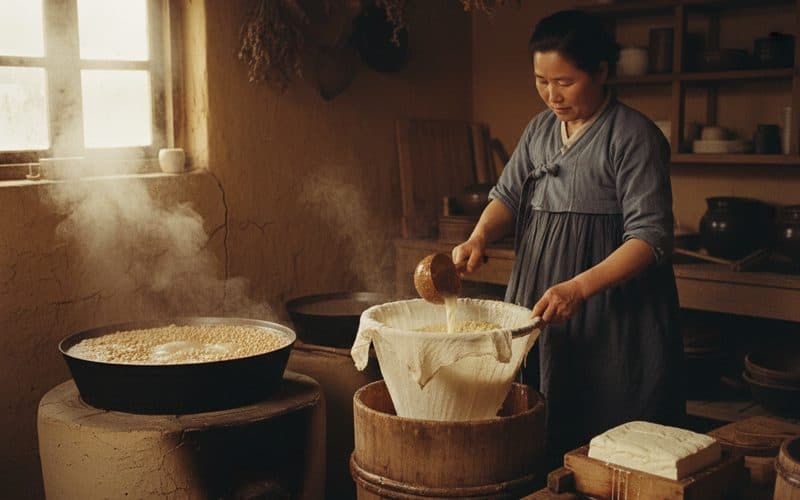
• Tofu becomes soft and mild • Cheonggukjang becomes pungent and deeply flavored • Doenjang develops deep, aged umami • Gochujang transforms into a complex spicy-sweet sauce
Same ingredient. Completely different food.
2. The Choice of How to Transform
This difference is not just a matter of recipes.
• How long to ferment • In what environment to age • What to add
Depending on these choices, one ingredient develops in completely different directions.
Korean food focuses less on "what to eat" and more on "how to transform it."
3. A Culture of Expanding Ingredients to Their Limits
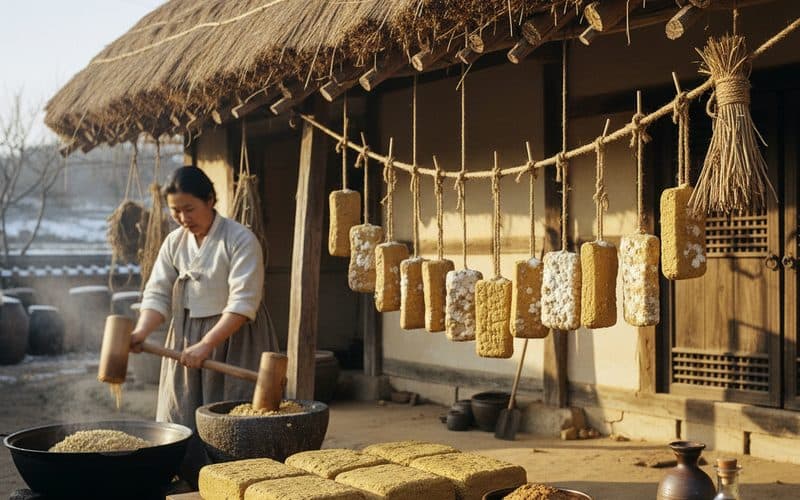
Soybeans are not an ingredient that ends with itself. They are closer to a starting point.
The process of transforming one ingredient in many ways and creating new flavors within it is an important characteristic of Korean food.
This is not just a cooking technique — it is a mindset of utilizing ingredients to their fullest.
4. Fermentation as a Tool for Transformation
The key player in this process is fermentation.
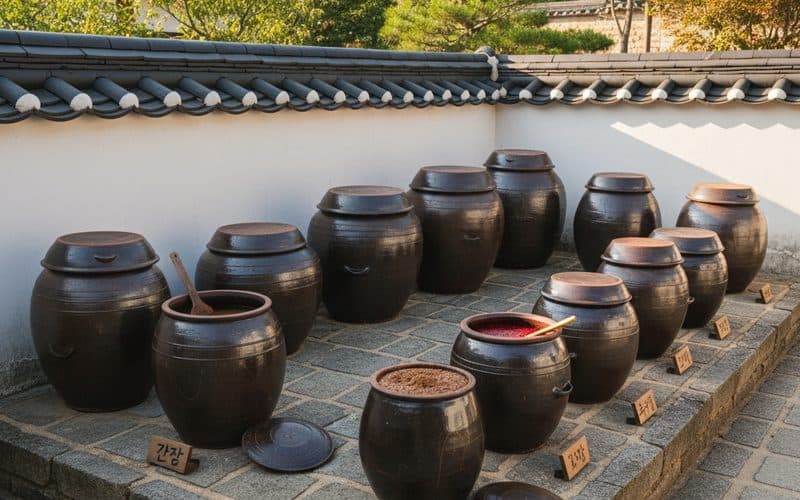
Fermentation is not simply a preservation technique — it is a "process of transformation" that turns an ingredient into a completely different food.
In Korean food, fermentation is less a "storage method" and more a "tool for creating change."
- A culture of utilizing one ingredient to its fullest
- Creating new value through transformation
- The technique of generating food diversity