Dolsot Bibimbap
Dolsot Bibimbap is a representative Korean rice dish that involves mixing rice with various vegetables, meat, and gochujang in a hot stone pot. The rice is served in a hot stone pot, forming crispy rice at the bottom, and it is mixed with gochujang and sesame oil for flavor.
Cultural background
Dolsot Bibimbap offers a unique experience of mixing rice in a hot stone pot, making it a traditional meal in Korea. The heat from the stone pot creates crispy rice at the bottom, enhancing its flavor.
Origin & history
Bibimbap has no single confirmed origin. One account says people mixed leftover namul and rice after ancestral rites, while another says farmers during the busy growing season gathered several side dishes into one bowl to eat.
Dolsot Bibimbap adds a heated stone bowl to that idea. While regular Bibimbap focuses on the flavor after mixing, Dolsot Bibimbap stands apart because the rice keeps cooking as you eat, turning crisp on the bottom.
Regional & modern variations
- Sanchae Dolsot Bibimbap — This version centers on wild mountain greens such as gosari, doraji, and Chwinamul. Often found at restaurants near mountains or at Korean restaurants, it highlights the aroma of greens more than the flavor of meat.
- Seafood Dolsot Bibimbap — A variation made with squid, shrimp, shellfish, and similar seafood. The heat of the stone bowl intensifies the seafood aroma, and the flavor becomes richer when mixed with Gochujang seasoning.
- Jeonju-style Dolsot Bibimbap — Named after Jeonju Bibimbap, this style often features Bean Sprouts and various garnishes neatly arranged on top. Traditional Jeonju Bibimbap does not necessarily mean a stone-bowl version, but restaurants commonly sell it as Dolsot Bibimbap as well.
How Koreans eat it
When the bowl first arrives, the ingredients sit neatly arranged by color, but admiring it for too long can make the rice stick to the bottom and burn. With Dolsot Bibimbap, ‘뜨거울 때 섞는 타이밍’ (tteugeoul ttae seongneun taiming, "the timing of mixing while hot") matters more than keeping it in its ‘예쁜 상태’ (yeppeun sangtae, "pretty state"). Most people mix it with a spoon, but loosening the greens first with chopsticks helps keep them from clumping.
Taste & how to choose
At first glance, it may look like rice topped with greens, but the flavor really centers on Gochujang, sesame oil, and the nuttiness of hot rice. A good Dolsot Bibimbap has a crisp bottom without a strong burnt smell. Add the Gochujang little by little rather than all at once, or you may miss the flavors of the greens and the nurungji, the crisped rice on the bottom.
Similar dishes
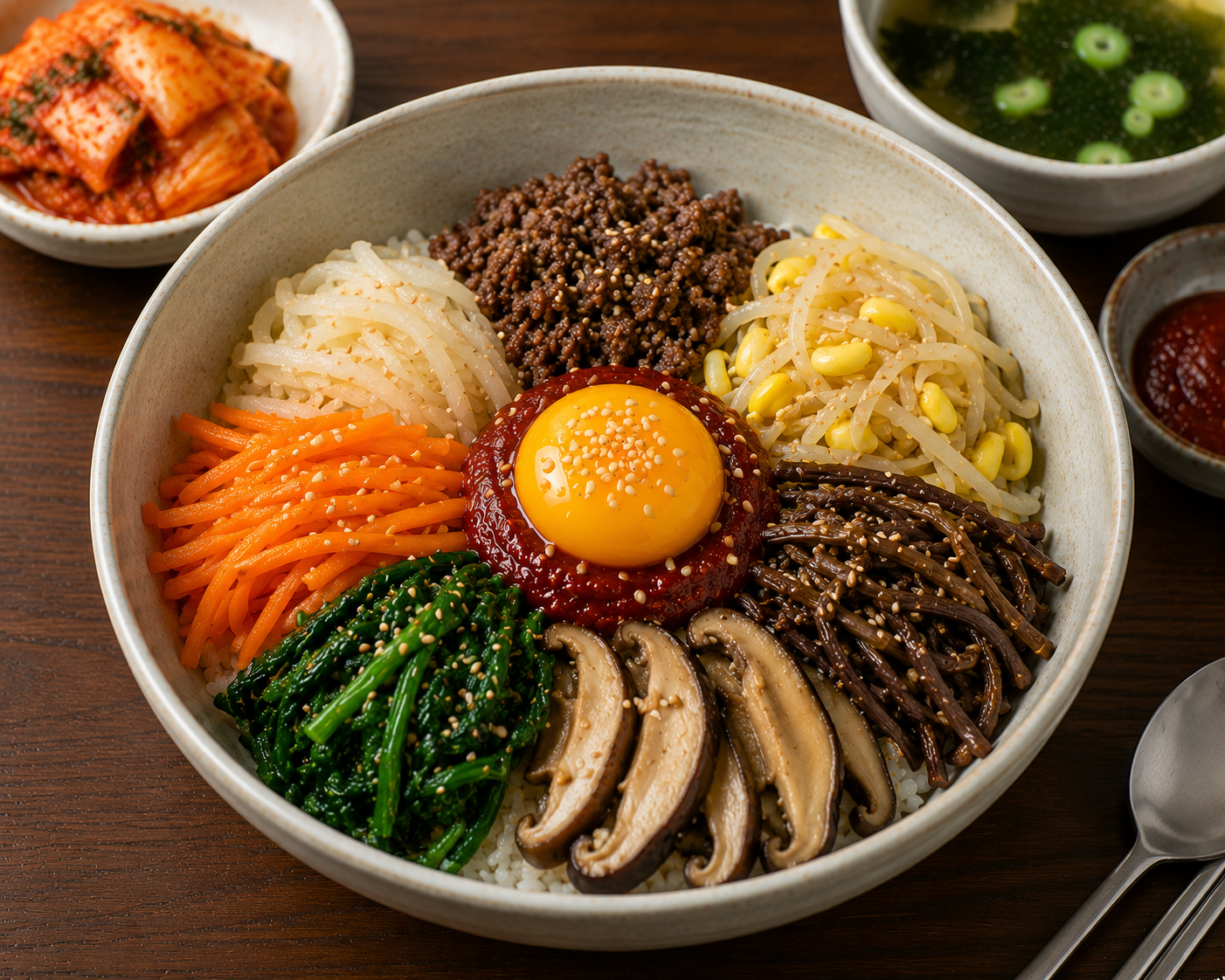
Bibimbap
비빔밥 · bi-bim-bap
A representative Korean rice dish topped with various vegetables, meat, and eggs, mixed with gochujang.
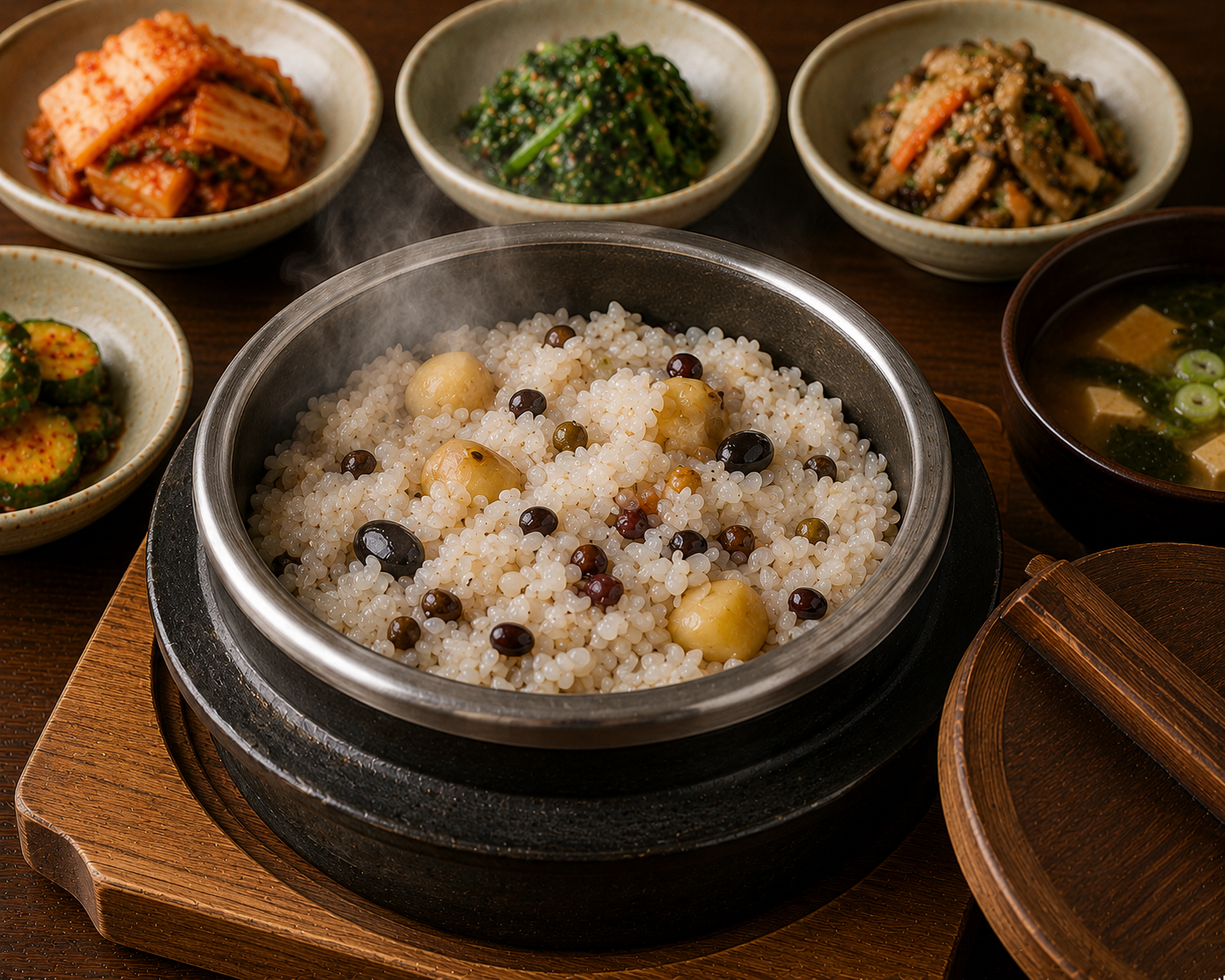
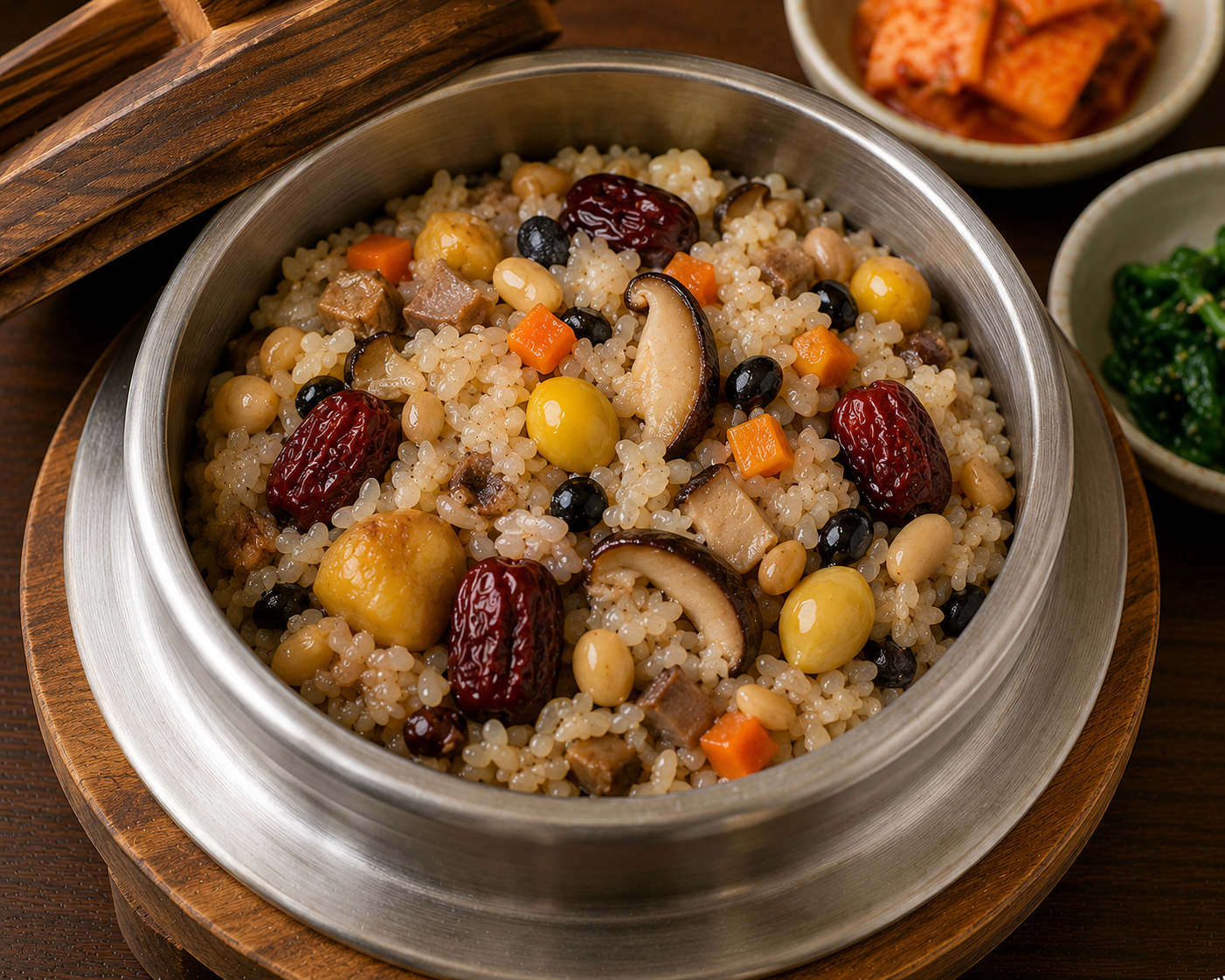
Sotbap
솥밥 · sotbap
A traditional Korean rice dish made by combining rice with various ingredients in a pot, with the crispy layer at the bottom known as nurungji being a delicacy.
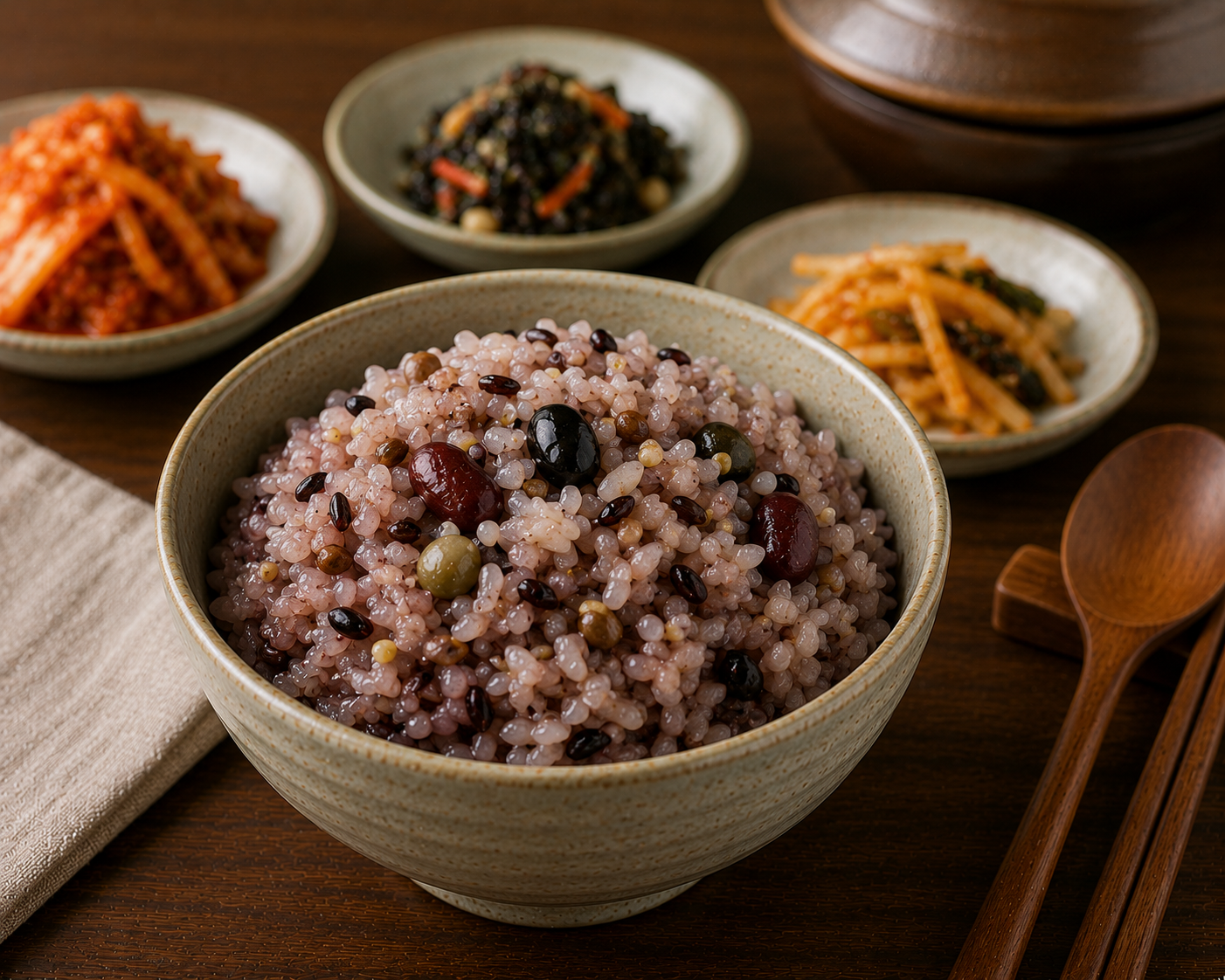
Five Grain Rice
오곡밥 · O-gok-bap
Rice made by mixing five types of grains, a traditional Korean dish that harmonizes various textures and nutrients.
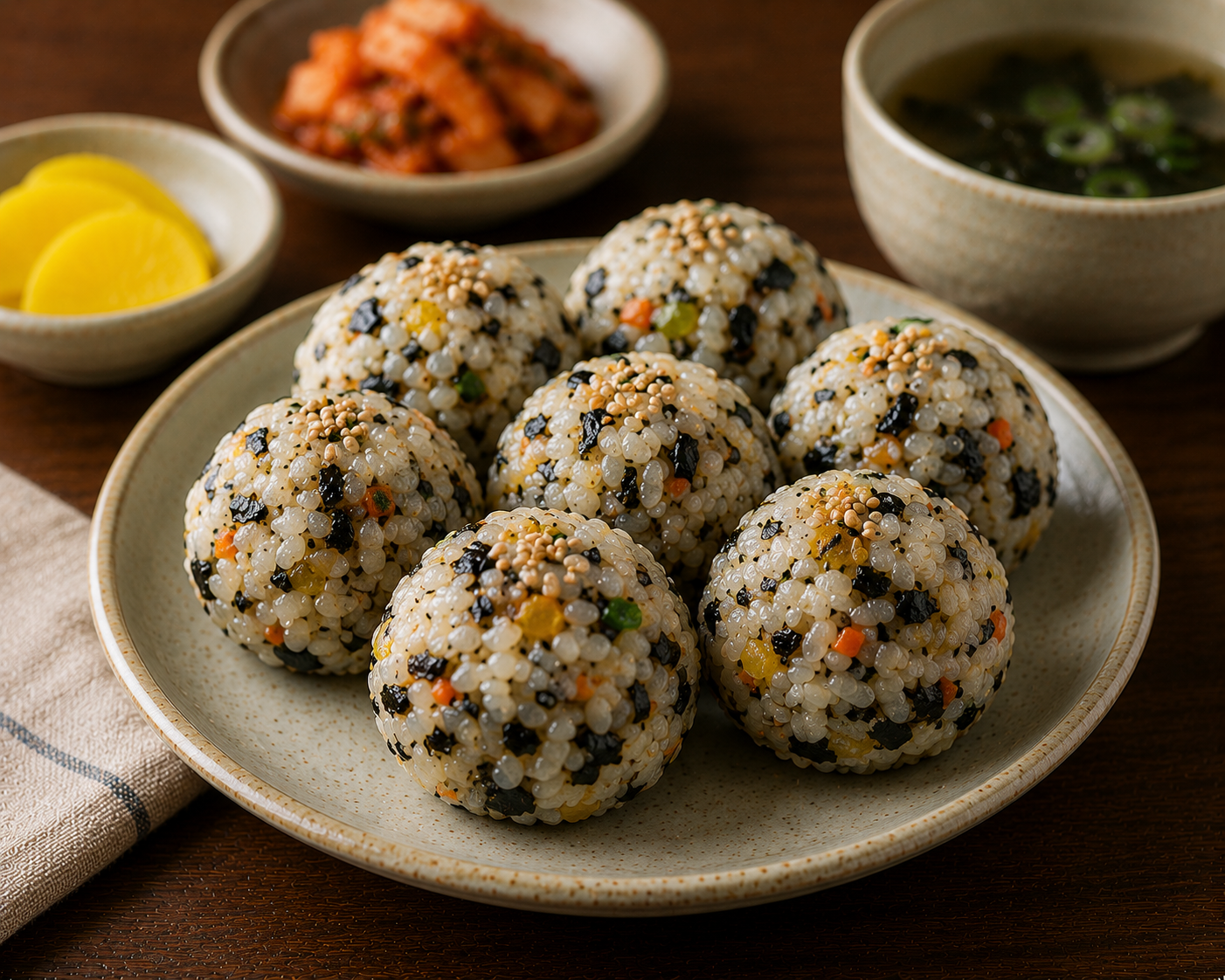
Jumeokbap
주먹밥 · jumeok-bap
A convenient meal made by mixing various ingredients with rice and shaping it by hand.
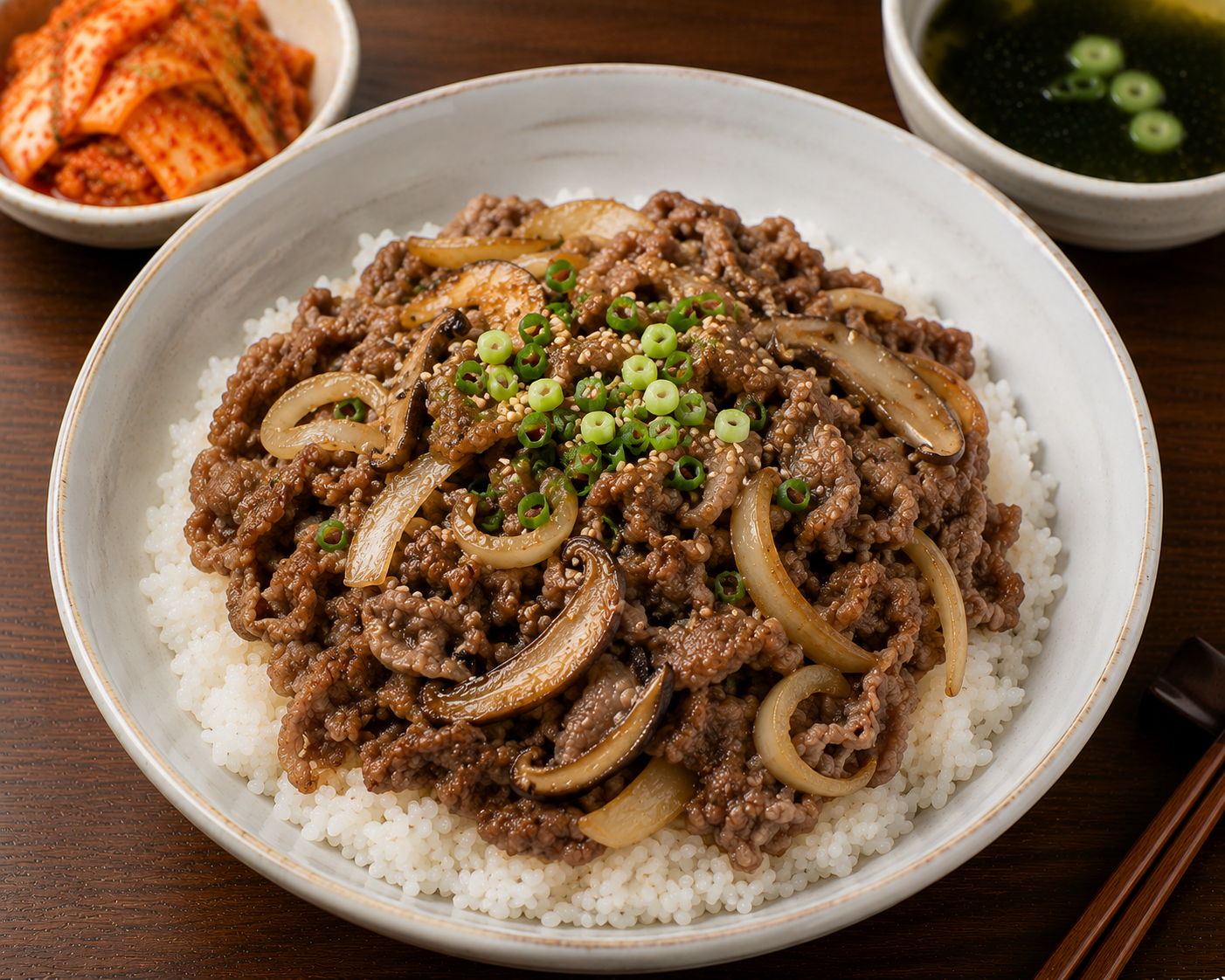
Bulgogi Rice Bowl
불고기덮밥 · bulgogi-deopbap
A Korean-style rice bowl dish topped with stir-fried marinated thinly sliced beef in soy sauce.
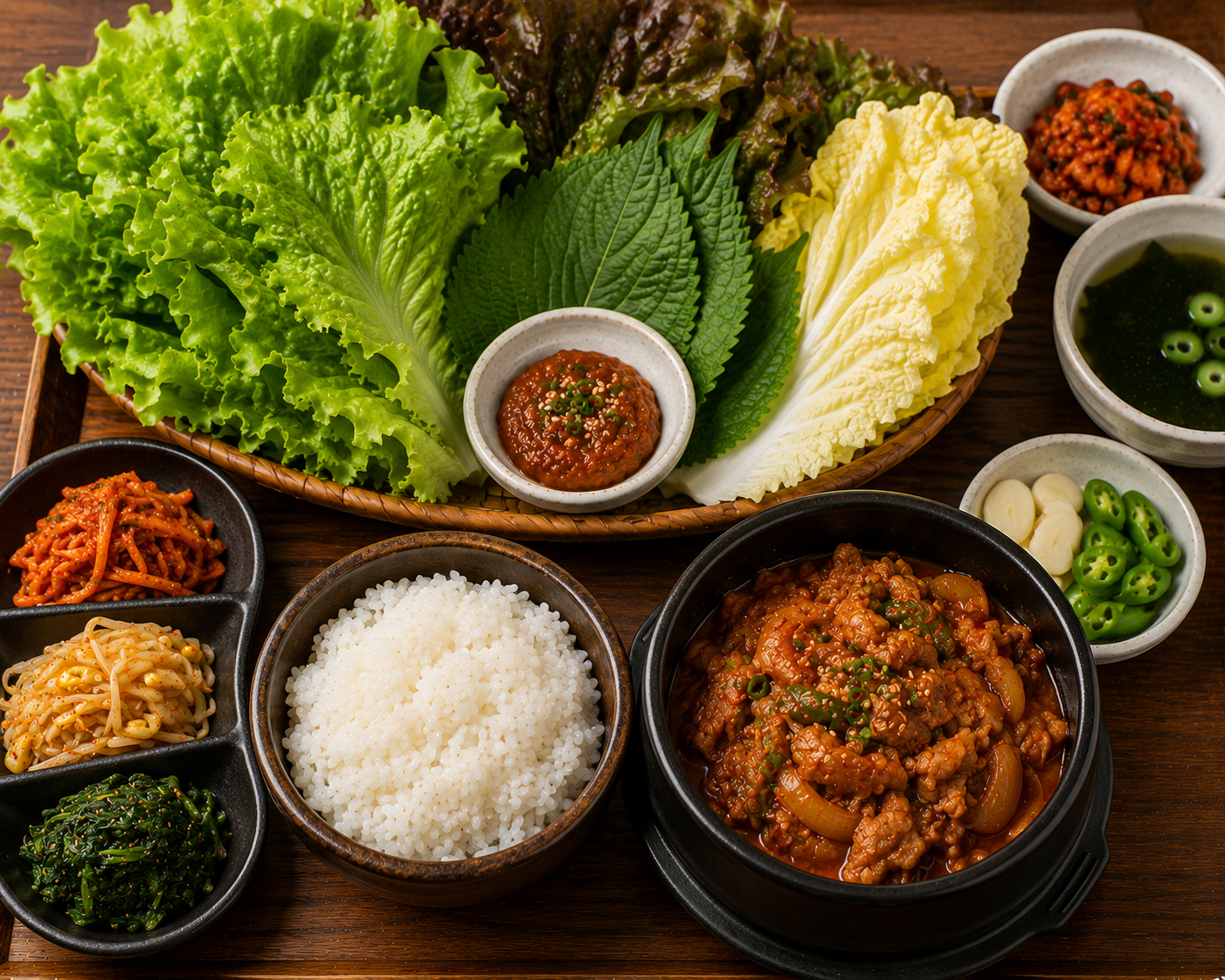
Ssam-bap
쌈밥 · ssam-bap
A traditional Korean meal that involves wrapping rice, meat, and seasoning in various leafy vegetables.
Goes well with
Ingredients
How it's made
- 1Wash the rice thoroughly and cook it.
- 2Place the rice in the stone pot and add vegetables and meat on top.
- 3Add gochujang and sesame oil, then heat the stone pot.
- 4Top with an egg and serve hot.
Nutrition
* Estimated values per serving.
Allergens
Contains meat and egg, so it is not suitable for vegetarian or vegan diets.
How to order
돌솥비빔밥 주세요
Dol-sot-bi-bim-bap ju-se-yo
Please give me Dolsot Bibimbap
Customize your order
Traveler tips
How to eat it
Frequently asked questions
- What should I do if the egg looks undercooked?
- The stone bowl is extremely hot, so the egg continues to cook as you mix. Some places can cook the egg fully if you ask when ordering.
- Should I mix everything right away if I want more nurungji?
- Pressing down and leaving a little rice on the bottom will make it crispier. Leave it too long, though, and the burnt flavor can become stronger than the nuttiness.
- Why is it eaten hotter than regular Bibimbap?
- In Dolsot Bibimbap, the bowl itself functions as a cooking tool. Even after it reaches the table, the rice, egg, and greens keep cooking in the residual heat, so it stays hot down to the last spoonful.
Last reviewed: 2026-10-07