
Cultural background
Gimbap is a popular food that can be easily eaten during picnics or outdoor activities. It is one of Korea's street foods, and there are many variations using different ingredients.
Origin & history
Modern Gimbap has taken shape as rice and fillings rolled into a round log with seaweed. One widely known account says this form was influenced by Japanese-style seaweed rolls introduced during the Japanese colonial period.
At the same time, Koreans had long eaten rice or side dishes wrapped in seaweed. Gimbap can therefore be seen as a dish that developed from a blend of an imported form and Korean table culture, with the aroma of sesame oil emphasized instead of vinegar.
Regional & modern variations
- Chungmu Gimbap — Small rolls filled only with rice are served with seasoned squid and radish kimchi. This style is often mentioned in connection with the Tongyeong area of Gyeongnam.
- Little Gimbap — A small Gimbap close to bite-size. People often dip it in mustard Soy Sauce, and it is eaten like a snack at markets or bunsik restaurants.
- Tuna Gimbap — Tuna and mayonnaise add a nutty, mellow richness to this Gimbap. The filling is moister than in basic Gimbap, so it is best eaten soon after being packed.
- Triangle Gimbap — A triangular Gimbap commonly found at convenience stores. The seaweed and rice are packaged separately, so the seaweed is wrapped around the rice just before eating.
How Koreans eat it
At bunsik restaurants, Gimbap is often ordered with Ramen or Tteokbokki. Lightly dipping Gimbap into Tteokbokki sauce is not a formal way to eat, but it is an extremely common pairing. When ordering several rolls, it is easy to mix different kinds and share them.
Taste & how to choose
Good Gimbap brings together the aroma of seaweed, the scent of sesame oil, and the crunch of yellow pickled radish in a single bite. If the rice layer is too thick, the flavor of the fillings becomes muted; if it sits too long, the seaweed turns soggy. When the fillings are evenly gathered in the center of the cut cross-section, the pieces are less likely to fall apart while eating.
Similar dishes
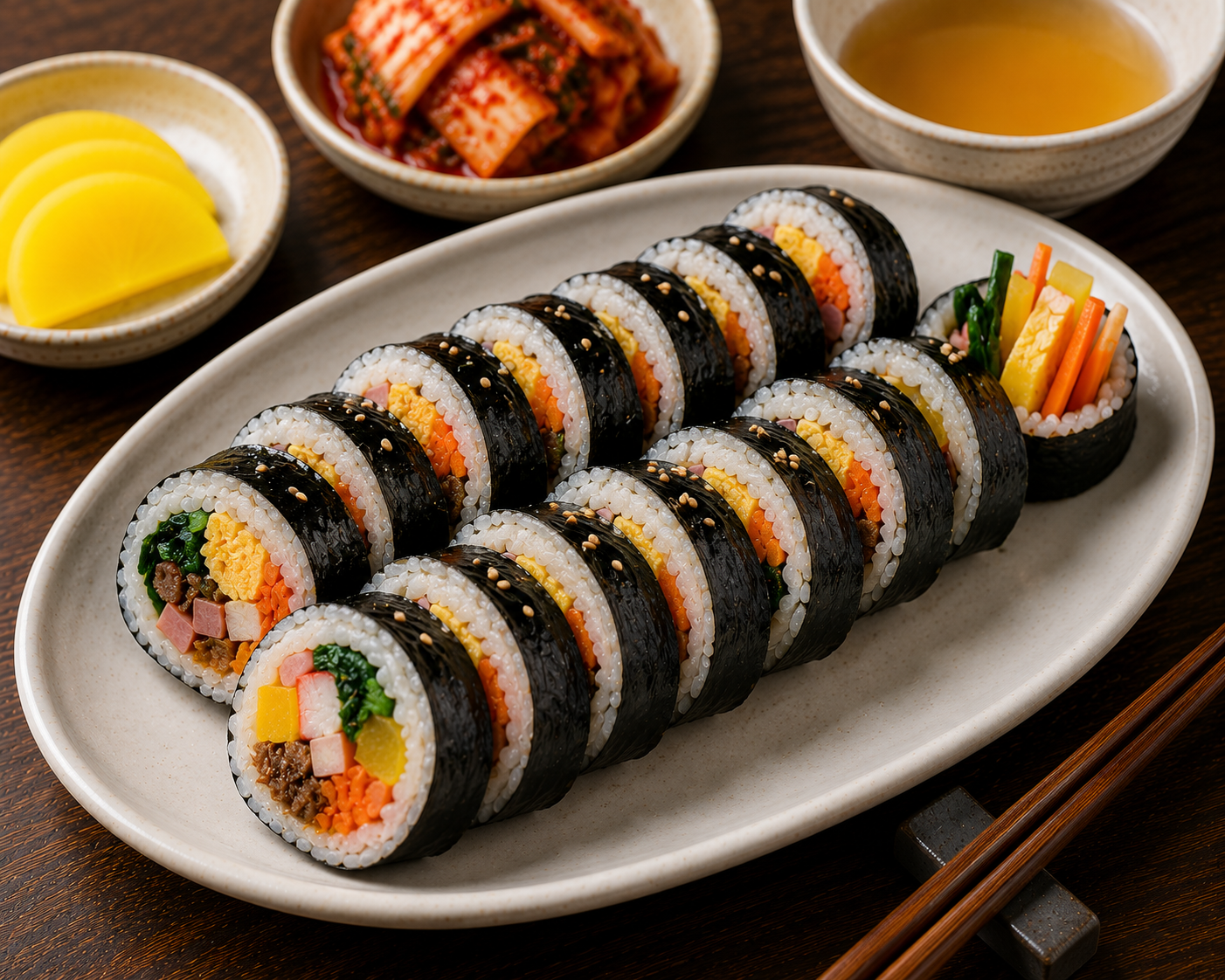
Little Gimbap
꼬마김밥 · kko-ma-gimbap
Gimbap rolled small with rice, vegetables, and pickled radish, perfect for one bite. Seasoned with sesame oil and salt for easy enjoyment.
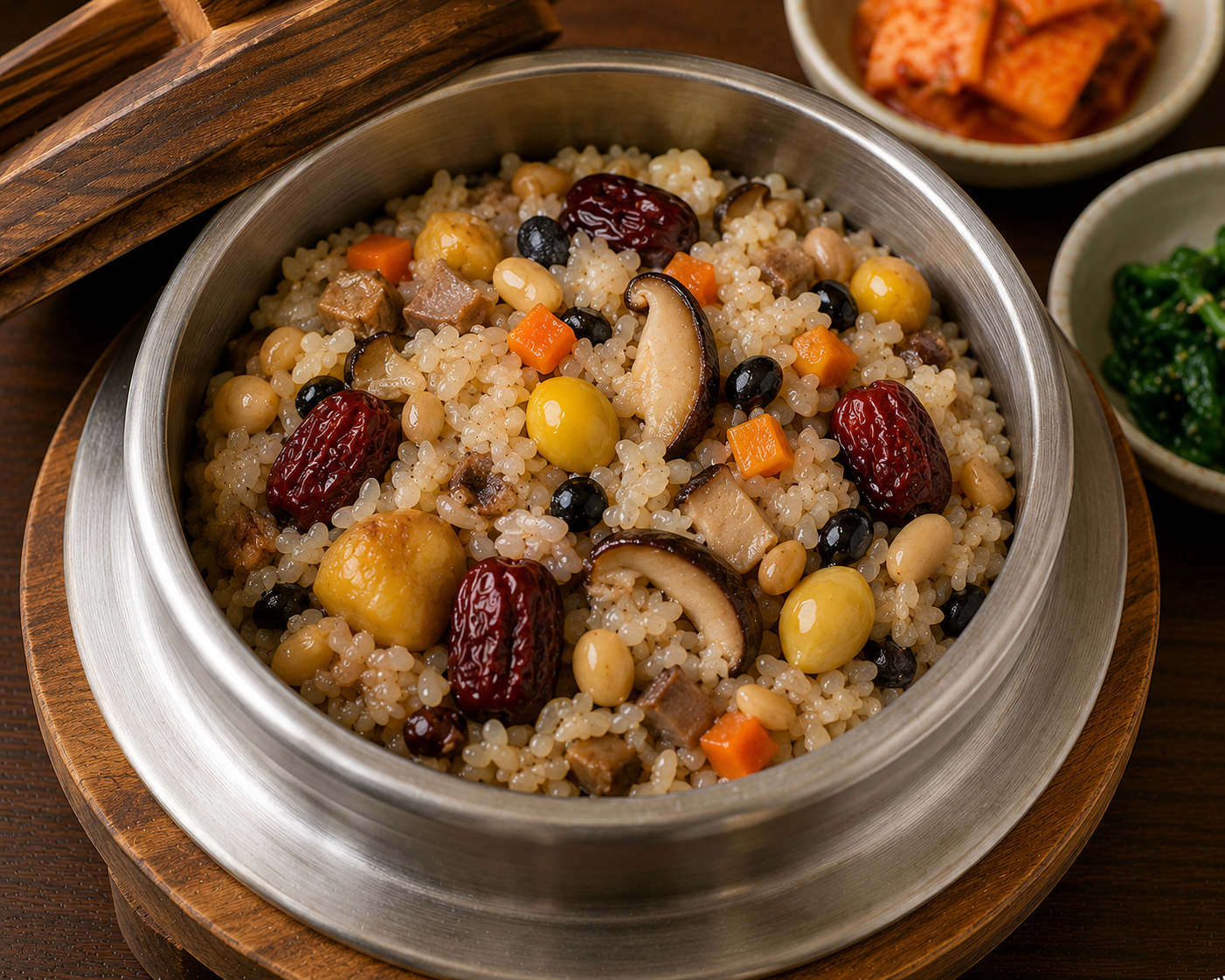
Nutritional Rice
영양밥 · yeong-yang-bap
A rice dish made by cooking rice with various nuts and grains to enhance its nutritional value. The fluffy rice grains blend with the flavors of the different ingredients.
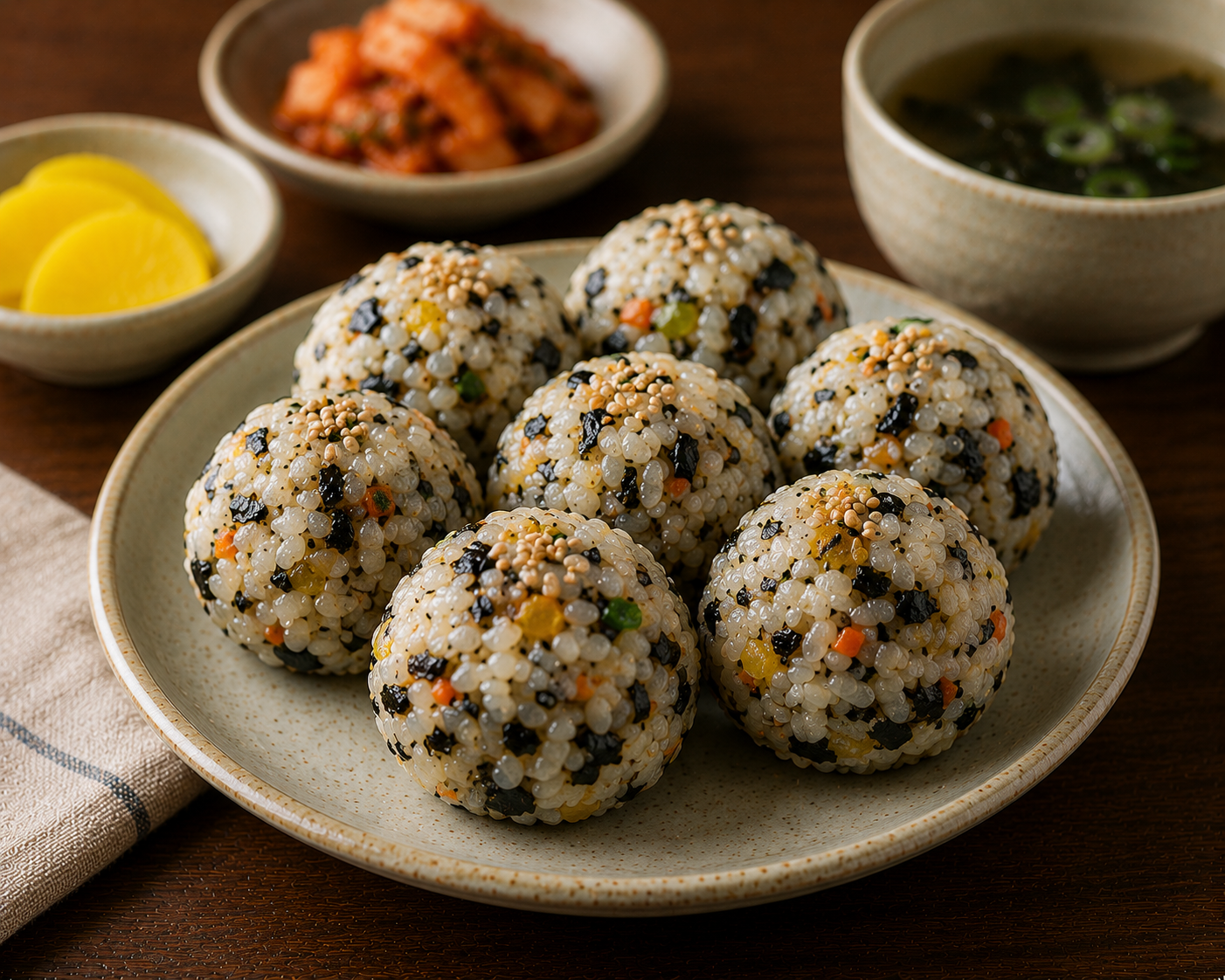
Jumeokbap
주먹밥 · jumeok-bap
A convenient meal made by mixing various ingredients with rice and shaping it by hand.
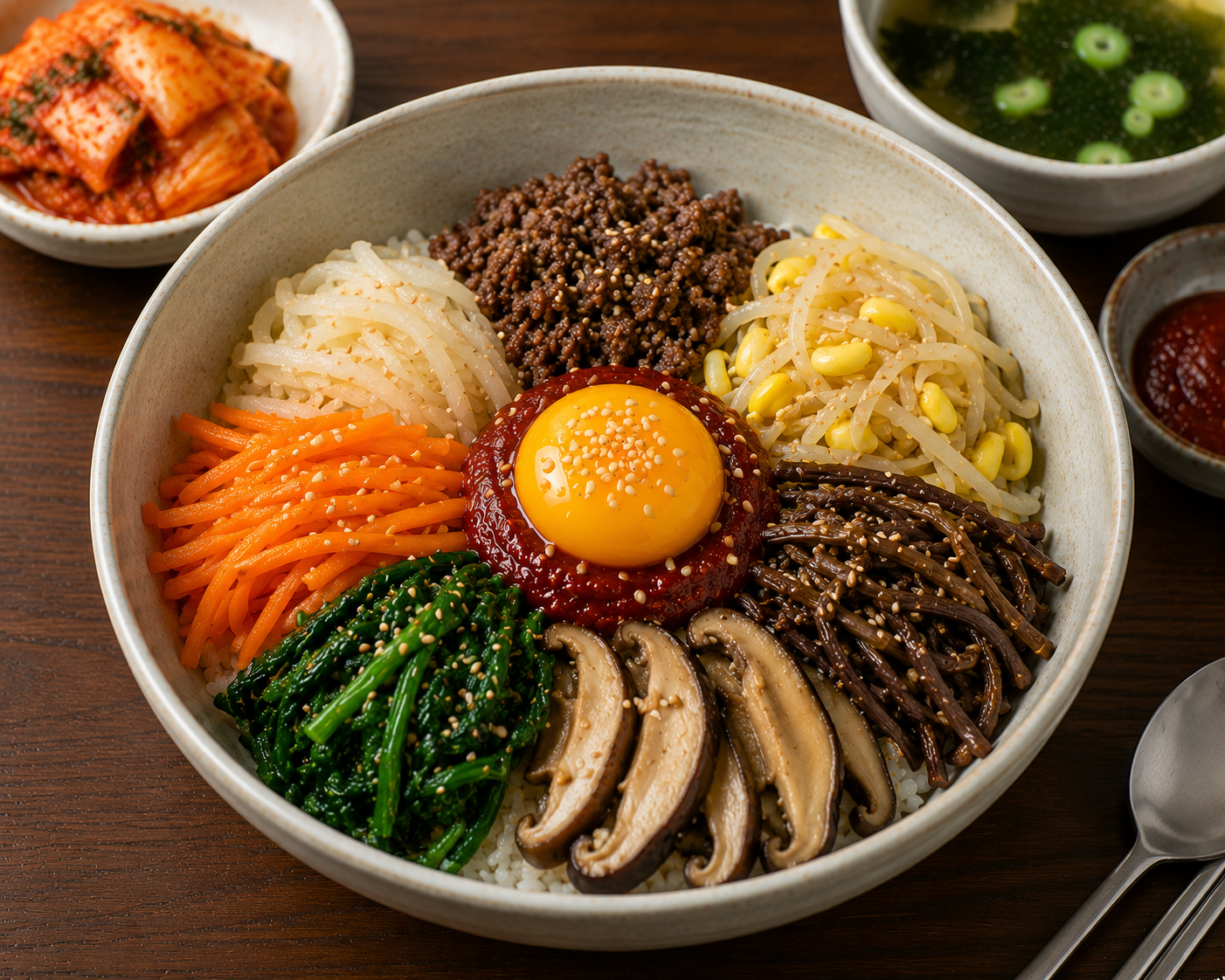
Bibimbap
비빔밥 · bi-bim-bap
A representative Korean rice dish topped with various vegetables, meat, and eggs, mixed with gochujang.
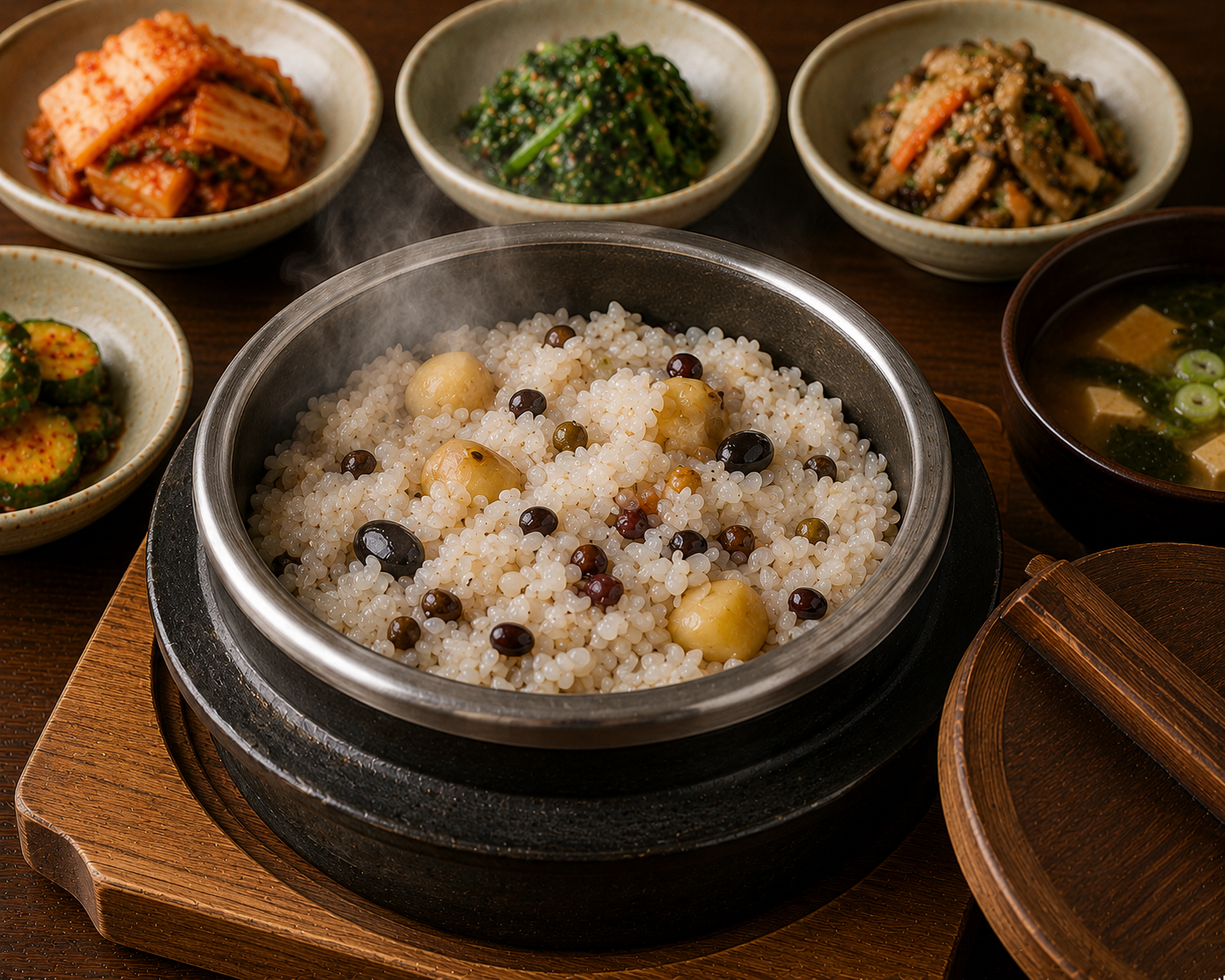
Sotbap
솥밥 · sotbap
A traditional Korean rice dish made by combining rice with various ingredients in a pot, with the crispy layer at the bottom known as nurungji being a delicacy.
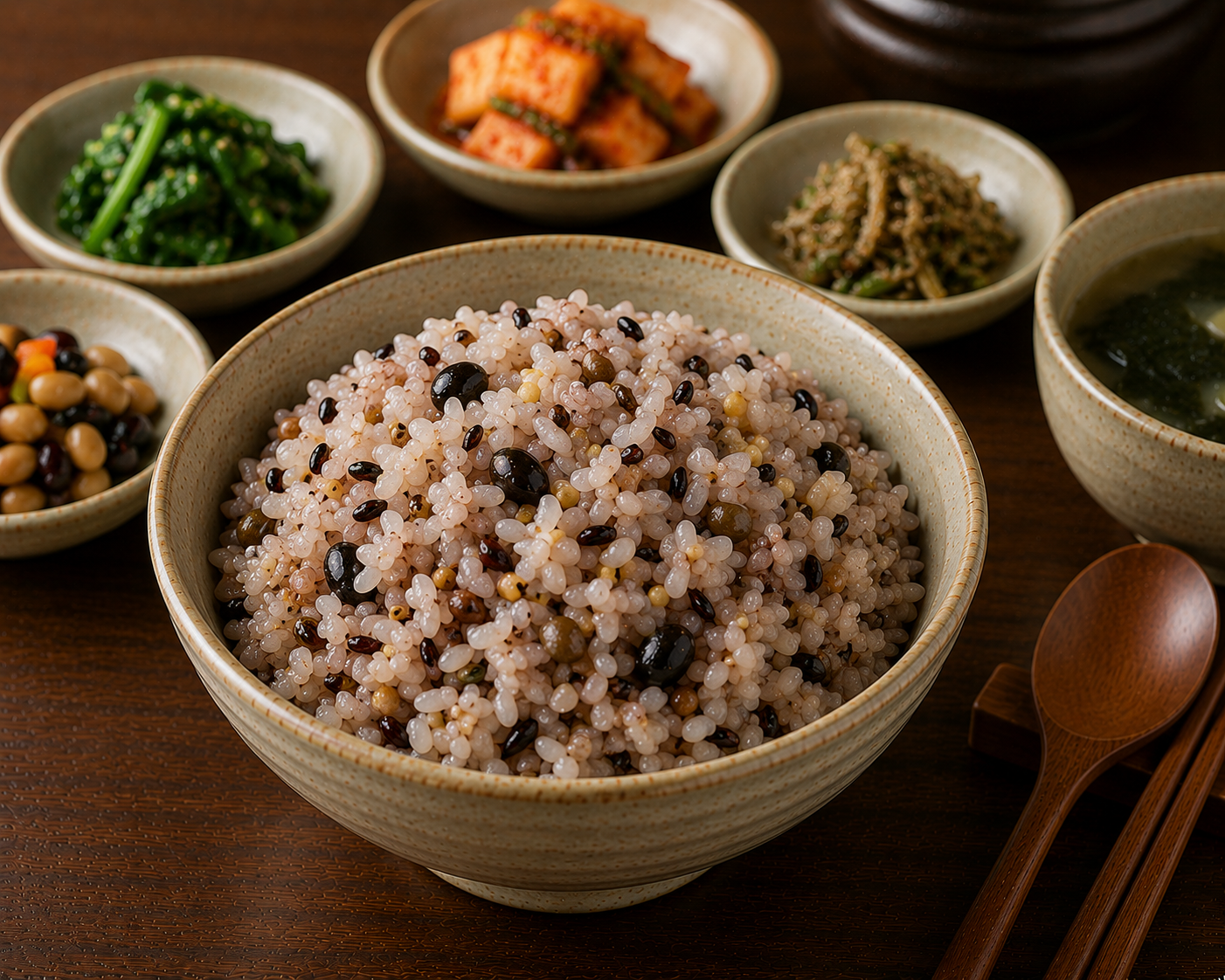
Mixed Grain Rice
잡곡밥 · japgokbap
Rice mixed with various grains, providing diverse textures and nutrition, is a staple type of rice in Korea.
Goes well with
Ingredients
How it's made
- 1Season the rice with sesame oil and salt.
- 2Spread the rice evenly on the seaweed and add the prepared vegetables, ham, and egg.
- 3Roll the seaweed tightly to secure it.
- 4Cut into appropriate sizes and place on a plate.
Nutrition
* Estimated values per serving.
Allergens
It can be vegetarian if ham or eggs are excluded.
How to order
김밥 주세요
Gim-bap ju-se-yo
Please give me Gimbap
Customize your order
Traveler tips
How to eat it
Frequently asked questions
- What is the difference between Gimbap and Japanese-style seaweed rolls?
- The biggest difference lies in how the rice is seasoned. Gimbap is usually seasoned in a savory way with sesame oil and salt, while Japanese-style seaweed rolls often use rice seasoned with vinegar. The fillings also differ: Gimbap commonly includes ingredients closer to side dishes, such as yellow pickled radish, egg, ham, and vegetables.
- Why do the end pieces of Gimbap look different, and why are they popular?
- When Gimbap is sliced, the two end pieces show more of the fillings and tend to be a little less neat in shape. Many people like these pieces because the ingredients come through more strongly in one bite. When making Gimbap at home, the person who made it often eats the ends first, or gives them to a child.
- Can I buy Gimbap in advance and eat it later?
- Gimbap is eaten at room temperature, but because it contains rice, egg, ham, and vegetables together, it does not keep well for long. Especially on hot days, eating it soon after purchase is safer and also tastes better.
Last reviewed: 2026-10-07