
Cultural background
Herbal drinks are traditionally consumed for health benefits, particularly sought after during winter or cold seasons.
Similar dishes
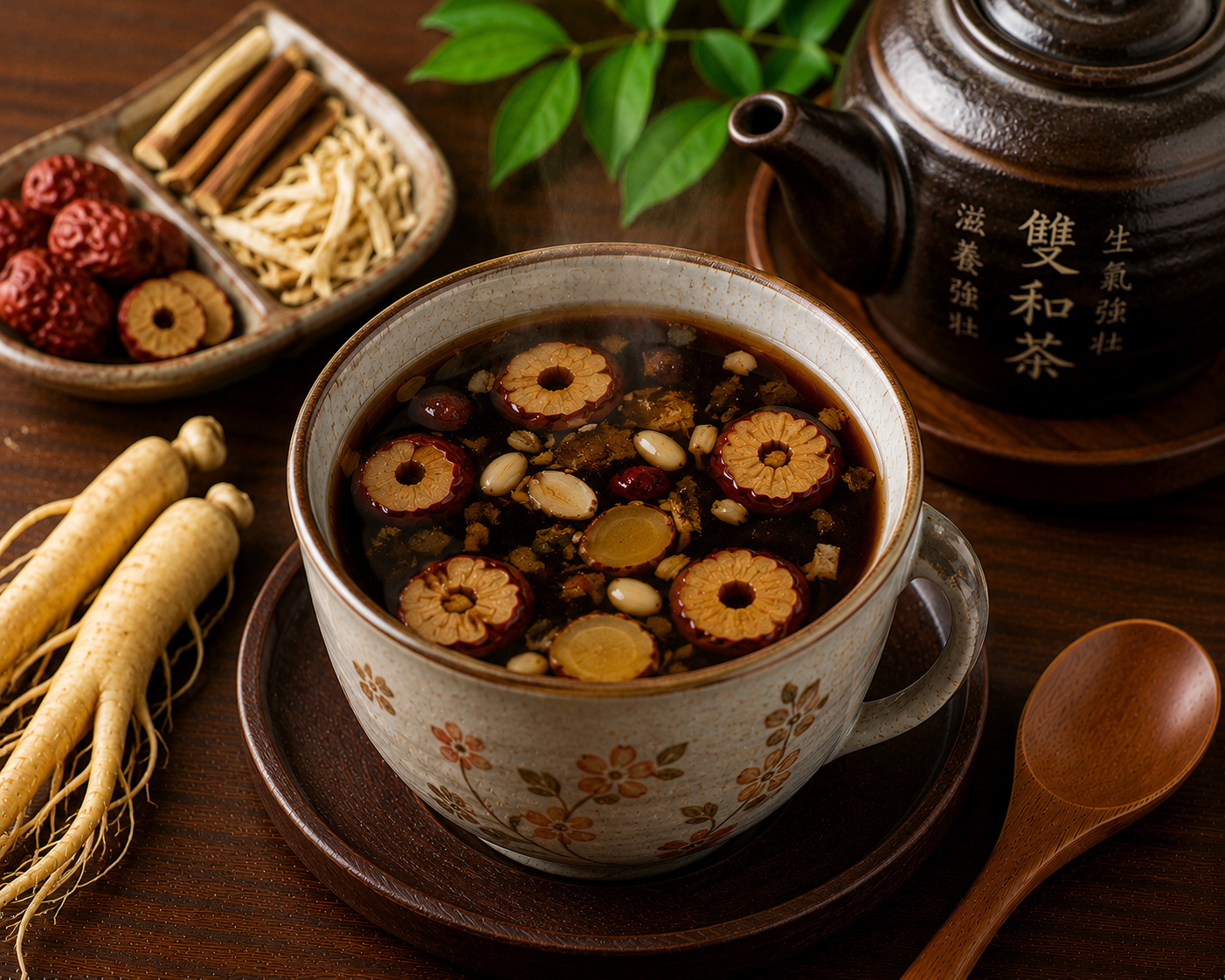
Sanghwacha
쌍화차 · ssang-hwa-cha
A warm traditional tea made by boiling various medicinal herbs, characterized by its sweet and fragrant taste. It is mainly consumed for fatigue recovery or health, often topped with ingredients like pine nuts or jujubes.
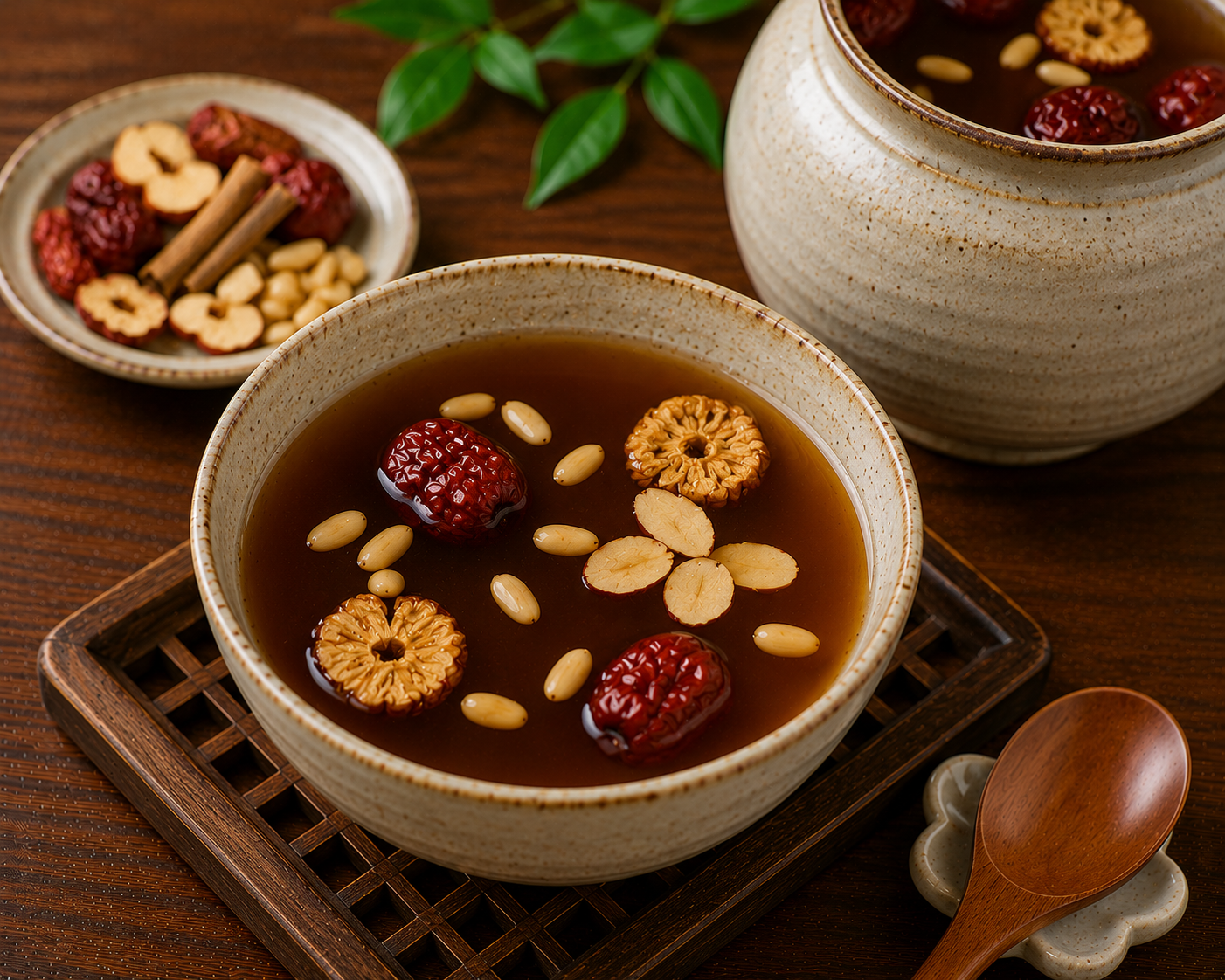
Sujeonggwa
수정과 · su-jeong-gwa
A spicy and sweet traditional drink made by infusing water with cinnamon and ginger, topped with dried persimmons. It is chilled and enjoyed as a dessert, where the flavors of cinnamon and ginger are pronounced.
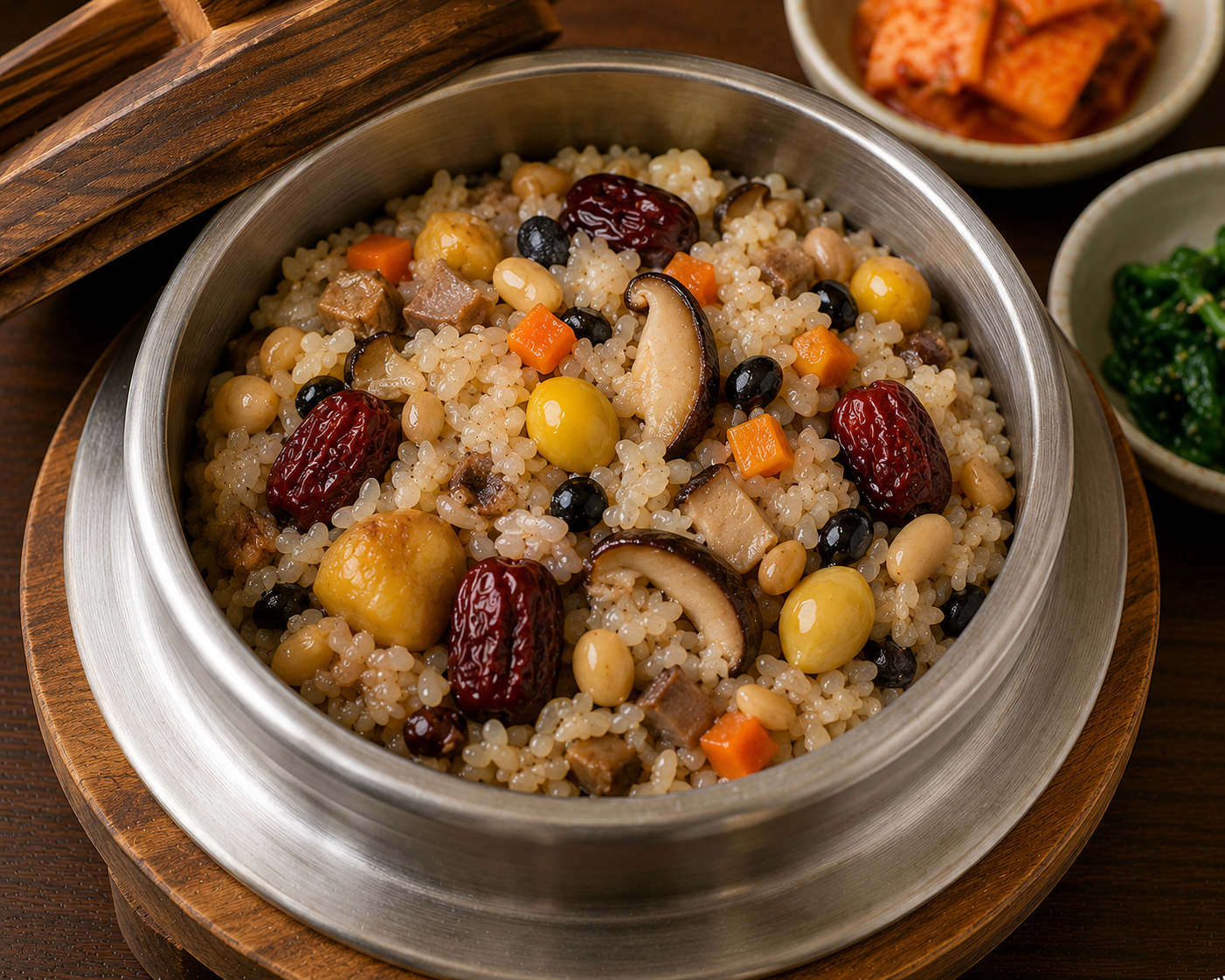
Nutritional Rice
영양밥 · yeong-yang-bap
A rice dish made by cooking rice with various nuts and grains to enhance its nutritional value. The fluffy rice grains blend with the flavors of the different ingredients.
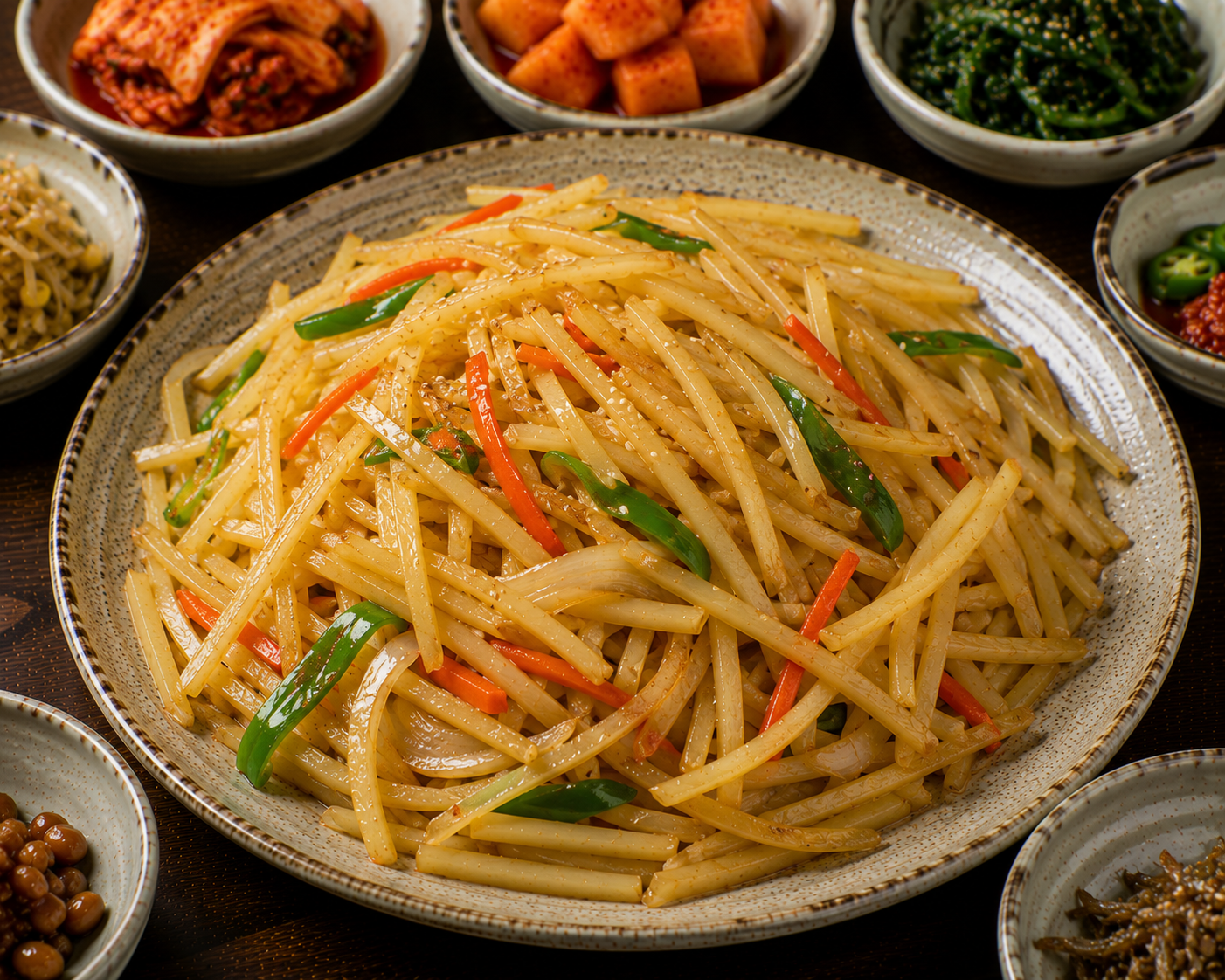
Stir-fried Potatoes
감자볶음 · gamja-bokkeum
Thinly sliced potatoes stir-fried in soy sauce and oil, making a savory and nutty side dish.
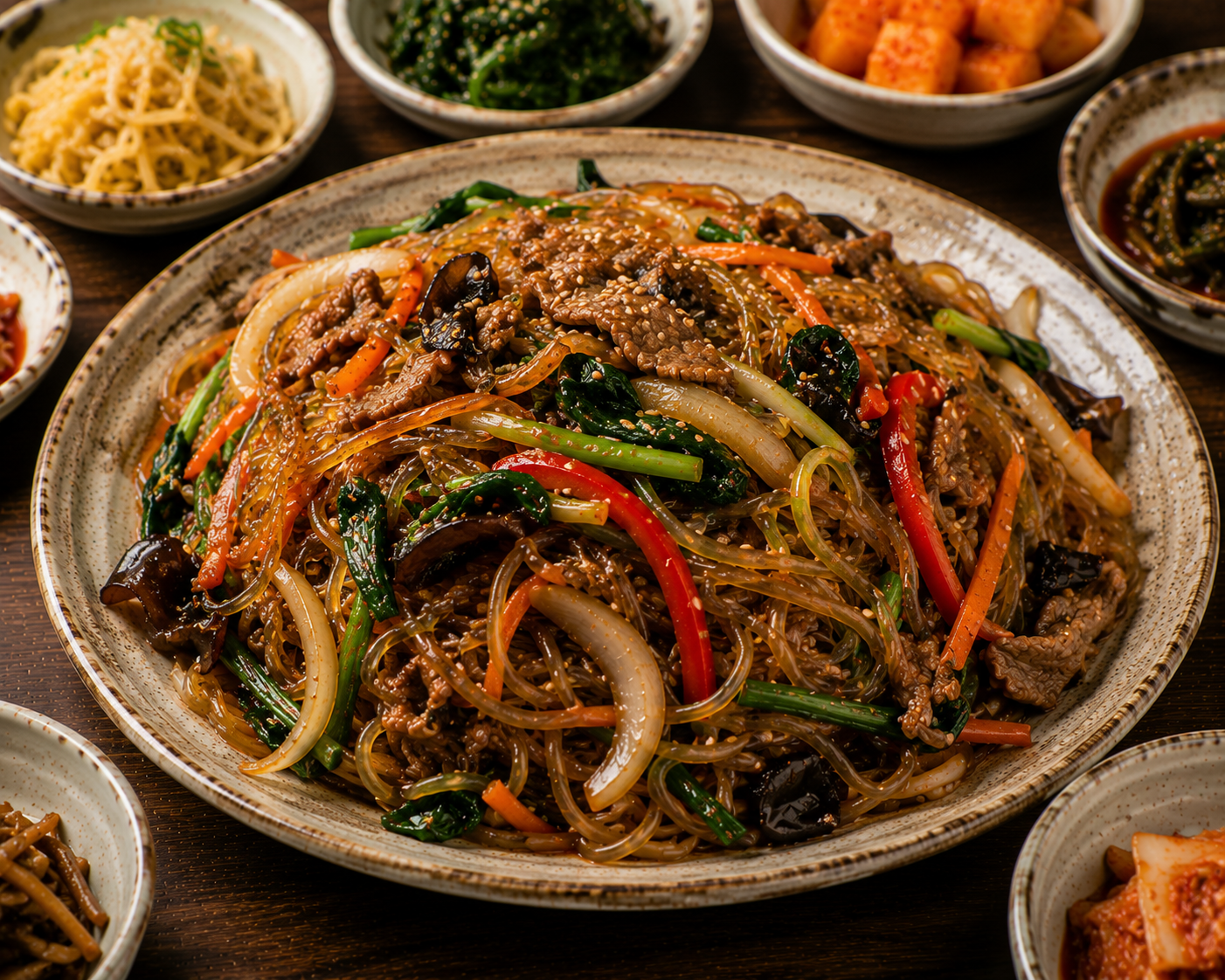
Japchae
잡채 · japchae
A traditional Korean stir-fried dish made with glass noodles and various vegetables and meat, seasoned with soy sauce. The chewy noodles and crunchy vegetables create a rich and savory taste.
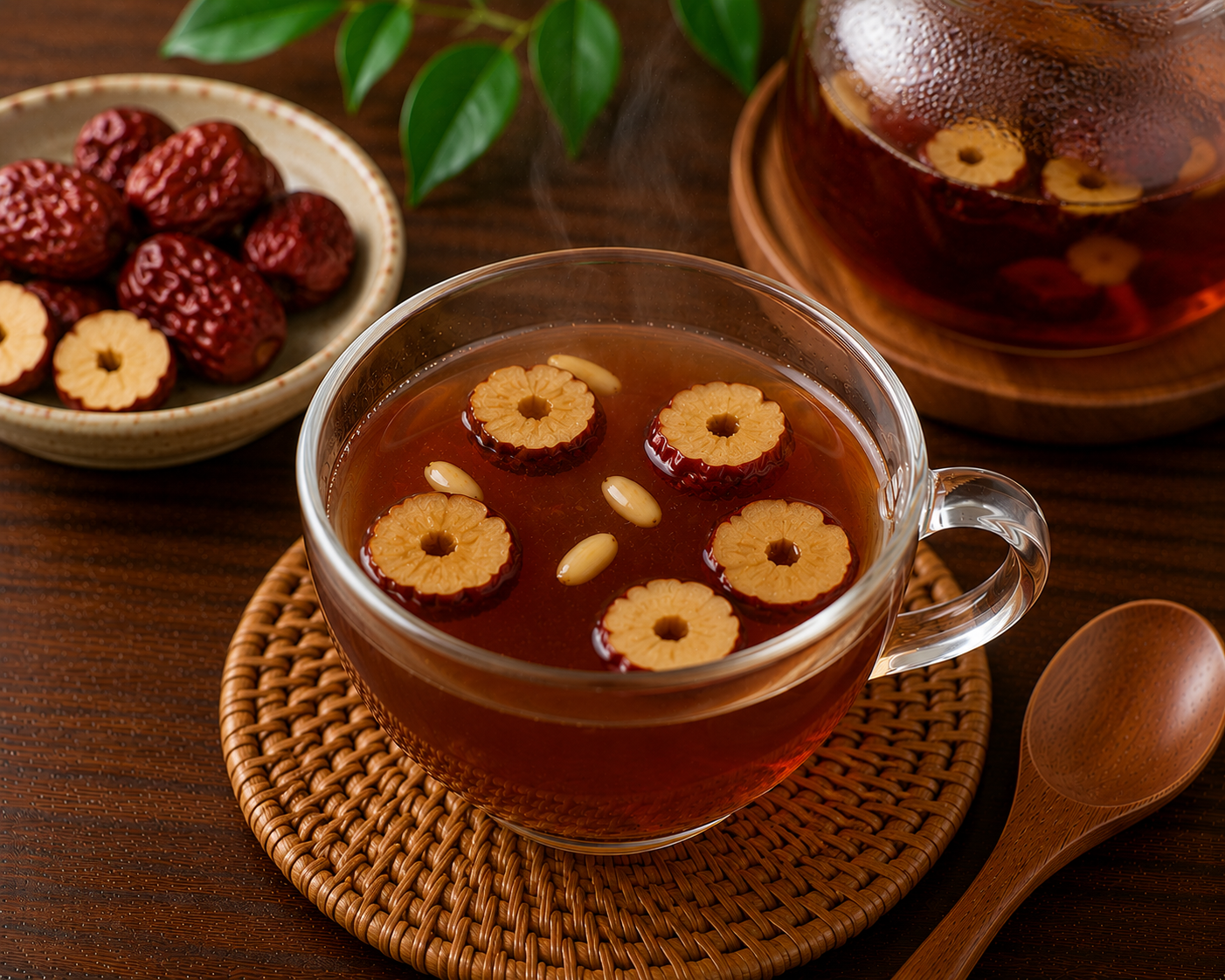
Jujube Tea
대추차 · dae-chu-cha
A warm traditional tea made by boiling jujubes, characterized by its sweet and fragrant taste. It is primarily consumed for health benefits and is said to be good for preventing colds.
Goes well with
Ingredients
How it's made
- 1Clean and prepare jujube, ginger, cinnamon, and licorice.
- 2Add water and the herbal ingredients to a pot and bring to a boil.
- 3Reduce to low heat and simmer for over an hour.
- 4Strain to remove residue and drink warm.
Nutrition
* Estimated values per serving.
Allergens
No allergen data.
Made with herbal ingredients, it is suitable for most dietary restrictions.
How to order
한방음료 주세요
Han-bang-eum-ryo ju-se-yo
Please give me herbal drink