Cultural background
Pumpkin porridge is especially popular in autumn and winter, and is often chosen as a recovery dish due to its easy digestibility. It is enjoyed warm and has a sweet flavor, making it a delicacy as well.
Origin & history
Pumpkin Porridge is thought to have grown out of the everyday practice of storing fully ripened mature pumpkins through winter and eating them later. Mature pumpkins have hard skins and plenty of flesh, so when simmered for a long time, they develop a vivid color and natural sweetness without much strong seasoning.
In Korea, folk customs also say that mature pumpkin was eaten after childbirth, when the body was swollen or the appetite was low. For that reason, Pumpkin Porridge is strongly associated not just with simple sweetness, but with gently soothing the body.
Regional & modern variations
- Pumpkin Porridge with Saealsim — Pumpkin Porridge made with small balls shaped from glutinous rice flour. The white glutinous rice cakes in the yellow porridge make it especially fun to chew.
- Danhobak Pumpkin Porridge — Made with danhobak, a sweet squash, instead of mature pumpkin. With its deeper color and more pronounced sweetness, it often appears on cafe or bunsik-style snack-shop menus as well.
- Pumpkin Porridge with Red Beans — A version with a small amount of boiled red beans added for a nutty depth alongside the sweetness. Unlike Red Bean Porridge, the main attraction here is the yellow flavor and aroma of pumpkin.
How Koreans eat it
Pumpkin Porridge can be eaten as a one-bowl meal, but at Hanjeongsik (Korean traditional full-course meal) restaurants or traditional Korean restaurants, it may also be served first in a small bowl. In that setting, it works like an appetizer that gently opens the palate. At markets and porridge specialty shops, it is also commonly bought for takeout.
Taste & how to choose
Good Pumpkin Porridge has a clear, vivid yellow color rather than a dull one, and its sweetness tastes closer to the pumpkin itself than to sugar. If it is too thin, it can feel like a drink; if too thick, it becomes heavy like rice cake. When saealsim are added, the outside is soft and the inside chewy, though they can be extremely hot.
Similar dishes
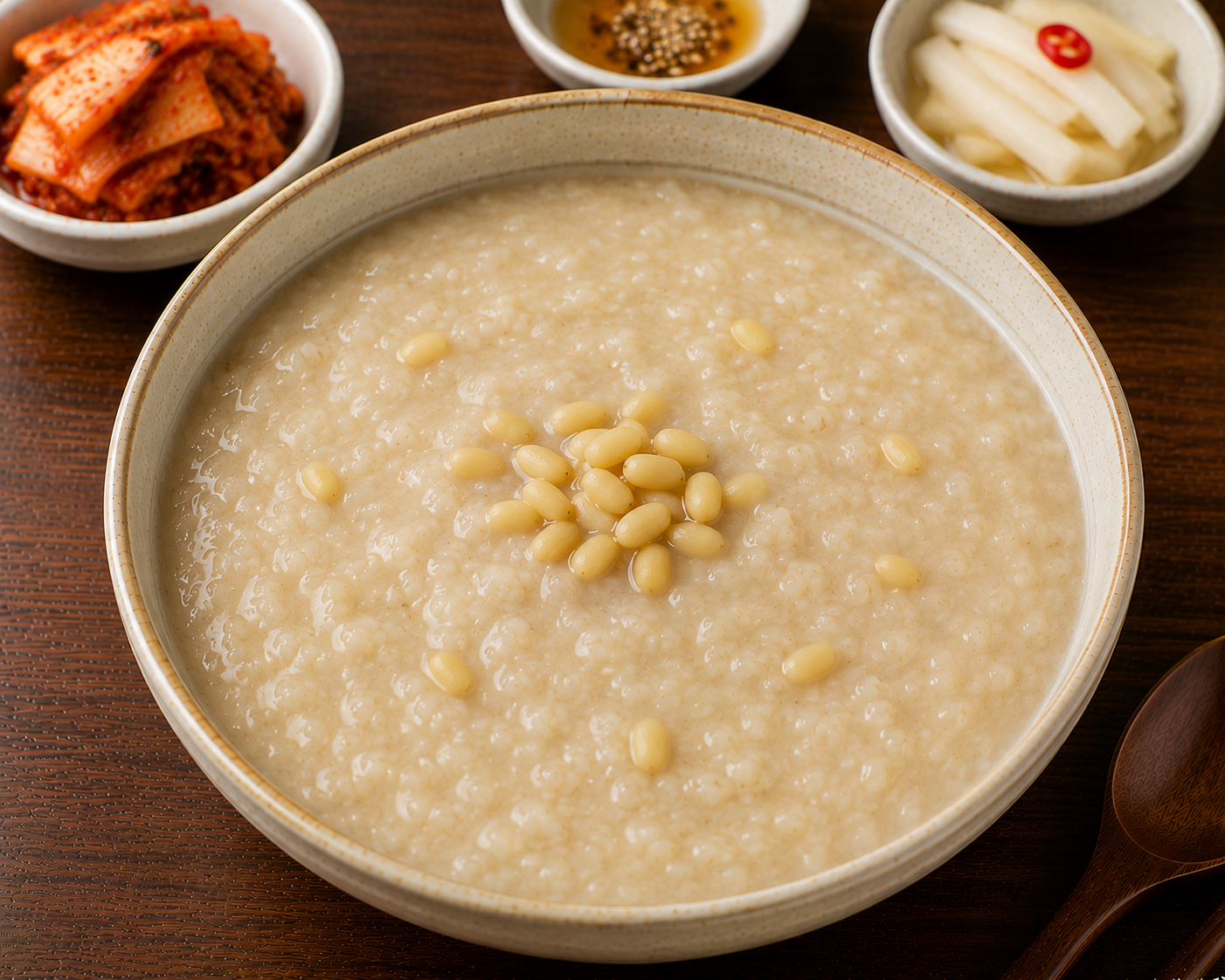
Pine Nut Porridge
잣죽 · jat-juk
A smooth and nutty porridge made by finely grinding pine nuts and cooking them with rice for a long time, making it suitable as a recovery dish due to its easy digestibility.
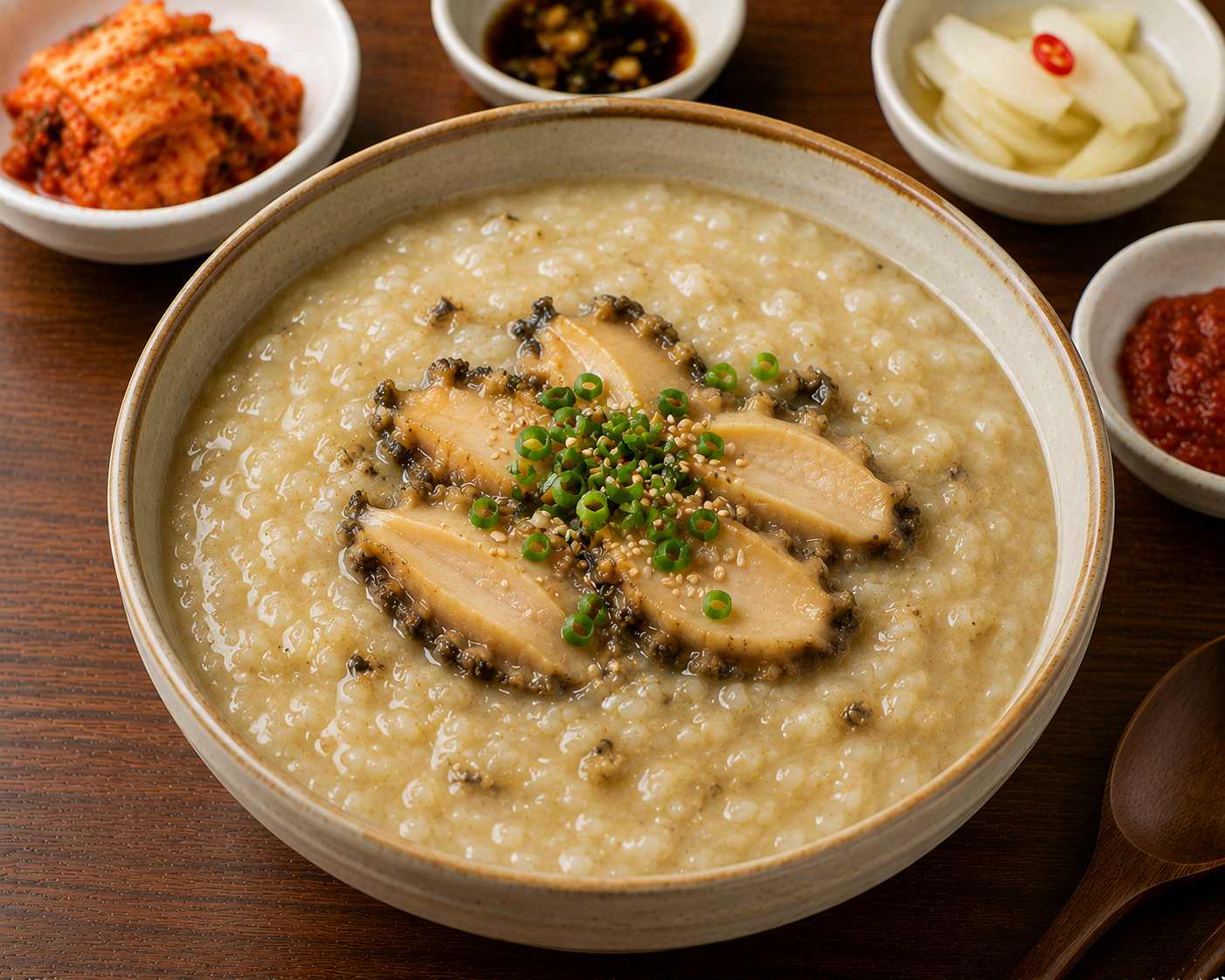
Abalone Porridge
전복죽 · jeon-bok-juk
This thick and savory porridge is made by stirring soaked rice in sesame oil, then adding abalone and its innards and simmering them together for a long time, allowing the umami flavor of the abalone and the green hue of the innards to meld. Because it is mildly seasoned, it is often enjoyed with kimchi or jangjorim, making it a recovery dish that is easy on the stomach and serves as a restorative delicacy.
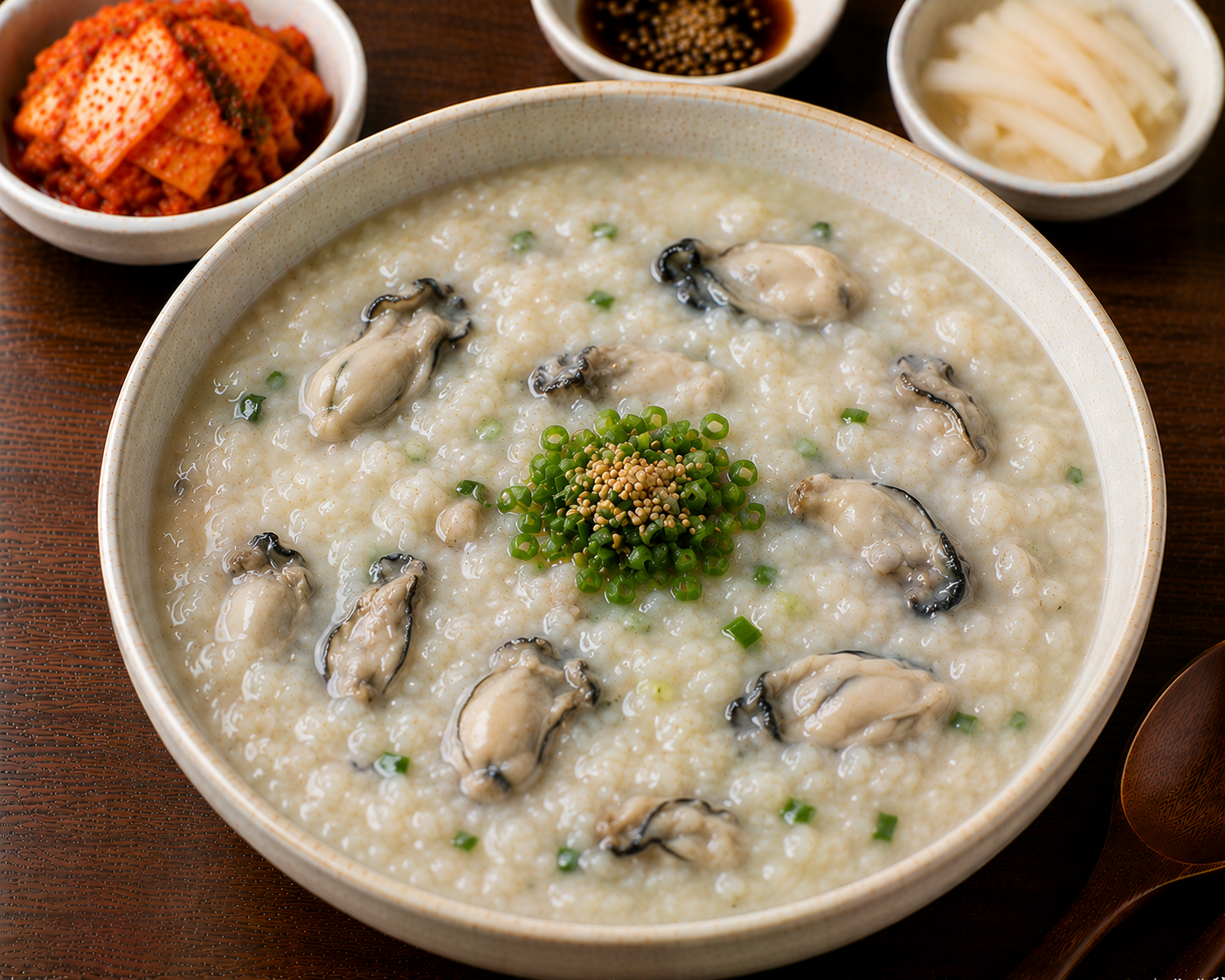
Oyster Porridge
굴죽 · gul-juk
A soft and thick porridge made by boiling oysters and rice together, filled with the scent of the sea. It is eaten with salty side dishes like kimchi or jangjorim to enhance the flavor.
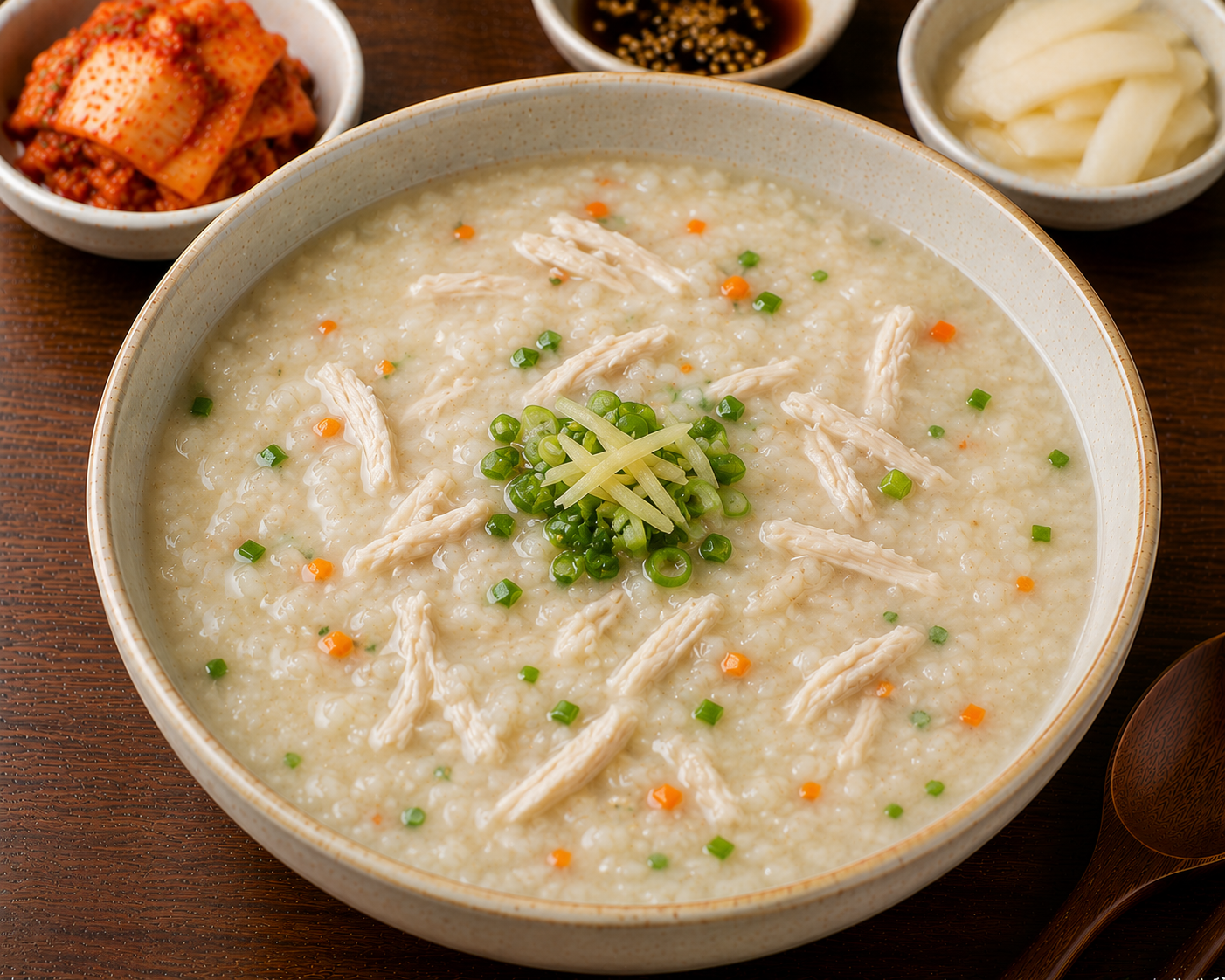
Chicken Porridge
닭죽 · dak-juk
A traditional Korean porridge made by simmering rice and chicken together until soft and thick. The deep flavor of the chicken adds a mild and nutty taste. It is best enjoyed with salty side dishes like kimchi or jangjorim.
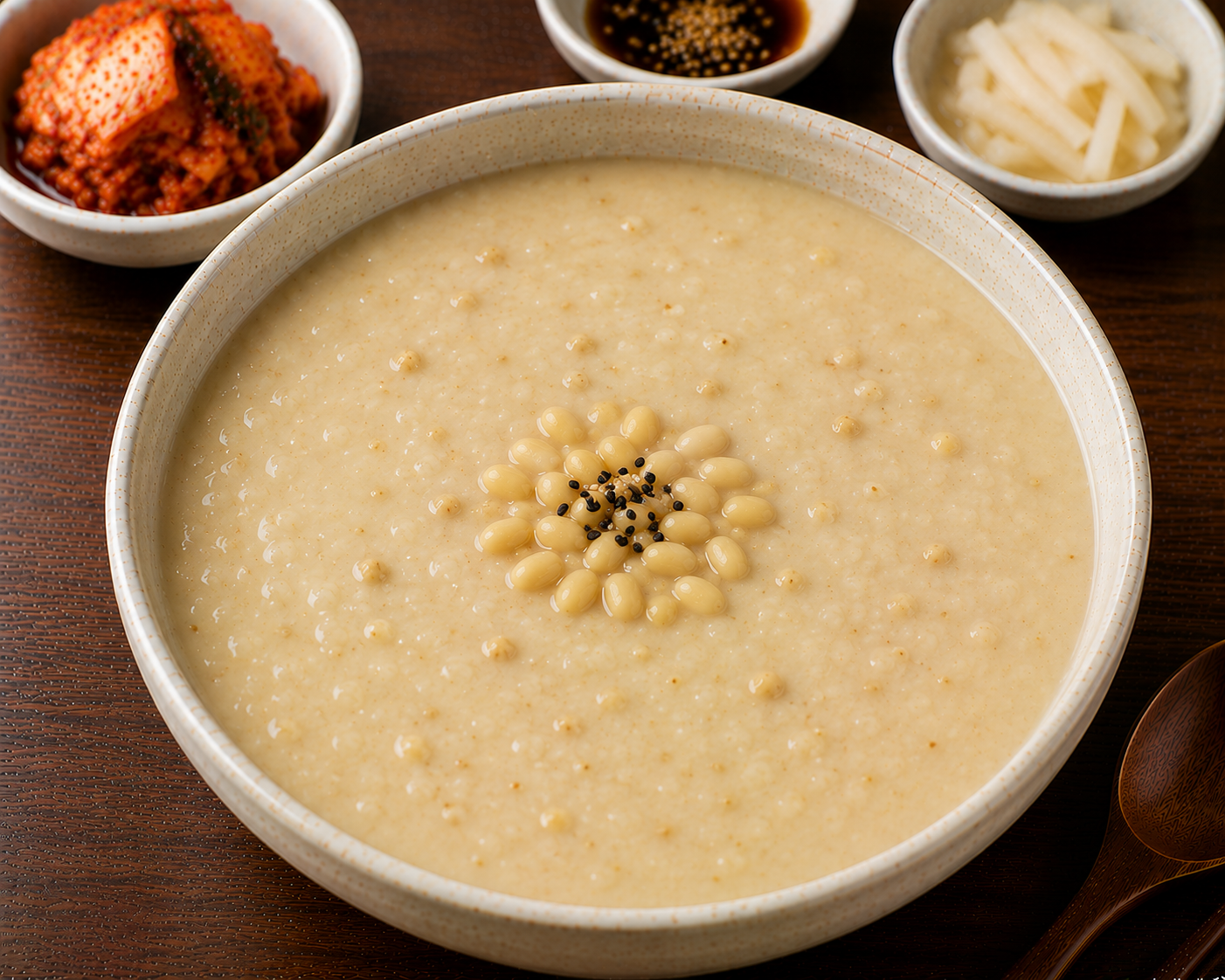
Bean Porridge
콩죽 · kong-juk
A traditional Korean porridge made by boiling soaked beans and rice together until soft and thick. It is characterized by its light and nutty flavor, and is suitable for breakfast or recovery meals due to its easy digestibility.
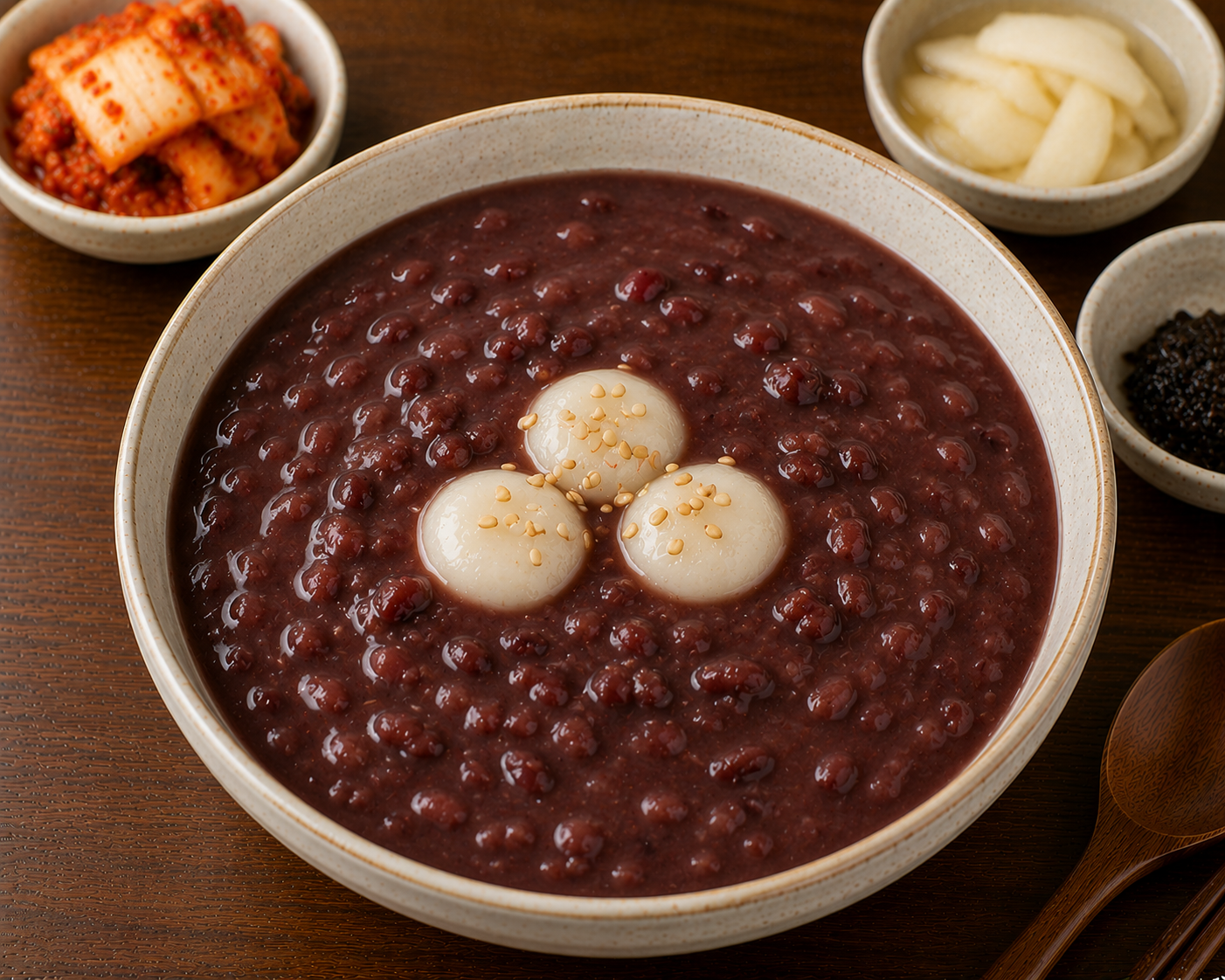
Red Bean Porridge
팥죽 · patjuk
A dish made by boiling red beans until soft and straining them into a red porridge, mixed with chewy glutinous rice balls, traditionally eaten on the winter solstice to ward off evil spirits. The hearty taste of the red beans and the chewy texture of the glutinous rice create a harmonious balance, usually enjoyed with salty side dishes like kimchi or soy sauce braised meat.
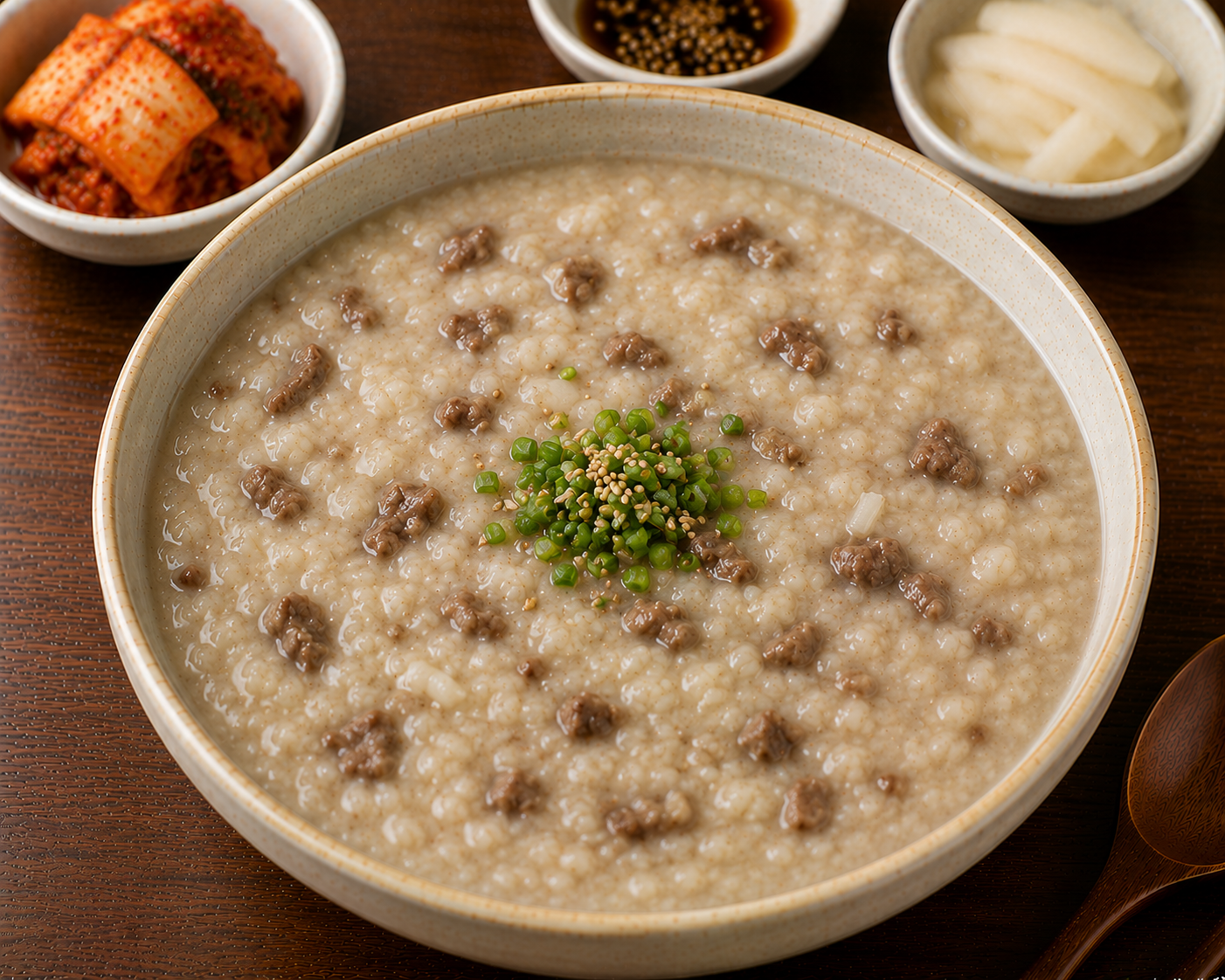
Beef Porridge
쇠고기죽 · soegogi-juk
A traditional Korean porridge made by boiling rice and beef together, resulting in a smooth and thick texture. It is characterized by the savory flavor of beef and is easily digestible, making it ideal for recovery meals. It is often enjoyed with salty side dishes like kimchi or jangjorim.
Goes well with
Ingredients
How it's made
- 1Wash the pumpkin thoroughly and remove the skin, then cut it into suitable sizes.
- 2Soak the rice and glutinous rice in water to prepare them.
- 3Pour water into a pot and add the pumpkin to boil well.
- 4Grind the boiled pumpkin finely, then add the rice and glutinous rice, cooking until thickened.
- 5Season with salt and sugar.
Nutrition
* Estimated values per serving.
Allergens
No allergen data.
Made mainly with plant-based ingredients, it is suitable for vegetarians.
How to order
호박죽 주세요
Ho-bak-juk ju-se-yo
Please give me Pumpkin Porridge
Customize your order
Traveler tips
How to eat it
Frequently asked questions
- Does the ‘호박’ (hobak, pumpkin/squash) in Pumpkin Porridge mean the same thing as a Western-style pumpkin?
- The Korean word ‘호박’ (hobak, pumpkin/squash) refers broadly not only to pumpkin but also to various kinds of squash. Pumpkin Porridge is usually made with sweet yellow squash or pumpkin, such as mature pumpkin or danhobak.
- What are the white round pieces in Pumpkin Porridge?
- They are usually glutinous rice cakes called ‘새알심’ (saealsim, bird-egg-shaped glutinous rice cake balls). The name comes from their small, bird-egg-like shape, and they add a chewy texture to the porridge.
- Is Pumpkin Porridge a meal or a dessert?
- Both are possible. Served in a large bowl, it makes a meal; served in a small bowl, it is eaten more like a not-too-sweet dessert or an appetizer.
Last reviewed: 2026-10-07