
Abalone Porridge
This thick and savory porridge is made by stirring soaked rice in sesame oil, then adding abalone and its innards and simmering them together for a long time, allowing the umami flavor of the abalone and the green hue of the innards to meld. Because it is mildly seasoned, it is often enjoyed with kimchi or jangjorim, making it a recovery dish that is easy on the stomach and serves as a restorative delicacy.
Cultural background
Abalone porridge is a delicacy often enjoyed for nourishment and recovery, especially popular in regions like Jeju where abalones are sourced. It is frequently chosen for its easy digestibility, making it a favored choice during recovery.
Origin & history
Abalone Porridge is especially well known along Korea's southern coast and on Jeju, where abalone is harvested. Because abalone is expensive and difficult to clean, it has long been regarded less as an everyday side dish than as food served to honored guests or eaten for nourishment.
On Jeju, abalone innards are called geu, and porridge cooked with the innards is also called geu-juk. A defining feature of Abalone Porridge is that the innards are not discarded but used as the heart of the flavor.
Regional & modern variations
- Geu-juk — A Jeju name for Abalone Porridge that brings out the flavor and color of geu, the abalone innards. It has a greenish or gray-green cast and a deeper ocean aroma.
- Jeonbok-sal-juk — Porridge made mainly with abalone meat, with little or no innards added. The color is relatively light and the flavor is clean, making it approachable for anyone unfamiliar with the aroma of abalone innards.
How Koreans eat it
Abalone Porridge usually comes as a one-bowl meal with a few small side dishes. Travelers on Jeju often seek it out for an early breakfast. Since the dish is not heavily seasoned, it is better to taste the porridge's own aroma first rather than mixing in lots of side dishes from the start.
Taste & how to choose
The greenish color can surprise first-time diners. The tint comes from the color of the abalone innards. Good Abalone Porridge should lead with the nutty aroma of sesame oil and a gentle scent of the sea rather than any fishiness, and the rice grains should be soft and fully opened up. The abalone meat should have a springy bite, not a squid-like toughness.
Similar dishes
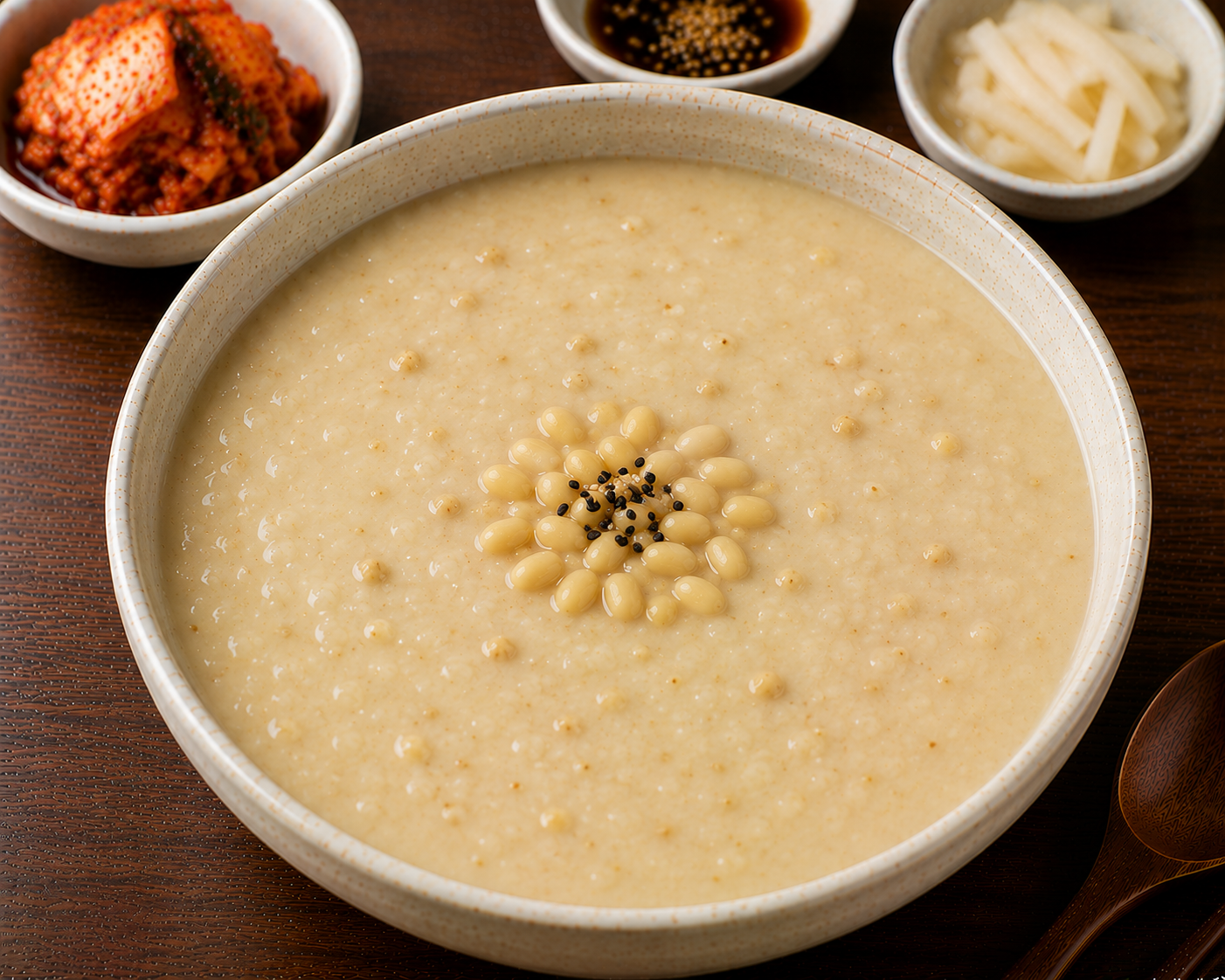
Bean Porridge
콩죽 · kong-juk
A traditional Korean porridge made by boiling soaked beans and rice together until soft and thick. It is characterized by its light and nutty flavor, and is suitable for breakfast or recovery meals due to its easy digestibility.
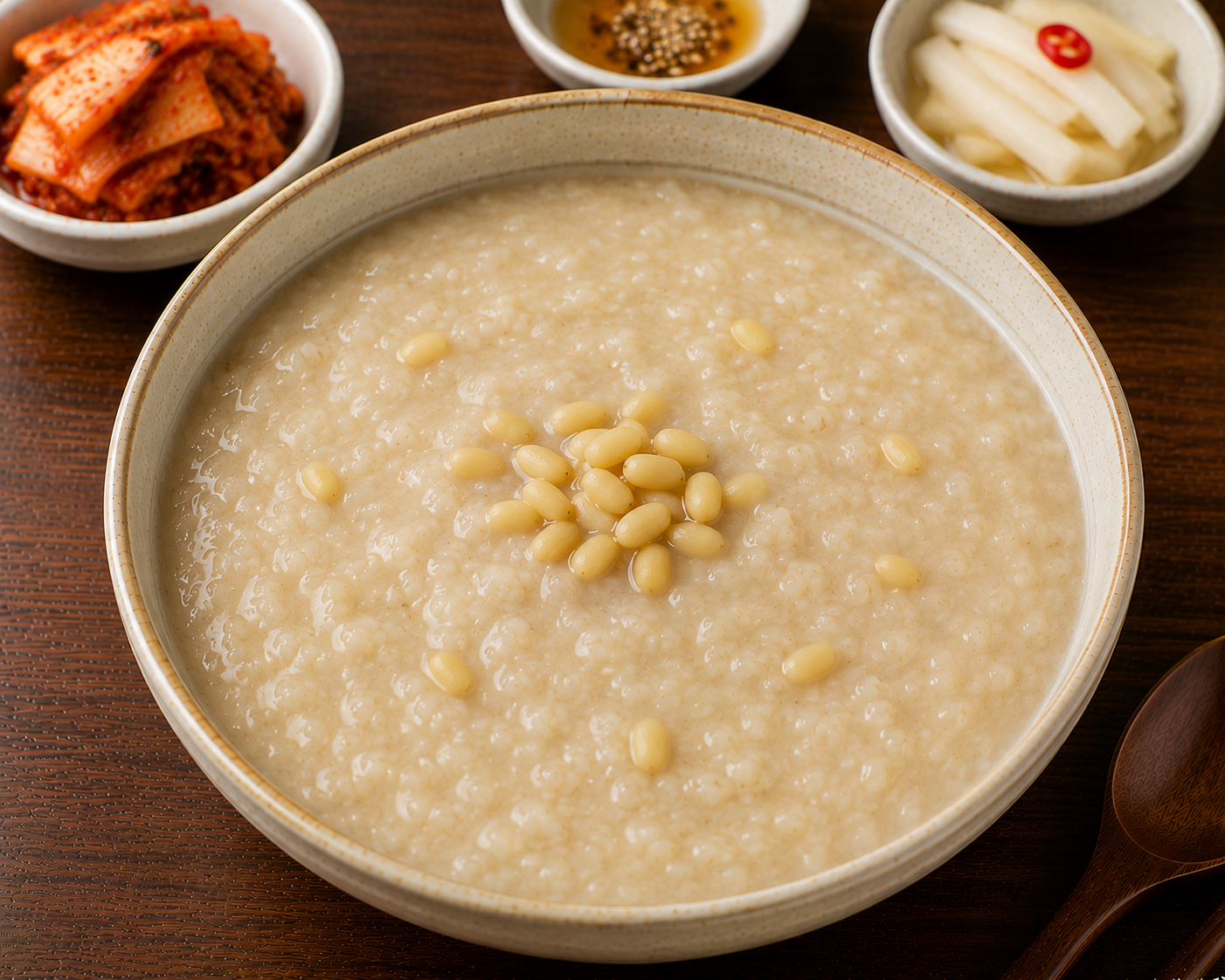
Pine Nut Porridge
잣죽 · jat-juk
A smooth and nutty porridge made by finely grinding pine nuts and cooking them with rice for a long time, making it suitable as a recovery dish due to its easy digestibility.
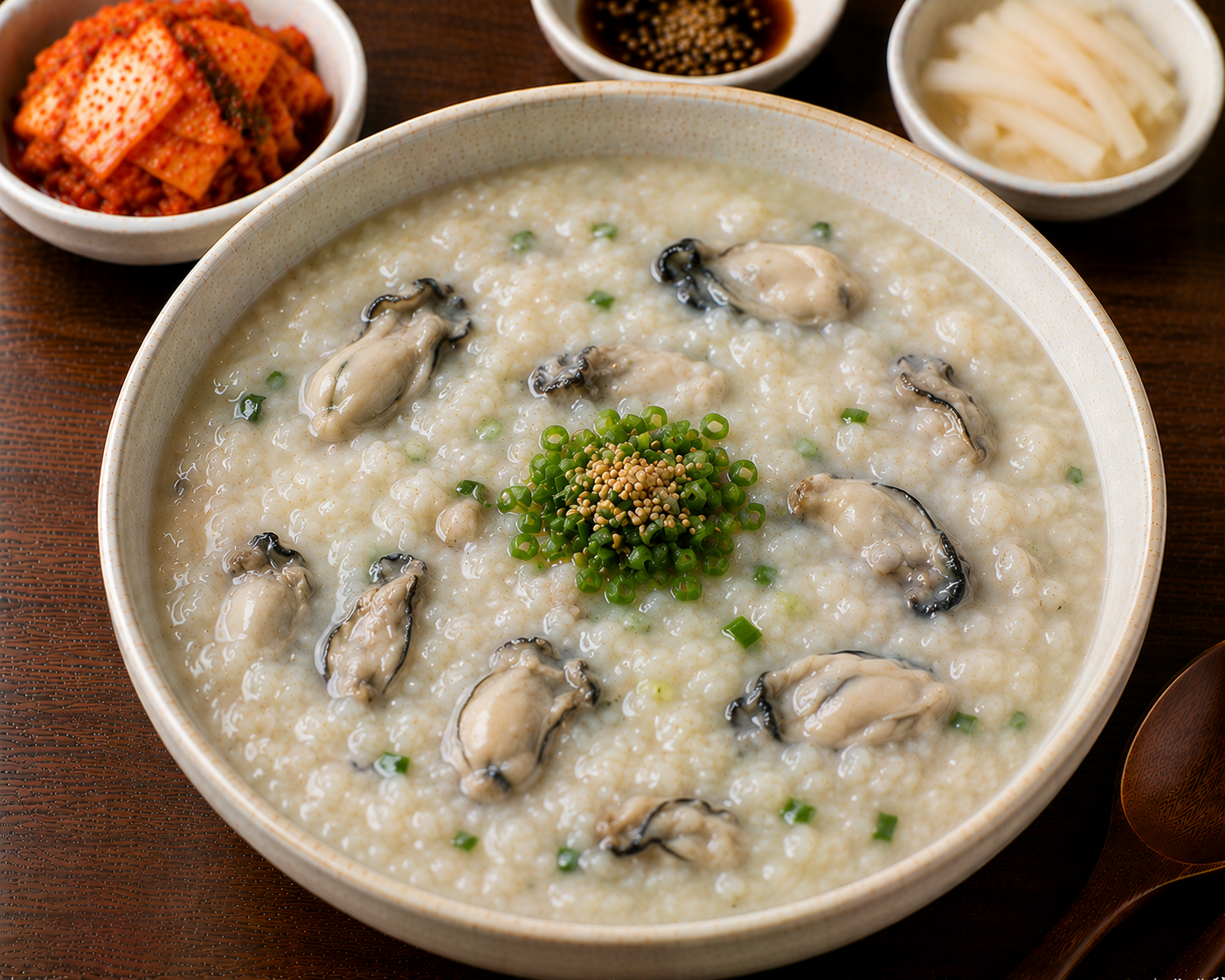
Oyster Porridge
굴죽 · gul-juk
A soft and thick porridge made by boiling oysters and rice together, filled with the scent of the sea. It is eaten with salty side dishes like kimchi or jangjorim to enhance the flavor.
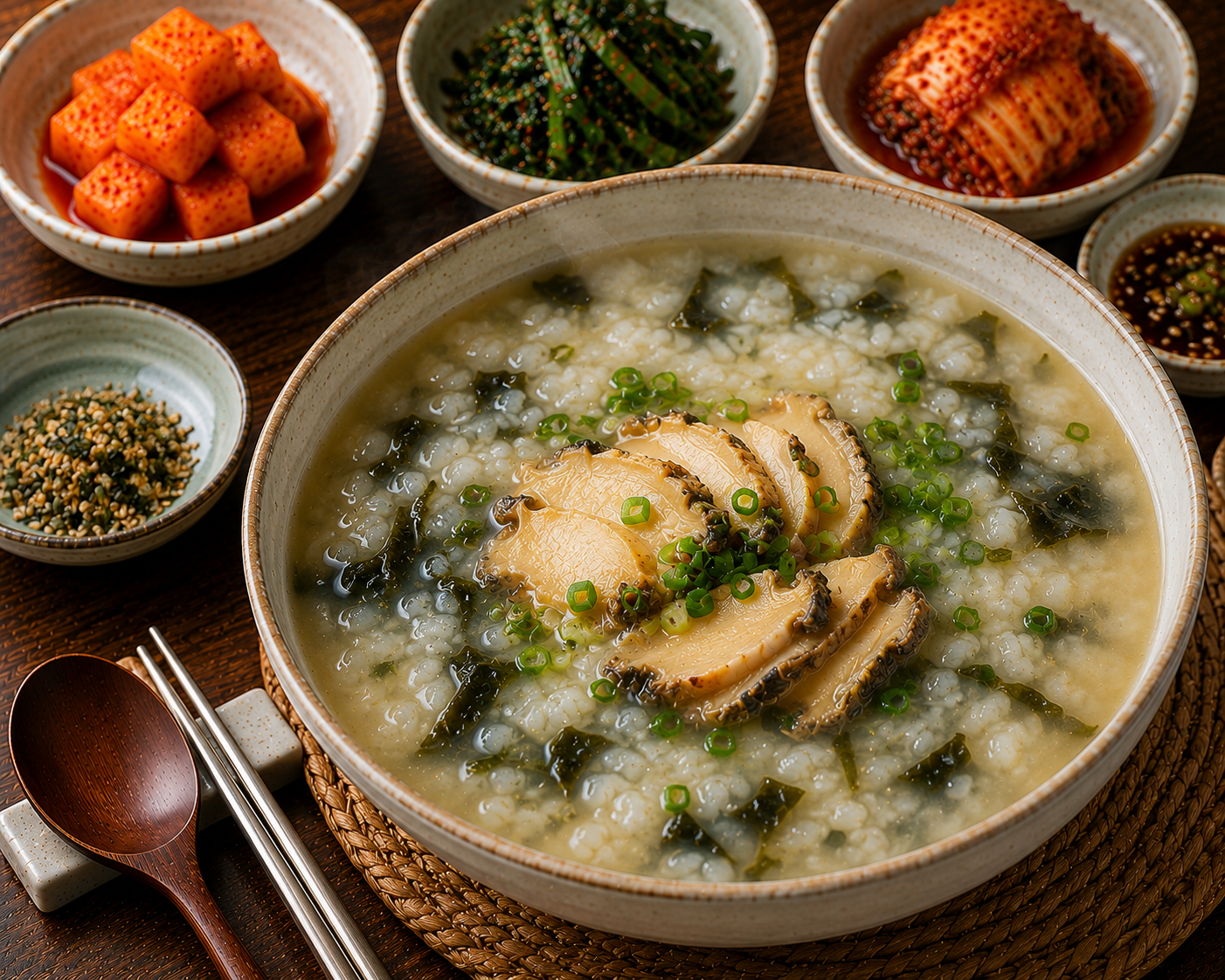
Abalone Porridge
전복죽국 · jeonbok-jukguk
A soup dish made by gently boiling abalone and rice, infused with the deep flavor of abalone.
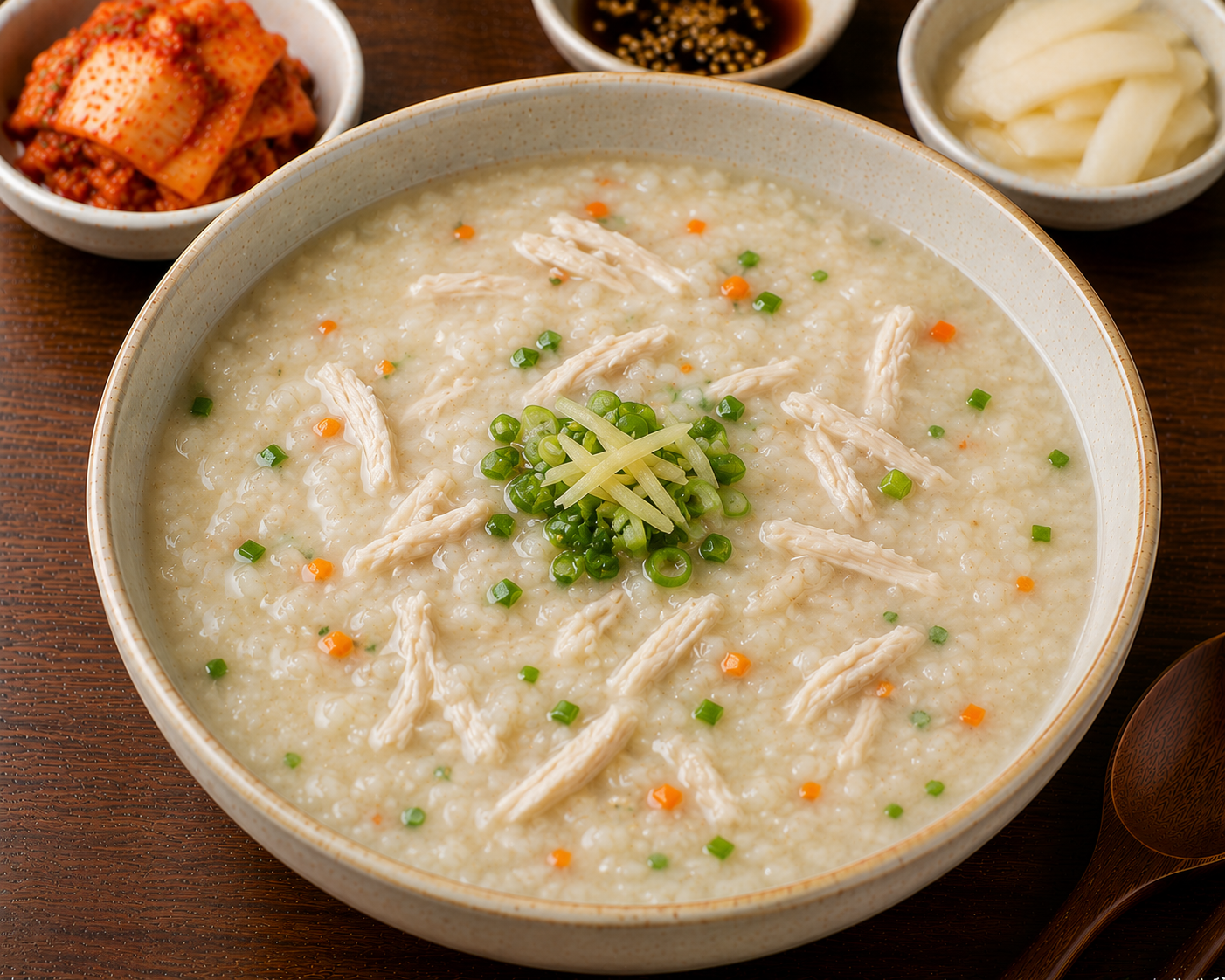
Chicken Porridge
닭죽 · dak-juk
A traditional Korean porridge made by simmering rice and chicken together until soft and thick. The deep flavor of the chicken adds a mild and nutty taste. It is best enjoyed with salty side dishes like kimchi or jangjorim.
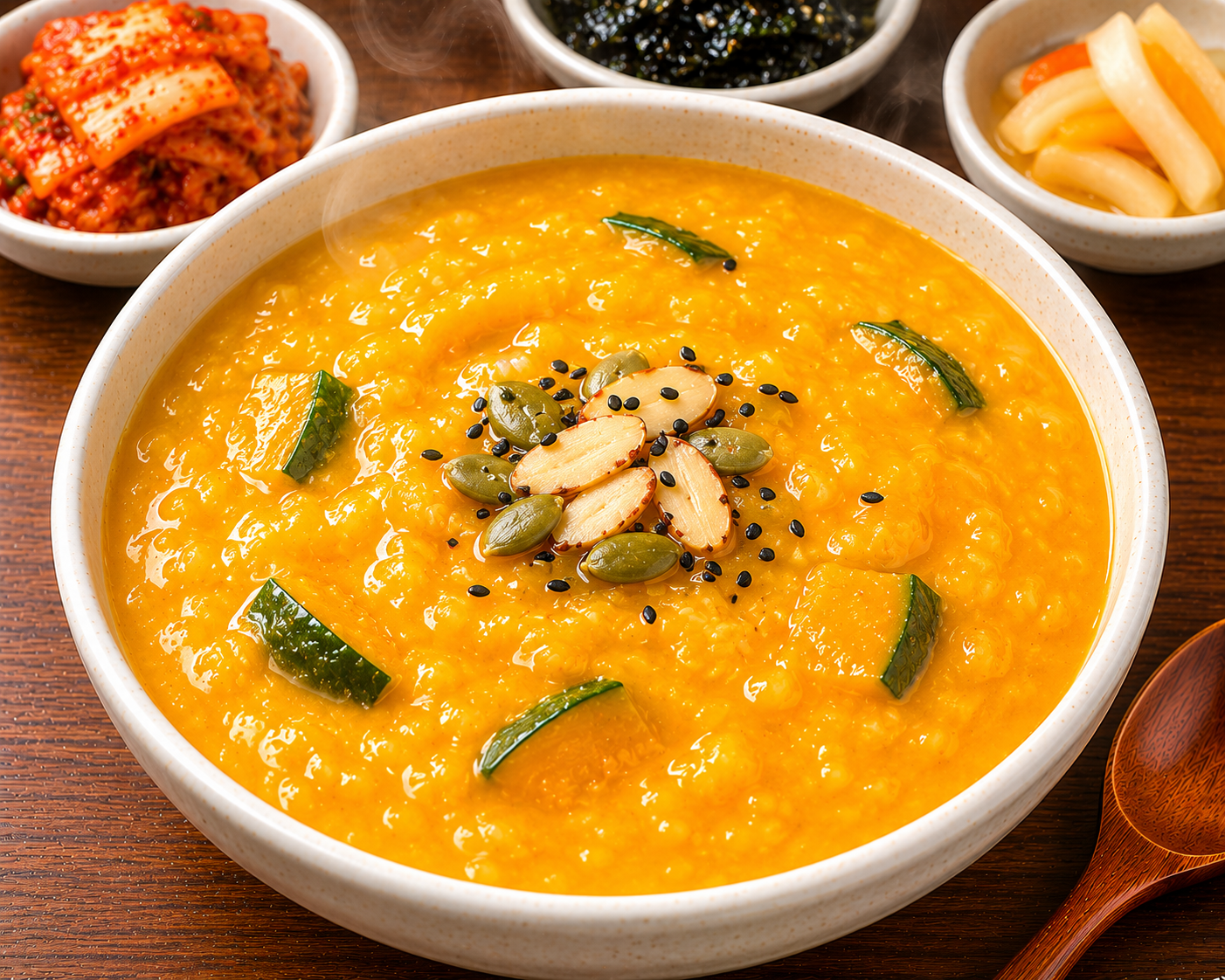
Pumpkin Porridge
호박죽 · hobak-juk
A smooth and sweet porridge made by boiling pumpkin until soft and then grinding it finely, it is easy to digest and often enjoyed as a recovery dish or delicacy.
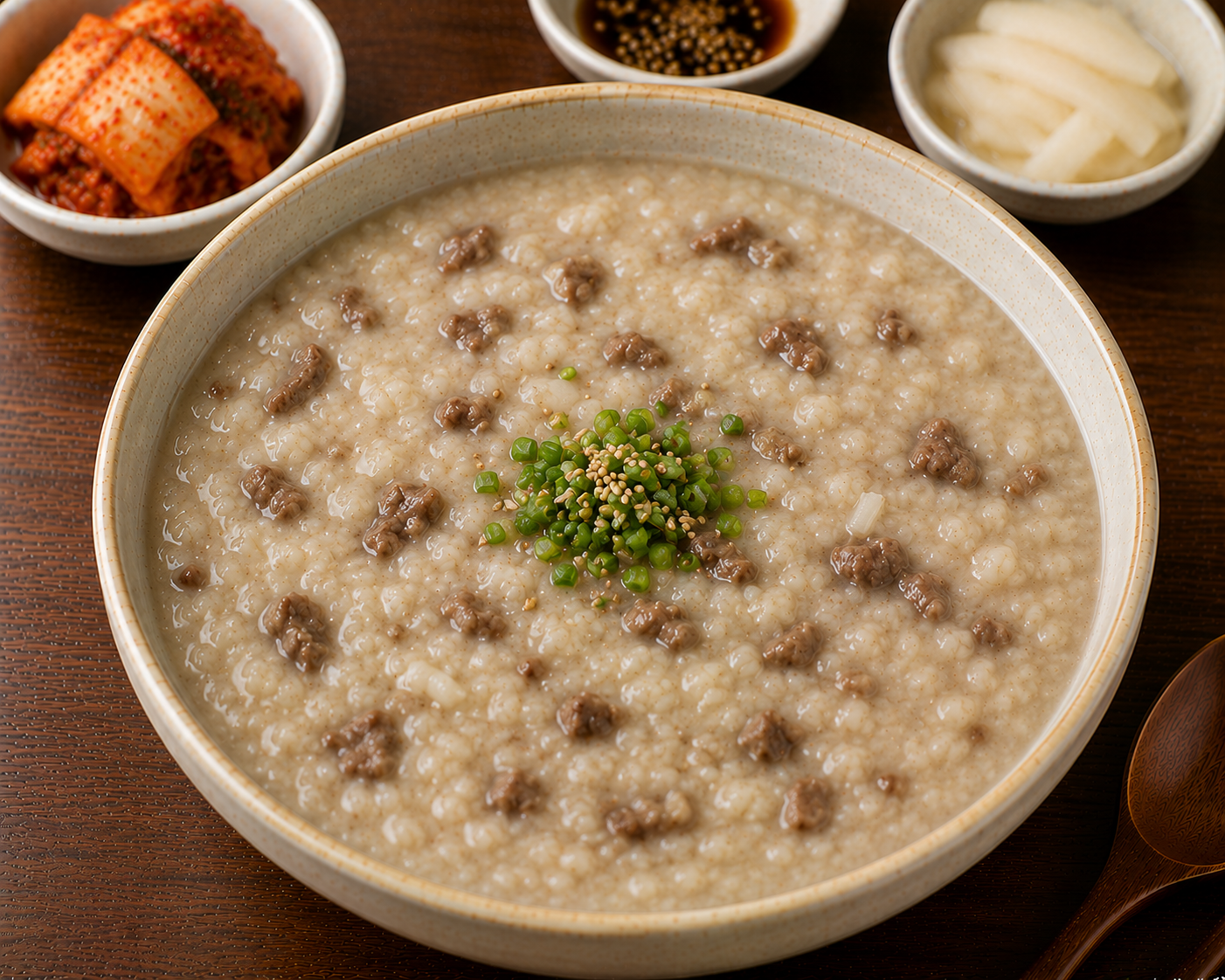
Beef Porridge
쇠고기죽 · soegogi-juk
A traditional Korean porridge made by boiling rice and beef together, resulting in a smooth and thick texture. It is characterized by the savory flavor of beef and is easily digestible, making it ideal for recovery meals. It is often enjoyed with salty side dishes like kimchi or jangjorim.
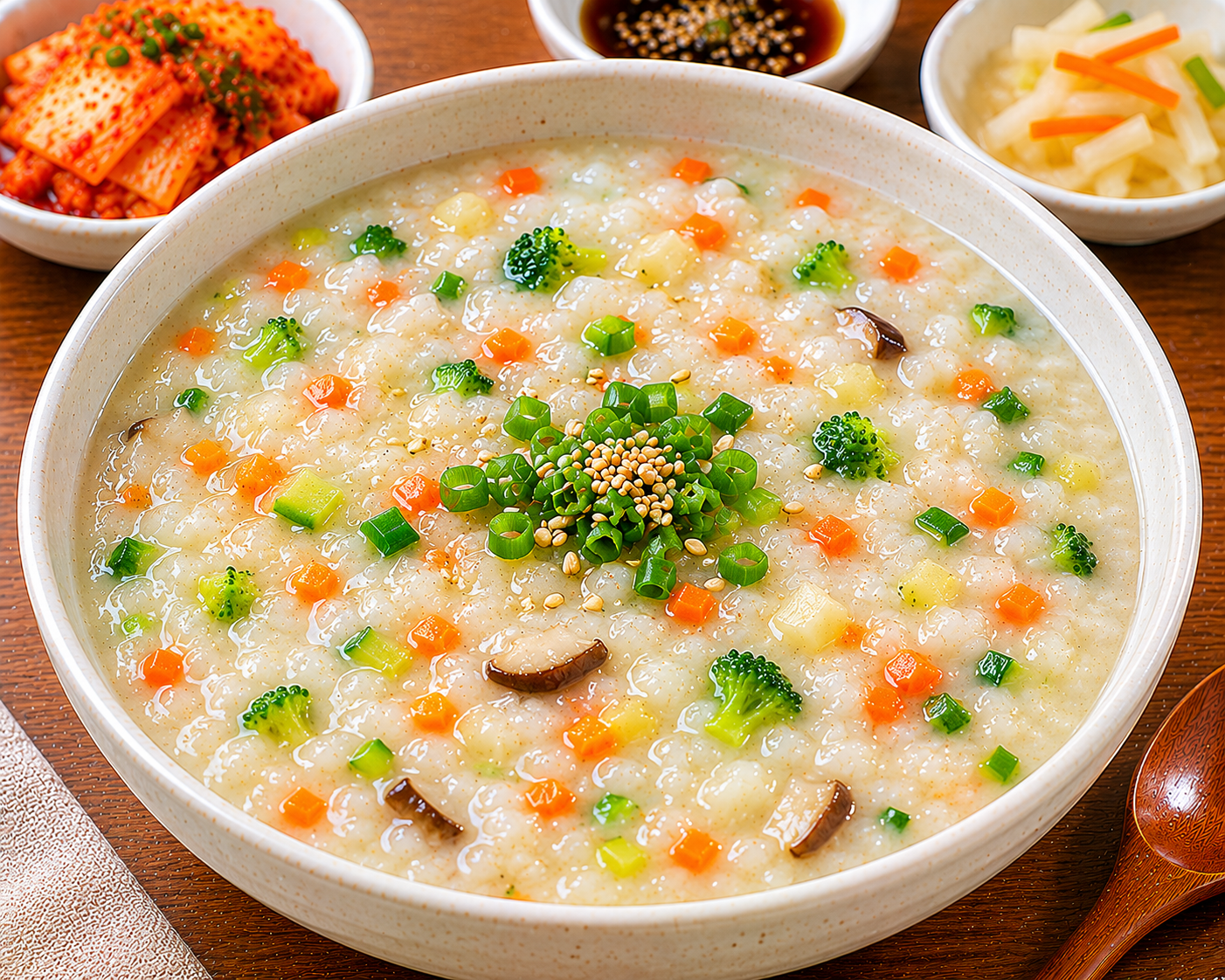
Vegetable Porridge
채소죽 · chae-so-juk
A thick and soft porridge made by boiling rice with various vegetables, characterized by a mild and nutty flavor. It is suitable for breakfast or recovery meals due to its easy digestibility and is typically eaten with salty side dishes like kimchi or jangjorim.
Goes well with
Ingredients
How it's made
- 1Soak the rice in water.
- 2Prepare the abalone and separate the innards.
- 3Stir-fry the soaked rice in sesame oil, then add the abalone and innards.
- 4Pour in water and simmer until thickened.
Nutrition
* Estimated values per serving.
Allergens
Not suitable for vegetarians as it contains abalone.
How to order
전복죽 주세요
Jeon-bok-juk ju-se-yo
Please give me abalone porridge
Customize your order
Traveler tips
How to eat it
Frequently asked questions
- If Abalone Porridge is green or grayish, has it gone bad?
- In most cases, the color comes naturally from the abalone innards. However, if it has a strong fishy smell or a sour odor, it is best not to eat it.
- Can you eat abalone innards?
- In Abalone Porridge, the innards are cooked and used as a flavoring ingredient. They have a strong ocean aroma, so if that feels unfamiliar, choose jeonbok-sal-juk, which contains less of the innards.
- Is there a whole abalone in the bowl?
- Not always. Usually, the bowl contains thinly sliced or finely chopped abalone, and the flavor comes from both the meat and the innards. If you are curious about the amount, check whether the menu has a teuk, or special, label, or whether extra abalone can be added.
Last reviewed: 2026-10-07