
Cultural background
A popular dish for a quick and convenient meal.
Origin & history
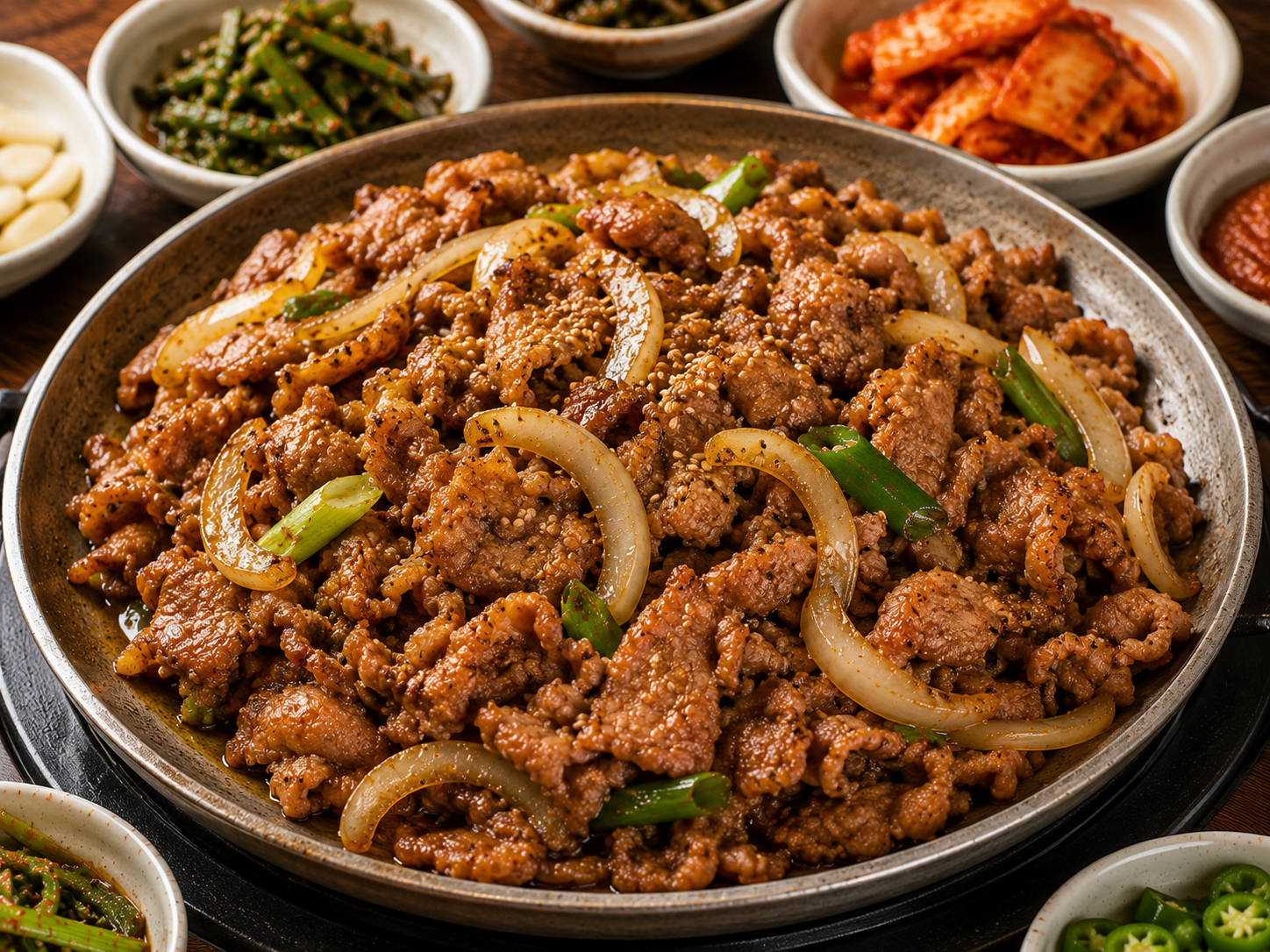
The word jeyuk refers to pork. On Korean menus, jeyuk usually means pork stir-fried in Gochujang seasoning.
Pork Over Rice takes Stir-fried Spicy Pork and serves it directly over rice instead of on a separate side-dish plate. The format suits places that serve quick meals, such as baekban restaurants, bunsik snack shops, and workplace or school cafeterias.
Regional & modern variations
- Stir-fried Spicy Pork — Rather than being placed over rice, the stir-fried pork comes on a separate plate. People sometimes wrap it in lettuce or perilla leaves to eat.
- Osam Bulgogi Rice Bowl — A rice bowl topped with squid and Samgyeopsal or pork stir-fried together in a spicy sauce. Compared with Pork Over Rice, it has a stronger seafood aroma and a chewier bite.
How Koreans eat it
Pork Over Rice often appears as a good option for a quick solo lunch. Unlike Stir-fried Spicy Pork served as a drinking snack, Pork Over Rice centers on the portion of rice, making it closer to a one-bowl meal. As the seasoning soaks into the rice, the flavors stay balanced even without many side dishes.
Taste & how to choose
Alongside the heat of Gochujang, sweetness, garlic aroma, and the fragrance of stir-fried onion come through. The pork is thinly sliced and tender, though some fattier pieces may be mixed in depending on the cut. A good Pork Over Rice should not have seasoning that is watery or overly soupy; the meat and onions should look glossy.
Similar dishes
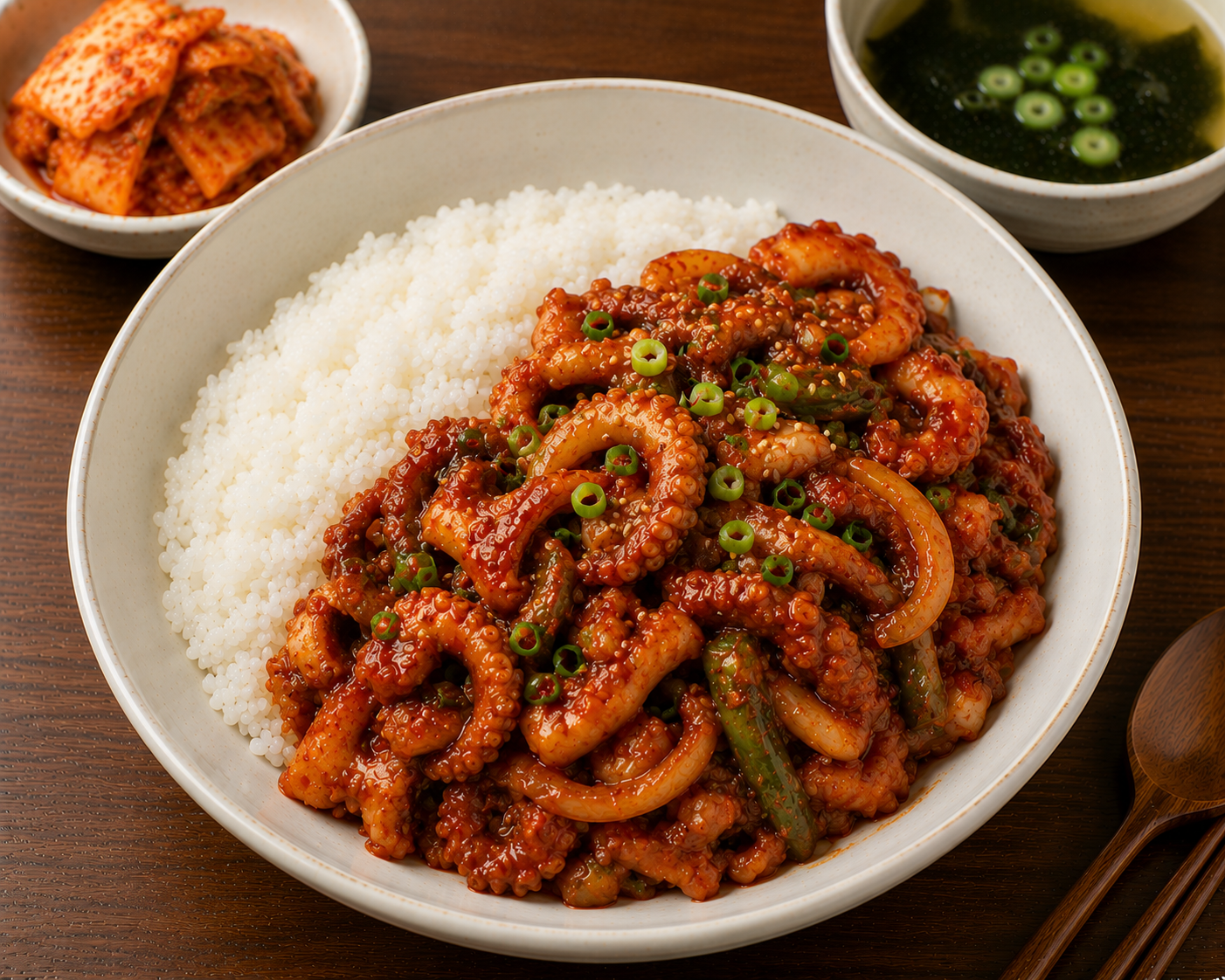
Spicy Stir-fried Octopus over Rice
낙지덮밥 · nakji-deopbap
A Korean-style rice bowl dish made by stir-frying octopus in a spicy sauce and serving it over rice.
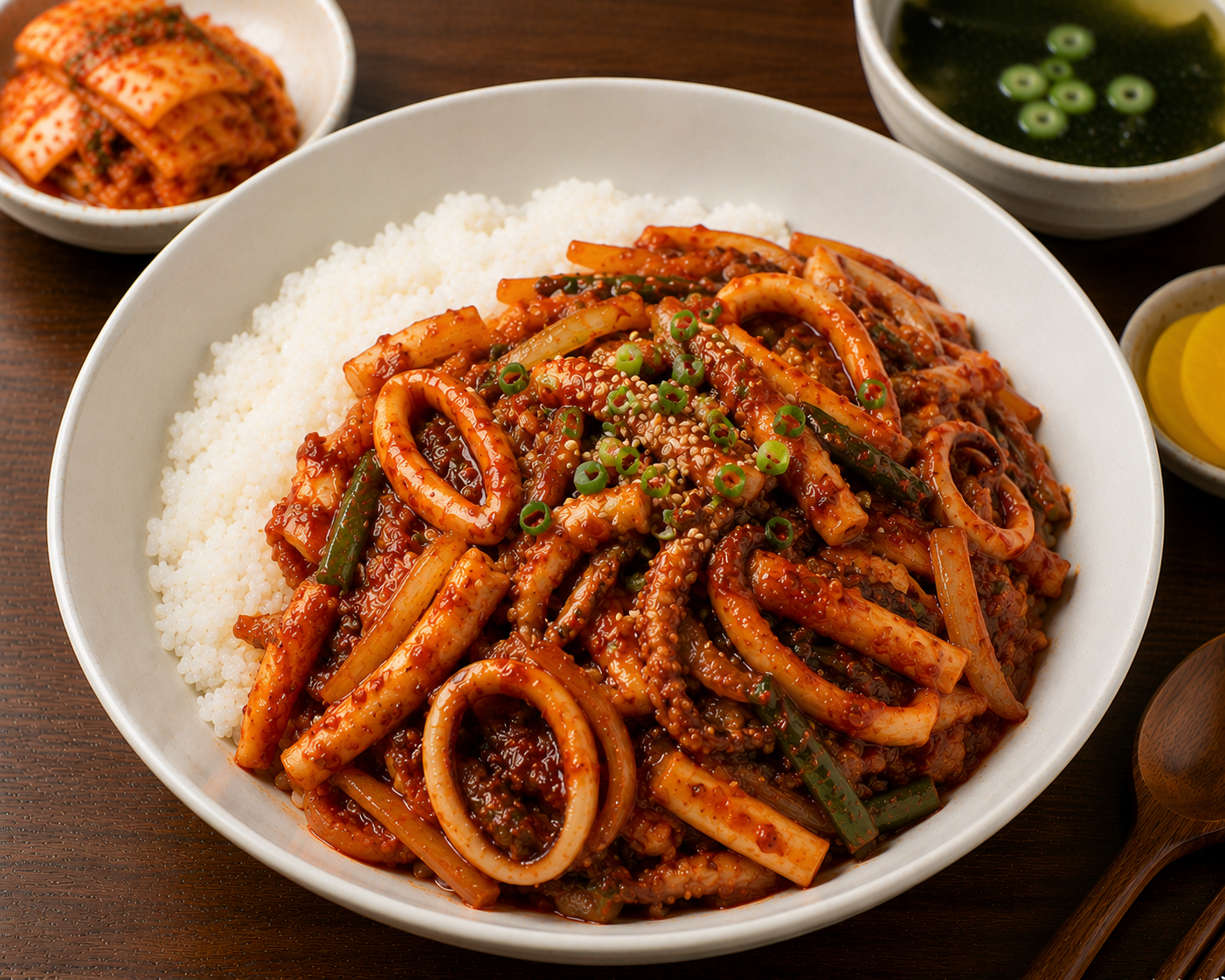
Squid Rice Bowl
오징어덮밥 · o-jing-eo-deop-bap
A Korean rice bowl dish where squid is stir-fried in a spicy seasoning and served over rice.
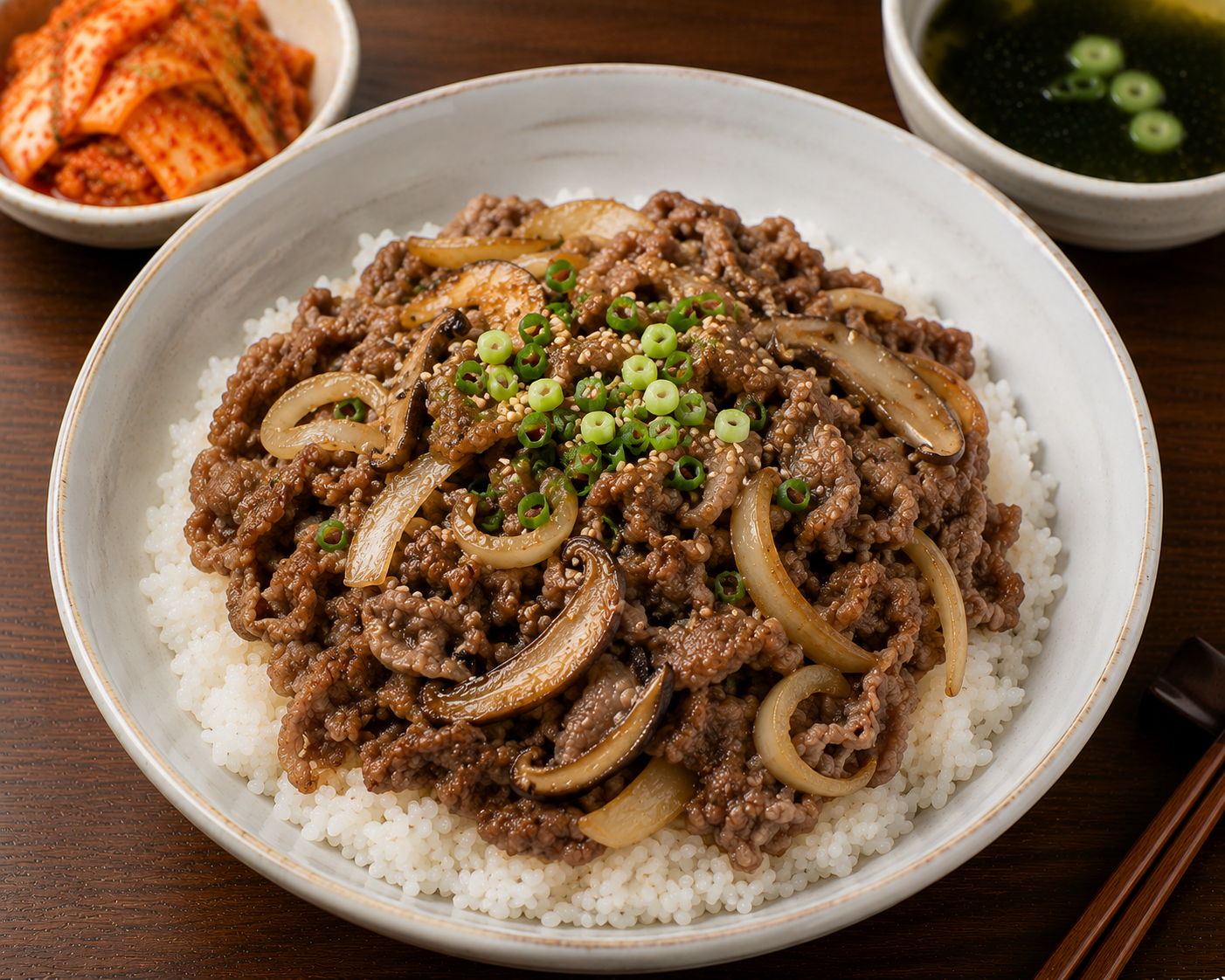
Bulgogi Rice Bowl
불고기덮밥 · bulgogi-deopbap
A Korean-style rice bowl dish topped with stir-fried marinated thinly sliced beef in soy sauce.
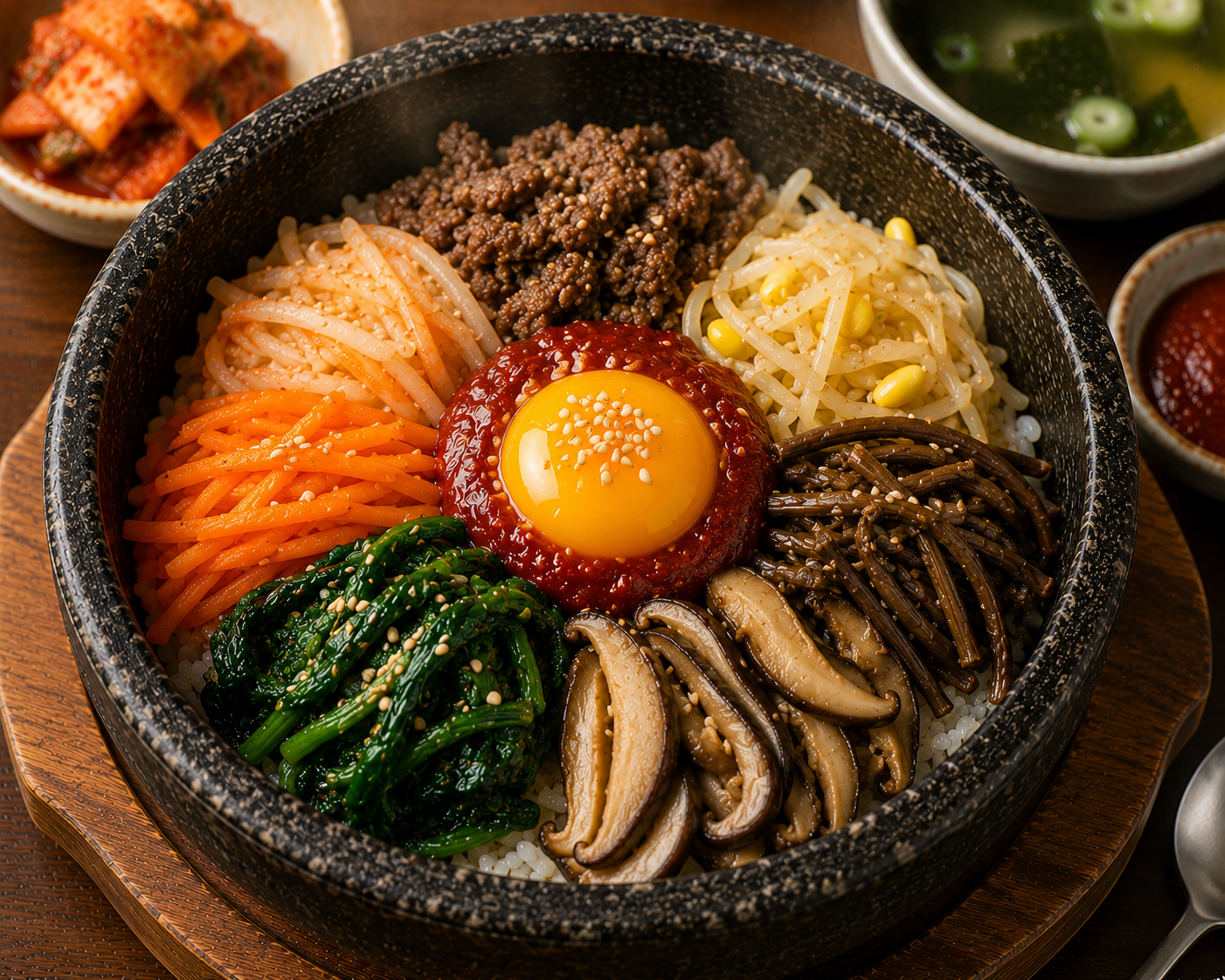
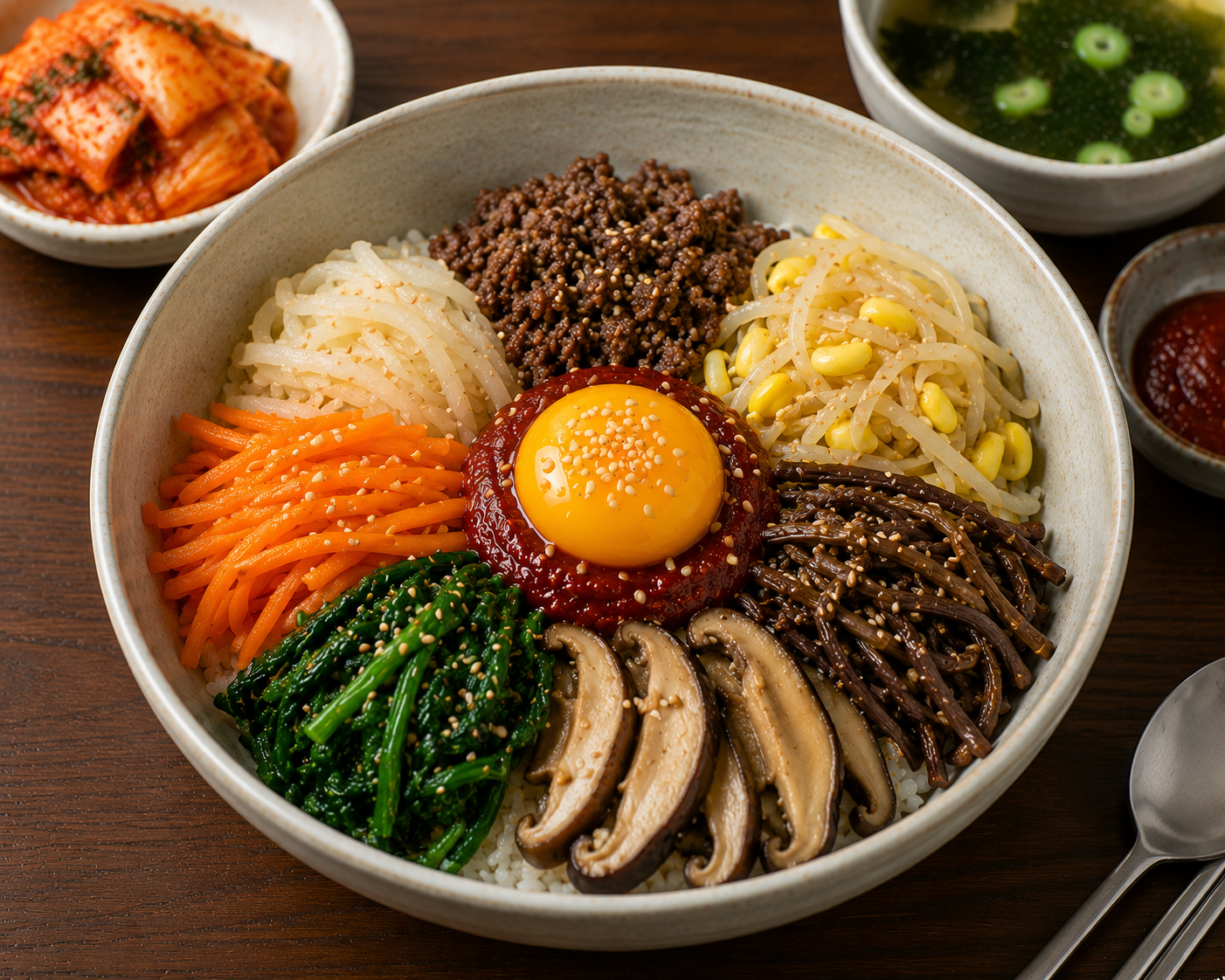
Dolsot Bibimbap
돌솥비빔밥 · dolsot-bibimbap
Dolsot Bibimbap is a representative Korean rice dish that involves mixing rice with various vegetables, meat, and gochujang in a hot stone pot. The rice is served in a hot stone pot, forming crispy rice at the bottom, and it is mixed with gochujang and sesame oil for flavor.
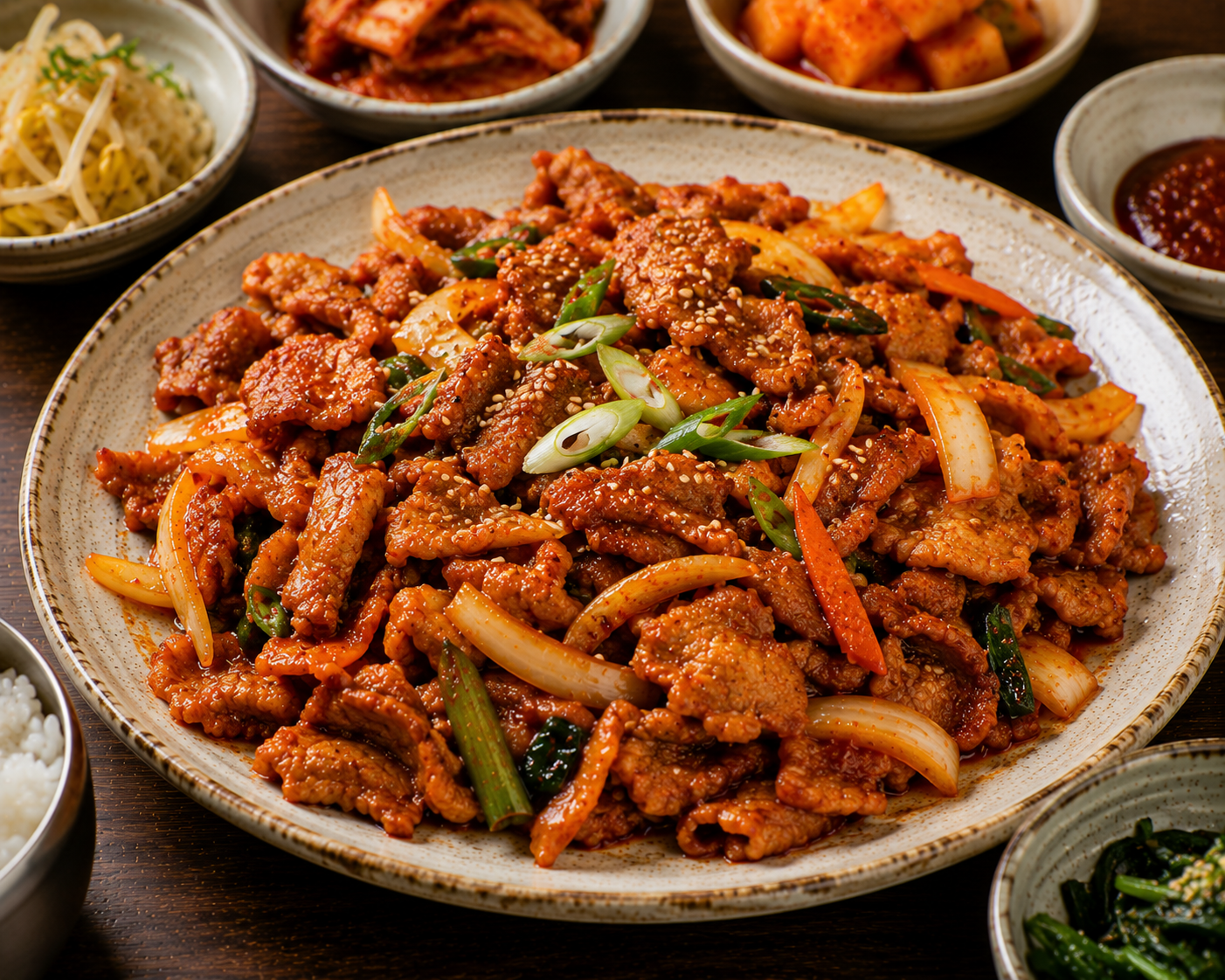
Stir-fried Spicy Pork
제육볶음 · je-yuk-bokkeum
This is a sweet and spicy dish made by marinating pork in gochujang and gochugaru, then stir-frying it over high heat with onions and green onions. The smoky flavor permeates as the seasoning coats the meat, and it is enjoyed either mixed with rice or wrapped in lettuce or perilla leaves.
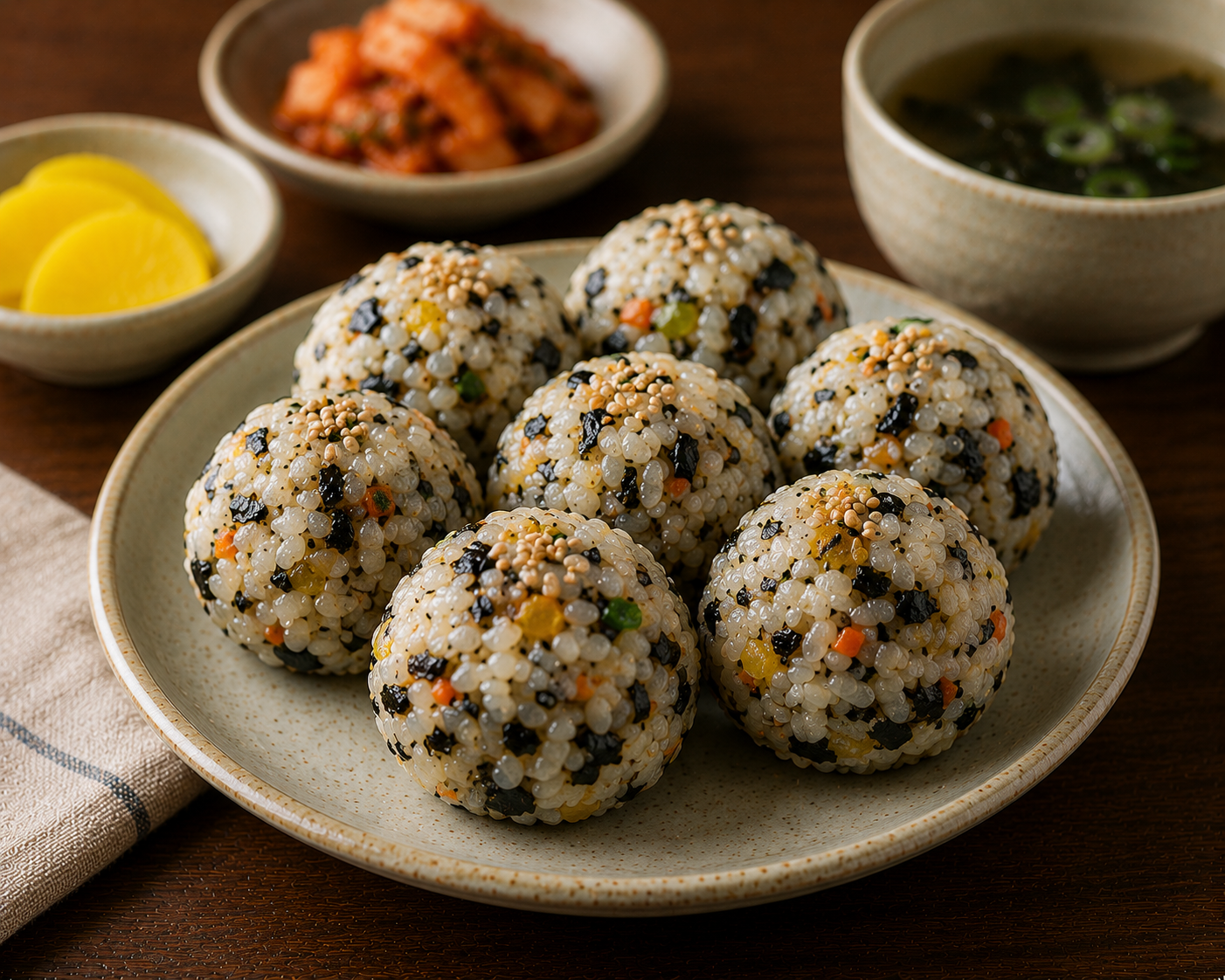
Jumeokbap
주먹밥 · jumeok-bap
A convenient meal made by mixing various ingredients with rice and shaping it by hand.
Goes well with
Ingredients
How it's made
- 1Thinly slice the pork and season with gochujang, garlic, and sesame oil.
- 2Prepare and slice the onion and green onion.
- 3In a pan, stir-fry the seasoned pork and then add the onion and green onion.
- 4Serve the stir-fried pork over rice.
Nutrition
* Estimated values per serving.
Allergens
Not suitable for vegetarians due to pork.
How to order
제육덮밥 주세요
Je-yuk-deop-bap ju-se-yo
Please give me Pork Over Rice
Customize your order
Traveler tips
How to eat it
Frequently asked questions
- What is the difference between Pork Over Rice and Stir-fried Spicy Pork?
- The basic seasoning and meat are similar. Stir-fried Spicy Pork is served separately, like a side dish or drinking snack, while Pork Over Rice is placed over rice and eaten as a single bowl.
- If a menu only says “jeyuk,” does that mean it is served over rice?
- Not always. Jeyuk usually means Stir-fried Spicy Pork, and the version served over rice is often listed separately as Pork Over Rice.
- The seasoning is red, but is it very spicy?
- The heat level is generally medium. Depending on the restaurant, though, extra chili powder or Cheongyang chili may be added to make it spicier.
Last reviewed: 2026-10-07