
Cultural background
Jokbal is commonly enjoyed during company dinners or family gatherings, and it is typical to eat it wrapped in ssam. It is also very popular as a late-night snack.
Origin & history
Jokbal grew out of a food culture that made use of the pig's feet and shank instead of throwing them away. The style common today, simmered in a Soy Sauce-based seasoning, cooled, and sliced thin, spread widely as market food, drinking food, and delivery food.
Jangchung-dong in Seoul is well known as a street lined with Jokbal restaurants. The area is often mentioned as having helped popularize modern Jokbal culture, though it is difficult to say that any one particular restaurant was the original.
Regional & modern variations
- Bul Jokbal — Boiled Jokbal is coated with a spicy chili seasoning, then stir-fried or grilled. Compared with standard Jokbal, it is hotter and noticeably sweeter, with skin that feels even stickier.
- Naengchae Jokbal — Chilled Jokbal is tossed with cucumber, onion, jellyfish, and other ingredients in a mustard-vinegar sauce. The bright, tart, nose-tingling flavor comes through more than the richness.
- Mini Jokbal — Small portions of Jokbal are simmered and served whole. Compared with thinly sliced Jokbal, it has more bone and skin, so people often pick it up and eat it with their hands.
How Koreans eat it
Some Jokbal restaurants sell ‘앞발’ (apbal, front feet) and ‘뒷발’ (dwitbal, hind feet) separately. Front feet are often considered chewier in the skin and tendons, and many places charge more for them. Jokbal is often served not only with Ssamjang but also with saeujeot, salted fermented shrimp. Its saltiness and fermented aroma help cut through the richness.
Taste & how to choose
Good Jokbal should have glossy skin, and the meat should not be dried out. First-time diners may be surprised that it arrives cool or lukewarm. After simmering, Jokbal needs to cool so the gelatin sets, making it easier to slice thinly while keeping the skin pleasantly chewy. If left too long, the surface dries out and the Soy Sauce aroma turns dull.
Similar dishes
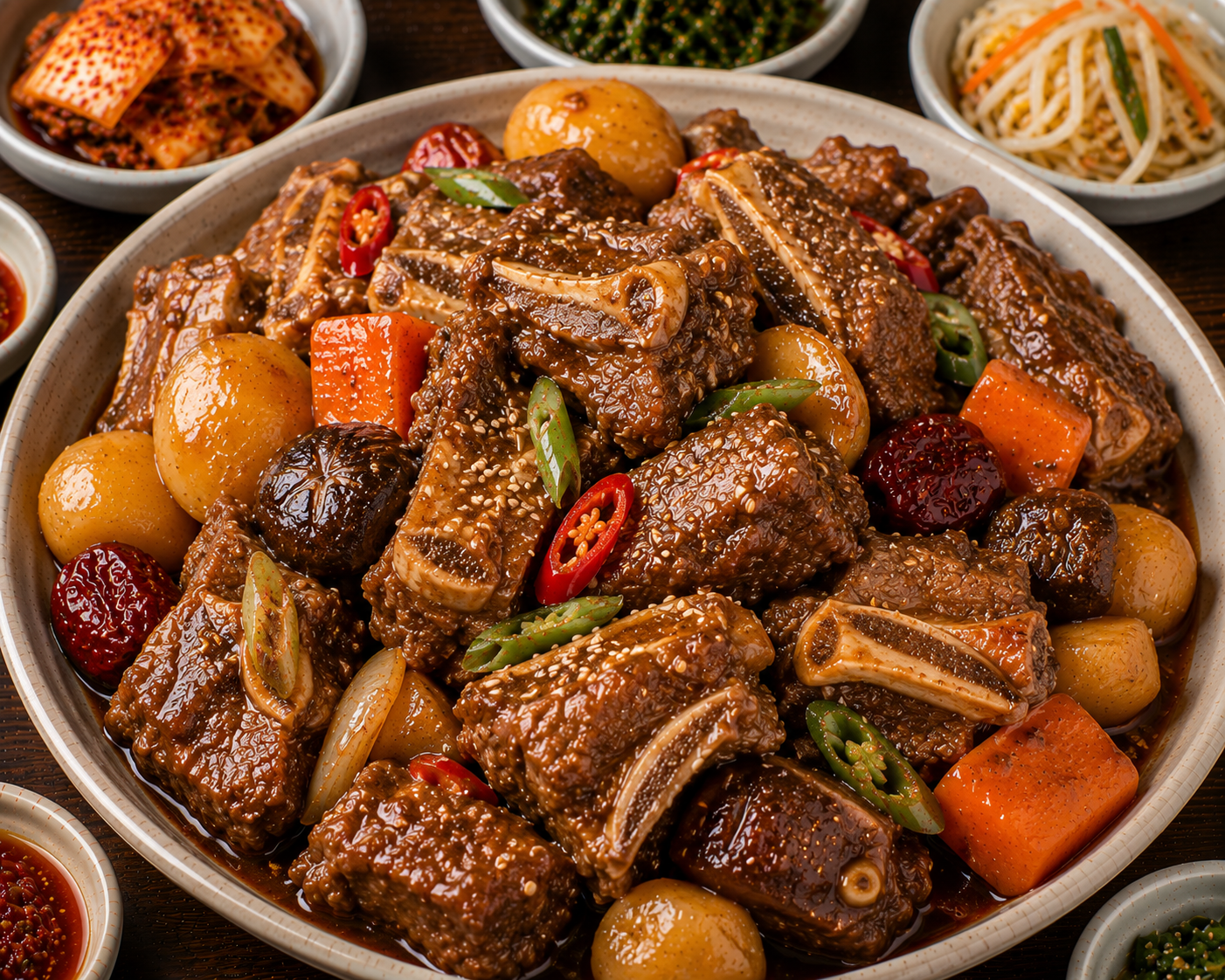
Braised Pork Ribs
돼지갈비찜 · dwaeji-galbi-jjim
A dish made by braising pork ribs in soy sauce and various seasonings, characterized by its sweet and tender texture. The broth reduces to a rich sauce that deeply flavors the meat, and the meat falls off the bone easily. Usually served on a large plate to share with many people.
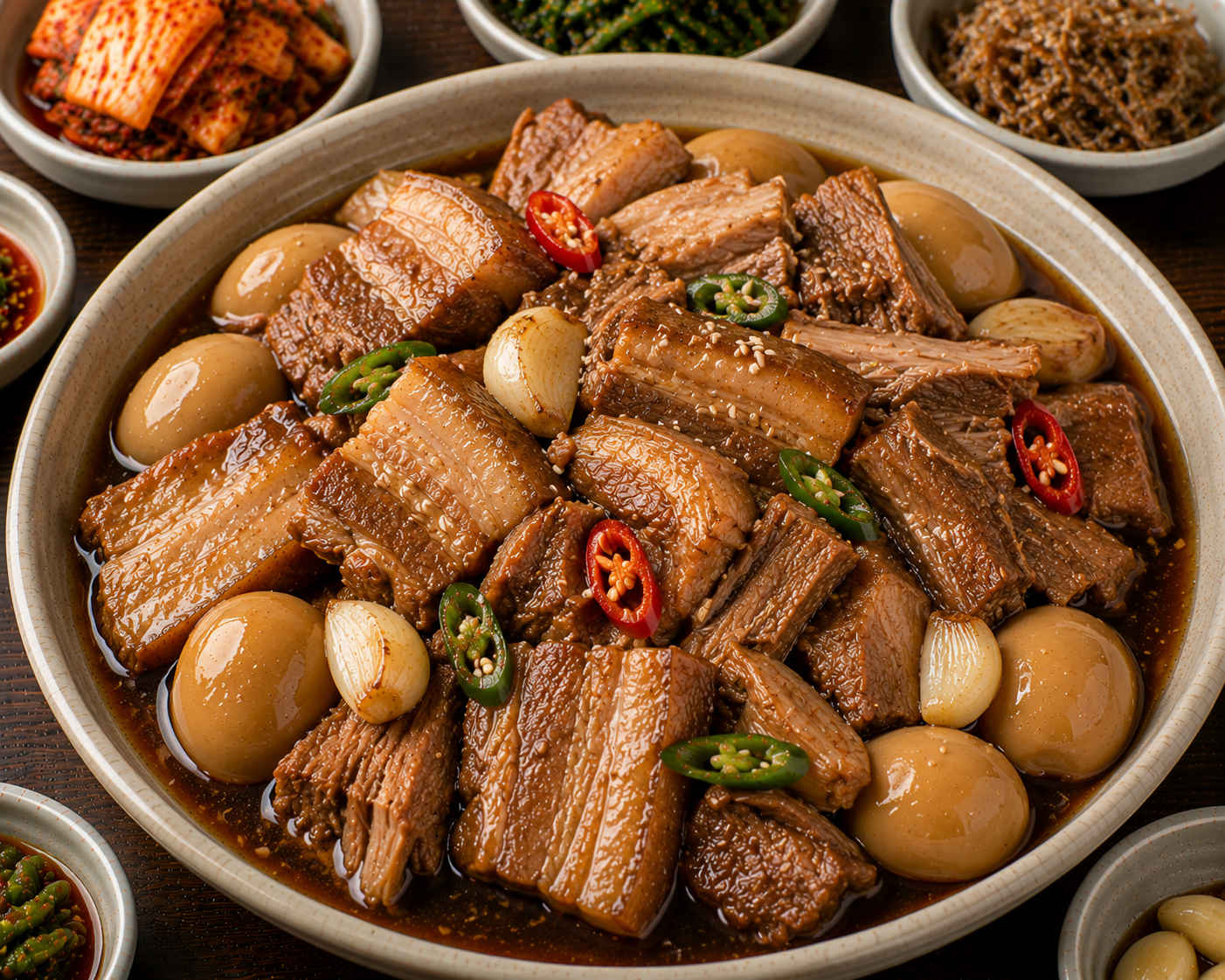
Soy-Braised Pork
돼지고기장조림 · dwaeji-gogi-jang-jo-rim
A side dish made by simmering pork in a savory soy sauce seasoning. It is common to shred it along the grain and serve it with rice.
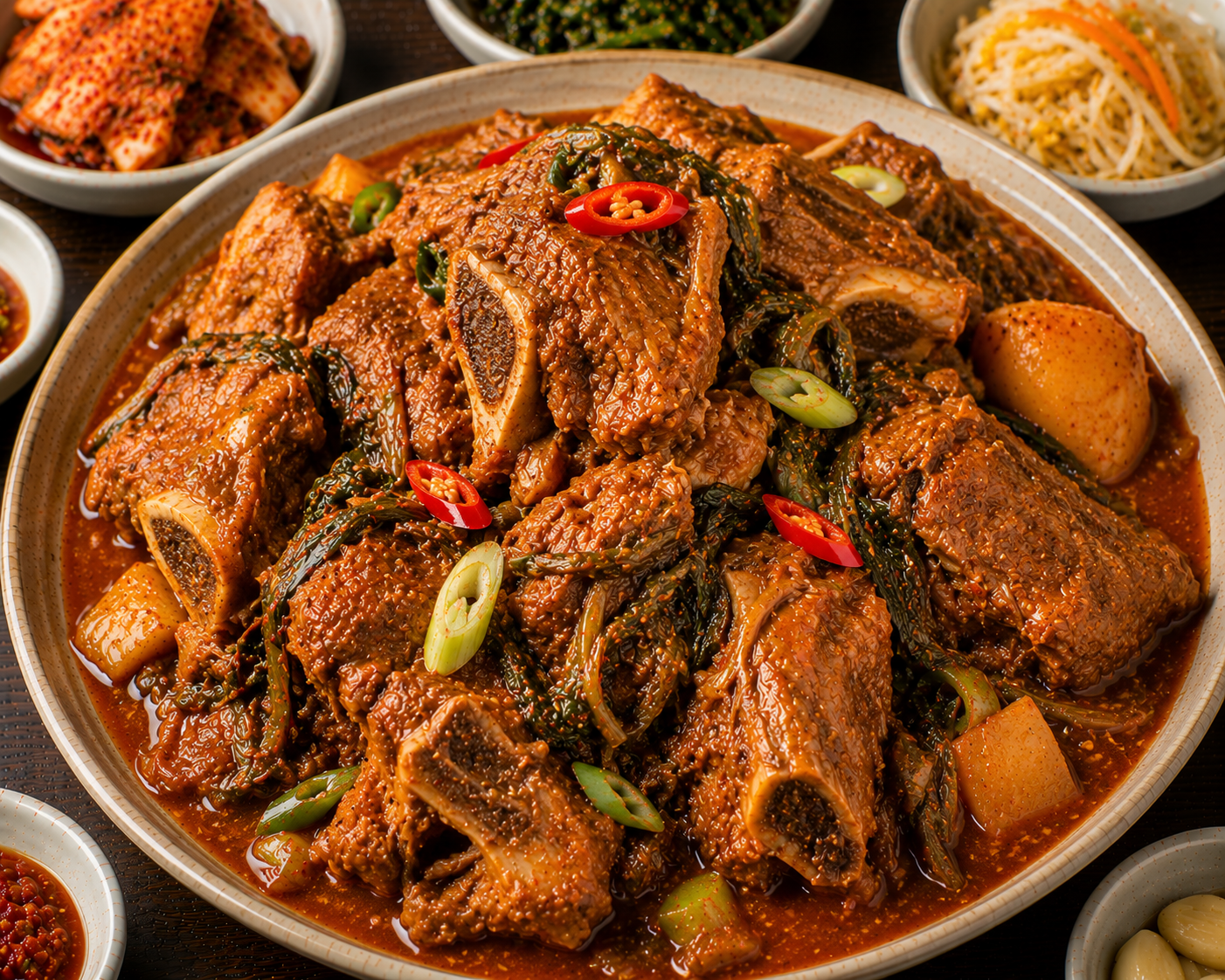
Braised Pork Backbones
뼈다귀찜 · Ppyeo-da-gwi-jjim
A spicy and tender dish made by steaming pork backbones in gochujang seasoning, with rich flavors as the broth reduces and infuses into the meat.
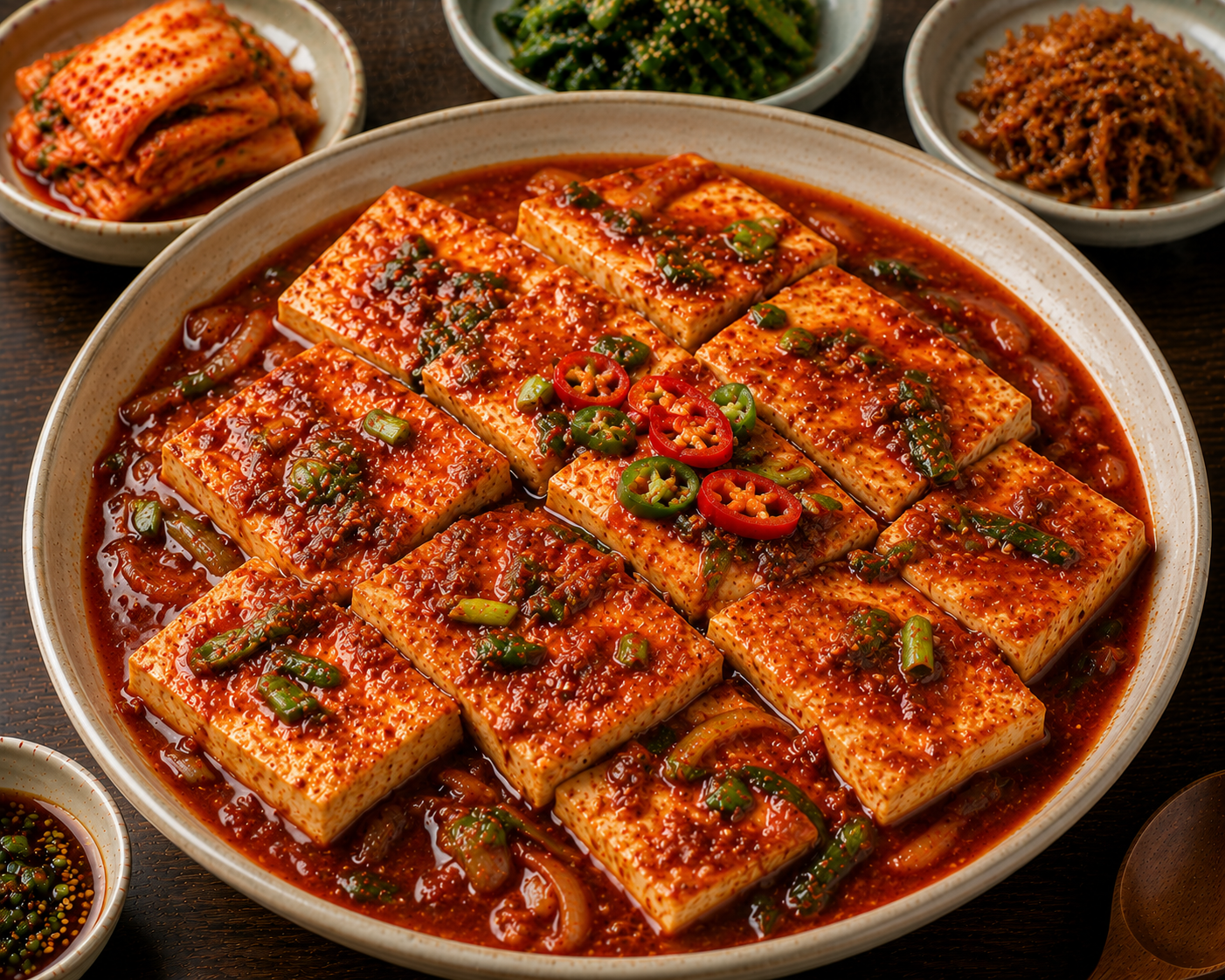
Tofu Jorim
두부조림 · dubu-jorim
A traditional Korean side dish made by simmering tofu in a soy sauce seasoning to infuse flavor.
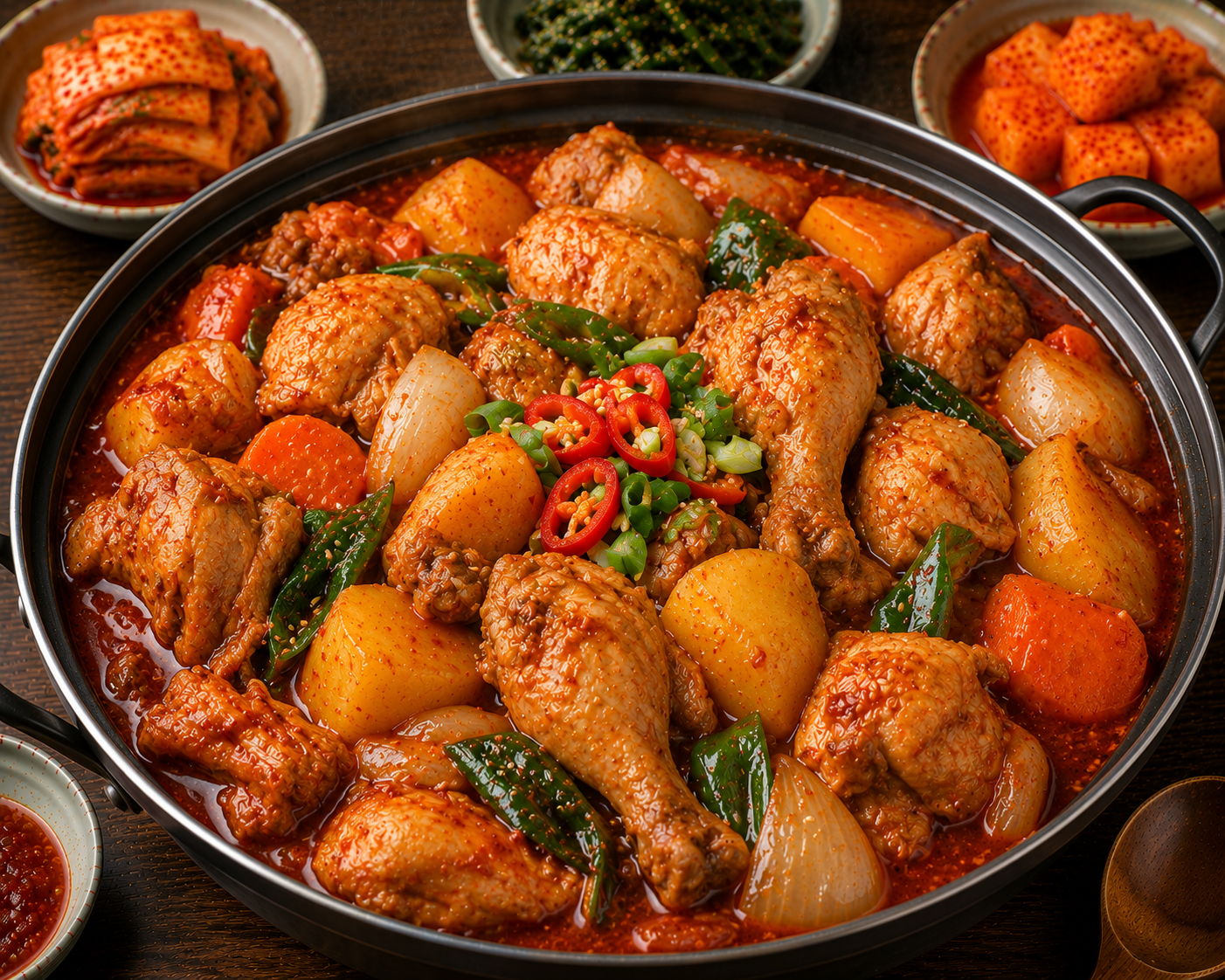
Spicy Braised Chicken
닭볶음탕 · dak-bokkeum-tang
A spicy braised dish made with chicken, potatoes, and carrots simmered in gochujang and gochugaru seasoning.
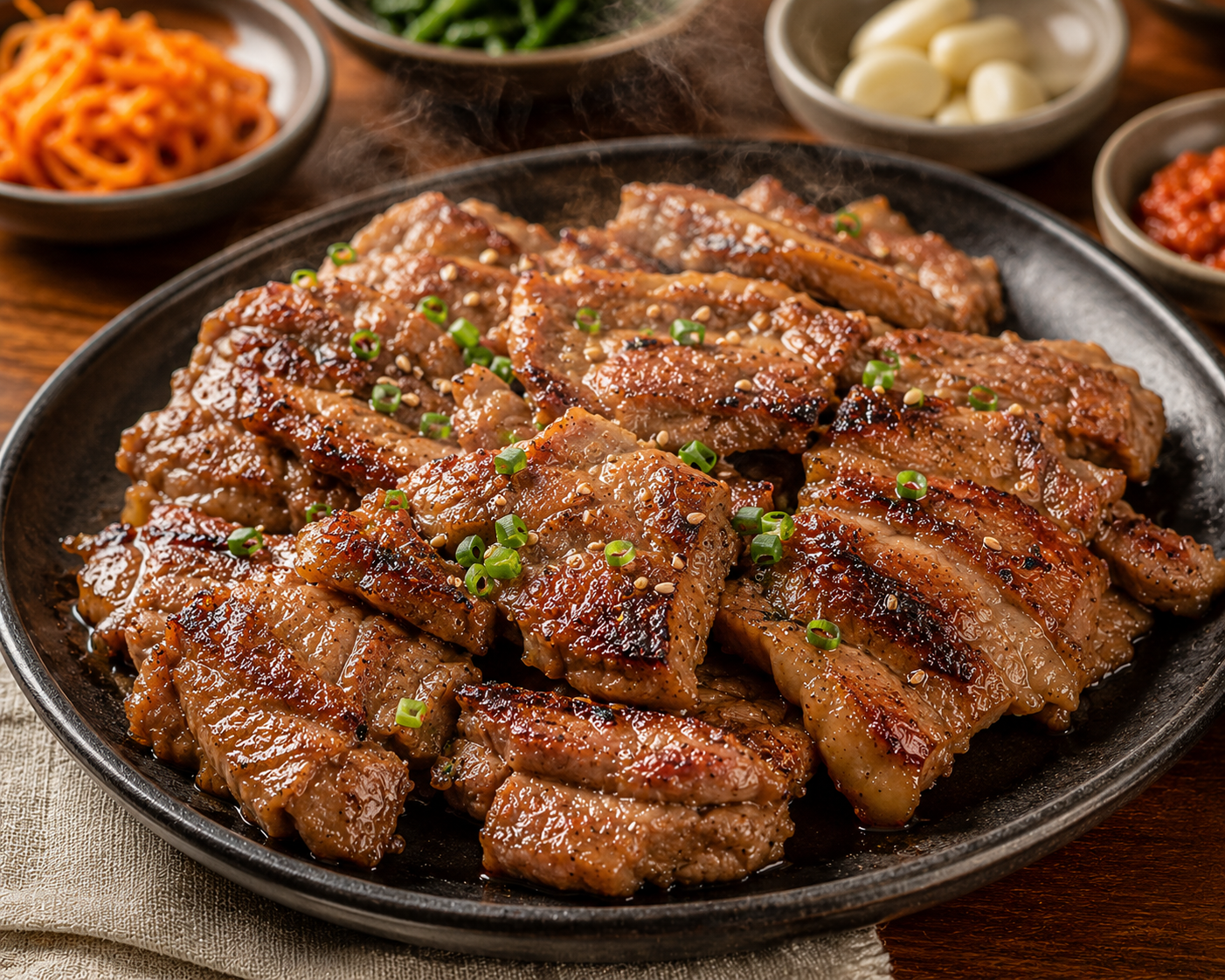
Pork Ribs
돼지갈비 · dwaeji-galbi
Pork ribs marinated with soy sauce, sugar, garlic, and other ingredients, grilled on a hot plate, is a traditional Korean barbecue dish. The marinade caramelizes, resulting in a sweet and savory flavor, and the meat is juicy. It is usually grilled at the table and eaten with wrapped vegetables.
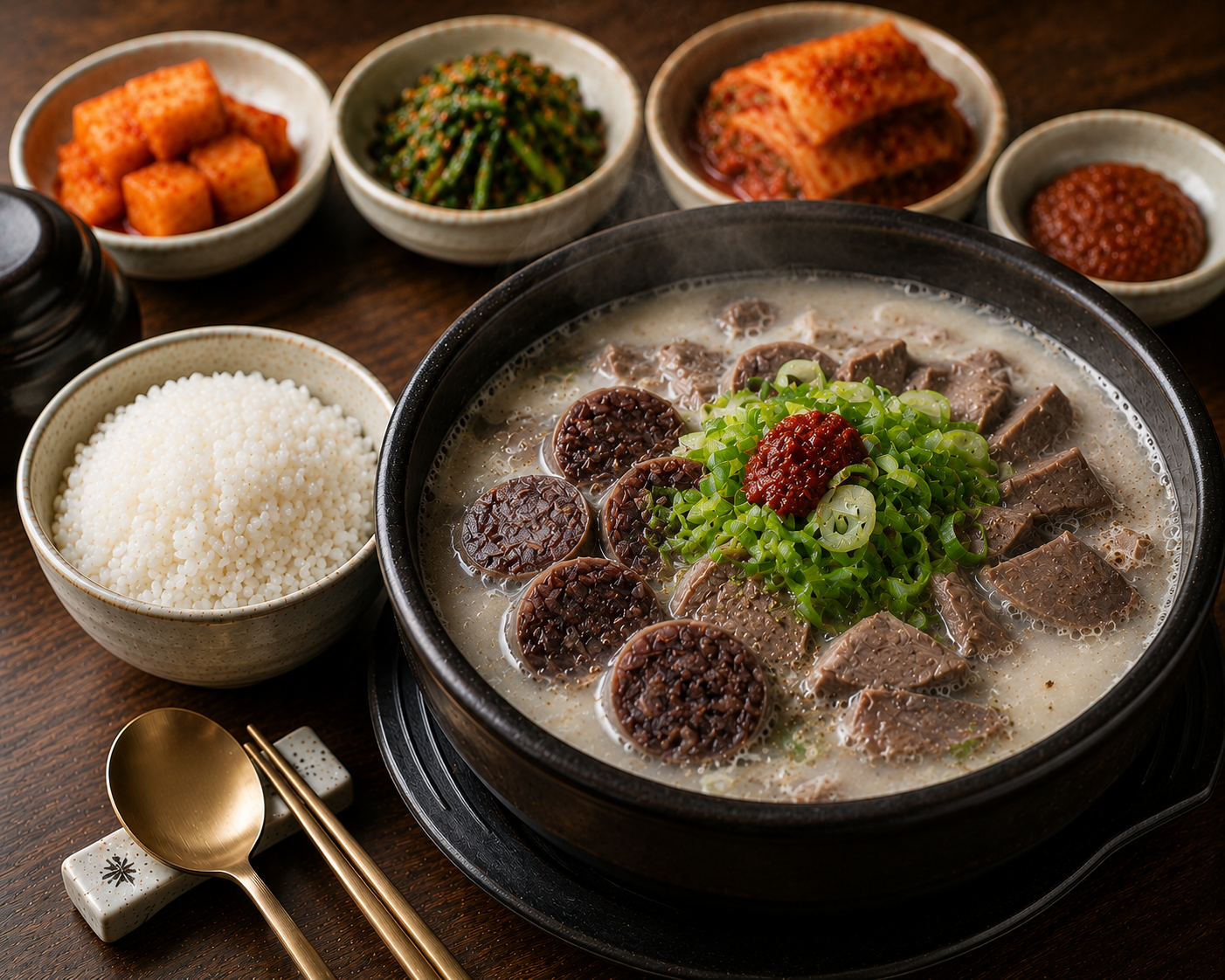
Sundae-guk (Korean Blood Sausage Soup)
순대국 · sun-dae-guk
A soup dish made by boiling pork intestines and sundae (blood sausage) in pork bone broth, characterized by its milky, rich broth and the chewy texture of the sundae. It is usually eaten with rice mixed in, seasoned to taste with salt or salted shrimp, and topped with perilla seed powder and a spicy seasoning paste.
Goes well with
Ingredients
How it's made
- 1Clean the pig's trotters thoroughly and prepare them.
- 2Boil water in a pot and add the trotters to cook them.
- 3Add soy sauce, garlic, ginger, green onion, onion, and pepper and let it simmer.
- 4Once the trotters are tender, remove them and let them cool.
Nutrition
* Estimated values per serving.
Allergens
It contains pork, so it is not halal or vegetarian-friendly.
How to order
족발 주세요
Jok-bal ju-se-yo
Please give me jokbal
Customize your order
Traveler tips
How to eat it
Frequently asked questions
- Why isn't Jokbal served hot?
- Jokbal is sliced after being simmered and cooled. As it cools, the skin and tendons firm up, giving it a chewy texture.
- How are Jokbal and Bossam different?
- Jokbal is made by simmering pig's feet in a Soy Sauce-based seasoning, with the texture of the skin and tendons as the main appeal. Bossam is usually made by boiling meatier cuts such as Samgyeopsal or pork neck, then eating them with kimchi.
- Do I have to eat the saeujeot, salted fermented shrimp, served with Jokbal?
- You do not have to eat it. Still, many people dip Jokbal lightly in saeujeot, salted fermented shrimp, because its saltiness and fermented aroma reduce the richness of the meat.
Last reviewed: 2026-10-07