Dumpling Hotpot
A Korean hotpot dish that consists of dumplings and various vegetables and mushrooms cooked in a large pot at the table with broth. As the ingredients cook, the broth becomes richer, and diners can enjoy eating the cooked ingredients before finishing with noodles or rice.
Cultural background
Dumpling hotpot is a communal dish enjoyed with family or friends, especially suitable for warm comfort during cold winter months.
Origin & history
Mandu are dumplings made by filling a wheat-flour wrapper with meat and vegetables, and in Korea they have often been eaten in winter and on holidays. The culture of large dumplings from northern regions such as Pyeongan-do and Hwanghae-do is especially well known. Dumpling Hotpot takes those dumplings and, rather than boiling them like a soup, arranges them neatly in a jeongol pan and cooks them at the table.
Large dumplings and vegetables set together in a wide pot look generous and appealing, making the dish well suited to serving guests. One account says that after the Korean War, people who made northern-style dumplings settled in various parts of the south, helping hotpot with large handmade dumplings become familiar as a restaurant dish as well.
Regional & modern variations
- Northern-Style Dumpling Hotpot — This style uses large handmade dumplings and a relatively clear, clean-tasting broth. Rather than relying on strong seasonings, it tends to highlight the flavor of the dumpling filling and the stock.
- Kimchi Dumpling Hotpot — Dumplings filled with kimchi are used, or kimchi is added to the broth as it cooks. The flavor is tangier and sharper than a basic Dumpling Hotpot.
- Mushroom Dumpling Hotpot — This version includes plenty of mushrooms, such as shiitake, oyster, and enoki. The mushroom aroma infuses the broth and gently supports the meaty flavor of the dumplings.
How Koreans eat it
Dumpling Hotpot can turn cloudy if the dumplings burst, so avoid stirring vigorously from the start. Once the broth begins to boil, gently lift the dumplings to keep them from sticking to the bottom, then transfer them to individual plates after they are cooked and let them cool before eating. At a Korean table, sharing from the central pot and serving yourself is a natural way to eat it.
Taste & how to choose
A good Dumpling Hotpot has wrappers that do not fall apart too easily, with a filling that is hot and moist. As it continues to simmer, the flavors of the meat and vegetables in the dumpling filling seep into the broth, making the later broth richer than at the beginning. On the first bite, the hot juices inside the dumpling can easily burn the roof of your mouth.
Similar dishes
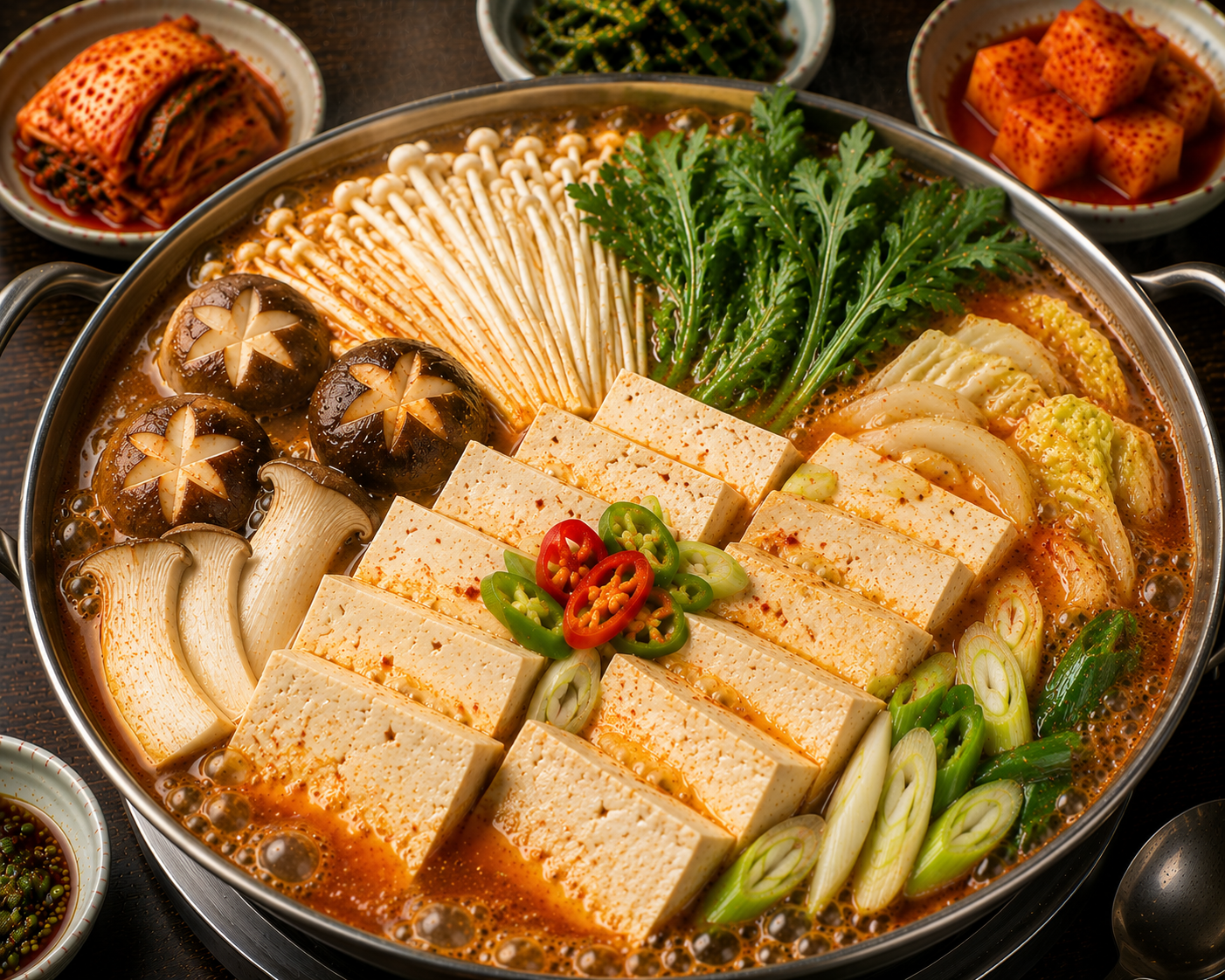
Tofu Jeongol
두부전골 · dubu-jeongol
This is a communal dish where tofu, vegetables, and mushrooms are neatly arranged in a wide pot, and broth is poured in to cook directly at the table. The soft texture of tofu and the freshness of various vegetables blend together, deepening the flavor of the broth. Enjoy cooked ingredients first, then add rice or noodle to finish.
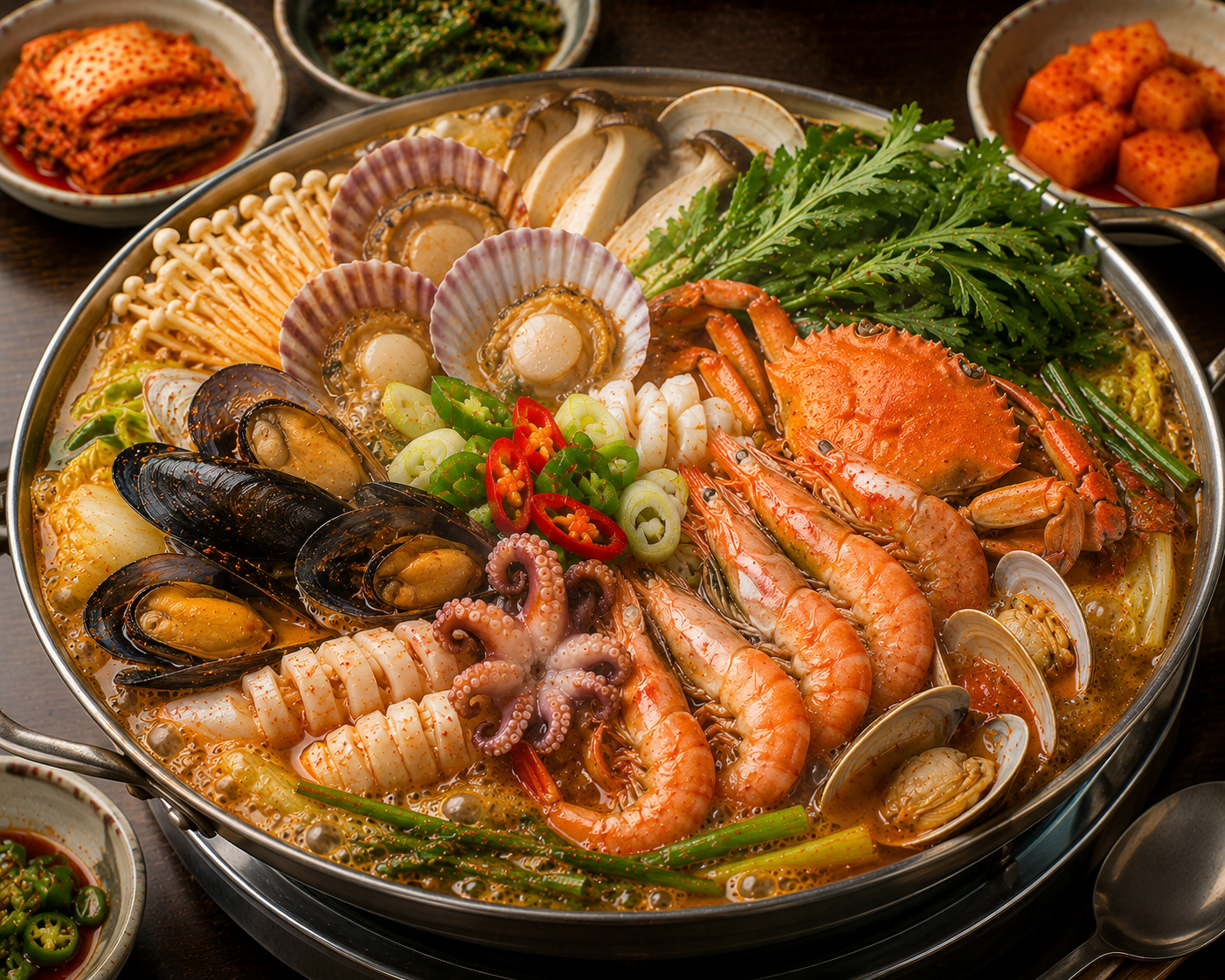
Seafood Hot Pot
해물전골 · hae-mul-jeon-gol
A Korean hot pot dish that combines various seafood and vegetables in a large pot, boiled at the table and eaten fresh. The fresh taste of seafood and the crunch of vegetables come together to enrich the broth.
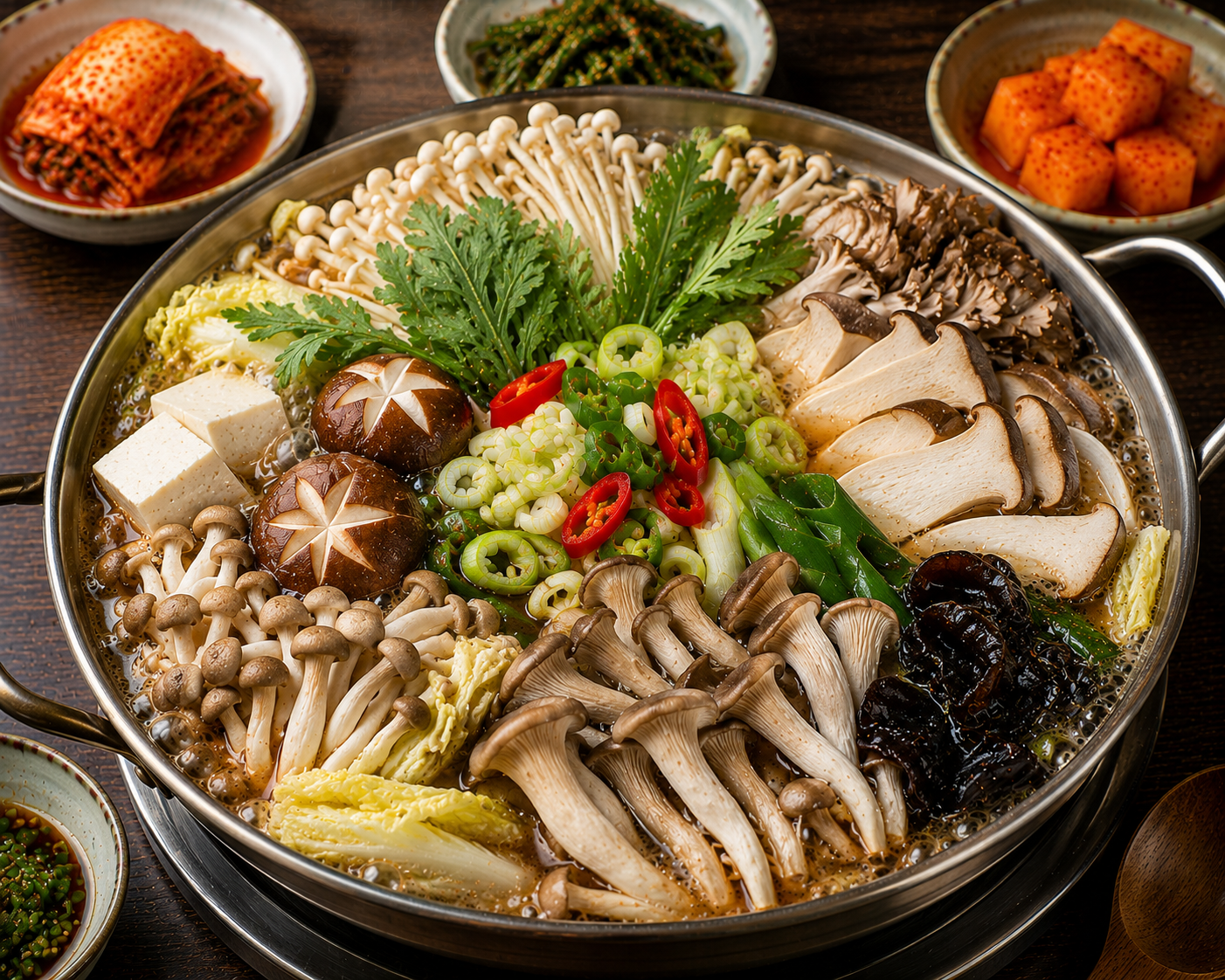
Mushroom Jeongol
버섯전골 · beoseot-jeongol
A communal dish where a variety of mushrooms and vegetables are neatly arranged in a large pot and cooked at the table by pouring in broth. As the ingredients cook, the broth reduces and deepens in flavor, and you enjoy the cooked ingredients before ending with rice or noodles added for a final treat.
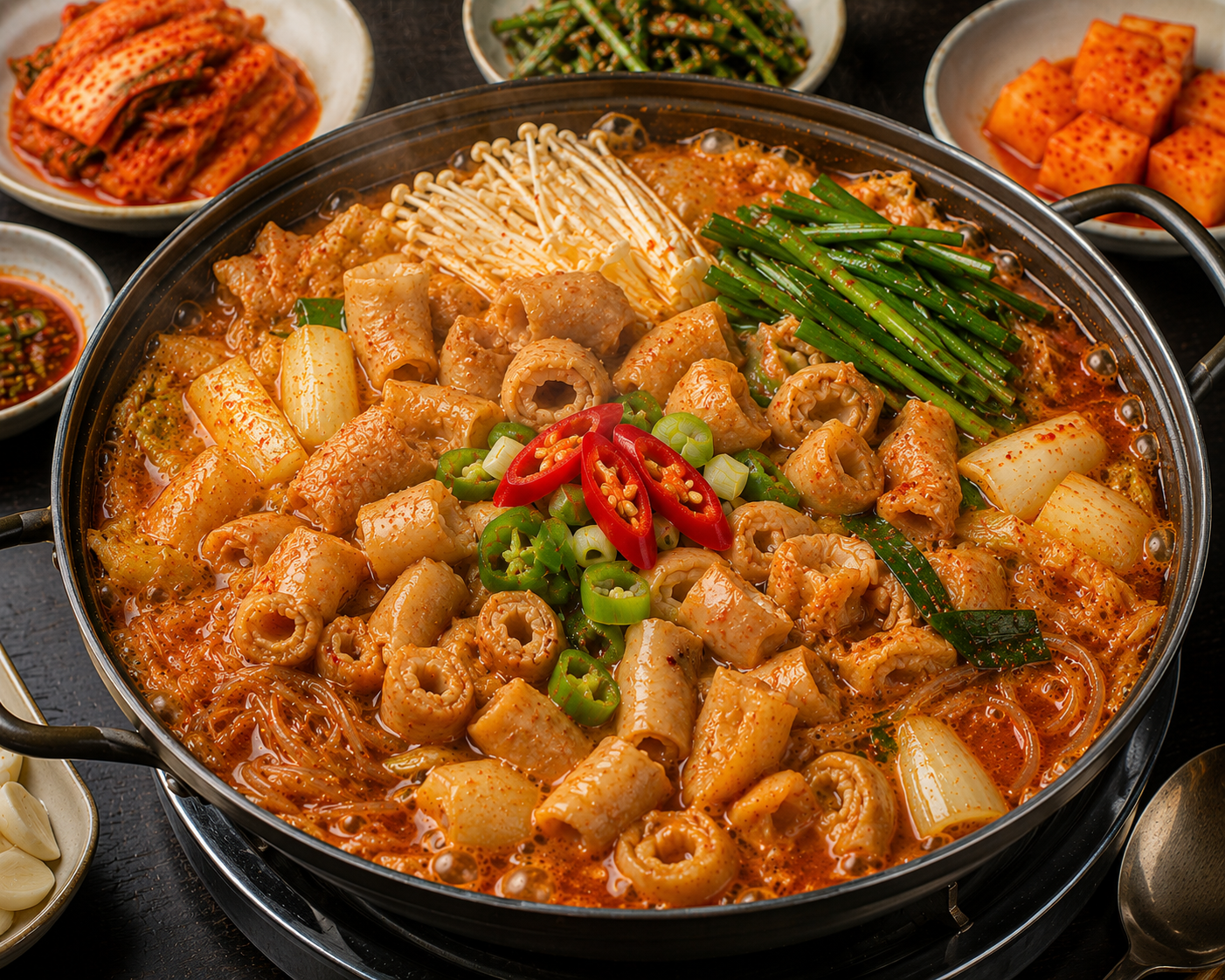
Gopchang Jeongol
곱창전골 · gopchang-jeongol
A Korean hot pot dish made by placing beef small intestines, vegetables, mushrooms, etc. in a large pot and pouring broth over it to cook directly at the table. The chewy texture of the intestines combines with various ingredients to create a deep flavor.
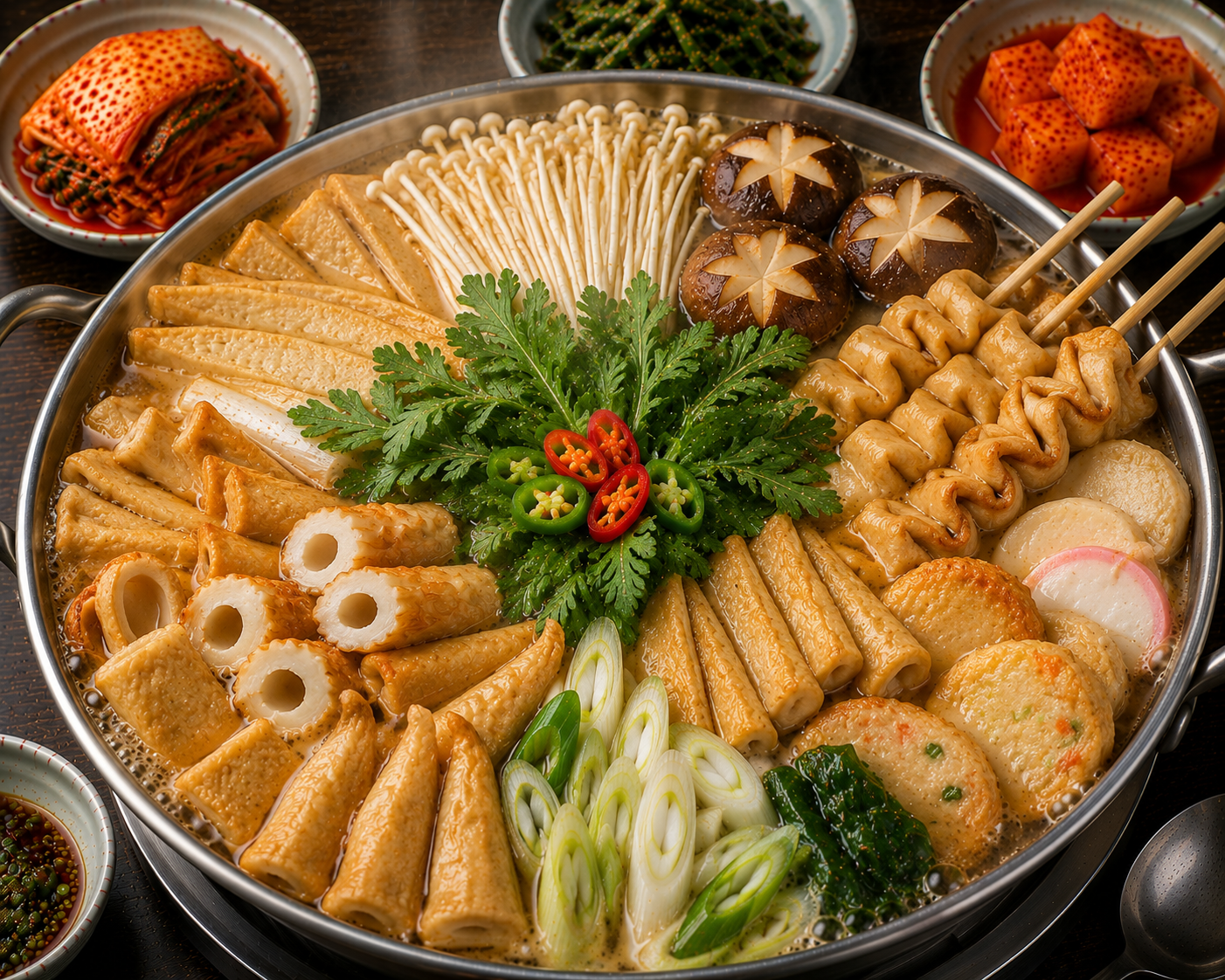
Eomuk Jeongol
어묵전골 · eomuk-jeongol
A gathering-style dish where eomuk and various vegetables are placed in a wide pot and boiled directly at the table. The chewy texture of the eomuk combines with the freshness of the vegetables, and the broth reduces to create a deep flavor. People sit together to eat the cooked ingredients, and for the finale, noodles or rice are added for enjoyment.
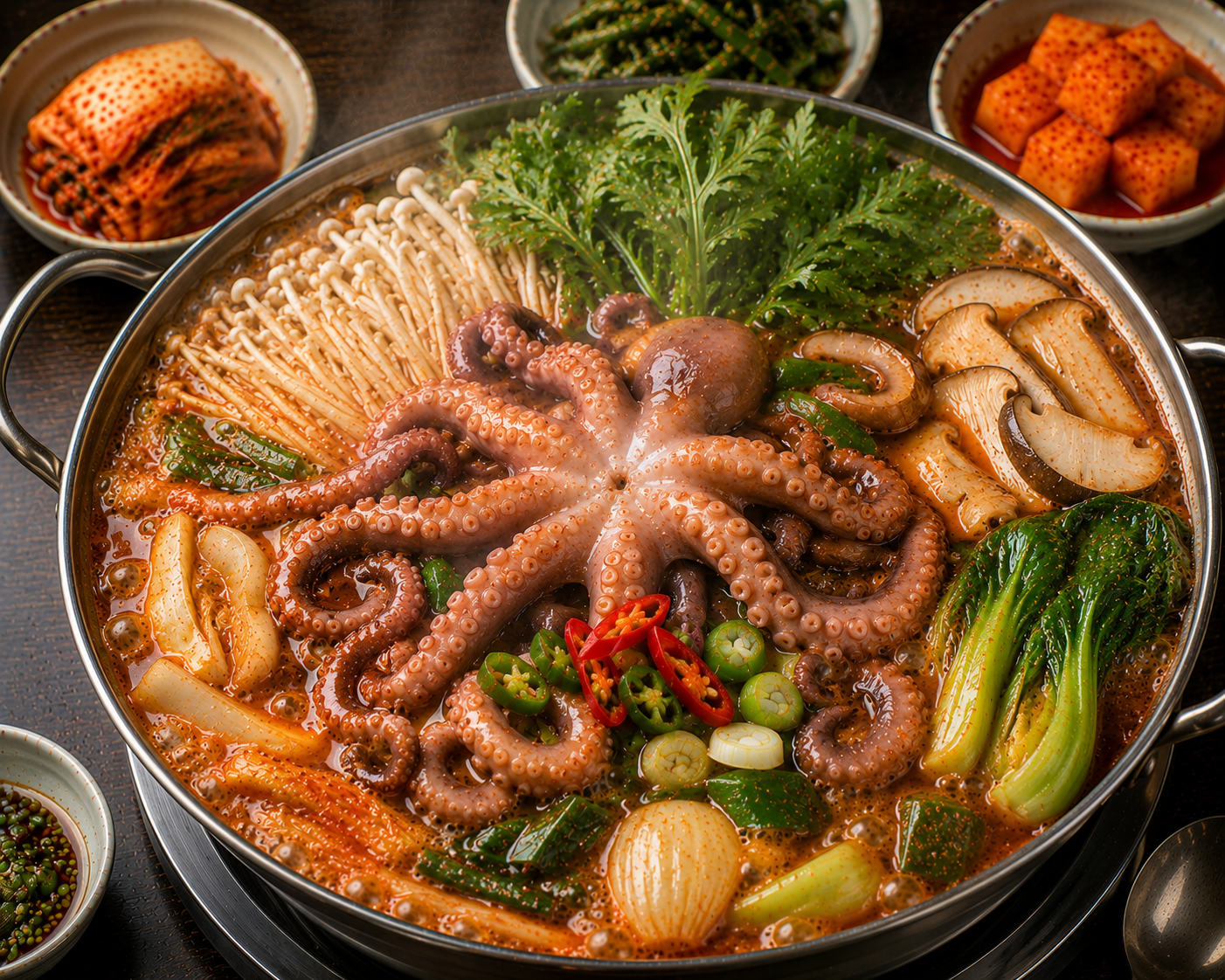
Nakji Jeonggol
낙지전골 · nakji-jeongol
Nakji and various vegetables and mushrooms are placed in a large pot, and broth is added to cook it directly at the table. The chewy texture of nakji and the freshness of the vegetables blend together, and as the broth reduces, it adds a deeper flavor. Enjoy the cooked ingredients and finish off with rice or noodles.
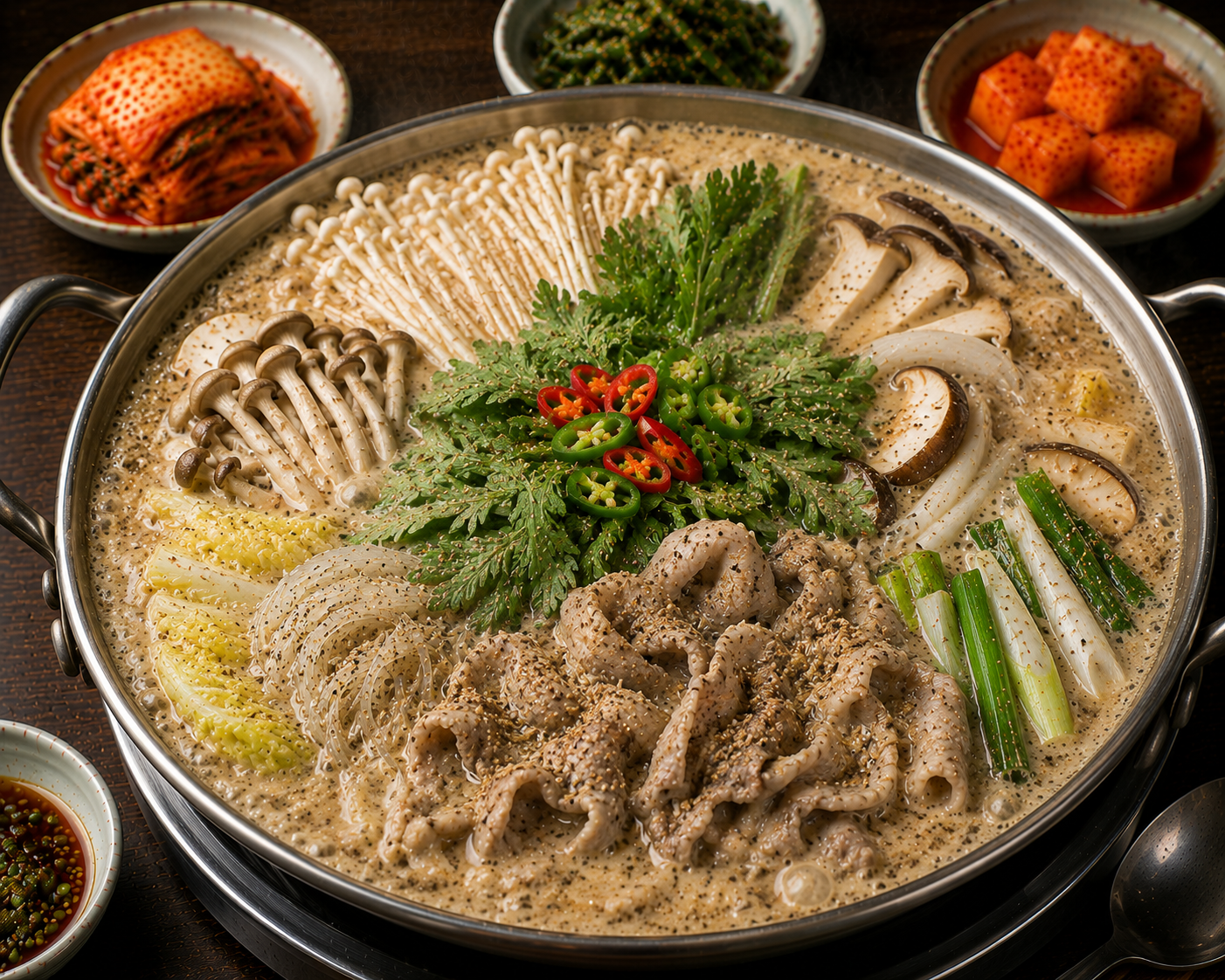
Perilla Seed Hot Pot
들깨전골 · Deulkkae-jeongol
This is a communal dish made by placing beef, mushrooms, and vegetables in a wide pot and pouring broth with perilla seed powder, which is cooked directly at the table. The nutty flavor of the perilla seeds melds into the broth, adding deep richness while the broth reduces and thickens as the ingredients cook. Enjoy by taking out the cooked ingredients first, then finish off with rice or noodles.
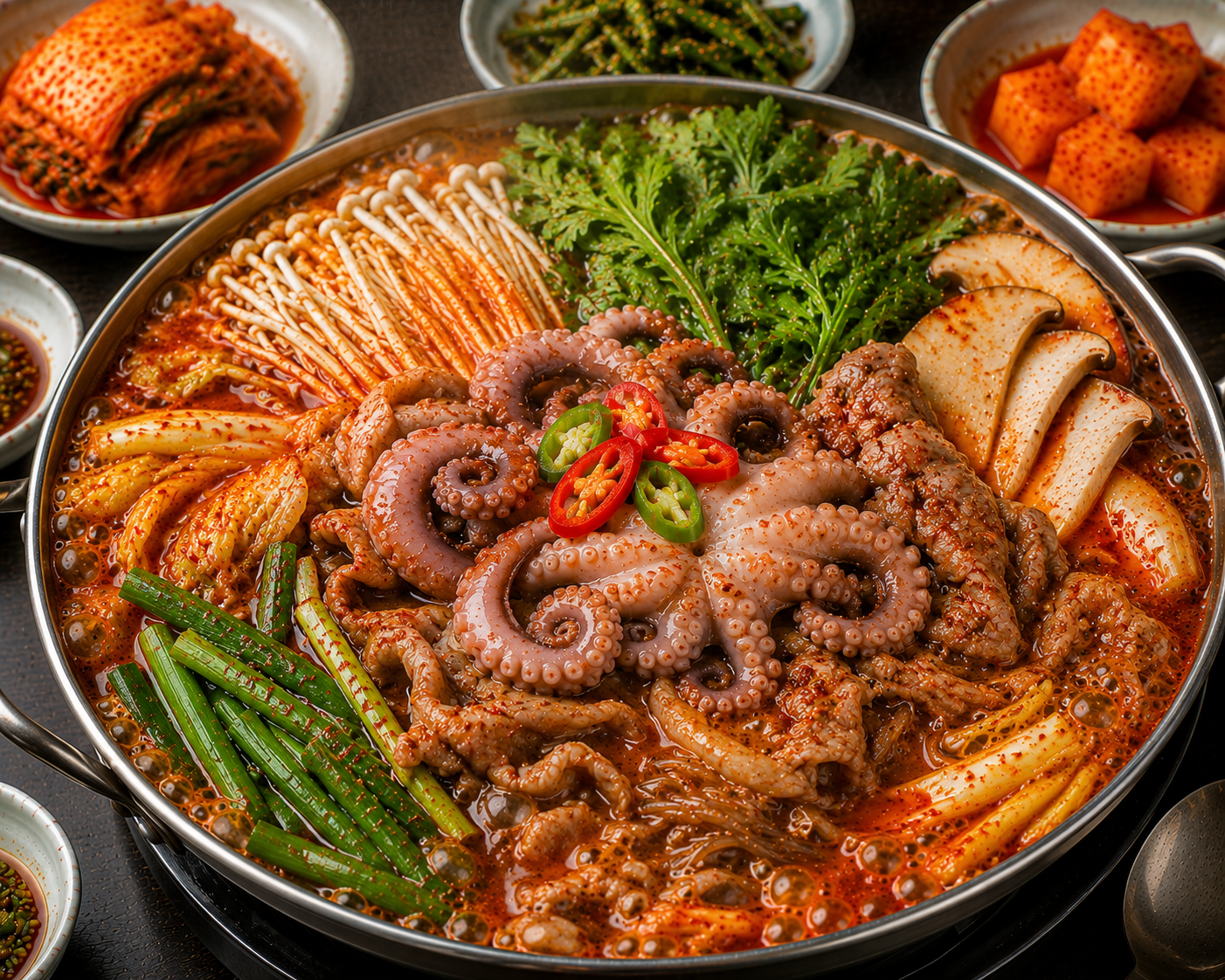
Bulnak Jeongol
불낙전골 · bul-nak-jeongol
A hot pot dish that includes beef and octopus cooked in a large pot with broth, served directly at the table. The deep flavor of the beef and the chewy texture of the octopus blend together, with the broth becoming richer as it reduces. Typically enjoyed slowly with multiple people gathered around, finishing with rice or noodles added.
Ingredients
How it's made
- 1Prepare dumplings and vegetables, and neatly arrange them in a large pot.
- 2Pour in the broth and place it on the table's burner.
- 3Let it boil until the ingredients are cooked.
- 4Enjoy the cooked ingredients first, then finish with noodles or rice.
Nutrition
* Estimated values per serving.
Allergens
Contains meat in the broth and dumplings, not suitable for vegetarian or halal diets.
How to order
만두전골 주세요
Man-du-jeong-ol ju-se-yo
Dumpling hotpot, please
Customize your order
Traveler tips
How to eat it
Frequently asked questions
- When should I eat the dumplings?
- The dumplings are usually ready to eat when the wrappers look translucent and glossy and the dumplings have puffed up fully. Since the filling needs to be hot all the way through, waiting a little longer is safer with large dumplings.
- Can I cut the dumplings in the pot before eating them?
- You can, but cutting them in the pot from the start may loosen the filling and cloud the broth. Most people transfer a dumpling to their own plate first, then split it with a spoon or chopsticks.
- How is it different from Dumpling Soup?
- Dumpling Soup is closer to a soup that arrives with the broth and dumplings already boiled together. Dumpling Hotpot is a jeongol in which dumplings, vegetables, and mushrooms cook together at the table, so the flavor of the broth keeps changing as you eat.
Last reviewed: 2026-10-07