
Cultural background
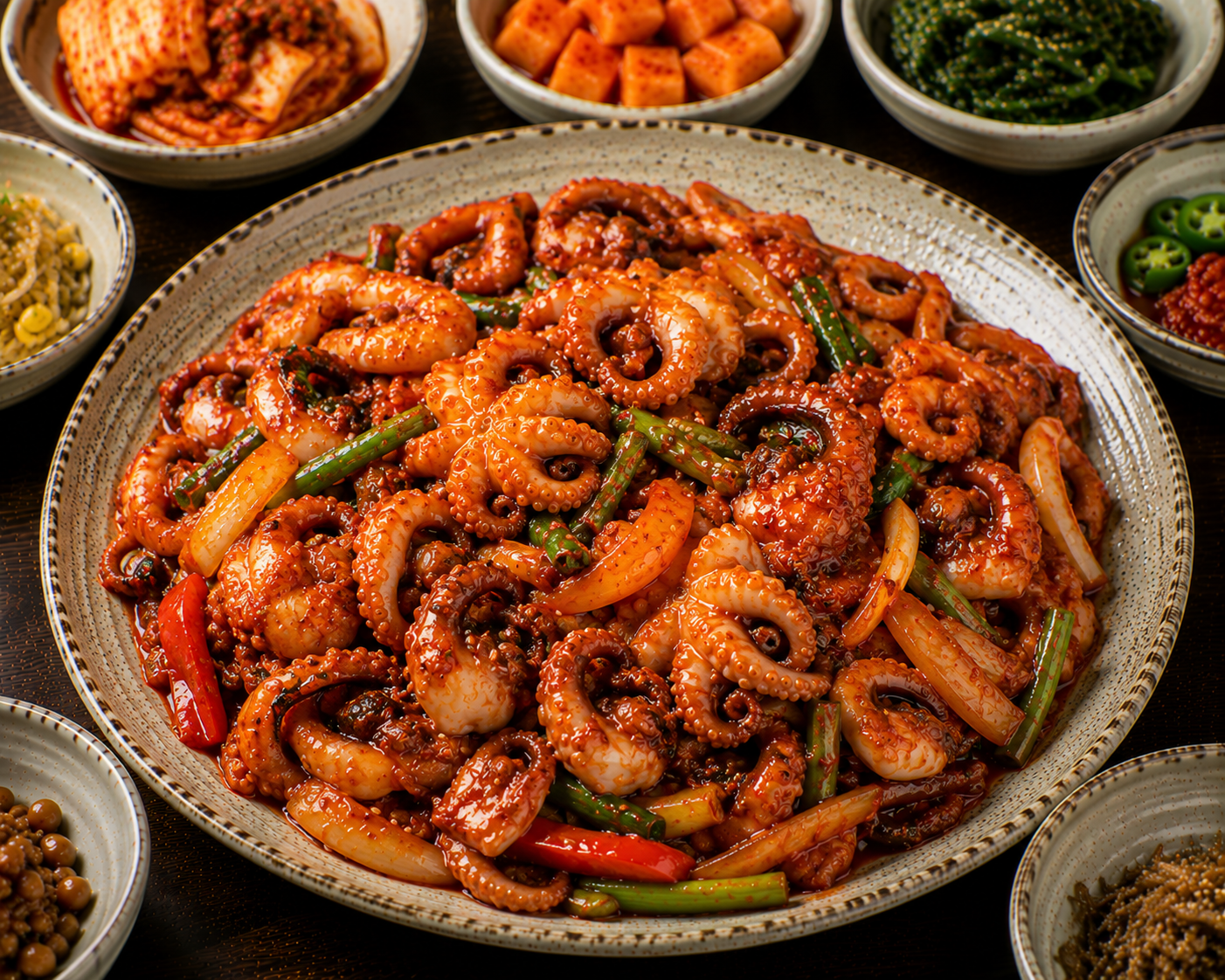
Stir-fried Octopus is a popular dish among those who enjoy spicy flavors, often enjoyed for lunch or dinner, and frequently chosen as an accompaniment to alcoholic drinks.
Origin & history
Nakji, a small octopus-like seafood, has long been eaten along Korea's west and south coasts. In Korea, a saying has long cast nakji as a food that boosts energy, and people enjoy it in many forms, including soups, raw preparations, and stir-fries.
Today's intensely red-seasoned Stir-fried Octopus is especially associated with the spicy version from the Mugyo-dong area of Seoul. As a style built around thick seasoning and a strong smoky char rather than a thin broth spread more widely, the image of "아주 매운 낙지볶음 (aju maeun nakji-bokkeum, 'very spicy Stir-fried Octopus')" became firmly established.
Regional & modern variations
- Mugyo-dong-style Stir-fried Octopus — A very spicy style known as the Seoul Mugyo-dong version. With little broth and a concentrated sauce, it is often mixed with rice or Bean Sprouts.
- Spicy Stir-fried Octopus over Rice — Stir-fried Octopus served over rice as a one-bowl meal. The stir-fry sauce soaks straight into the rice, making it easy for travelers to order.
- Griddle Stir-fried Octopus — Octopus and vegetables are stir-fried together on a large iron griddle and shared by several people. Diners sometimes finish by frying rice in the remaining sauce.
How Koreans eat it
Restaurants specializing in Stir-fried Octopus often serve Soybean Sprout Soup or blanched Bean Sprouts on the side. Bean Sprouts soften the heat and soak up the sauce, making them good to mix with rice. Some places sell single portions, but griddle-style restaurants or specialty shops may require a minimum order of two servings.
Taste & how to choose
Good Stir-fried Octopus should be springy to the bite without turning tough. Because octopus becomes tough easily when overcooked, cooking time matters as much as the flavor of the sauce. The seasoning tends to be sweet and spicy, and since the octopus releases moisture, the sauce is best when it is not too watery and clings well to the ingredients.
Similar dishes
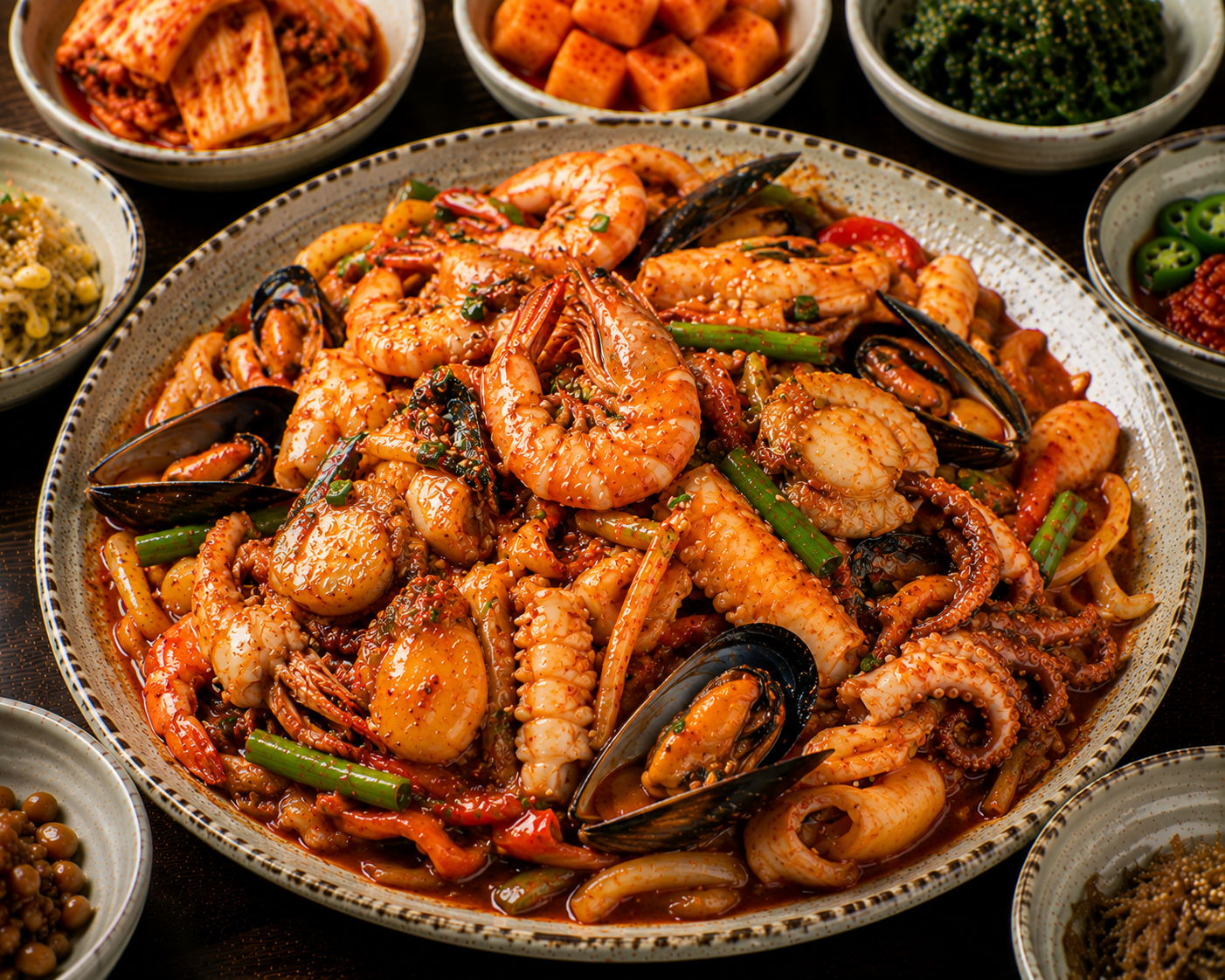
Seafood Stir-fry
해물볶음 · hae-mul-bokkeum
A spicy dish made by stir-frying various seafood in gochujang sauce over high heat, showcasing the harmony of chewy seafood and seasoning. It can be enjoyed mixed with rice or wrapped in lettuce.
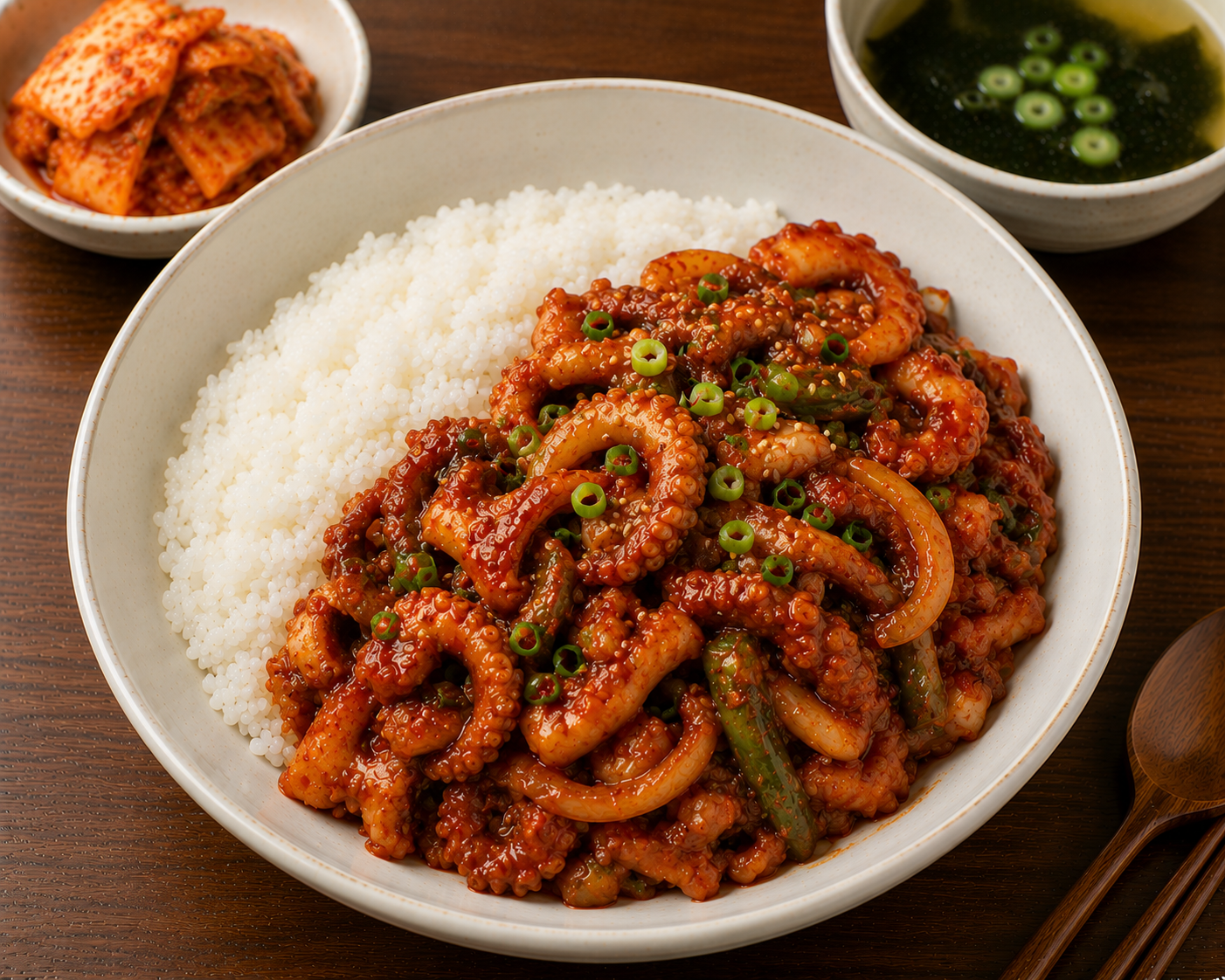
Spicy Stir-fried Octopus over Rice
낙지덮밥 · nakji-deopbap
A Korean-style rice bowl dish made by stir-frying octopus in a spicy sauce and serving it over rice.
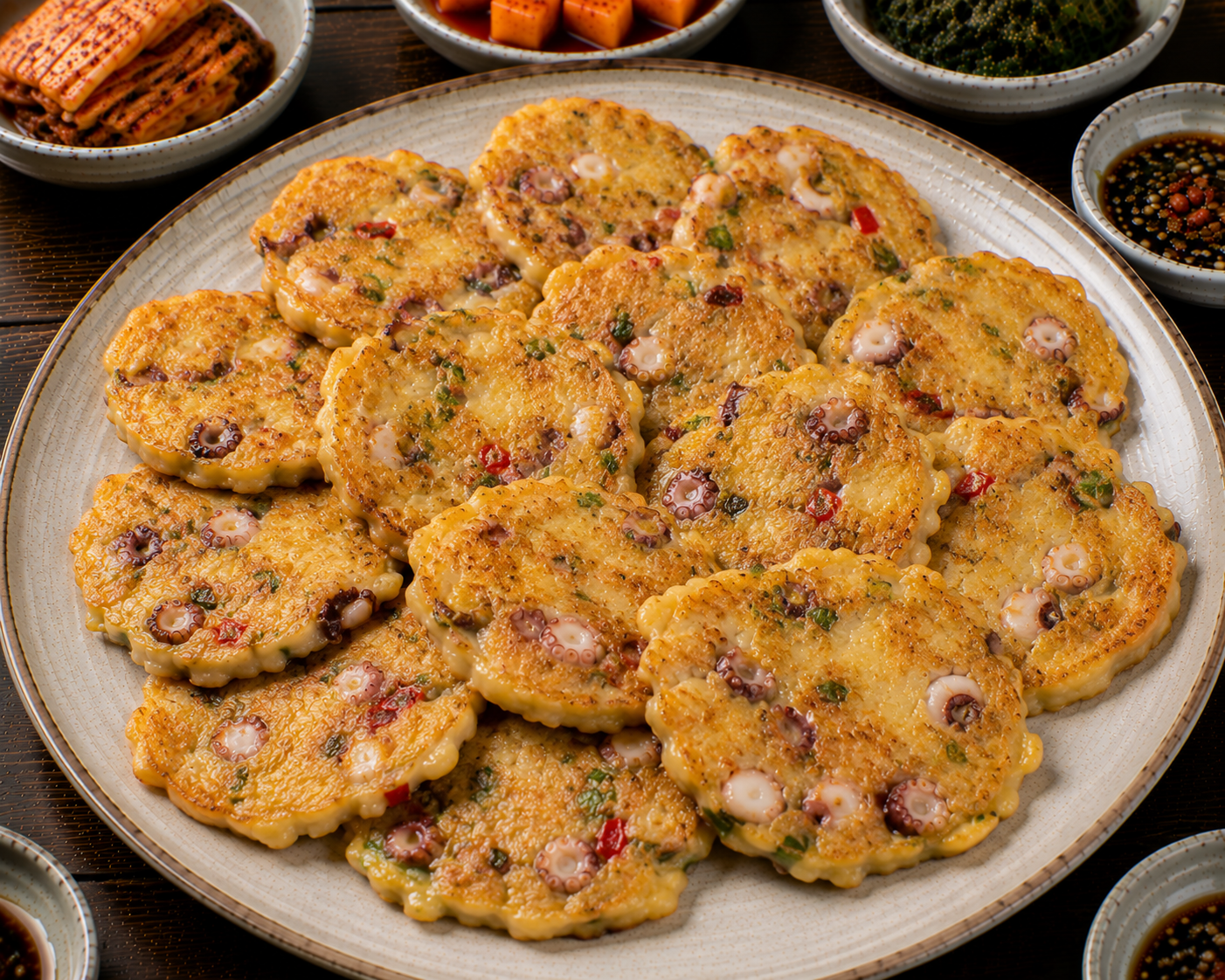
Octopus Pancake
낙지전 · nakji-jeon
A pancake dish made by finely cutting octopus, coating it with flour and egg, and pan-frying. The outside is golden and crispy, while the inside retains the chewy texture of the octopus. It's delicious dipped in vinegared soy sauce and pairs well with drinks.
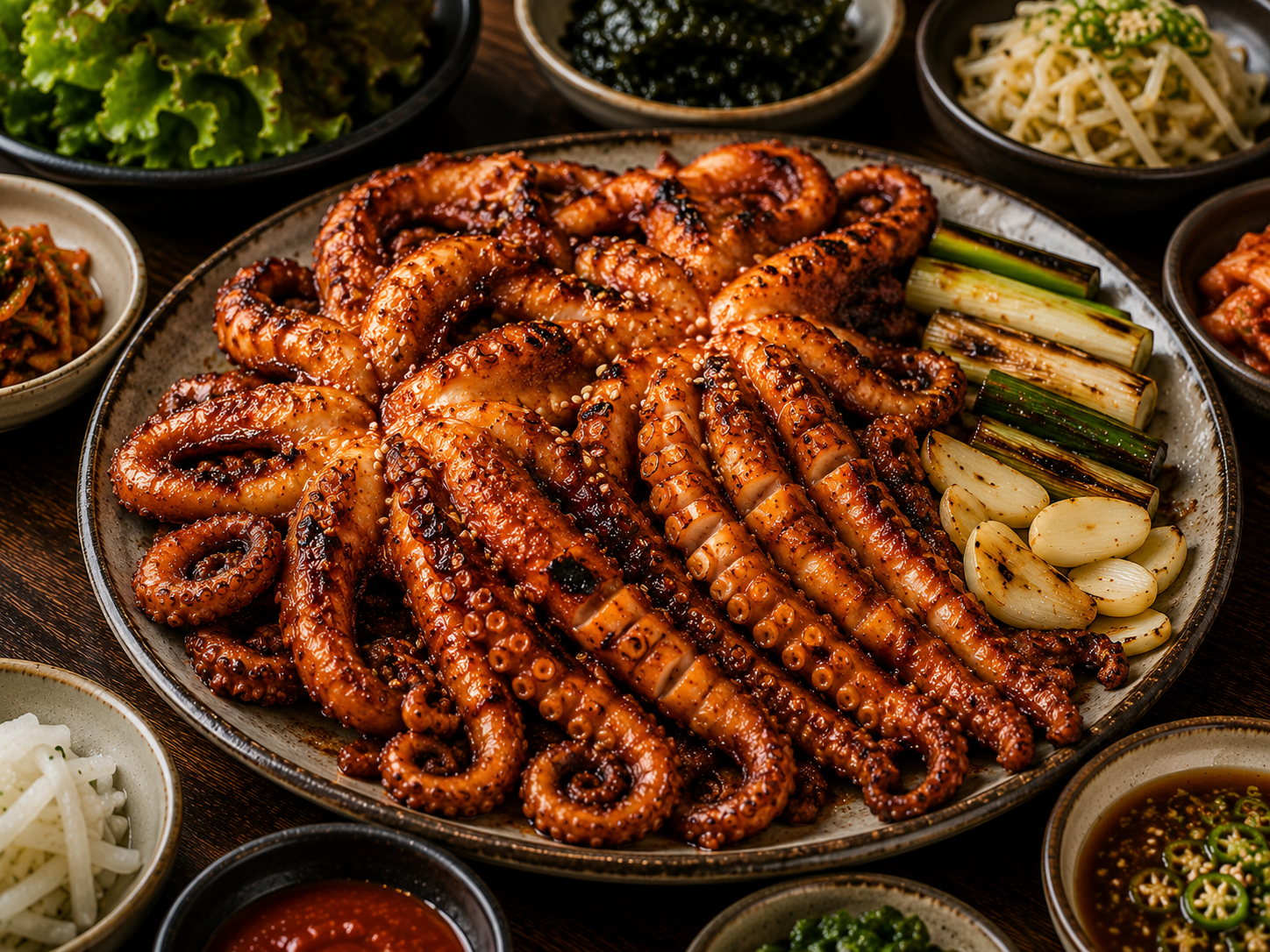
Grilled Octopus
낙지구이 · nakji-gui
This dish features octopus marinated in sauce and grilled on a hot plate, characterized by its chewy texture and spicy seasoning. It is typically grilled directly at the dining table and enjoyed at the perfect moment of cooking, wrapped in lettuce and enjoyed with ssamjang.
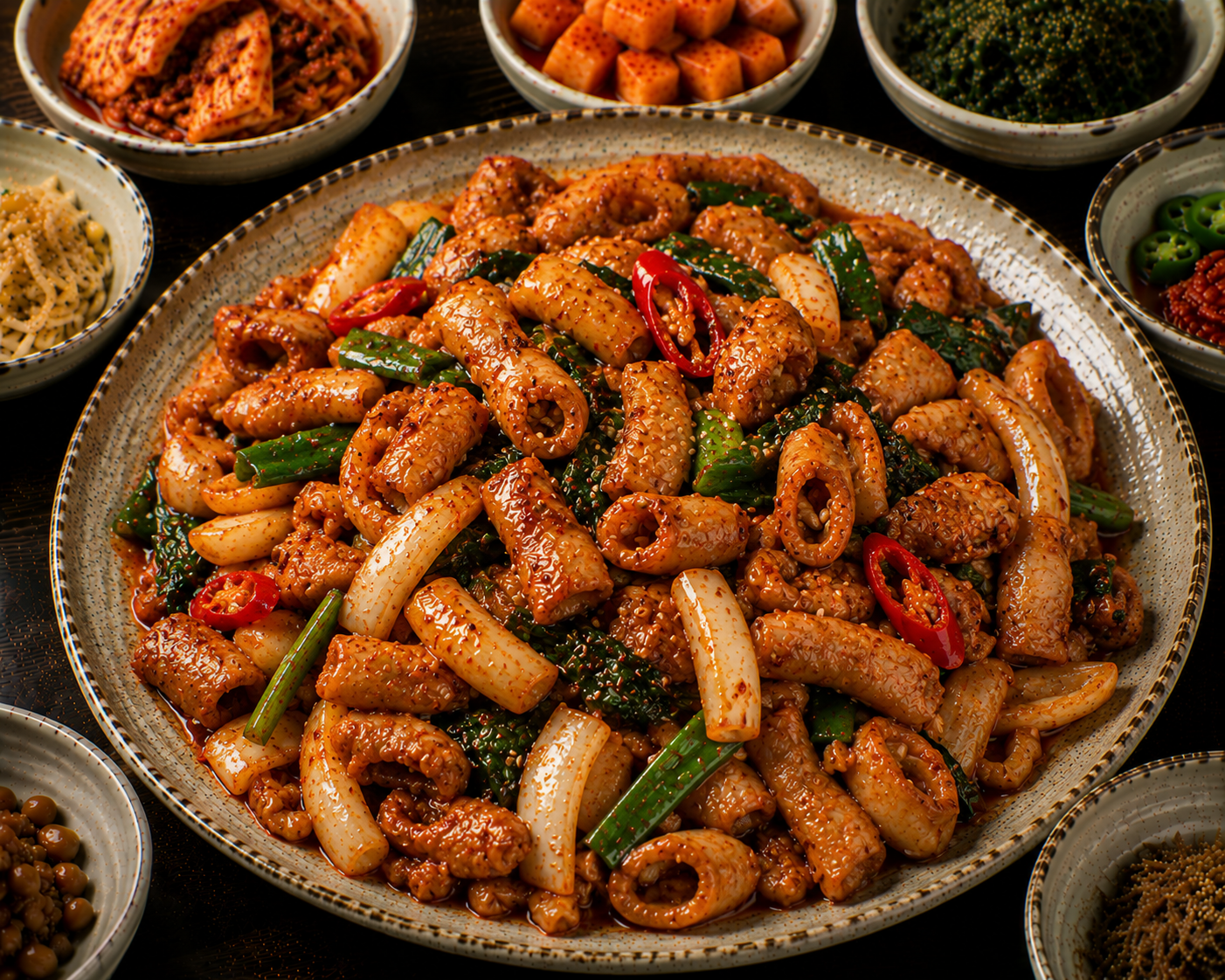
Grilled Intestines Stir-fry
곱창볶음 · gopchang-bokkeum
A spicy dish made by marinating intestines in gochujang sauce and stir-frying them with vegetables over high heat. It features the chewy texture of intestines and the sweet-spicy flavor of the seasoning.
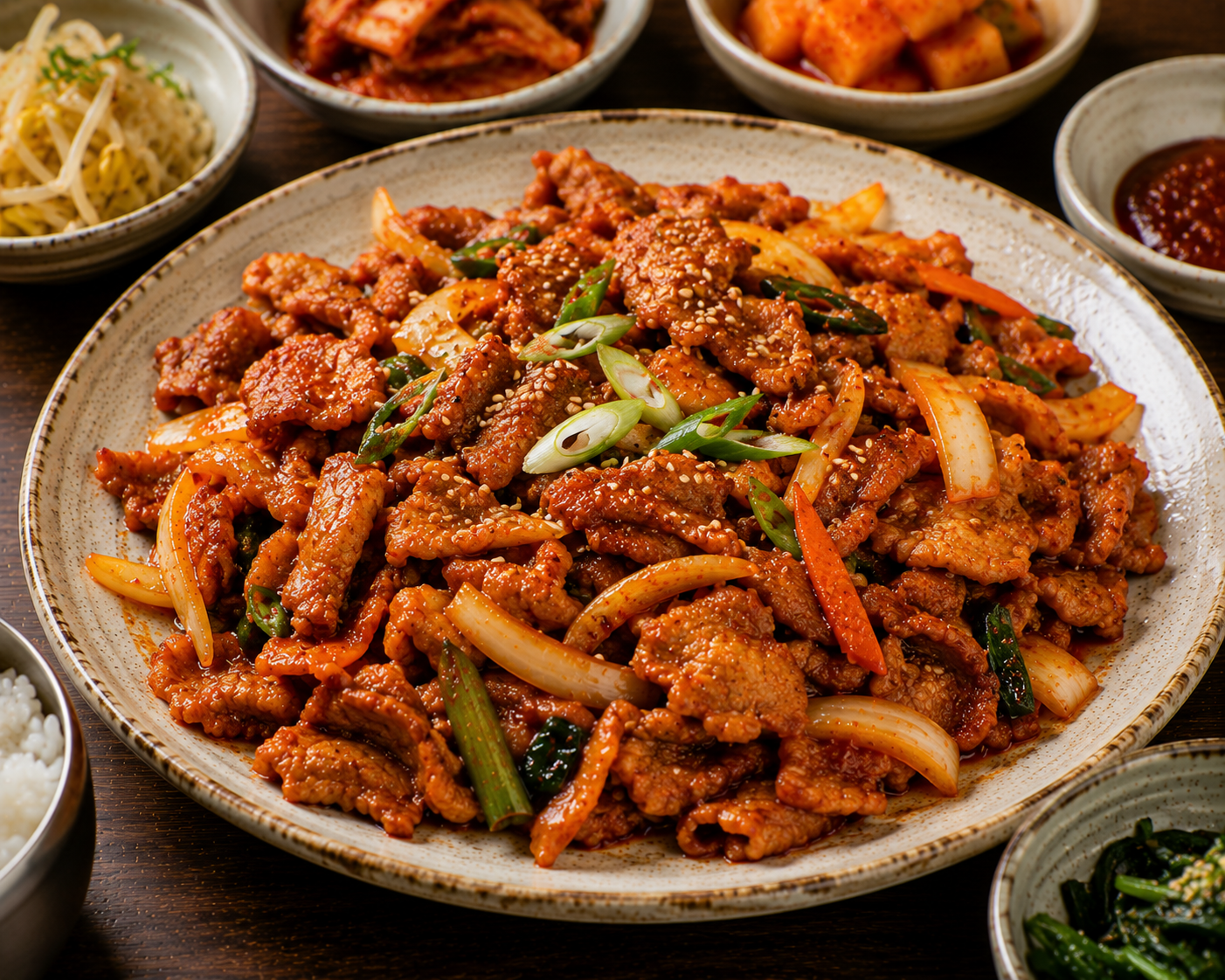
Stir-fried Spicy Pork
제육볶음 · je-yuk-bokkeum
This is a sweet and spicy dish made by marinating pork in gochujang and gochugaru, then stir-frying it over high heat with onions and green onions. The smoky flavor permeates as the seasoning coats the meat, and it is enjoyed either mixed with rice or wrapped in lettuce or perilla leaves.
Goes well with
Ingredients
How it's made
- 1Clean the octopus and cut it into bite-sized pieces.
- 2Chop the onion and green onion into appropriate sizes.
- 3Heat oil in a pan and sauté garlic to release its aroma.
- 4Add octopus and vegetables, season with gochujang and gochugaru, and stir-fry.
Nutrition
* Estimated values per serving.
Allergens
Not vegetarian as it contains seafood.
How to order
낙지볶음 주세요
Nak-ji-bok-keum ju-se-yo
Please give me stir-fried octopus
Customize your order
Traveler tips
How to eat it
Frequently asked questions
- Is it the same as san-nakji?
- No. San-nakji is a dish made by cutting up live or very fresh octopus, while Stir-fried Octopus is a stir-fried dish in which octopus is cooked in a spicy sauce.
- How are Stir-fried Octopus and Stir-fried Squid different?
- Both are spicy seasoned stir-fries, but the textures differ. Octopus is smaller and has a stronger springy bounce, while squid is firmer and has a more distinct chew.
- Why do people mix in Bean Sprouts?
- Bean Sprouts make the spicy sauce a little less aggressive and add a crisp texture. Especially with a spicy version like Mugyo-dong-style Stir-fried Octopus, mixing the rice, octopus, and Bean Sprouts together makes it easier to eat.
Last reviewed: 2026-10-07