Cultural background
A dish commonly found in rice meal houses or snack bars, often sought after by those who enjoy spicy flavors.
Origin & history
Squid has long been a familiar seafood in Korea, a country surrounded by sea on three sides. Large catches come from waters such as the East Sea and South Sea, and common ways to eat it spread widely: blanching fresh squid, or drying it for storage and grilling it later. As refrigerated and frozen distribution improved, city households also gained easy access to cleaned squid.
Stir-fried Squid belongs to Korea's family of spicy stir-fries, made by adding a seasoning of Gochujang and chili powder to that ingredient. The chili-based seasoning tames the fishy smell of the seafood, while the sweetness of onion and green onion brings balance. After industrialization, quick-cooked spicy stir-fried dishes became fixtures in popular restaurants, and Stir-fried Squid likewise became an everyday dish that moves easily between home cooking and dining out.
Regional & modern variations
- Squid Rice Bowl — A one-bowl meal with Stir-fried Squid served directly over rice. The sauce is often a little more generous, making it easy to mix in with a spoon.
- Osam Bulgogi — A variation that stir-fries squid together with Samgyeopsal. The chewiness of the seafood mixes with the rich fat of the pork, making it heavier than Stir-fried Squid.
How Koreans eat it
In restaurants, people often eat it as a full meal set, such as "오징어볶음 백반" (ojingeo-bokkeum baekban, Stir-fried Squid set meal), with rice, soup, and small side dishes. The seasoning is bold, so it tends to make people eat a lot of rice, and many diners also add rice to the remaining sauce and mix it in to the last bite.
Taste & how to choose
Good Stir-fried Squid has squid that has turned white as it cooks but has not become rubbery, and onions and green onions that have softened while still retaining sweetness and texture. If too much liquid is released, the dish can feel more like a braise than a stir-fry.
Similar dishes
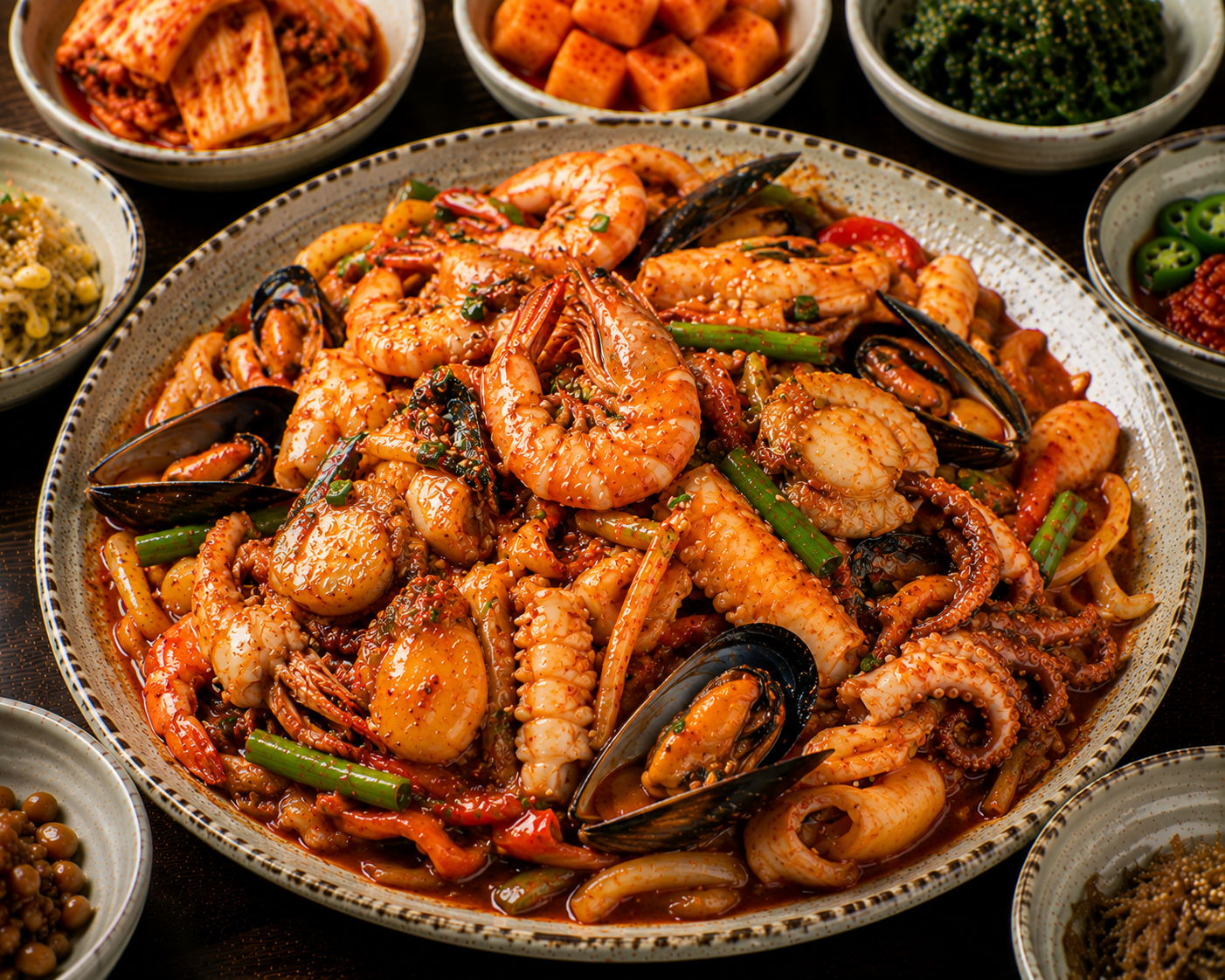
Seafood Stir-fry
해물볶음 · hae-mul-bokkeum
A spicy dish made by stir-frying various seafood in gochujang sauce over high heat, showcasing the harmony of chewy seafood and seasoning. It can be enjoyed mixed with rice or wrapped in lettuce.
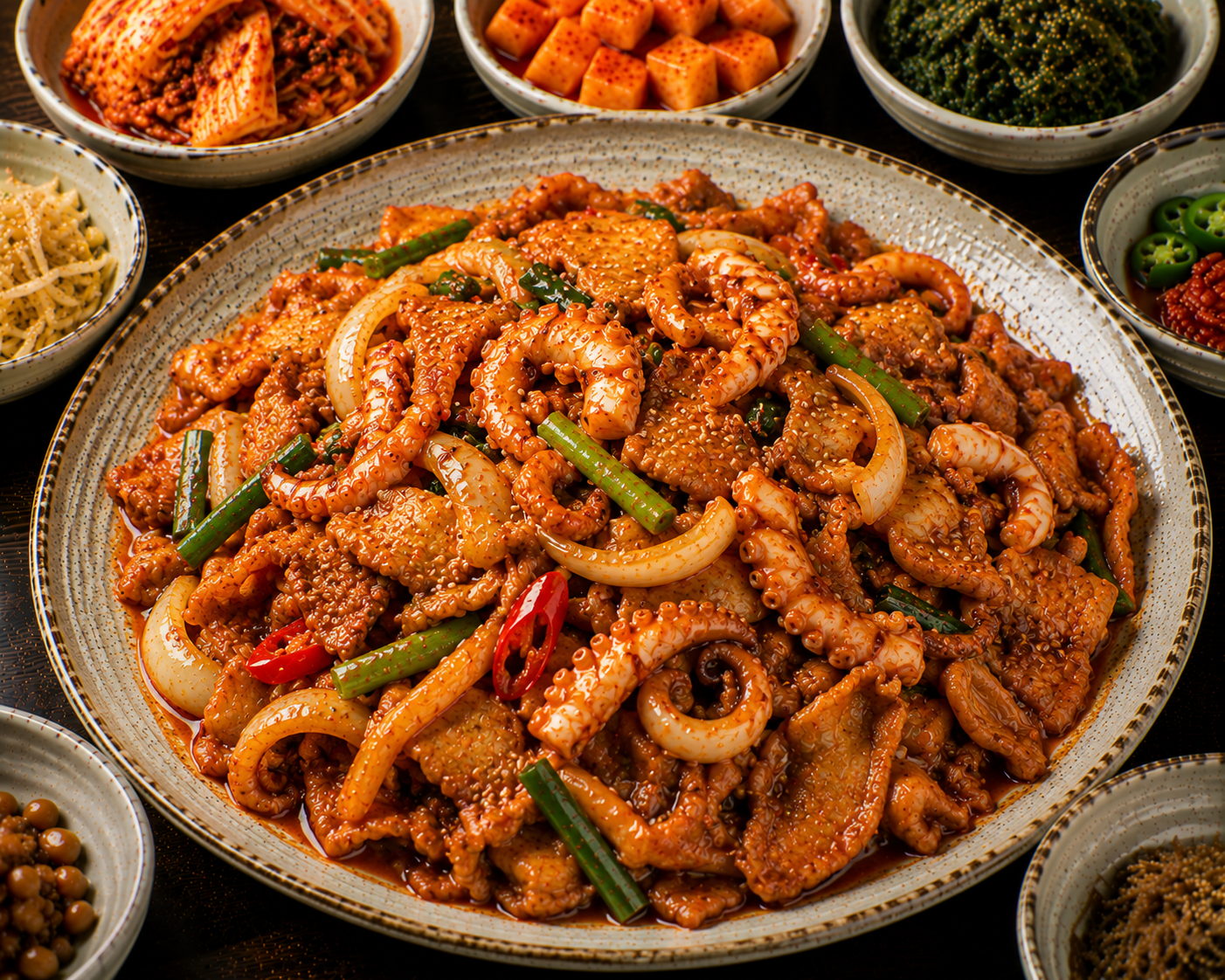
Osam Bulgogi
오삼불고기 · o-sam-bul-go-gi
A spicy and sweet dish made by marinating squid and pork belly in gochujang sauce and quickly stir-frying it over high heat. The grilled flavor infuses and the seasoning coats the ingredients, and it is either mixed with rice or wrapped in lettuce.
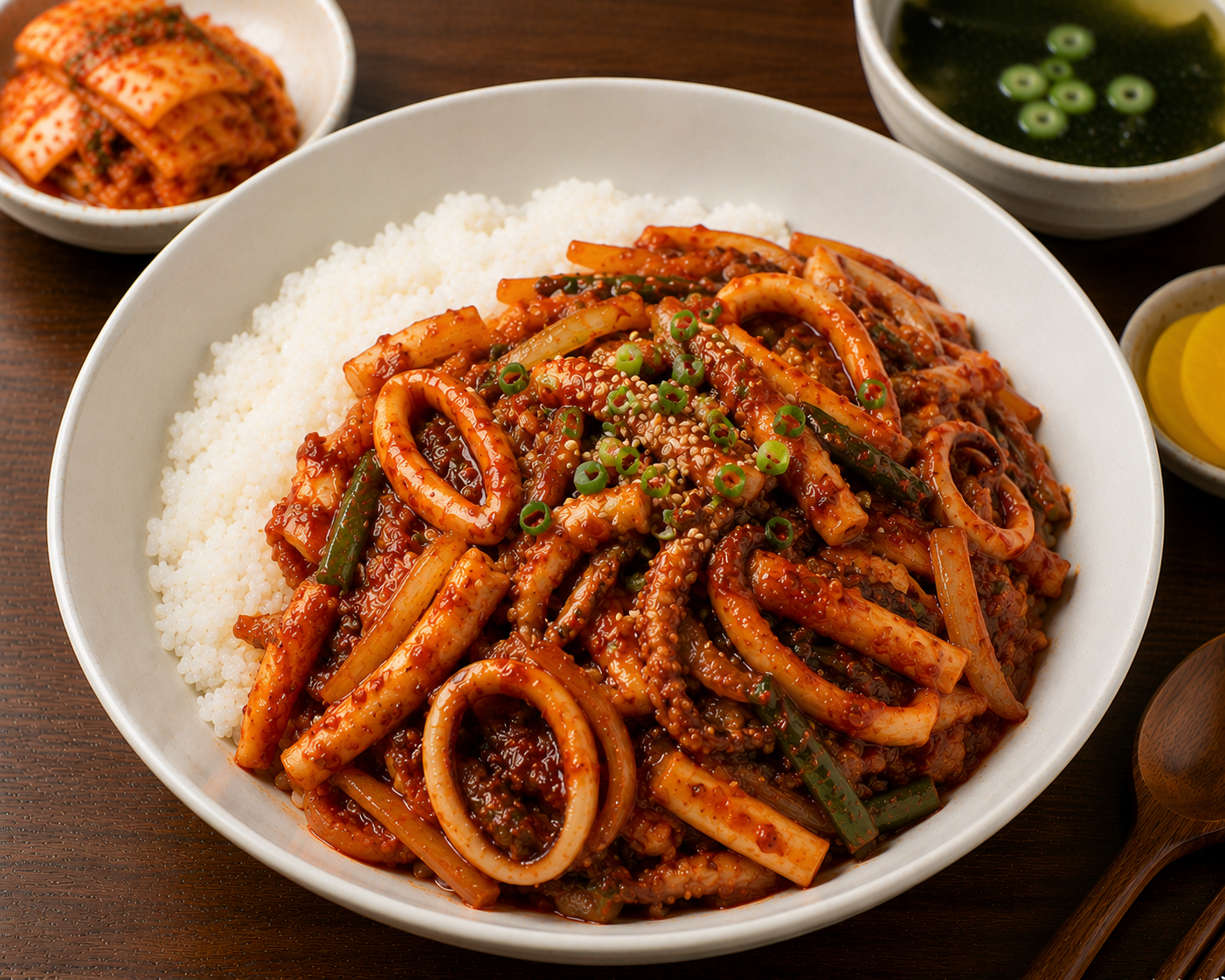
Squid Rice Bowl
오징어덮밥 · o-jing-eo-deop-bap
A Korean rice bowl dish where squid is stir-fried in a spicy seasoning and served over rice.
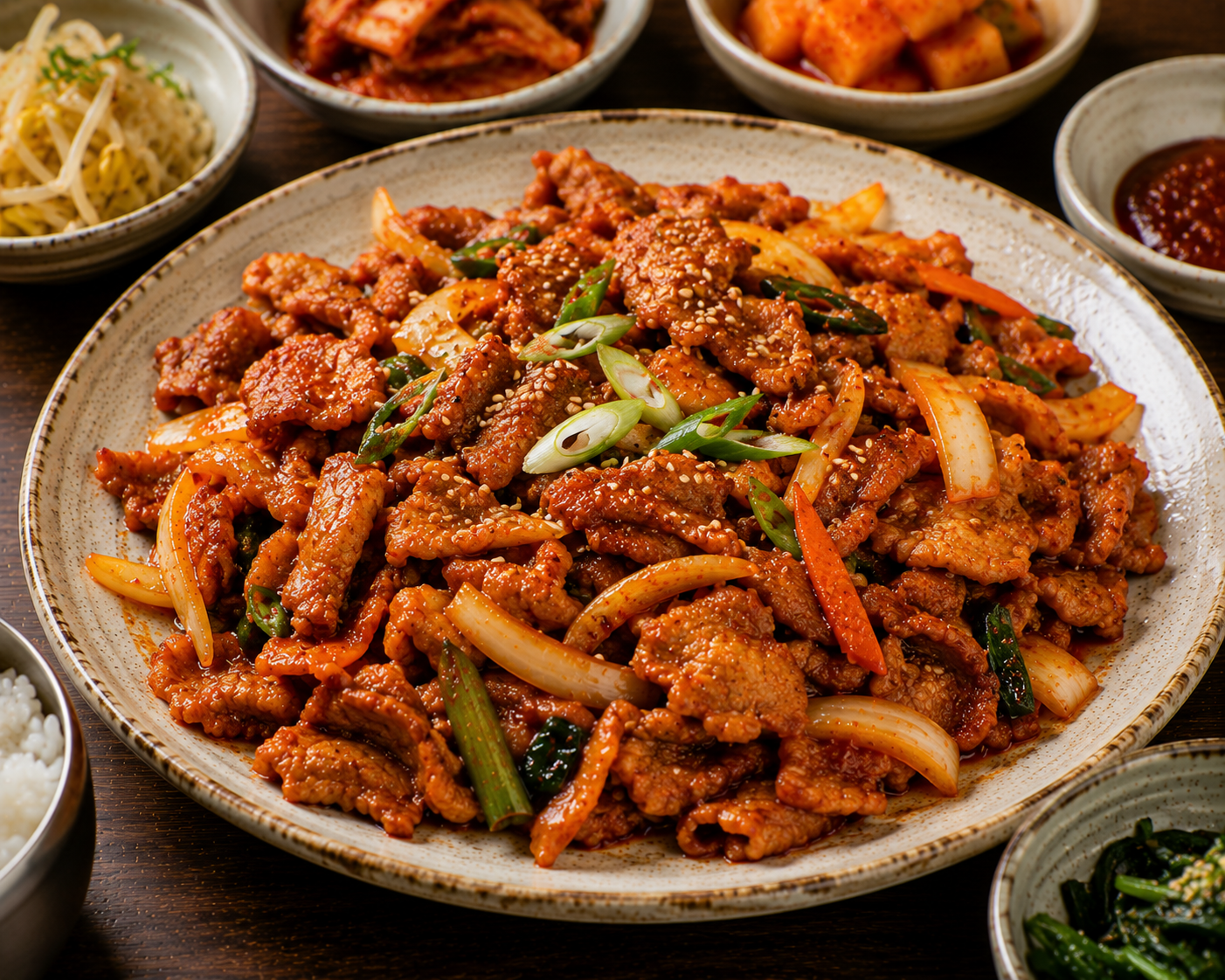
Stir-fried Spicy Pork
제육볶음 · je-yuk-bokkeum
This is a sweet and spicy dish made by marinating pork in gochujang and gochugaru, then stir-frying it over high heat with onions and green onions. The smoky flavor permeates as the seasoning coats the meat, and it is enjoyed either mixed with rice or wrapped in lettuce or perilla leaves.
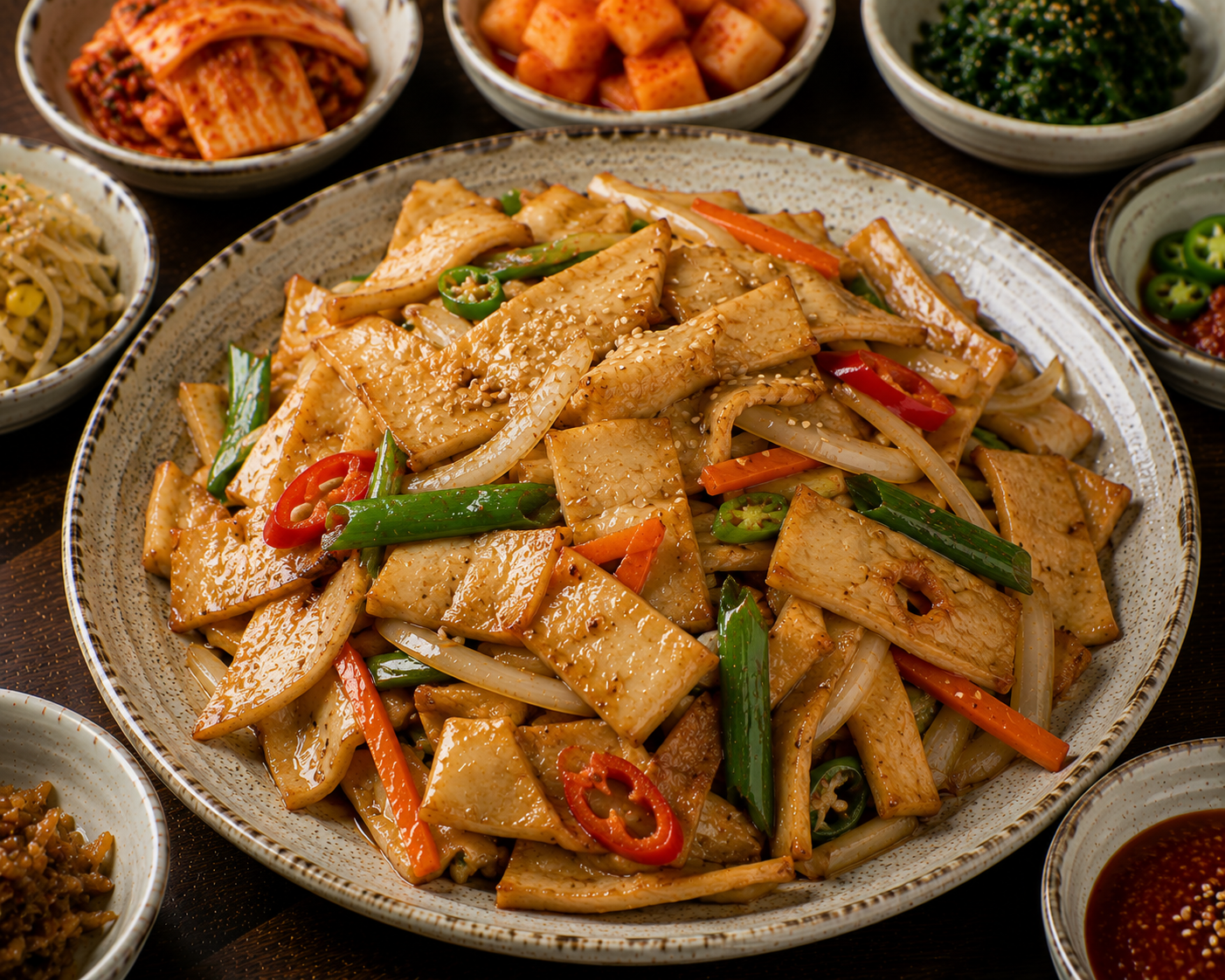
Stir-fried Fish Cake
어묵볶음 · eomuk-bokkeum
Stir-fried fish cakes seasoned with soy sauce and sugar, creating a savory and sweet side dish.
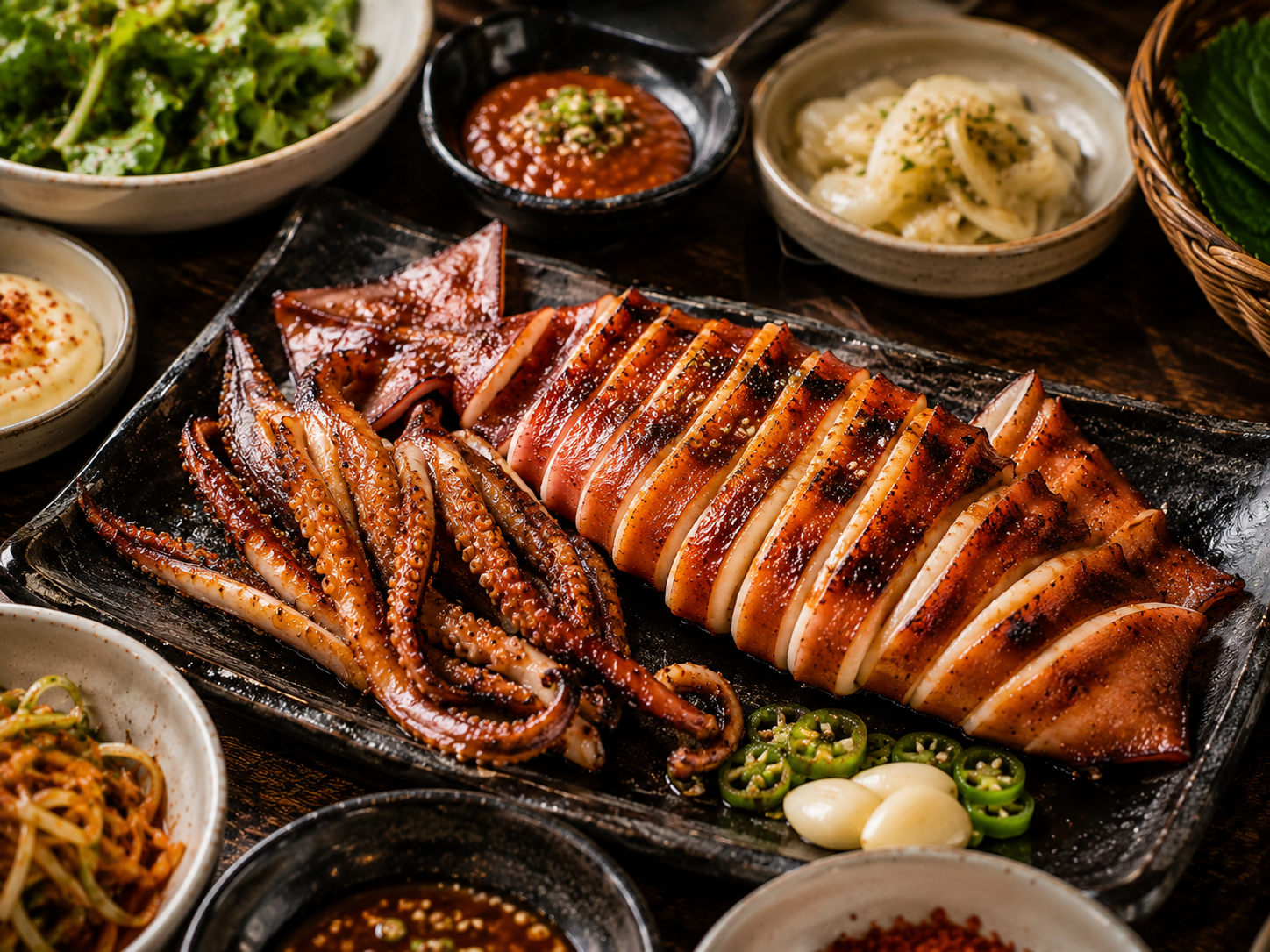
Grilled Squid
오징어구이 · o-jing-eo-gui
A dish made by grilling squid over direct heat or on a griddle, characterized by its savory and chewy texture. It is usually grilled with seasoning like soy sauce or salt and can be wrapped in ssamjang or garlic for eating.
Goes well with
Ingredients
How it's made
- 1Clean the squid and cut it into bite-sized pieces.
- 2Slice the onion and green onion thinly and prepare them.
- 3Heat oil in a pan and sauté the garlic to release its aroma.
- 4Add the squid and vegetables and quickly stir-fry with gochujang seasoning over high heat.
Nutrition
* Estimated values per serving.
Allergens
Not suitable for vegetarians as it contains seafood and gochujang seasoning.
How to order
오징어볶음 주세요
O-jing-eo-bokkeum ju-se-yo
Please give me stir-fried squid.
Customize your order
Traveler tips
How to eat it
Frequently asked questions
- Is squid naturally tough?
- Squid easily turns tough when cooked for too long. It needs to be stir-fried briefly over high heat so it stays chewy yet tender.
- How is it different from Stir-fried Octopus?
- Stir-fried Octopus uses nakji, a small octopus, while Stir-fried Squid uses thick-bodied squid. Stir-fried Squid has a firmer bite, while Stir-fried Octopus stands out for the springy texture of the tentacles.
- Can I cut it with scissors before eating?
- If large pieces of squid are served, cutting them with scissors at the table is perfectly normal. In Korean restaurants, seafood or meat in stir-fried dishes is commonly cut into bite-size pieces.
Last reviewed: 2026-10-07