
Samgyeopsal
A representative Korean grilled dish made by grilling pork belly without seasoning, typically dipped in salt or oil sauce. The layers of fat melt, creating a rich flavor while the outside is grilled to a golden color, boasting a chewy texture. It is common to wrap it in lettuce or perilla leaves with ssamjang and garlic.
Cultural background
Samgyeopsal is often enjoyed in Korea during gatherings or family meetings, and the act of grilling and sharing it signifies friendship and bonding.
Origin & history
The name ‘삼겹살’ (Samgyeopsal, literally “three-layered pork belly”) comes from the way the lean meat and fat appear in several layers. ‘삼’ (sam) means the number three, but the meat does not literally have only three layers.
The culture of grilling Samgyeopsal right at the restaurant table, as people do today, became widespread after pork consumption grew and dining out became popular. Unlike marinated Galbi, it does not need to be prepared in advance, and as the fat melts during grilling, it adds flavor, making this relatively simple style widely loved.
Regional & modern variations
- Ogyeopsal — Samgyeopsal with the pork skin left on. The skin has a chewy texture, giving it a stronger bite than regular Samgyeopsal.
- Daepae Samgyeopsal — Frozen Samgyeopsal shaved into very thin slices. It cooks quickly and the edges turn crisp, but the fat also renders out fast.
- Frozen Samgyeopsal — A style of grilling thinly sliced frozen Samgyeopsal. Sometimes enjoyed as ‘추억의 음식’ (chueogui eumsik, “a nostalgic food”), along with the atmosphere of an old-school barbecue restaurant.
How Koreans eat it
At Samgyeopsal restaurants, the meal often does not end with just the meat. Kimchi, garlic, and Bean Sprouts are commonly grilled in the fat that collects on the hot plate, and Naengmyeon or Doenjang Jjigae may be added at the end. Since the oil splatters a lot, wearing an apron feels perfectly natural.
Taste & how to choose
Good Samgyeopsal shows fairly even layers of fat and lean meat, without either one being overly concentrated on one side. Thick-cut Samgyeopsal has more juiciness and chew, while thin-cut Samgyeopsal stands out for its crispness. First-time eaters may be surprised less by the meat itself than by the nutty richness of the rendered fat.
Similar dishes
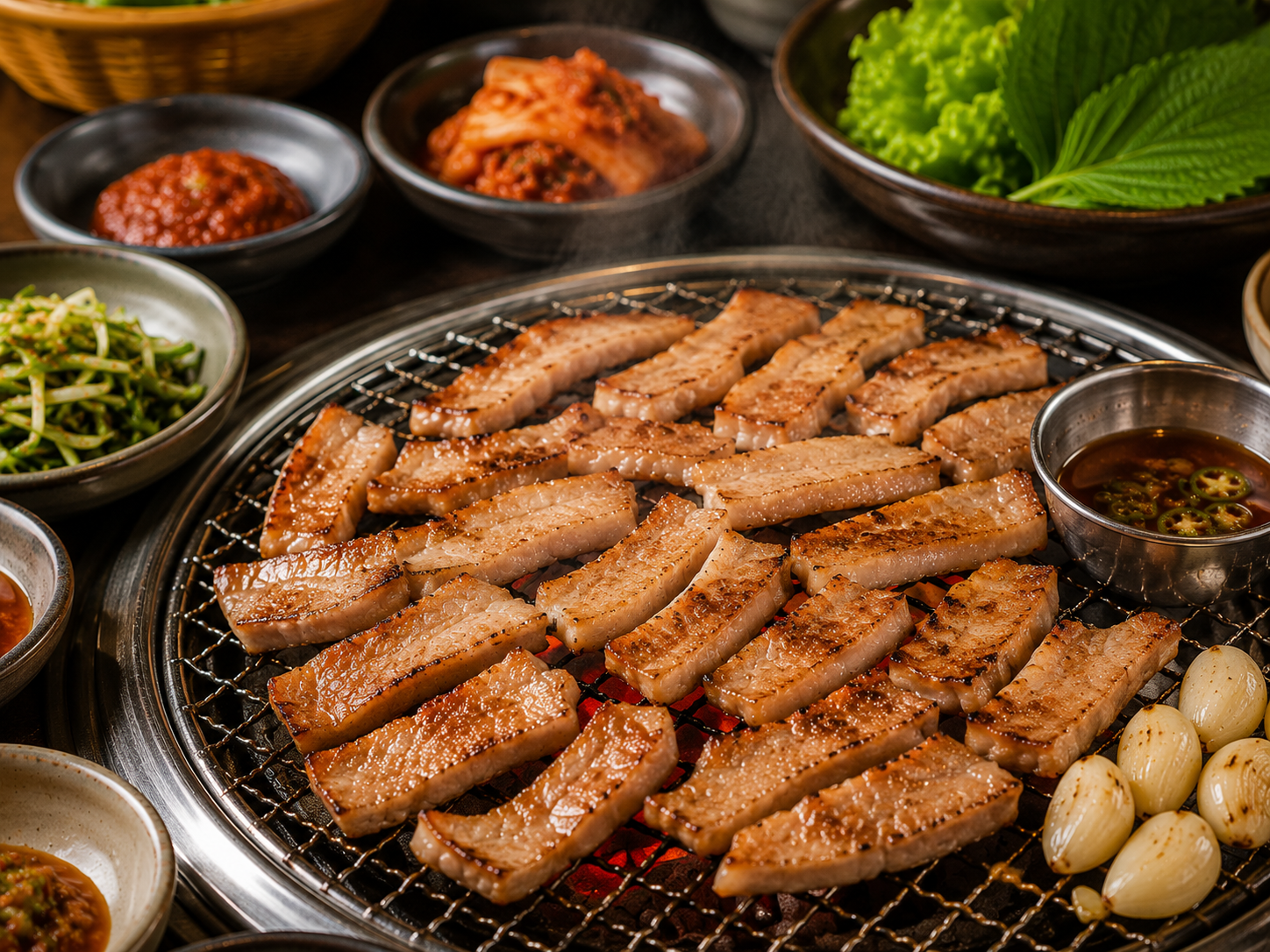
Grilled Pork Neck
항정살구이 · hang-jeong-sal-gui
A dish made by grilling pork neck with salt or simple seasoning, characterized by its chewy and nutty flavor. It is enjoyed by grilling it directly at the table and wrapping it in lettuce.
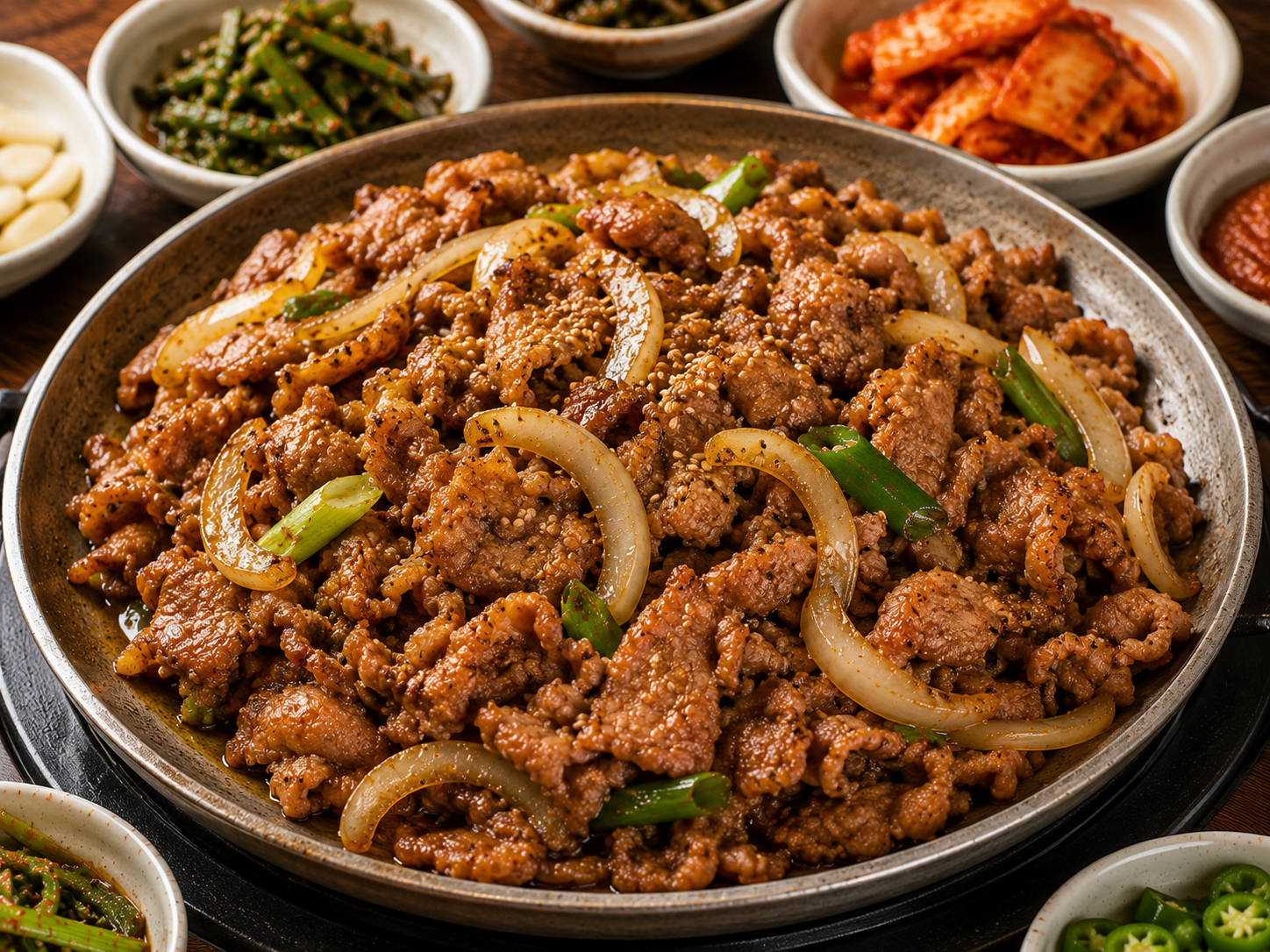
Pork Bulgogi
돼지불백 · dwaeji-bulbaek
A dish where pork is marinated in soy sauce and gochujang and grilled on a hot plate, served with rice. It is characterized by a sweet and spicy flavor due to the caramelization of the marinade.
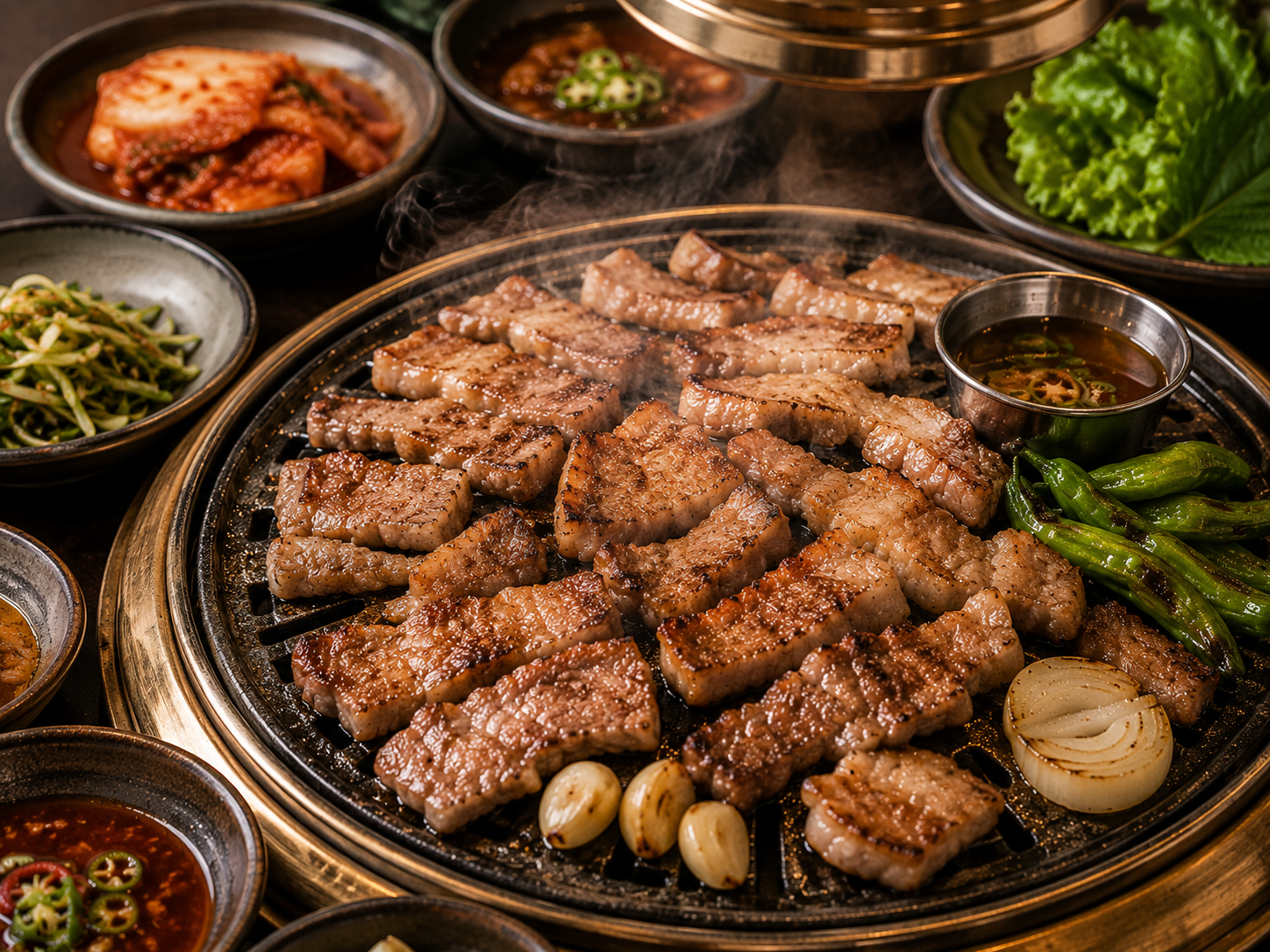
Pork Neck Grilling
목살구이 · moksal-gui
A dish where pork neck is marinated in salt or soy sauce and grilled on a hot plate, characterized by a light and chewy texture. It is usually grilled directly at the table and eaten wrapped in lettuce or perilla leaves with ssamjang.
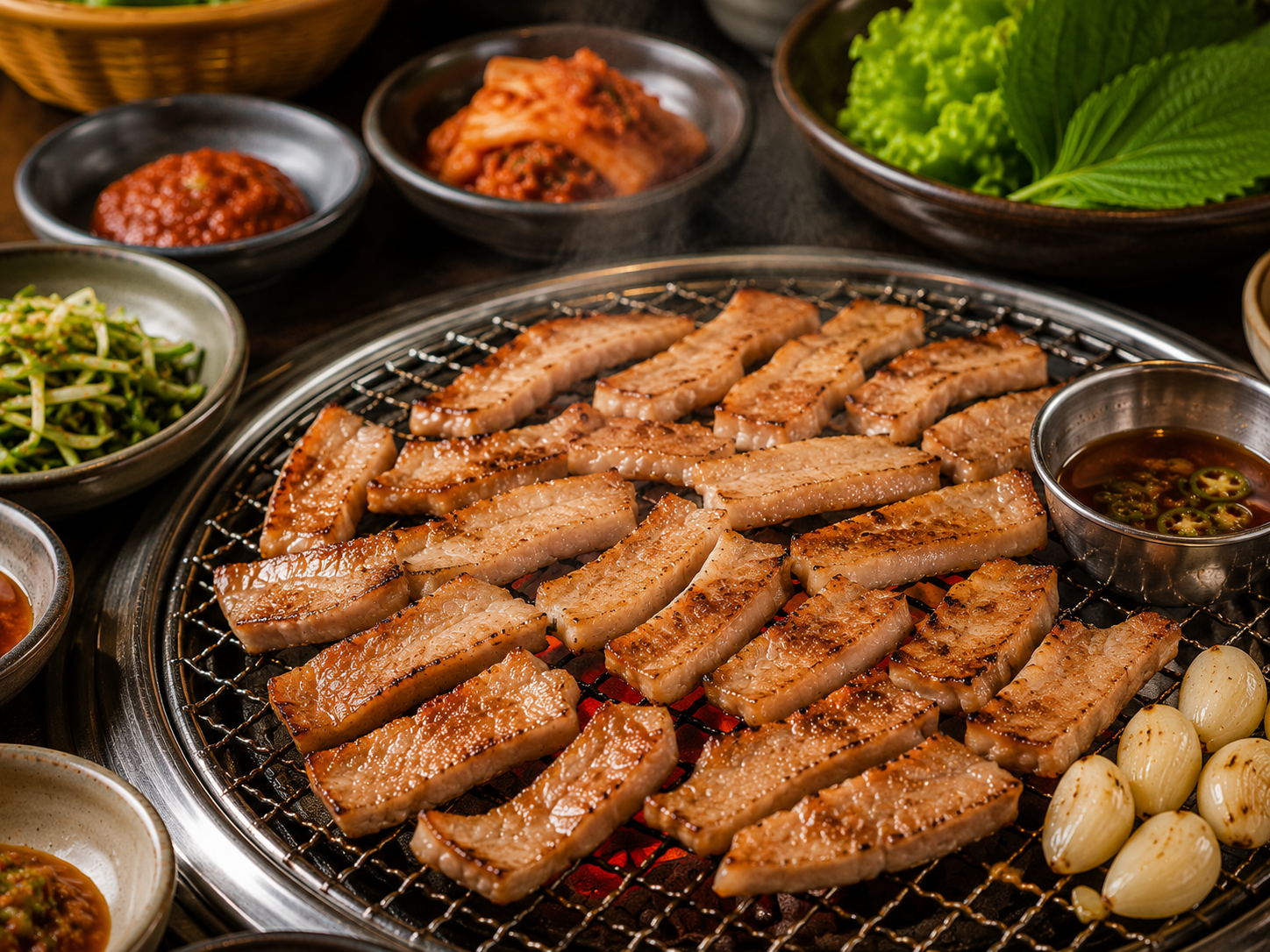
Pork Jowl
항정살 · hang-jeong-sal
This dish features pork jowl grilled without seasoning, meant to be dipped in salt or ssamjang. It is characterized by its chewy texture and rich flavor. Usually, it is grilled directly at the table, and consumed at the perfect moment of doneness, often wrapped in lettuce or perilla leaves with ssamjang and garlic.
Pork Ribs
돼지갈비 · dwaeji-galbi
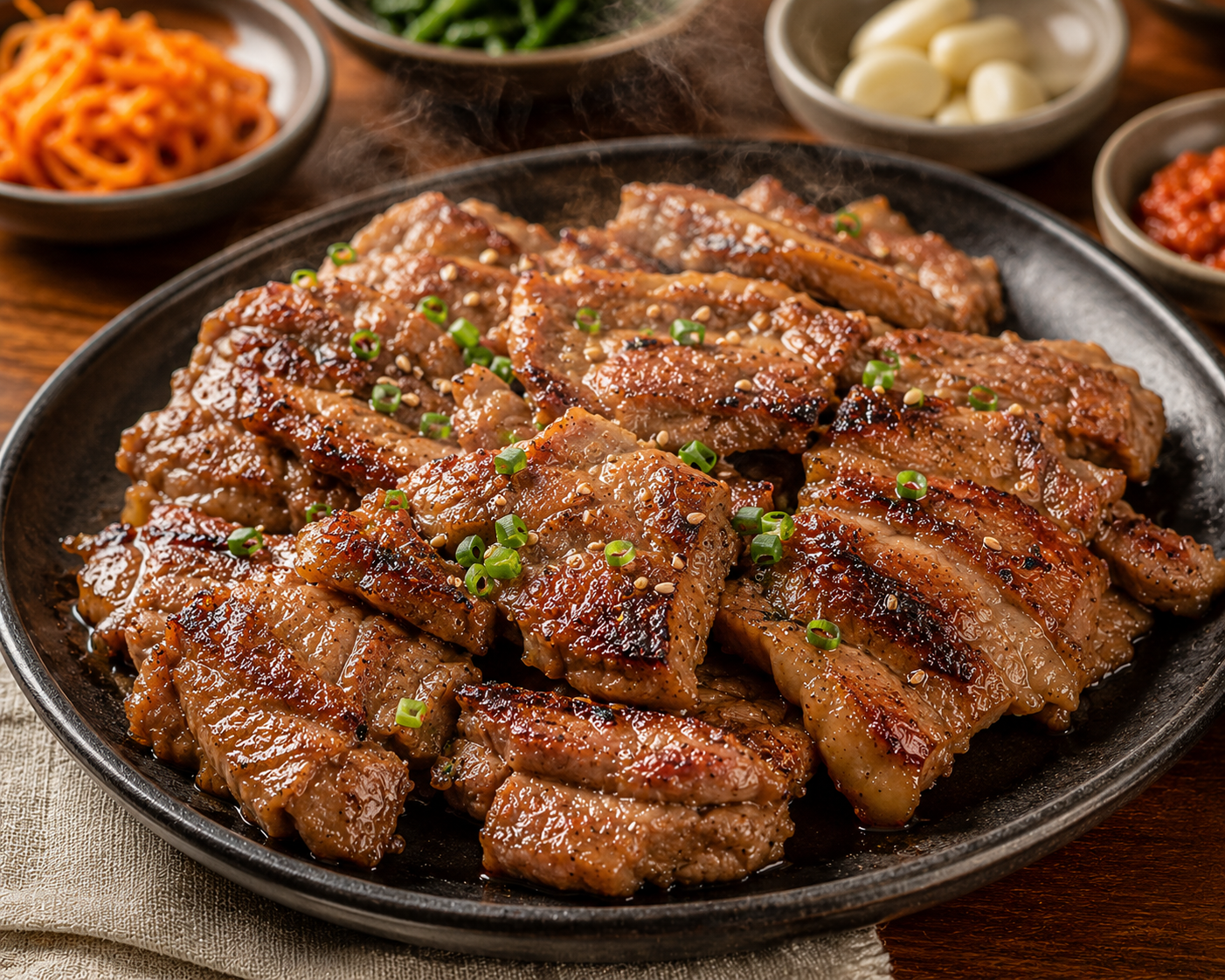
Pork ribs marinated with soy sauce, sugar, garlic, and other ingredients, grilled on a hot plate, is a traditional Korean barbecue dish. The marinade caramelizes, resulting in a sweet and savory flavor, and the meat is juicy. It is usually grilled at the table and eaten with wrapped vegetables.
Braised Pork Belly
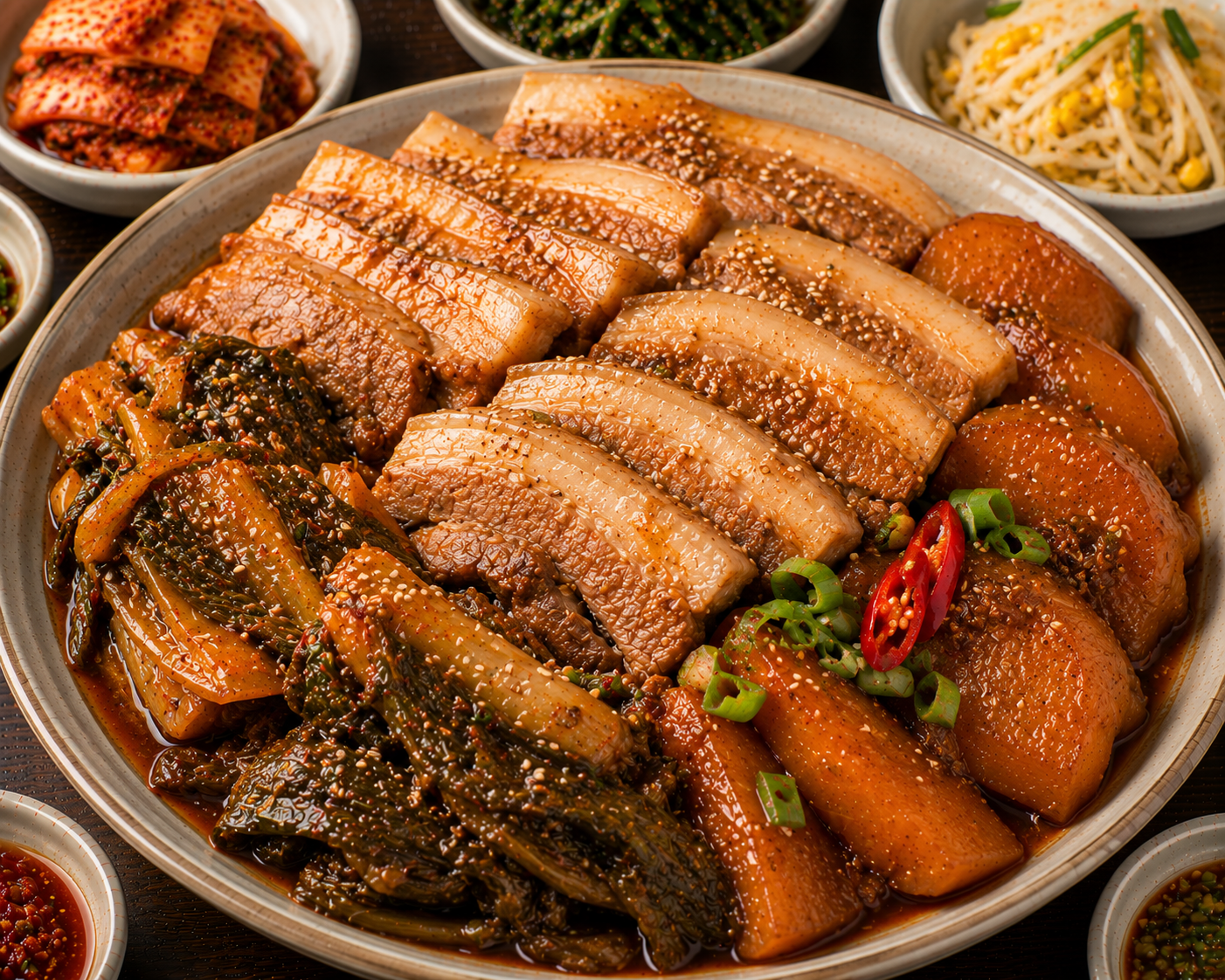
삼겹살찜 · samgyeopsal-jjim
A tender dish made by braising pork belly in a soy sauce and garlic seasoning, with the flavors deeply infused into the meat.
Osam Bulgogi
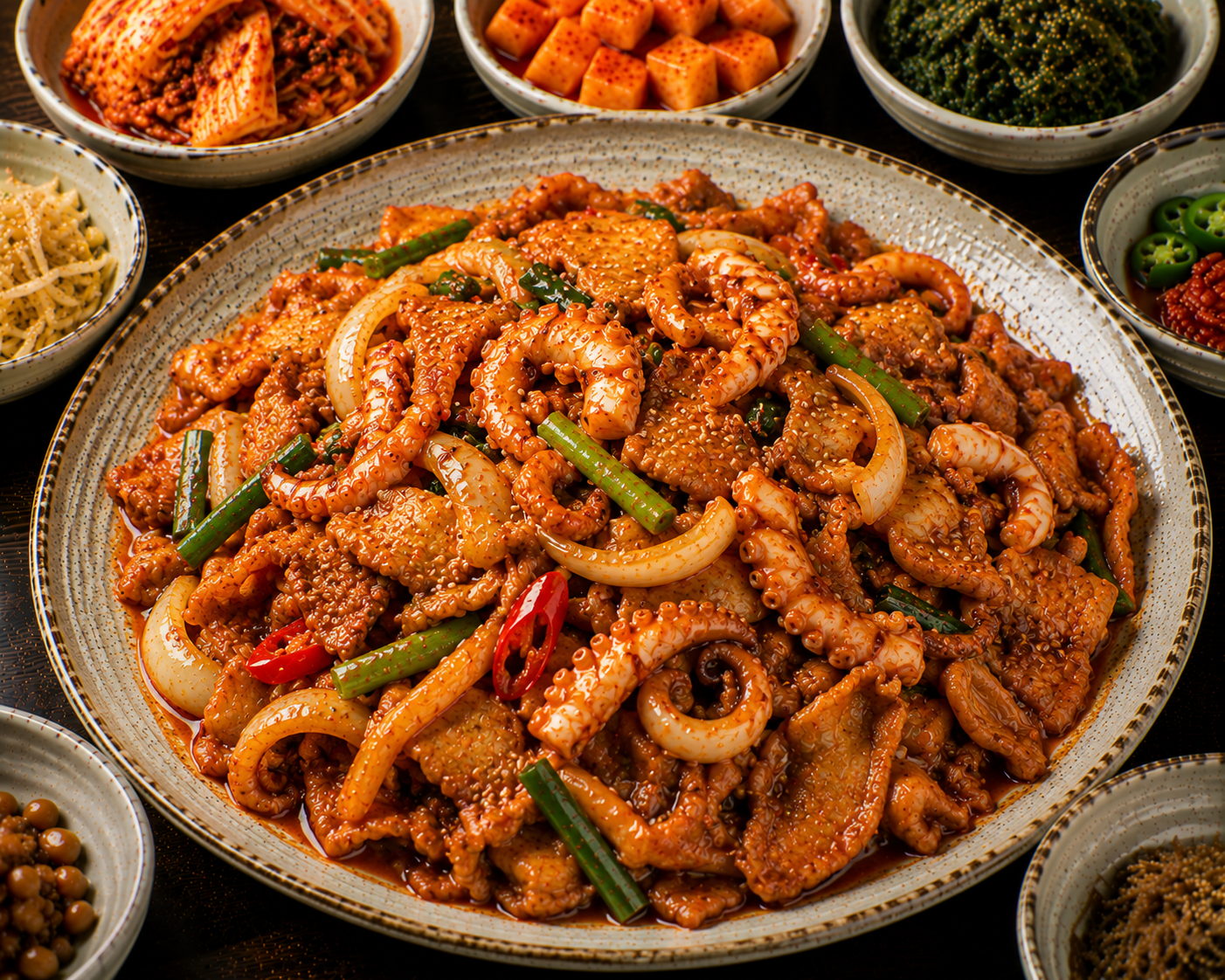
오삼불고기 · o-sam-bul-go-gi
A spicy and sweet dish made by marinating squid and pork belly in gochujang sauce and quickly stir-frying it over high heat. The grilled flavor infuses and the seasoning coats the ingredients, and it is either mixed with rice or wrapped in lettuce.
Stir-fried Spicy Pork
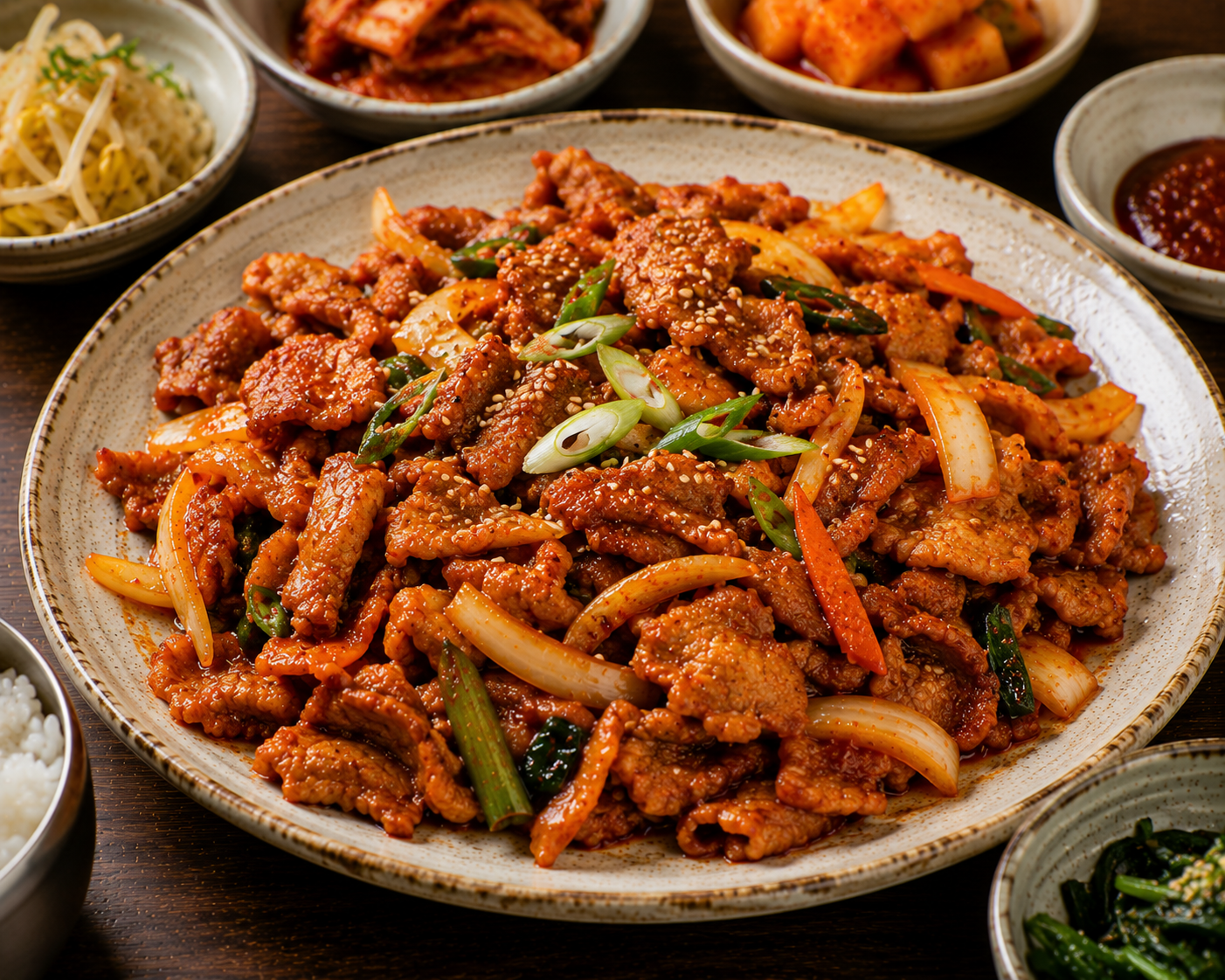
제육볶음 · je-yuk-bokkeum
This is a sweet and spicy dish made by marinating pork in gochujang and gochugaru, then stir-frying it over high heat with onions and green onions. The smoky flavor permeates as the seasoning coats the meat, and it is enjoyed either mixed with rice or wrapped in lettuce or perilla leaves.
Goes well with
Ingredients
How it's made
- 1Slice the pork belly into appropriate thickness and prepare it.
- 2Heat the grill and place the pork belly on it to cook.
- 3Flip it over when the outside is golden and grill the other side as well.
- 4Cut the grilled pork belly into bite-sized pieces with scissors.
Nutrition
* Estimated values per serving.
Allergens
Not suitable for vegetarian or halal diets as it uses pork.
How to order
삼겹살 주세요
Sam-gyeop-sal ju-se-yo
Please give me samgyeopsal
Customize your order
Traveler tips
How to eat it
Frequently asked questions
- Why is it called ‘삼겹살’ (Samgyeopsal, literally “three-layered pork belly”)?
- The name comes from the layered look of the lean meat and fat. The number three is closer to a description of the appearance, and the number and thickness of the layers vary from piece to piece.
- What is the difference between Ogyeopsal and Samgyeopsal?
- Ogyeopsal usually has the skin left on, so it is chewier. Samgyeopsal is often served with the skin removed, putting more focus on the soft richness of the fat and lean meat.
- Is there a reason the grill plate is tilted?
- Samgyeopsal releases a lot of fat as it grills. A tilted grill plate lets the fat run to one side so the meat does not sit submerged in oil.
Last reviewed: 2026-10-07