Cultural background
Tangpyeongchae symbolizes the Tangpyeong policy of the Joseon Dynasty, and is a harmonious side dish made from various ingredients. It is often served at feasts and holidays, and the colorful ingredients make it visually appealing.
Similar dishes
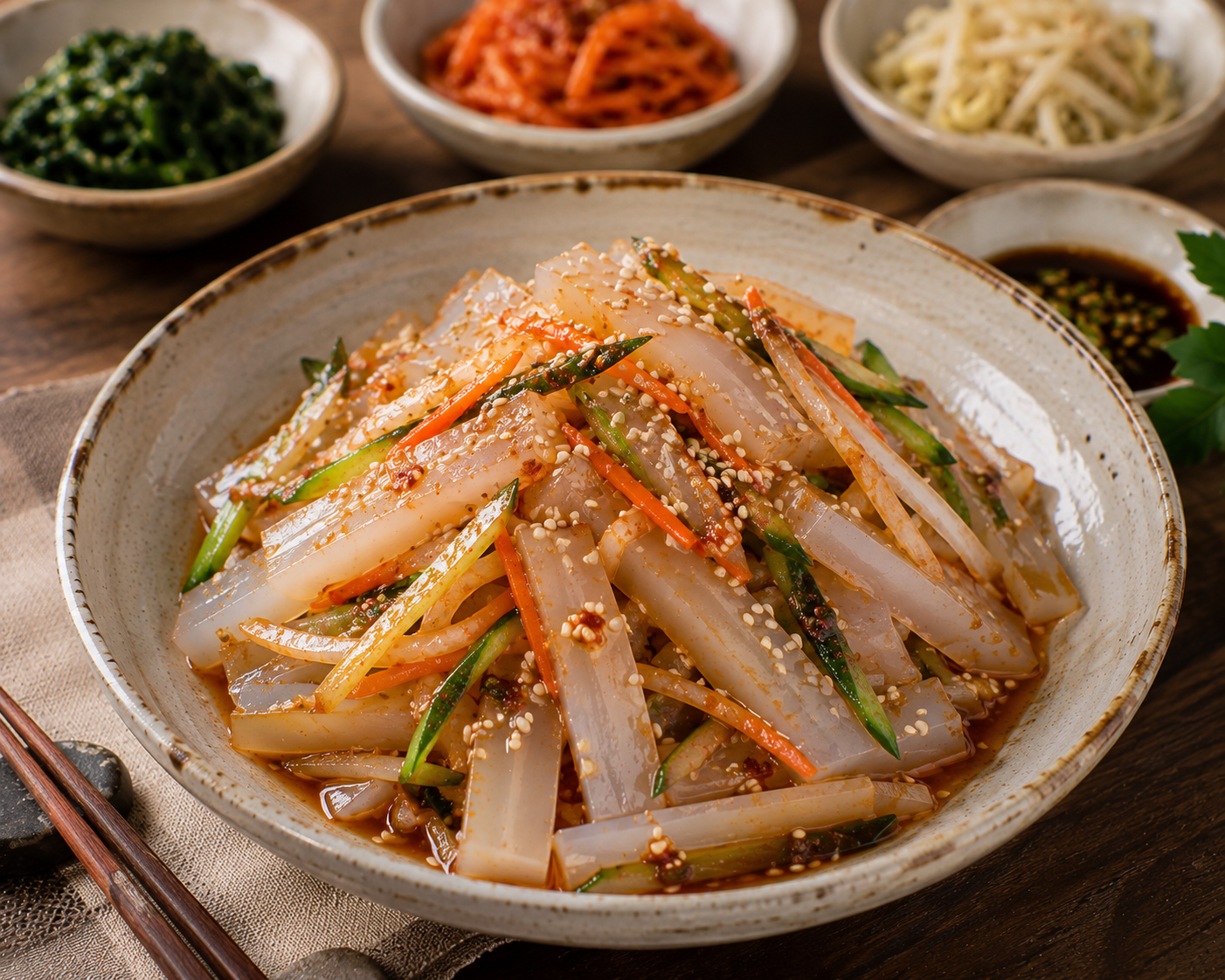
Cheongpomuk Muchim
청포묵무침 · cheong-po-muk-mu-chim
A side dish made by slicing Cheongpomuk thinly and mixing it with soy sauce, sesame oil, vinegar, and other ingredients to create a sweet and sour flavor. It is characterized by a soft and chewy texture and is eaten with rice.
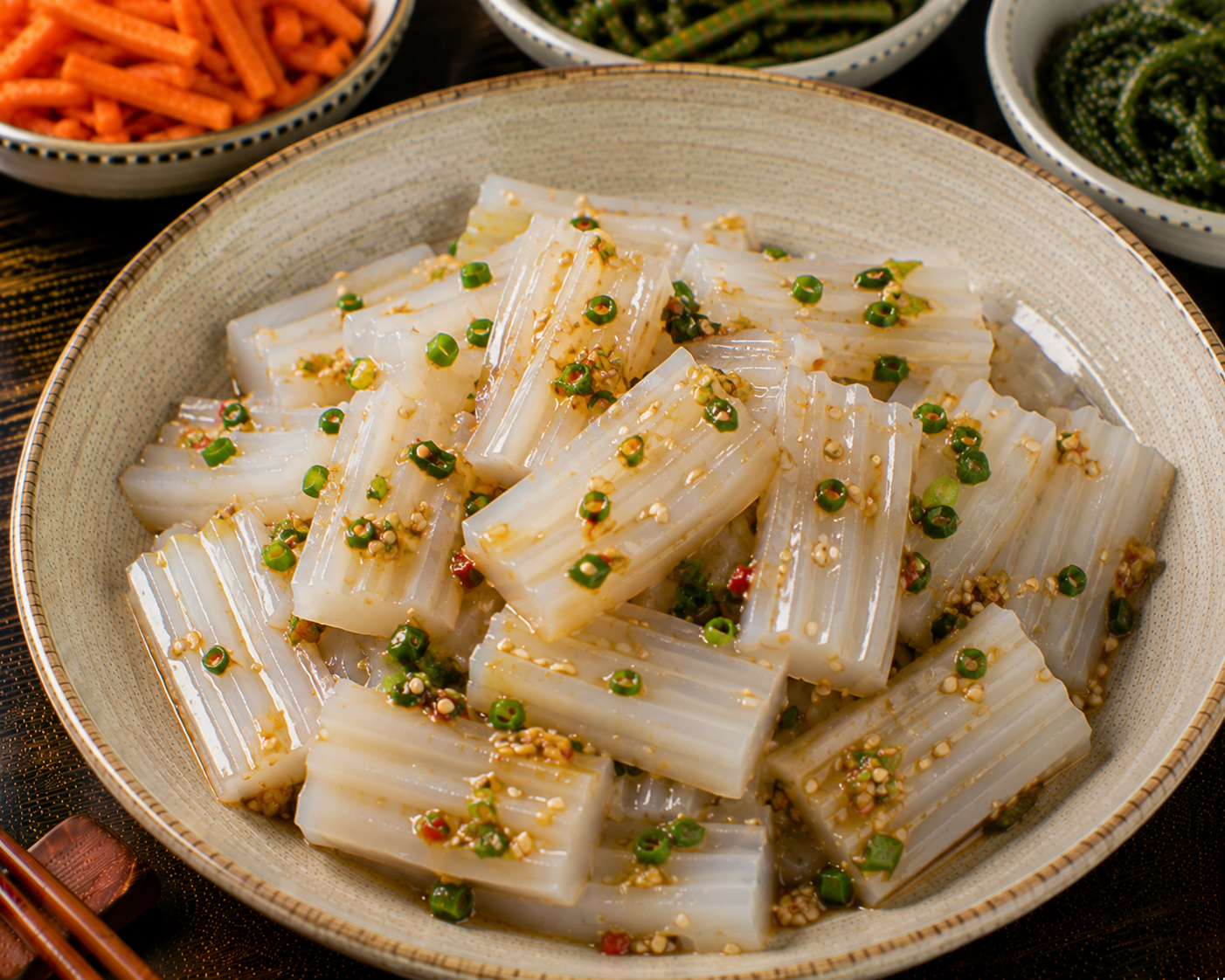
Cheongpomuk
청포묵 · cheongpo-muk
It is a jelly made from ground mung beans, characterized by its soft and light texture. It is usually eaten with soy sauce and sesame oil, enjoyed as a side dish or a snack.
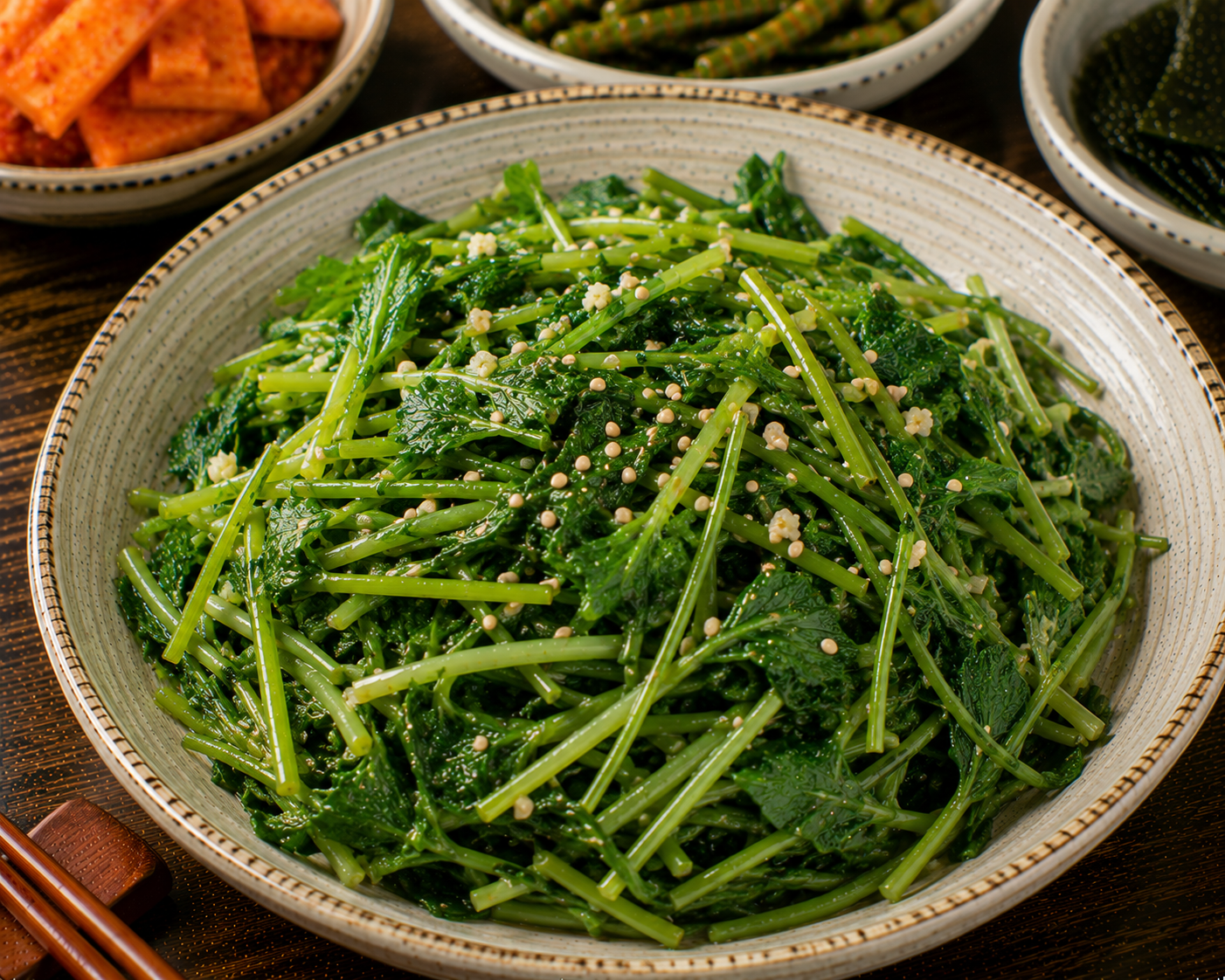
Chamnamul
참나물 · Cham-na-mul
Chamnamul is a lightly blanched vegetable side dish mixed with soy sauce and sesame oil, characterized by its tender and nutty flavor. It is enjoyed with rice and is also used as an ingredient in bibimbap.
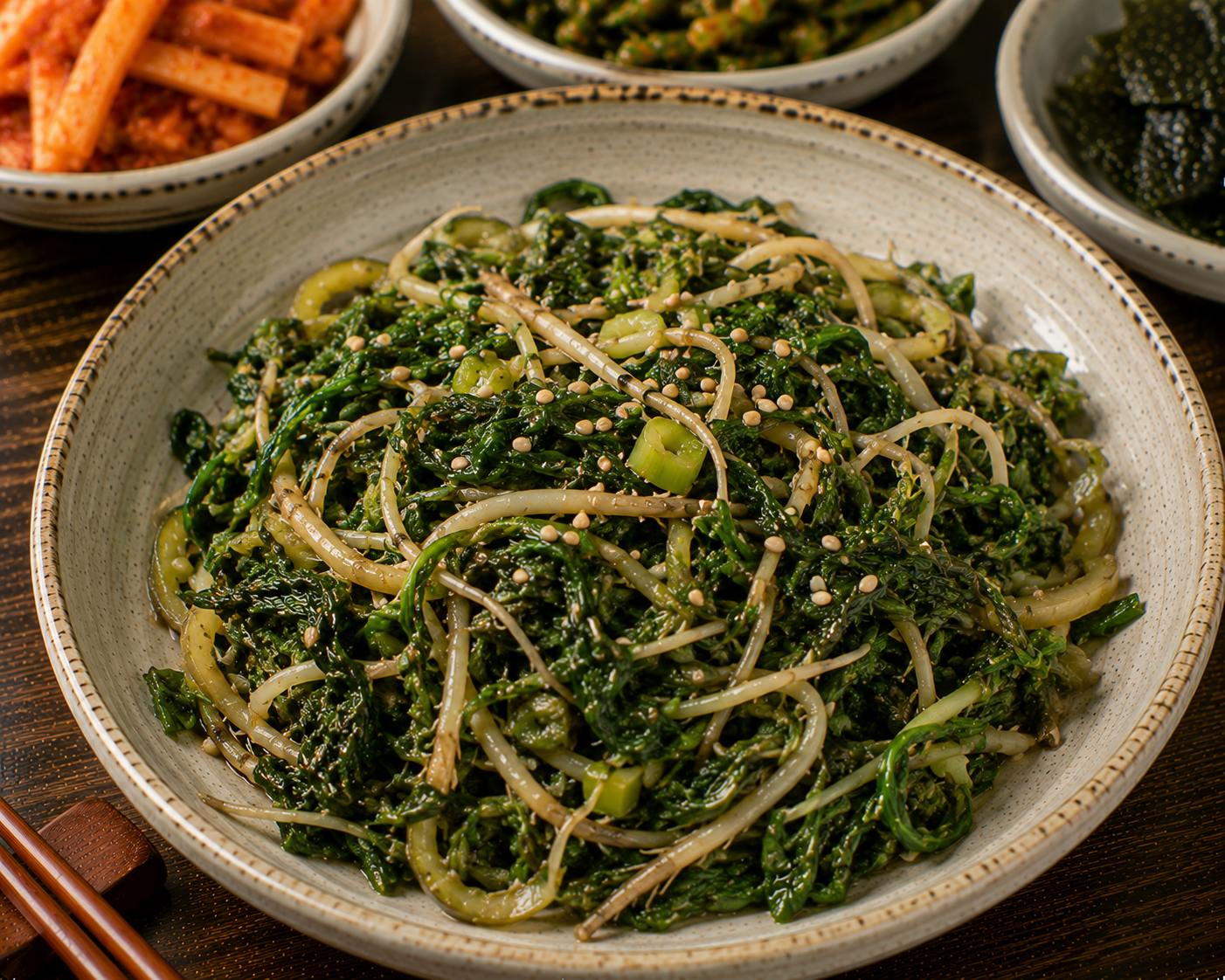
Naeng-i-namul
냉이나물 · naeng-i-na-mul
Blanched naengi seasoned with soy sauce and sesame oil, a light and nutty vegetable side dish.
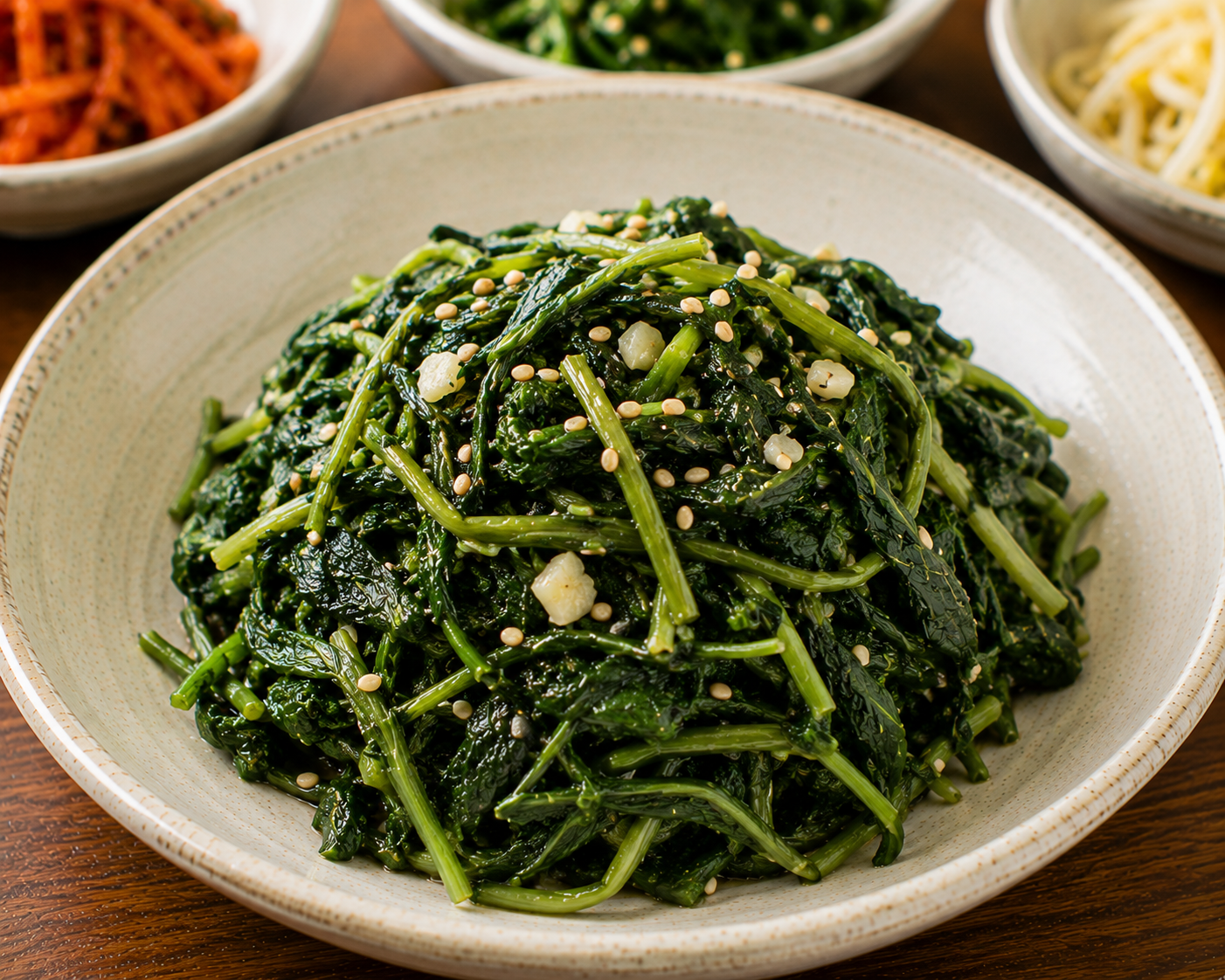
Chwinamul
취나물 · chwi-namul
Chwinamul is a soft and light side dish made by blanching it and mixing with soy sauce and sesame oil.
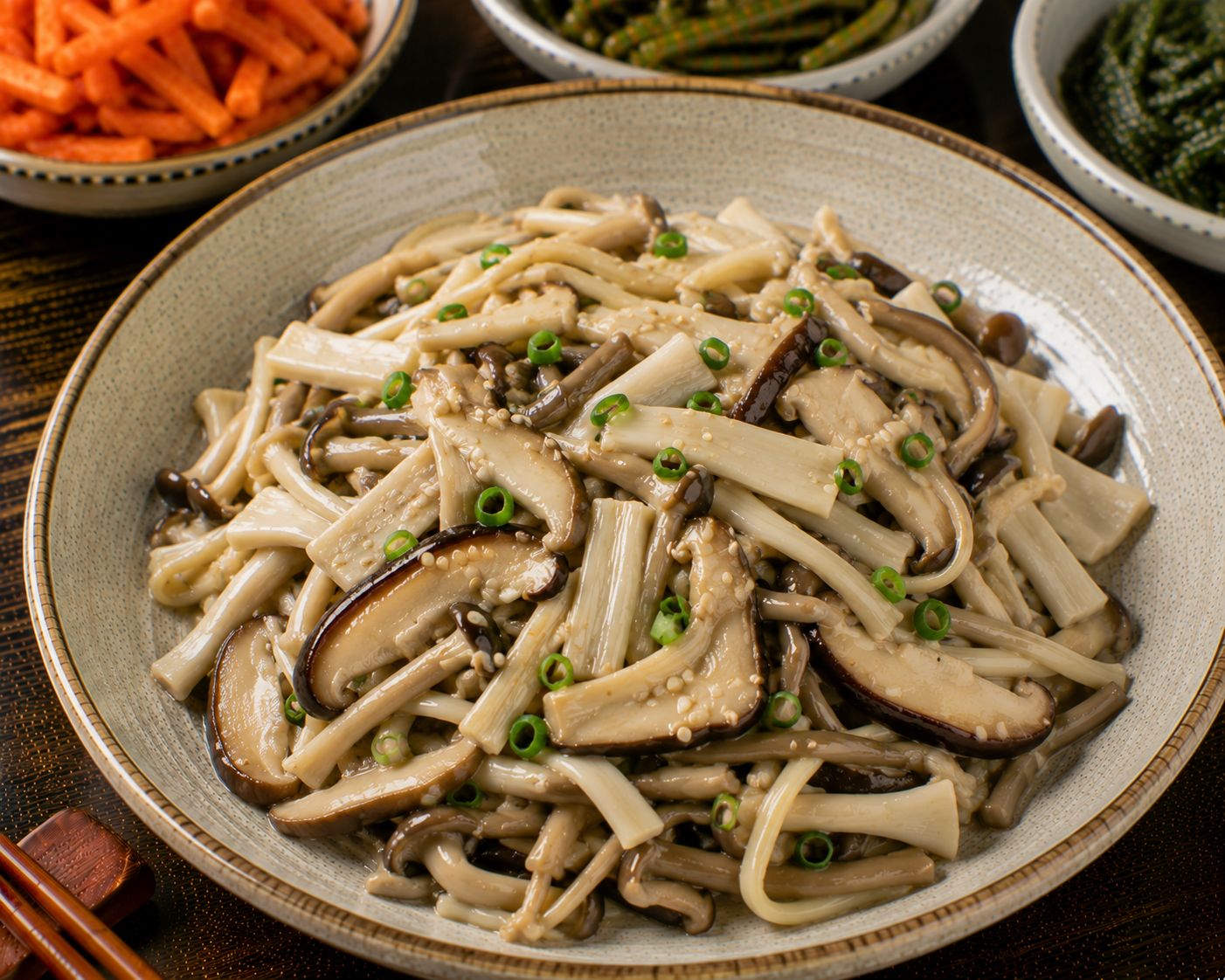
Mushroom Namul
버섯나물 · beoseot-namul
A light and savory side dish made by blanching mushrooms and seasoning them with soy sauce and sesame oil.
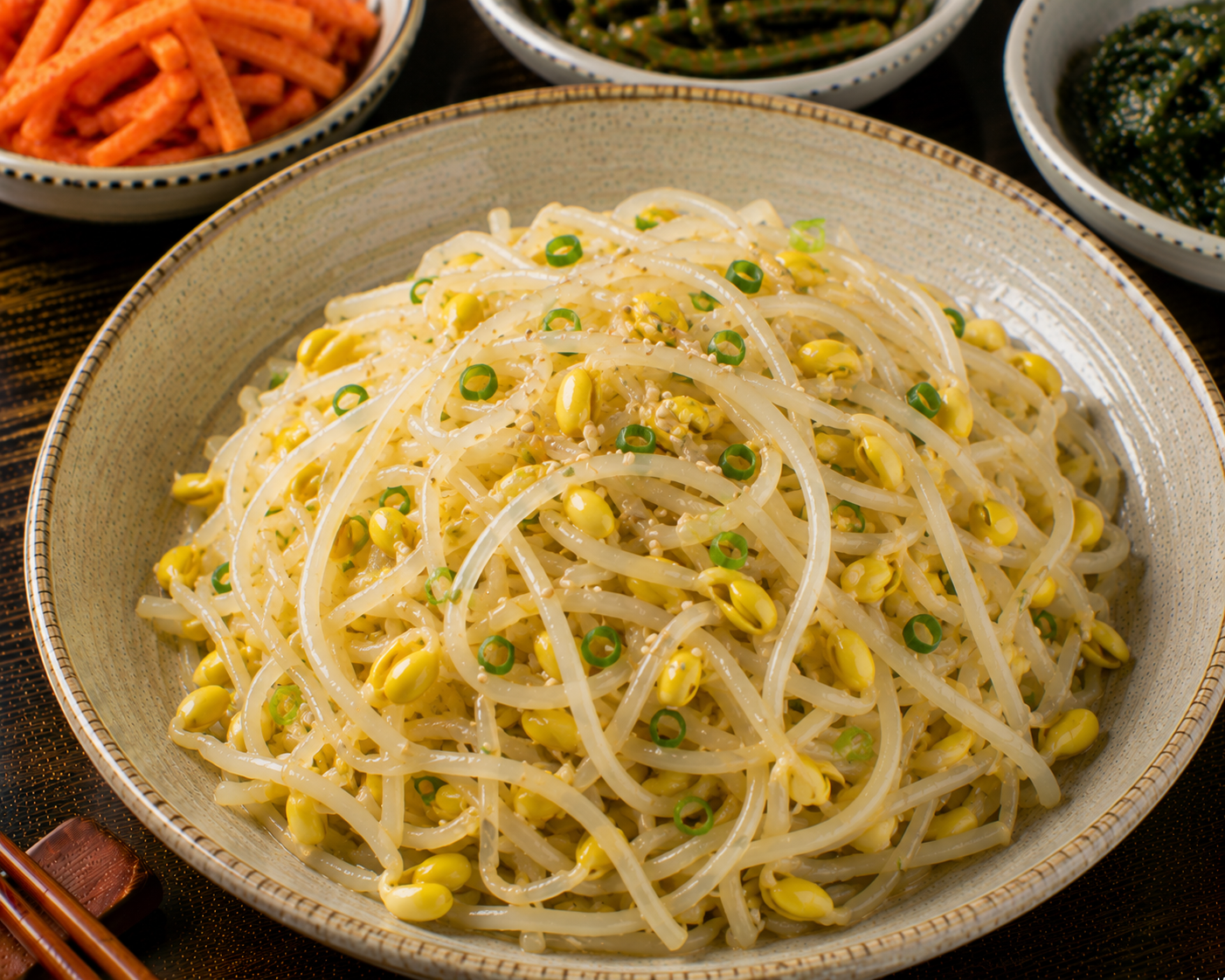
Goes well with
Ingredients
How it's made
- 1Slice Cheongpomuk into thin strips.
- 2Also slice cucumber and carrot into thin strips.
- 3Stir-fry the beef and let it cool down.
- 4Mix all the ingredients with soy sauce and sesame oil.
Nutrition
* Estimated values per serving.
Allergens
Not vegetarian as it contains beef.
How to order
탕평채 주세요
Tang-pyeong-chae ju-se-yo
Please give me Tangpyeongchae